English
Back
Open Account
The Federal Reserve launches reforms! How to position for the Worshe era?
Futubull Options Sir
joined discussion · Jun 4 17:44 ·

Options Sir on Macro | Middle East tensions surface in markets—how to navigate this period of uncertainty?

Yesterday (June 3), capital markets experienced a minor storm. All three major U.S. equity indices closed lower, Treasury yields rose again, and crypto assets along with gold, silver, and copper all declined in tandem—only oil prices moved higher. Even the AI-driven market theme showed signs of divergence, $SanDisk (SNDK.US)$ soaring to new highs, while previously strong software stocks tumbled sharply.
Adding further gloom to the market was $Broadcom (AVGO.US)$the after-hours earnings release, which sparked concerns that the 'ceiling' for AI-related capital expenditures may have been reached, sending the stock down more than 13% after hours.Today, we’ll systematically unpack the underlying logic behind recent market moves under mounting Middle East tensions and explore potential strategies to navigate this environment.
How is Middle East pressure breaching market defenses?
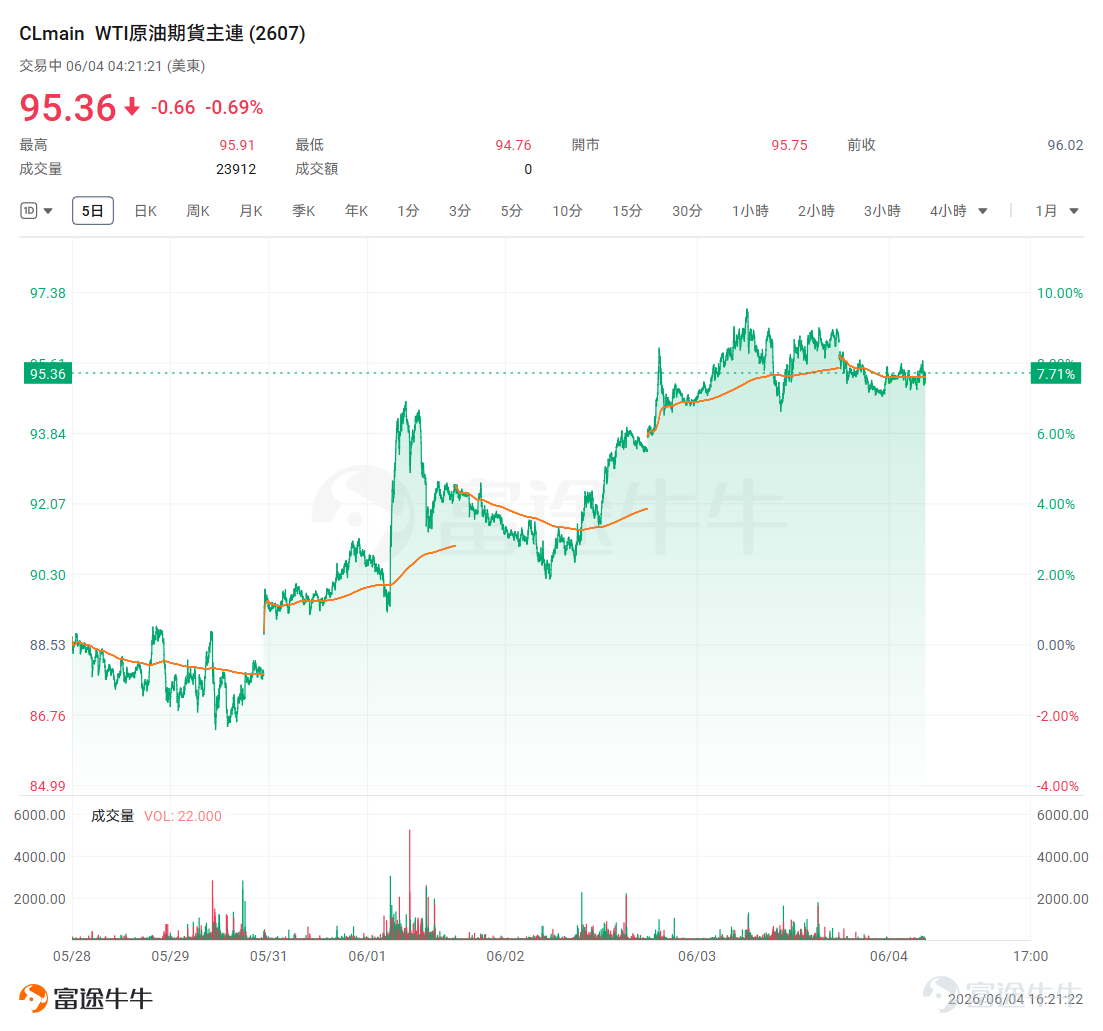
Since the start of the week, news about escalating Middle East tensions has been constant, yet U.S. equities largely ignored it and continued hitting new highs.However, as time passed, market concerns began resurfacing. Underlying this shift is a clear macro transmission channel: 'geopolitical risk → surging oil prices → entrenched inflation → persistently high interest rates,' which is now affecting various risk assets.
Yesterday (June 3), capital markets experienced a minor storm. All three major U.S. equity indices closed lower, U.S. Treasury yields rose again, and crypto assets along with gold, silver, and copper all declined in tandem—only oil prices climbed higher. The AI-driven market theme also showed signs of divergence, $SanDisk (SNDK.US)$ soaring to new highs again, but software stocks that had led the previous strong rebound tumbled sharply. Adding further gloom to the market was $Broadcom (AVGO.US)$Broadcom's after-hours earnings release, which sparked concerns among investors that the 'ceiling' for AI-related capital expenditures may have been reached, sending its shares plunging more than 13% after hours.Today, we’ll systematically unpack the underlying logic behind current market dynamics under Middle East geopolitical pressure and explore potential strategies to respond. How is Middle East pressure breaching market defenses? Since the start of the week, news about escalating tensions in the Middle East has been constant, yet U.S. equities largely ignored it and kept hitting new highs.However, as time passed, market anxieties began resurfacing. Underlying this shift is a clear macro transmission channel: 'geopolitical risk → surging oil prices → entrenched inflation → persistently high interest rates,' which is now affecting various risk assets. U.S.-Iran negotiations have been intermittent, with Iran questioning the agreement and uncertainty looming over navigation through the Strait of Hormuz. Market confidence in Federal Reserve rate cuts is wavering amid persistent price stickiness. The high-rate environment is weighing on valuations of long-duration assets, compounded by fears of stagflation—slowing growth coupled with elevated inflation—prompting capital to retreat from risk assets. The result is the broad-based pressure seen across U.S. equities, crypto, industrial metals, and precious metals...
U.S.-Iran negotiations have been intermittent, with Iran questioning the agreement and uncertainty looming over navigation through the Strait of Hormuz. Market confidence in Federal Reserve rate cuts is wavering amid persistent price stickiness. The high-rate environment is weighing on valuations of long-duration assets, compounded by fears of stagflation—slowing growth coupled with elevated inflation—prompting capital to retreat from risk assets. The result is the broad-based pressure seen across U.S. equities, crypto, industrial metals, and precious metals.
Against a backdrop of systemic capital outflows, funds are gravitating toward assets with the highest degree of certainty.The shortage in memory chips represents a hard, tangible constraint. The expectation of price increases driven by supply-demand imbalances has emboldened capital to cluster here. Western Digital surged more than 6% yesterday, powerfully hitting a new all-time high, with its market cap approaching $300 billion—though it sharply declined in pre-market trading today along with the broader sector.
Walking a tightrope at high altitude—why can even a 'gentle breeze' trigger massive waves?
According to the latest data, since late March, the rally led by AI has further increased concentration in the U.S. equity market. This extreme crowding resembles a heavy aircraft walking a tightrope high above the ground.When everyone piles onto the same side (AI tech), stability may appear intact—but even a minor external shock (such as escalating Middle East tensions or inflation data exceeding expectations) could cause an instantaneous loss of balance from the slightest tilt.
Yesterday (June 3), capital markets experienced a minor storm. All three major U.S. equity indices closed lower, U.S. Treasury yields rose again, and crypto assets along with gold, silver, and copper all declined in tandem—only oil prices climbed higher. The AI-driven market theme also showed signs of divergence, $SanDisk (SNDK.US)$ soaring to new highs again, but software stocks that had led the previous strong rebound tumbled sharply. Adding further gloom to the market was $Broadcom (AVGO.US)$Broadcom's after-hours earnings release, which sparked concerns among investors that the 'ceiling' for AI-related capital expenditures may have been reached, sending its shares plunging more than 13% after hours.Today, we’ll systematically unpack the underlying logic behind current market dynamics under Middle East geopolitical pressure and explore potential strategies to respond. How is Middle East pressure breaching market defenses? Since the start of the week, news about escalating tensions in the Middle East has been constant, yet U.S. equities largely ignored it and kept hitting new highs.However, as time passed, market anxieties began resurfacing. Underlying this shift is a clear macro transmission channel: 'geopolitical risk → surging oil prices → entrenched inflation → persistently high interest rates,' which is now affecting various risk assets. U.S.-Iran negotiations have been intermittent, with Iran questioning the agreement and uncertainty looming over navigation through the Strait of Hormuz. Market confidence in Federal Reserve rate cuts is wavering amid persistent price stickiness. The high-rate environment is weighing on valuations of long-duration assets, compounded by fears of stagflation—slowing growth coupled with elevated inflation—prompting capital to retreat from risk assets. The result is the broad-based pressure seen across U.S. equities, crypto, industrial metals, and precious metals...
Historically, whenever stock trading becomes excessively concentrated, it is often followed by violent market reversals—because there are no counterparties left to absorb selling pressure, and once a stampede begins, it is indiscriminate.More paradoxically, despite such extreme crowding, implied market volatility remains relatively low.
Yesterday (June 3), capital markets experienced a minor storm. All three major U.S. equity indices closed lower, U.S. Treasury yields rose again, and crypto assets along with gold, silver, and copper all declined in tandem—only oil prices climbed higher. The AI-driven market theme also showed signs of divergence, $SanDisk (SNDK.US)$ soaring to new highs again, but software stocks that had led the previous strong rebound tumbled sharply. Adding further gloom to the market was $Broadcom (AVGO.US)$Broadcom's after-hours earnings release, which sparked concerns among investors that the 'ceiling' for AI-related capital expenditures may have been reached, sending its shares plunging more than 13% after hours.Today, we’ll systematically unpack the underlying logic behind current market dynamics under Middle East geopolitical pressure and explore potential strategies to respond. How is Middle East pressure breaching market defenses? Since the start of the week, news about escalating tensions in the Middle East has been constant, yet U.S. equities largely ignored it and kept hitting new highs.However, as time passed, market anxieties began resurfacing. Underlying this shift is a clear macro transmission channel: 'geopolitical risk → surging oil prices → entrenched inflation → persistently high interest rates,' which is now affecting various risk assets. U.S.-Iran negotiations have been intermittent, with Iran questioning the agreement and uncertainty looming over navigation through the Strait of Hormuz. Market confidence in Federal Reserve rate cuts is wavering amid persistent price stickiness. The high-rate environment is weighing on valuations of long-duration assets, compounded by fears of stagflation—slowing growth coupled with elevated inflation—prompting capital to retreat from risk assets. The result is the broad-based pressure seen across U.S. equities, crypto, industrial metals, and precious metals...
The options market is pricing in: 'calm waters ahead.' Yet this is an extremely dangerous calm.When volatility is extremely low and market structure becomes fragile, the market’s reaction to bad news exhibits nonlinear amplification.An event that would normally cause only minor ripples could now trigger a deep correction under the current market configuration. This explains why Broadcom’s earnings announcement led to unusually severe swings in the hardware sector, and why even unconfirmed rumors about Middle East developments can instantly wipe out tens of billions in market value from metals and crypto markets.
Deterioration in market microstructure and rising trade crowding,may alter the short-term trajectory of price action but cannot easily undermine the prevailing trend.The foundation of the current tech bull market—the surge in industry sentiment driven by artificial intelligence—has not shown systemic deterioration.
The market’s reaction to Broadcom is essentially capital naturally unwinding crowded trades, cooling down an overheated trading structure.Even if the pullback triggered by Broadcom deepens and spreads broadly, as long as the high level of AI supply-chain activity continues to be validated, the market will ultimately revert to this dominant theme.
We articulated a similar rationale last month when U.S. Treasury yields surged sharply; interested fellow investors can revisit that discussion.
Options Strategy: Avoid Going Naked—Master the Art of Defense
Amid frequent macro turbulence and fragile market microstructure, it’s more critical than ever to use options tools to create breathing room for your portfolio.
Strategy One: The Equity Holder’s 'Bulletproof Vest'—Protective Put Options
If you’re already heavily invested in tech stocks and unwilling to sell at current levels, the simplest and most direct defensive move is to buy protective put options—much like insuring your mansion against fire.
Take holding Broadcom as an example: last night, the stock closed around $480. If you’re concerned about a potential sharp pullback, you could buy a put option expiring in one to two months. By paying just a few dollars per share in premium, you cap your maximum downside loss. If AVGO does plunge sharply, your put will offset part of your loss; if the stock stabilizes or rebounds, you only lose that small 'insurance premium.'It’s important to note that if Broadcom opens significantly lower today, the premium on tonight’s puts is likely to surge substantially.
Yesterday (June 3), capital markets experienced a minor storm. All three major U.S. equity indices closed lower, U.S. Treasury yields rose again, and crypto assets along with gold, silver, and copper all declined in tandem—only oil prices climbed higher. The AI-driven market theme also showed signs of divergence, $SanDisk (SNDK.US)$ soaring to new highs again, but software stocks that had led the previous strong rebound tumbled sharply. Adding further gloom to the market was $Broadcom (AVGO.US)$Broadcom's after-hours earnings release, which sparked concerns among investors that the 'ceiling' for AI-related capital expenditures may have been reached, sending its shares plunging more than 13% after hours.Today, we’ll systematically unpack the underlying logic behind current market dynamics under Middle East geopolitical pressure and explore potential strategies to respond. How is Middle East pressure breaching market defenses? Since the start of the week, news about escalating tensions in the Middle East has been constant, yet U.S. equities largely ignored it and kept hitting new highs.However, as time passed, market anxieties began resurfacing. Underlying this shift is a clear macro transmission channel: 'geopolitical risk → surging oil prices → entrenched inflation → persistently high interest rates,' which is now affecting various risk assets. U.S.-Iran negotiations have been intermittent, with Iran questioning the agreement and uncertainty looming over navigation through the Strait of Hormuz. Market confidence in Federal Reserve rate cuts is wavering amid persistent price stickiness. The high-rate environment is weighing on valuations of long-duration assets, compounded by fears of stagflation—slowing growth coupled with elevated inflation—prompting capital to retreat from risk assets. The result is the broad-based pressure seen across U.S. equities, crypto, industrial metals, and precious metals...
(The design images displayed on the screen are for demonstration purposes only and do not constitute any investment advice or guarantee; market movements are frequent, and the illustrated option prices do not represent actual conditions)
Strategy Two: The 'Speed Bump' for Reducing Costs – Collar Strategy
Pure protective puts can be relatively expensive, especially during periods when volatility may spike at any moment. To reduce hedging costs, we can employ a 'collar strategy'—that is, while holding the underlying stock, simultaneously sell an out-of-the-money call option.
You can buy a put while simultaneously selling an out-of-the-money call. The premium received from selling the call offsets the cost of buying the put.This creates a defined range with both upper and lower bounds on your potential profit and loss. While this caps your upside gains if the stock surges, in the current fragile market environment, sacrificing some upside potential in exchange for 'zero-cost' downside protection represents a highly cost-effective defensive strategy.
Take $Micron Technology (MU.US)$ For example:
Yesterday (June 3), capital markets experienced a minor storm. All three major U.S. equity indices closed lower, U.S. Treasury yields rose again, and crypto assets along with gold, silver, and copper all declined in tandem—only oil prices climbed higher. The AI-driven market theme also showed signs of divergence, $SanDisk (SNDK.US)$ soaring to new highs again, but software stocks that had led the previous strong rebound tumbled sharply. Adding further gloom to the market was $Broadcom (AVGO.US)$Broadcom's after-hours earnings release, which sparked concerns among investors that the 'ceiling' for AI-related capital expenditures may have been reached, sending its shares plunging more than 13% after hours.Today, we’ll systematically unpack the underlying logic behind current market dynamics under Middle East geopolitical pressure and explore potential strategies to respond. How is Middle East pressure breaching market defenses? Since the start of the week, news about escalating tensions in the Middle East has been constant, yet U.S. equities largely ignored it and kept hitting new highs.However, as time passed, market anxieties began resurfacing. Underlying this shift is a clear macro transmission channel: 'geopolitical risk → surging oil prices → entrenched inflation → persistently high interest rates,' which is now affecting various risk assets. U.S.-Iran negotiations have been intermittent, with Iran questioning the agreement and uncertainty looming over navigation through the Strait of Hormuz. Market confidence in Federal Reserve rate cuts is wavering amid persistent price stickiness. The high-rate environment is weighing on valuations of long-duration assets, compounded by fears of stagflation—slowing growth coupled with elevated inflation—prompting capital to retreat from risk assets. The result is the broad-based pressure seen across U.S. equities, crypto, industrial metals, and precious metals...
(The design images displayed on the screen are for demonstration purposes only and do not constitute any investment advice or guarantee; market movements are frequent, and the illustrated option prices do not represent actual conditions)
Strategy Three: The 'Bumper' for Extreme Volatility – Long Volatility
When you believe the fragile equilibrium of 'high concentration + low volatility' is about to break—whether due to a sudden escalation in Middle East tensions or unexpectedly hot inflation data—and a major market shift is brewing, yet you don’t want to bet on a specific direction, going long volatility becomes appropriate. This approach works best when implied volatility is neutral to low. If volatility spikes sharply right at tonight’s open, it may be better to wait for another opportunity to deploy this strategy.
If you prefer focusing on individual stocks, you can construct positions ahead of key macro data releases or earnings announcements for your core holdings.Long straddle—Simultaneously buy a call and a put with the same expiration date and strike price. As long as the stock price experiences significant volatility due to a market breakout (whether up or down), and the resulting gains exceed the total premiums paid for both options, you profit. This strategy essentially bets that 'a storm is coming—and it will be more intense than expected.'
Take $NVIDIA (NVDA.US)$ For example:
Yesterday (June 3), capital markets experienced a minor storm. All three major U.S. equity indices closed lower, U.S. Treasury yields rose again, and crypto assets along with gold, silver, and copper all declined in tandem—only oil prices climbed higher. The AI-driven market theme also showed signs of divergence, $SanDisk (SNDK.US)$ soaring to new highs again, but software stocks that had led the previous strong rebound tumbled sharply. Adding further gloom to the market was $Broadcom (AVGO.US)$Broadcom's after-hours earnings release, which sparked concerns among investors that the 'ceiling' for AI-related capital expenditures may have been reached, sending its shares plunging more than 13% after hours.Today, we’ll systematically unpack the underlying logic behind current market dynamics under Middle East geopolitical pressure and explore potential strategies to respond. How is Middle East pressure breaching market defenses? Since the start of the week, news about escalating tensions in the Middle East has been constant, yet U.S. equities largely ignored it and kept hitting new highs.However, as time passed, market anxieties began resurfacing. Underlying this shift is a clear macro transmission channel: 'geopolitical risk → surging oil prices → entrenched inflation → persistently high interest rates,' which is now affecting various risk assets. U.S.-Iran negotiations have been intermittent, with Iran questioning the agreement and uncertainty looming over navigation through the Strait of Hormuz. Market confidence in Federal Reserve rate cuts is wavering amid persistent price stickiness. The high-rate environment is weighing on valuations of long-duration assets, compounded by fears of stagflation—slowing growth coupled with elevated inflation—prompting capital to retreat from risk assets. The result is the broad-based pressure seen across U.S. equities, crypto, industrial metals, and precious metals...
(The design images displayed on the screen are for demonstration purposes only and do not constitute any investment advice or guarantee; market movements are frequent, and the illustrated option prices do not represent actual conditions)
In this early summer of 2026, the smoke of conflict in the Middle East intertwines with Silicon Valley’s code, jointly testing the resilience of global assets.The fragile equilibrium of high concentration and low volatility is now being disrupted by macroeconomic headwinds.Although the more likely scenario is yet another unwinding of crowded trades and release of macro risks, the underlying investment thesis for AI remains solid. Nevertheless, we must maintain respect for the market.
Risk Disclaimer: The above content only represents the author's view. It does not represent any position or investment advice of Futu. Futu makes no representation or warranty.Read more
Thumbs Up
15
Heart
2
500K Views
Report
Comments
Write a Comment...
17
16