
淨利潤預計增超百倍,天齊鋰業價值幾何?

China's 'Lithium King' is ruthless
![Without the wild excitement that first-time entrepreneurs often feel when they achieve success, Jiang Weiping, at 67, remained calm as he watched the stock price fluctuate on the large screen at the Hong Kong Stock Exchange. How should we evaluate this 'Lithium King' of China? He rarely attends forum events and almost never accepts media interviews, yet he possesses the humble and pragmatic qualities of a doer. Over a decade, he has built a lithium empire for China. He does not have an ostentatious style that craves attention, but occasionally, in appropriate settings, expresses his vision and views on industry and corporate development with a rational and objective attitude. His demeanor is calm; he does not wear his emotions on his sleeve, nor does he show outward signs of sadness. However, he has grand visions and immense resolve, and when decisive action is needed, he does not hesitate. [Bold Resolve When Taking Risks] One day in 2012, Jiang Weiping got up and went to work as usual, but what awaited him was a bolt from the blue: Rockwood intended to acquire Talison. Rockwood was one of the top three global lithium salt producers at the time, while Talison was the world’s largest spodumene producer, owning the highest-quality and largest reserves of spodumene ore— the Greenbushes lithium mine. If these two companies successfully join hands, other global lithium industry players will be trembling, and Chinese enterprises will be heartbroken. At that time, China's lithium resources mainly depended on imports from Australia, and Talison was the most important supplier. According to statistics...](https://nnqimage.futunn.com/18891453/editor_image/68061937b40f324691fd0866c8c945a1.jpg/big?imageMogr2/ignore-error/1/format/webp)
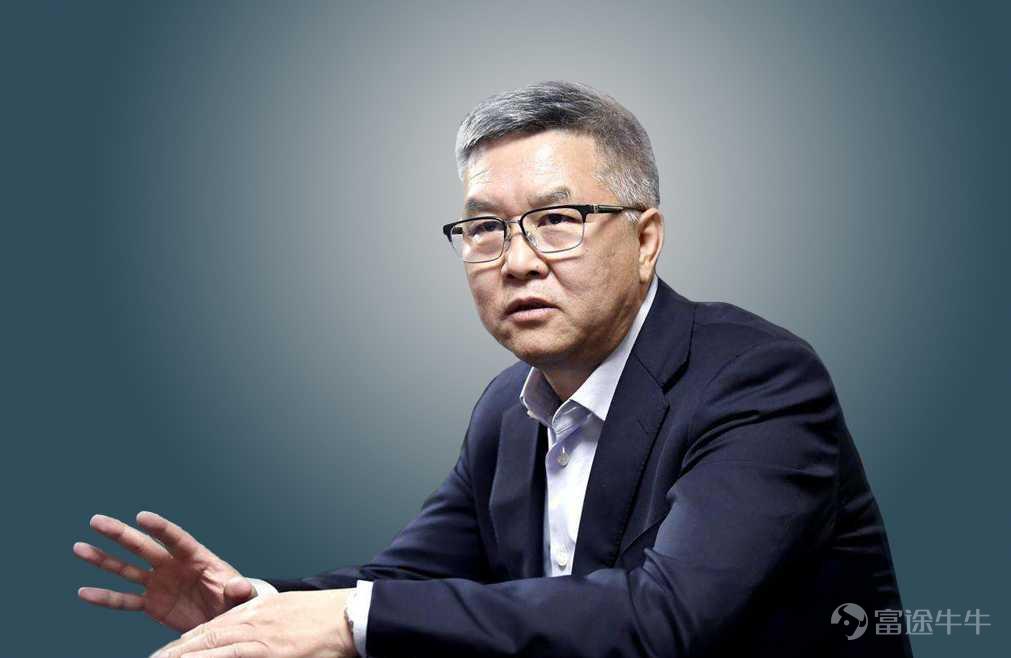
There was no wild excitement typical of an entrepreneur’s first big success. Gazing at the fluctuating stock price on the Hong Kong Stock Exchange screen, 67-year-old Jiang Weiping remained calm.
How should we evaluate this Chinese 'Lithium King'?
He rarely attends forum events and almost never accepts media interviews, yet he embodies the practical and humble nature of a doer. Over a decade, he secured a lithium empire for China.
He doesn’t have the ostentatiousness of 'shocking with words,' but occasionally shares his vision and views about the industry and corporate development in a rational and objective manner.
His demeanor is calm; he does not wear his emotions on his sleeve or show overt signs of sorrow, yet he has grand strategies in mind and acts decisively when necessary.
[The bold determination when taking calculated risks]
One day in 2012, Jiang Weiping got up for work as usual, only to be met with a thunderbolt: Rockwood intended to acquire Talison.
Rockwood was one of the top three lithium salt giants globally at the time, while Talison was the largest producer of lithium concentrate, owning the world's largest and highest-quality lithium deposit – the Greenbushes mine.
If these two companies successfully joined hands, it would send shivers down the spines of other global lithium industry players, especially breaking the hearts of Chinese companies.
At that time, China’s lithium resources mainly depended on imports from Australia, with Talison being the most important supplier. According to statistics, 90% of the lithium concentrate used by Chinese lithium-from-ore producers came from Talison. At its peak,Tianqi Lithium alone could purchase one-third of Talison's lithium concentrate annually.
Once this deal was completed, Tianqi Lithium would either face price hikes or even direct supply cuts. Having been in the industry for many years, Jiang Weiping naturally understood the implications and knew he had to prevent this 'devilish marriage.'
But how difficult it was? A look at the financial strengths of all parties involved made it clear.
In 2012, Tianqi Lithium’s total assets were less than 1.6 billion yuan, with revenue under 400 million yuan and a market value of just 3.5 billion yuan. On the other hand, Rockwood had nearly 40 billion yuan in total assets and about 15 billion yuan in annual revenue.
Even Talison, which was on the table, had an asset size of around 2 billion yuan.
The opponent was dozens of times bigger, and backing off might be the choice for most people, but Jiang Weiping didn’t back down.
He put his entire fortune on the line, borrowed a massive amount of debt, and made a bold move towards Australia.
In the end, Jiang Weiping acquired a total of 19.99% of Talison's shares through secondary market transactions and off-market negotiated transfers, becoming the second-largest shareholder. At the shareholders' meeting, he vetoed the acquisition proposal, catching Rockwood off guard.
An infuriated Rockwood was still unwilling to give up and intended to raise its offer to acquire the remaining shares. Jiang Weiping knew well that retreating at this point would mean all previous efforts were in vain. Despite running out of funds, he had no choice but to push forward. After several rounds of bidding, Rockwood realized that Jiang Weiping was somewhat 'outwardly strong but inwardly weak,' so they decided to step back and wait for the spectacle.
But what Rockwood didn’t expect was that China Investment Corporation came to the rescue at a critical moment, relieving Jiang Weiping’s predicament.
The consolidation of Talison significantly boosted Tianqi Lithium’s profile, coupled with the upward cycle in lithium prices, propelling the company’s stock price to achieve a tenfold increase over five years.
The joy of victory did not hold Jiang Weiping back; 'contentment with modest success' has never been his style. Soon, an even bigger 'gamble' began brewing in his mind.
Chile’s SQM, one of the world’s top four lithium mining giants, owns the Atacama Salt Flat, which boasts the highest lithium concentration, largest reserves, and most mature extraction conditions globally.
Jiang Weiping had long set his sights on SQM but hadn’t found an opportune moment to intervene. It wasn’t until 2017, when SQM’s major shareholder was forced to sell its stake due to antitrust investigations, that Jiang Weiping moved decisively, outperforming all other bidders to acquire 23.77% of SQM’s shares for $4.066 billion (approximately RMB 25.9 billion).
Upon completion of the transaction, Tianqi Lithium now controlled the world's largest spodumene mine and the largest salt lake mine, positioning itself as an emerging global lithium giant.
But the pressure was immense.
Of the 25.9 billion in acquisition funds, 24 billion came from a syndicated loan.
What does 24 billion mean?
Tianqi Lithium only spent 3 billion to acquire Talison Lithium, making this deal eight times that amount.
In 2017, Tianqi Lithium’s total assets were only 17.8 billion, and its net profit was just 2.6 billion. This means that,repaying the loan with profits alone would take nearly a decade, not counting interest.
Jiang Weiping naturally understood all this, but he remained resolute. To express sincerity and boost the confidence of the lenders, he even pledged a large number of shares under his name as collateral.
Jiang Weiping once again bet everything, but this time, what awaited him was not the Goddess of Luck, but the Grim Reaper.
[Calm Self-Promise at a Critical Moment]
"The successful flower, people only marvel at her present brilliance! Yet when she was a bud, she was soaked in the tears of struggle and bathed in the blood of sacrifice."
Though bold and decisive, Jiang Weiping was not reckless; he knew well that Tianqi Lithium’s ability to generate cash flow was far from sufficient to repay the loan. He had already planned an exit strategy: first secure the transaction through a syndicated loan, then push for the company’s listing in Hong Kong to recoup funds and repay the debt.
But human plans often go awry.
After 2018, the domestic EV subsidies declined, compounded by overcapacity in the industry, causing the price of lithium carbonate to plummet from a high of 180,000 yuan per ton to 40,000 yuan per ton.
Tianqi Lithium’s declining profitability forced it to terminate its plan to raise funds in Hong Kong.
On the other hand, the financial costs from the enormous debt were suffocating.
Every day when Jiang Weiping opened his eyes, the first thing he had to face was millions of yuan in daily interest. Data shows that in 2019, Tianqi Lithium spent over 2 billion yuan just on interest payments, which led to a massive loss of nearly 6 billion yuan for the company that year.
Declining profitability, an IPO that failed before it began, and an overwhelming debt load led to rampant rumors about Tianqi Lithium's bankruptcy and delisting. Even auditing firms issued non-standard opinions at one point, citing significant operational uncertainty risks.
Jiang Weiping faced unprecedented challenges since starting his business.
The scale of the 2020 annual shareholders' meeting was unprecedented, with more than 120 institutions and numerous retail investors and media gathered together. The venue was packed, with even the aisles filled with people.

However, compared to the restlessness and unease in public opinion, Jiang Weiping appeared very calm. This is his true character—he didn’t get carried away during soaring success, nor did he lose heart or composure when hitting rock bottom.
As for external speculation and doubts, Jiang Weiping rarely steps forward to clarify or explain. You would never hear bold statements like 'Work hard for three months, and we will definitely repay the debt' from him.
He doesn’t talk much, but he has been consistently taking action.
In order to reduce the debt-to-asset ratio, Jiang Weiping has tried almost every possible financing tool and method: convertible bonds, private placements, rights issues, strategic investments, collar options… repeatedly failing but persistently trying again.
On November 29, 2020, Tianqi Lithium’s $1.884 billion debt matured, but it was unable to repay, forcing a debt extension, putting the company in a countdown to survival. Subsequently, Jiang Weiping managed to secure IGO as a strategic investor in just eight days, allowing Tianqi Lithium, which had already entered the ICU, to successfully extend its life.
Entering 2021, with lithium prices entering an upward cycle, Tianqi Lithium's profitability greatly improved. Jiang Weiping then planned to restart the Hong Kong IPO. As of today (July 13), Tianqi Lithium officially listed on the Hong Kong Stock Exchange, raising 13.4 billion yuan, repaying the remaining loans with funds left over.
Watching the fluctuating stock price on the big screen at the Hong Kong Stock Exchange, Jiang Weiping remained very calm. Born in 1955, the now 67-year-old has entered the prime age range for an entrepreneur, with his mindset, experience, and judgment all at their peak. He clearly understands where the future of the enterprise lies and knows exactly what he should do.
[Forethought in Times of Peace]
In 2019, the Nobel Prize in Chemistry was awarded to three scientists: American researchers John Goodenough and Stanley Whittingham, and Japanese scientist Akira Yoshino. The Royal Swedish Academy of Sciences gave the award with heartfelt reasoning: they created a rechargeable world.
However, John Goodenough, known as the 'Father of Lithium Batteries,' later made a less sentimental statement: 'The importance of lithium resources is no less than that of strategic resources such as oil. If bottlenecks occur in lithium resource extraction, it could become a trigger for war just like oil.'
Goodenough’s words proved prophetic. Over the past two years, lithium prices have skyrocketed fivefold, and global competition over lithium resources has turned bloody, with the situation intensifying further.
We suddenly realize that China is a country with a severe shortage of lithium resources. Data from the USGS shows that the 'Lithium Triangle' in South America (Bolivia, Argentina, and Chile) holds the world’s richest lithium reserves, collectively accounting for 58% of global lithium reserves.In contrast, China's share of global lithium reserves is only 6%.

We can finally understand why Jiang Weiping risked everything to snatch Talison away from Rockwood back in the day; and why, despite being heavily in debt and on the brink of failure, he firmly said:"I don't regret acquiring SQM, because this was the only opportunity."
The value of a person sometimes lies not in what their actions bring, but in what would be lost if they didn’t act.
Without Jiang Weiping’s two ‘all-in’ overseas battles, would Chinese companies still have access to such high-quality resources today? Even if they could get them, at today’s prices, how much more would it cost? And if they couldn’t get them, would the so-called energy independence remain just a slogan on paper?
In the book *Zero to One*, author Peter Thiel emphasized: In a world where technology is changing things rapidly, to succeed, you must study the endgame before anything happens.
China’s good fortune lies in the fact that while most people are busy making quick money, there remains a group of industry leaders like Jiang Weiping who possess a strong sense of endgame awareness.Ren Zhengfei in telecommunications, Wang Dongsheng in display technology, Sun Piaoyang in pharmaceuticals, Cao Dewang, the glass magnate, and Li Zhenhua in photovoltaics…
They possess the insight to penetrate an era, able to sense danger even in times of peace. They have the courage of 'though thousands oppose me, I shall proceed,' and the confidence of 'while all are drunk, I alone am awake,' remaining unperturbed by challenges as if taking a leisurely walk in the courtyard.
And this, perhaps, is the greatest difference between them and so-called entrepreneurs.
Author: Wen Yu, Editor: Xiao Shi Mei
Disclaimer
The content of this article concerning listed companies is based on the author's personal analysis and judgment derived from information publicly disclosed by the companies in accordance with their legal obligations (including but not limited to temporary announcements, periodic reports, and official interactive platforms). The information or opinions contained in the article do not constitute any investment or other business advice, and Market Value Observer assumes no responsibility for any actions taken based on this article.
Risk Disclaimer: The above content only represents the author's view. It does not represent any position or investment advice of Futu. Futu makes no representation or warranty.Read more

Comments (2)
to post a comment
9
26