BTC returns to $85,000! Is the crypto market heating up again?

A critical juncture for the crypto market is approaching: with the CLARITY Act vote scheduled for September 15, which companies are worth watching?
U.S. crypto regulation is about to reach a critical juncture.
The official U.S. Senate schedule shows thatthe U.S. Senate plans to hold a key procedural vote on the 'Digital Asset Market CLARITY Act' at 2:15 PM ET on September 15.In fact, the House of Representatives already passed a related version with 294 votes to 134 in July 2025.
This bill aims to establish the first comprehensive regulatory framework for the crypto asset market in the U.S., including defining which crypto assets are regulated by the SEC and which by the CFTC, as well as setting rules for trading platforms, DeFi, anti-money laundering, and more.
However, it is important to note thatSeptember 15 is not the final vote determining whether the CLARITY Act will ultimately become law.
What exactly are we voting on September 15?
Currently, a cloture vote is being held on the "motion to proceed," which aims to end procedural delays and allow the bill to formally enter Senate consideration. Under Senate rules, this step requires60 votes in support.
Simply put, the vote on September 15 asks: Do we agree to stop stalling and bring the CLARITY Act to the table for formal discussion?
Therefore, September 15 can be seen as an "entry threshold."
If it secures 60 votes, the CLARITY Act can formally enter Senate debate, though there are still several steps before it truly becomes law.The subsequent steps include:Formal Senate consideration → Bill amendment → Ending debate → Final Senate vote → Reconciliation of House and Senate versions → Presidential signature.
If it fails to secure 60 votes, the bill will remain stuck in the Senate in the short term, unless both parties renegotiate, revise the version, and attempt to push it forward again.
So,Passing on September 15 ≠ The CLARITY Act being officially enacted.More accurately, it signifies that the bill has finally qualified to enter the "main arena" of the Senate.
Although it is merely a procedural vote, it will answer the question currently most concerning to the market:
Have the Democratic and Republican parties found enough room for compromise to allow crypto regulatory legislation to move forward?
The Republicans currently control 53 seats, which is insufficient to unilaterally cross the 60-vote threshold, so they must secure support from some Democratic senators.Given previous disagreements between the two sides, Schumer's convening of the caucus meeting is itself a signal worth watching: Democrats need to decide whether to block the bill entirely or allow some moderate members to let it pass.
An important development emerged just before the vote: Trump made concessions.
One of the biggest obstacles previously was the Democrats' demand to include stricterconflict-of-interest provisions regarding government officials' crypto asset holdings,particularly targeting Trump and his family's crypto businesses.
A recent Associated Press report on September 14 stated that Trump has agreed to accept approximately 80% of the provisions in the bipartisan crypto ethics framework,including divesting certain crypto assets or placing them into a blind trust upon reaching specific thresholds, as well as allowing state attorneys general to participate in related enforcement actions.These are precisely the safeguards that some Democratic lawmakers had previously demanded be added.
This development is critical.
The July version stalled largely because Democrats’ core grievance was that enforcement authority rested primarily with the DOJ under the Trump administration, leaving state attorneys general with insufficient power. Democratic senators had publicly criticized this as a major loophole creating conflicts of interest.
Therefore, today’s concessions do increase the likelihood of passing the procedural vote tomorrow.
However, the issues have not been entirely resolved.Disagreements persist regarding anti-money laundering (AML) measures, DeFi regulation, stablecoin yields, and the risk of bank deposit outflows.The latest version of the bill, released on September 10, further requires certain DeFi protocols that are 'nominally decentralized but effectively controlled by individuals' to register with the CFTC and comply with the Bank Secrecy Act.
How will this impact market trends? What options strategies should be considered?
The market remains cautious about the CLARITY Act ultimately becoming law in 2026.
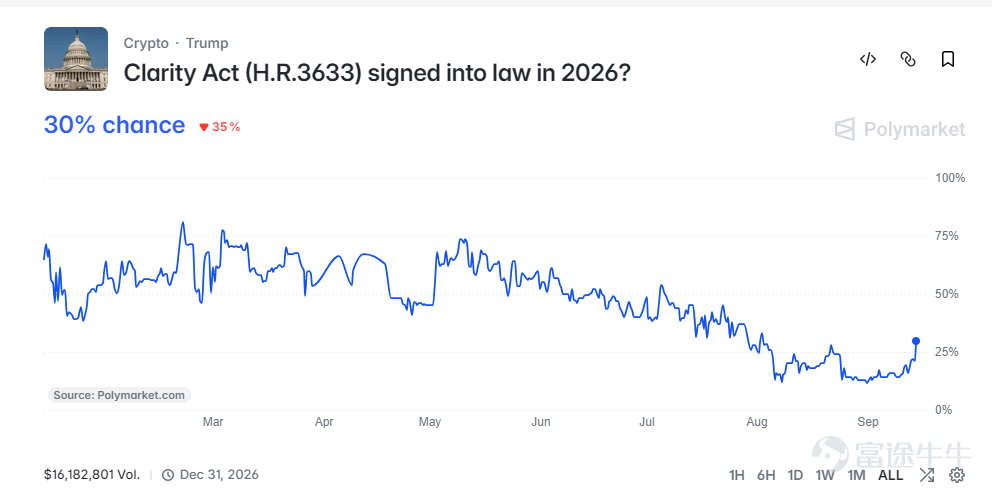
As of September 14, Polymarket assigned a roughly 30% probability to the "CLARITY Act officially becoming law by year-end," with trading volume exceeding $16 million. Just before news broke regarding concessions on Trump's ethics clauses, this probability was only around 17%–19%.
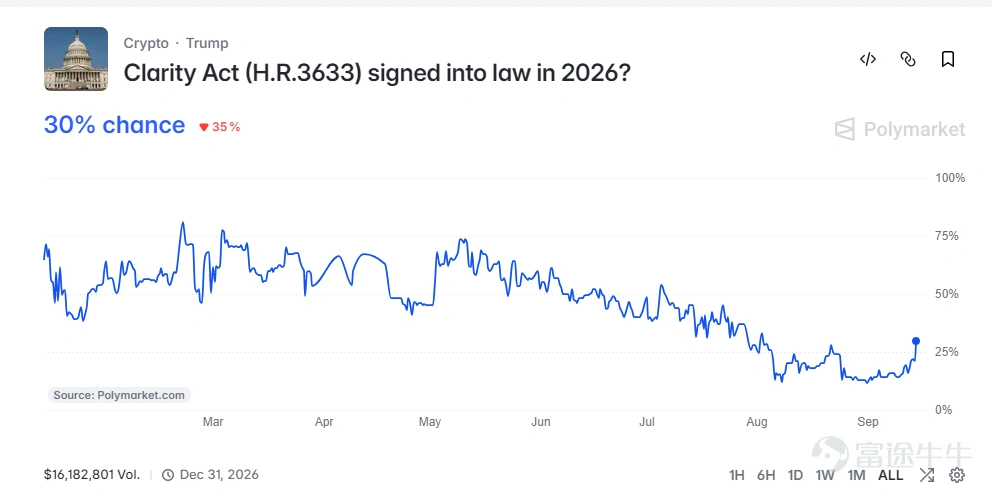
In other words,despite recent progress in negotiations, the market has not priced in "successful legislation this year" as the base case scenario.While the probability of finalizing legislation in 2026 remains low, it has shifted from "highly unlikely" to "having a significant tail-risk probability of success."
This also created a certain expectation gap on September 15.
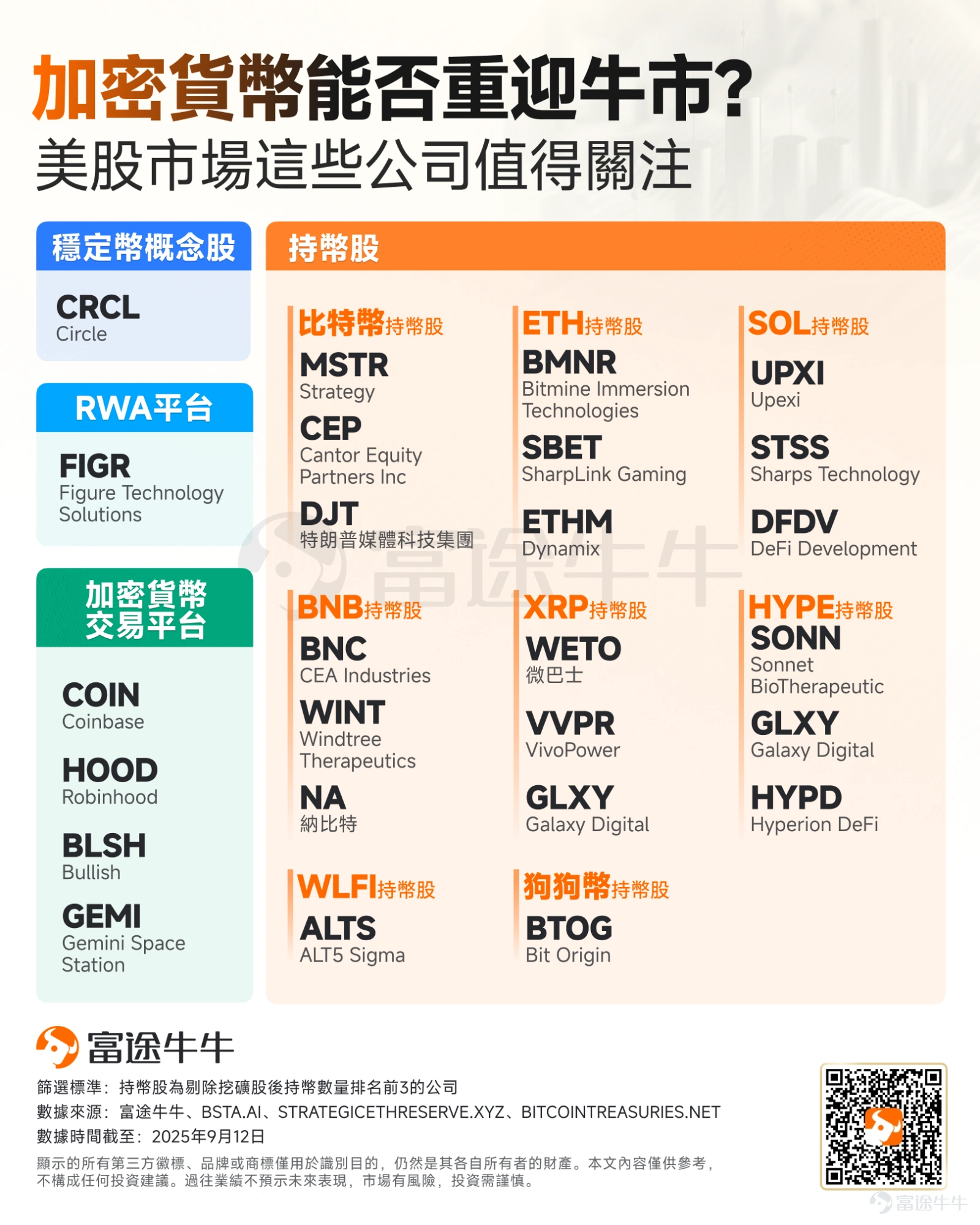
1. If the procedural vote successfully clears the 60-vote threshold, significantly surpassing prior low expectations, the legislation will enter genuine floor debate.The market would then reassess and increase the likelihood of the CLARITY Act being enacted within the year. Reduced regulatory uncertainty is expected to benefit trading platform stocks highly sensitive to US crypto regulation, such as COIN and HOOD. The case for CRCL is more complex. While the implementation of the entire crypto regulatory framework is beneficial for Circle in the long term, the CLARITY Act also involves issues such as stablecoin yields and competition for bank deposits; therefore, it may not be the purest "beneficiary of the bill's passage."
2. If the vote count falls significantly short of 60, it indicates that bipartisan consensus is still insufficient, and the market may revise down the probability of legislation within the year,making crypto stocks and high-beta tokens that were previously traded on expectations of regulatory improvement more susceptible to pressure.
Stablecoins and RWA Sector: $Circle (CRCL.US)$ Primarily benefiting from the expansion of on-chain trading and settlement volumes, demand for USDC as an asset for trading, payments, and collateral is expected to rise; $Figure Technology Solutions (FIGR.US)$ Directly benefits from clearer regulatory boundaries for RWAs, with institutional barriers for tokenizing traditional assets like loans and securities expected to decrease.
Crypto Exchange Sector: $Coinbase (COIN.US)$ 、 $Robinhood (HOOD.US)$ 、 $Bullish (BLSH.US)$ and $Gemini Space Station (GEMI.US)$ Are the most direct beneficiaries. If the CLARITY Act is enacted, it will further clarify which digital assets are tradable and delineate regulatory jurisdiction between the SEC and CFTC. This will help exchanges expand their list of tradable tokens, boost institutional participation, and reduce long-term compliance risks. Among them, HOOD (Robinhood) has also laid out plans for tokenized stocks and RWAs, thus enjoying a broader scope of benefits.
Bitcoin Treasury Sector $Strategy (MSTR.US)$ , , and $Trump Media & Technology (DJT.US)$ Primarily benefit indirectly from improvements in Bitcoin prices and market risk appetite. Since the regulatory status of BTC itself is already relatively clear, the incremental impact of the CLARITY Act on these companies is weaker than on trading platforms. The impact is more reflected in the increased demand for BTC and valuation uplift driven by institutional capital entering the crypto market.
ETH, SOL, and Other Token Treasury Sectors $Bitmine Immersion Technologies (BMNR.US)$ 、 $SharpLink (SBET.US)$ Primarily benefit from reduced regulatory uncertainty surrounding ETH and staking. For BNB-related BNC and Nano Labs (NA), XRP-related Webus (WETO), VivoPower (VVPR), and Hyperion DeFi (HYPD), the core logic is similar: if the CLARITY Act clarifies the regulatory status of these tokens, their "regulatory discount" is expected to narrow, improving the asset value and financing capabilities of holding companies.
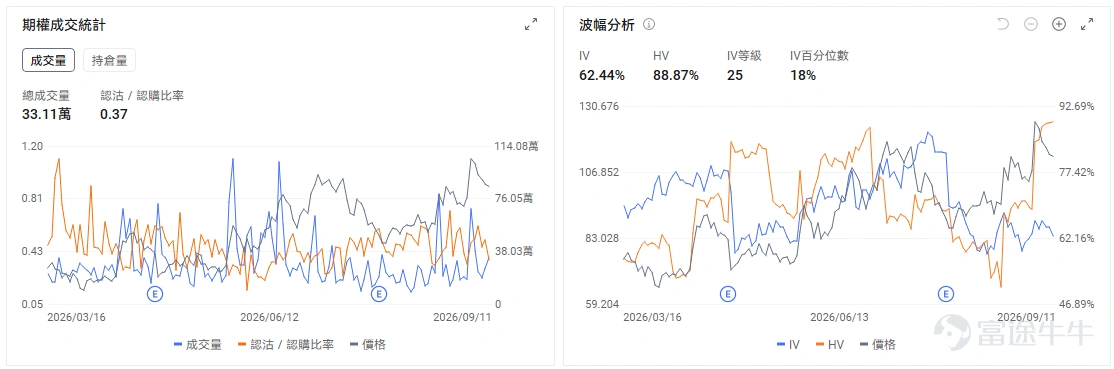
Based on the scenario above, taking $Robinhood (HOOD.US)$ as an example, let's look at option strategies under different conditions. HOOD closed last Friday at approximately $112.57; the options signals presented a combination of "strong bullish sentiment, moderately priced volatility, and weakening short-term momentum in the underlying stock".
The Put/Call Ratio (PCR) dropped to 0.37, with call option volume clearly dominating; the IV Rank was only 25, the IV percentile stood at 18%, and the implied volatility of 62.44% was lower than the historical volatility of 88.87%. Overall, the structure reflects a bullish bias without extreme accumulation. This combination typically suggests that the market is actively betting on a rebound or trend continuation through options, but is not pricing in high volatility expectations.
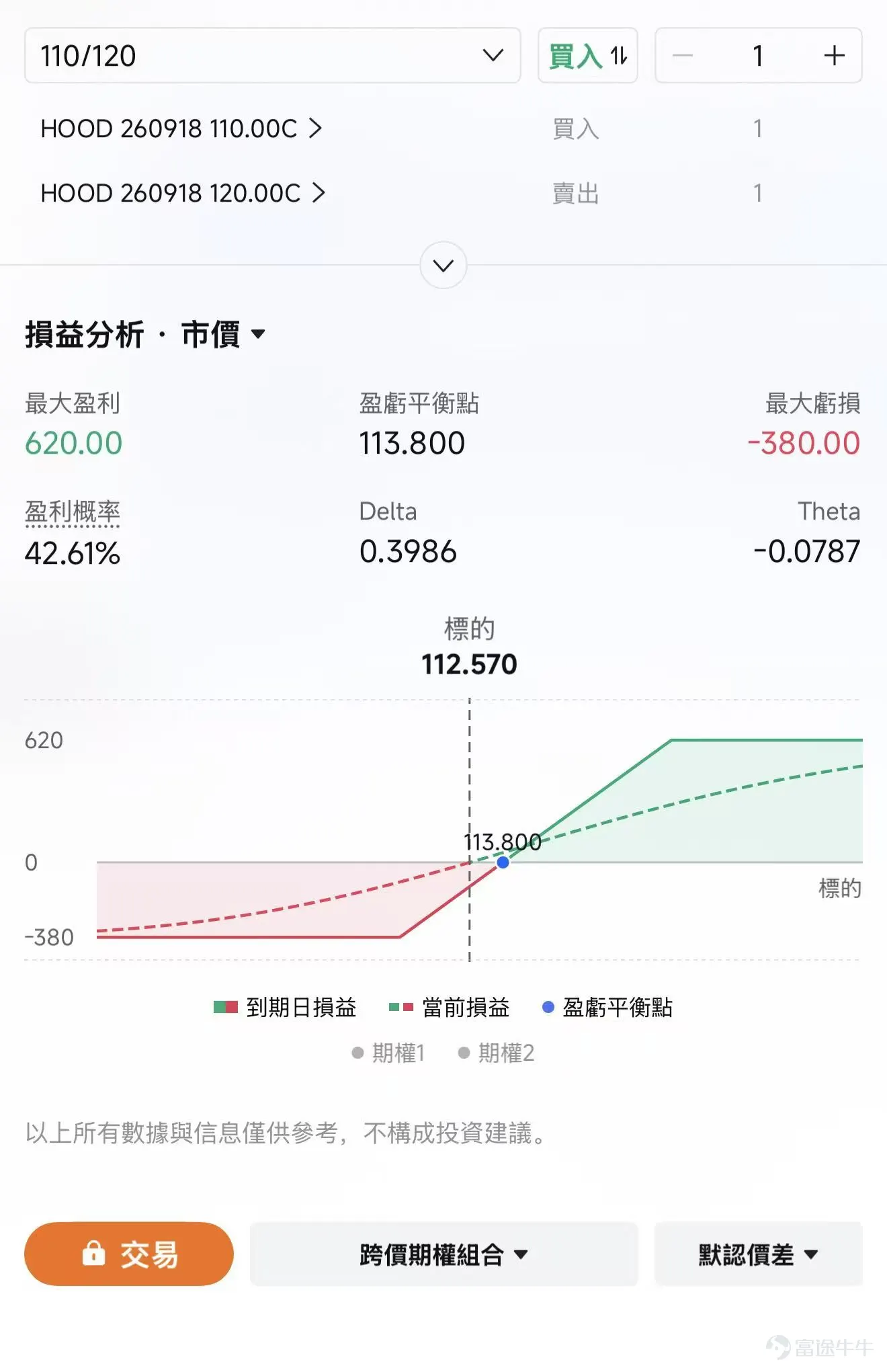
1. Bull Call Spread: Bullish on the bill passing, prioritizing capturing the event-driven upside
Suitable for: Investors who believe the CLARITY Act will surpass the 60-vote threshold on September 15 and are bullish on HOOD benefiting from improved crypto regulatory expectations, but do not wish to buy naked calls and bear the higher premium costs.
You can buy an at-the-money (ATM) call and simultaneously sell a higher strike price call.
The rationale is that the CLARITY Act vote is a typical binary event. If the procedural vote passes, HOOD could see a rapid surge; however, with implied volatility (IV) already above 60% in recent months, buying calls directly would also expose you to IV crush after the event concludes. A Bull Call Spread reduces costs by selling higher-strike calls, thereby mitigating some of the impact from IV crush.
The maximum loss is limited to the net premium paid, while profit potential is capped by the short call position.
(The chart below illustrates the simulated profit/loss profile of this strategy at expiration. The displayed graphic is for demonstration purposes only and does not constitute investment advice or guarantees; market conditions change rapidly, and the prices shown do not reflect real-time data.)
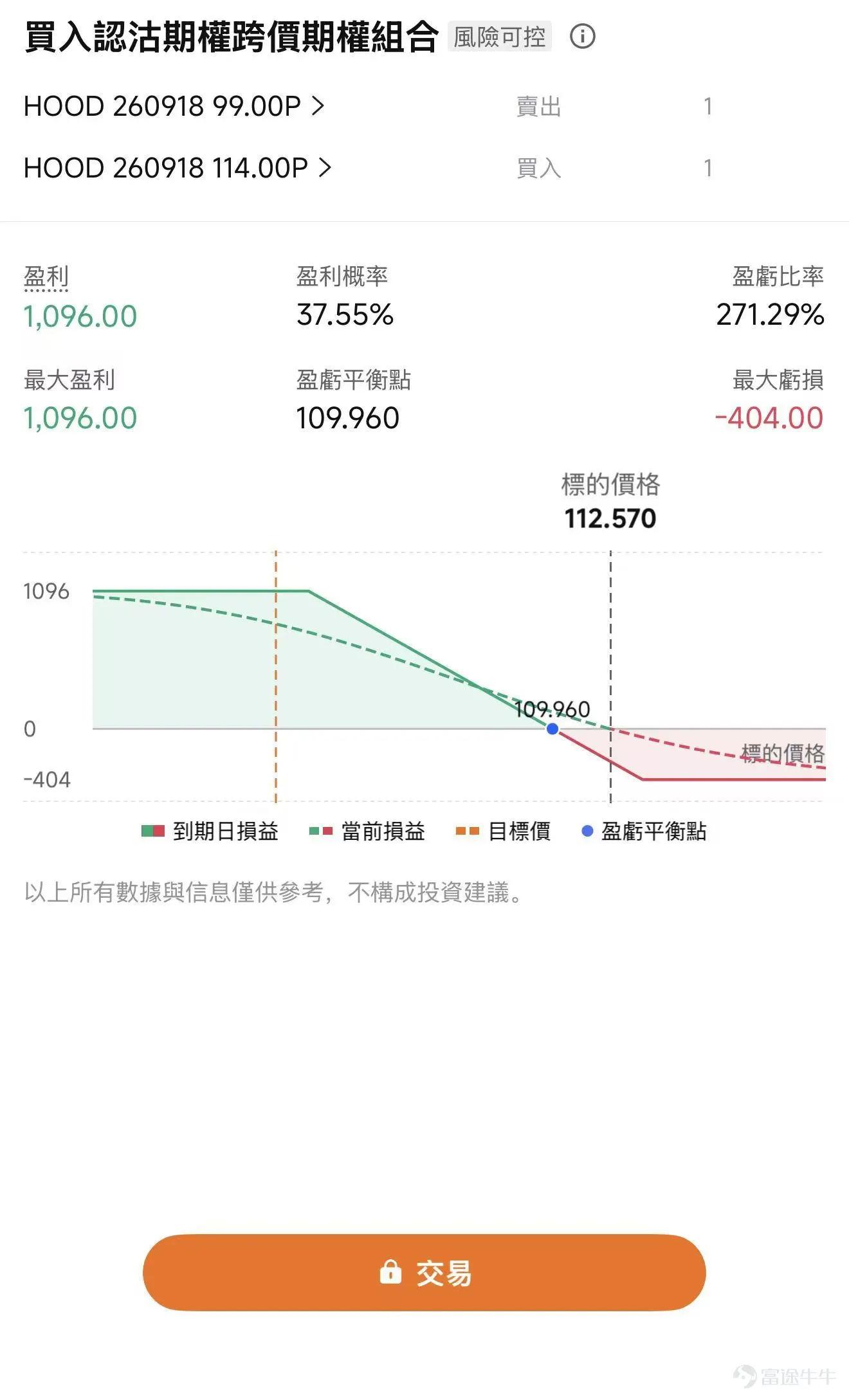
2. Bear Put Spread: Betting against the bill securing 60 votes, while controlling bearish positioning costs.
Suitable for: Investors who believe bipartisan divergence remains significant, expect the procedural vote to fall short of 60 votes, and anticipate that HOOD will give back recent gains driven by regulatory improvement expectations.
You can buy near-the-money puts while simultaneously selling lower-strike puts.
If the procedural vote clearly fails, the market is likely to quickly downgrade the probability of the CLARITY Act passing this year. HOOD has high correlation with regulatory expectations for crypto businesses and tokenized assets, meaning it may exhibit a higher equity beta than Bitcoin itself. Robinhood has also cited the lack of regulatory clarity for digital assets as a major constraint on business development.
The Bear Put Spread is also well-suited to the current event-driven environment:It allows you to bet on a downside move while avoiding the excessive cost of buying puts outright in a high-IV environment.
(The chart below illustrates the simulated profit/loss profile of this strategy at expiration. The displayed graphic is for demonstration purposes only and does not constitute investment advice or guarantees; market conditions change rapidly, and the prices shown do not reflect real-time data.)
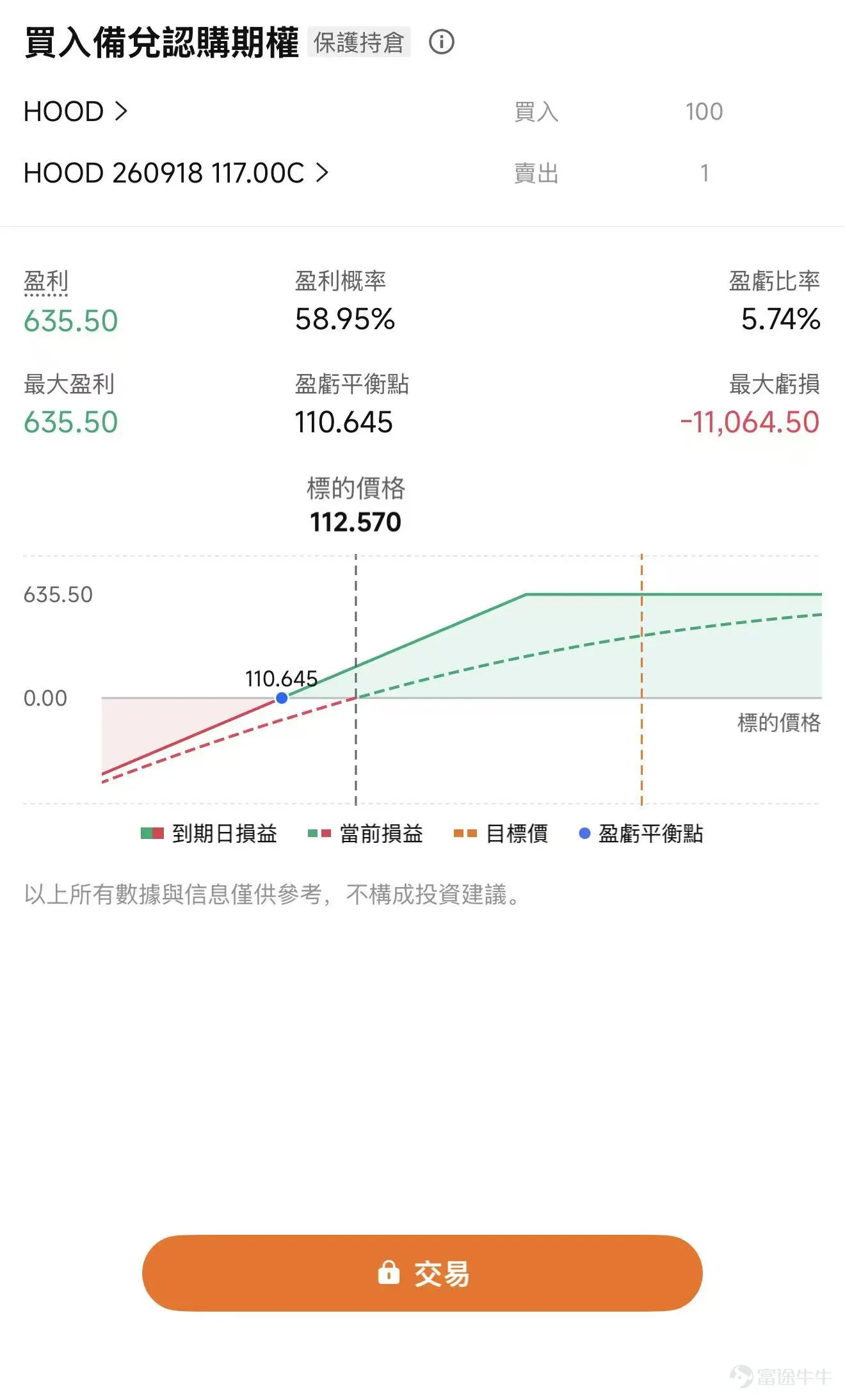
3. Covered Call: For those already holding HOOD positions but who do not believe the procedural vote will trigger a sustained major rally.
Suitable for: Investors who remain bullish on HOOD in the long term and already hold the underlying stock, but believe that even if the CLARITY procedural vote passes, the stock price may pull back after a short-term spike.
You can continue to hold HOOD while selling a call option with a higher strike price.
This strategy primarily aims to collect premiums by leveraging the elevated implied volatility (IV) ahead of the event. If the voting results are muted and the bill merely advances to the next stage of deliberation, without HOOD surging beyond expectations, both the time value and IV of the call options could drop rapidly, allowing the premiums collected from the short calls to generate some profit.
The trade-off is:If the procedural vote significantly exceeds expectations and HOOD quickly breaks above the strike price, your upside potential will be capped.
(The chart below illustrates the simulated profit/loss profile of this strategy at expiration. The displayed graphic is for demonstration purposes only and does not constitute investment advice or guarantees; market conditions change rapidly, and the prices shown do not reflect real-time data.)
Finally, Options Sir brings a small bonus for fellow investors. You are welcome to claim it.Options Starter Pack
*This event is exclusively for invited HK users. Click to learn more.Detailed terms and conditions of the promotion >>
Market conditions are complex and ever-changing,Options strategiesToo many choices and unsure how to proceed? Let Futubull help you build a strategy in three simple stepsOptions strategies, making investing simple and efficient!

Options Risk Disclosure:An option is a contract that gives the holder the right, but not the obligation, to buy or sell an asset at a fixed price on a specific date or at any time before that date. Option prices are influenced by various factors, including the current price of the underlying asset, the strike price, time to expiration, and implied volatility. Implied volatility reflects the market's expectation of future volatility over the option's lifespan; it is a figure derived backwards from the Black-Scholes pricing model and is generally regarded as an indicator of market sentiment. When investors anticipate greater volatility, they may be willing to pay higher premiums for options to help hedge risk, thereby leading to higher implied volatility. Traders and investors use implied volatility to assess the attractiveness of option prices, identify potential mispricing, and manage risk exposure.
Disclaimer:This content does not constitute an offer, solicitation, recommendation, opinion, or guarantee regarding any securities, financial products, or instruments. The risk of loss in trading options can be substantial. In certain circumstances, the losses you incur may exceed the initial margin deposited. Even if you set contingent orders, such as "stop-loss" or "limit" orders, you may not be able to avoid losses. Market conditions may prevent such orders from being executed. You may be required to deposit additional margin within a short period. If you fail to provide the required amount within the specified time, your open positions may be liquidated. However, you will still be responsible for any deficit in your account resulting from such liquidation. Therefore, before trading, you should research and understand options, and carefully consider whether such trading is suitable for you based on your financial situation and investment objectives. If you trade options, you should be familiar with the procedures for exercising options and upon option expiration, as well as your rights and obligations when exercising options and at expiration. Options trading carries extremely high risk and is not suitable for all investors. Before engaging in any options trading strategy, investors should carefully read"Characteristics and Risks of Standardized Options"。
Risk Disclaimer: The above content only represents the author's view. It does not represent any position or investment advice of Futu. Futu makes no representation or warranty.Read more


Comments (13)
to post a comment
93
272