The Fed raises interest rates for the first time in three years! How will the market react?

Wall's hawkish signals at his Jackson Hole debut: What is the outlook for the market?
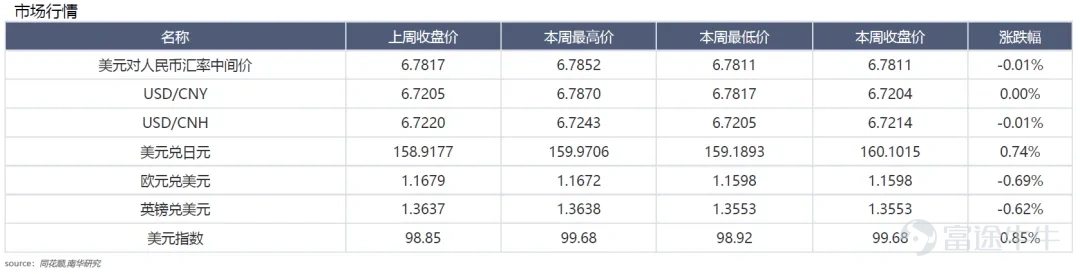
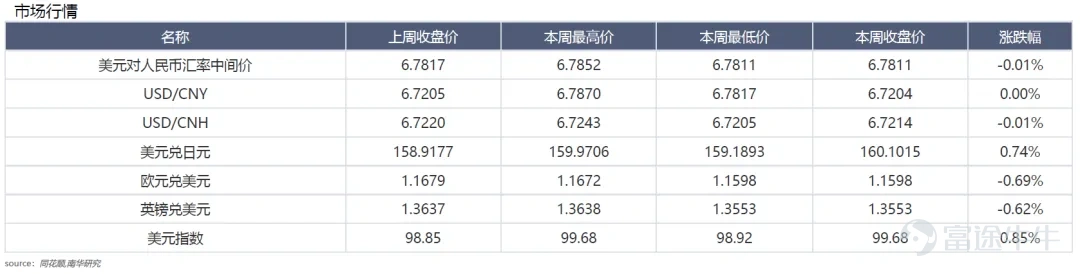
Last week, the US Dollar Index (DXY) showed a significant upward trend, recovering its earlier losses. The market movement was primarily driven by two factors:
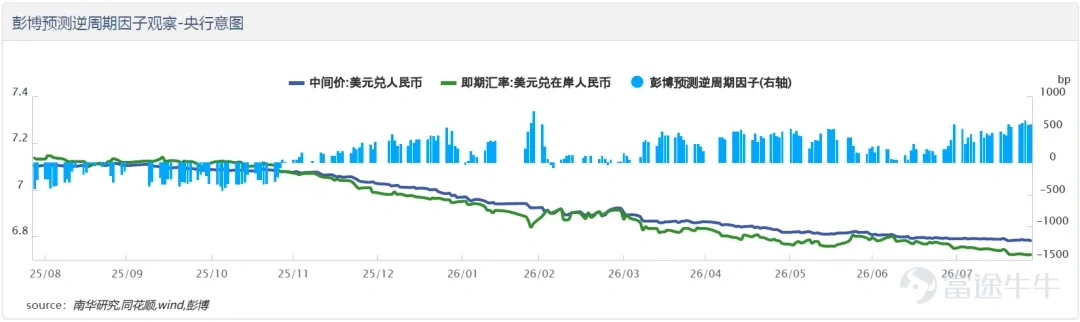
First, US PCE data slightly exceeded market expectations; second, Waller delivered hawkish signals at the Jackson Hole Annual Symposium, with the latter becoming the core driver behind the DXY's strength. Regarding the RMB exchange rate, the central bank's policy stance suggests it does not favor rapid appreciation of the yuan. Consequently, the USD/CNY spot rate remained in a narrow range around 6.72 for the first four trading days last week. On Friday, bolstered by Waller's hawkish remarks, the DXY strengthened, driving the USD/CNY pair higher in tandem.
Analysis of Exchange Rate Trends
This week, the market will face several key events:
The US will release critical economic data, including PMI, non-farm payrolls, and the unemployment rate. Additionally, Waller will deliver public remarks on the inflation outlook on Thursday. These data releases and comments will dominate the short-term trajectory of the DXY.
Waller's recent statements have already set a tighter tone for future monetary policy. Even if employment data slightly miss expectations, it is unlikely to trigger a trend-like decline in the DXY. The core anchor for subsequent market movements remains the August inflation data.
Currently, the center of gravity for crude oil prices in August has shifted higher compared to the previous period, leaving uncertainty regarding the sustainability of disinflation. On the RMB front, although the DXY recovered its losses on Friday, the yuan exchange rate continues to demonstrate strong resilience. As the stronger dollar pushes the USD/CNY marginally higher, corporations may encounter a favorable window for foreign exchange settlements.
Key points to watch:
1) New developments in US-Iran tensions
2) US PMI, unemployment rate, and non-farm payroll data
3) Jackson Hole Symposium
4) Domestic PMI data
Risk Warning: Geopolitical conflicts exceed expectations; domestic policy support falls short of expectations; overseas economic data surpasses market expectations.
Weekly Market Review and Outlook
Review and Outlook for USD/CNY Exchange Rate Trends
Last week, the US Dollar Index (DXY) posted a significant rally, fully recovering its previous cumulative losses. This rebound was primarily driven by the resonance of two core factors: US PCE inflation data that exceeded expectations, and hawkish remarks by Governor Waller at the Jackson Hole symposium, with the latter serving as the primary catalyst for the DXY's rebound.
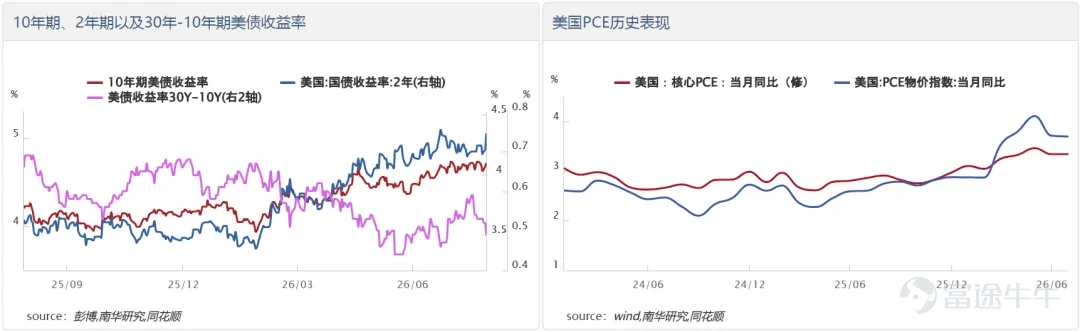
Regarding inflation data, the US July PCE price index slightly exceeded market expectations, highlighting the stickiness of US inflation. Specifically, the July PCE price index rose 3.7% year-over-year (YoY), against a market expectation of 3.6%, while the previous figure remained at 3.7%. On a month-over-month (MoM) basis, it increased by 0.2%, compared to an expected 0.1% and a previous decline of 0.1%. After excluding volatile items, the core PCE price index rose 3.3% YoY, largely in line with market expectations. Overall, this PCE data provided slight support to the US dollar, pushing the DXY marginally higher during trading sessions, but did not provide stronger upward momentum.
However, this data clearly confirms that US inflation remains sticky, and the risk of a subsequent inflation rebound cannot be entirely ignored.
In terms of policy expectations, Governor Waller's hawkish speech at the Jackson Hole Global Central Bankers Symposium was the key driver behind the DXY's bottoming out and recovery of previous losses. Looking back at earlier market trends, following the July FOMC meeting, Waller's market communication fell short of expectations, leading to doubts about the Federal Reserve's determination and ability to combat inflation. As a result, long-end US Treasury yields rose sharply, and the yield curve steepened. Coupled with the US Treasury Department's increase in the buyback limit for long-term bonds, which further pressured the US dollar, the DXY continued to trade at low levels even as long-term bond yields later recovered.
From a pricing logic perspective, the recent decline in the DXY had already fully priced in the negative impact of US debt management policies on the index. In this context, the market highly anticipated that Waller would make clear statements at the central bank symposium to restore market confidence, reiterate the policy stance of strictly controlling inflation, keep the option of 'continued rate hikes if inflation does not fall' open, and clearly outline the future monetary policy framework.
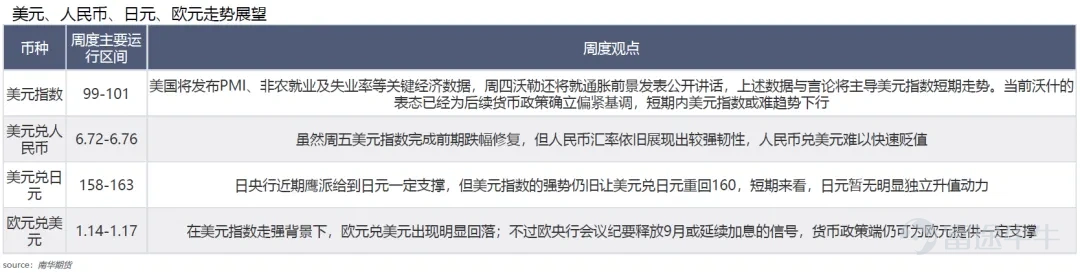
The US is set to release key economic data such as PMI, non-farm payrolls, and the unemployment rate. Additionally, Governor Waller will deliver a public speech on the inflation outlook on Thursday. The aforementioned data and comments will dominate the short-term trend of the DXY. Currently, Waller's statements have established a relatively tight tone for future monetary policy, making it difficult for the DXY to trend downward in the short term.
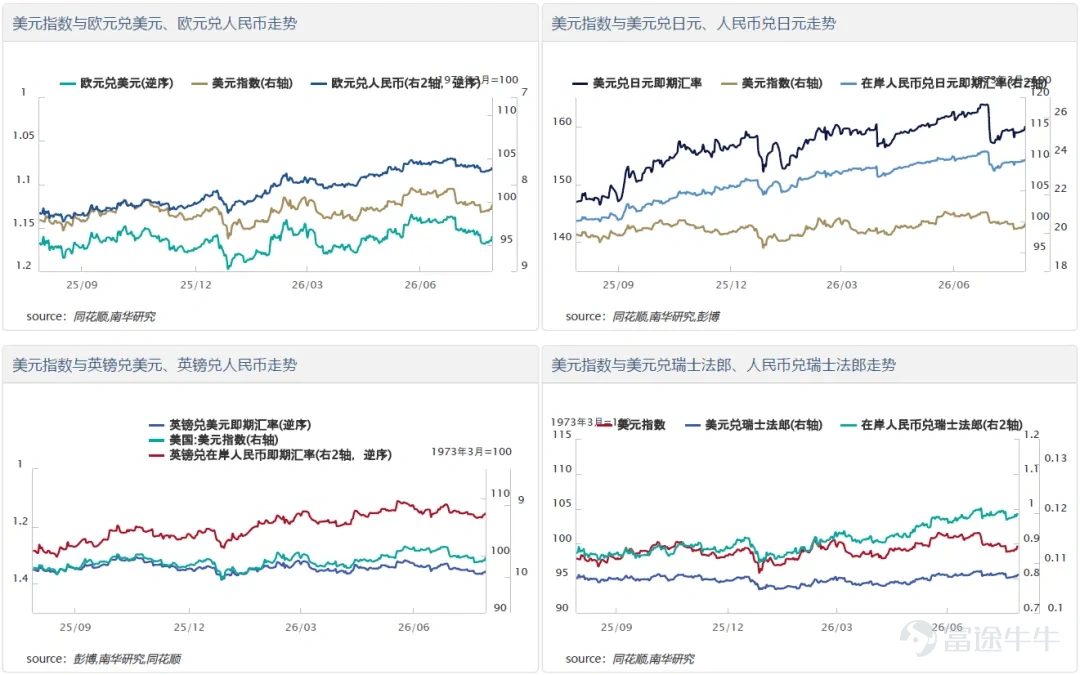
Although the DXY completed the recovery of its previous losses on Friday, the RMB exchange rate continued to demonstrate strong resilience, making a rapid depreciation of the RMB against the USD unlikely. The Bank of Japan's recent hawkish stance has provided some support for the Yen, but the strength of the DXY has pushed the USD/JPY pair back to the 160 level. In the short term, the Yen lacks significant independent appreciation momentum.
Against the backdrop of a strengthening DXY, the EUR/USD pair saw a significant decline. However, the ECB meeting minutes signaled that interest rate hikes might continue in September, suggesting that monetary policy can still provide some support for the Euro.
During this meeting, Waller's remarks largely aligned with market expectations, effectively repairing the market confidence that had previously collapsed. In essence, this served as a market-driven correction to earlier communication missteps. He clearly articulated the latest economic assessment and the subsequent policy path, reiterating that inflation remains the core macroeconomic contradiction and stating that current market interest rates have not yet reached restrictive levels. This addressed the market's expectation for a clearer monetary policy framework. Following his speech, the yield on the US 2-year Treasury note rose significantly, and the yield curve flattened from its previous steepness. Market expectations for a Federal Reserve rate hike in September heated up rapidly, directly driving the US Dollar Index (DXY) to recover all losses incurred earlier due to the Treasury Secretary's debt policy comments, returning to the range above 99.5. In summary, Waller's hawkish remarks primarily conveyed two core signals to the market, while also pointing the way for future market trends:
1) Policy changes regarding the monetary policy adjustment path
Compared to the policy tone of the July FOMC meeting, the hawkish nature of this speech was significantly strengthened. The July meeting conveyed to the market that tightening policy would be more appropriate if inflation did not decline. In contrast, Waller delivered a more hawkish signal this time: he emphasized that the 2% PCE inflation target remains unchanged and demanded that underlying inflation must fall toward the target at a clear and rapid pace. This means that even if inflation shows signs of declining in the future, as long as the speed of decline falls short of expectations, the Fed will still initiate tightening policies, thereby clearly revealing the Fed's latest monetary policy reaction function.
At present, this stance has effectively alleviated market skepticism regarding the Fed's monetary policy, but market confidence has not been fully restored. Current market expectations for a September Fed rate hike remain around 50%. The fact that long-term US Treasury yields briefly declined before quickly recovering their losses and ultimately closing higher indicates that the market still harbors some doubt about the Fed. The Fed needs more clear statements and substantive actions to completely rebuild market trust.
2) How to view subsequent market trends?
This hawkish stance can be viewed as the Fed's remedial measure for previous communication errors. Considering Waller's latest policy framework, even if inflation data declines slightly in September, as long as core fundamental data such as US employment and economic growth remain resilient, the Fed is highly likely to implement a rate hike, and this cycle of rate hikes may not yet be over.
Currently, there is still some divergence and uncertainty in the market regarding the implementation of a September rate hike, and the outcome of the September decision will be a key node affecting the short-term trend of the US dollar: if the rate hike proceeds as expected, it will further consolidate the upward trend of the US dollar; if the rate hike fails to materialize, the previous market distrust of the Fed will likely resurface quickly, probably driving the US Dollar Index down again. Therefore, the upcoming US inflation and employment data will directly determine the direction of Fed policy and the rhythm of the short-term US dollar market.
Outlook
This week, the market will face several important events: the US will release key economic data such as PMI, non-farm payrolls, and the unemployment rate. Additionally, Governor Waller will deliver a public speech on the inflation outlook on Thursday. The aforementioned data and comments will dominate the short-term trend of the US Dollar Index. Waller's current stance has already established a tighter tone for subsequent monetary policy; even if employment data slightly misses expectations, it is unlikely to drive a trend-like decline in the US Dollar Index. The core anchor for future market movements remains the August inflation data. Currently, the central tendency of crude oil prices in August has shifted upward compared to earlier periods, and the sustainability of the inflation decline remains uncertain. Regarding the Renminbi, although the US Dollar Index recovered its losses on Friday, the RMB exchange rate continues to show strong resilience. In the phase where the strengthening US dollar drives a marginal rise in the USD/CNY rate, corporations may encounter a window for settling foreign exchange.
Investment Consulting Business Qualification: CSRC License [2011] No. 1290
Author: Pan Xiang, Financial Futures and Derivatives Analyst, Nanhua Research Institute, Z0021448
Risk Disclaimer: The above content only represents the author's view. It does not represent any position or investment advice of Futu. Futu makes no representation or warranty.Read more
Comments
to post a comment