PDD Holdings' adjusted profit exceeded expectations; is the market finally rewarding its ecosystem i

Earnings Options Strategy | After PDD Holdings' stock takes a deep dip, will it rebound following the earnings report?
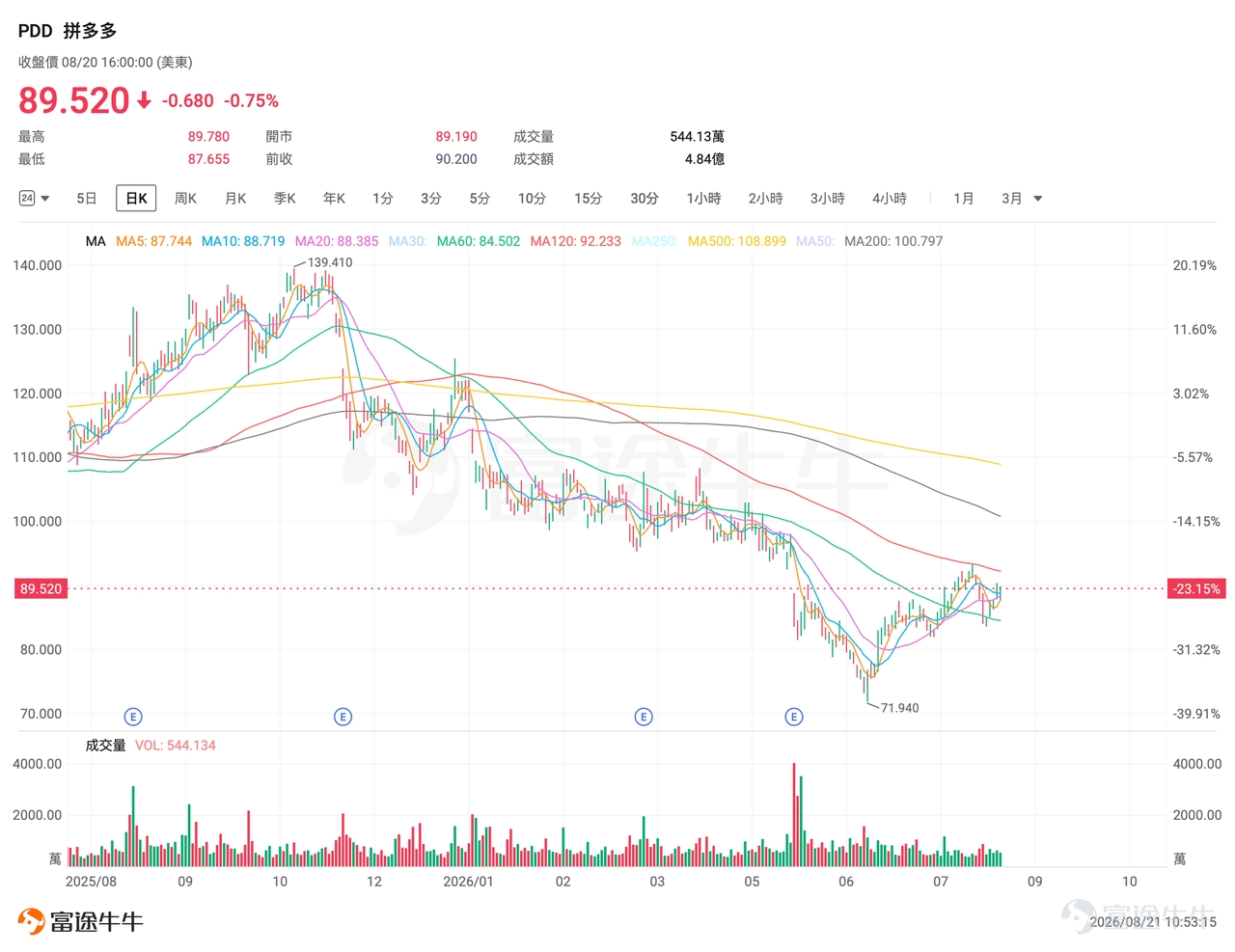
$PDD Holdings (PDD.US)$ The company is scheduled to release its Q2 2026 earnings before the market opens on August 24, 2026 (Eastern Time). Over the past few months, the company has undergone a significant valuation compression, with its stock price pulling back sharply from recent highs. As of the close on August 20, the stock was trading at approximately $89.5, representing a nearly 36% decline from its 52-week high of around $139.4. The trailing twelve-month (TTM) P/E ratio stands at approximately 9.33x, which is in the lower end of its historical range.
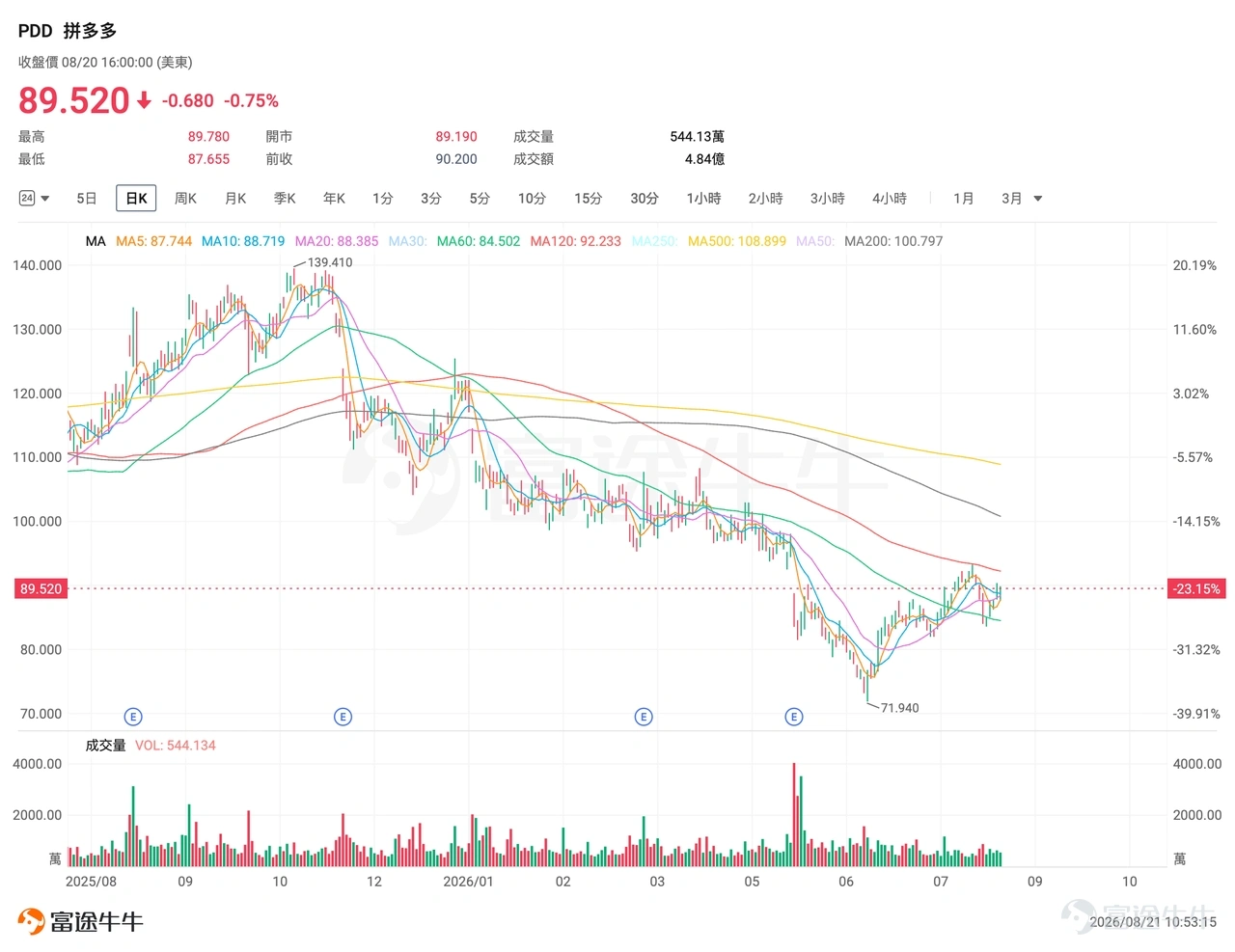
The current price level already reflects some pessimistic expectations. The Q2 earnings report will serve as a key checkpoint to verify whether these expectations are overly bearish or if fundamentals are indeed deteriorating.
Review of Q1 Earnings: The Direct Catalyst for the Valuation Crush
Following the release of its Q1 2026 earnings, the company's stock price continued to decline.Revenue for the quarter was approximately RMB 106.2 billion, an 11% year-over-year increase, missing market consensus expectations. Non-GAAP net profit was RMB 14.1 billion, down 17% year-over-year and significantly below the market expectation of RMB 24.6 billion.On the day of the earnings release, the stock closed down approximately 10.4%, with intraday losses exceeding 13% at one point.
Structurally, there is a divergence between operating performance and profitability.Non-GAAP operating profit was RMB 21.1 billion, up 15% year-over-year,Operational efficiency in core business shows further improvement;Non-GAAP net profit stood at RMB 14.1 billion, a 17% year-on-year decline, primarily dragged down by non-operating items such as investment losses turning negative and a significant drop in other net income. $PDD Holdings (PDD.US)$ Specific details of these non-operating items were not disclosed; in other words,PDD Holdings delivered a financial report showing operational improvement in the previous quarter, but investors remain concerned about unrealized losses from non-operating activities.
Excluding non-operating items,PDD Holdings' transaction service revenuewas approximately RMB 56.3 billion, up about 20% year-over-year, with its share rising to around 53%,surpassing online marketing services for the first time; advertising revenue increased by only about 2.5% year-over-year, indicating that monetization growth has nearly stalled.This indicates that PDD Holdings' monetization model is shifting from ad-dependence to transaction services.
Furthermore, during the Q1 earnings conference call, PDD Holdings announced a CNY 100 billion investment over three years to heavily bolster its supply chain and incubate its own global brands.This statement aligns with the company's goal of "Rebuilding PDD in Three Years," proposed at the end of last year. While private labels and supply chain integration may drive new growth curves in the long term, these investments will suppress profits and forecasts in the short term.
Consequently, with the tariff impact on Temu yet to be quantified, insufficient transparency in non-operating items, and short-term investments weighing on profits, the market is reassessing the growth slope and investment cycle length, leading to a passive downward revision in valuation multiples.
Key Points for This Quarter's Earnings
Institutions expect PDD Holdings' revenue in Q2 2026 to reach CNY 114.153 billion, a year-over-year increase of 9.78%; EPS is expected to be CNY 17.130, a year-over-year decrease of 17.45%. The above figures are based on US GAAP.
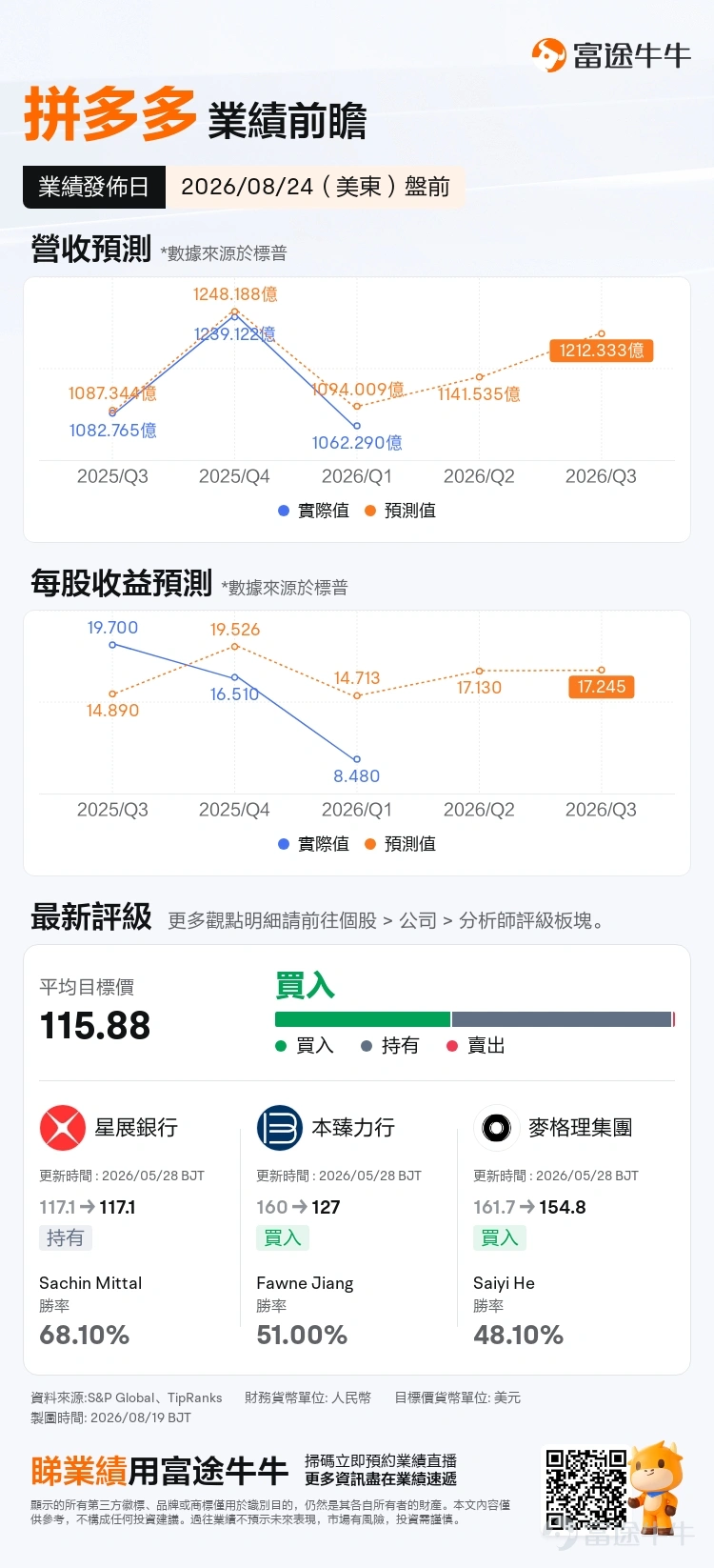
For this quarter's earnings report, investors will focus on the following dimensions:
Resilience of the domestic core platform. The market will closely monitor operating margins, as well as the year-over-year and quarter-over-quarter performance of adjusted net profit for the core e-commerce business. In Q1, transaction services surpassed advertising, shifting the platform's revenue structure towards supply chain and transaction commissions. If the operating profit growth of the core platform stabilizes and monetization efficiency stops weakening, the potential for valuation recovery in a low-valuation environment will become clearer. However, if advertising weakness and pressure on merchants further transmit to margins, the valuation discount may persist.
Is the non-operating floating loss in Q1 truly a one-time event?Investors will focus on non-operating gains and losses in the Q2 financial report. If this segment continues to drag down profits, it indicates systemic issues within the asset portfolio, potentially leading to further valuation downward revisions; if confirmed as a one-time impact, valuations may be revised upward.
What is the true state of Temu? Against the backdrop of rising tariffs and stricter overseas regulations, Temu is accelerating its transition from a fully managed model to a semi-managed model, reallocating fulfillment, customs clearance, and partial compliance costs to merchants. The semi-managed model helps mitigate the direct erosion of the platform by tariff and logistics shocks, and may also change revenue recognition methods and short-term profit visibility. This quarter, investors may look to management to answer: What is the true state of Temu? It has been over a year since the US eliminated the de minimis exemption for small parcels; how significant has the impact been on Temu's US business?
What progress has been made in the heavy investment of RMB 100 billion into the supply chain over the past three years?Management's comments during the earnings call regarding heavy supply chain investments and the development of proprietary brand businesses will serve as a window for investors to assess the actual progress of PDD Holdings' major strategic shift.
Share buybacks and shareholder returns. The company has ample cash on hand, making the market highly sensitive to its capital allocation stance. Previously, management emphasized multi-front investments and external environmental uncertainties, maintaining a cautious position on buybacks and dividends. If this quarter's conference call or management statements release more positive signals regarding shareholder returns, it will provide emotional and liquidity support for the sluggish stock price; if the capital allocation stance remains conservative, even with marginal improvements in operational data, the pace of valuation re-rating may be delayed.
Judging from PDD Holdings' current stock price, the slowdown in growth and profit volatility have been partially priced in. If the Q2 report shows stabilization in the main platform's profit margins, and the guidance or narrative no longer emphasizes long-term investments suppressing short-term returns, there is room for a resonance of technical and fundamental recovery post-earnings.
However, if the monetization capability of the main platform continues to weaken, Temu's compliance and tariff costs exceed expectations, and non-operating items again significantly disrupt net profit, the low valuation will largely reflect a 'cheap but hard to repair' scenario, with the stock price likely oscillating at the bottom rather than experiencing a trend-based rebound.
Options strategies
Implied volatility is expected to rise during the earnings window. While the absolute level of implied volatility (IV) for the company's options is not high, the IV percentile is at 87%, which is historically elevated.
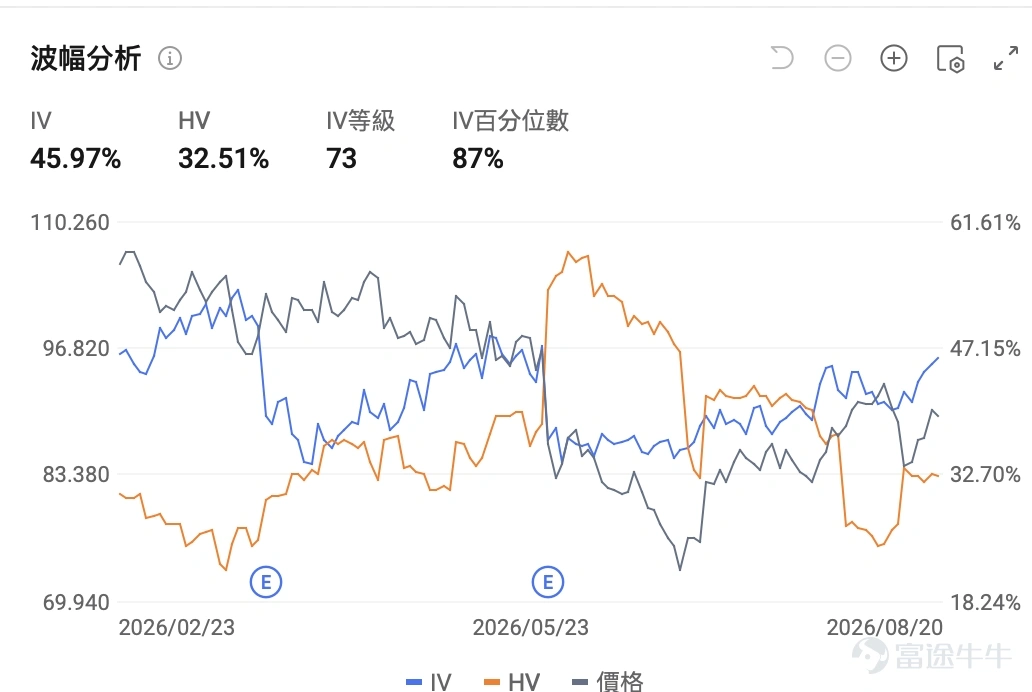
Based on options signals, the market expects a stock price volatility of approximately 7.67% following the Q2 2026 earnings report.
1. Bull Call Spread:
For investors who are cautiously bullish and wish to avoid heavy unilateral bets, consider a Bull Call Spread: buy a call option at a lower strike price while simultaneously selling a call option at a higher strike price. This reduces the premium cost but also caps the upside potential.
This strategy is suitable for scenarios where a post-earnings recovery is anticipated, but upside space is limited, and the investor is unwilling to bear the dual drag of high premiums and IV crush.
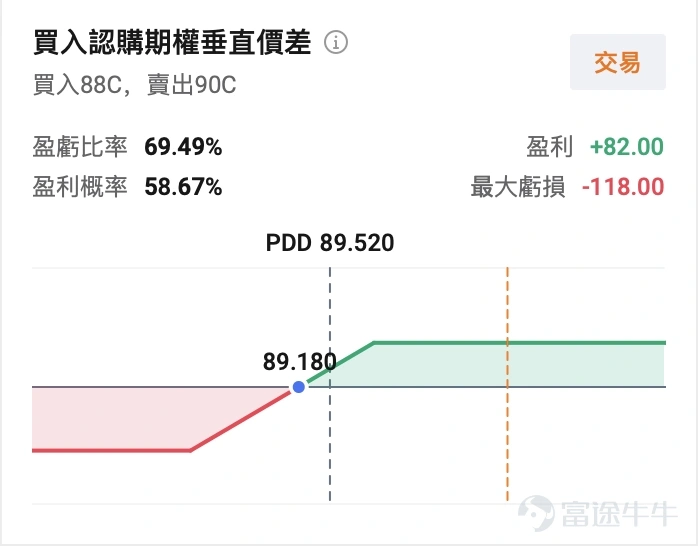
(The design images shown on screen are for illustrative purposes only and do not constitute any investment advice or guarantee; market conditions change rapidly, and displayed prices may not reflect actual market values.)
2. Covered Call:
If you already hold the underlying stock and prioritize holding comfort during volatility, consider a Covered Call: sell call options above your current position to use the premium as a buffer against fluctuations. However, you must accept the opportunity cost of potentially having your shares called away if the stock price surges. This strategy is akin to "trading holding comfort for an insurance premium mindset," making it suitable for neutral-to-bullish investors who focus more on managing portfolio volatility. If the stock rises significantly and triggers assignment, be prepared to accept the opportunity cost of losing your position.
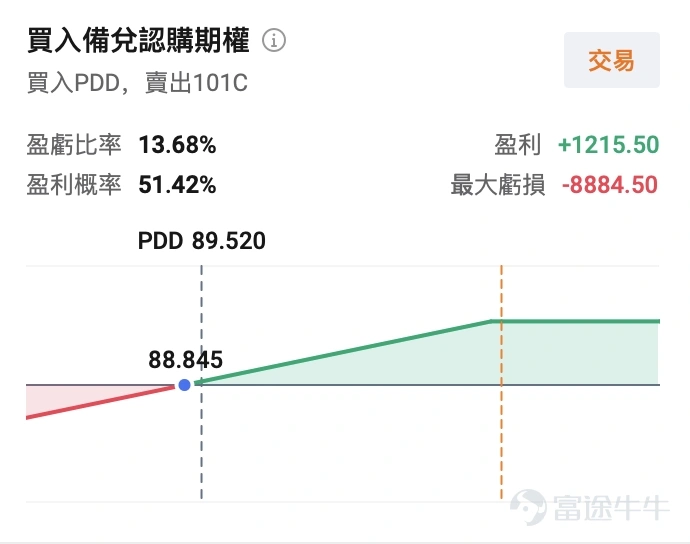
(The design images shown on screen are for illustrative purposes only and do not constitute any investment advice or guarantee; market conditions change rapidly, and displayed prices may not reflect actual market values.)
3. Cash-Secured Put:
For investors willing to accumulate shares at a agreed-upon price and who have sufficient cash, consider selling puts: sell put options near your target entry price. If the stock does not fall, you earn the premium; if it drops below the strike price, you acquire the shares as planned.
This strategy requires sufficient cash to cover the exercise obligation and is suitable for investors who have completed valuation and fundamental analysis and are willing to increase their holdings at specific price levels. The attractiveness of the premium should not replace the assessment of risks associated with holding the position after assignment.
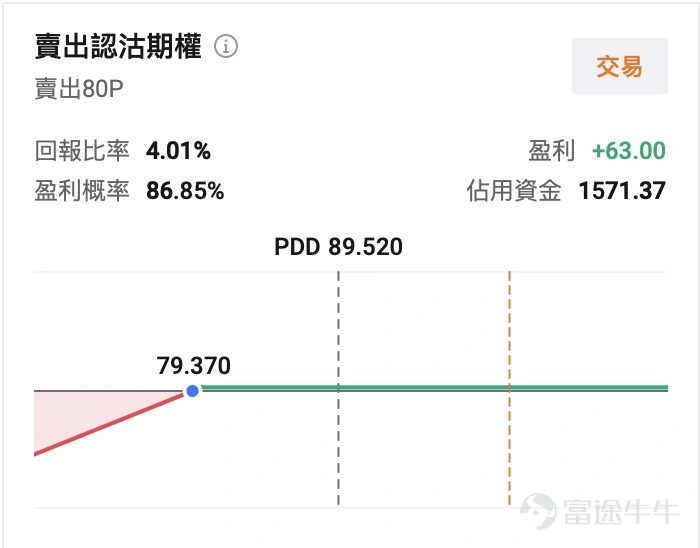
(The design images shown on screen are for illustrative purposes only and do not constitute any investment advice or guarantee; market conditions change rapidly, and displayed prices may not reflect actual market values.)
 Fellow investors, do you think PDD Holdings' stock price will rebound after its earnings report?
Disclaimer
This content does not constitute an offer, solicitation, recommendation, opinion, or any form of guarantee regarding any securities, financial products, or instruments. The risk of loss in trading options can be substantial. In certain circumstances, your losses may exceed the initial margin deposit. Even if you place contingent orders such as 'stop-loss' or 'limit' orders, there is no assurance that losses will be avoided, as market conditions may prevent execution of these orders. You may be required to deposit additional margin on short notice. If you fail to meet such margin calls within the stipulated time, your open positions may be liquidated. You remain fully liable for any resulting deficit in your account. Therefore, prior to trading options, you should thoroughly research and understand how options work and carefully consider whether such trading aligns with your financial situation and investment objectives. If you trade options, you should become familiar with the procedures for exercising options and handling expiration, as well as your rights and obligations upon exercise or expiration. Options trading involves significant risk and is not suitable for all investors. Investors should carefully read"Characteristics and Risks of Standardized Options"。
Finally, Options Sir has a small giveaway for fellow investors—feel free to claim it!Options Starter Pack
*This promotion is exclusively available to invited Hong Kong users. Click to learn more.Detailed terms and conditions of the promotion >>
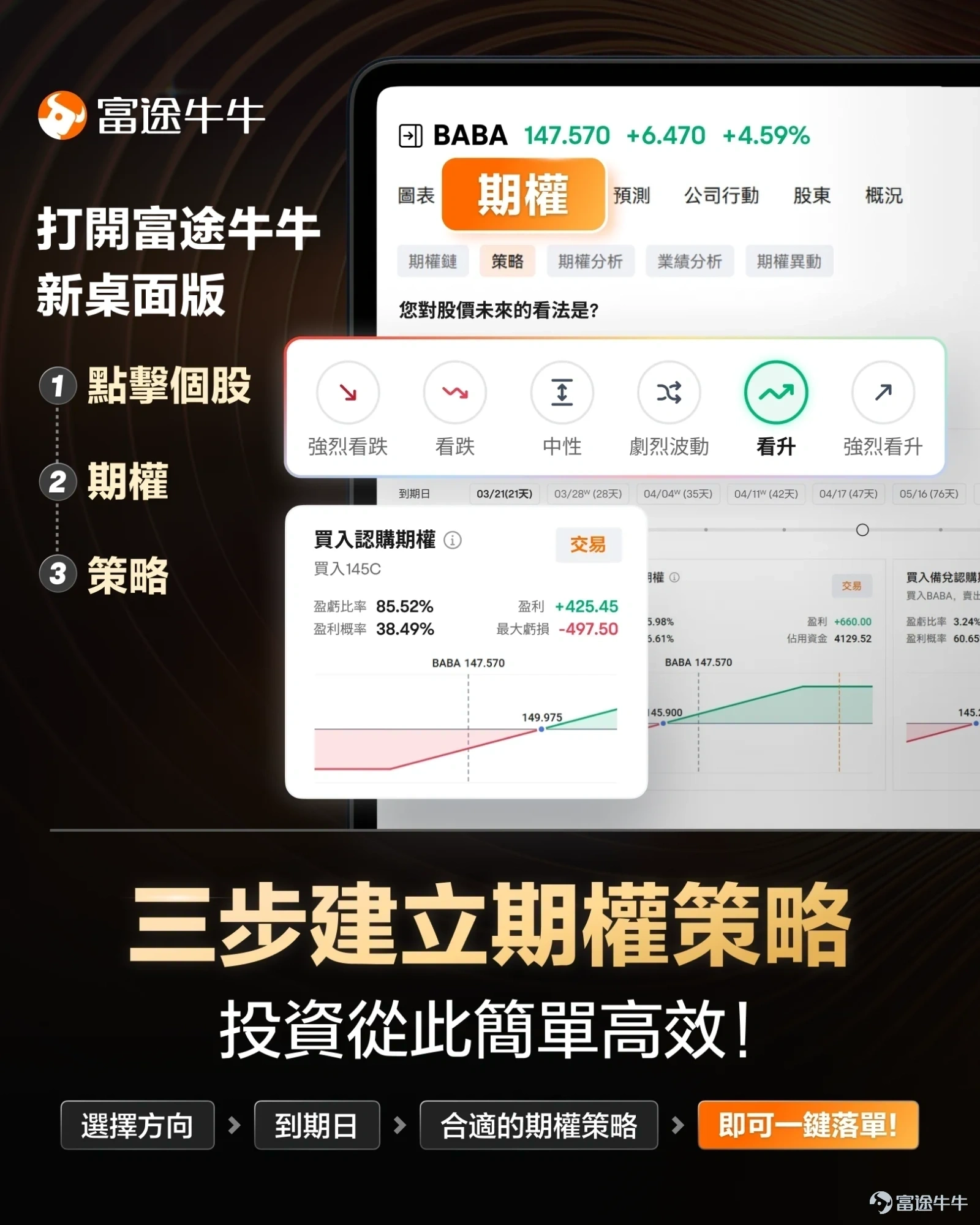
Market conditions are complex and ever-changing,Options strategiesToo many choices and unsure how to proceed? Let Futubull help you build a strategy in three simple stepsOptions strategies, making investing simple and efficient!
Risk Disclaimer: The above content only represents the author's view. It does not represent any position or investment advice of Futu. Futu makes no representation or warranty.Read more

Comment (1)
to post a comment
14
12