SEC introduces "innovation exemption," crypto markets surge across the board!

Review of the Simultaneous Rally in Gold and BTC: With US Treasury Buybacks Pressing Down Long-End Rates, What Should We Watch Next?
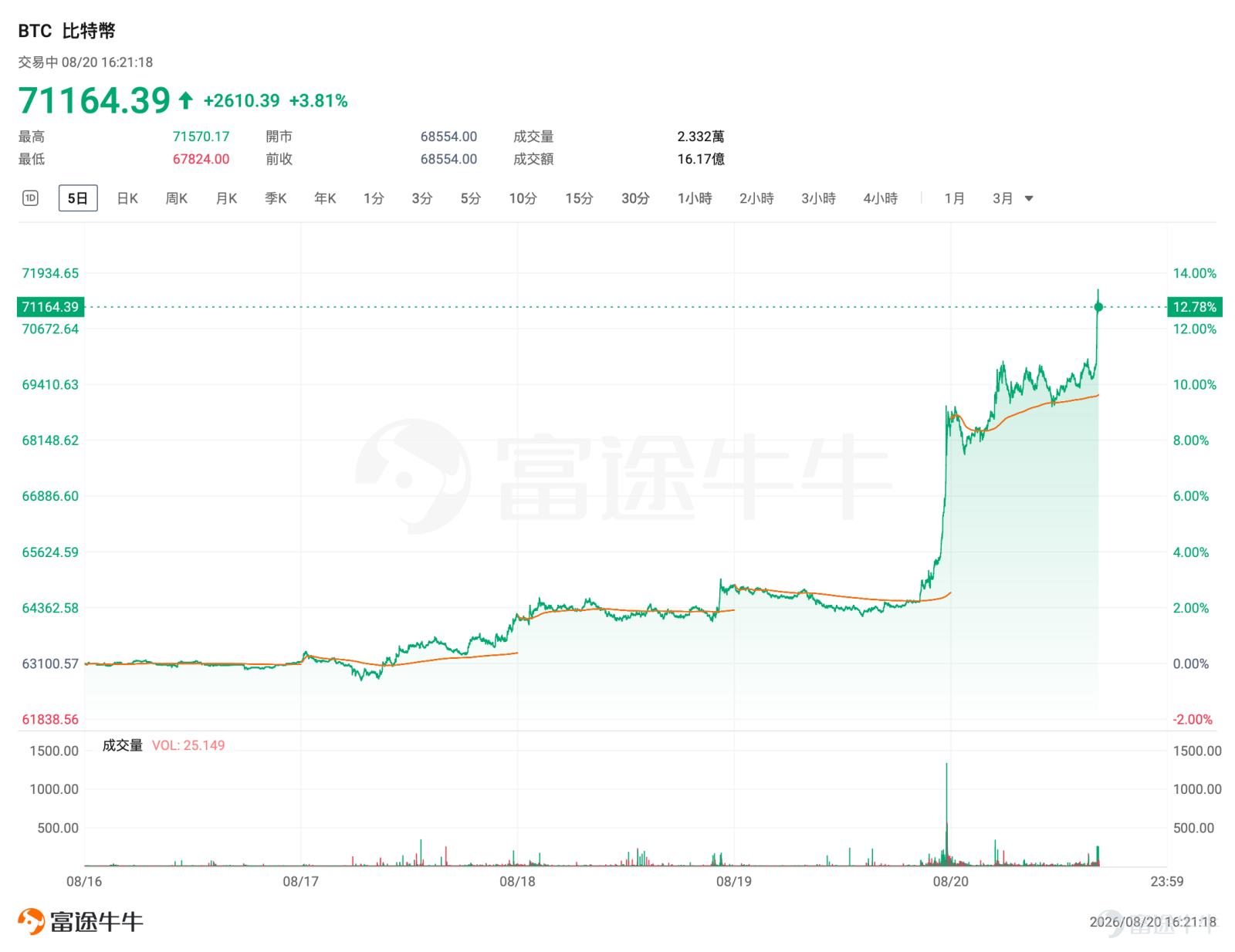
Overnight and into this morning, precious metals and crypto assets strengthened in tandem, with market attention heating up significantly. $XAU/USD (XAUUSD.CFD)$ It surged sharply in the short term, briefly climbing above $4,500 per ounce; $Bitcoin (BTC.CC)$ It rapidly spiked from around $64,000 to test the $70,000 threshold.
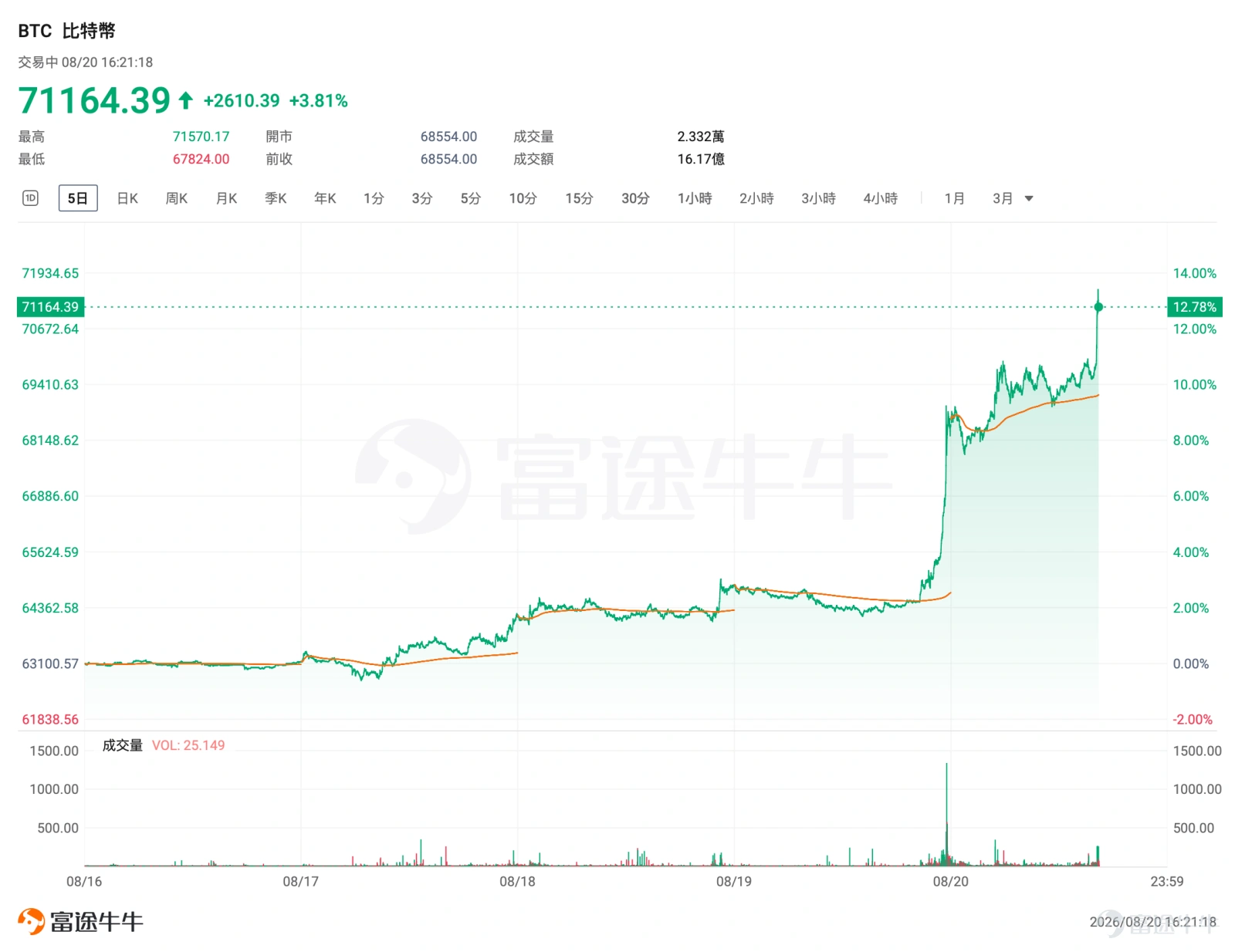
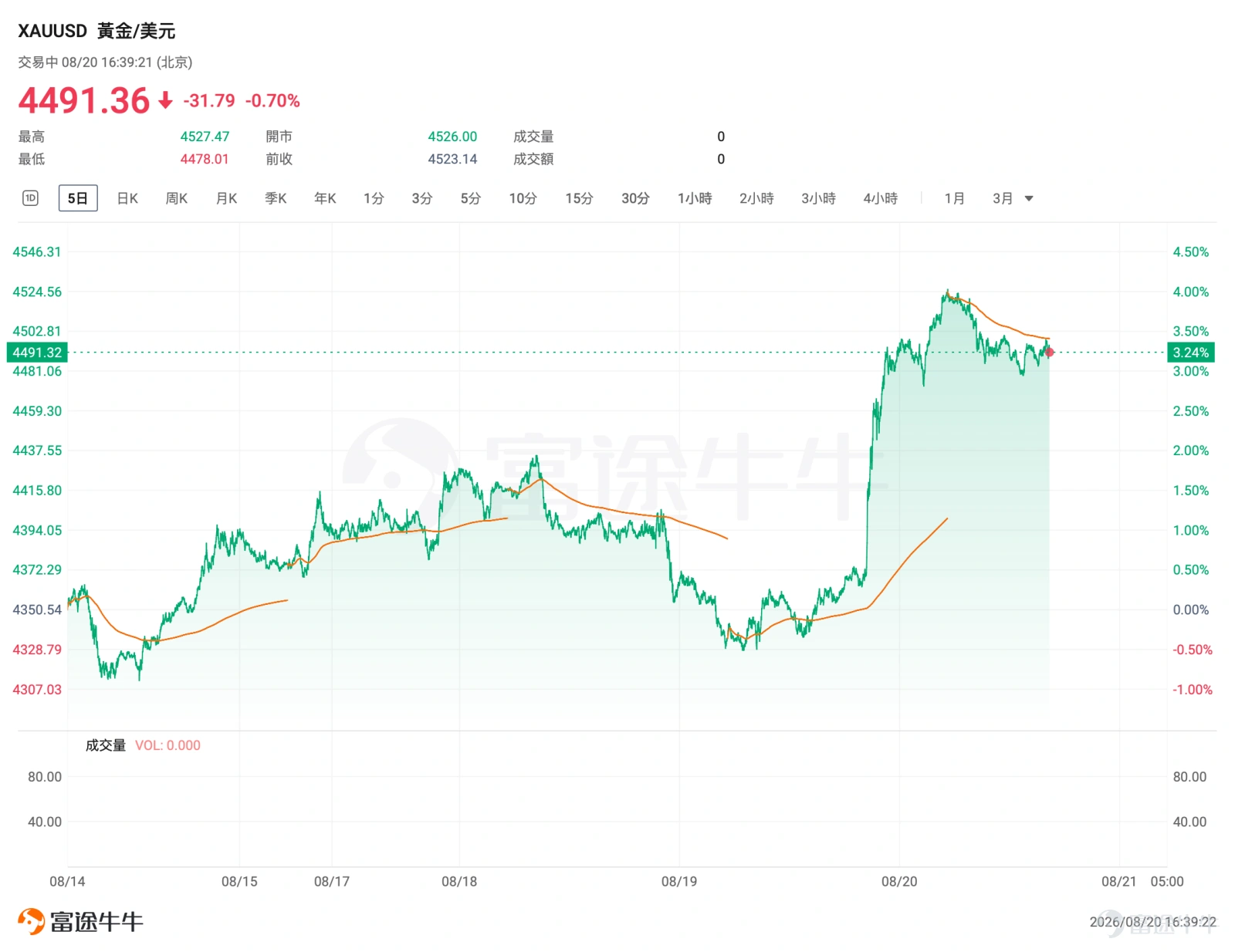
Although gold and crypto assets belong to different pricing systems, they resonated upward within the same time window.The core logic behind this rally is that the decline in long-end interest rates has led to a marginal easing of financial conditions, driving a simultaneous valuation repair for non-yielding assets.
1. Trigger: The Treasury Department expanded long-end buybacks, causing interest rates to drop accordingly.
The direct catalyst for this market move came from the US Treasury Department's announcement on August 19.The Treasury announced that it would raise the single-operation cap for liquidity support buybacks of nominal Treasuries in the 10–20 year and 20–30 year segments,At least doubling from the current $2 billion to $4 billion,Effective from September 9. It is important to clarify that the "buybacks" here do not refer to quantitative easing in the Federal Reserve's sense; rather, they involve the Treasury repurchasing less liquid "off-the-run" bonds from primary dealers. The aim is to improve trading depth in the secondary market for long-term Treasuries, not to reduce the total amount of government debt.
Following the announcement, the market reacted swiftly, $U.S. 30-Year Treasury Bonds Yield (US30Y.BD)$ quickly pulling back from Tuesday's high of approximately 5.338% to around 5.19%; $U.S. 10-Year Treasury Notes Yield (US10Y.BD)$ simultaneously declining to near 4.65%, while the U.S. Dollar Index weakened.
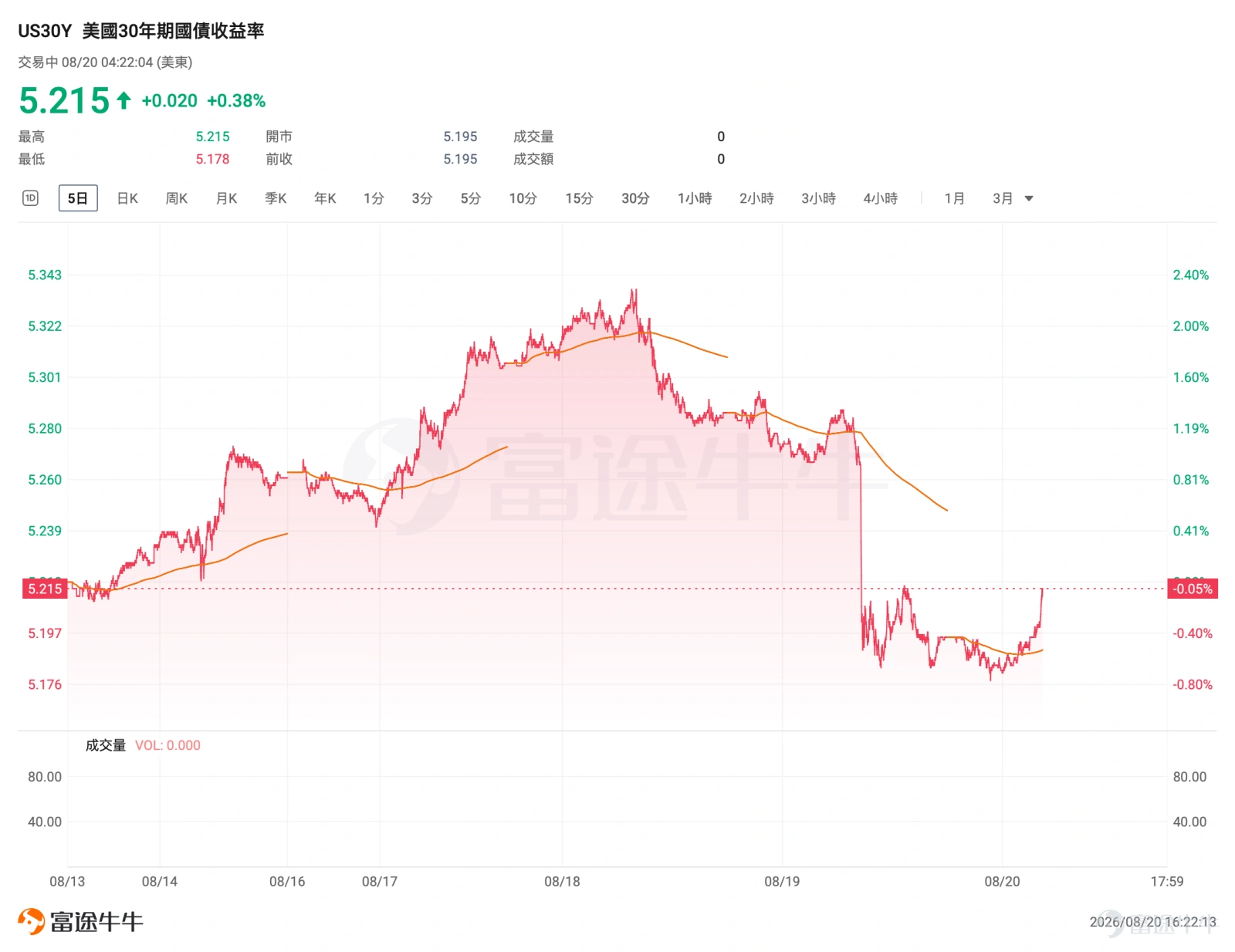
Long-term interest rates are a core variable in measuring the opportunity cost of holding non-yielding assets.As yields on 10-year and 30-year U.S. Treasuries decline, holding gold, $Bitcoin (BTC.CC)$ As the "cost" of holding non-yielding assets declines, capital is being reallocated toward hard assets and crypto assets.
For retail investors, this can be simply understood as: the Treasury is injecting liquidity into the long-end bond market, causing interest rates to fall, which in turn boosts the relative attractiveness of gold and Bitcoin.
It is important to note that repo operations improve trading depth and alleviate balance sheet constraints for primary dealers; they are not equivalent to a cut in policy rates. Their transmission to risk assets is mainly achieved through compression of term premiums and a marginal easing of financial conditions. If supply pressure at the long end re-emerges or inflation expectations rise again, the sustainability of the decline in interest rates remains to be seen.
II. Medium-term logic for gold: Cooling macro expectations + Weakening US dollar credibility + Central bank gold purchases
$XAU/USD (XAUUSD.CFD)$While short-term rallies are certainly driven by interest rates, the medium-term logic for gold also deserves attention.
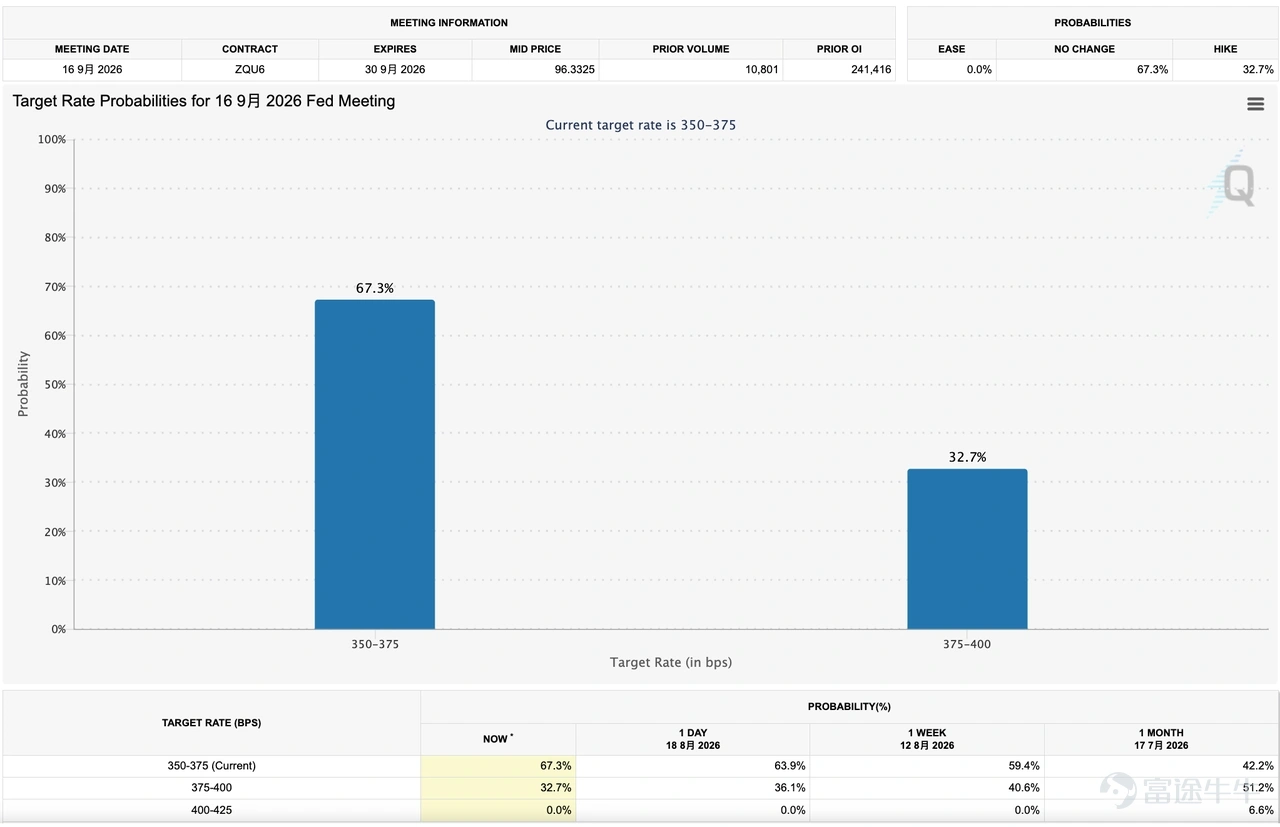
At the macro level, the US Treasury announced an increase in the scale of long-term Treasury buybacks to boost market confidence, but this has further catalyzed the underlying weakening of the US dollar's credibility.Coupled with generally weak data on US employment, retail sales, and inflation, market expectations for further tightening by the Federal Reserve have cooled, creating conditions for a recovery in risk appetite. As of now, CME data shows that the market-implied probability of a Fed rate hike in September has dropped to 32.7%.
On the supply and demand front, continuous gold purchases by global central banks and adjustments to official reserve structures provide medium-to-long-term support for gold prices.Data from the World Gold Council shows that net official gold purchases in recent years remain at historically high levels. In Q2 of this year, global central banks and other official institutions increased their gold reserves by a net 289 tons, a 62% year-on-year increase, with gold buying activities rebounding across multiple countries' central banks.
Conditions are favorable for a medium-term rise in gold, but short-term participation requires attention to the interplay between technical levels and macroeconomic data.If oil prices rise more than expected subsequently, pushing up inflation expectations and causing long-end yields to climb again, key technical resistance levels may face repeated tests.
3. Crypto Assets: Expectations of an improved regulatory framework combined with capital inflows have led to short-term volatility being amplified by liquidations.
Strengthening in tandem with gold $Bitcoin (BTC.CC)$, this round has also been driven by the dual forces of policy expectations and liquidity conditions.
Regarding regulatory signals, on August 19, US President Trump met with executives from crypto industry leaders such as Coinbase, Kraken, and Ripple at the White House, reiterating his push for the swift passage of the CLARITY Act in the Senate. The bill was already passed by the House of Representatives in July 2025, with a procedural vote in the Senate tentatively scheduled for September 15. Meanwhile, the new draft rules titled "Regulation Crypto Assets" proposed by the US Securities and Exchange Commission (SEC) plan to provide a financing exemption channel of up to $75 million for certain crypto projects, which constitutes a potential利好 (positive factor) for mainstream assets like Bitcoin and Ethereum.
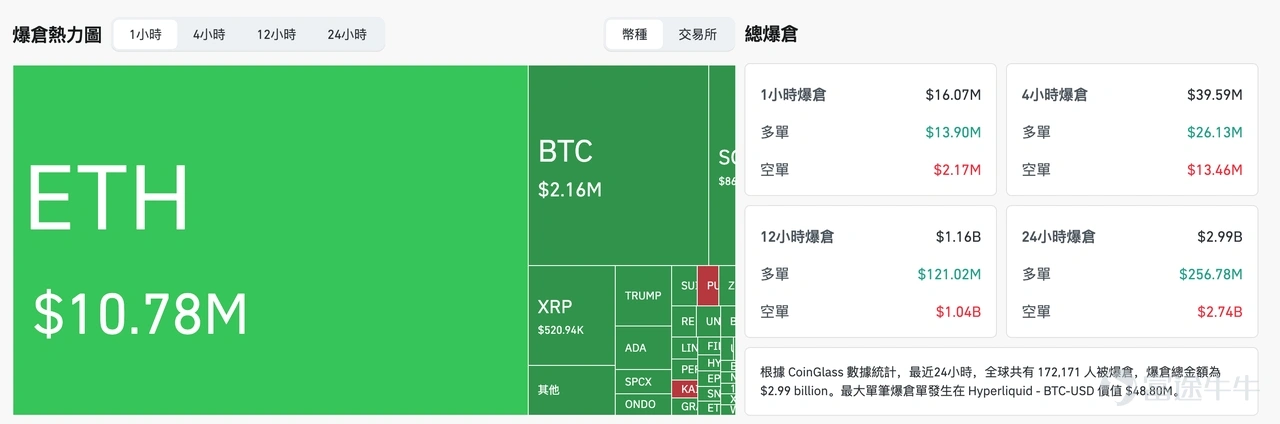
On the funding front, the sharp price surge triggered massive short liquidations.According to Coinglass, $Bitcoin (BTC.CC)$ and $Ethereum (ETH.CC)$ the sharp rally resulted in over $2.7 billion in crypto short positions being forcibly liquidated in the past 24 hours, further amplifying short-term volatility.
Regarding US spot Bitcoin ETFs, as of August 19, cumulative net inflows amounted to approximately $1.47 billion (data from SoSoValue), with BlackRock's $iShares Bitcoin Trust (IBIT.US)$ Continuing to lead the market, with clear signs of institutional capital inflows. Meanwhile, on-chain data shows that whale addresses have begun re-accumulating after approximately 60 days of continuous reduction, providing spot-side support for price stabilization.
For investors focused on crypto, the gradual clarification of the regulatory framework combined with sustained ETF inflows forms the core support for the medium-term thesis. However, the pending implementation of regulatory legislation and short-term volatility amplified by high-leverage liquidations remind investors to control their positions and manage risks effectively.
4. Futures Underlyings
Mapping the above logic to the futures market, we can focus on three types of underlyings:
Gold Futures:Directly tracking spot gold prices with ample liquidity, suitable for monitoring the pricing transmission of long-end interest rates and USD trends to precious metals.
Silver Futures:Possessing both industrial and financial attributes, silver typically exhibits greater elasticity than gold, is more sensitive to changes in financial conditions, and experiences higher volatility.
Crypto Futures:Driven by interest rates, regulatory expectations, and ETF flows, leverage liquidations significantly amplify short-term crypto volatility, thus requiring stricter position management for crypto futures.
$CME-Bitcoin RR Futures (SEP6) (BTCmain.US)$ 、 $Micro Bitcoin RR Futures (SEP6) (MBTmain.US)$ 、$Ether RR Futures (SEP6) (ETHmain.US)$ 、 $Micro Ether Futures (SEP6) (METHmain.US)$ 、 $Solana Futures (SEP6) (SOLmain.US)$ 、 $Micro SOL Futures (SEP6) (MSLmain.US)$ 、 $CME-XRP RR Futures (SEP6) (XRPmain.US)$ 、 $Micro XRP RR Futures (SEP6) (MXPmain.US)$
Futures involve leverage, which amplifies price volatility. Before participating, clearly assess your risk tolerance to avoid chasing rallies or panic-selling driven by news headlines.
5. What should we watch next?
The core driver behind the simultaneous rise in gold and cryptocurrencies in this cycle is the decline in long-term interest rates. Whether this trend continues depends on the following variables:
1. Whether long-term U.S. Treasury yields rise again
Treasury buybacks improve liquidity but do not alter the fundamentals of the U.S. fiscal deficit and debt issuance scale. If subsequent inflation data exceeds expectations or the Federal Reserve signals a more hawkish stance, 10-year and 30-year yields may still rebound. In that case, short-term gains in gold and Bitcoin could face pressure from profit-taking.
2. Jackson Hole Global Central Bankers Symposium (August 27–29)
Christopher Waller’s speech at this year’s symposium marks his first appearance at the event since taking office and serves as the most important policy communication window before the September FOMC meeting.The market is closely watching whether he provides new signals on the interest rate path, inflation outlook, and the regulatory framework for financial innovation.
Additionally, this year’s Jackson Hole Symposium focuses on financial innovation and payment policies. Whether stablecoins, digital assets, and new payment systems will be incorporated into the Fed’s policy framework could become another trading theme. Positive news related to digital assets may further sustain the momentum for BTC and ETH.
3. Progress in Crypto Regulatory Legislation
The Senate procedural vote on the CLARITY Act scheduled for September 15 will be a key juncture in determining whether US crypto regulation will proceed via "legislative enactment" or "administrative rules first." If the bill faces obstacles, the market may reprice regulatory uncertainty.
4. Sustainability of ETF Fund Flows
Net inflows into Bitcoin ETFs exceeded $1 billion in August, but whether these net inflows can be sustained will directly impact Bitcoin's medium-term trend.
 Fellow investors, how do you think BTC and gold will perform next?
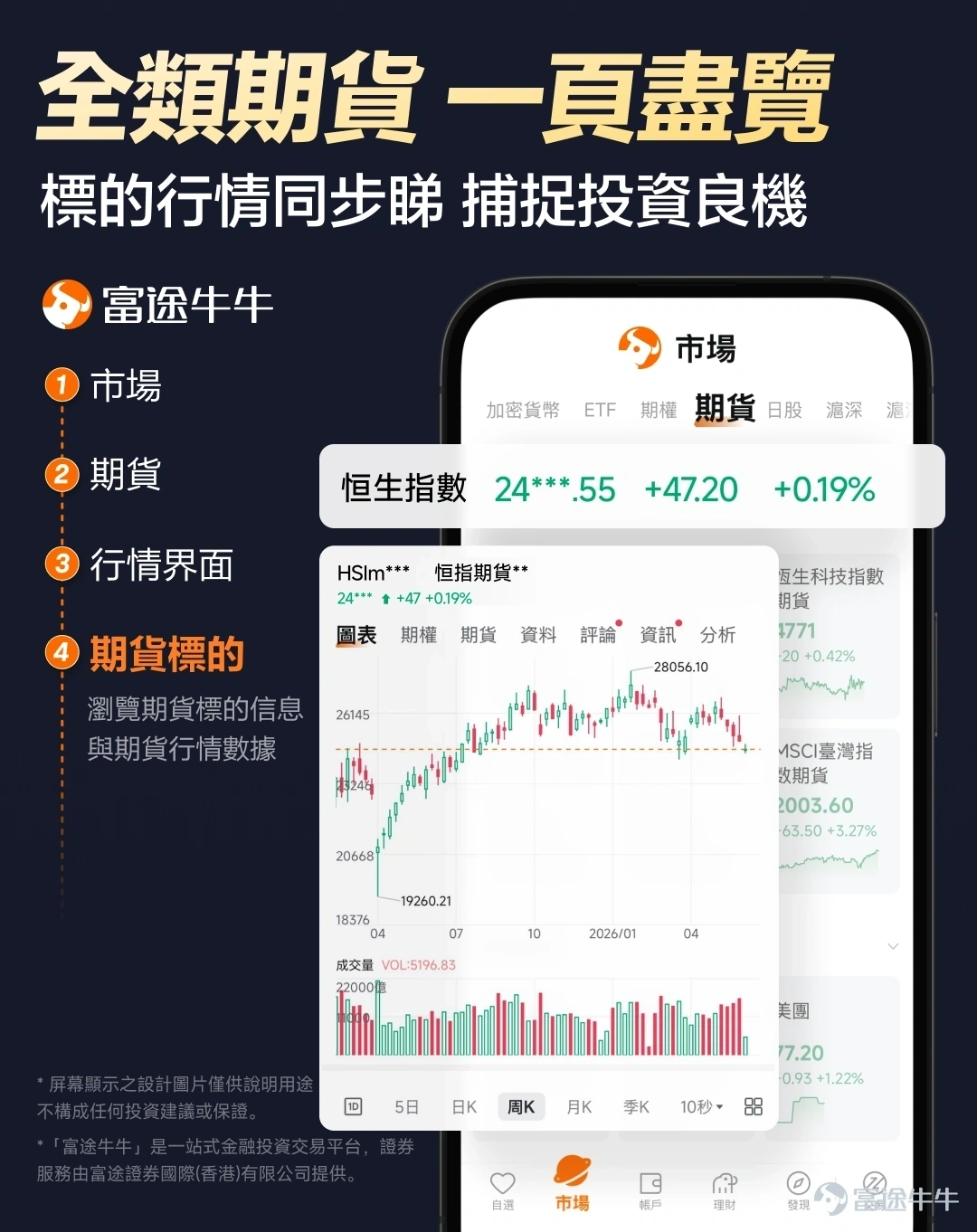
All-category futures at a glance,Click to start futures trading >>
Monitor underlying asset quotes in real-time to seize investment opportunities!
Disclaimer
The above information does not represent the stance of Futu. It is provided for reference only and does not constitute any investment advice. The risk of loss in trading futures can be substantial; in certain circumstances, losses may exceed the initial margin deposited. Market conditions may prevent the execution of contingency orders such as stop-loss or limit orders. Investors should research and understand futures before trading, and carefully consider whether such transactions are suitable for them based on their financial situation and investment objectives. Futures trading carries high risks and is not suitable for all investors. Before engaging in any futures trading strategy, investors should thoroughly understand the associated risks and assess their own risk tolerance.
Risk Disclaimer: The above content only represents the author's view. It does not represent any position or investment advice of Futu. Futu makes no representation or warranty.Read more


Comments (2)
to post a comment
24
75