The Fed raises interest rates for the first time in three years! How will the market react?

Gaoyuan Weekly Review | 30-Year US Treasury Yield Surges to 5.34%! Why Did AI Chip Stocks Plummet Overnight?
AI Hardware Sector Hit by Concentrated Sell-Off Driven by Interest Rates
As of the market close on August 18, 2026 (ET), the three major US stock indices fell for the third consecutive trading day, with the Information Technology sector dropping 1.9% in a single day, making it the $S&P 500 Index (.SPX.US)$ worst-performing sector among the eleven major sectors.
The AI hardware supply chain, which had previously led the rally, became the hardest-hit area: $PHLX Semiconductor Index (.SOX.US)$ It plunged 4.98% in a single day to close at 11,992.46 points, with all thirty constituent stocks finishing lower; in the memory storage sector, $KIOXIA HOLDINGS CORPORATION UNSPON ADR EACH REP 0.1 COM (KXIAY.US)$ 、 $SanDisk (SNDK.US)$ 、 $Seagate Technology (STX.US)$ 、 $SK hynix (SKHY.US)$ 、 $Western Digital (WDC.US)$ 、 $Micron Technology (MU.US)$ none were spared;
Why Did AI and Semiconductors Come to a Sudden Halt?
First, the discount rate mechanism.
On August 18, the yield on the 30-year U.S. Treasury bond touched 5.337% intraday, hitting a new high since June 2007; the 10-year yield briefly rose to 4.75%, reaching its highest level since January 2025.
Long-term risk-free rates serve as the pricing anchor for long-duration growth stocks. As the discount rate for future earnings rises, the market's willingness to pay a premium for high earnings growth declines.
Burns McKinney, Portfolio Manager at NFJ Investment Group, described the situation to Reuters as 'almost like a domino effect—failed peace talks push up oil prices, rising oil prices lift inflation expectations, higher inflation expectations drive up bond yields, and when bond yields rise, tech stocks often suffer disproportionately heavy losses.'
Tony Welch, Chief Investment Officer at SignatureFD, bluntly stated that 'nothing crushes the rebound of momentum stocks more effectively than rising interest rates.'
Second, AI debt financing risk has become a new variable in pricing.
Amanda Lynam, Chief Credit Strategist at Goldman Sachs, pointed out that AI-related bond issuance has reached $489 billion year-to-date, far exceeding the full-year total of $322 billion in 2025.
According to calculations by Zheshang Macro, 49% of the outstanding corporate bonds held by tech giants have maturities of over 20 years, and new issuances in 2026 are significantly skewed toward the 20- to 40-year range, directly competing with long-end US Treasuries for long-term allocation capital from insurers and pension funds.
Rising borrowing costs directly undermine the return on investment for capital-intensive AI projects such as data centers. Kim Forrest, Chief Investment Officer at Bokeh Capital Partners, noted that rising yields signal a tightening financing environment, which particularly impacts AI investments with still-uncertain payback periods.
Third, profit-taking coincides with valuation anxiety.
Paul Meeks, Head of Technology Research at Freedom Capital Markets, believes that AI storage demand and long-term customer agreements continue to support fundamentals. However, concerns over high valuations and peaking memory chip prices have intensified short-term volatility. The recent decline is essentially profit-taking from heavy positions triggered by an interest rate shock.
Why have short-end U.S. Treasury yields fallen while long-end yields surged, given their role as the denominator?
The short end follows the Fed's policy rate path:
July non-farm payrolls unexpectedly dropped by 23,000, CPI rose only 0.1% month-over-month, retail sales were weak, and new housing starts fell 12.4% month-over-month in July. This basket of weak data has cooled expectations for further tightening.
CME FedWatch indicates a roughly 65% to 70% probability that the interest rate range will remain unchanged at 3.50% to 3.75% in September, leading the 2-year U.S. Treasury yield to fall to approximately 4.17%.
The long end is dominated by structural forces:
First, U.S. federal debt has exceeded $40 trillion, with annual interest expenses surpassing $1.17 trillion. Approximately 70% of publicly held debt is set to mature and roll over within the next five years.
Last week, the U.S. Treasury auctioned $25 billion in new 30-year bonds at a yield of 5.216%, marking the highest winning yield for this maturity since 2001. The 10-year auction also saw a record high winning yield of 4.683% since 2008.
Second, according to U.S. Treasury data from June, foreign investors have cumulatively reduced their holdings of U.S. Treasuries by approximately $190 billion since the year-to-date peak in February, with Japan leading the reduction at $122.6 billion.
Anshul Pradhan, Head of U.S. Rates Strategy at Barclays, pointed out that the evolution of buyer structure over the past decade is sufficient to explain about 90 basis points of the change in the term premium for 30-year U.S. Treasuries.
Thirdly, amid the US-Iran stalemate, Brent crude closed at a three-week high of $91.02 per barrel, while diesel crack spreads surged past $100 to hit record highs, reigniting long-term inflation concerns.
Fourthly, Nohshad Shah, Head of Fixed Income at Citadel Securities, believes that long-term yields reflect the market's repricing of the Fed's policy stance, with the market even starting to price in the possibility of "forced rate hikes amid weakening data."
This round of curve steepening is driven by fiscal dominance and term premiums,"bear steepener",rather than growth improvement-driven"bull steepener",with the spread between the 2-year and 30-year yields widening to approximately 114 basis points, posing significantly greater risks to risk assets.
Historical Perspective: Why rising long-end yields naturally benefit money market funds
Duration asymmetry.
Bond prices move inversely to interest rates; the longer the duration, the sharper the price decline—when yields on 30-year US Treasuries rise by 100 basis points, prices drop by approximately 15% to 16%;
Long-duration growth stocks in the equity market (AI, semiconductors) are essentially"discounted cash flow assets based on distant future earnings", and are similarly subject to valuation compression.
The weighted average remaining maturity of money market fund portfolios is typically only 30 to 60 days. Regardless of how sharply long-end rates spike, their net asset value hardly suffers any capital loss.
They possess a "long interest rate" attribute through rolling repricing.
As money market fund holdings constantly mature and are reinvested at new rates, their 7-day annualized yield continues to rise as long as the overall interest rate environment is trending upward or stabilizing at a high plateau.
—It is a"fund that goes long on short-term rates", whereas bond funds are effectively"shorting rates" during periods of rising interest rates.the vehicle.
Both the 1994 cycle and the 2022–2023 cycle have confirmed that wherever policy rates rise, money market fund yields follow within weeks.
Risk premium and the value of liquidity options.
Historically, uncontrollable rises in long-end yields have often accompanied sudden impairment events (e.g., Orange County in 1994, SVB in 2023). In such times, money market funds simultaneously provide positive returns, a safe haven, and"dry powder"—ready to pivot and buy the dip on duration assets that have been battered. In 2022, when both stocks and bonds fell and the 60/40 portfolio failed, money market funds were one of the few mainstream asset classes to record positive returns for the full year.
Allocation logic for HKD and USD money market funds
Under the Linked Exchange Rate System (7.75 to 7.85), short-term HKD interest rates track USD rates but are subject to disturbances from local liquidity conditions.
In a steep bear market environment, cash-like assets are a natural safe haven. Money market funds have extremely short duration, with yields rolling over and repricing in line with policy rates, thereby hardly suffering capital losses from surging long-end rates. In contrast, long-duration bond funds continue to face real loss pressure from the current sell-off; the two should be strictly distinguished.
In terms of currency, USD funds"Interest Rate Differential/Volatility Ratio"is favorable. According to data from the Hong Kong Association of Banks, the short-end interest rate differential between Hong Kong and the US is approximately 100 to 150 basis points. With an interest rate spread return of about 100 to 150 basis points, hedging against the maximum exchange rate fluctuation of approximately 1.3% within the Linked Exchange Rate System band, and after deducting one-time foreign exchange conversion costs of about 0.3% to 1%, holding USD money market funds offers a clear neutral yield advantage for idle cash. This makes it suitable as a"cash hold-and-wait"default safe haven during pullbacks.
Increasing the weight of cash-like instruments helps maintain HKD liquidity to address local needs. Although HKD money market fund yields are lower, they can be used to cover rigid HKD expenditures such as mortgage payments and IPO subscription freezes, avoiding spread erosion from frequent currency conversions. If southbound capital flows and large-scale IPOs strengthen the HKD and cause HIBOR to rise sharply, HKD fund yields will quickly catch up.
Open-ended money market funds can instantly capture rising interest rates. If the Federal Reserve is ultimately forced to hike rates, the 7-day annualized yield of USD funds will rise accordingly; conversely, if weakening data leads to rate cuts, easing pressure on equity discount rates will also create favorable conditions for re-entry into the stock market. Money market funds offer both offensive potential and defensive stability.
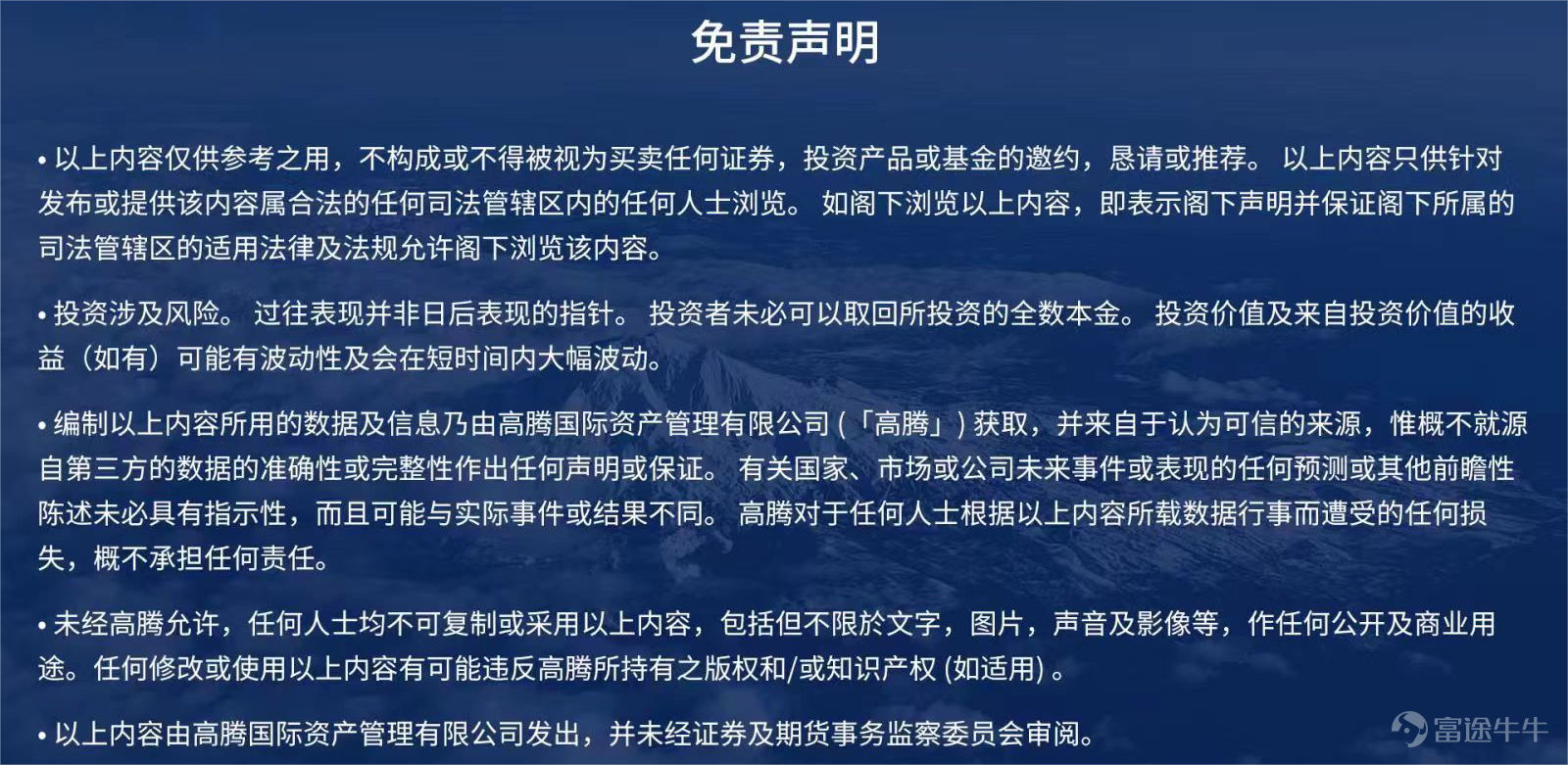
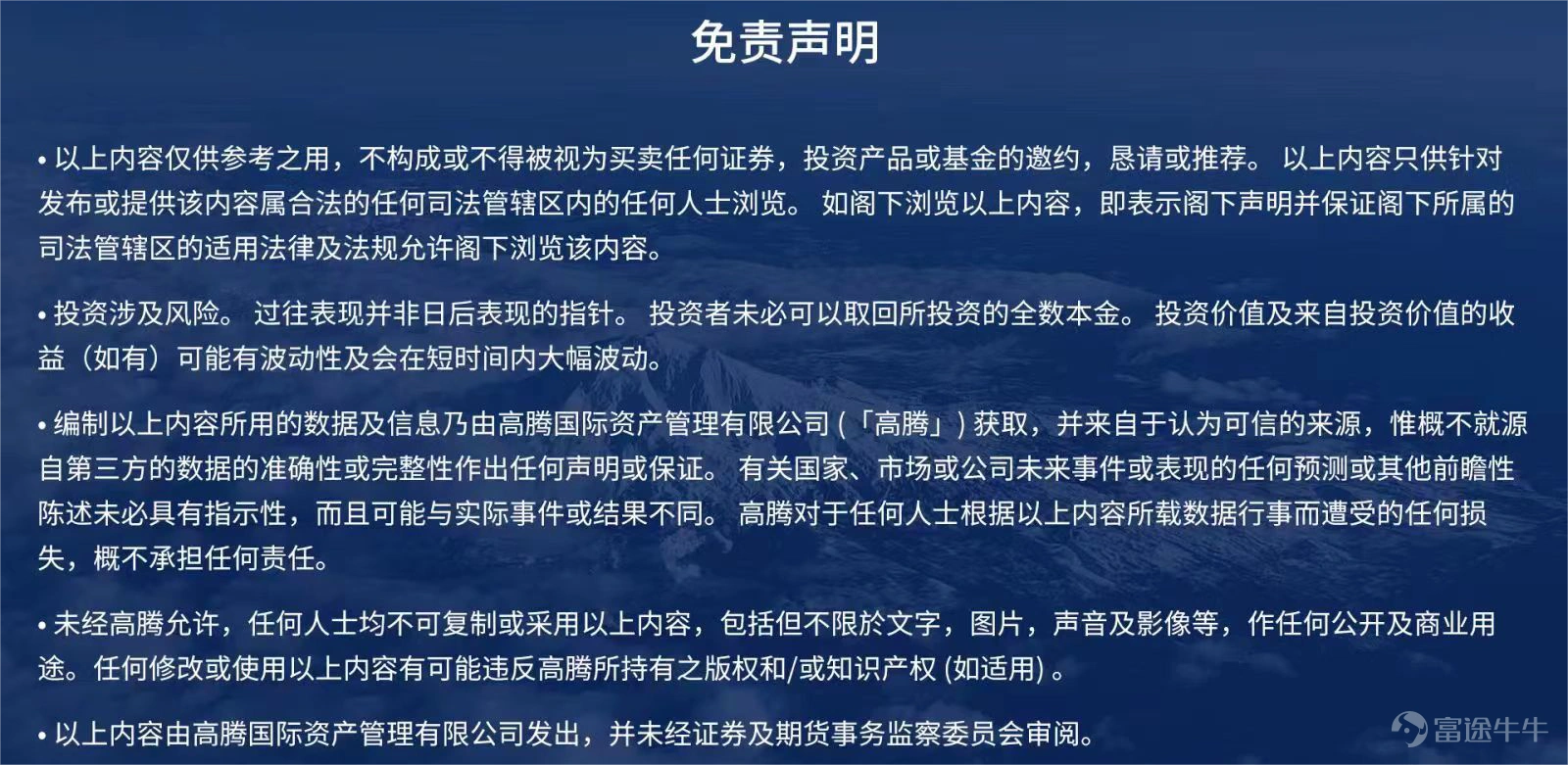
Risk Warning: If long-end yields spiral further out of control, money market funds cannot hedge against drawdowns in equity positions. All data cited in this article are from public sources and do not constitute investment advice.
$GaoTeng WeInvest Money Market Fund (HK0000478930.MF)$ $GaoTeng WeValue USD Money Market Fund (HK0000584752.MF)$ $GaoTeng WeFund-GaoTeng Asian Income Fund (HK0000447943.MF)$ $Fabrinet (FN.US)$ $Coherent (COHR.US)$ $CoreWeave (CRWV.US)$ $NVIDIA (NVDA.US)$ $Meta Platforms (META.US)$ $Advanced Micro Devices (AMD.US)$ $Hang Seng Index (800000.HK)$ $Hang Seng TECH Index (800700.HK)$ $KB LAMINATES (01888.HK)$ $HUA HONG GRACE (01347.HK)$ $GIGADEVICE (03986.HK)$ $MONTAGE TECH (06809.HK)$ $VGT (02476.HK)$ $Z.AI (02513.HK)$ $Dow Jones Industrial Average (.DJI.US)$ $Nasdaq Composite Index (.IXIC.US)$
Risk Disclaimer: The above content only represents the author's view. It does not represent any position or investment advice of Futu. Futu makes no representation or warranty.Read more

Comments
to post a comment
24
10