The Fed raises interest rates for the first time in three years! How will the market react?

Tengsi | US Treasury yields soaring?! Hang Seng Index entering a phase of wide-range box oscillation?

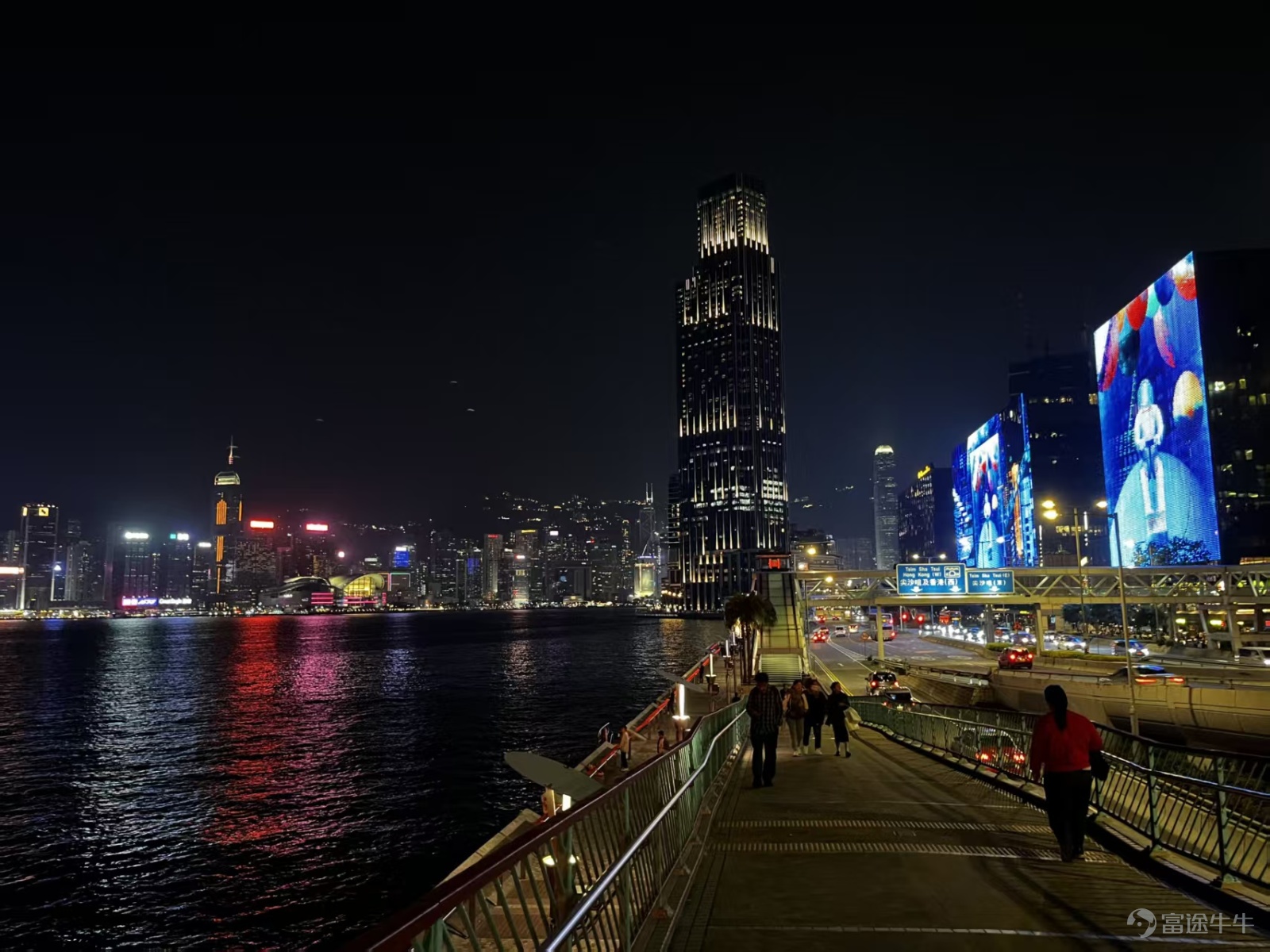
Tsim Sha Tsui — Waterfront Promenade
The U.S. Treasury completed the auction of $25 billion in 30-year bonds last week at a yield of 5.216%, marking the highest winning bid rate for this maturity since 2001.
Meanwhile, U.S. investment-grade corporate bond issuance in August reached $145.2 billion, surpassing the previous monthly record of $136 billion set in August 2020. The corporate debt surge, driven by the AI infrastructure investment boom, is resonating with the nearly $2 trillion annual budget deficit, creating supply pressure on long-end pricing.
According to Bloomberg data as of August 18, 2026, $U.S. 30-Year Treasury Bonds Yield (US30Y.BD)$ rose intraday to 5.31%, hitting its highest level in nearly 19 years since June 2007;
$U.S. 10-Year Treasury Notes Yield (US10Y.BD)$ simultaneously climbed to 4.724%, with the spread between 2-year and 30-year yields widening to 113 basis points, reaching its widest level since April 2025.
The Congressional Budget Office's latest forecast projects that U.S. debt interest payments will rise to $2.1 trillion by 2036, with the debt-to-GDP ratio climbing to 120%.
Zhitong Finance observes that when long-end yields stabilize above 5%, the cheapest-to-deliver bond for CME 30-year Treasury futures undergoes a discrete jump.
For every additional 10 basis point rise in yields, the switch moves from the current bond maturing in 2045 with a 4.875% coupon to the older bond maturing in 2046 with a 2.5% coupon; a further 30 basis point increase shifts it to an even longer-dated older bond maturing in 2049 with a 2.25% coupon.
Barclays interest rate strategists Andres Mok and Amrut Nashikkar also emphasized that conversion risk for futures contracts rises significantly when long-end yields exceed 5.0%, as large-scale sell-offs push the cheapest-to-deliver (CTD) bond further out into the delivery pool.
The total US federal debt has now exceeded $39.9 trillion, equivalent to 4.5 times the level in April 2007, while yields have returned to their highs from that period.
Data from the US Treasury Department on the same day showed that foreign investors' holdings of US Treasuries fell from $9.371 trillion to $9.299 trillion in June, with Japanese holdings dropping to $1.116 trillion and UK holdings falling to $939.9 billion, indicating a collective retreat by major overseas buyers.
What is the impact on the Hong Kong stock market?
(1) Interest rate transmission under the Linked Exchange Rate System has compressed alpha returns in the Hong Kong stock market to extreme lows.
Hong Kong implements a Linked Exchange Rate System pegging the Hong Kong dollar to the US dollar. Sharp fluctuations in US Treasury yields are directly transmitted to Hong Kong's banking system through the interest rate channel.
According to data from the Hong Kong Association of Banks on August 18, 2026, the one-month HIBOR related to mortgage loans was quoted at 2.57655%, the three-month HIBOR at 2.88792%, and the six-month HIBOR at 3.18744%.
However, as of July 31, 2026, $Hang Seng Index (800000.HK)$ the dynamic P/E ratio stood at 12.36x, at the 80th percentile since 2010; the Hang Seng Index equity risk premium calculated based on the 10-year US Treasury yield was only 4.11%, at an extremely low level corresponding to the 5th percentile since 2010.
This means that the safety margin of the Hong Kong stock market relative to the risk-free rate has been compressed to historically rare levels. Theoretically, every 10 basis point rise in US Treasury yields further erodes the risk premium buffer for Hong Kong stocks.
Nohshad Shah, Head of Fixed Income Sales at Citadel Securities, pointed out in a client report that although policy rates are 175 basis points below their peak, long-end yields remain near two-decade highs. This reflects the market's view that the Fed and fiscal authorities tend to choose the easier path when faced with difficult choices.
Anshul Pradhan, Head of US Rates Strategy at Barclays, expressed more caution, stating that it is still premature to bet on the end of the long-bond sell-off. Adopting a bullish stance on the long end would require a simultaneous combination of several conditions: fiscal contraction exceeding expectations, a slowdown in AI-related debt issuance, adjustments to the Treasury's issuance strategy, and continued softening of economic data.
(II) Inflow of Safe-Haven Capital and the "Safe Haven" Effect
When investors wish to hold USD-denominated assets but are concerned about geopolitical risks or the high level of US debt, Hong Kong serves as the preferred destination for international safe-haven capital.“safe haven”。
As of March 2026, total bank deposits in Hong Kong exceeded HK$19 trillion. The average liquidity coverage ratio (LCR) of banks was approximately 170%, far surpassing the international regulatory requirement of 100%, while the non-performing loan (NPL) ratio remained at internationally low levels.
Paul Chan Mo-po emphasized that there is no intention to change the arrangement pegging the Hong Kong dollar to the US dollar. The exchange rate of HK$7.8 to US$1 provides market certainty and policy consistency.
$CGS (06881.HK)$ Data shows that as of July 31, 2026, net inflows into Hong Kong stocks via the Stock Connect reached HK$612.22 billion, with net inflows from international intermediaries totaling HK$206.309 billion. CITIC Securities estimates that foreign capital inflows into Hong Kong stocks have cumulatively reached HK$75 billion since May 8, reversing the previous trend of continuous outflows.
With long-end US Treasury yields stabilizing above 5% and major overseas buyers retreating, some safe-haven funds spilling over from the US Treasury market are indirectly holding high-yield, USD-denominated assets through Hong Kong's Linked Exchange Rate System. This allows them to avoid the duration risk and geopolitical exposure associated with directly holding US Treasuries.
The 60-day negotiation window set by the US-Iran Memorandum of Understanding expired on August 17. The surge in oil prices has further pushed up inflation expectations and intensified selling pressure on long-end US Treasuries, reinforcing the logic behind capital flowing into Hong Kong as a safe haven.
Therefore, the current Hong Kong stock market is in a tug-of-war between bulls and bears. With no unilateral consensus on direction, volatility itself has become the only certainty.
The Hang Seng Index is trapped within an observable range, repeatedly testing its boundaries like a prisoner probing every bar of their cage.
Amidst the interplay of earnings verification, liquidity rebalancing, and external interest rate/geopolitical disturbances, both realized volatility and option-implied volatility have risen in tandem. The index remains confined to box-range oscillations, with the short-term price center repeatedly testing the upper and lower bounds of the observable trading range, exhibiting"support below, selling pressure above"characteristics of range convergence.
If not employing grid trading, what is the allocation logic for cash management tools?
The first level of choice concerns humanity's attitude toward"time".
In a world where long-end US Treasury yields are as high as 5.3%, duration risk is extremely amplified—this meansTime is no longer a friend, but has become a tyrant.。
Historically, some asset managers have preferred short-duration money market instruments to harvest carry without taking on duration risk, refusing to be dragged into the leverage backlash spiral caused by CTD switches, DV01 imbalances, and rising repo margin requirements in basis trades. They do not attempt to beat time; they simply choose not to be consumed by it.
The second choice concerns"Patience"and"Action"ethics.
The risk premium of the Hang Seng Index relative to the 10-year US Treasury yield is at a historical low, in the 5th percentile since 2010—this implies that the stock market’s promise of excess returns has nearly defaulted.
when"Risk"is no longer adequately priced, and bearing risk itself has lost its moral justification.
Increasing the weight of short-duration or money market instruments is not the end goal, but a buildup of momentum—preserving ammunition for re-entry when Hong Kong stock valuations correct to more attractive levels. Defense is not surrender; it isPreserve the optionality for your next move.。
However, please note: Money market funds do not guarantee principal or returns. They still carry credit risk, redemption risk, and exchange rate risk. Fund investments involve risks; please invest with caution.
"Man is the measure of all things." — Protagoras. But in financial markets, a more accurate statement might be: "The ability to preserve optionality itself is the ultimate measure."
Data sources: Bloomberg, Xinhua Finance, U.S. Department of the Treasury, Congressional Budget Office (CBO), The Hong Kong Association of Banks, Hong Kong Monetary Authority (HKMA), Office of the Financial Secretary, Zhitong Finance, China News Service (data as of August 18, 2026).
$GaoTeng WeInvest Money Market Fund (HK0000478930.MF)$ $GaoTeng WeValue USD Money Market Fund (HK0000584752.MF)$ $GaoTeng WeFund-GaoTeng Asian Income Fund (HK0000447943.MF)$ $Hang Seng TECH Index (800700.HK)$ $USD (USDindex.FX)$ $Dow Jones Industrial Average (.DJI.US)$ $S&P 500 Index (.SPX.US)$ $Nasdaq Composite Index (.IXIC.US)$
Risk Disclaimer: The above content only represents the author's view. It does not represent any position or investment advice of Futu. Futu makes no representation or warranty.Read more

Comments
to post a comment
2
2