English
Back
Open Account
US Treasury repo operations may expand again; will the global central banks' annual meeting set the

链捕手ChainCatcher
joined discussion · Aug 6 00:03

"Mini Fed Payroll" Misses Expectations! U.S. July ADP Employment Rises by Only 44,000, Lowest This Year; Friday’s Nonfarm Payrolls Data Becomes Crucial

Author:Zhang Yaqi, Wall Street News
U.S. private-sector employment growth in July came in significantly below expectations, indicating a cooling in labor market momentum, though wage growth remained resilient, keeping the overall employment situation stable.
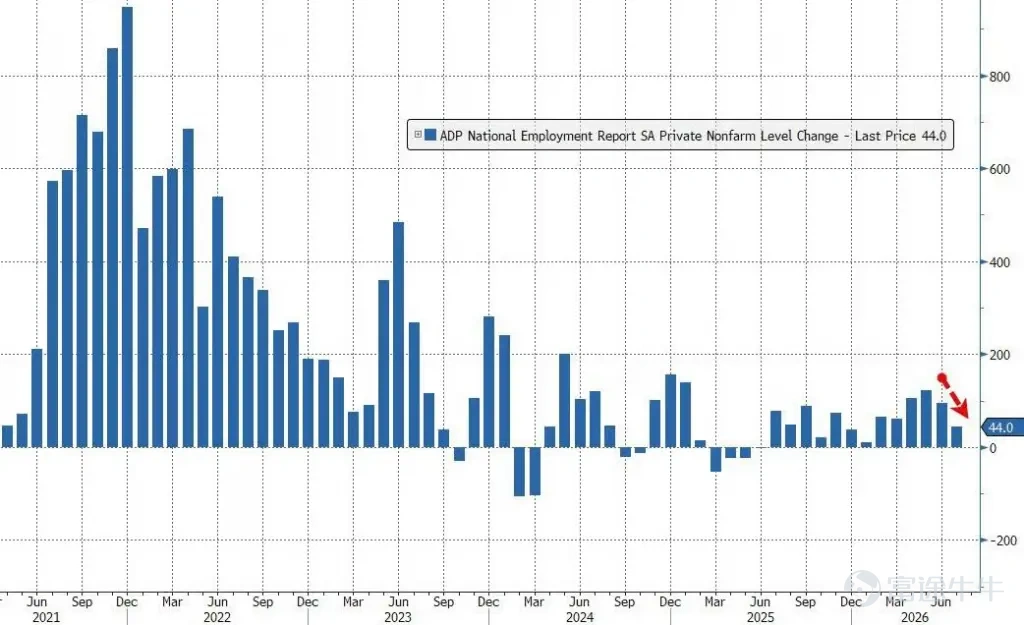
Data released Wednesday by the ADP Research Institute showed thatprivate-sector payrolls added 44,000 jobs in July, below the Bloomberg survey consensus forecast of 65,000 and marking the weakest gain so far this year. June’s figure was revised upward to 95,000.
Author:Zhang Yaqi, Wall Street CN  U.S. private-sector employment growth in July came in significantly below expectations, signaling a cooling labor market momentum, though wage growth remained resilient, keeping the overall employment situation stable. Data released Wednesday by the ADP Research Institute showed thatprivate-sector employment added just 44,000 jobs in July, below the Bloomberg survey consensus forecast of 65,000 and marking the weakest gain so far this year. The revised figure for June stood at 95,000.  Despite the slowdown in hiring, the report also indicated that wage growth for job switchers accelerated to its strongest pace in nearly a year. Nela Richardson, chief economist at ADP, noted, "Traditional hiring patterns are shifting as employers respond to changes in the macroeconomic environment." The U.S. government’s nonfarm payrolls report due Friday is drawing intense market attention; if corroborated, the current employment trend would support the Federal Reserve’s continued focus on persistently elevated inflation.   Employment Growth Hits Year-to-Date Low as Goods-Producing Sector Faces Pressure  ADP data showed that private-sector employment rose by only 44,000 in July—not only falling short of every economist surveyed by Bloomberg but also marking the lowest level since January. This represents a sharp decline from June’s revised gain of 95,000. By sector, goods-producing industries shed 3,000 net jobs, indicating weakening labor demand in certain segments of the real economy.  AD...
Despite the slowdown in hiring, the report also indicated that wage gains for job switchers accelerated to their strongest pace in nearly a year. Nela Richardson, ADP’s chief economist, noted, "The typical hiring pattern is shifting as employers respond to changes in the macroeconomic environment."
The U.S. government’s nonfarm payrolls report, due Friday, is drawing significant market attention. If corroborated by that data, the current employment trend would support the Federal Reserve’s continued focus on still-elevated inflation.
Author:Zhang Yaqi, Wall Street CN  U.S. private-sector employment growth in July came in significantly below expectations, signaling a cooling labor market momentum, though wage growth remained resilient, keeping the overall employment situation stable. Data released Wednesday by the ADP Research Institute showed thatprivate-sector employment added just 44,000 jobs in July, below the Bloomberg survey consensus forecast of 65,000 and marking the weakest gain so far this year. The revised figure for June stood at 95,000.  Despite the slowdown in hiring, the report also indicated that wage growth for job switchers accelerated to its strongest pace in nearly a year. Nela Richardson, chief economist at ADP, noted, "Traditional hiring patterns are shifting as employers respond to changes in the macroeconomic environment." The U.S. government’s nonfarm payrolls report due Friday is drawing intense market attention; if corroborated, the current employment trend would support the Federal Reserve’s continued focus on persistently elevated inflation.   Employment Growth Hits Year-to-Date Low as Goods-Producing Sector Faces Pressure  ADP data showed that private-sector employment rose by only 44,000 in July—not only falling short of every economist surveyed by Bloomberg but also marking the lowest level since January. This represents a sharp decline from June’s revised gain of 95,000. By sector, goods-producing industries shed 3,000 net jobs, indicating weakening labor demand in certain segments of the real economy.  AD...
Job growth hits year-to-date low, with goods-producing sector under pressure
According to ADP data, private-sector payrolls rose by just 44,000 in July—falling short of all economist forecasts in the Bloomberg survey and representing the lowest reading since January. This marks a notable decline from June’s revised gain of 95,000. By industry, the goods-producing sector shed a net 3,000 jobs, signaling weakening labor demand in certain areas of the real economy.
The ADP report is based on payroll data covering more than 26 million U.S. private-sector employees and is jointly published by the ADP Research Institute and the Stanford Digital Economy Lab.
While job growth has slowed, wage data tells a different story. The report shows thatsalaries for employees who switched jobs rose 7% year-over-year—the fastest pace in nearly a year—while pay for those who stayed in their roles increased by a steady 4.4%.
In a statement, Nela Richardson said, "Job switchers are highly sensitive to real-time economic conditions, and their rapid wage gains suggest supply constraints in certain segments of the labor market." This signal indicates that despite the overall slowdown in employment growth, structural tightness in the labor market persists.
Fed stance and Friday’s nonfarm payrolls data take center stage
Prior to the ADP report, Fed Chair Waller described the labor market as "solid" and "stable" during last week’s press conference. The Federal Open Market Committee (FOMC) held rates steady, though three officials dissented in favor of a rate hike, highlighting ongoing internal divisions.
Markets are now awaiting confirmation from Friday’s official government nonfarm payrolls report.According to a Bloomberg survey, economists expect July’s nonfarm payroll gain—including public-sector jobs—to reach 80,000, an improvement from June. If the data aligns with the ADP report’s trend, it would further reinforce market expectations that the labor market remains strong enough for the Fed to stay focused on fighting inflation, directly influencing outlooks on the Fed’s policy path.
Risk Disclaimer: The above content only represents the author's view. It does not represent any position or investment advice of Futu. Futu makes no representation or warranty.Read more
3077 Views
Report
Comments
Write a Comment...