
有沒有一種戰法可以穿越牛熊市?

01 Auto sees explosive revenue growth but losses exceed RMB 600 million—can a RMB 7 billion valuation support its 'transport robot' ambitions?
On May 29, Jiangsu 01 Auto Technology Co., Ltd. (hereinafter referred to as '01 Auto') filed its prospectus with the Hong Kong Stock Exchange, with Goldman Sachs and Haitong International serving as joint sponsors.
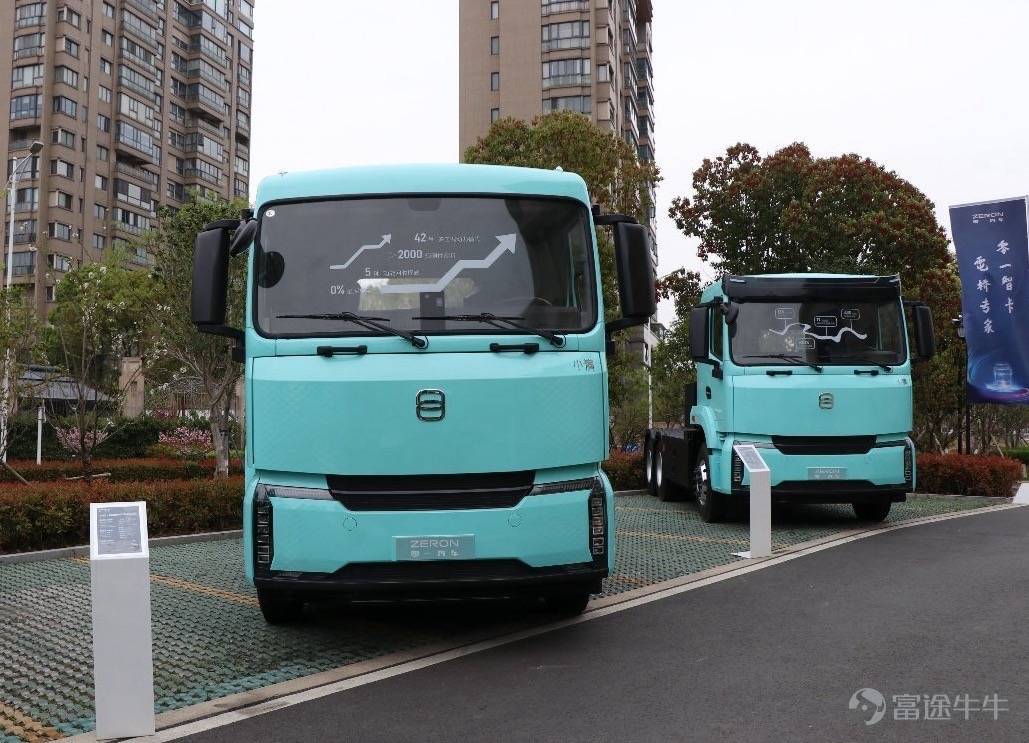
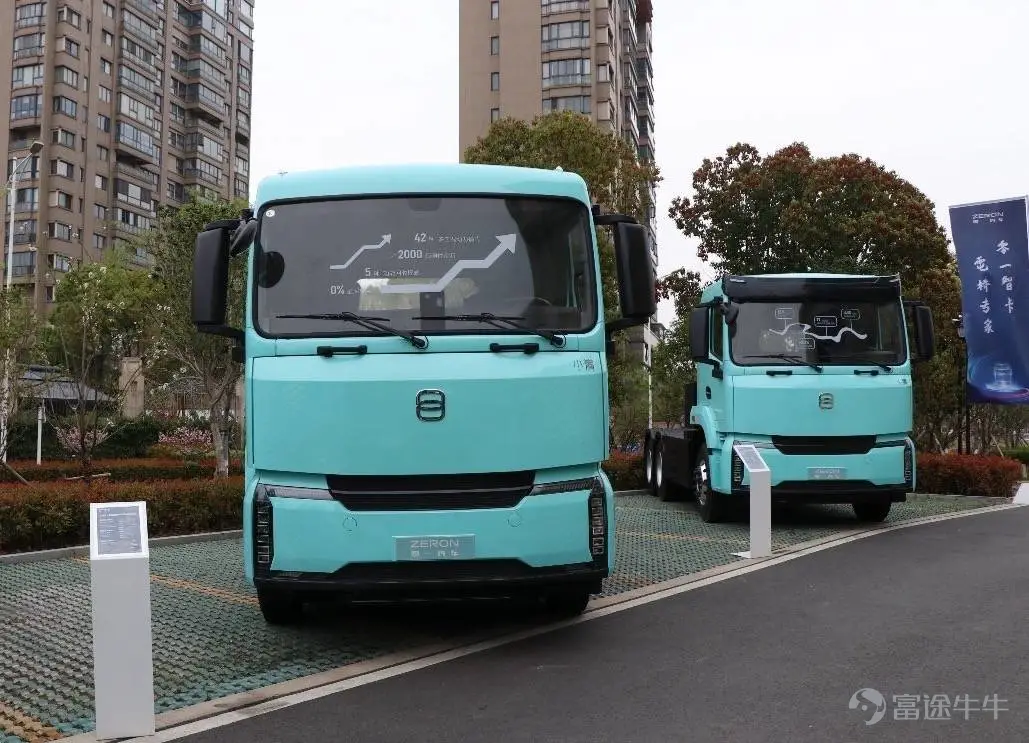
According to Tianyancha and the company's prospectus, Lingyi Auto was founded in 2022, with core businesses covering sales of new energy intelligent heavy-duty trucks and autonomous driving solutions for heavy trucks. Branded as 'the world’s first company possessing both forward-designed vehicle development capabilities and an end-to-end multimodal large language model for heavy-truck autonomous driving,' it is attempting to pitch a 'transportation robot' investment narrative in the Hong Kong stock market.
However, a closer look at the prospectus reveals a set of figures that form the backdrop of this story: cumulative losses of RMB 636 million over the three years from 2023 to 2025, negative gross margins for three consecutive years, net outflows of operating cash flow for three straight years, and a continuously rising debt-to-asset ratio.
As technological ambition collides with financial reality, is Lingyi Auto’s IPO path a milestone toward commercialization—or yet another capital relay race in the new energy vehicle sector?
Gross margins remain persistently negative, and the profitability inflection point is still some way off.
Lingyi Auto’s growth curve has been remarkably steep. During the reporting period—2023, 2024, and 2025—the company recorded revenues of RMB 1.163 million, RMB 124 million, and RMB 522 million, respectively, representing year-over-year growth of over 100x in 2024 and 320.8% in 2025.
According to Frost & Sullivan, Lingyi Auto is the fastest-growing new energy heavy-truck startup globally and the quickest to surpass 1,000 units in annual sales. In the first four months of 2026 alone, it delivered 778 vehicles, a 334.6% year-over-year increase compared to the same period in 2025.
Yet this rapid growth has not translated into profitability. The company reported annual losses of RMB 114 million, RMB 241 million, and RMB 281 million during the reporting period, accumulating total losses of RMB 636 million over three years. Losses have widened year after year—expanding by 111.4% in 2024 compared to 2023, and further increasing by 16.5% in 2025 versus 2024.
Yu Fenghui, an invited researcher at the China Financial Think Tank, commented: 'Lingyi Auto is experiencing revenue growth without corresponding profit growth, primarily because the company is making substantial investments and incurring significant costs in its early commercialization phase to rapidly capture market share.'
Specifically, this includes increased R&D spending, expansion of production facilities, and development of sales networks. While these upfront investments have driven revenue growth, they have also caused a sharp rise in short-term costs, negatively impacting profit margins.
From an investment perspective, determining when the company might reach breakeven depends on multiple factors, including—but not limited to—the pace of market penetration, improvements in cost control, and adjustments to product pricing strategies. Generally, as market share expands and operational efficiency improves, the company is expected to gradually achieve profitability.
Gross margin is key to understanding this dilemma. During the reporting periods, the company's consolidated gross margins were -287.2%, -34.7%, and -2.5%, respectively—negative for all three years but showing a significant narrowing trend.
From a revenue composition perspective, sales of new energy intelligent heavy-duty trucks have consistently been the core source. In 2023, this segment generated RMB 1.15 million in revenue, accounting for 98.9% of total revenue, all from the 'Jingzhe' model, as the 'Xiaoman' model had not yet generated any revenue. In 2024, revenue from this segment rose to RMB 121 million, representing 97.3% of total revenue, with RMB 105 million (84.3%) from 'Jingzhe' and RMB 16 million (13.0%) from 'Xiaoman'. In 2025, revenue reached RMB 507 million, or 97.2% of total revenue, with 'Xiaoman' contributing RMB 306 million (58.7%) and 'Jingzhe' contributing RMB 201 million (38.5%).
Over the three-year period, the 'Xiaoman' model grew from zero to become the primary revenue driver, while the 'Jingzhe' model’s share declined from 98.9% to 38.5%, reflecting a significant shift in product mix.
Looking at gross margins, the new energy intelligent heavy-duty truck segment recorded negative gross margins across all three years. In 2023, the gross loss was RMB 33.4 million, yielding a gross margin of -290.4%; in 2024, the gross loss was RMB 422.8 million, with a gross margin of -35.0%; and in 2025, the gross loss narrowed to RMB 148 million, resulting in a gross margin of -2.9%. By model, in 2024, 'Xiaoman' posted a gross margin of -35.5% versus -34.9% for 'Jingzhe'; in 2025, 'Xiaoman' improved to -0.4%, while 'Jingzhe' stood at -6.8%. The 'Xiaoman' model showed markedly greater improvement, narrowing from -35.5% to -0.4% and nearing breakeven, whereas 'Jingzhe' improved from -34.9% to -6.8% but remained far from profitability.
The only segment achieving a positive gross margin was the autonomous heavy-duty truck solutions business. In 2025, it generated RMB 8.102 million in revenue with a gross margin of 4.3%, though it accounted for just 1.5% of total revenue. This business generated no revenue in 2023 or 2024.
This means that Zero One Auto’s current core business—selling vehicles—is fundamentally unprofitable. Throughout the reporting periods, each vehicle sold not only failed to generate profit but actually resulted in a continuous net cash outflow.
The cost structure reveals the root of the problem. Cost of sales during the reporting periods amounted to RMB 4.503 million, RMB 167 million, and RMB 535 million, respectively. Of this, raw material costs were RMB 1.694 million, RMB 149 million, and RMB 514 million, representing 37.6%, 89.1%, and 95.9% of cost of sales in each respective period—a substantial increase.
Operating expenses (R&D, sales, and general & administrative) also imposed a heavy burden. Total operating expenses over the three years were RMB 999.76 million, RMB 1.82 billion, and RMB 2.27 billion, representing 8,596.4%, 146.9%, and 43.5% of revenue in each respective period.
Specifically, during the reporting periods, R&D expenses were RMB 714.23 million, RMB 1.16 billion, and RMB 1.26 billion, accounting for 6,141.3%, 93.6%, and 24.1% of revenue; sales expenses were RMB 37.54 million, RMB 247.99 million, and RMB 474.73 million, representing 322.8%, 20.0%, and 9.1% of revenue; and general & administrative expenses were RMB 247.99 million, RMB 412.83 million, and RMB 537.78 million, or 2,132.3%, 33.3%, and 10.3% of revenue, respectively.
Adjusted net loss (a non-IFRS metric) better reflects the underlying business performance. During the reporting periods, adjusted net losses were RMB 985.59 million, RMB 2.16 billion, and RMB 2.31 billion, with adjusted net loss rates of 8,474.5%, 174.4%, and 44.2%, respectively. Although the loss rate narrowed significantly over the three years, the absolute loss amount continued to expand.
Net current liabilities have surged sharply, significantly straining the company's cash flow.
If the income statement reflects Leapmotor Auto’s 'ability to generate cash internally,' the balance sheet reveals its 'dependence on external funding.'
During the reporting periods, the company's total current assets amounted to RMB 98.63 million, RMB 119 million, and RMB 608 million, respectively, while total current liabilities stood at RMB 248 million, RMB 515 million, and RMB 1.298 billion, resulting in net current liabilities of RMB 150 million, RMB 396 million, and RMB 690 million. The current ratios for these periods were 0.4, 0.2, and 0.5, respectively, and the quick ratios were 0.4, 0.2, and 0.4. The debt-to-asset ratios were 200%, 325%, and 178.5%, respectively. Following financing in Q1 2026, current assets increased substantially, and the debt-to-asset ratio declined from 325% to 137.7%, providing temporary relief to financial pressure—though the company remains insolvent.
Notably, according to public information, Leapmotor Auto achieved positive operating cash flow in Q4 2025, marking a positive signal on the company's financial front.
The primary driver behind the expanding net current liabilities is redeemable ordinary shares. During the reporting periods, this liability amounted to RMB 215 million, RMB 356 million, and RMB 724 million, respectively. The rationale stems from multiple financing rounds in which the company granted investors special rights: if the company fails to complete an IPO within the agreed timeframe, investors may exercise their redemption rights. Prior to listing, these equity instruments are classified as financial liabilities rather than equity, thereby inflating reported liabilities.
Yu Fenghui commented: 'Regarding Leapmotor Auto’s liquidity pressure, the company’s financial data indeed indicates certain risks in its short-term solvency, particularly due to low current and quick ratios, suggesting significant near-term challenges in cash turnover.'
However, considering that the increase in net liabilities primarily results from the growth in redeemable ordinary shares and sustained investment during the early commercialization phase, this liability structure partly reflects the company’s growth-stage status and its strategic choice to support rapid expansion through fundraising.
In light of this situation, investors should closely monitor the company’s future cash flow performance, improvements in profitability, and any new financing plans aimed at alleviating short-term debt pressure. Additionally, strengthening internal management and optimizing capital structure are effective ways to address liquidity constraints.'
Cash flow data further underscores this urgency. Net cash from operating activities amounted to -RMB 84.24 million, -RMB 213 million, and -RMB 233 million during the reporting periods—marking three consecutive years of net outflows with escalating scale. Net cash from investing activities was -RMB 31.11 million, +RMB 34.32 million, and -RMB 25.54 million, respectively. Net cash inflows from financing activities totaled RMB 141 million, RMB 159 million, and RMB 400 million, serving as the sole source sustaining the company’s cash balance.
Cash and cash equivalents declined from RMB 320.9 million at end-2023 to RMB 129.7 million at end-2024, before rebounding to RMB 1.55 billion at end-2025 following substantial B1 and B2 financing rounds. However, this RMB 1.55 billion in cash covers less than 23% of the RMB 690 million net current liabilities. In March and May 2026, Leapmotor Auto completed RMB 1.2 billion in Series B1 financing and approximately RMB 1.36 billion in Series B2 financing, backed by a top-tier consortium of industrial and international investors including CATL (300750.SZ), Temasek, Momenta, Nio Capital, Zijin Mining (601899.SH/02899.HK), Yankuang Capital (an affiliate of Yankuang Energy, 600188.SH), Moutai Investment (an affiliate of Kweichow Moutai, 600519.SH), and Sanhua (002050.SZ). The company’s pre-filing valuation reached RMB 7.01 billion.
From a capital structure perspective, 01 Auto remains in a typical venture capital-driven phase: business expansion relies on funding infusions, the timeline to profitability hinges on when economies of scale are achieved, and that inflection point itself depends on the continuity of financing.
The prospectus also acknowledges in its risk factors section that net current liabilities may expose the company to certain liquidity risks, potentially limiting operational flexibility and affecting its ability to expand the business.
Rising supplier concentration; commercialization of autonomous driving remains unproven
01 Auto’s shareholder roster is notably prestigious. Prior to its IPO, Huang Zehua and multiple limited partnerships under his control (Yangzhou Bannary, Yangzhou Binary, Yangzhou Dongyao, Yangzhou Shengyao, Shanghai Dongyao, Suzhou Lingdong, Suzhou Lingdong Auto, Suzhou Bannary, Suzhou Jushi, and Suzhou Dongyi) collectively held approximately 30.05% of voting rights, forming the single largest shareholder group.
Puquan Capital, an affiliate of CATL, holds 11.51%, making it the largest external shareholder; Singapore’s Temasek holds 9.06%; and Momenta and Nio Capital are also among the shareholders.
In terms of customer concentration, during the reporting periods, revenue from the top five customers accounted for 98.9%, 60.8%, and 35.8% respectively, while revenue from the largest single customer represented 98.9%, 23.4%, and 12.5% respectively.
During the same periods, purchases from the top five suppliers accounted for 33.3%, 48.6%, and 49.6% respectively, while purchases from the largest single supplier represented 8.9%, 24.2%, and 11.5% respectively.
The company adopts a vertically integrated philosophy, designing complete vehicles in-house, but partners with contract manufacturing collaborators such as United Heavy-Duty Trucks, Hubei Sanhuan (000883.SZ), and Shenhe Auto for vehicle assembly. This 'asset-light manufacturing' model helps reduce fixed asset investment but also implies reliance on these partners.
The prospectus explicitly warns in its risk factors that if cooperation with contract manufacturing partners is interrupted, terminated, or ceases to be mutually beneficial, the company’s business and operating results could be adversely affected. More subtly, several key suppliers are also customers of the company, and vice versa—creating overlapping customer-supplier relationships in certain cases.
On the technology front, 01 Auto’s proprietary 'Jushi' integrated four-in-one electric drive axle combines the motor, gearbox, drive axle, and power take-off unit into a lightweight module. It marks the industry’s first integration of a power take-off unit directly onto a drive axle, the first application of an oil-cooled hairpin motor in heavy-duty trucks, and the first mass production of a segmented axle housing architecture. By eliminating the driveshaft, the system reduces weight by over 200 kg and achieves a peak efficiency of 94%. The company is also the industry’s first and only enterprise to achieve mass production of a multi-source heat pump-based, vehicle-level thermal management system. Under -20°C conditions, this system delivers up to 70% greater energy savings compared to traditional PTC heating. According to Frost & Sullivan data, under rated payload conditions, the company’s vehicles achieve up to 15% lower average energy consumption than certain competitors across combined empty-load and full-load operating scenarios.
In the field of autonomous driving, Zero One Auto claims its autonomous driving system is the industry’s first end-to-end multimodal large language model (MLLM), capable of fully automating the entire process from sensor input to trajectory generation. The complexity of its core system is approximately 95% lower than traditional modular architectures, and its data annotation costs are also about 95% lower than the industry average.
From the perspective of its autonomous driving business, the most visionary part of Zero One Auto’s prospectus is its depiction of the autonomous heavy-duty truck market. According to Frost & Sullivan, the global market size for autonomous heavy-truck solutions—measured by revenue—exceeded RMB 1.5 billion in 2025, is projected to reach RMB 192.4 billion by 2030, and will surpass RMB 1 trillion by 2035. The compound annual growth rate (CAGR) from 2026 to 2030 is expected to be as high as 209.8%.
This forecast rests on three assumptions: continuous advancement in technological maturity, gradual regulatory liberalization, and ongoing improvements in infrastructure (including high-definition maps, V2X communication, and battery-swapping and charging networks). If any one of these assumptions fails to materialize, the projected market size could be significantly reduced.
Zero One Auto’s ‘three-step’ strategy aims to capture this opportunity: Step one involves selling new-energy intelligent heavy trucks to accumulate real-world operational data; step two entails generating technical service revenue through its autonomous heavy-truck solution (comprising the ZSD system, drive-by-wire chassis, and cloud-based digital platform); and step three focuses on building a comprehensive ecosystem encompassing sales, services, battery-swapping and charging infrastructure, and business partners.
As of December 31, 2025, the company had delivered 15 heavy trucks equipped with its autonomous driving solution, followed by an additional 41 units in the first four months of 2026. The cumulative delivery volume of 56 autonomous-enabled trucks represents less than 5% of the total 1,176 new-energy intelligent heavy trucks delivered. Revenue from the autonomous heavy-truck solution amounted to RMB 8.102 million in 2025, accounting for just 1.5% of total revenue. In other words, the autonomous driving business remains in the ‘proof-of-concept’ stage and is still far from becoming a primary revenue driver. (Produced by Harbour Financial)
Xu Huijing, Harbour Business Observer
Risk Disclaimer: The above content only represents the author's view. It does not represent any position or investment advice of Futu. Futu makes no representation or warranty.Read more
Comments
to post a comment