
有沒有一種戰法可以穿越牛熊市?

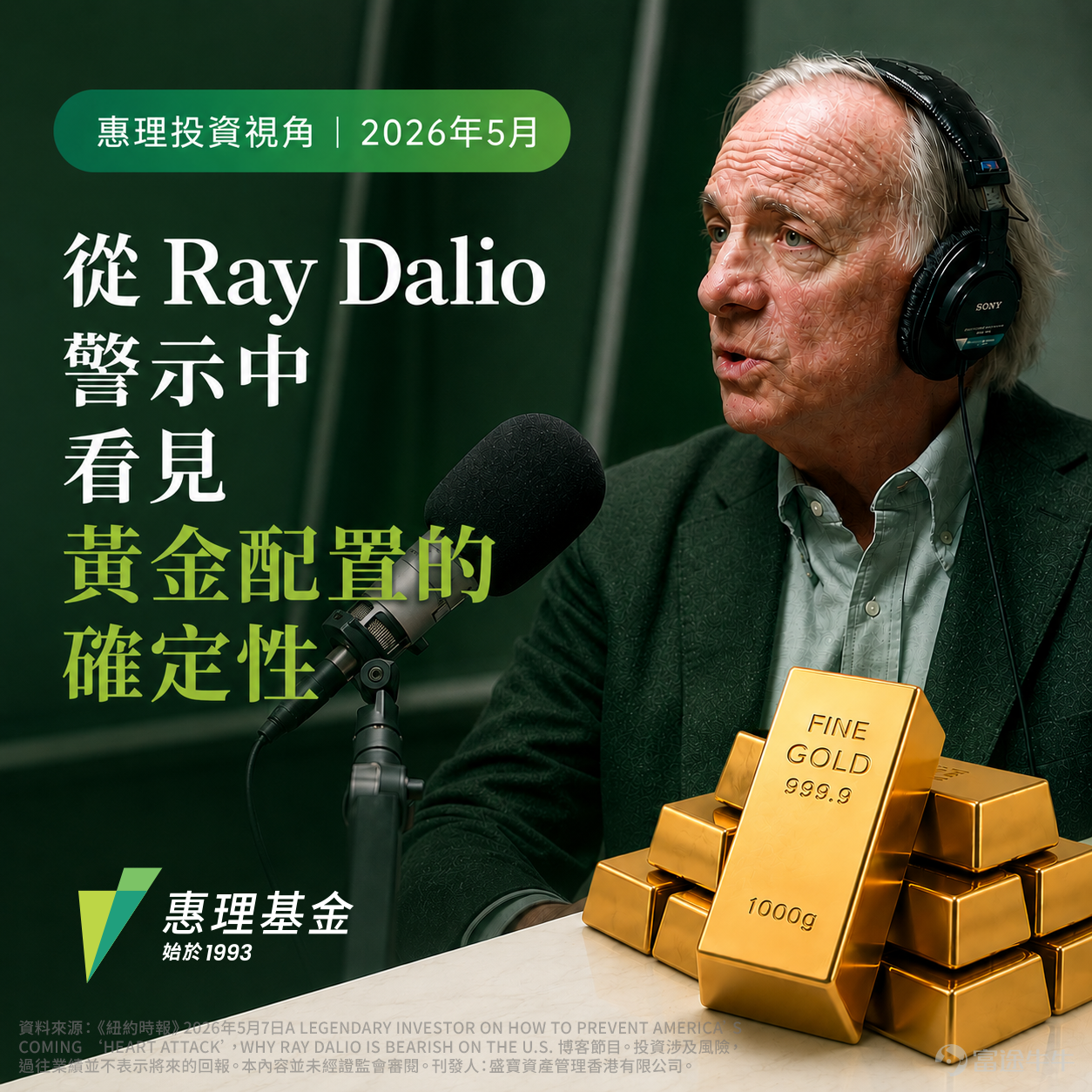
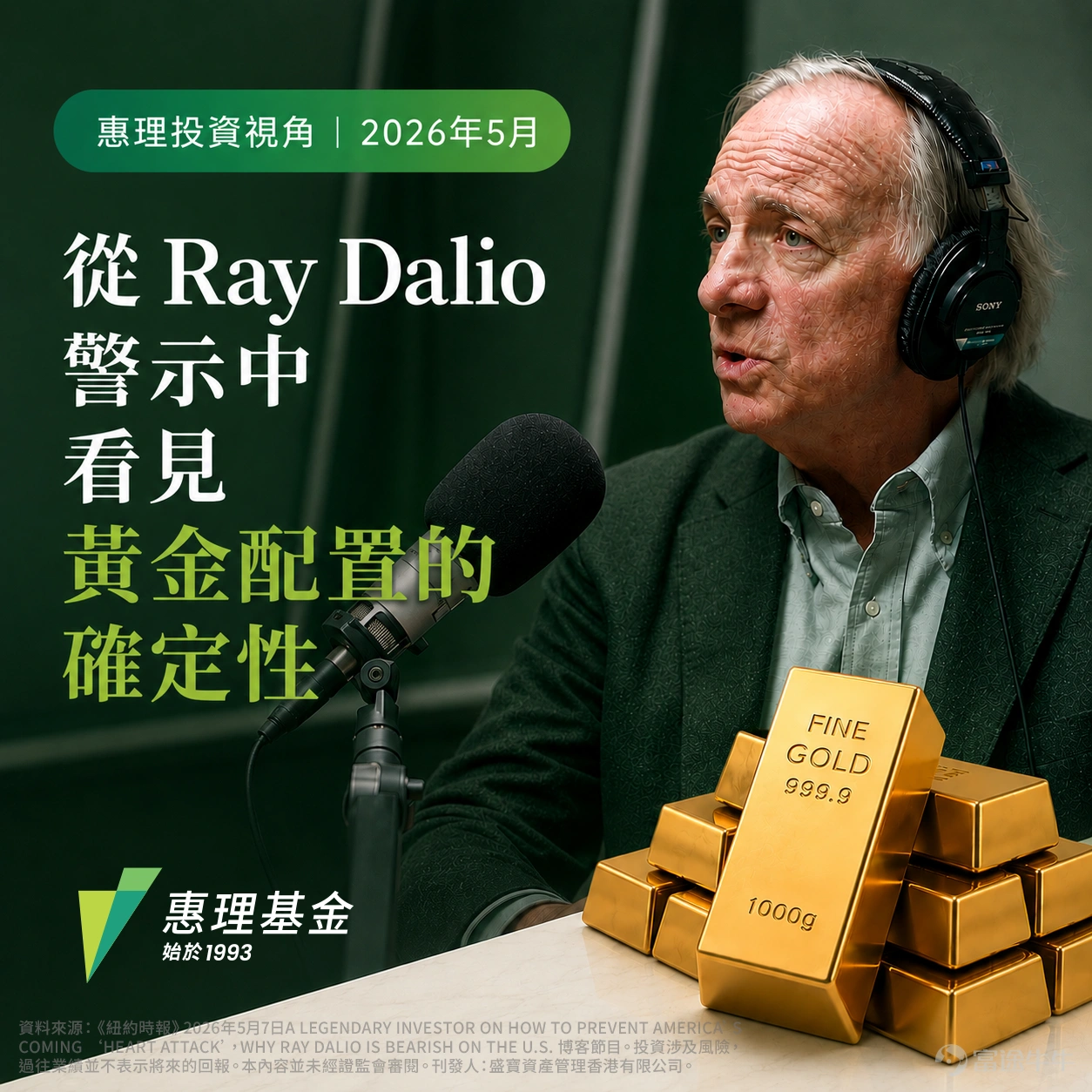
㊙️From Ray Dalio's Warning ❗️The Importance of Gold Allocation - Value Partners Investment Perspective | May 2026
Recently, Bridgewater Associates founder Ray Dalio shared a thought-provoking perspective on a New York Times Podcast. He likened the current state of the U.S. economy to the 'plaque buildup' in heart disease — risks are silently piling up within the veins. Though the heart continues to beat, the tipping point is becoming increasingly clear. As in the world of investing, by identifying these 'structural plaques,' one can indirectly predict the next wave of volatility.
Examining the 'Warning Lines' of U.S. Fiscal Policy Through Numbers
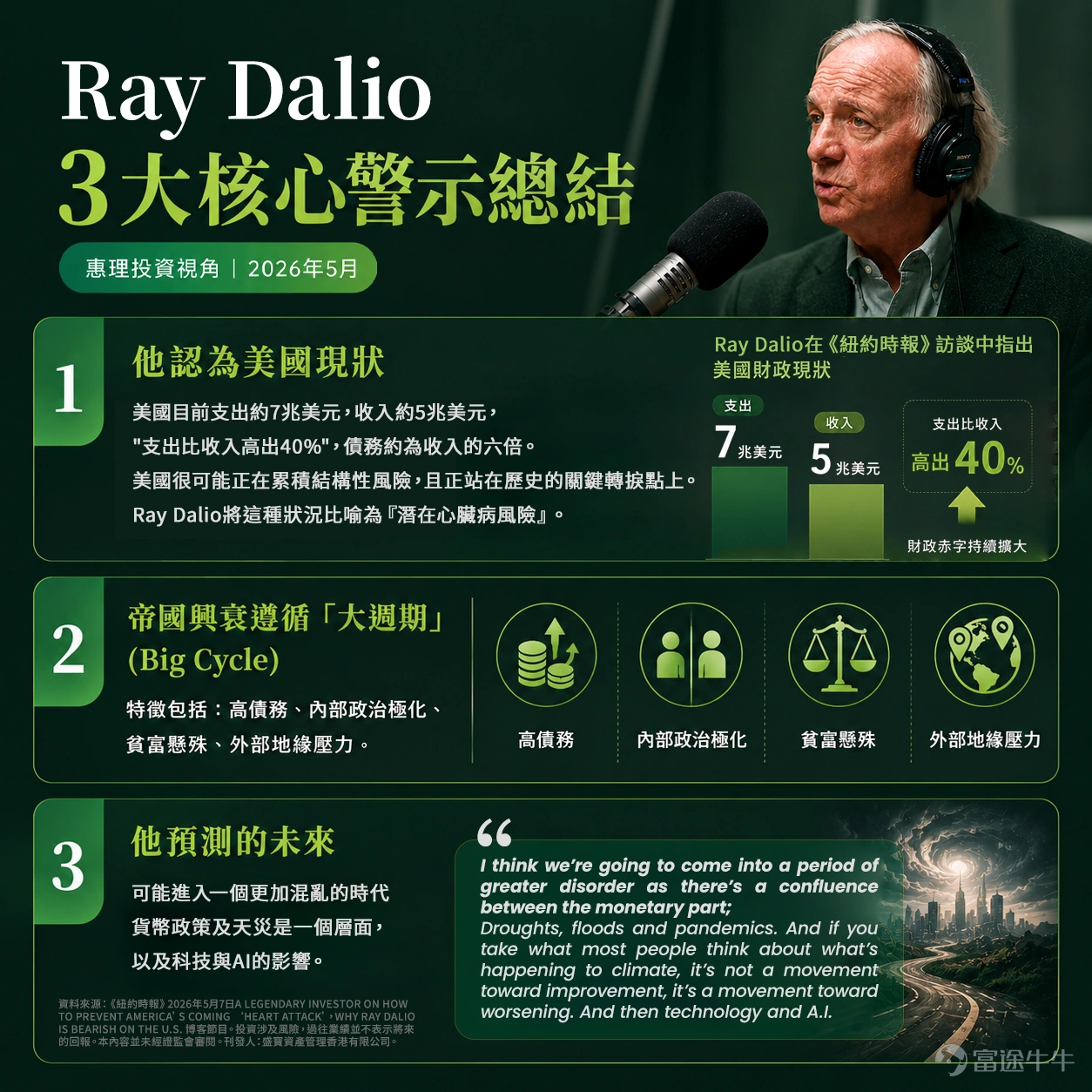
According to the latest fiscal perspective provided by Ray Dalio, the U.S. is currently spending about $7 trillion while its revenue is only $5 trillion, resulting in an overspending rate as high as 40%. Moreover, its debt scale has reached six times its income.
This kind of fiscal imbalance is not the first time it has appeared in a long historical cycle. Dalio pointed out that when the government frequently resorts to printing money to cover deficits, the cost is often the implicit erosion of currency purchasing power. Unlike Japan's 'internal debt' structure, mainly held by nationals, about one-third of U.S. debt is held by foreign countries. In today’s increasingly polarized geopolitical climate, this reliance on external financing makes the U.S. fiscal situation much more vulnerable to external influences.
The Historical Metaphor of the 'Suez Moment'
In an interview, Ray Dalio mentioned a highly symbolic term—'Suez Moment' 。
This refers to the historical event in 1956 when the UK lost control of the Suez Canal, marking the end of the British Empire's colonial era and directly shaking the status of the pound as a reserve currency. Ray Dalio believes that if the U.S. is perceived as 'failing' in key geopolitical games (such as the current Middle East situation), the resulting chain reaction could become a modern version of the 'Suez Moment,' accelerating the restructuring of the global financial order. This is not scaremongering but an objective observation based on the rise and fall of past empires and cycles of reserve currencies.
Convergence of Five Major Forces: Impacts Over the Next Five Years
Ray Dalio believes we are at the eye of the storm where five major forces are simultaneously fermenting: besides the aforementioned debt cycle, there are internal social divisions, geopolitical competition, economic costs brought by climate change, and the disruptive impact of AI technology.
Particularly regarding the impact of AI, Dalio believes it has a dual nature: On one hand, it has the potential to significantly boost productivity and alleviate debt pressure; on the other hand, it is creating a huge wealth gap.
✅ Ray Dalio’s Strategy: Allocate 5%-15% to Gold
Ray Dalio mentioned in an interview that everyone's asset allocation should include a 5%-15% gold position.$Value Gold ETF (03081.HK)$
"I think any portfolio should have between 5 percent and 15 percent in gold" ---- Ray Dalio
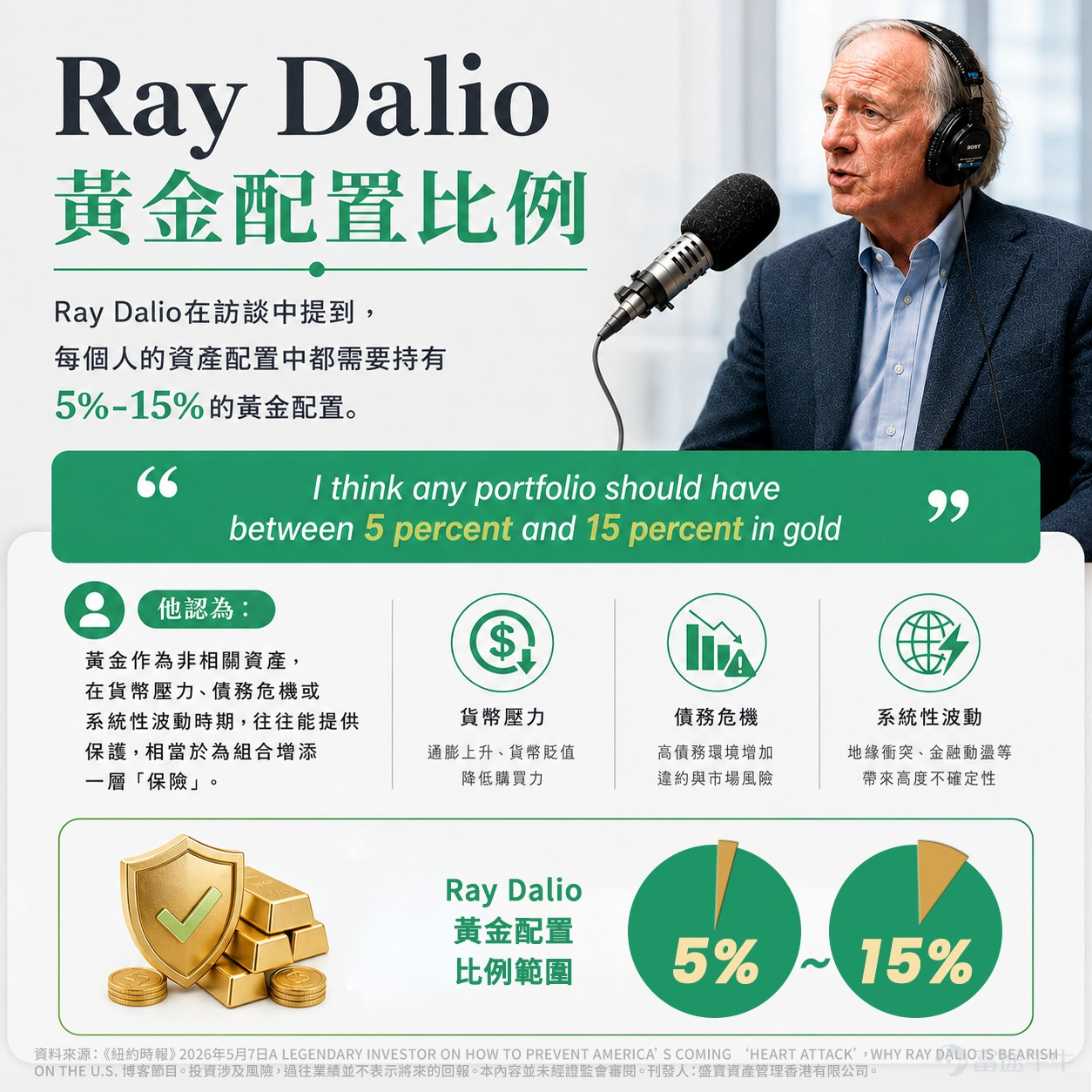
He believes that gold, as a non-correlated asset, often provides protection during periods of currency pressure, debt crises, or systemic volatility, essentially adding a layer of 'insurance' to a portfolio. A moderate allocation to gold (within the 5-15% range) helps improve overall risk characteristics: maintaining reasonable return contributions during normal times and offering diversification benefits during adjustments. This aligns with the value investing principle of emphasizing a margin of safety — focusing on long-term capital preservation and the ability to weather cycles.
Amid global changes, when currencies depreciate, the hedging properties of physical assets once again come to the forefront.
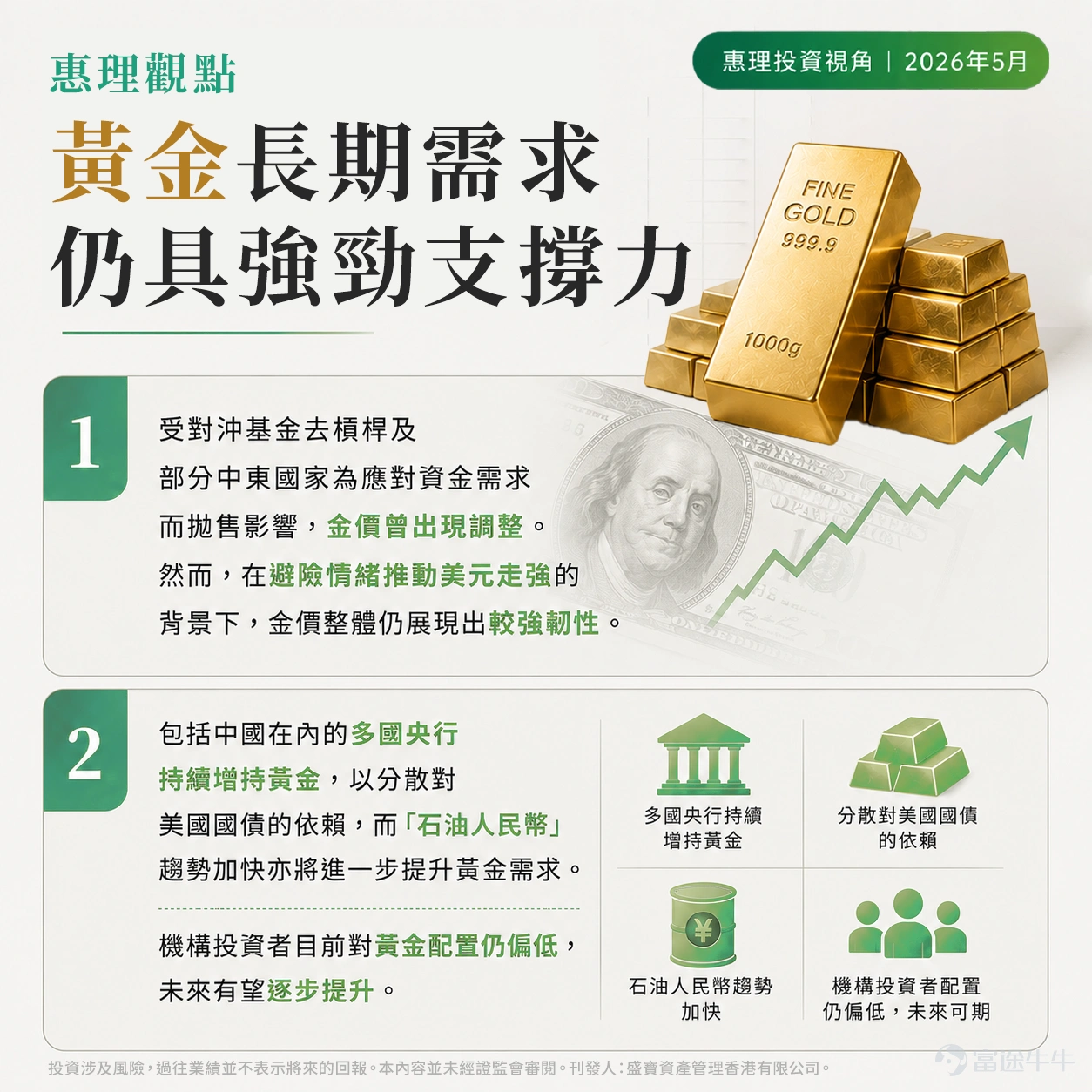
▶️Value Partners Perspective: How to find balance amid uncertainty?
1. Gold prices experienced adjustments due to hedge funds deleveraging and some Middle Eastern countries selling gold to meet funding needs. However, against the backdrop of a strong dollar driven by risk aversion, gold prices have generally shown strong resilience.
2. Central banks in multiple countries, including China, continue to increase their gold holdings to diversify away from reliance on US Treasuries, and the accelerating trend of 'Petro-Yuan' will further boost gold demand. Institutional investors currently remain underweight in gold allocation, but this is expected to gradually increase in the future.

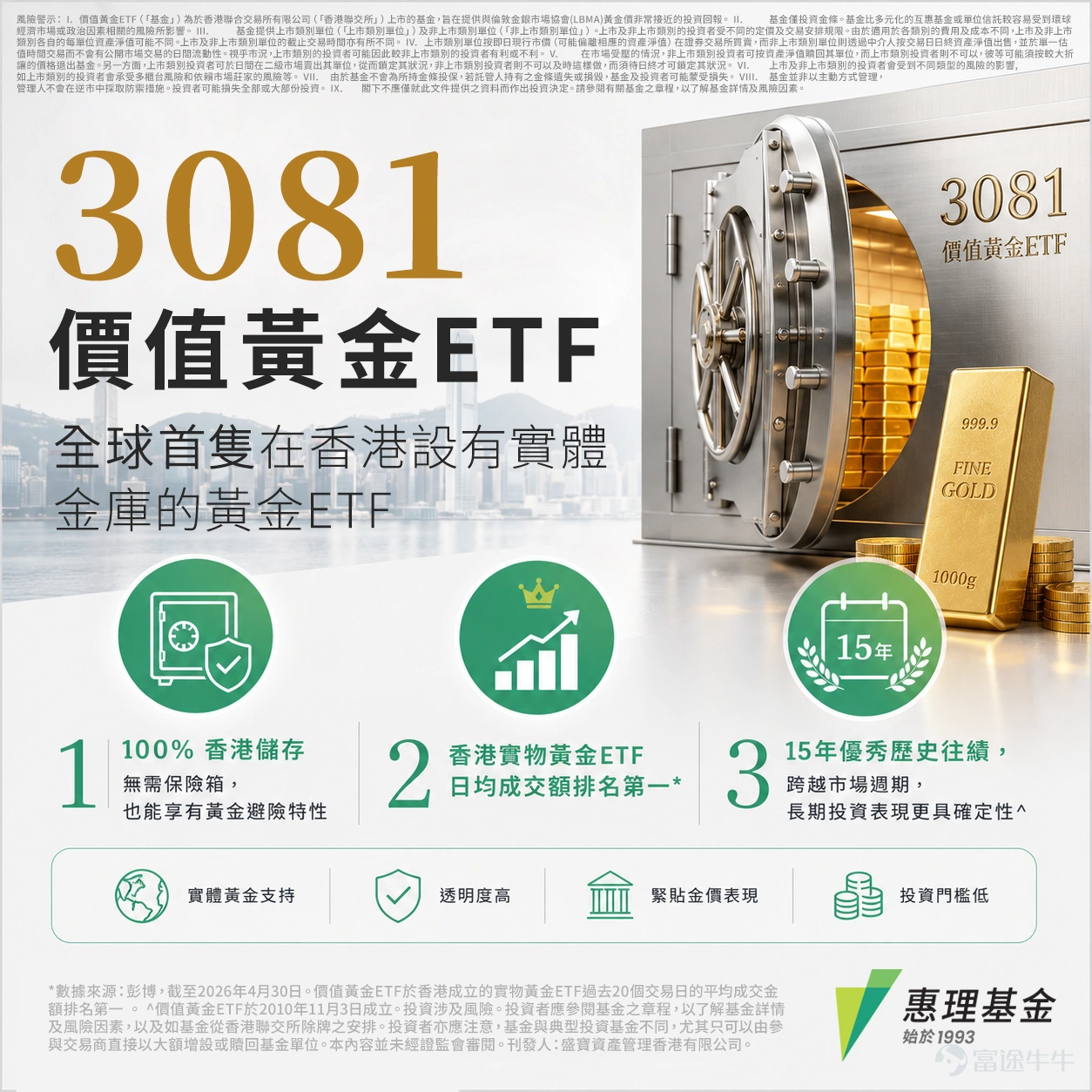
1. 100% stored in Hong Kong, without the need for a safe deposit box, you can still enjoy gold's hedging characteristics.
2. Hong Kong Physical Gold ETF Daily Average Trading Volume RankingFirst*
3. 15 Years of Excellent Historical Performance, spanning market cycles, with greater certainty in long-term investment performance ^
Since its establishment in 1993, Value Partners has witnessed multiple market cycles. In an era of transformation, the resilience demonstrated by Asian markets, particularly Greater China, cannot be overlooked. Despite ongoing macro noise, the region still hosts a group of highly productive and innovative enterprises. Through our more than 6,500 due diligence reviews each year, we have found that true value often lies in companies that can address AI challenges and remain agile amidst complex geopolitical environments.
Finally, I’d like to share with fellow investors that investing is a marathon with time, not a 100-meter sprint. Facing major changes, the most dangerous moves are often ‘betting everything on one position’ or ‘blindly following trends.’ In the uncertain next five years, maintaining a diversified portfolio and moderately allocating assets such as Gold ETFs may be a more important 'strategy for survival.'
Though historical scars are accumulating, as long as we stay clear-headed and find our positioning within the framework of value investing, we will be able to uncover precious opportunities underestimated by the market amid changing circumstances.
What’s your view on gold allocation? Feel free to vote and leave comments.
$VALUE PARTNERS (00806.HK)$$Value Gold ETF (03081.HK)$$Value Gold ETF (83081.HK)$$Value Partners HK-US Dividend Low Volatility ETF (03488.HK)$$Value Partners Asian Income Fund MDis (HK0000352291.MF)$$Value Partners Greater China High Yield Income Fund MDis (KYG9319N1337.MF)$$Value Partners USD Money Market ETF (03480.HK)$$Value Partners HKD Money Market ETF (03421.HK)$$Value Partners RMB Money Market ETF (03420.HK)$$XAU/USD (XAUUSD.CFD)$
*Data source: Bloomberg, as of April 30, 2026. The Value Gold ETF ranks first in average trading volume over the past 20 trading days among physically-backed Gold ETFs established in Hong Kong. ^Value Gold ETF was established on November 3, 2010. The opinions provided in this article solely represent the views of Value Partners Investment Management Hong Kong Limited and Saxo Asset Management Hong Kong Limited, which may change due to market and other conditions. The information provided does not constitute any investment advice and should not be considered as a basis for investment decisions. All data is collected from sources deemed reliable, but Value Partners does not guarantee its accuracy. Some statements in this article may be considered forward-looking statements; these statements do not guarantee future performance, and actual results or developments may differ significantly. Investment involves risks; the price of fund units can go up as well as down, and past performance of the fund is not indicative of future returns. Investors should refer to the fund's explanatory memorandum to understand the details and risk factors of the fund. Investors should pay special attention to the risks involved in investing in emerging markets. Before deciding to subscribe to the fund, investors should seek advice from a financial advisor. If choosing not to consult a financial advisor, investors should consider whether the fund product is suitable. This article has not been reviewed by the Securities and Futures Commission. Publisher: Value Partners Investment Management Hong Kong Limited and Saxo Asset Management Hong Kong Limited.
Risk Disclaimer: The above content only represents the author's view. It does not represent any position or investment advice of Futu. Futu makes no representation or warranty.Read more

Comments
to post a comment
4
1