
[Futu Investment Exhibition] FUN Share Check-in for a Chance to Win Prizes!

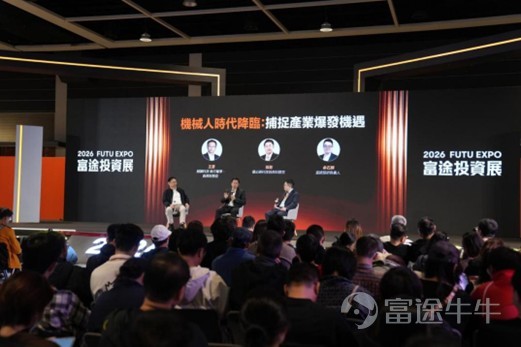
2026 Futu Investment Expo Frontier Dialogue: Dobot x Ubtech Robotics, Unpacking the Commercialization and Investment Opportunities of Robotics
As 'embodied intelligence' crosses the boundary of science fiction, how are daily life and industrial production being restructured?
This year’s Futu Investment Exhibition 2026 has specially invited two heavyweight guests from the industry — Mr. Wang Yong, CFO of Dobot ($DOBOT (02432.HK)$ ), a pioneer in collaborative robots, and Mr. Zhang Ju, CFO of Ubtech Robotics ($UBTECH ROBOTICS (09880.HK)$ ), a leader in humanoid robots.(Ranking is not in any particular order, listed according to stock codes)
They speak from the front lines of the industry, focusing on the topic 'The Arrival of the Robot Era: Seizing Opportunities in an Exploding Industry.' They provide investors with cutting-edge insights into the robotics sector by clarifying technological complexities, emphasizing advancements like the acceleration of domestic core components and large-scale commercial application scenarios.

Below are the key insights from the discussion.
Phase 01 of Commercial Validation —— Moving Beyond Concepts: The Real-World Scenarios Behind the Surge in Orders
Futu: DouBao Technology's revenue growth for the first half of 2025 reached 27%, with a stunning 56.7% surge in the domestic market. Can you explain the story behind these figures in a way that regular investors can understand? For instance, why are customers willing to buy your robots? Which application scenarios have already matured and been successfully implemented?
Wang Yong:DouBao Technology was founded in 2015 and currently has two main business segments: collaborative robots and embodied intelligent robots, including humanoid robots, multi-legged robot dogs, etc.
The rapid growth of collaborative robots in the domestic marketis mainly due to the gradual increase in industry penetration in recent years, with relatively fast market growth. The applicable scenarios for the products are very broad, such as industrial manufacturing, semiconductors, healthcare, new energy, scientific research and education, and commercial retail, where scaled applications have been achieved. Technologically speaking, collaborative robots offer significant advantages in terms of intelligence, ease of deployment, and user-friendliness. As the market size expands and the cost of core components decreases significantly, collaborative robots now offer high cost-effectiveness and practicality.Additionally, the company’s IPO has increased its visibility, and customer recognition of our products continues to improve, making us more competitive in the market.
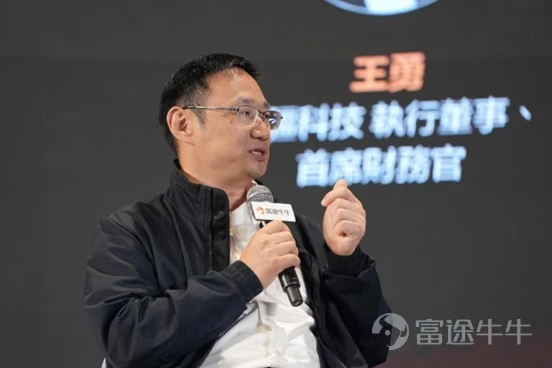
Mr. Wang Yong, CFO of Yueliang Technology
Futu: Ubtech Robotics' $1.4 billion order sounds impressive, but investors want to know more: which industries are these orders coming from? What tasks will the robots perform? Why are companies willing to spend so much money on humanoid robots instead of traditional equipment?
Zhang Ju:1.4 billion is just the beginning.Our current orders are mainly focused on three core areas: industrial manufacturing (our main battlefield), commercial services, and data collection centers.
Why are companies willing to buy humanoid robots?Because traditional factory automation actually has a “ceiling.”Traditional automated equipment can only work on specific and fixed production lines, while there are still many unstructured scenarios in factories that rely on manual labor.
But the pain point now is the “labor shortage,” as the younger generation is unwilling to work in factories doing tedious, repetitive assembly line jobs.The form of humanoid robots is the most compatible with the human working environment. They can seamlessly integrate into existing factory production lines, filling the labor gaps that traditional machines cannot cover and humans are unwilling to do.

Mr. Zhang Ju, CFO of Youbixuan
Phase 2: Cost Inflection Point — AI catalysis and the economics behind 'machine-for-human substitution'
Futu: The price of collaborative robots has dropped significantly in recent years. What is the approximate pricing for a collaborative robot now? In addition to collaborative robots, we have also seen DouBot's humanoid robots recently enter large-scale mass production. What scenarios are they mainly used in?
Wang Yong:The price range varies for different forms and payloads. Currently, the price for 4-axis models is relatively lower. The main 6-axis collaborative robots offered by the company have payloads ranging from 3kg to 30kg, with unit prices approximately between $10,000 and $30,000.
This price has rapidly decreased compared to a few years ago, mainly due to the maturation of the domestic supply chain and the reduction in the cost of core components; collaborative robots have become very affordable.
Regarding embodied intelligence products, we have not only launched a dual-arm embodied intelligence platform but also introduced a variety of product forms such as full-size humanoid robots, quadruped/hexapod robot dogs, and more. These products are currently applied primarily in scientific research and education (e.g., embodied intelligence labs), industrial scenarios (such as sorting, packaging, and material handling), commercial retail (such as popcorn stands in malls), and outdoor inspection and exploration scenarios where they are increasingly being deployed.
Futu: Shouldn't humanoid robots be more expensive? What kind of companies are willing to spend large amounts on humanoid robots? Compared to traditional assembly line equipment, what advantages do humanoid robots have, and will their prices drop further in the future?
Zhang Ju:In fact, we should not simply compare the price of humanoid robots with traditional automation equipment; their benchmark is 'labor costs.'
Take new energy vehicle factories as an example. A large factory may only need a few thousand traditional industrial robots but requires tens or even hundreds of thousands of workers. If the cost of a humanoid robot can be kept within the total salary of a worker over several years, companies would be highly motivated to purchase them.
The development of AI technology is the most important catalyst driving the advancement of humanoid robots; without the progress of AI technology, humanoid robots cannot be applied in scenarios like factories.Their advantage lies in their versatility and ability to adapt to complex environments.
In the future, with scaled mass production (similar to the development path of electric vehicles back then), the price of humanoid robots will definitely continue to drop.
Phase 03: Crossing the Chasm —— Tackling 'Physical World Data' and the 2026 Strategic Anchor Point
Futu: What real-world challenges have you encountered in promoting robots? How do you view the challenge of 'high-quality data'? In your respective product implementations, what specific methods have you used to address this issue?
Wang Yong:Although the hardware side has developed relatively quickly, there are still some performance issues that cannot meet the needs of home services; additionally, on the brain side, the amount of robot data is very limited, and the cost of acquiring data is also high.
We choose to train our bodies and models through the real physical world. Although the cycle is long and the cost is high, the accuracy of the data obtained will be higher. At the same time, relying on our accumulated scenario advantages in fields such as industry, commerce, and semiconductors, we precipitate valuable, high-quality data. Additionally, our embodied product forms are diverse, applying our constructed 'one brain, multiple bodies' model to multi-form products, using unified data standards to address data migration issues.
Zhang JuHigh-quality data is indeed a bottleneck in the industry. Currently, many companies are using simulated data for training, but they encounter significant difficulties when migrating to the real physical world.
We have more than a decade of first-mover advantage in data accumulation, covering multimodal data collection.It can be said that data is very important, and this is one of Ubtech Robotics' advantages.By unifying the underlying technology platform and data standards, we enable different types of robots (such as humanoid and wheeled robots) to share and reuse this valuable data.
Futu: Could you briefly introduce the company’s key focus areas and core strategy for 2026?
Wang Yong: In 2026, we will firmly advance"Dual-Drive Strategy": 'Intelligentization of collaborative robots' and 'Innovation in embodied intelligence.' On one hand, we will deepen the penetration of collaborative robots in industrial, commercial, and scientific research and educational scenarios, expanding market share and coverage through excellent cost-performance. On the other hand, we will continuously increase R&D investment in embodied intelligence, AI technology, and data.
Zhang Ju: We will resolutely promote the application of humanoid robots in industrial manufacturing scenarios, striving for scaled commercial implementation in real factory production lines. Based on this, we will gradually expand into commercial services and home scenarios.
04 Insights from Investors' "Profit Effect": Look Beyond Complete Machines, Embrace the Entire Industry Chain
This meeting provided highly practical guidance: do not limit your focus to single complete machine manufacturing.Ubtech Robotics CFO Ju Zhang recommends: 'Investors should pay close attention to the entire artificial intelligence industry chain, not just focus on finished product companies. From upstream chips and model companies to downstream applications, the prospects for the entire industry chain are extremely broad. The humanoid robotics investment sector deserves serious study.'
Following this line of thought, from upstream computing chips and core transmission components to midstream model companies and finished product manufacturing, deeply exploring key nodes with core technological barriers and domestic substitution logic will be the core principle for capturing the dividends of the Physical AI era.
Transitioning from code to the physical world, technology is reshaping productivity. This year’s Futu Investment Exhibition, by building an efficient dialogue platform between listed companies and investors, clearly translates cutting-edge applications like flexible manufacturing of robots and the commercialization of embodied intelligence into tangible business value.In the future, Futu will continue to connect industrial transformation with investment opportunities, opening up broader value perspectives for investors.
*The content represents the personal views of the guest and does not necessarily reflect the position of Futu. Before making any investment decisions, consider your risk tolerance and consult independent advice. This content does not constitute any offer, solicitation, recommendation, opinion, or guarantee regarding any securities, financial products, or tools.
Risk Disclaimer: The above content only represents the author's view. It does not represent any position or investment advice of Futu. Futu makes no representation or warranty.Read more
Comments
to post a comment
3