First quarterly turnaround from loss to profit! Has XPeng reached a turning point?

Revenue surpasses 100 billion yuan, but net profit plunges by 85%, marking the 'most dangerous year' for Li Auto

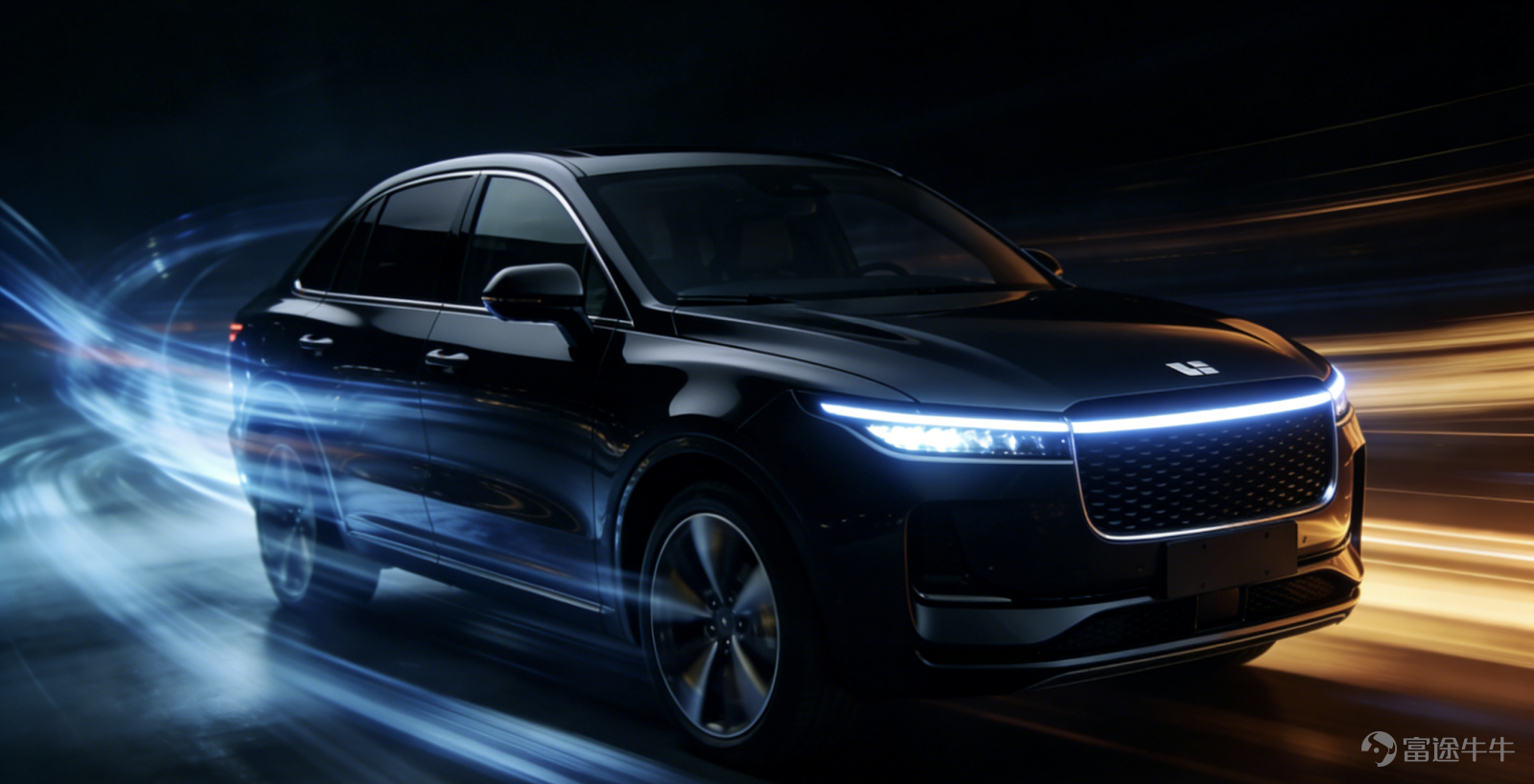
Image generated by AI
March 2026,Li Autodelivered a report card that could send shivers down the spines of most investors.
In 2025, Li Auto's revenue reached 112.3 billion yuan, a sharp year-on-year drop of 22.3%; net profit was 1.14 billion yuan,,a reduction of 85.8% from the previous year’s 8.05 billion yuan.。Annual deliveries fell from 500,500 units in 2024 to 406,300 units, marking a decline of over 18%.

Even more concerning is the guidance for the first quarter of this year: expected revenue between 20.4 billion and 21.6 billion yuan, far below market expectations of 24 billion yuan. This suggests that the first-quarter year-on-year decline may continue at a rate of 16.7% to 21.3%.
For Li Auto, 2025 was the most challenging and transformative year since the company’s founding. During this period, Li Auto experienced the pain of losing its sales crown and witnessing a sharp drop in profits but also decisively initiated a deep organizational restructuring, shifting from a 'professional manager model' back to a 'Venture model.'
During that evening’s earnings call, Li Xiang spent a significant amount of time discussing not financial figures, but organizational changes, AI strategy, in-house chip development – and one recurring term: 'embodied intelligence.'
In 2025, Li Auto's annual revenue reached 112.3 billion yuan, a year-on-year decrease of 22.3%. This figure would be alarming for any company, but within the new forces, it preserved the sole record of 'three consecutive years of revenue surpassing 100 billion yuan'. Net profit was 1.1 billion yuan, plummeting 85.8% from 11.8 billion yuan in 2024.
More painfully, this 1.1 billion yuan was propped up by interest income and changes in the fair value of investments, with an actual operating loss of 521 million yuan at the operational level. According to relevant data from the financial report, its pre-tax profit for 2025 was approximately 1.297 billion yuan, while net interest and investment gains for the period were as high as 1.919 billion yuan. These gains directly covered the operating losses of the core business, becoming the key factor in maintaining a positive net profit.
But the capital market hasn't completely abandoned Li Auto, because another set of figures carries more weight: as of the end of 2025, cash reserves amounted to 101.2 billion yuan, ranking first among China's new forces. Free cash flow turned positive at 2.47 billion yuan in Q4, indicating that the toughest quarter had passed, with still a hundred billion yuan worth of resources available on the books.
The drop in deliveries directly explains why revenue shrank. In 2025, total deliveries were 406,300 units, a year-on-year decline of 18.8%, falling from being the sales champion among new forces in 2024 to fifth place—overtaken by HarmonyOS Intelligent Travel, Leapmotor, Xpeng, and Xiaomi. The pure electric model MEGA got off to an unfortunate start, and competitors in the extended-range track all surged forward, making Li Auto feel the taste of being 'surrounded on all sides' for the first time.
Gross margin is one of the few bright spots in the financial report. The annual gross margin was 18.7%, narrowing only 1.8 percentage points from 20.5% in 2024, and rebounded to 17.8% in Q4. The L6 lowered the average selling price, but economies of scale and cost control maintained the basic operations—indicating that the price war has not yet breached Li Auto’s bottom line.
However, the core issue remains unchanged: the L series faces generational updates, and the pure electric segment is still climbing. The good news is that the pure electric model i6 broke through production bottlenecks at the beginning of 2026, reaching a production capacity of 20,000 units in March, and orders for i8 in March increased by 180% compared to January.
Li Xiang set a goal of over 20% year-on-year growth for 2026—on the basis of 406,000 vehicles, meaning the full year target is to reach 490,000 vehicles. However, Q1 guidance is only 85,000-90,000 vehicles, implying a need for a strong rebound in the second half of the year.
The fulcrum of this rebound will be the all-new generation of the Li Auto L9, set to release in Q2. The numbers in the financial report have drawn a bottom line: a hundred-billion-yuan cash reserve serves as a moat, three consecutive years of profitability provide confidence, but a ranking drop out of the top three and halved profits leave no room for further mistakes by Li Auto.
More noteworthy than the earnings report figures is the deep transformation Li Auto is currently undergoing. Before the earnings release, rumors spread in the market that Li Auto was 'planning to close 100 stores.' Ma Donghui directly refuted this in the conference call: 'This is not accurate information.'
But denial does not mean no action is being taken. In fact, Li Auto is carrying out a reform of its sales system.
The core issue was pointed out by Li Xiang himself: 'Our biggest problem in the past was managing our direct sales system with a distributor mindset.'
The essence of a direct sales model is that each store operates as an independent unit, but in the past, Li Auto's performance evaluation mechanisms, incentive structures, and site selection decisions were fundamentally still based on dealer thinking — where headquarters makes all the decisions and store managers simply execute them.
On March 1, Li Auto officially launched the 'Store Partner' mechanism. This is not franchising, but rather delegating operational decision-making power and profit-sharing rights to store managers, making them truly responsible for their store’s performance. New store locations will be assessed with full participation from store managers, tying responsibilities and rights to individuals.
Ma Donghui was very straightforward: 'We hope to address the root causes of blindly opening stores and expanding external operations in the past.'
The goal of this mechanism is to cultivate a large number of store managers earning over a million annually, allowing top-performing managers to earn two to three times the industry average. The effectiveness of these evaluations aims to show significant improvement by the third quarter.
Regarding the departure of several senior executives from Li Auto since 2025, including former head of end-to-end models for intelligent driving Xia Zhongpu, technology R&D head Jia Peng, and mass production R&D head Wang Jiajia — some of whom have even started their own ventures — Li Xiang expressed congratulations while also highlighting a set of data: Over the past 5-10 years, many core talents who were nurtured have gone on to start businesses and received recognition from the capital markets; internally within the company,Biga significant number of post-90s and post-95s employees have taken on leading roles in business operations, while post-00s campus recruits have become core technical solution contributors.。
He said, 'This is the most important sign of our confidence in the next decade.'
If channel reform represents defense, then AI and chips symbolize Li Auto's offense.
In 2025, Li Auto plans to invest 11.3 billion yuan in R&D, with 50% allocated to AI-related initiatives. By 2026, this investment will remain steady at around 12 billion yuan, with AI still accounting for roughly half.
Where is the money being spent? The most significant portion goes toward the self-developed chip 'Mach 100'.
This automotive-grade chip, manufactured using a 5nm process, will be installed in the all-new Li Auto L9. During its earnings call, Li Auto provided several key metrics:
Within the same silicon area, Mach 100 delivers effective computing power five to six times that of Thor-U.
It can run VLA models with parameter counts six times higher than the previous generation and computational capacity increased tenfold.
The overall delay from sensor input to vehicle execution has been reduced to 200-300 milliseconds.
Reportedly, the BOM cost of a single Mach 100 chip is significantly lower than externally sourced alternatives. Additionally, by replacing the previous-generation XCU controller with the Mach 100 chip, each vehicle saves over 1,000 yuan.
More importantly, Mach 100 achieves deep integration with the self-developed StarRing OS and full-line controlled chassis. Regarding the gap in hardware-software integration, Li Auto's CTO, Xie Yan, said it would be likeAppleThe gap with Android — once formed, becomes a structural and continuously expanding advantage.
Li Xiang explained this wave of transformation from a technological philosophy perspective: upgrading from the '2D camera + LiDAR' solution to 3D ViT allows vehicles to perceive and understand the physical world just like humans. Combined with a full-line control chassis (steer-by-wire, brake-by-wire, four-wheel steering, and 800V active suspension), large models can directly control actuators without going through traditional MCU intermediaries.
This system represents an important standard for embodied intelligence in future automobiles,' said Li Xiang.
In 2025, Li Auto's financial report was filled with contradictions: declining revenue, profits cut in half, yet it maintained the bottom line of holding over 100 billion in cash and three consecutive years of profitability. However, the market's patience is always limited — falling out of the top three means no room for any further mistakes.
A 20% growth target is both the bottom line and a gamble.
The new generation L9 carries not only the renewal of the L series but also whether Li Auto can prove that 'hardware-software integration' is more than just a slogan with Mach 100 and its full-line control chassis. The pure electric i6 has overcome production bottlenecks, and i8 orders have rebounded, but the real test lies in the second half of the year — when the i9 enters the market, Li Auto will truly reveal its hand in the pure electric battlefield.
By then, whether Li Auto's 'rebound' can materialize will determine whether it returns to its peak or gets left behind by the new wave of forces.
(Article by Engine Perspective, Author: Han Jingxian, Editor: Li Yupeng
Risk Disclaimer: The above content only represents the author's view. It does not represent any position or investment advice of Futu. Futu makes no representation or warranty.Read more
Comments
to post a comment