
Options Square: Micron's earnings guidance was explosive—how should options be positioned for the me

Option trading with a hundred dollars | META's one-day PUT option surged 1399 times, volatility soared, and the probability of exercise is only 0.28%
Hello fellow investors! Many options beginners get overwhelmed when they first encounter options, unsure which underlying asset or contract to choose, fearing they'll lose everything by making the wrong choice.For beginners, using an extremely low trial-and-error cost (e.g., less than $100) to familiarize yourself with the rules, experience the adrenaline rush, and develop market intuition may be an essential step on your investment journey.
To meet the needs of our fellow investors, OptionMovers has launched the 'Hundred Bucks for Options' column.Focus on two key factors: trending underlyings (which are prone to big swings, and where volatility brings opportunity, with relatively sufficient liquidity) + small-capital contracts (where the price of a single option is under $100, allowing you to test the waters at a minimal cost).
Every day, we'll review the top 10 traded stocks priced by tier, while breaking down key information about active core options, including strike prices, volatility, and probability of execution, helping investors capture market opportunities affordably while balancing cost-effectiveness and trading insights. Fellow investors, stay tuned!

I. Stock Price Below $50 - Top 10 Low-Cost Option Trades
Stocks with lower share prices often have relatively cheaper absolute option premiums (i.e., option fees or rights fees), as they represent smaller underlying asset value scales, determined by the pricing logic of options. Therefore, this category of options hasThis is because the underlying asset value it carries is relatively small, which is determined by the pricing logic of options. Therefore, this option hasLow barrier, light costFeatures: Suitable for small-capital layouts in directional opportunities while reducing the risk of premium erosion. $Hims & Hers Health (HIMS.US)$$SoFi Technologies (SOFI.US)$$American Airlines (AAL.US)$$Bank of America (BAC.US)$$Ondas (ONDS.US)$
Core screening criteria: Latest option price between 0.1-1 USD (indicating a single option contract price range of 10-100 USD), underlying stock price < 50 USD, ranked by top ten trading volume on the day (with an attached chart showing the top ten traded).

Among HIMS options with trading volumes exceeding 100 contracts, the largest increase was in the call option expiring on March 13, 2026, with a strike price of $30.

The current volatility of this option is higher than the 30-day historical average, and its implied volatility is close to 175%. If it is expected that the implied volatility will decline, it is suitable for constructing strategies as an option seller. However, given the current implied volatility situation, this short-term option may experience rapid increases near the strike price.
If implied volatility is expected to rise alongside continued stock price fluctuations, it would be suitable for option buyers.

The current probability of exercise is low, approximately 4.01%. If planning to buy the option and expecting the implied volatility to rise, combined with the high implied volatility mentioned above, it would be appropriate to use a strategy as an option buyer. Conversely, if the probability of exercise is expected to decrease or even drop to zero, it is more suitable as an option seller.

II. Weekly Top Nine Options Trading Rankings
Starting from January 26, the US stock options market experienced a significant upgrade:$Tesla (TSLA.US)$ 、$NVIDIA (NVDA.US)$ 、$Apple (AAPL.US)$ 、$Amazon(AMZN.US)$ 、Meta Platforms (META.US) 、$Broadcom (AVGO.US)$ 、$谷歌-C (GOOG.US)$、$Microsoft(MSFT.US)$、$iShares Bitcoin Trust (IBIT.US)$These nine major underlying assets, which originally had options contracts expiring every Friday, now also have new contracts expiring on Mondays and Wednesdays.
What does this mean? Previously, if you wanted to use options on these underlying assets to leverage small capital for bigger gains, you would have to wait until the market closed on Friday. But now, you can also trade up to Monday or Wednesday, accelerating capital turnover.Moreover, due to shorter durations and lower prices, it’s possible to participate in market movements with even less capital, reducing trial-and-error costs significantly.
Although the unit price of the underlying stock in this option is relatively high, the premium for a single option contract is still kept below $100, allowing investors to gain exposure to high-priced core assets while significantly lowering entry costs.
Core screening criteria: nine major underlying assets, latest option prices between $0.1 and $1 (indicating that the price for a single option contract is between $10 and $100), expiration within three days, sorted by percentage change.

Among the nine companies, the largest increase was in Meta Platforms' put option expiring on March 13, 2026, with a strike price of $340.

The current volatility of this option is much higher than the 30-day historical average, and its implied volatility is close to 217%. If it is expected that the implied volatility will decline in the future, it is suitable for constructing strategies as an option seller. If the implied volatility is expected to increase along with continued stock price fluctuations, it is more suitable as an option buyer.

The current probability of exercise is low, approximately 0.28%, and combined with the high implied volatility mentioned above, it is more suitable for option selling strategies. Conversely, if the probability of exercise is expected to continue rising, it would be more appropriate as an option buyer.

On the investment journey, every practice of validating one's understanding at a controllable cost is a solid step toward realizing future value. Fellow investors who wish to learn more about how to trade low-cost options can click the link below to study further.
 Finally, Futu News brings a small perk for fellow investors. Fellow investors are welcome to claim it.Options Beginner Pack
This event is exclusively for invited HK users, click to learn moreDetailed event rules >>
Market conditions are complex and volatile,Options strategyOverwhelmed by choices? Futubull helps you build a portfolio in three steps.Options strategymaking investing simple and efficient from now on!
Risk Warning
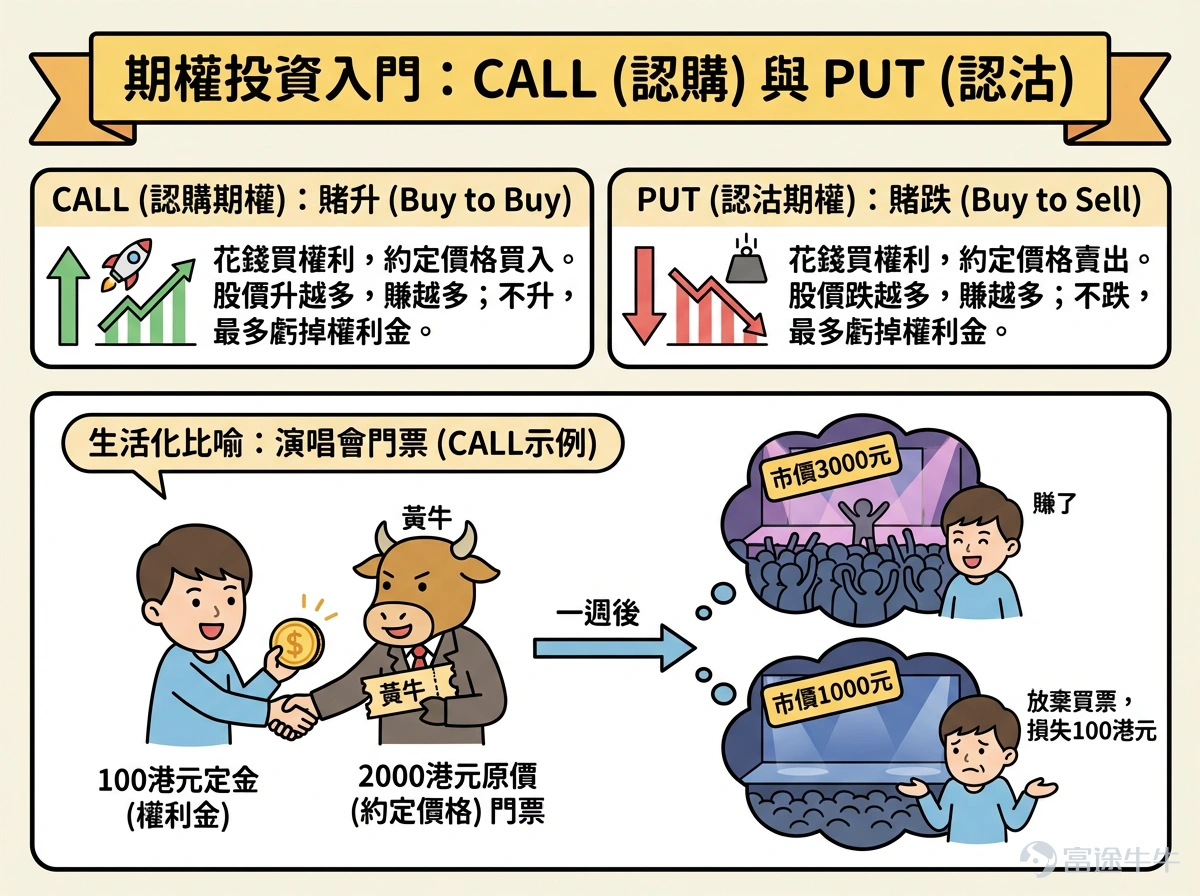
An option is a contract that gives the holder the right, but not the obligation, to buy or sell an asset at a fixed price at any time on or before a specific date. The price of an option is influenced by several factors including the current price of the underlying asset, the strike price, time to expiration, and implied volatility.
Implied volatility reflects the market’s expectation of the future volatility of an option over a certain period. It is data derived inversely from the BS option pricing model and is generally considered an indicator of market sentiment. When investors anticipate higher volatility, they may be willing to pay more for options to hedge risks, resulting in higher implied volatility.
Traders and investors use implied volatility to assess the attractiveness of option prices, identify potential mispricing, and manage risk exposure.
Disclaimer
This content does not constitute any offer, solicitation, recommendation, opinion, or guarantee for any securities, financial products, or tools. The risk of loss in trading options can be substantial. In some cases, losses may exceed the initial margin deposited. Even if you set contingent orders such as 'stop-loss' or 'limit' orders, these may not prevent losses. Market conditions may prevent these orders from being executed. You might be required to deposit additional margin within a short period. If you fail to provide the required amount within the specified time, your open positions may be liquidated. However, you will still be responsible for any shortfall in your account. Therefore, before trading, you should study and understand options and carefully consider whether such trading is suitable for you based on your financial situation and investment objectives. If you trade options, you should be familiar with the procedures for exercising options and the rights and obligations upon exercise and expiration. Option trading involves extremely high risks and is not suitable for all investors. Investors should read carefully before engaging in any options trading strategy.Characteristics and Risks of Standardized Options。
This content does not constitute any offer, solicitation, recommendation, opinion, or guarantee for any securities, financial products, or tools. The risk of loss in trading options can be substantial. In some cases, losses may exceed the initial margin deposited. Even if you set contingent orders such as 'stop-loss' or 'limit' orders, these may not prevent losses. Market conditions may prevent these orders from being executed. You might be required to deposit additional margin within a short period. If you fail to provide the required amount within the specified time, your open positions may be liquidated. However, you will still be responsible for any shortfall in your account. Therefore, before trading, you should study and understand options and carefully consider whether such trading is suitable for you based on your financial situation and investment objectives. If you trade options, you should be familiar with the procedures for exercising options and the rights and obligations upon exercise and expiration. Option trading involves extremely high risks and is not suitable for all investors. Investors should read carefully before engaging in any options trading strategy.Characteristics and Risks of Standardized Options。
Editor/Lee
Risk Disclaimer: The above content only represents the author's view. It does not represent any position or investment advice of Futu. Futu makes no representation or warranty.Read more


Comments
to post a comment
25
56