English
Back
Open Account
US-Iran talks to resume at end-May! Middle East situation shifts again
Futubull Options Sir
joined discussion · Feb 24 17:36 ·

OptionSir Breaks Down Hot Topics | A Stunning Recovery After a Plunge? Geopolitical Tensions Resurface – What’s Next for Gold and Silver After the Holidays?

At the start of 2026, the precious metals market experienced epic volatility. After a continuous rise in January, the end of the month witnessed a 'historic crash,' with silver recording its largest single-day drop ever and gold prices falling to around $4,400 per ounce, shrouding the market in panic and uncertainty.
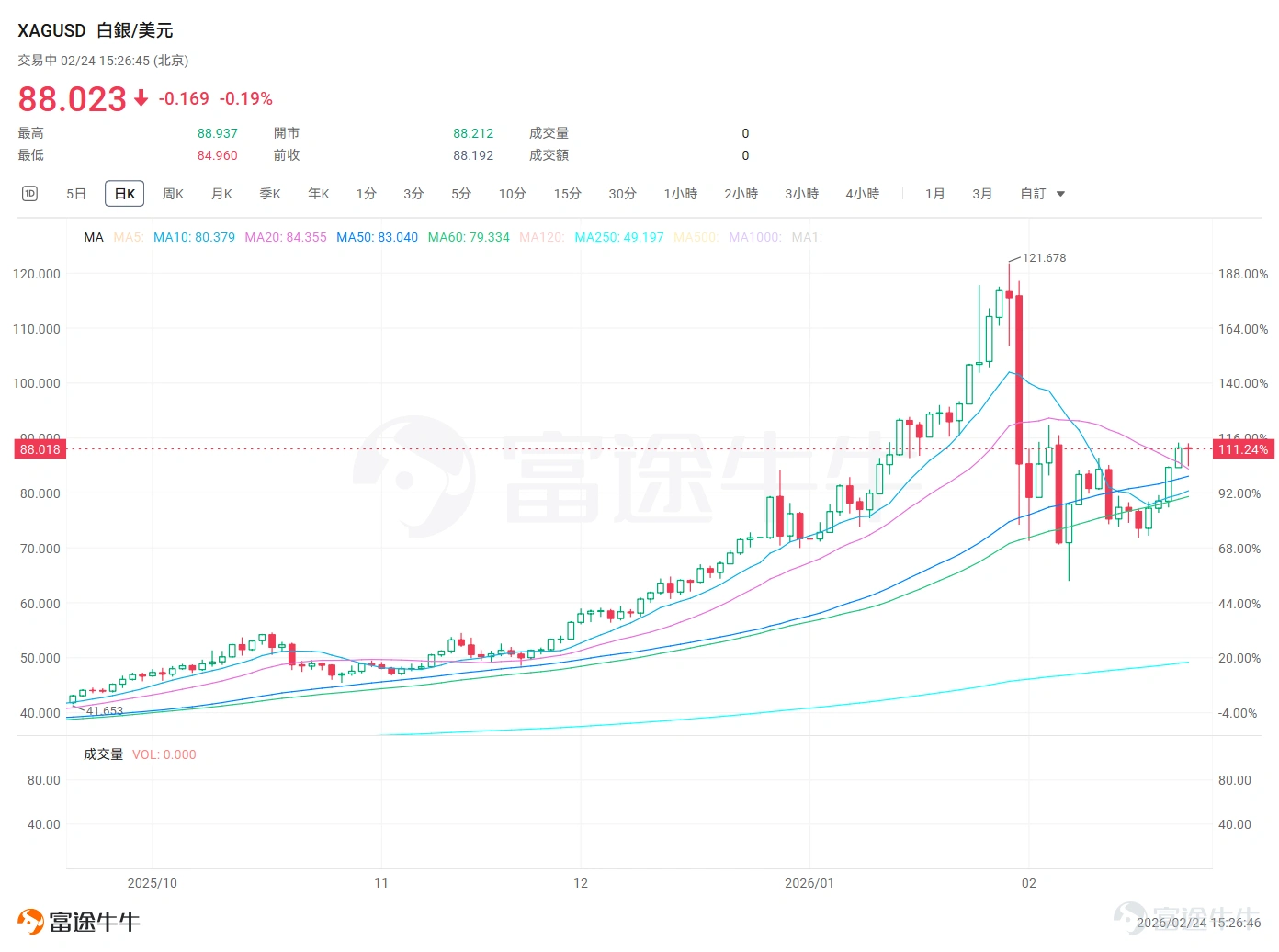
During the Spring Festival of the Year of the Horse, precious metals gradually stabilized and began to rebound.As of today (February 24), gold has largely recovered its pre-holiday losses and is approaching the high levels seen at the end of January, while silver has also rebounded, but with noticeably less strength compared to gold.This 'strong gold, weak silver' divergence reflects the complex state of the current precious metals market.
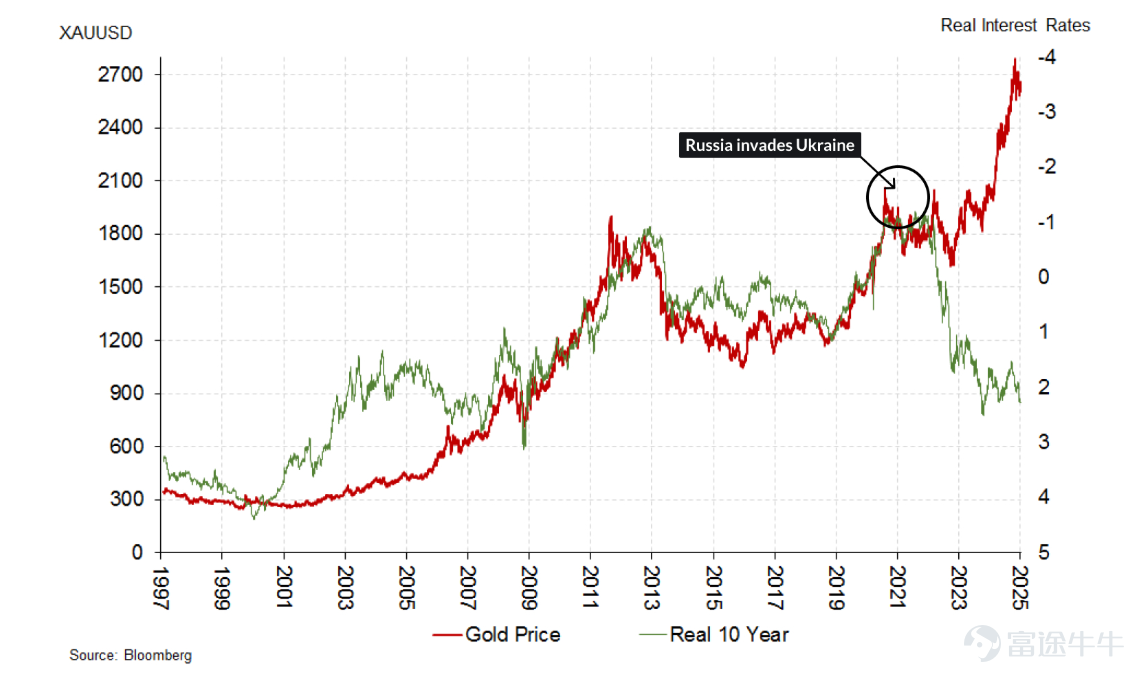
Notably, four years ago today, the Russia-Ukraine conflict erupted fully, marking the beginning of a major event that profoundly altered the global political and economic landscape.The global energy landscape has been reshaped, Europe's security architecture faces reconstruction, and military spending has generally risen across countries. The Russia-Ukraine conflict has profoundly changed the pricing logic of precious metals (especially gold). Gold, since then, is no longer merely the mirror image of real interest rates; central bank gold-buying sprees, de-dollarization, and persistently elevated risk aversion have all brought new narratives.
At the start of 2026, the precious metals market experienced an epic level of volatility. In January, after a sustained rally, the market witnessed a 'historic crash' at the end of the month, with silver recording its largest single-day drop ever, while gold prices fell to around $4,400 per ounce, shrouding the market in fear and uncertainty. During the Spring Festival of the Year of the Horse, precious metals gradually stabilized and began to rebound.As of today (February 24), gold has largely recovered its pre-holiday losses, approaching the high levels seen at the end of January, while silver has also rebounded but with noticeably less strength compared to gold.This 'strong gold, weak silver' divergence reflects the complex dynamics currently at play in the precious metals market. Notably, four years ago today, the Russia-Ukraine conflict erupted in full force, marking the beginning of a major event that profoundly altered the global political and economic landscape.The global energy landscape has been reshaped, Europe's security architecture faces restructuring, and defense spending across nations has generally increased. The Russia-Ukraine conflict has fundamentally changed the pricing dynamics of precious metals (especially gold). Since then, gold is no longer merely the mirror image of real interest rates; central bank gold purchases, de-dollarization, and persistently elevated risk aversion have introduced new narratives. Recently, tensions with Iran have escalated again, with multiple media outlets reporting that Trump 'is inclined to strike Iran in the coming days.' Against the backdrop of escalating geopolitical conflicts, can the current rebound continue? How should investors position themselves moving forward? Escalating US-Iran Tensions: Historical Insights on Potential Outcomes On February 6, Trump signed an executive order to impose an additional tariff of up to 25% on goods imported from countries that trade with Iran...
Recently, tensions with Iran have escalated again, with multiple media reports suggesting that Trump is 'inclined to strike Iran in the coming days.' Against the backdrop of escalating geopolitical conflicts, can the recent rebound continue? How should one position themselves next?
Escalation of US-Iran tensions: How historical parallels could play out
On February 6, Trump signed an executive order imposing an additional tariff of up to 25% on goods imported from countries trading with Iran; simultaneously, sanctions against Iran's oil, petrochemicals, and shipping sectors were expanded, with new entities and tankers added to the list. On February 17, the second round of talks between the US and Iran took place in Geneva, but significant differences remain.
By late February, Trump intensified the pressure. He issued a 'final ultimatum' of 10 to 15 days to reach a 'meaningful agreement' on nuclear issues, or else he would take tough action.The U.S. military deployed dual aircraft carriers (Ford and Lincoln) to the Middle East, assembling the largest air force since the 2003 Iraq War.Media reports stated that the U.S. military was ready to strike, with around the 24th as the potential window for action.
This move significantly heightened global risk aversion, directly stimulating safe-haven buying in precious metals. The geopolitical risk premium became the direct driver of price increases during the Spring Festival.
It is worth noting that Trump has demonstrated a distinctive style of 'deal-first, quick resolution' in handling international disputes. Whether it was the bombing of Iran's nuclear facilities in June last year or taking control of Venezuelan President Maduro this January, both were carried out with overwhelming force followed by de-escalation announcements. Trump's goal this time is most likely not a prolonged war but rather to use conflict to push for negotiations and quickly reach a deal.
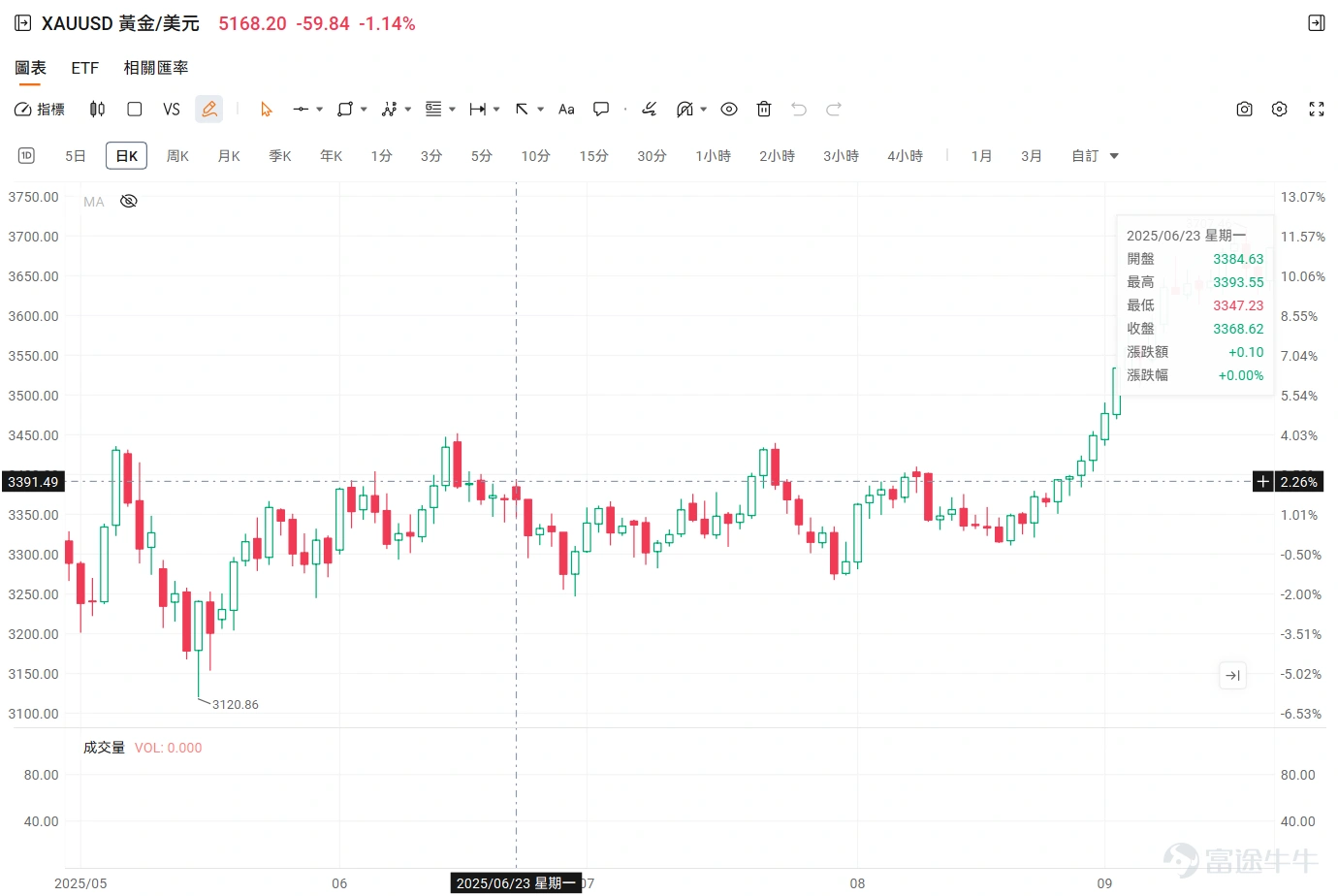
The sustainability of an increase driven by a single geopolitical event heavily depends on whether the conflict escalates and whether it resonates with other macro factors.In June 2025, the U.S. bombing of Iran's nuclear facilities clearly illustrated the 'pulse-like' rather than 'trend-driven' impact of geopolitical crises on gold prices. Iran responded with limited retaliation, and Trump subsequently announced a ceasefire agreement between Iran and Israel. During this period, gold even saw a pullback.If the event is interpreted by the market as 'manageable,' safe-haven buying may quickly recede.
At the start of 2026, the precious metals market experienced an epic level of volatility. In January, after a sustained rally, the market witnessed a 'historic crash' at the end of the month, with silver recording its largest single-day drop ever, while gold prices fell to around $4,400 per ounce, shrouding the market in fear and uncertainty. During the Spring Festival of the Year of the Horse, precious metals gradually stabilized and began to rebound.As of today (February 24), gold has largely recovered its pre-holiday losses, approaching the high levels seen at the end of January, while silver has also rebounded but with noticeably less strength compared to gold.This 'strong gold, weak silver' divergence reflects the complex dynamics currently at play in the precious metals market. Notably, four years ago today, the Russia-Ukraine conflict erupted in full force, marking the beginning of a major event that profoundly altered the global political and economic landscape.The global energy landscape has been reshaped, Europe's security architecture faces restructuring, and defense spending across nations has generally increased. The Russia-Ukraine conflict has fundamentally changed the pricing dynamics of precious metals (especially gold). Since then, gold is no longer merely the mirror image of real interest rates; central bank gold purchases, de-dollarization, and persistently elevated risk aversion have introduced new narratives. Recently, tensions with Iran have escalated again, with multiple media outlets reporting that Trump 'is inclined to strike Iran in the coming days.' Against the backdrop of escalating geopolitical conflicts, can the current rebound continue? How should investors position themselves moving forward? Escalating US-Iran Tensions: Historical Insights on Potential Outcomes On February 6, Trump signed an executive order to impose an additional tariff of up to 25% on goods imported from countries that trade with Iran...
The Maduro incident in early 2026 provides deeper insight into understanding the structural impact of current geopolitics. Market logic evolved into 'what happened to Venezuela today could happen to any country tomorrow,' systematically raising the geopolitical risk premium. U.S. unilateral actions challenged international norms, accelerating concerns over 'de-dollarization' and the safety of the global reserve system, setting the stage for the explosive rise of gold and silver in January.
The escalation of the US-Iran situation this time still requires attention to what level of action both sides, especially the US, will take.The focus on resource control, spheres of influence, and economic interests has provided greater room for the 'art of the deal'.
After the plunge, gold outperformed silver. Why was gold stronger?
Following the sharp drop, both gold and silver rebounded, but they took different paths, with gold being stable and strong while silver remained volatile and weak, showing a differentiated trajectory.
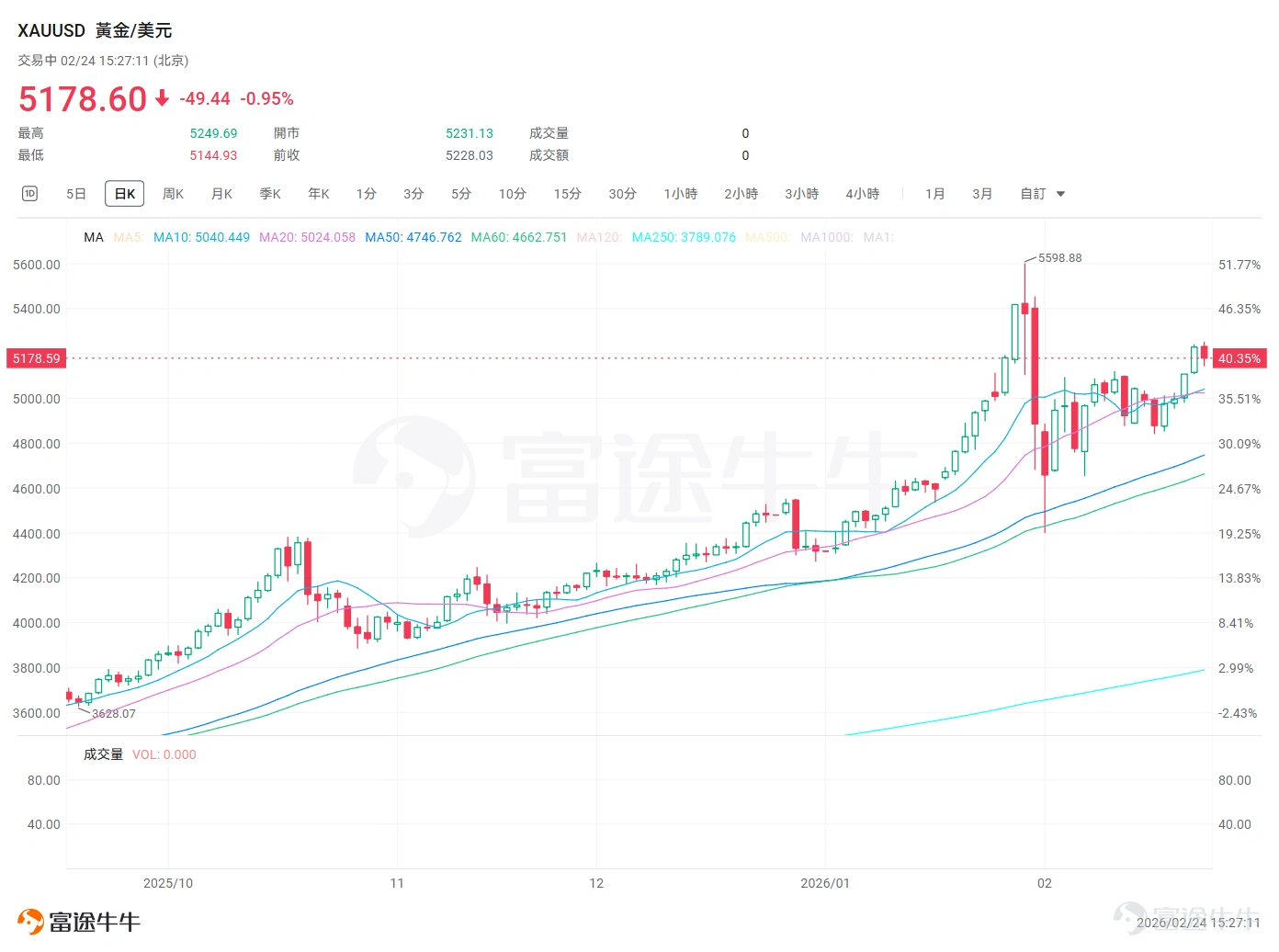
In terms of absolute price recovery, gold has rebounded to around $5,200, basically recouping its losses from the late-January plunge. Silver, although rallying during the Spring Festival, only recovered to mid-January levels, still significantly below its late-January peak.
At the start of 2026, the precious metals market experienced an epic level of volatility. In January, after a sustained rally, the market witnessed a 'historic crash' at the end of the month, with silver recording its largest single-day drop ever, while gold prices fell to around $4,400 per ounce, shrouding the market in fear and uncertainty. During the Spring Festival of the Year of the Horse, precious metals gradually stabilized and began to rebound.As of today (February 24), gold has largely recovered its pre-holiday losses, approaching the high levels seen at the end of January, while silver has also rebounded but with noticeably less strength compared to gold.This 'strong gold, weak silver' divergence reflects the complex dynamics currently at play in the precious metals market. Notably, four years ago today, the Russia-Ukraine conflict erupted in full force, marking the beginning of a major event that profoundly altered the global political and economic landscape.The global energy landscape has been reshaped, Europe's security architecture faces restructuring, and defense spending across nations has generally increased. The Russia-Ukraine conflict has fundamentally changed the pricing dynamics of precious metals (especially gold). Since then, gold is no longer merely the mirror image of real interest rates; central bank gold purchases, de-dollarization, and persistently elevated risk aversion have introduced new narratives. Recently, tensions with Iran have escalated again, with multiple media outlets reporting that Trump 'is inclined to strike Iran in the coming days.' Against the backdrop of escalating geopolitical conflicts, can the current rebound continue? How should investors position themselves moving forward? Escalating US-Iran Tensions: Historical Insights on Potential Outcomes On February 6, Trump signed an executive order to impose an additional tariff of up to 25% on goods imported from countries that trade with Iran...
This highlights the core feature of this rebound: gold received firmer and more sustained buying support, making its rebound more trend-driven; silver, on the other hand, saw a high-volatility recovery driven primarily by leveraged funds and short-term speculation, with a relatively fragile upward foundation.
OptionSir mentioned this structural characteristic in an article at the beginning of the month, pointing out that after experiencing a severe adjustment, silver's role relative to gold could undergo a profound transformation, becoming more of a 'follower' of gold's movements.
As expected, the market played out accordingly. Fellow investors who are interested can revisit the analysis~ Also, everyone is welcome to follow OptionSir closely!
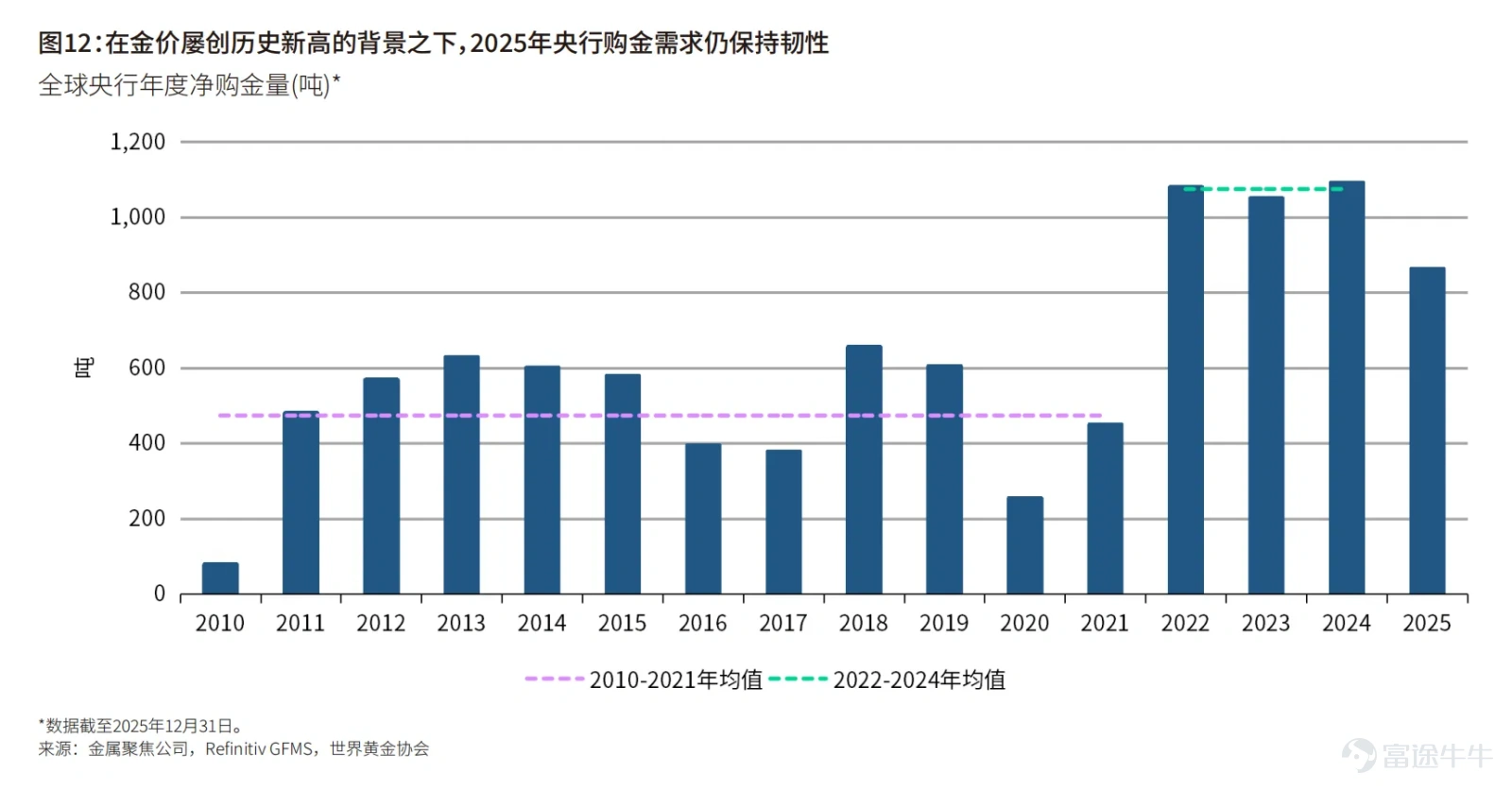
The resilience gold has demonstrated in this round of market activity stems from the resonance of its dual attributes as both a 'safe-haven asset' and a 'monetary asset'.The ongoing gold purchasing by central banks worldwide represents the most certain and powerful structural buying force in the current gold market.
The latest data released in February shows that the People's Bank of China continued to increase its holdings by 40,000 ounces in January 2026, marking the fifteenth consecutive month of增持. China’s gold reserves account for approximately 9.7% of its official international reserves, which is still significantly lower than the global average of around 15%. This indicates substantial room for strategic reserve expansion.
Poland’s central bank formally approved a gold purchase plan totaling 150 tons in January, aiming to increase its reserves to 700 tons and rank among the top ten globally.
Data from the World Gold Council shows that 95% of surveyed central banks expect global official gold reserves to continue increasing over the next 12 months, reflecting the highest level of optimism since the inception of the survey.
At the start of 2026, the precious metals market experienced an epic level of volatility. In January, after a sustained rally, the market witnessed a 'historic crash' at the end of the month, with silver recording its largest single-day drop ever, while gold prices fell to around $4,400 per ounce, shrouding the market in fear and uncertainty. During the Spring Festival of the Year of the Horse, precious metals gradually stabilized and began to rebound.As of today (February 24), gold has largely recovered its pre-holiday losses, approaching the high levels seen at the end of January, while silver has also rebounded but with noticeably less strength compared to gold.This 'strong gold, weak silver' divergence reflects the complex dynamics currently at play in the precious metals market. Notably, four years ago today, the Russia-Ukraine conflict erupted in full force, marking the beginning of a major event that profoundly altered the global political and economic landscape.The global energy landscape has been reshaped, Europe's security architecture faces restructuring, and defense spending across nations has generally increased. The Russia-Ukraine conflict has fundamentally changed the pricing dynamics of precious metals (especially gold). Since then, gold is no longer merely the mirror image of real interest rates; central bank gold purchases, de-dollarization, and persistently elevated risk aversion have introduced new narratives. Recently, tensions with Iran have escalated again, with multiple media outlets reporting that Trump 'is inclined to strike Iran in the coming days.' Against the backdrop of escalating geopolitical conflicts, can the current rebound continue? How should investors position themselves moving forward? Escalating US-Iran Tensions: Historical Insights on Potential Outcomes On February 6, Trump signed an executive order to impose an additional tariff of up to 25% on goods imported from countries that trade with Iran...
This strategic asset allocation led by central banks provides a 'market floor' for gold prices. Unlike short-term speculative positions that target quick price differentials, this approach is based on the long-term logic of 'optimizing reserve structure and hedging against dollar credit risk.'
While both involve bullish positions on gold, the nature of capital differs, and so does its impact on the market ecosystem. Trading by private investors often increases market turnover and liquidity; however, central bank purchases of gold represent a form of 'liquidity withdrawal.' The gold bought by central banks is stored in vaults, effectively exiting circulation, leading to a continuous reduction in available spot inventories for delivery and lending. This 'one-way inflow' hoarding effect naturally fuels bullish trends.
The silver market suffered even more severe damage during the plunge – with multiple rounds of forced liquidations of bullish positions and a more pronounced liquidity crunch effect.After significant leveraged funds were forcibly liquidated, the market needs more time to restore confidence and rebuild positions.At the same time, silver lacks the protection of 'central bank purchases', with its price more influenced by speculative sentiment and the industrial cycle.
Options strategy deployment
After reviewing the broad-based rally post-holiday and assessing geopolitical tensions, and after discussing gold's 'strength' versus silver's 'weakness', we ultimately need to return to the essence of trading: how to convert market analysis and logic into actionable plans that match risk.
For most investors, directly trading futures involves excessive leverage, while physical delivery is somewhat sluggish. However, products linked to gold $SPDR Gold ETF (GLD.US)$ and those linked to silver $iShares Silver Trust (SLV.US)$ as well as their options, offer a toolbox with more controllable risks and richer strategies.
Strategy One: Utilize geopolitical developments to capitalize on small moves for larger gains, following the trend.
The situation in Iran remains highly tense, with the next round of negotiations expected to take placeFebruary 26in Geneva, Switzerland. Meanwhile, the market is still speculating whether Trump might strike Iran before the negotiation window closes.
If the situation escalates unexpectedly and market risk aversion intensifies, consider deploying out-of-the-money Calls; conversely, if geopolitical risks subside significantly, buying out-of-the-money Puts can yield profits from price pullbacks.It should be noted that the international landscape is highly volatile, and current volatility in precious metals is relatively high, requiring precise timing for entry and strict adherence to stop-loss discipline.
Strategy Two: Moderately Bullish on Gold, Deploy a Bull Call Spread
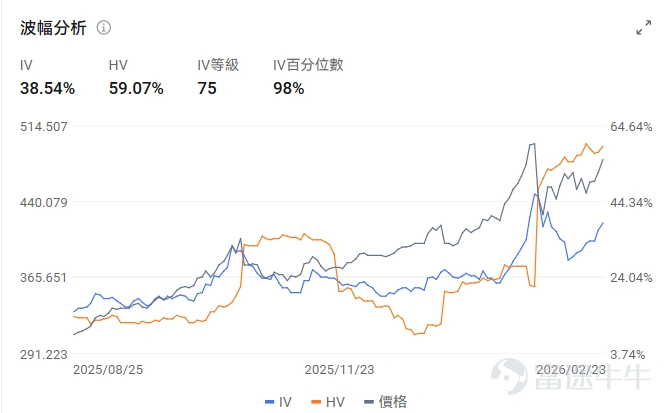
The current IV rank for GLD is 75, with an IV percentile of 98%, indicating volatility is at a relatively high level.
At the start of 2026, the precious metals market experienced an epic level of volatility. In January, after a sustained rally, the market witnessed a 'historic crash' at the end of the month, with silver recording its largest single-day drop ever, while gold prices fell to around $4,400 per ounce, shrouding the market in fear and uncertainty. During the Spring Festival of the Year of the Horse, precious metals gradually stabilized and began to rebound.As of today (February 24), gold has largely recovered its pre-holiday losses, approaching the high levels seen at the end of January, while silver has also rebounded but with noticeably less strength compared to gold.This 'strong gold, weak silver' divergence reflects the complex dynamics currently at play in the precious metals market. Notably, four years ago today, the Russia-Ukraine conflict erupted in full force, marking the beginning of a major event that profoundly altered the global political and economic landscape.The global energy landscape has been reshaped, Europe's security architecture faces restructuring, and defense spending across nations has generally increased. The Russia-Ukraine conflict has fundamentally changed the pricing dynamics of precious metals (especially gold). Since then, gold is no longer merely the mirror image of real interest rates; central bank gold purchases, de-dollarization, and persistently elevated risk aversion have introduced new narratives. Recently, tensions with Iran have escalated again, with multiple media outlets reporting that Trump 'is inclined to strike Iran in the coming days.' Against the backdrop of escalating geopolitical conflicts, can the current rebound continue? How should investors position themselves moving forward? Escalating US-Iran Tensions: Historical Insights on Potential Outcomes On February 6, Trump signed an executive order to impose an additional tariff of up to 25% on goods imported from countries that trade with Iran...
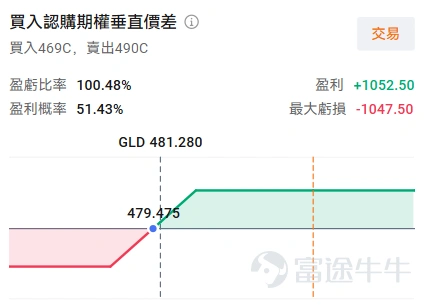
If you're optimistic about gold but unwilling to bear excessively high premium costs in the current high-volatility environment, consider usinga Bull Call Spread.Buy a call option with a lower strike price while simultaneously selling a call option on GLD with a higher strike price, both with the same expiration date.
The premium received from selling the higher strike call can partially offset the cost of buying the lower strike call, thereby reducing overall investment; maximum loss is limited to the net premium paid, offering controlled risk.
At the start of 2026, the precious metals market experienced an epic level of volatility. In January, after a sustained rally, the market witnessed a 'historic crash' at the end of the month, with silver recording its largest single-day drop ever, while gold prices fell to around $4,400 per ounce, shrouding the market in fear and uncertainty. During the Spring Festival of the Year of the Horse, precious metals gradually stabilized and began to rebound.As of today (February 24), gold has largely recovered its pre-holiday losses, approaching the high levels seen at the end of January, while silver has also rebounded but with noticeably less strength compared to gold.This 'strong gold, weak silver' divergence reflects the complex dynamics currently at play in the precious metals market. Notably, four years ago today, the Russia-Ukraine conflict erupted in full force, marking the beginning of a major event that profoundly altered the global political and economic landscape.The global energy landscape has been reshaped, Europe's security architecture faces restructuring, and defense spending across nations has generally increased. The Russia-Ukraine conflict has fundamentally changed the pricing dynamics of precious metals (especially gold). Since then, gold is no longer merely the mirror image of real interest rates; central bank gold purchases, de-dollarization, and persistently elevated risk aversion have introduced new narratives. Recently, tensions with Iran have escalated again, with multiple media outlets reporting that Trump 'is inclined to strike Iran in the coming days.' Against the backdrop of escalating geopolitical conflicts, can the current rebound continue? How should investors position themselves moving forward? Escalating US-Iran Tensions: Historical Insights on Potential Outcomes On February 6, Trump signed an executive order to impose an additional tariff of up to 25% on goods imported from countries that trade with Iran...
(The design images displayed on screen are for illustrative purposes only and do not constitute any investment advice or guarantees; market conditions fluctuate frequently, and the option prices shown do not represent real-world values.)
Strategy Three: Hold silver-related assets and collect 'rent' using high volatility
SLV’s volatility is currently higher than GLD’s. Investors could consider holding SLV while selling out-of-the-money call options. In a volatile market where confidence in trends is weak, this strategy provides some income cushioning. However, it also limits potential gains from sharp rebounds.
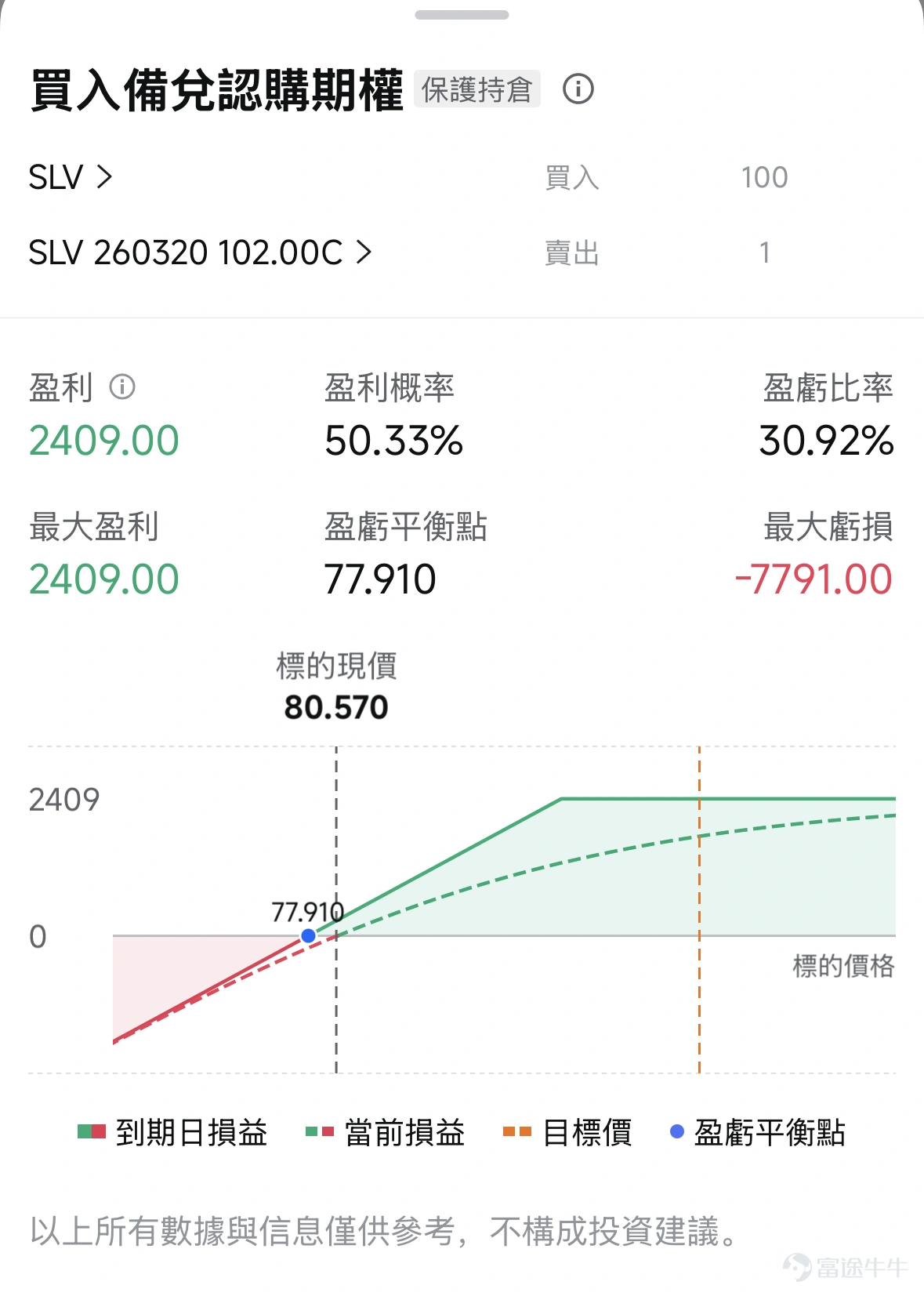
At the start of 2026, the precious metals market experienced an epic level of volatility. In January, after a sustained rally, the market witnessed a 'historic crash' at the end of the month, with silver recording its largest single-day drop ever, while gold prices fell to around $4,400 per ounce, shrouding the market in fear and uncertainty. During the Spring Festival of the Year of the Horse, precious metals gradually stabilized and began to rebound.As of today (February 24), gold has largely recovered its pre-holiday losses, approaching the high levels seen at the end of January, while silver has also rebounded but with noticeably less strength compared to gold.This 'strong gold, weak silver' divergence reflects the complex dynamics currently at play in the precious metals market. Notably, four years ago today, the Russia-Ukraine conflict erupted in full force, marking the beginning of a major event that profoundly altered the global political and economic landscape.The global energy landscape has been reshaped, Europe's security architecture faces restructuring, and defense spending across nations has generally increased. The Russia-Ukraine conflict has fundamentally changed the pricing dynamics of precious metals (especially gold). Since then, gold is no longer merely the mirror image of real interest rates; central bank gold purchases, de-dollarization, and persistently elevated risk aversion have introduced new narratives. Recently, tensions with Iran have escalated again, with multiple media outlets reporting that Trump 'is inclined to strike Iran in the coming days.' Against the backdrop of escalating geopolitical conflicts, can the current rebound continue? How should investors position themselves moving forward? Escalating US-Iran Tensions: Historical Insights on Potential Outcomes On February 6, Trump signed an executive order to impose an additional tariff of up to 25% on goods imported from countries that trade with Iran...
Four years ago today, geopolitical tensions changed the world. Four years later, the precious metals market stands at a delicate crossroads — the bull market’s main thesis has yet to be disproven, but the 'comfort period' of one-way appreciation has ended. Long-term allocation value remains, but don't expect the near-linear rise seen in the past; volatility is the new norm.
With the help of options, investors are able to participate in trends more cleverly while managing ever-present risks. Markets will always have their share of turbulence, but a steady vessel paired with a wise helm remains key to navigating through cycles.
Finally, here's a small perk for fellow investors—welcome to claim it!Options Beginner Pack
This event is exclusively for invited HK users, click to learn moreDetailed event rules >>
Major upgrade to the US options mechanism! Monday and Wednesday options added for nine major symbols including Tesla and NVIDIA. A step-by-step guide on using Futu tools to capitalize on end-of-term options.
At the start of 2026, the precious metals market experienced an epic level of volatility. In January, after a sustained rally, the market witnessed a 'historic crash' at the end of the month, with silver recording its largest single-day drop ever, while gold prices fell to around $4,400 per ounce, shrouding the market in fear and uncertainty. During the Spring Festival of the Year of the Horse, precious metals gradually stabilized and began to rebound.As of today (February 24), gold has largely recovered its pre-holiday losses, approaching the high levels seen at the end of January, while silver has also rebounded but with noticeably less strength compared to gold.This 'strong gold, weak silver' divergence reflects the complex dynamics currently at play in the precious metals market. Notably, four years ago today, the Russia-Ukraine conflict erupted in full force, marking the beginning of a major event that profoundly altered the global political and economic landscape.The global energy landscape has been reshaped, Europe's security architecture faces restructuring, and defense spending across nations has generally increased. The Russia-Ukraine conflict has fundamentally changed the pricing dynamics of precious metals (especially gold). Since then, gold is no longer merely the mirror image of real interest rates; central bank gold purchases, de-dollarization, and persistently elevated risk aversion have introduced new narratives. Recently, tensions with Iran have escalated again, with multiple media outlets reporting that Trump 'is inclined to strike Iran in the coming days.' Against the backdrop of escalating geopolitical conflicts, can the current rebound continue? How should investors position themselves moving forward? Escalating US-Iran Tensions: Historical Insights on Potential Outcomes On February 6, Trump signed an executive order to impose an additional tariff of up to 25% on goods imported from countries that trade with Iran...
Disclaimer
This content does not constitute any offer, solicitation, recommendation, opinion, or guarantee of any securities, financial products, or tools. The risk of loss in buying and selling options can be substantial. In some cases, your losses may exceed the initial margin amount deposited. Even if you set contingent orders, such as 'stop-loss' or 'limit' orders, these may not necessarily prevent losses. Market conditions may make these orders unexecutable. You might be required to deposit additional margin within a short period. If you fail to provide the required amount within the specified time, your open positions may be liquidated. However, you will still be responsible for any account deficit arising from this. Therefore, before trading, you should study and understand options and carefully consider whether such trading suits you based on your financial situation and investment objectives. If you trade options, you should be familiar with the procedures upon exercising options and at expiration, as well as your rights and obligations when exercising options and at expiration.
Risk Disclaimer: The above content only represents the author's view. It does not represent any position or investment advice of Futu. Futu makes no representation or warranty.Read more
Thumbs Up
44
Respect
1
Heart
1
134K Views
Report
Comments (2)
Write a Comment...
2
46
18