
BTC surpasses $75,000! Has the upward channel been fully opened?

Options Weekly Strategy 0209 | Rare NFP + CPI Showdown in the Same Week, Aftershocks or Reversal After Market Turmoil? Focus on Gold and Silver Trends, AI Main Theme, and Crypto Stock Earnings Reports This Week
This article is from the "Weekly Options Strategy" column, which brings fellow investors a review of last week's market, the hot topics of the week, and an analysis of potential options trading opportunities. Welcome!click hereto join the learning journey. You will receive notifications when new updates are available in this column.
Happy Monday, fellow investors~ Next week is the Spring Festival. OptionSir wishes all fellow investors a happy new year and rising returns in the Year of the Horse!
Last week, trading factors such as liquidation of precious metals leverage positions, concerns over software stocks triggering a major tech sell-off, and momentum selling caused significant shocks.Overseas equities, commodities, and cryptocurrencies all experienced sharp volatility, but sentiment improved significantly on Friday.The Dow Jones Industrial Average ended the week up 2.5% and broke through the historic 50,000-point level; both the S&P 500 Index and Nasdaq fell.
This week faces a flurry of macro data. Can last Friday's optimism continue? We will systematically review the pathways of key events and explore potential options trading strategies.
Non-farm payroll + CPI releases intensify—how will precious metals perform amid this flood of data?
This week will see two major US economic data releases: non-farm payrolls and CPI. It is rare to gain the latest updates on both the Fed’s most-watched “employment” and “inflation” fronts within the same week.
The non-farm payroll report and unemployment rate are scheduled for release on21:30 Beijing Time, February 11 (Wednesday)while the CPI is set to be released on21:30 Beijing Time, February 13 (Friday).
The direct reason for this schedule adjustment is a 'technical shutdown' of some agencies of the US federal government. Due to disagreements between the two parties in Congress over the appropriations bill, the Bureau of Labor Statistics (BLS) suspended its data collection and publication work, delaying the non-farm payroll data originally scheduled for release last Friday to this week.
Opportunity Analysis
Under normal circumstances, the release times of key US economic data are relatively spread out: at the beginning of each month, the market focuses on employment data such as non-farm payrolls, while CPI and PPI data are generally released in the middle of the month, typically one to two weeks apart. This staggered arrangement allows the market sufficient time to gradually digest the impact of each piece of data on monetary policy expectations.
This schedule consolidation due to a brief government shutdown means that the market will receive dual critical signals about labor market resilience and inflation persistence within an extremely short period, potentially increasing sensitivity in policy path pricing and amplifying market volatility.Market expectations are for 70,000 new non-farm jobs in January, compared with 50,000 in the previous reading; CPI year-on-year growth is expected to be 2.5%, down from 2.7% the previous month.
From the data already released, the US ADP employment number (small non-farm) for January increased by 22,000, lower than the expected increase of 48,000.Moreover, the non-farm payroll report scheduled for release on February 11 will also provide annual employment revision data. The market widely expects that the 2025 non-farm data may be revised downward again.The current data shows that only 584,000 new non-farm jobs were added in 2025, the weakest figure since 2003, excluding years of economic recession. If there is a further significant downward revision, it could alter the market’s overall assessment of labor market trends, thereby strengthening expectations for interest rate cuts and providing a short-term boost to US stocks.
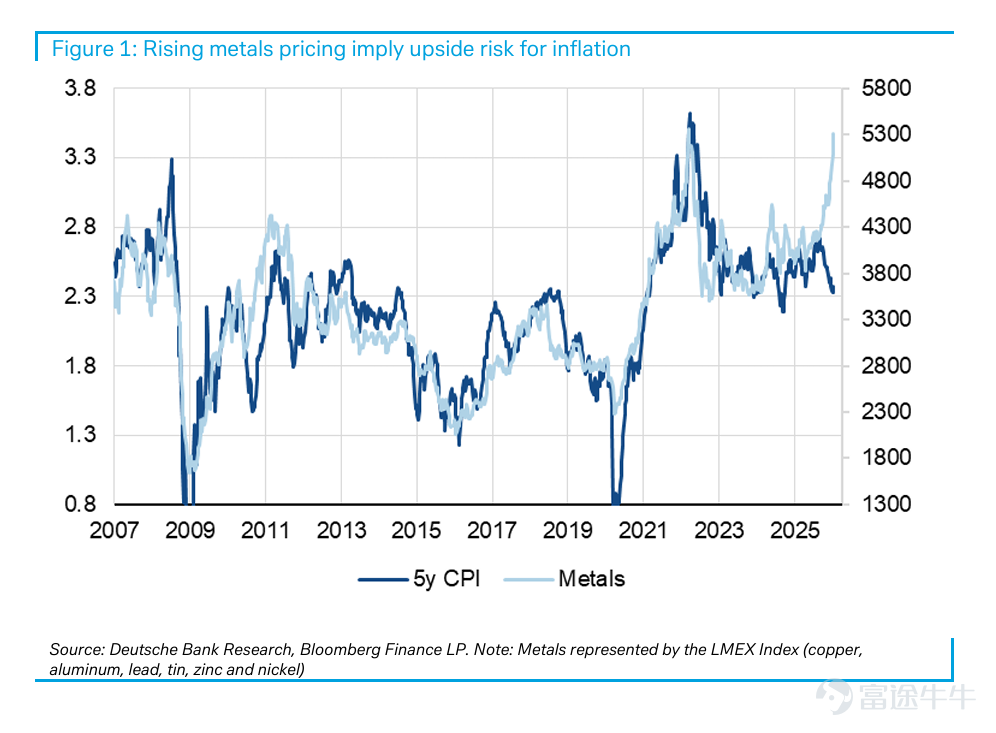
On the other hand, the CPI faces certain upside risks.In the just-passed January, not only did gold and silver, which garnered the most attention, surge, but industrial metals like copper and aluminum, as well as long-suppressed crude oil, all showed upward movements. This 'periodic table' frenzy has also accumulated risks of rising inflation.Cost increases in raw material prices at the top of the supply chain will trickle down through the industry chain to the consumer end. Although there is a time lag, if prices remain persistently high, their effects will gradually become apparent.
![This article is from the "Weekly Options Strategy" column, which brings fellow investors a review of last week's market, the hot topics of the week, and an analysis of potential options trading opportunities. Welcome![Share Link: click here]to join the learning journey. You will receive notifications when new updates are available in this column. Good Monday, fellow investors~ Next week is the Chinese New Year. Options Sir wishes all fellow investors a happy new year and steadily increasing returns in the Year of the Horse! Last week, factors such as deleveraging in precious metals trading, concerns over software stocks triggering a major tech selloff, and momentum selling impacted markets.Overseas equities, commodities, and cryptocurrencies all experienced sharp volatility, but sentiment improved significantly on Friday.Ultimately, the Dow Jones Industrial Average gained 2.5% for the week and broke through the historic 50,000-point level; the S&P 500 Index and Nasdaq both fell. This week faces a flurry of macro data releases. Can last Friday’s optimism continue? We’ll keep providing systematic analysis of core events and uncover potential options trading strategies. NFP and CPI Releases Back-to-Back, Where Are Precious Metals Headed Amidst a Flood of Data? This week will see two key US economic data releases: Non-Farm Payrolls (NFP) and CPI. Getting updates on both employment and inflation—the Fed's most-watched indicators—in the same week is rare. The Non-Farm Payrolls Report & Unemployment Rate are scheduled for release on21:30 on Wednesday, February 11, Beijing timeAnnouncement; CPI is scheduled forBeijing time...](https://nnqimage.futunn.com/sns_client_feed/999908/20260209/web-1770630679996-qxR4KBrEoV.png/big?area=2&is_public=true&imageMogr2/ignore-error/1/format/webp)
This week’s economic data may not significantly alter the Fed's interest rate path (a balance still needs to be struck between employment and inflation), but it could bring volatility at different times.
Last week, COMEX gold rose by 5.13%, while COMEX silver fell by 1.28%. Following last week's historic volatility, precious metals are expected to experience fluctuations again around data releases due to changes in interest rate expectations. One possibility is that weak non-farm payroll data could provide support from the perspective of recession risks and central bank easing expectations, but if CPI comes in stronger than expected, it could temporarily pressure the prices of non-interest-bearing assets.
Options strategy
(1) Deploy same-day expiry options and follow the trend
$SPDR S&P 500 ETF (SPY.US)$ and $Invesco QQQ Trust (QQQ.US)$ Highly liquid index ETF options, such as those on extremely liquid indices, offer expiry contracts every trading day; early 2026 will see a major upgrade to the US stock options mechanism, with nine major underlyings including NVIDIA and Tesla adding Monday and Wednesday same-day expiry options.
Investors with higher risk appetites can directly participate in same-day expiry options trading on the two key days of Wednesday/Friday, and adjust promptly based on market reactions to major events at different times.The premium for same-day expiry options is relatively low, with minimal time value, offering potentially high leverage and the possibility of significant returns in a short period. However, it should be noted that this strategy also comes with higher volatility.
(2) Moderately bullish on precious metals
$SPDR Gold ETF (GLD.US)$ and $iShares Silver Trust (SLV.US)$ The IV percentile is currently at 97%, still extremely high. After an overbought pullback, if the long-term trend is deemed unchanged, this strategy can be cautiously used to position for a rebound. Buy a Call with a lower strike price and sell a Call with a higher strike price on the same expiration date, with the net cost being the difference between the two premiums. This approach helps mitigate the disadvantage of high IV for option buyers.
![This article is from the "Weekly Options Strategy" column, which brings fellow investors a review of last week's market, the hot topics of the week, and an analysis of potential options trading opportunities. Welcome![Share Link: click here]to join the learning journey. You will receive notifications when new updates are available in this column. Good Monday, fellow investors~ Next week is the Chinese New Year. Options Sir wishes all fellow investors a happy new year and steadily increasing returns in the Year of the Horse! Last week, factors such as deleveraging in precious metals trading, concerns over software stocks triggering a major tech selloff, and momentum selling impacted markets.Overseas equities, commodities, and cryptocurrencies all experienced sharp volatility, but sentiment improved significantly on Friday.Ultimately, the Dow Jones Industrial Average gained 2.5% for the week and broke through the historic 50,000-point level; the S&P 500 Index and Nasdaq both fell. This week faces a flurry of macro data releases. Can last Friday’s optimism continue? We’ll keep providing systematic analysis of core events and uncover potential options trading strategies. NFP and CPI Releases Back-to-Back, Where Are Precious Metals Headed Amidst a Flood of Data? This week will see two key US economic data releases: Non-Farm Payrolls (NFP) and CPI. Getting updates on both employment and inflation—the Fed's most-watched indicators—in the same week is rare. The Non-Farm Payrolls Report & Unemployment Rate are scheduled for release on21:30 on Wednesday, February 11, Beijing timeAnnouncement; CPI is scheduled forBeijing time...](https://nnqimage.futunn.com/sns_client_feed/999908/20260209/web-1770630679651-lzCO3BjT8X.png/big?area=2&is_public=true&imageMogr2/ignore-error/1/format/webp)
(The illustration is for explanatory purposes only and does not constitute any investment advice or guarantee.)
Reviewing the recent turbulence in the US tech sector, does buying on dips still work?
The stock movements over the past week further underscore the importance of maintaining diversification and balance in investment portfolios, especially when holdings are overly concentrated in certain popular themes. High-beta assets faced concentrated selling last week, while value stocks and those with higher dividend yields performed better.
Despite a brief plunge into panic, the recovery rally on Friday indicated that the bulls have not completely lost pricing power, showing capital's willingness to return after irrational panic.
The triggers for this market reversal include:
Ongoing selloffs in the cryptocurrency market have exacerbated the deterioration of overall risk sentiment (Bitcoin fell 19% for the week and is down 45% from its October 2025 high); Anthropic released plugins specifically for the Claude platform, raising concerns about software stock displacement, which accelerated the selloff in software stocks; additionally, Alphabet and Amazon’s capital expenditure forecasts were much higher than expected, typically a positive signal for the Asian tech hardware supply chain. However, although CapEx expansion has historically been beneficial to the hardware supply chain, this time it sparked investor concerns, shifting the market focus to 'input-output ratios'.
Opportunity Analysis
Regarding the selloff in software stocks, Anthropic’s release of Claude was the direct trigger. Currently, AI contributes minimally to software companies’ revenues, failing to reverse the overall growth curve.Meanwhile, rapid iterations of underlying large models (such as Agent functionality) have led the market to worry that some application-layer software faces replacement risks. The deeper logic lies in the market systematically repricing the SaaS model.
Endogenous growth momentum is weakening: Major SaaS targets (e.g. $Salesforce (CRM.US)$ 、 $Adobe (ADBE.US)$ ) have seen their revenue growth rates drop from over 20% during the pandemic to between 10%-13%. As the industry matures, the effectiveness of the PS (Price-to-Sales) valuation framework is diminishing.
Rigorous reassessment of valuation anchors: For a long time, software companies have relied on substantial equity incentives (SBC) to enhance their Non-GAAP performance. However, in the current high-interest-rate environment, investors are paying more attention to real EPS (earnings per share) and FCF (free cash flow) under GAAP standards.
Strategically remain patient, prioritizing sectors over indiscriminate 'bottom-fishing'。Companies in infrastructure, data, and cybersecurity (e.g. $Microsoft (MSFT.US)$、 $Snowflake (SNOW.US)$、 $Datadog (DDOG.US)$、 $Okta (OKTA.US)$、 $Zscaler (ZS.US)$) can be considered, as these areas face lower AI disruption risks and maintain healthy customer spending trends.
The current deep correction does not signify a reversal of fundamental logic but rather reflects profit-taking combined with macro risk aversion causing pricing dislocation. For stocks with strong competitive moats, 'buying on dips' remains a strategy with a higher probability of success, as the current valuation pullback offers long-term capital a more attractive risk-reward entry point.
According to FactSet data, more than half of the S&P 500 constituents have reported earnings, surpassing expectations by 7.6%. Market expectations for earnings growth in 2025 and 2026 remain at elevated levels of 13.5% and 14.1%, respectively.Despite concerns over high capital expenditures (CapEx) from large technology companies, for$NVIDIA (NVDA.US)$infrastructure suppliers at the bottom of the supply chain, as long as the total CapEx does not shrink, their earnings certainty remains relatively high.
Options strategy
February 6th,$NVIDIA (NVDA.US)$Implied Volatility (IV) of the options stands at 52.68%,The implied volatility (IV) is 52.68%.From the perspective of the volatility percentile (IV Percentile), the current level is at the 67th percentile of the past year's statistics, indicating a relatively high position;The Put/Call Ratio (PCR) is 0.63, and since this ratio is less than 1, it shows that market trading activity leans more towards call options.
(1) Accumulate on dips
one may considerSell out-of-the-money put options (Cash-Secured Put),Suitable for investors who are optimistic about NVIDIA’s fundamentals in the long term, are willing to buy at lower prices, and hold sufficient cash.
Take advantage of the opportunity presented by the high IV to earn substantial premiums. If the stock price falls, shares can be passively acquired at a lower cost (strike price - premium); if the stock rebounds or moves sideways, the premium is gained without further action. As NVIDIA’s earnings report has yet to be released (expected on February 25), investors with low risk tolerance may choose to close positions or roll them forward before the earnings announcement to avoid potential 'black swan' risks.
![This article is from the "Weekly Options Strategy" column, which brings fellow investors a review of last week's market, the hot topics of the week, and an analysis of potential options trading opportunities. Welcome![Share Link: click here]to join the learning journey. You will receive notifications when new updates are available in this column. Good Monday, fellow investors~ Next week is the Chinese New Year. Options Sir wishes all fellow investors a happy new year and steadily increasing returns in the Year of the Horse! Last week, factors such as deleveraging in precious metals trading, concerns over software stocks triggering a major tech selloff, and momentum selling impacted markets.Overseas equities, commodities, and cryptocurrencies all experienced sharp volatility, but sentiment improved significantly on Friday.Ultimately, the Dow Jones Industrial Average gained 2.5% for the week and broke through the historic 50,000-point level; the S&P 500 Index and Nasdaq both fell. This week faces a flurry of macro data releases. Can last Friday’s optimism continue? We’ll keep providing systematic analysis of core events and uncover potential options trading strategies. NFP and CPI Releases Back-to-Back, Where Are Precious Metals Headed Amidst a Flood of Data? This week will see two key US economic data releases: Non-Farm Payrolls (NFP) and CPI. Getting updates on both employment and inflation—the Fed's most-watched indicators—in the same week is rare. The Non-Farm Payrolls Report & Unemployment Rate are scheduled for release on21:30 on Wednesday, February 11, Beijing timeAnnouncement; CPI is scheduled forBeijing time...](https://nnqimage.futunn.com/sns_client_feed/999908/20260209/web-1770630679761-JiPIHQBfqd.jpeg/big?area=2&is_public=true&imageMogr2/ignore-error/1/format/webp)
(The illustration is for explanatory purposes only and does not constitute any investment advice or guarantee.)
(2) Moderately bullish
one may considera Bull Call Spread. 。Suitable for traders who believe this week's rebound will continue, hoping to achieve significant gains with minimal risk, but unwilling to bear the high option premiums and risks of volatility decline. By selling a higher-level Call, the cost of constructing the portfolio is significantly reduced, while partially offsetting the risks associated with declining implied volatility (IV). Profits can be achieved as long as the stock price rises moderately.
(3) Existing holdings, hedging protection
Last week, NVIDIA shares experienced a sharp rebound following a deep correction. However, key trend indicators did not provide clear direction, and major fund flows were not strong, indicating a temporary balance between bullish and bearish forces. Trading behavior in the options market reflected a slightly optimistic short-term sentiment, but elevated implied volatility warns of potentially heightened future fluctuation risks. Active short-selling remains another variable worth monitoring.
Given that the current trend remains unclear,Collar StrategyAppropriate for investors holding substantial NVIDIA shares who are concerned about short-term pullback risks but do not wish to sell their stocks. Purchase protective Puts below to lock in maximum losses while simultaneously selling Calls above to use premium income to cover the cost of buying Puts. This confines portfolio fluctuations within a fixed range, sacrificing potential excess upside returns in exchange for absolute safety during a downturn.
![This article is from the "Weekly Options Strategy" column, which brings fellow investors a review of last week's market, the hot topics of the week, and an analysis of potential options trading opportunities. Welcome![Share Link: click here]to join the learning journey. You will receive notifications when new updates are available in this column. Good Monday, fellow investors~ Next week is the Chinese New Year. Options Sir wishes all fellow investors a happy new year and steadily increasing returns in the Year of the Horse! Last week, factors such as deleveraging in precious metals trading, concerns over software stocks triggering a major tech selloff, and momentum selling impacted markets.Overseas equities, commodities, and cryptocurrencies all experienced sharp volatility, but sentiment improved significantly on Friday.Ultimately, the Dow Jones Industrial Average gained 2.5% for the week and broke through the historic 50,000-point level; the S&P 500 Index and Nasdaq both fell. This week faces a flurry of macro data releases. Can last Friday’s optimism continue? We’ll keep providing systematic analysis of core events and uncover potential options trading strategies. NFP and CPI Releases Back-to-Back, Where Are Precious Metals Headed Amidst a Flood of Data? This week will see two key US economic data releases: Non-Farm Payrolls (NFP) and CPI. Getting updates on both employment and inflation—the Fed's most-watched indicators—in the same week is rare. The Non-Farm Payrolls Report & Unemployment Rate are scheduled for release on21:30 on Wednesday, February 11, Beijing timeAnnouncement; CPI is scheduled forBeijing time...](https://nnqimage.futunn.com/sns_client_feed/999908/20260209/web-1770630679913-Y9rloW0tYp.jpeg/big?area=2&is_public=true&imageMogr2/ignore-error/1/format/webp)
(The illustration is for explanatory purposes only and does not constitute any investment advice or guarantee.)
Crypto was hit hard last week as Cathie Wood built positions against the trend
Last week, after plunging to a critical level near $60,000 on 'Black Thursday,' Bitcoin staged a resilient recovery. As of writing, the price has rebounded to $70,969. This level marks a return to the pivotal pre-2024 election trading range, carrying significant implications.Despite the price recovery, market confidence has yet to fully restore, with the Fear & Greed Index dropping to 9, indicating traders remain in an 'extreme fear' state.
![This article is from the "Weekly Options Strategy" column, which brings fellow investors a review of last week's market, the hot topics of the week, and an analysis of potential options trading opportunities. Welcome![Share Link: click here]to join the learning journey. You will receive notifications when new updates are available in this column. Good Monday, fellow investors~ Next week is the Chinese New Year. Options Sir wishes all fellow investors a happy new year and steadily increasing returns in the Year of the Horse! Last week, factors such as deleveraging in precious metals trading, concerns over software stocks triggering a major tech selloff, and momentum selling impacted markets.Overseas equities, commodities, and cryptocurrencies all experienced sharp volatility, but sentiment improved significantly on Friday.Ultimately, the Dow Jones Industrial Average gained 2.5% for the week and broke through the historic 50,000-point level; the S&P 500 Index and Nasdaq both fell. This week faces a flurry of macro data releases. Can last Friday’s optimism continue? We’ll keep providing systematic analysis of core events and uncover potential options trading strategies. NFP and CPI Releases Back-to-Back, Where Are Precious Metals Headed Amidst a Flood of Data? This week will see two key US economic data releases: Non-Farm Payrolls (NFP) and CPI. Getting updates on both employment and inflation—the Fed's most-watched indicators—in the same week is rare. The Non-Farm Payrolls Report & Unemployment Rate are scheduled for release on21:30 on Wednesday, February 11, Beijing timeAnnouncement; CPI is scheduled forBeijing time...](https://nnqimage.futunn.com/sns_client_feed/999908/20260209/web-1770630679860-W5aeh3T7t0.png/big?area=2&is_public=true&imageMogr2/ignore-error/1/format/webp)
Sanae Takichi's coalition achieved a decisive victory in the general election, securing over two-thirds of the seats in the lower house. The Japanese election results signal expansionary fiscal policy, with markets pricing in 'yen weakening,' and Bitcoin rebounding around 3% on the news, easing concerns over carry trade unwinding. However, markets remain on edge this week amid US-Iran talks and a flurry of macroeconomic data releases, with asset prices still facing severe volatility tests.
Last week's sharp drop in cryptocurrency prices dealt a heavy blow to related stocks, $Strategy (MSTR.US)$ with shares plummeting as Bitcoin's market price broke below its average cost line, $Coinbase (COIN.US)$ and $Robinhood (HOOD.US)$ with retracements of 67% and 52% from their respective all-time highs.The market is bracing for key earnings reports from major cryptocurrency-related companies: Robinhood (after market close on February 10), Coinbase (after market close on February 12), $Circle (CRCL.US)$(before market open on February 25), and guidance will determine whether the sector can stabilize.
Amid market panic, Cathie Wood’s ARK Invest has displayed complex tactical moves. While Cathie Wood proclaimed'Extreme negative sentiment presents an excellent opportunity for phased buying,'and began purchasing approximately $19 million worth of crypto-related stocks against the trend starting February 4, even adding to its Bullish holdings on February 6; intriguingly, ARK sold $22 million worth of Coinbase shares on the same day (February 6).
Opportunity Analysis
The current crypto market is undergoing a critical shift from macro liquidity dynamics to micro fundamental differentiation. Last week’s crash cleared out substantial leveraged positions, with the core issue now shifting from 'broad-based gains or losses' to 'structural selection.'
Robinhood: Growth model faces 'second derivative' test
Its explosive growth stemmed from the resonance between active trading and subscription services. However, the high base effect and lower-than-expected cryptocurrency revenues have exposed the singularity of its growth engine.Market focus has shifted from 'whether it can achieve high growth' to 'marginal changes in growth': the commercialization progress and monetization efficiency of new businesses such as predictive markets, social, and ventures will determine whether it can evolve from a cyclical 'trading platform' into a more sticky 'financial services ecosystem,' thereby supporting its current valuation.
The options market is signaling bullish sentiment, with Robinhood's implied volatility (IV) rising to an annual high of 83%.Meanwhile, the Put/Call ratio (PCR) dropped to 0.59, indicating strong willingness among investors to buy on dips; a high concentration of open interest near the $100 price level across the next four expiration dates may create a magnetic effect.However, caution is warranted asthe market is currently pricing in volatility exceeding 11%,while historical data shows there is only a 28% probability (4 out of 14 occurrences) that the actual volatility will exceed expectations, suggesting significant option premium at present.
![This article is from the "Weekly Options Strategy" column, which brings fellow investors a review of last week's market, the hot topics of the week, and an analysis of potential options trading opportunities. Welcome![Share Link: click here]to join the learning journey. You will receive notifications when new updates are available in this column. Good Monday, fellow investors~ Next week is the Chinese New Year. Options Sir wishes all fellow investors a happy new year and steadily increasing returns in the Year of the Horse! Last week, factors such as deleveraging in precious metals trading, concerns over software stocks triggering a major tech selloff, and momentum selling impacted markets.Overseas equities, commodities, and cryptocurrencies all experienced sharp volatility, but sentiment improved significantly on Friday.Ultimately, the Dow Jones Industrial Average gained 2.5% for the week and broke through the historic 50,000-point level; the S&P 500 Index and Nasdaq both fell. This week faces a flurry of macro data releases. Can last Friday’s optimism continue? We’ll keep providing systematic analysis of core events and uncover potential options trading strategies. NFP and CPI Releases Back-to-Back, Where Are Precious Metals Headed Amidst a Flood of Data? This week will see two key US economic data releases: Non-Farm Payrolls (NFP) and CPI. Getting updates on both employment and inflation—the Fed's most-watched indicators—in the same week is rare. The Non-Farm Payrolls Report & Unemployment Rate are scheduled for release on21:30 on Wednesday, February 11, Beijing timeAnnouncement; CPI is scheduled forBeijing time...](https://nnqimage.futunn.com/sns_client_feed/999908/20260209/web-1770630679763-oPWGECnm01.png/big?area=2&is_public=true&imageMogr2/ignore-error/1/format/webp)
Coinbase: Margin resilience draws attention as market awaits crypto recovery
The company’s revenue and EPS last quarter significantly exceeded expectations. Despite being affected by fluctuations in investment gains and losses, net profit margin fell to 23.15% quarter-over-quarter but still showed notable year-over-year growth, with gross margin remaining at a high of 74.61%. The recent sharp pullback in crypto asset prices triggered 'bear market concerns,' and declining trading volumes could pressure future revenue. Whether the company can maintain stable core business profitability amid headwinds will be the biggest test this quarter.
Due to the cooling market, management's outlook for trading revenue in Q1 2026 will determine market confidence. Additionally, the market is also focused on the integration dividend post Deribit acquisition, the performance of Coinbase Predict (prediction market), and the latest trends in the regulatory environment.
The Put/Call ratio (PCR) dropped sharply from 0.83 to 0.66, indicating that short sellers are taking profits and exiting after the stock price correction, reflecting an improvement in market sentiment.The market is pricing in a post-earnings volatility exceeding 12%; however, historical data shows only about a 14% probability (2 out of 14 instances) of actual volatility reaching this expectation, necessitating caution against the risk of an implied volatility collapse (IV Crush).
Options strategy
(1) Enter at an opportune moment
Investors looking for entry opportunities near key support levels can sell put options utilizing the elevated implied volatility (IV) ahead of earnings. By selling high-premium options, they can collect premiums. As time passes and volatility retreats, the decay in option value benefits the seller.
It should be noted that as an option seller, if the stock price falls below the strike price by expiration, there is an obligation to buy the stock at the strike price. Therefore, sufficient cash must be reserved to prepare for potential assignment.
(2) Betting on volatility pullback
In most quarters, the actual price movement has been smaller than the pre-earnings expectations priced into the options market. The current IV is also at a relatively high level, making it suitable to capitalize on the opportunity of declining volatility.
Earnings reports are a major source of uncertainty; even with thorough analysis, there remains a risk of prices 'derailing.'While both Short Straddle and Short Strangle strategies can profit from a decline in volatility, it is important not to overlook that the theoretical loss risk in both is unlimited. The Iron Condor strategy supplements the Short Strangle by adding two additional option legs, capping the maximum predetermined loss and purchasing 'insurance' for extreme scenarios, thus achieving a controlled-risk bet on volatility contraction.
![This article is from the "Weekly Options Strategy" column, which brings fellow investors a review of last week's market, the hot topics of the week, and an analysis of potential options trading opportunities. Welcome![Share Link: click here]to join the learning journey. You will receive notifications when new updates are available in this column. Good Monday, fellow investors~ Next week is the Chinese New Year. Options Sir wishes all fellow investors a happy new year and steadily increasing returns in the Year of the Horse! Last week, factors such as deleveraging in precious metals trading, concerns over software stocks triggering a major tech selloff, and momentum selling impacted markets.Overseas equities, commodities, and cryptocurrencies all experienced sharp volatility, but sentiment improved significantly on Friday.Ultimately, the Dow Jones Industrial Average gained 2.5% for the week and broke through the historic 50,000-point level; the S&P 500 Index and Nasdaq both fell. This week faces a flurry of macro data releases. Can last Friday’s optimism continue? We’ll keep providing systematic analysis of core events and uncover potential options trading strategies. NFP and CPI Releases Back-to-Back, Where Are Precious Metals Headed Amidst a Flood of Data? This week will see two key US economic data releases: Non-Farm Payrolls (NFP) and CPI. Getting updates on both employment and inflation—the Fed's most-watched indicators—in the same week is rare. The Non-Farm Payrolls Report & Unemployment Rate are scheduled for release on21:30 on Wednesday, February 11, Beijing timeAnnouncement; CPI is scheduled forBeijing time...](https://nnqimage.futunn.com/sns_client_feed/999908/20260209/web-1770630679684-gSiZfN3Zvu.png/big?area=2&is_public=true&imageMogr2/ignore-error/1/format/webp)
(The illustration is for explanatory purposes only and does not constitute any investment advice or guarantee.)
Futu Securities Analyst Xu Anyu
CE: BWS681
(The author is a licensed person with the Securities and Futures Commission, and he and his associates do not have any financial interests in the recommended stock issuer.)
Finally, here's a small perk for fellow investors—welcome to claim it!Beginner's Options Package
This event is exclusively for invited HK users, click to learn moreDetailed event rules >>
Major upgrade to the US stock options mechanism! Tesla, NVIDIA, and seven other major symbols now have Monday and Wednesday options added. Get step-by-step guidance on using Futu tools to profit >>
![This article is from the "Weekly Options Strategy" column, which brings fellow investors a review of last week's market, the hot topics of the week, and an analysis of potential options trading opportunities. Welcome![Share Link: click here]to join the learning journey. You will receive notifications when new updates are available in this column. Good Monday, fellow investors~ Next week is the Chinese New Year. Options Sir wishes all fellow investors a happy new year and steadily increasing returns in the Year of the Horse! Last week, factors such as deleveraging in precious metals trading, concerns over software stocks triggering a major tech selloff, and momentum selling impacted markets.Overseas equities, commodities, and cryptocurrencies all experienced sharp volatility, but sentiment improved significantly on Friday.Ultimately, the Dow Jones Industrial Average gained 2.5% for the week and broke through the historic 50,000-point level; the S&P 500 Index and Nasdaq both fell. This week faces a flurry of macro data releases. Can last Friday’s optimism continue? We’ll keep providing systematic analysis of core events and uncover potential options trading strategies. NFP and CPI Releases Back-to-Back, Where Are Precious Metals Headed Amidst a Flood of Data? This week will see two key US economic data releases: Non-Farm Payrolls (NFP) and CPI. Getting updates on both employment and inflation—the Fed's most-watched indicators—in the same week is rare. The Non-Farm Payrolls Report & Unemployment Rate are scheduled for release on21:30 on Wednesday, February 11, Beijing timeAnnouncement; CPI is scheduled forBeijing time...](https://nnqimage.futunn.com/sns_client_feed/999908/20260209/web-1770630680582-uxx26ue4Yg.png/big?area=2&is_public=true&imageMogr2/ignore-error/1/format/webp)
Disclaimer
This content does not constitute any offer, solicitation, recommendation, opinion, or guarantee of any securities, financial products, or tools. The risk of loss in buying and selling options can be substantial. In some cases, your losses may exceed the initial margin amount deposited. Even if you set contingent orders, such as 'stop-loss' or 'limit' orders, these may not necessarily prevent losses. Market conditions may make these orders unexecutable. You might be required to deposit additional margin within a short period. If you fail to provide the required amount within the specified time, your open positions may be liquidated. However, you will still be responsible for any account deficit arising from this. Therefore, before trading, you should study and understand options and carefully consider whether such trading suits you based on your financial situation and investment objectives. If you trade options, you should be familiar with the procedures upon exercising options and at expiration, as well as your rights and obligations when exercising options and at expiration.
Risk Disclaimer: The above content only represents the author's view. It does not represent any position or investment advice of Futu. Futu makes no representation or warranty.Read more


Comments (123)
to post a comment
269
50