港股在線教育板塊下挫,行業轉型路在何方?

Private higher education groups are booming. How do the latest vocational education policies affect profits and valuations?

Key points:
1. Vocational education is the sector with the greatest potential and the highest policy certainty in the education industry.Recently, support policies related to vocational education have been intensively introduced. The continuation of the “Opinions on Promoting the High-Quality Development of Modern Vocational Education” issued on October 12 also clarifies the policy's encouraging attitude towards vocational education, and also verifies Futu Research's previous expectations for the Hong Kong stock vocational education sector.
2. The education sector is affected by K12's “double reduction”, and vocational education valuations can be expected to rebound.As can be seen from the review of the Hong Kong stock education sector, private education stock prices are highly correlated with policy supervision. However, this year's “double reduction” policy was aimed only at the K12 sector, but sentiment spread throughout the education sector. As sentiment gradually clarifies price in and incentive policies, vocational education-related companies are expected to usher in valuation repairs.
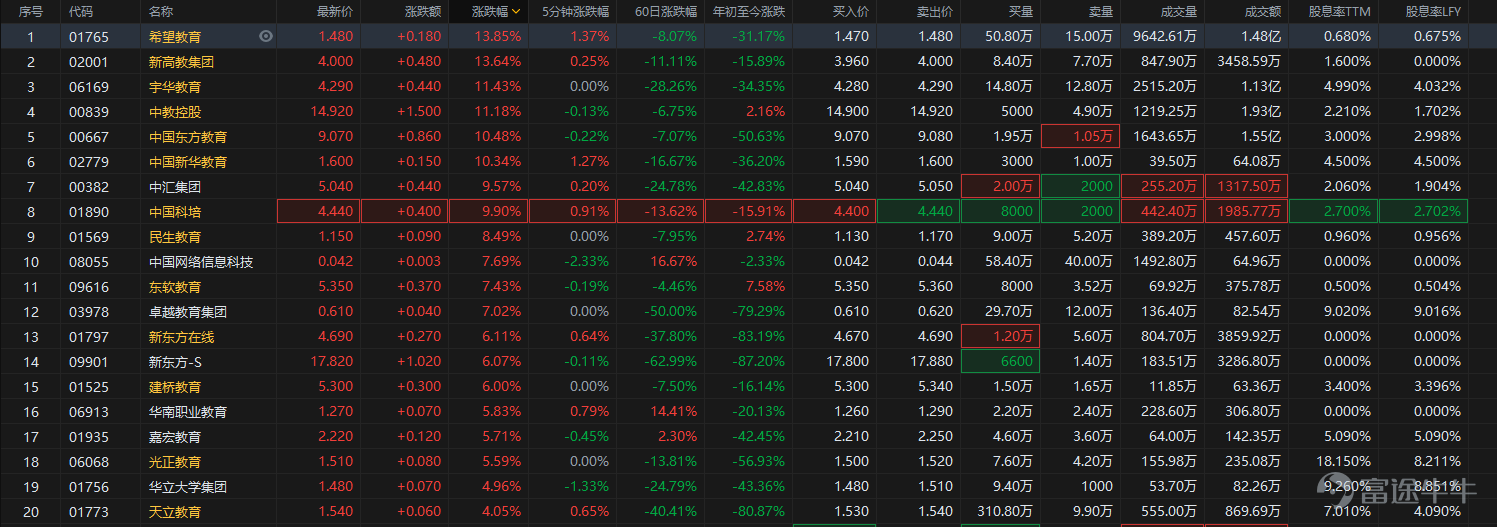
3. Sorting out relevant opportunities:On October 13, the stock prices of a large number of A-share vocational education companies surged. The Hong Kong stock market can focus on private higher education companies with large market capitalization, strong performance certainty, and an epitaxial expansion model, such as China Education Holdings, China Oriental Education, and Yuhua Education.
1. The policy continues to increase vocational education, and the legality of private vocational education is further strengthened
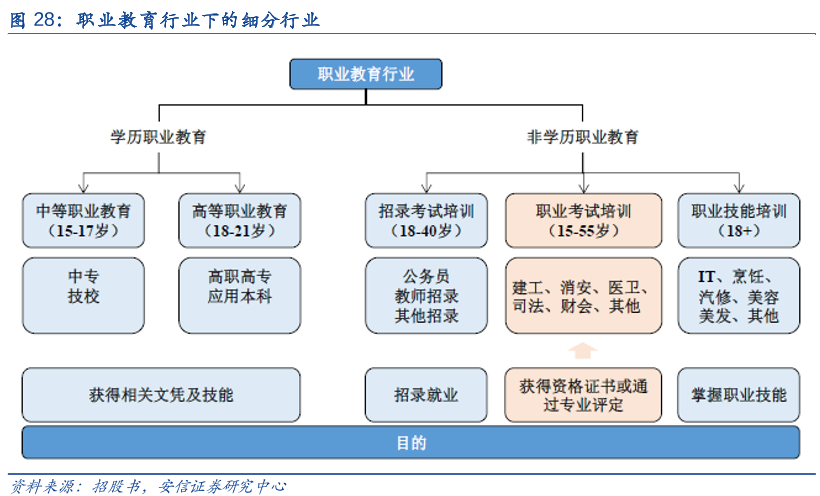
Vocational education is rich in content:Vocational education can be divided into academic vocational education and non-academic vocational education. The former is a type of education where a diploma can be obtained, such as technical colleges or applied undergraduate education; non-academic vocational education includes examination training, cooking and auto repair, etc. Overall, vocational education has a very broad spectrum, and specific industry tracks are long and rich.
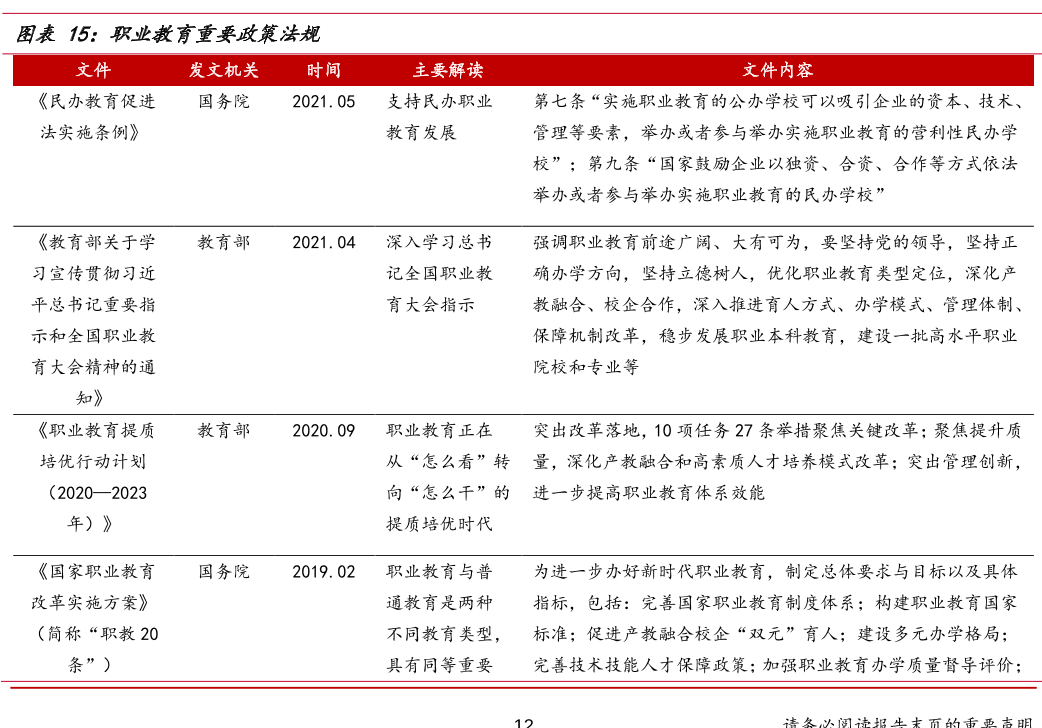
Sorting out policy priorities in the past three years: Judging from the policy review in the past three years, we can see three trends in the development of vocational education
1. The importance of vocational education has been repeatedly emphasized:Due to the impact of the epidemic and the gradual increase in the importance of China's manufacturing industry, vocational education is becoming more and more important in solving employment and industrial upgrading. In particular, in the current context where China emphasizes “specialization, excellence and innovation” and a manufacturing power, it needs large, high-quality industrial workers. Previously, the departments issuing policies and regulations included the Ministry of Education, the State Council, and the General Office of the CPC Central Committee on October 12, which fully reflected the support attitude of the top level.
2. Emphasize private capital and for-profit participation to enhance the legality of private vocational education:From the Public Promotion Law promulgated in May 2021 to the “Opinions on Promoting the High-Quality Development of Modern Vocational Education” promulgated on October 12, private capital and listed companies are continuously encouraged to participate in the construction of vocational education, and the legality of “for-profit” private vocational education schools. Previously, the capital market's most important estimate of private education was legality. As policy attitudes continue to be clarified, market concerns will gradually be dispelled.
3. The development plan is gradually clarified:Judging from the latest policy, several specific value tables for improving the vocational education system in 2025 have been clarified, including: ① the enrollment scale for vocational undergraduate education is not less than 10% of the enrollment scale for higher vocational education; ② clarifying the professional supply structure, connecting with the country's industrial upgrading priorities, and prioritizing the development of majors such as advanced manufacturing, new energy, and new materials. ③ It is clear that by 2035, the social status of skilled workers will increase dramatically,,
2. “Accidental killing” of private higher education institutions. Panic may ease
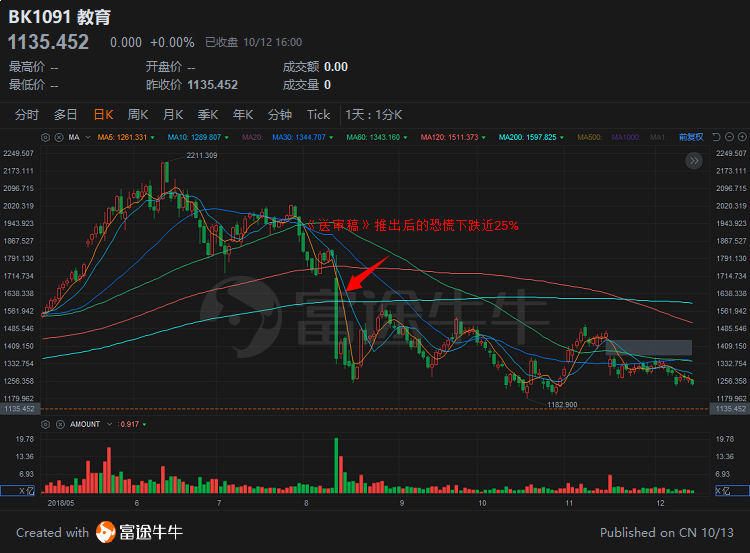
The valuation of the private higher education industry is strongly linked to strong policies.Chinese private education companies concentrated on the Hong Kong stock market in 2017. In August 2018, the Ministry of Justice issued the “Regulations on the Implementation of the Private Education Promotion Law of the People's Republic of China (Revision Draft)” (Draft for Review). Some of the provisions relate to the legality of profitable private colleges and universities in Hong Kong stocks, and the market reaction was extremely extreme. Immediately after the launch of the “Draft for Review”, Hong Kong education stocks plummeted by nearly 25%, while the industry sector did not return to the level before the collapse until 2020.
The reason for this is that foreign investors are highly sensitive to the pursuit of certainty and regulatory policies.Since the main revenue of private higher education companies comes from student tuition fees, they are basically a highly determined and predictable industry. The biggest uncertainty lies in regulatory policies, and foreign-funded institutions in the Hong Kong market are usually very sensitive to mainland regulatory policies. Once policy uncertainty occurs, they immediately sell off in a panic.
The July 2021 double reduction policy targeted K12, but it mistakenly killed private higher education, especially the vocational education sector.We hereby reaffirm Futu Research's previous views:The new policy of “double cutting” education mainly affects the K12 education and training circuit, and there is basically no negative impact on the higher education circuit.However, due to investors' pessimistic expectations of listed companies in the education industry as a whole, higher education listed companies (such as Zhonghui Group, China Education Holdings, etc.) were also “mistakenly killed” by the market. Based on multi-dimensional considerations such as fundamentals, valuation, and the increase in majority shareholders' holdings, we are still optimistic about the future of private higher education.
III. Reiterating investment logic and sorting out opportunities
At this point, we believe that the fundamentals of private higher education will continue to improve, and the valuation level will gradually be repaired as policies are clarified.Currently, the investment logic of higher education companies is: ① China's gross enrolment ratio in higher education still has room for significant increase, and the past 3 to 5 years have also been in a golden development window period of endogenous growth+epitaxial mergers and acquisitions, and growth certainty is high. ② The company's performance comes from student tuition fees. The certainty is very clear, and tuition fee increases have been gradually liberalized; ③ with policy support, vocational education may receive more preferential policies, such as subsidies or tax benefits.
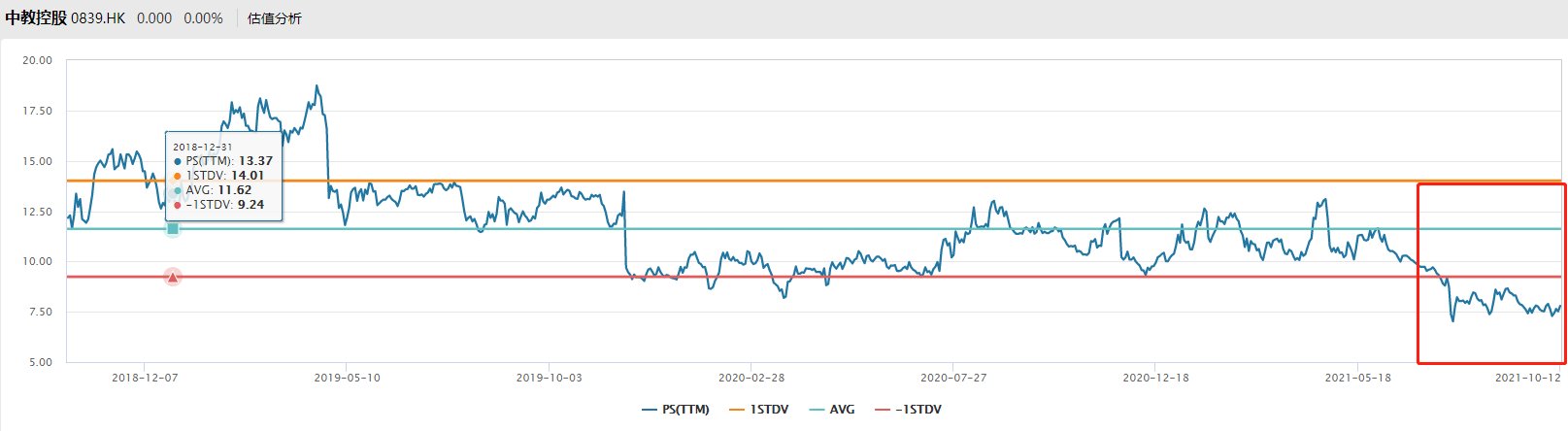
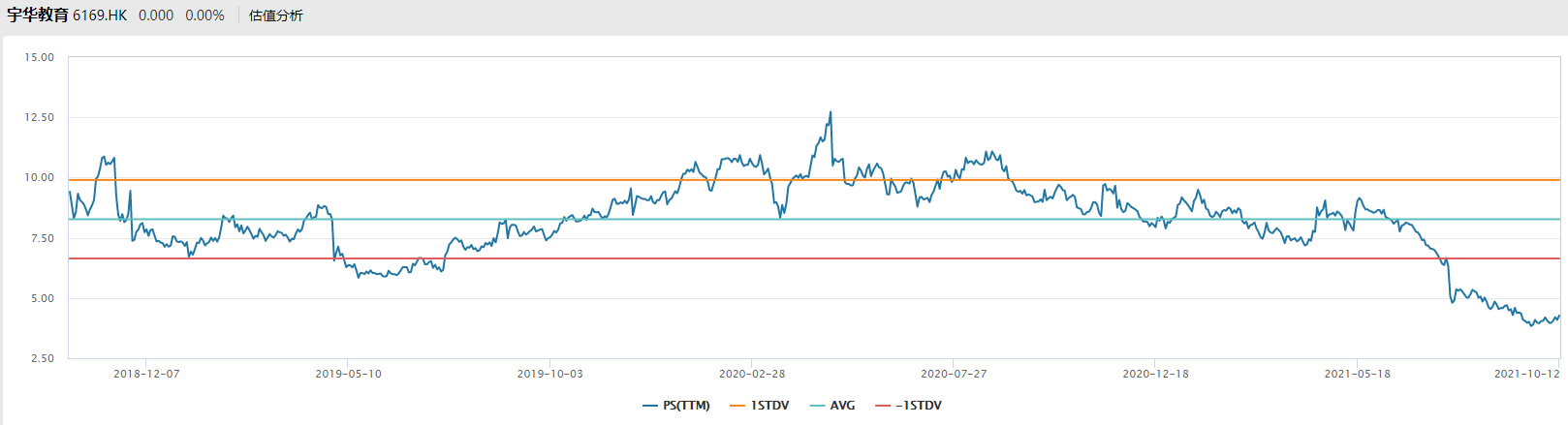
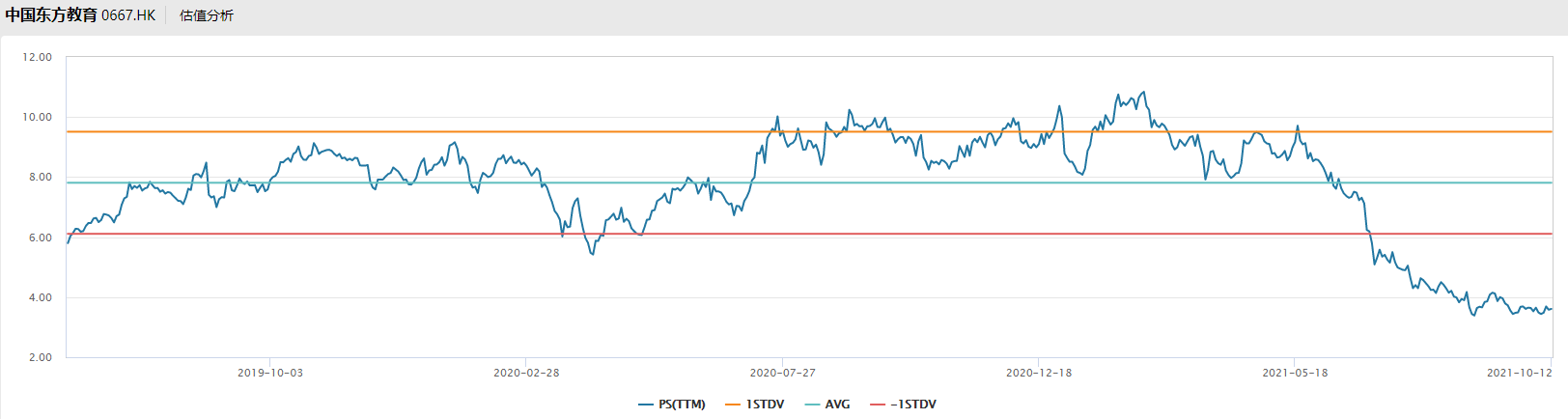
The valuation repair is the part that deserves more attention.As mentioned earlier, due to the “double reduction” policy, the entire Hong Kong private education sector has declined sharply in recent months. Among them, well-known China Education Holdings, Yuhua Education, and China Oriental Education all fell below the standard deviation for 3 years after July. However, with the implementation of the implementing regulations of the Public Promotion Law, it will further eliminate the sector's policy uncertainty and concerns. It is expected to boost the attention and valuation of the private higher education sector, and the valuation of the higher education and vocational education industry is expected to be repaired.
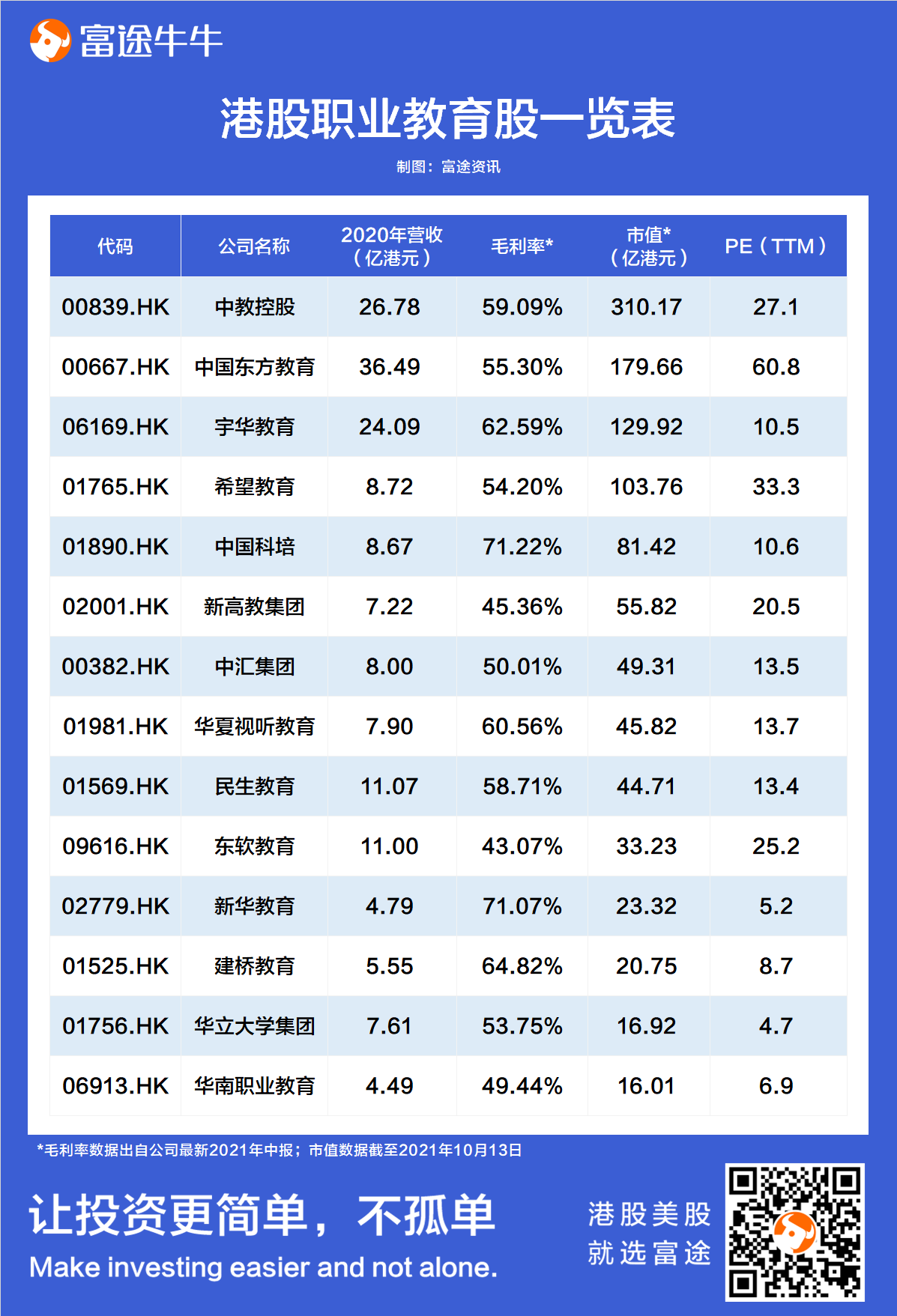
Related stocks:In order of market value, Futubull Niu Niu has listed the following investment targets for investors
Risk Disclaimer: The above content only represents the author's view. It does not represent any position or investment advice of Futu. Futu makes no representation or warranty.Read more


Comments (3)
to post a comment
34
295