
The US-Iran peace talks present conflicting narratives! What’s next for oil prices?

As the conflict enters its third month, will oil prices be "higher for longer"?
The volatile pattern, often described as 'one thought away from hell, one thought away from heaven,' has become the norm for the crude oil market over the past few months. Yesterday (May 7), the market plunged by more than 5% in a single day amid signs of potential easing tensions in the Middle East. $Crude Oil Futures (JUL6) (CLmain.US)$ Crude prices fell below the $90/barrel mark. However, early this morning, tensions between the US and Iran flared up again, causing oil prices to rebound immediately, and market sentiment tightened once more.
Since the outbreak of the US-Iran conflict at the end of February, the global energy market has experienced the most severe geopolitical supply shock in history.Now that the conflict has entered its third month, traffic through the Strait of Hormuz remains far below pre-war levels, with about 20% of the world's oil transportation routes still in a 'disrupted' state.
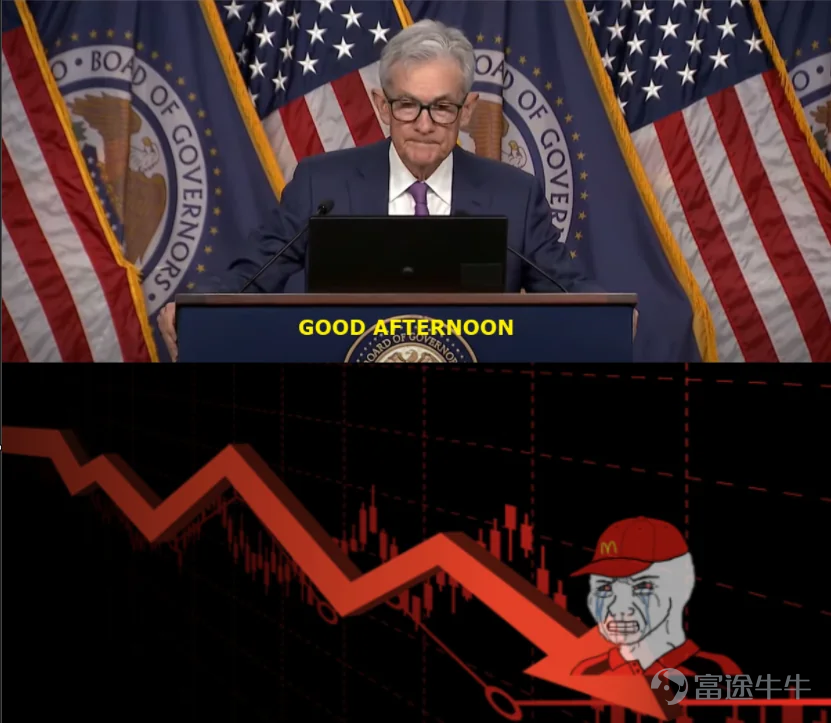
'Higher for longer'—the idea that oil prices will remain elevated for an extended period—is gradually becoming the market consensus.This phrase was not originally coined by the crude oil market but was frequently used by Powell after the Fed began its rate hike cycle in 2022. Fellow investors who went through that cycle will likely remember it well. It was also during that time that his 'Good Afternoon' repeatedly shocked global markets.

During this 'special period' for the crude oil market, how have the forces on both the supply and demand sides changed, and what might happen next? This article will provide an interpretation.
Supply Side: The 'Non-Linear Risks' of Inventory Depletion and Production Capacity Damage
Following Iran's announcement to close the Strait of Hormuz, the strait effectively underwent several weeks of 'complete blockade.' Although Iran later established so-called 'safe passages,' allowing vessels from certain non-hostile nations to pass through under coordination, actual traffic remains far below pre-war levels.

In the early stages of the conflict, global markets were still able to rely on inventory buffers. However, as time has passed, this buffer is gradually being depleted. According to Goldman Sachs, in April global oil inventories declined at a record rate of 11 to 12 million barrels per day.And even under the most optimistic scenario, where Persian Gulf exports normalize as early as the beginning of May, global crude oil inventories will drop to record lows.

As lockdowns persist, risks are not accumulating linearly but are amplifying exponentially. When inventories run out, refineries will sweep the spot market at any cost to maintain operations, causing extreme regional price disparities that will ripple into the futures market.
On the supply side, export disruptions have forced Gulf oil-producing nations to implement large-scale production cuts. Restarting oil fields after shutdowns isn't a simple 'on-off' process; each well needs to be re-pressurized and issues like scaling and sand blockages addressed, taking weeks to months. Additionally, there is a lag of about 30-40 days from when crude is loaded onto ships until it's processed at refineries—this impact will also take time to resolve.
This means that even if headline news one day announces the 'reopening of the strait,' the market won't quickly return to its pre-conflict state. A systematic rise in the central level of oil prices along with heightened volatility will become the new normal for quite some time.
Demand Side: Will high prices backfire?
However, rising oil prices are not solely governed by upward logic. Multiple forces are suppressing oil prices from different directions, creating a complex game-theory landscape.
(1) Self-restraint after price spikes
There's a classic concept in economics called 'demand destruction'—when prices rise to a certain point, consumers voluntarily reduce consumption, which in turn lowers prices.
This contraction in demand is already evident in Asia, which has the highest dependency: Bangladesh has moved up its Eid holiday, the Philippines and Sri Lanka have implemented four-day workweeks, Pakistan has closed schools, and Vietnamese officials have been urged to work from home—all measures aimed at reducing fuel consumption.
The IEA (International Energy Agency) has revised down its forecast for global oil demand in 2026 by 500,000 barrels per day, reversing previous growth projections.
(2) Acceleration of structural substitution: New energy eroding the 'base' of demand
Unlike cyclical price suppression, the substitution effect from new energy is structural and trend-driven, reshaping the long-term demand curve for oil.In 2025, global electric vehicles are reducing oil consumption by approximately 2.3 million barrels per day, accounting for about 2% of global daily demand.As the largest market globally, China’s penetration rate of new energy vehicles exceeded 50% in 2025, while overseas markets continue to accelerate adoption. The IEA forecasts that by 2030, the displacement from electric vehicles will surpass 12 million barrels per day.
(3) Alliance fracture: UAE exits coalition
On May 1, the UAE officially withdrew from OPEC and OPEC+.The UAE has been one of the countries within the organization most eager to increase production, with its capacity far exceeding the current quota but being constrained by production agreements.Once transportation bottlenecks ease, the UAE's strategic intention to break free from production quotas will translate into actual supply increases. Its planned release of 1 to 1.5 million barrels per day or more of idle capacity will flood the market, placing structural downward pressure on oil prices.
However, given the current shipping constraints in the Strait of Hormuz as the core issue limiting supply, the UAE’s production capacity located within the Persian Gulf also cannot be exported on a large scale.
(4) The true capability of foreign aid: Will the US and Russia be the 'white knights'?
Faced with a massive supply gap in the Gulf region, the market naturally turns its attention to the two major non-OPEC oil producers—the United States and Russia.
After experiencing an astonishing negative oil price over the past 20 years, American crude oil producers, especially shale oil producers, have generally adopted a cautious stance, maintaining strong discipline in capital expenditures.The number of fracking fleets is often regarded as a leading indicator of changes in shale oil production. When fracking fleet activity increases, it signifies that a large number of drilled but uncompleted wells are being activated and will contribute to production in the coming period.
During the deepening of the shale oil revolution, the number of fracking fleets once reached a peak. Although the Russia-Ukraine conflict that began in early 2022 also pushed oil prices to high levels, producer behavior remained restrained. After 2023, the number of fracking fleets continued to decline. Even after this year’s US-Iran conflict, this data has not seen a significant increase.

On the Russian side, its ability to increase production is constrained under sanctions and continues to face pressure from Ukraine's attacks on infrastructure. It is estimated that by 2026, global supply outside the Gulf region will be one million barrels per day higher than before the Hormuz disruption.
(5) A drop in the bucket
Placing these bearish forces in a medium-term context for an overall assessment leads to a clear conclusion:Factors on the demand side will exert downward pressure, but they are far from sufficient to fully offset the tense situation caused by physical supply disruptions.。
Demand destruction and new energy substitution will limit the upside potential for oil prices and accelerate the rebalancing process once supply recovers, but they cannot immediately resolve the current massive supply shortfall. The release of the UAE's production capacity comes with prerequisites; it must wait until the navigability of the Strait of Hormuz substantially resumes before its increased output can translate into effective supply—a delayed bearish factor. The production responses from the US and Russia are marginal and slow, making them incapable of acting as 'white knights'.
Under the assumption of a protracted conflict, the continued depletion of inventories and permanent damage to production capacity will become the core narrative driving the market. The aforementioned bearish factors are more about shaping a higher price platform with volatility, rather than ending the high oil price cycle.
How do we view the oil and gas sector now?
Oil prices are still at high levels, but typical oil and gas stocks have retreated significantly from their March highs, with some even returning to levels seen before the outbreak of the conflict in late February. However, there was already some 'preemptive' movement in oil and gas stocks before the war, accumulating gains even when oil prices had not yet risen significantly.
If inventory declines faster than expected in the coming period, and high volatility persists, it may force the market to reprice oil scarcity, leading to a valuation recovery. Of course, if US-Iran negotiations make substantial progress again, the performance of oil and gas stocks will still be affected.

In addition to oil and gas stocks, there are also various tools such as industry ETFs and crude oil ETFs, all of which fellow investors can find.We also did a recap in the early days of the conflict; interested fellow investors can find the answers in this article~
Reviewing past oil crises, the 1973 Middle East War caused a permanent rise in the central level, while the 1990 Gulf War led to a short-term spike followed by a rapid decline. The difference lies in the duration of supply disruptions and the abundance of alternative capacity.
The current situation is somewhere in between: the scale of disruption is unprecedented, but alternative supplies are much richer than in the 1970s, and demand-side resilience has decreased due to the energy transition. The most likely outcome is repeated high volatility in oil prices until a clear geopolitical resolution is reached.
This is the first time in history that the Strait of Hormuz has been completely blockaded. Regardless of the final outcome, the risk pricing of Middle Eastern oil in the global energy market has permanently changed. This is the true meaning of 'higher for longer' - not that oil prices will rise to $200, but that they are unlikely to return to the $50-$60 range of last year.
Risk Disclosure: This content does not constitute a research report and is for reference only. It should not be used as the basis for any investment decision. The information involved in this article is not a comprehensive description of the mentioned securities, markets, or developments. Although the source of the information is considered reliable, no guarantee is provided regarding its accuracy or completeness. Additionally, no assurance is given regarding the accuracy of any statements, opinions, or forecasts provided herein.
Risk Disclaimer: The above content only represents the author's view. It does not represent any position or investment advice of Futu. Futu makes no representation or warranty.Read more


Comments (3)
to post a comment
31
42