
AI Boom vs. Tight Liquidity: Will the US Stock Rally Continue?

Options Sir on Macro | Fed Minutes + NVIDIA Earnings Deliver a One-Two Punch—Why Did Markets Have a 'Quiet Thursday'?
If you're a seasoned U.S. stock market investor (and also have some knowledge of fried chicken), you're certainly no stranger to 'Crazy Thursday.'
Key events in U.S. financial markets are typically scheduled for Wednesdays local time, for example,The Federal Reserve's FOMC meetings usually take place from Tuesday to Wednesday, with the policy statement released at 2:00 p.m. Eastern Time on Wednesday, which corresponds to early Thursday morning Beijing time.Similarly, $NVIDIA (NVDA.US)$ major tech companies such as NVIDIA tend to release their quarterly earningsafter the market close on Wednesdays (after 4:00 p.m. Eastern Time), which also conveniently corresponds to early Thursday morning Beijing time.If other economic data releases coincide with these events, the day becomes especially eventful.
Sir will analyze NVIDIA's earnings in a separate post; here, we focus primarily on macroeconomic impacts.Despite the Fed minutes signaling a hawkish stance, why has the market risen so calmly? What factors are driving this rebound, and how should we view the outlook going forward?
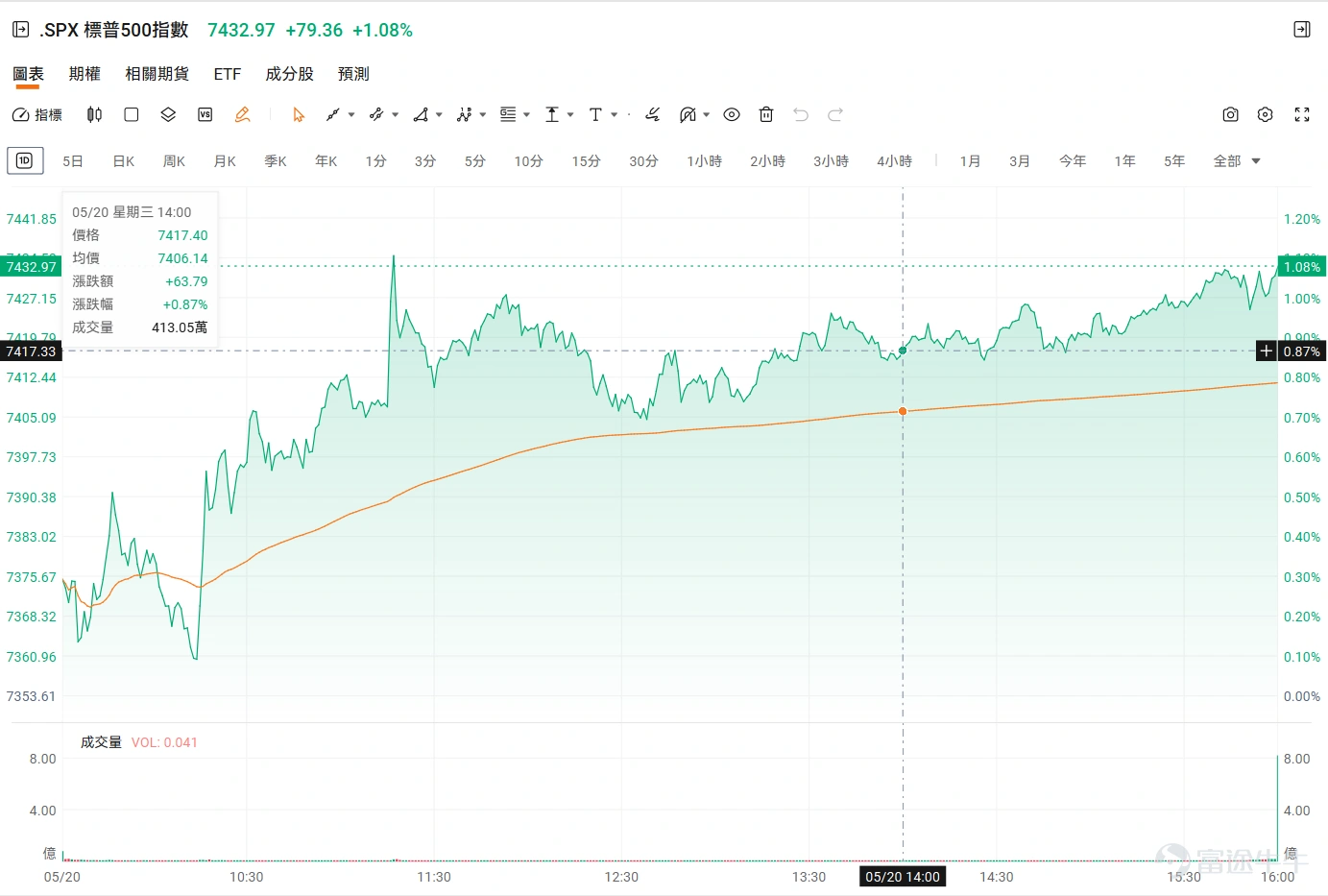
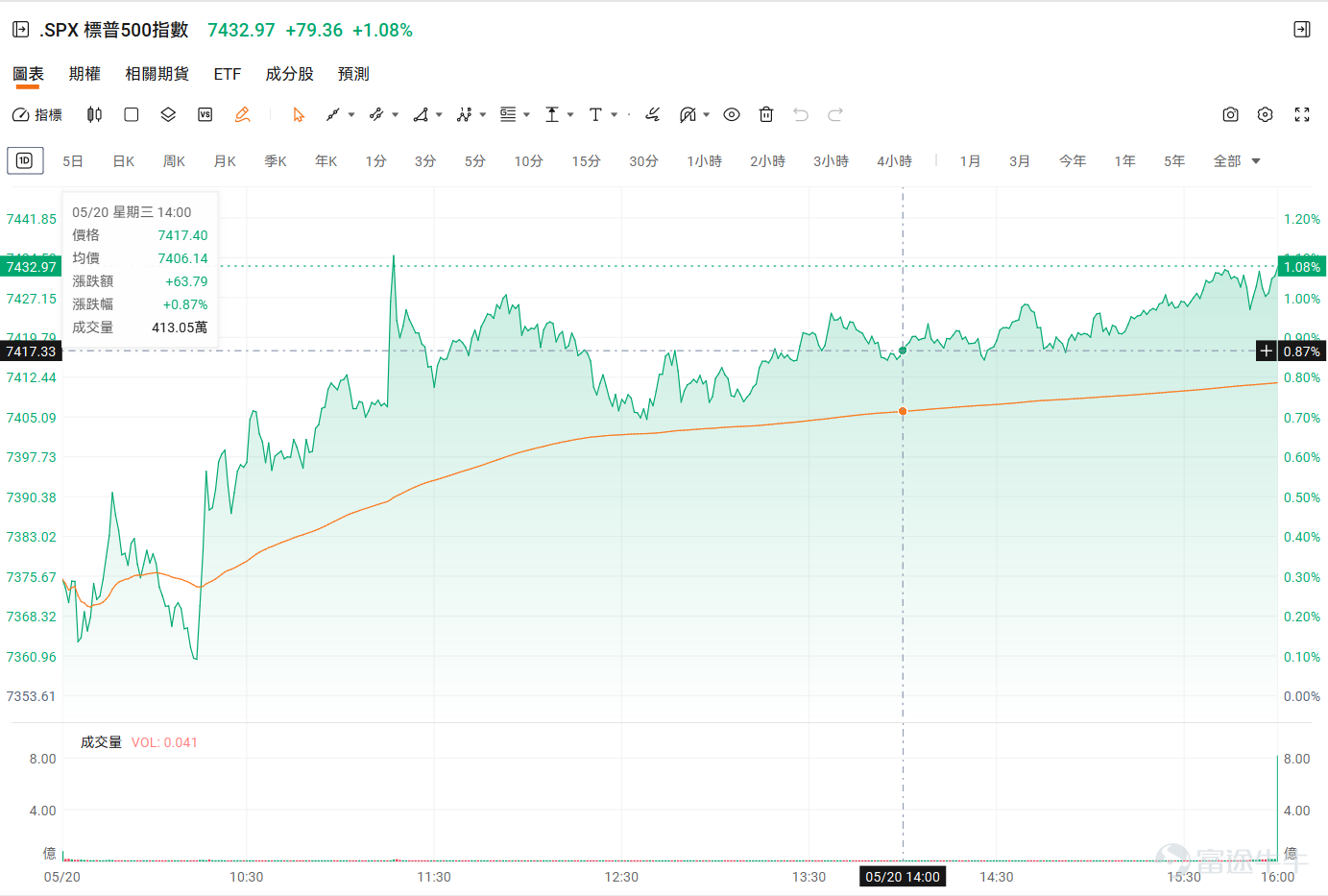
Intraday S&P 500 chart for U.S. stocks the following day; Fed minutes released at 14:00 local time. Source: Futubull
Three Weeks Late: The Fed Minutes & Fed Hermeneutics
We need to clarify two commonly confused concepts:FOMC interest rate decision (Statement)withFOMC meeting minutes (Minutes).

Source: Fed Calendar
Interest rate decision (real-time news): This is the outcome releasedimmediately after the meeting.Typically at 2:00 p.m. Eastern Time, the Federal Reserve issues a brief policy statement announcing whether rates are raised, lowered, or held steady, accompanied by a concise description of economic conditions. The statement aims to be clear and unified, reflecting the committee’s final, collective decision. For example, the outcome of the April meeting was to maintain the target range for the federal funds rate at 3.50%–3.75%.
Meeting Minutes (Delayed Full View):This was the real star of last night. It is not a verbatim transcript of the meeting, but rather a carefully compiled and summarized record of the discussion. As per the Federal Reserve's usual practice,it is typically released publicly three weeks after the meeting, at the same time of day.Compared to the interest rate decision, the minutes reveal more details—such as disagreements among officials and discussions about economic risks. The minutes undergo multiple rounds of review to ensure every word accurately reflects participants’ views.
These minutes documentthe final FOMC meeting chaired by former Chair Powell—so what signals did it send?
“A majority ofparticipants emphasized that if inflation remains persistently above the 2% target, some degree of policy tightening could become appropriate.” This indicates the Fed’s collective thinking has shifted from “when to cut rates” to “whether rate hikes might be needed.” This marks the first time since the pause in this hiking cycle thatan official document has so explicitly discussed the possibility of raising rates.
“ManyMany participants indicated they had initially favored removing language in the post-meeting statement that suggested a dovish tilt in future interest rate decisions.” This signals growing hawkish sentiment within the Federal Reserve, as the removal of the “dovish tilt” wording paves the way for potential future rate hikes.
At this point, you might be wondering: why include the English phrasing? Surely Sir doesn’t think readers can’t understand such basic English, right? No, no, no.
There’s a method to this—it’s actually a core technique for interpreting Fed minutes:Every quantifier the Fed uses is a carefully calibrated policy signal.This lexicon is a deliberately designed system of communication—ambiguous yet structured—and market analysts closely track shifts in these word choices to gauge the strength and direction of policy bias.
That’s precisely why the original English must be included—because Chinese translations tend to flatten the nuanced gradations in participant counts. In Chinese media reports, these distinctions are often all reduced to the generic term “some.”
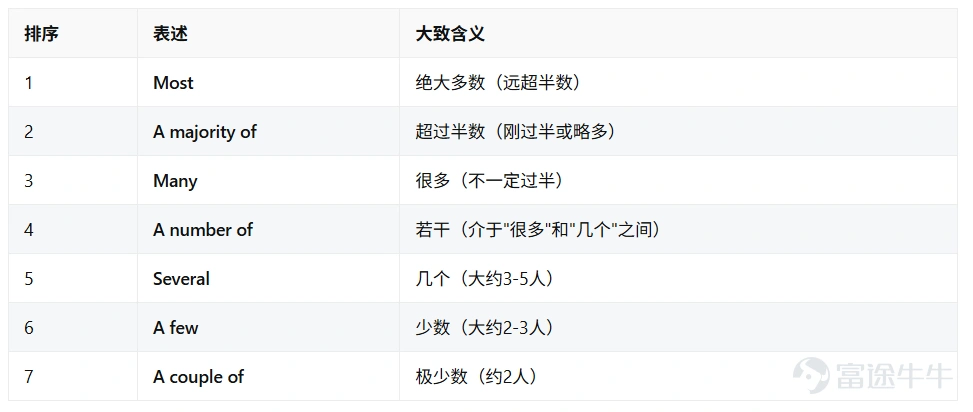
The Fed’s terminology hierarchy, ranked from largest to smallest group size:
If, in the next set of minutes, the phrasing around 'removing dovish language' escalates from 'Many' to 'Most' or 'A majority of,' it would mean not only is a rate hike itself becoming consensus, but even the preparatory messaging for such a move already enjoys overwhelming support. At that point, market pricing would shift from whether to hike at all to how much and how many times.
Markets reacted calmly to these minutes, primarily because the three-week digestion period had already allowed markets to price in the implications. Over the past three weeks, numerous public remarks by Fed officials and a stream of economic data releases had already conveyed the message that rate cuts would be delayed and rate hikes had become a possibility.
Moreover, judging from the wording,the discussion on rate hikes is far from certain and remains relatively restrained.The minutes stated that rate hikes would only be considered 'if inflation remains persistently above 2%,' which reads more like a scenario analysis than a clear commitment to act. In fact, the internal dissent reflected in the minutes suggests the Federal Reserve has yet to coalesce around a unified tightening path, leading markets not to interpret it as an imminent threat.
Deeper drivers behind the rebound
On that day, even stronger factors overshadowed the impact of the minutes.
U.S. President Trump explicitly stated yesterday that negotiations between the U.S. and Iran had entered their 'final stage,' adding, 'An agreement will be reached; otherwise, we’ll do something unpleasant—but hopefully it won’t come to that.' Meanwhile, Iran also signaled de-escalation: the Islamic Revolutionary Guard Corps announced that, within the past 24 hours, a total of 26 vessels of various types had passed through the Strait of Hormuz under its coordination.
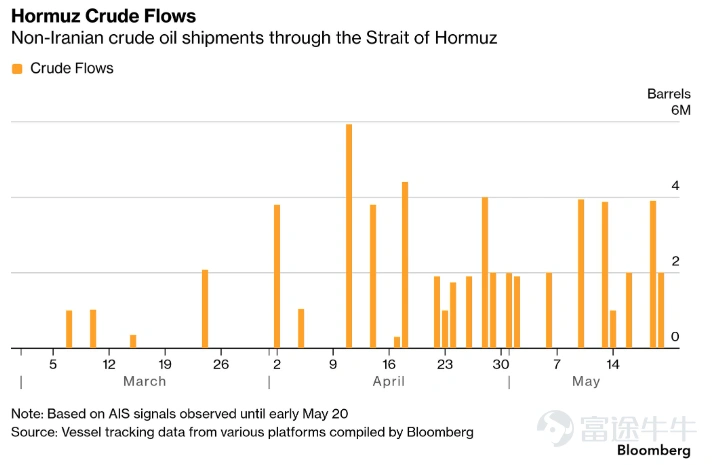
This news triggered an immediate sharp reaction in crude oil markets: both WTI and Brent crude prices dropped by more than 5% at one point. Energy is a key component of core inflation. The significant decline in oil prices directly dampened market fears of a potential runaway 'inflation spiral' that might force the Fed to raise rates.
Previously, the bond market had been causing investor anxiety. The yield on the 30-year U.S. Treasury note briefly hit its highest level since 2007, while the 10-year yield neared multi-year highs. Following the oil price plunge, the 10-year Treasury yield fell from 4.67% to 4.57%, marking its steepest single-day drop since last August; the 30-year yield also declined accordingly.
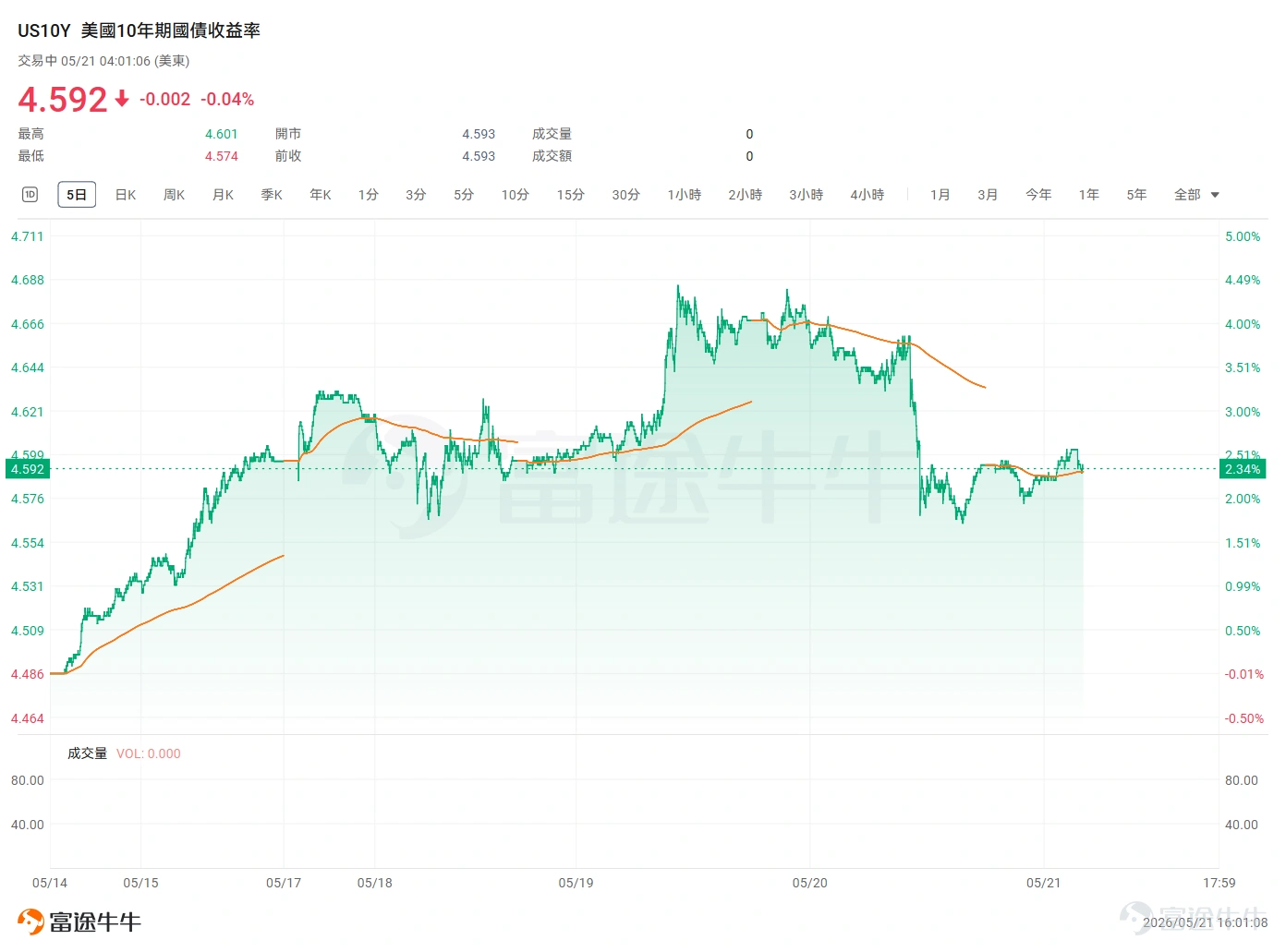
As noted on Monday, in recent years, every time bond-market shocks spilled over into equities, the market ultimately reverted to its AI-driven narrative—and that’s exactly what happened again yesterday.
Fellow investors who are interested can revisit this~
Amid macroeconomic uncertainty, the endogenous growth momentum driven by a new wave of industrial revolution—led by AI—remains robust.This provides the market with a solid fundamental anchor, enabling capital to swiftly flow back into sectors offering the highest growth certainty whenever the macro clouds temporarily part.
On that day, technology stocks—led by chipmakers—became the primary drivers of gains, $PHLX Semiconductor Index (.SOX.US)$ surging 4.49%. Some familiar names well-known to fellow investors have returned, $Advanced Micro Devices (AMD.US)$ +8%, $Intel (INTC.US)$ 7%, $Micron Technology (MU.US)$ 5%……
In the preceding trading sessions, due to geopolitical uncertainty and escalating turmoil in the US Treasury market, a significant amount of capital opted to stay on the sidelines or reduce exposure for risk mitigation. When two positive signals—'a sharp drop in oil prices' and 'strong AI momentum'—emerged simultaneously, the market’s balance tipped instantly. Sideline capital rushed in, aiming to capture returns during this narrow window of reduced risk. Trend-following quantitative strategies also added positions in response to the strengthening market signal, collectively creating a short squeeze effect (a smaller-scale version of the late-March rally).
Key developments to watch closely
The current market equilibrium is fragile and temporary. The AI growth narrative has temporarily overshadowed macro risks, but this does not mean those risks have vanished. Forinvestors, while enjoying the rebound, it is essential to keep an eye on key variables that could disrupt this delicate balance.
1) The fragility of a 'peace deal'
Trump merely stated that negotiations have entered the 'final stage,' without signing any agreement. Iran has also warned that if the U.S. or Israel launches another attack against it, Tehran will retaliate beyond the Middle East. Even if the U.S. and Iran reach a deal, crude oil supply is unlikely to immediately return to pre-conflict levels. Given the possibility of renewed U.S. strikes on Iran, oil prices may remain elevated.
2) Earnings season draws to a close
With NVIDIA having reported its results, this earnings season is gradually winding down. The next major AI-related earnings report on Wall Street will come next week from $Marvell Technology (MRVL.US)$as well as$Broadcom (AVGO.US)$ with its earnings release in early June.
Currently, the most solid support for U.S. equities lies in corporate earnings—particularly those tied to AI.However, it’s important to note that even strong earnings don’t guarantee rising stock prices—especially for stocks whose performance has already been fully priced in—now that markets have rallied sharply and earnings reports are largely out.
3) Waller officially takes the stage
This Friday (May 22), Trump will host an inauguration ceremony for Waller at the White House, where Waller will formally assume the role of Federal Reserve Chair.The next FOMC meeting will be held on June 16–17. His first FOMC meeting as chair will serve as a 'litmus test' for the market to assess his policy stance and ability to manage internal divisions.
The market has now fully priced in no rate cuts in 2026, and expectations of a potential rate hike have even begun to emerge. Every statement made by Waller at the post-meeting press conference will be closely scrutinized by the market to recalibrate assessments of how long the 'higher for longer' interest rate environment will persist and the true probability of the tail risk of a rate hike.
Given the current complex macroeconomic backdrop, unresolved geopolitical risks, and uncertain monetary policy stance, entering the market through dollar-cost averaging or phased position building is far more prudent than placing a large, concentrated bet all at once.
Options Strategies: How to Achieve Both Offense and Defense in Today’s Market Environment?
We are now in a 'high-volatility era' driven jointly by policy shifts, geopolitical developments, and economic data. For retail investors, this does not mean passively bearing risk. Options—often perceived as complex derivatives—can actually serve as an effective 'safety belt' in volatile markets, helping investors manage risk and enhance returns amid uncertainty.
Below are several strategy references tailored to different market outlooks:
Strategy 1: Protective Put — 'Insure' Your Core Holdings
If you remain bullish on the long-term uptrend but worry about a sharp short-term pullback, you can purchase put options like buying car insurance—paying a 'premium' (option premium) to buy a corresponding number of puts, effectively equipping your portfolio with 'body armor.'
If the market declines, gains from the put options can partially or fully offset losses in your underlying positions; if the market rises, you only lose the premium paid and still capture most of the upside appreciation. Consider deploying this strategy using $SPDR S&P 500 ETF (SPY.US)$ 、 $Invesco QQQ Trust (QQQ.US)$ broad-market ETFs with strong liquidity, high trading volume, and flexible expiration schedules (with options expiring every trading day).
(using SPY as an example)
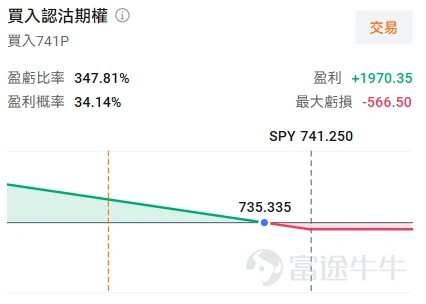
(The design images displayed on the screen are for demonstration purposes only and do not constitute any investment advice or guarantee; market movements are frequent, and the illustrated option prices do not represent actual conditions)
The core of this strategy is risk management rather than directional prediction—it trades a certain, small cost for the 'peace of mind' of holding positions, helping investors avoid panic-driven selling in volatile markets.
Strategy Two: Covered Call — 'Earn Rent on Your Holdings' to Boost Cash Flow
If you hold an asset long-term and have already realized substantial gains (e.g., assets linked to the AI ecosystem), but have a neutral or mildly bullish outlook for the short term, a covered call is the preferred tool to enhance returns and lower your cost basis.
The core mechanism involves holding the underlying asset while simultaneously selling an equivalent number of call options. This effectively allows you to 'collect rent' when the market is calm or experiences modest gains. The trade-off is that you forfeit any upside beyond the strike price if the asset surges significantly. Should the stock price rise sharply, your shares may be called away at the strike price.
(Using INTC as an example)
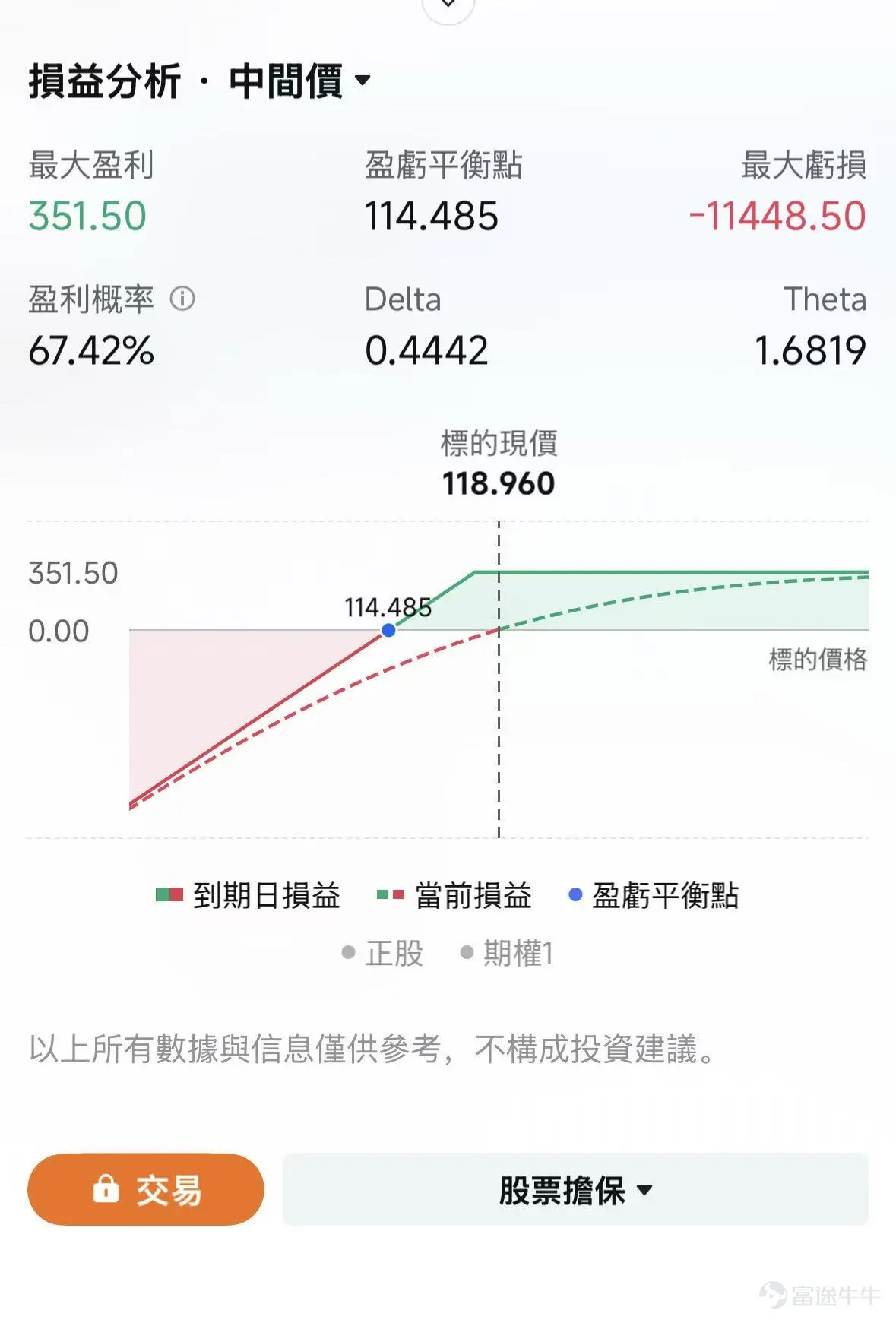
(The design images displayed on the screen are for demonstration purposes only and do not constitute any investment advice or guarantee; market movements are frequent, and the illustrated option prices do not represent actual conditions)
Finally, here's a small perk for fellow Futubull investors, welcome to claim it.Options Beginner Pack
*This event is exclusive to invited HK users. Click to learn more.Detailed event rules>>
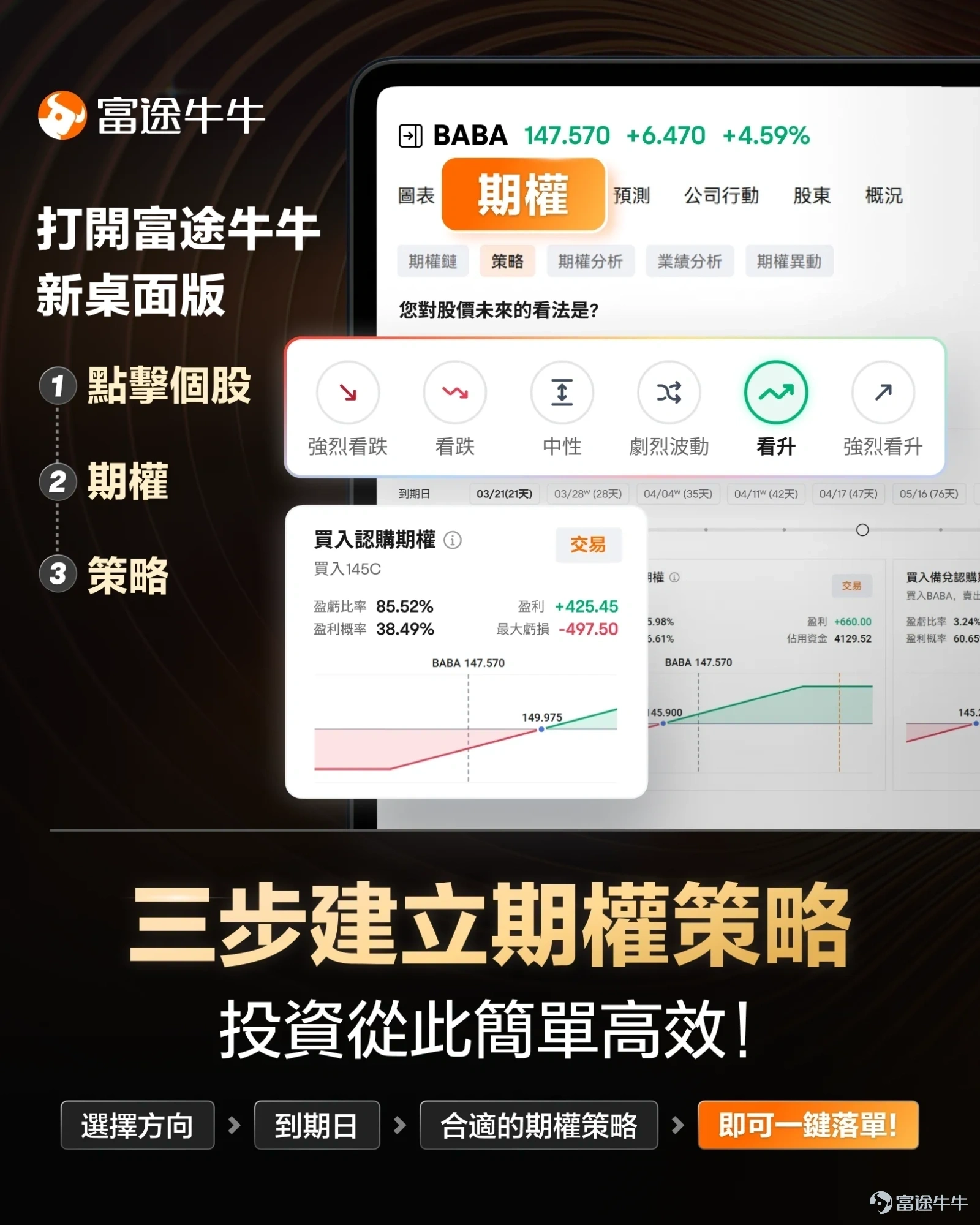
Market conditions are complex and volatile,Options StrategyOverwhelmed by choices? Futubull helps you build a portfolio in three steps.Options Strategymaking investing simple and efficient!
Option Risk Warning:An option is a contract that grants the holder the right, but not the obligation, to buy or sell an asset at a fixed price on a specific date or at any time before that date. The price of an option is influenced by various factors, including the current price of the underlying asset, the strike price, time to expiration, and implied volatility. Implied volatility reflects the market’s expectations for the level of volatility in the option over a future period. It is a data point derived inversely from the Black-Scholes option pricing model and is generally regarded as an indicator of market sentiment. When investors anticipate greater volatility, they may be more willing to pay a higher price for options to hedge risks, resulting in higher implied volatility. Traders and investors use implied volatility to assess the attractiveness of option prices, identify potential mispricings, and manage risk exposure.
Disclaimer:This content does not constitute any offer, solicitation, recommendation, opinion, or guarantee of any securities, financial products, or tools. The risk of loss in trading options can be substantial. In some cases, losses may exceed the initial margin deposited. Even if you set contingent orders such as 'stop-loss' or 'limit' orders, these may not prevent losses. Market conditions may make such orders unexecutable. You may be required to deposit additional margin within a short period. If you fail to provide the required amount within the specified time, your open positions may be liquidated. However, you will still be responsible for any shortfall in your account. Therefore, before trading, you should study and understand options and carefully consider whether such trading is suitable for you based on your financial situation and investment objectives. If you trade options, you should be familiar with the procedures for exercising options and the rights and obligations upon exercise and expiration. Options trading carries extremely high risks and is not suitable for all investors. Investors should carefully readCharacteristics and Risks of Standardized Options。
Risk Disclaimer: The above content only represents the author's view. It does not represent any position or investment advice of Futu. Futu makes no representation or warranty.Read more


Comments (5)
to post a comment
33
27