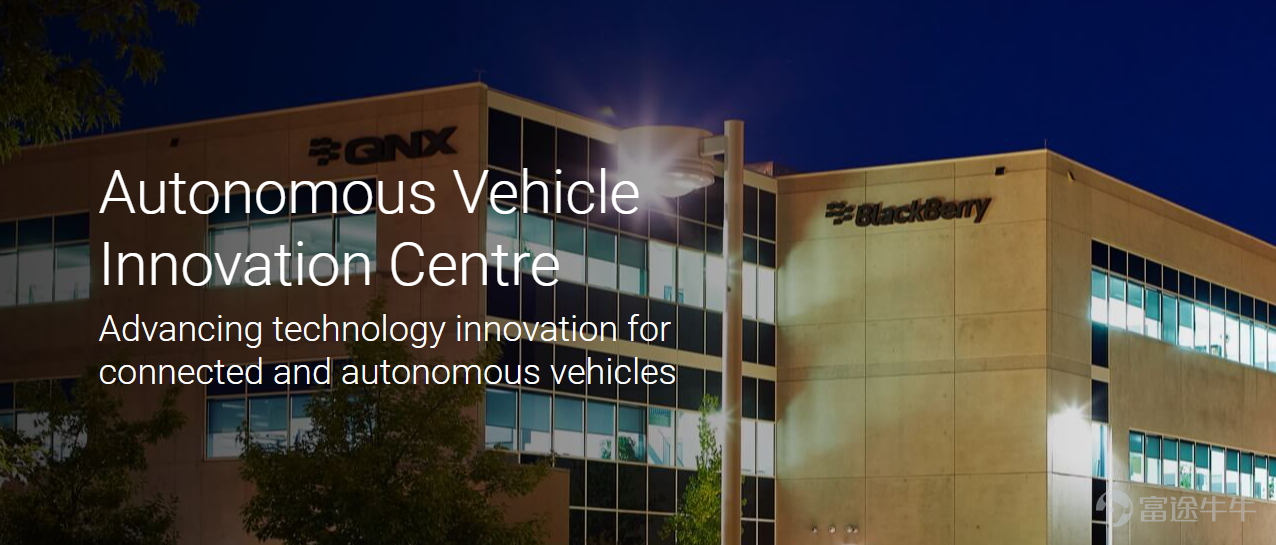

Is BlackBerry the Android of the automotive world? — BlackBerry CES Conference Call Summary
U.S. Stock Market Watch:
BlackBerry QNX in-vehicle system has recently been hailed as the "Android of the automotive industry." So just how promising is BlackBerry? We've excerpted the minutes of BlackBerry's January CES conference call to find out.
Overall, the IVY cloud platform, which the market has high expectations for, is still in the R&D stage and is expected to be officially launched in 2023. Before then, it may have little impact on BlackBerry's performance.

Q:
Let's start by introducing BlackBerry QNX and the embedded software it provides. For those who are not very familiar with QNX, perhaps you could explain what it is.
A:
QNX provides two foundational products based on a microkernel: a real-time operating system named Neutrino and a hypervisor that offers virtualization capabilities. Both are tailored for deeply embedded systems and are especially suited for applications requiring absolute security and protection.We have attained the highest level of safety certification for foundational products in the automotive, medical, and industrial sectors.: ISO 26262 ASIL D and IEC 61508 ASIL 3. This means our products are specifically engineered for safety-critical applications.Particularly within the automotive sector, our products are designed to control steering, braking, and virtually any system governing vehicle operation.
In the automotive industry, secure ADAS operating systems and the currently popular digital cockpit are emerging as new trends.Within this trend, we are seeing infotainment systems and other in-cabin functions—such as the digital cockpit—integrated into a single hardware module, with our virtualization technology used to separate safety-critical from non-safety-critical systems. Moreover, in other markets—such as pharmaceuticals, medical robotics, nuclear power plants, and nuclear magnetic resonance scanners for the oil and gas industry—QNX may be deployed to control blade pitch in wind turbines, a function critical for maintaining system stability.
These are just a few examples.
Q:
You did mention that safety is one of the key factors here. Perhaps you could provide a high-level overview of the overall trends in the automotive industry and how these trends might impact QNX's potential market?
A:
Of course.I believe the macro trend everyone knows is connectivity.Vehicles are requiring more and more connectivity. We have electrification, as well as automation—collectively, technologies that enable or are advancing toward autonomous driving. Consequently, software is playing an increasingly significant role in vehicles. Some studies indicate that,By 2030, 50% of automotive BOMs will consist of electronic components, with 30% of those being software.Therefore, the trend we are currently observing is,Today's automobiles are composed of numerous components known as ECUs—electronic control units. At present, these units typically perform only a single function.So, you can think of it this way: the door lock is an ECU, my transmission control unit is an ECU, my digital instrument cluster is an ECU, and so on. These are just a few examples.
ThereforeWe are beginning to see these ECUs integrated into what we call domain controllers in vehicles.The domain controller will handle multiple functions on a single module.These domain controllers are typically high-performance computing platforms. So when you think of these, you think of Qualcomm, Samsung, NVIDIA.These applications can run on your PC or on your smartphone. This is a significant advantage for QNX.Because QNX products run on high-performance computing platforms., rather than on low-end 8-bit and 16-bit ECUs.
Today, as more and more systems are migrating to these domain controllers, security has become essential, since these components either control the vehicle's chassis or its functional systems. Beyond infotainment systems, most of these modules incorporate safety features. This posesQNXIn other words, yet another outstanding benefit. This trend is in4Before the New Year or5Before the New Year, perhaps it was6Developed before the New Year, we are seeing infotainment increasingly shift toAndroidHowever, we are also seeing that the automotive industry is moving toward this architecture of domain controllers. Moreover, we recognize that there will be greater opportunities to deliver richer software experiences within vehicles. Consequently, we are increasingly focusing our efforts on safety and security, knowing that as vehicles evolve, we will have more opportunities to integrate into a wider range of vehicle subsystems—going beyond just infotainment.
Q:
Got it. You recently announced BlackBerry IVY, which was co-developed with Amazon AWS. So, how is this different from what QNX is currently doing?
A:
In fact,This represents a significant departure from QNX's traditional approach. The IVY we have announced is an ubiquitous smart-car platform.IVY is a cloud-connected, cross-platform system that supports multiple operating systems and cloud environments, as well as in-vehicle software. It allows automakers to access vehicle sensor data in compliance with security requirements, process that data using updatable code, and then share it with developers through a consistent and straightforward in-vehicle API mechanism.
Therefore, in essence, what we are doing here is toAPIFrom a perspective, how can vehicles be made to appear universal, and how can vehicle data be accessed in a manner that is consistent across all automotive brands? This is an extremely high bar because, from an electrical-architecture standpoint, vehicles remain highly customized. No two vehicles from differentOEMmanufacturers look exactly the same. They use different sensors. They have different architectural layouts. Therefore,
IVYThe idea is to create middleware—I believe it serves as a translator for entering the vehicle. InIVYAt the very bottom layer, we communicate directly with the sensors embedded in the vehicle. We then apply machine learning or other processing techniques to normalize this raw data into synthetic sensors. For example, consider a smart city that wants to monitor winter road conditions: the synthetic sensors in the vehicle might be a combination of wheel-speed sensors, anti-lock braking system sensors, temperature sensors, and possibly camera inputs. By leveraging these four types of sensors, we can normalize the data into a single composite sensor, enabling the smart city to determine whether there is ice on the roads, whether vehicles are skidding in certain sections of the route, whether there is black ice, and so on.
Now, imagine the tremendous power of this capability if every automaker were to access the data in a standardized manner. Therefore,IVY's true strength lies in ensuring that we develop an ecosystem.This ecosystem can be scaled to enable application developers to build universal applications, while smart cities gain access to standardized data across different automotive brands. The underlying vision is to ensure that automakers can maximize the value of their data—whether by analyzing vehicle performance or other metrics—to drive revenue growth or reduce costs. The goal is to establish an ecosystem that becomes the de facto industry standard.
Q:
What is our current progress, and how will we divide responsibilities with AWS?
A:
We are jointly developing with AWS on a 50-50 basis. We do not rely on the AWS cloud.AWSNor do we rely on QNX. This is indeed the universal middleware that underpins the creation of this ecosystem. Therefore, it's clear that we are developing on QNX. Given our leading position in the automotive sector, we aim for QNX to become the premier choice for automotive applications. This is one of the key reasons why AWS is highly interested in partnering with us: our deep roots in the automotive industry speak for themselves.We have a delivery record of over 175 million vehicles.
I believe that we,IVYThere is a very, very consistent goal in this direction—namely, to drive this ecosystem and deliver value both inside and outside the vehicle.OEMA common application ecosystem among brands.
Q:
If I look back about three or four years, I do recall several startups—private firms that sought to unify data from different vehicles. So, are companies already doing this? And why would IVY be any different in this regard?
A:
I believe that another challenge facing some of the larger companies in this field is data ownership. Therefore, from the very beginning,BlackBerryandAmazonIt's perfectly clear. We don't want to own the data, nor do we want to control it. That's entirely inOEMin our hands. This is indeed not an area we intend to enter. The true purpose of this collaboration is to build a real-world ecosystem—one that will truly set the stage apart and drive the development of cutting-edge, automotive-focused ideas and applications.
Q:
What are the market opportunities for IVY, and what is the total addressable market (TAM) size?
A:
The first vehicles equipped with the IVY system are expected to be launched in 2023.Naturally, prior to that, we aim to collaborate with OEMs and potential Tier 1 and Tier 2 suppliers, while generating professional services revenue along the way.Our goal is a SaaS-based model.In other words, establish a recurring revenue stream.
Q:
Two follow-up questions about IVY are more related to automakers. Will BlackBerry QNX or IVY appear in the new product that NVIDIA and Nio will co-develop? Will Tesla consider adopting IVY?
A:
Yes. These are excellent questions.Most people know that we have a very close relationship with NVIDIA., as we announced a few years ago that QNX is the underlying OS for the NVIDIA DRIVE platform. We are currently unable to comment on any specific OEM. What I can say is that before Christmas, we already held a seminar with an OEM.
Therefore, the ability to create this ecosystem is truly exciting. When people think about past ecosystems, they used to assume that automakers would have to come together and develop a unified vehicle architecture in order to build such an ecosystem.Try considering it from an iOS or Android perspective.—not iOS or Android, but something along those lines—yet it's perfectly suited for the automotive context. It's genuinely practical—it's all about taking shortcuts and building that app ecosystem before automakers have the ability to standardize their architectures.
As far as Tesla is concerned, Tesla can definitely be a customer in this field.
Q:
Is it possible to re-engage the 175 million QNX users in the IVY market?
A:
Today, as we focus on integrating more safety software across a growing number of vehicle modules—particularly in ADAS, autonomous driving, chassis control, and the digital cockpit—we already hold a dominant position in the digital cockpit market. At the same time, I believe this will also open up new customer segments.Some customers are running different operating systems, have different architectures, or use different cloud solutions.
Q:
Regarding the sale of patents, BlackBerry sold 90 patents to Huawei. How should this be understood?
A:
With regard to Huawei, only a very small number of patents unrelated to its core business have been sold.
Q:
Could you provide an overview of the per-vehicle value of QNX in electric vehicles versus internal combustion engine vehicles?
A:
Traditionally, if we look back...10Before the New YearQNXIn the automotive industry, the typical application is the telematics box.OnStaror infotainment devices. At the time, we held a leading position in the infotainment and telematics sectors.With an integrated box controller,Advanced Driver Assistance SystemsController, autonomous drive controller. You have a digital cockpit—perhaps the first integrated system of its kind within the vehicle—and we will leverage a hypervisor to consolidate cockpit functions such as the digital instrument cluster and infotainment system onto a single high-performance computing platform.
Therefore, I believe that, in fact, no specific dollar figure has been cited regarding the opportunities within the vehicle; rather, there will certainly be2or3An opportunity turns into5or6or7an opportunity. For us, usingIVYIt's simply a different function.
That said, from an electric-vehicle perspective, I believe we hold a position in the pre-Christmas earnings, and I am confident that we25Ranked among the top electric vehicle manufacturers19position, with a market share in collaboration with electric vehicle customers of61%。
Q:
Is automotive-grade Linux a significant competitive threat? Within the automotive ecosystem, who poses the most substantial competitive threat? Over time, how has QNX maintained its advantage over these competitors?
A:
I'd like to say that we have two competitors: Green Hills and Wind River.Green Hills is highly renowned in the aerospace and defense sectors, as is Wind River.
On the other hand, more information comes from the user side, while more comes from high-performance computing platforms; you will have various forms ofLinux, whether it isAGL,UbuntuOr something else.
Now,QNX's advantage over Linux lies in the fact that many Linux distributions have not undergone security certification.Security certification is a highly complex undertaking, and it is difficult to achieve. When you look at products like Linux, achieving it is particularly challenging.Linux is popular because it runs extremely fast and is driven by community contributions. However, this also introduces a critical security vulnerability.Security requires conducting due diligence centered on security use cases, understanding the software's provenance, performing extensive testing, and carrying out thorough impact analyses.
So what I mean is that we take all competitors seriously. We are simply committed to continuously advancing our products—enhancing performance and delivering superior security—to outpace every rival. We believe this approach will help us maintain our leading position.
Q:
How will the IVY app store ecosystem be monetized?
A:
As I mentioned earlier, this isAmazonandBlackBerryof50-50Investment. This is a substantial investment. However, we have not disclosed any specific figures. Nevertheless, such an undertaking requires significant capital.
As for fromOEMWith app store monetization, we've only just begun to…OEMEngage in a conversation. I'm not sure we have a clear understanding of this. Based on our discussions withOEMBased on the discussions held, we recognize that there is significant untapped value in this area. Offering a more comprehensive and standardized approach across automotive brandsSoftware Development KitandAPIThe idea will only make it more valuable. However, apart from what we knowOEMBeyond controlling the data and controlling access to the data, we have not yet delved deeply into any of this.
(The original meeting minutes can be viewed by clicking here.)
(The original meeting minutes can be viewed by clicking here.)
Risk Disclaimer: The above content only represents the author's view. It does not represent any position or investment advice of Futu. Futu makes no representation or warranty.Read more


Comments (2)
to post a comment
25
120