English
Back
Open Account
[Prize Giveaway] Q&A Session! The Options Practical Trading Camp Q&A Hub is now open

牛牛跑現場
joined discussion · ·

[Options Trading Bootcamp | Key Highlights No.3] Can you still lose money even if you predict the direction correctly? Deconstructing the 6 major factors driving option premium fluctuations

Even if you correctly predicted the stock price direction, why might the option premium still drop after buying a Call or Put? Besides the underlying stock price, what other factors affect option value? And how can you use the Moomoo App to observe the impact of different parameters on option prices?
In this issue, we revisit the key highlights from the second beginner session, "Option Premiums Are Volatile: Understanding Why They Rise or Fall." Bevis, Senior Analyst at Futu Securities, combines the composition of option premiums with... $TENCENT (00700.HK)$ 、 $NVIDIA (NVDA.US)$ ...case studies to step-by-step deconstruct the six major pricing factors, and provides a live demonstration of the Moomoo Options Analysis and Options Calculator tools.
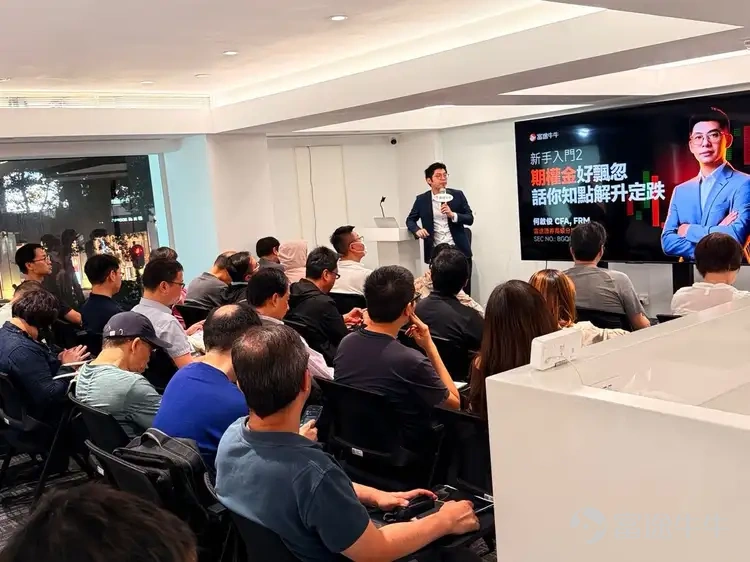
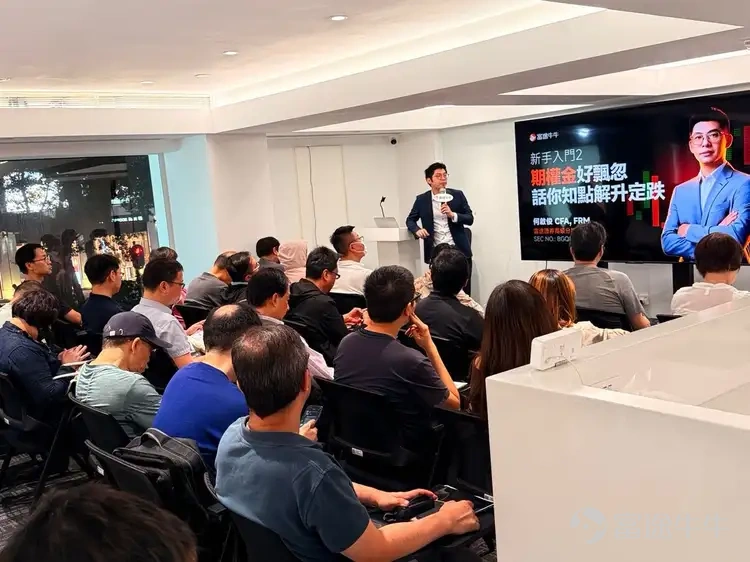
The seminar was packed with attendees, featuring lively interaction.
🔥 Sneak Peek! 3 Key Highlights from the Lectures
① Can you still lose money even if you predict the direction correctly? What makes up an option premium?
Understand intrinsic value, time value, and how option premiums are calculated.
② Why do option premiums rise or fall? A breakdown of the 6 major factors
From underlying stock price and time to expiration to IV, get to know the factors influencing option pricing.
③ Introduction to seller strategies in the four basic option types
Understand the maximum profit, maximum loss, and break-even points for short calls and short puts.
✨ Quick delivery of instructor's key insights
"Especially when beginners trade options, avoid choosing contracts with expiration dates that are too near-term, as their time value decays very rapidly."
Instructor Bevis reminds investors who are new to options to pay attention to the choice of expiration date, especially when they are not fully confident about the market trend.

Even if you correctly predicted the stock price direction, why might the option premium still drop after buying a Call or Put? Besides the underlying stock price, what other factors affect option value? And how can you use the Moomoo App to observe the impact of different parameters on option prices? In this issue, we revisit the key highlights from the second beginner session, "Option Premiums Are Volatile: Understanding Why They Rise or Fall." Bevis, Senior Analyst at Futu Securities, combines the composition of option premiums with... $TENCENT (00700.HK)$ 、 $NVIDIA (NVDA.US)$ ...case studies to step-by-step deconstruct the six major pricing factors, and provides a live demonstration of the Moomoo Options Analysis and Options Calculator tools. 🔥 Sneak Peek! 3 Key Highlights from the Lectures ① Can you still lose money even if you predict the direction correctly? What makes up an option premium? Understand intrinsic value, time value, and how option premiums are calculated. ② Why do option premiums rise or fall? A breakdown of the 6 major factors From underlying stock price and time to expiration to IV, get to know the factors influencing option pricing. ③ Introduction to seller strategies in the four basic option types Understand the maximum profit, maximum loss, and break-even points for short calls and short puts. ✨ Quick delivery of instructor's key insights "Especially when beginners trade options, avoid choosing contracts with expiration dates that are too near-term, as their time value decays very rapidly." Instructor Bevis reminds investors who are new to options to pay attention to the choice of expiration dates, especially when they have no clear view on the market trend...
1. What makes up the option premium? Intrinsic Value + Time Value
The instructor first explained that the option premium can be broken down into two parts:Intrinsic Value and Time Value。
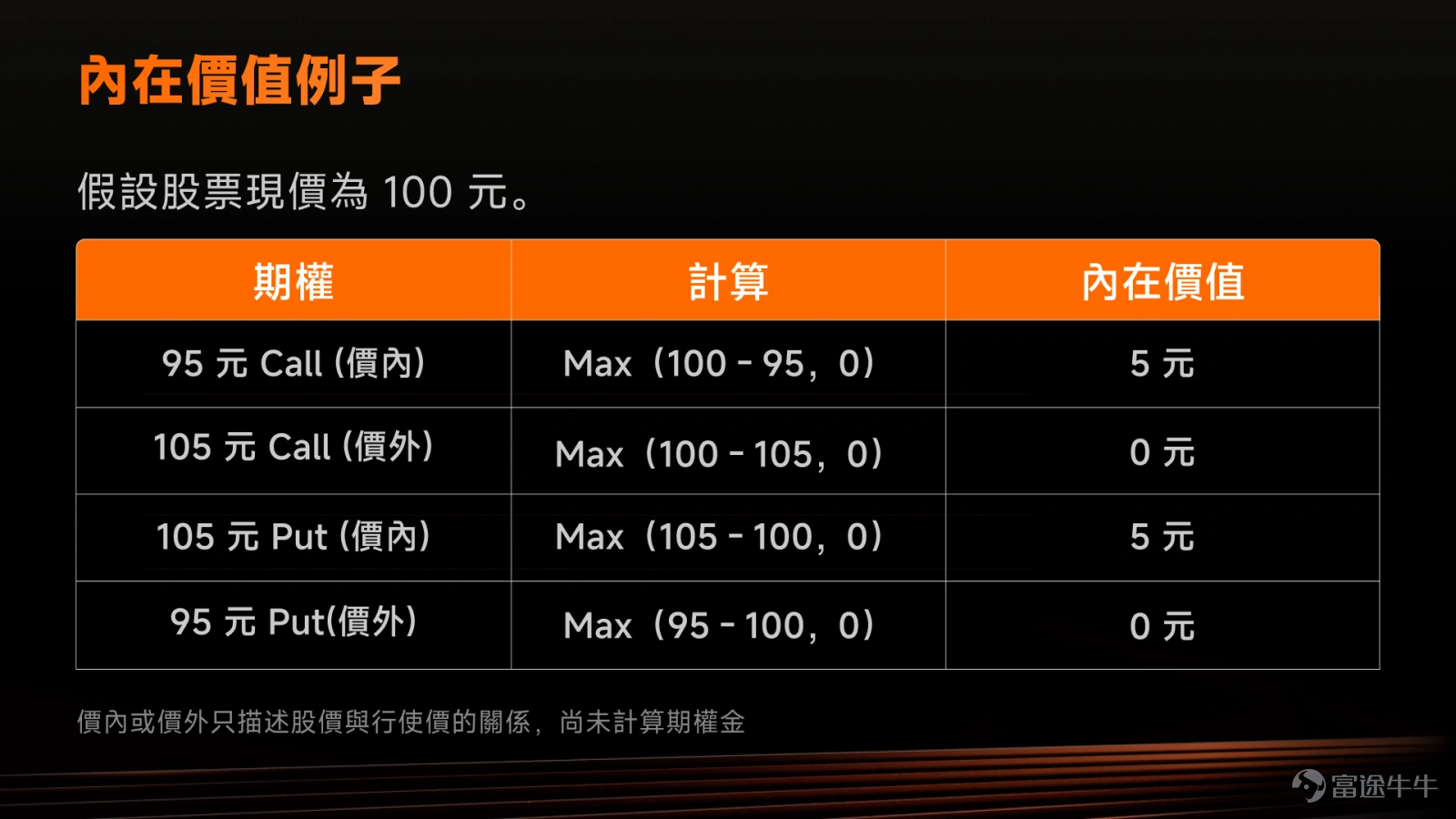
Intrinsic value is relatively easy to understand. For a call option, it is the amount by which the underlying stock price exceeds the strike price.
For example, if a stock is currently trading at $100 and the call option has a strike price of $95, its intrinsic value is $5. If the quoted premium for this option is $8, after deducting the $5 intrinsic value, the remaining $3 represents the time value.
Conversely, if a call option is out-of-the-money, its intrinsic value is zero, meaning the entire premium consists of time value.
Even if you correctly predicted the stock price direction, why might the option premium still drop after buying a Call or Put? Besides the underlying stock price, what other factors affect option value? And how can you use the Moomoo App to observe the impact of different parameters on option prices? In this issue, we revisit the key highlights from the second beginner session, "Option Premiums Are Volatile: Understanding Why They Rise or Fall." Bevis, Senior Analyst at Futu Securities, combines the composition of option premiums with... $TENCENT (00700.HK)$ 、 $NVIDIA (NVDA.US)$ ...case studies to step-by-step deconstruct the six major pricing factors, and provides a live demonstration of the Moomoo Options Analysis and Options Calculator tools. 🔥 Sneak Peek! 3 Key Highlights from the Lectures ① Can you still lose money even if you predict the direction correctly? What makes up an option premium? Understand intrinsic value, time value, and how option premiums are calculated. ② Why do option premiums rise or fall? A breakdown of the 6 major factors From underlying stock price and time to expiration to IV, get to know the factors influencing option pricing. ③ Introduction to seller strategies in the four basic option types Understand the maximum profit, maximum loss, and break-even points for short calls and short puts. ✨ Quick delivery of instructor's key insights "Especially when beginners trade options, avoid choosing contracts with expiration dates that are too near-term, as their time value decays very rapidly." Instructor Bevis reminds investors who are new to options to pay attention to the choice of expiration dates, especially when they have no clear view on the market trend...
Instructor Bevis also used a live Q&A session on Tencent options to help the audience practice distinguishing between intrinsic value and time value.Of course, the NiuNiu App's option quote page already provides this data, so investors do not need to calculate it manually each time.
However, compared to intrinsic value, time value is more complex. This leads to the core theme of the lecture: Why might option buyers still incur losses even when the stock price moves as expected?
II. Getting the Direction Right Doesn't Guarantee Profit? 6 Factors Affecting Option Premiums
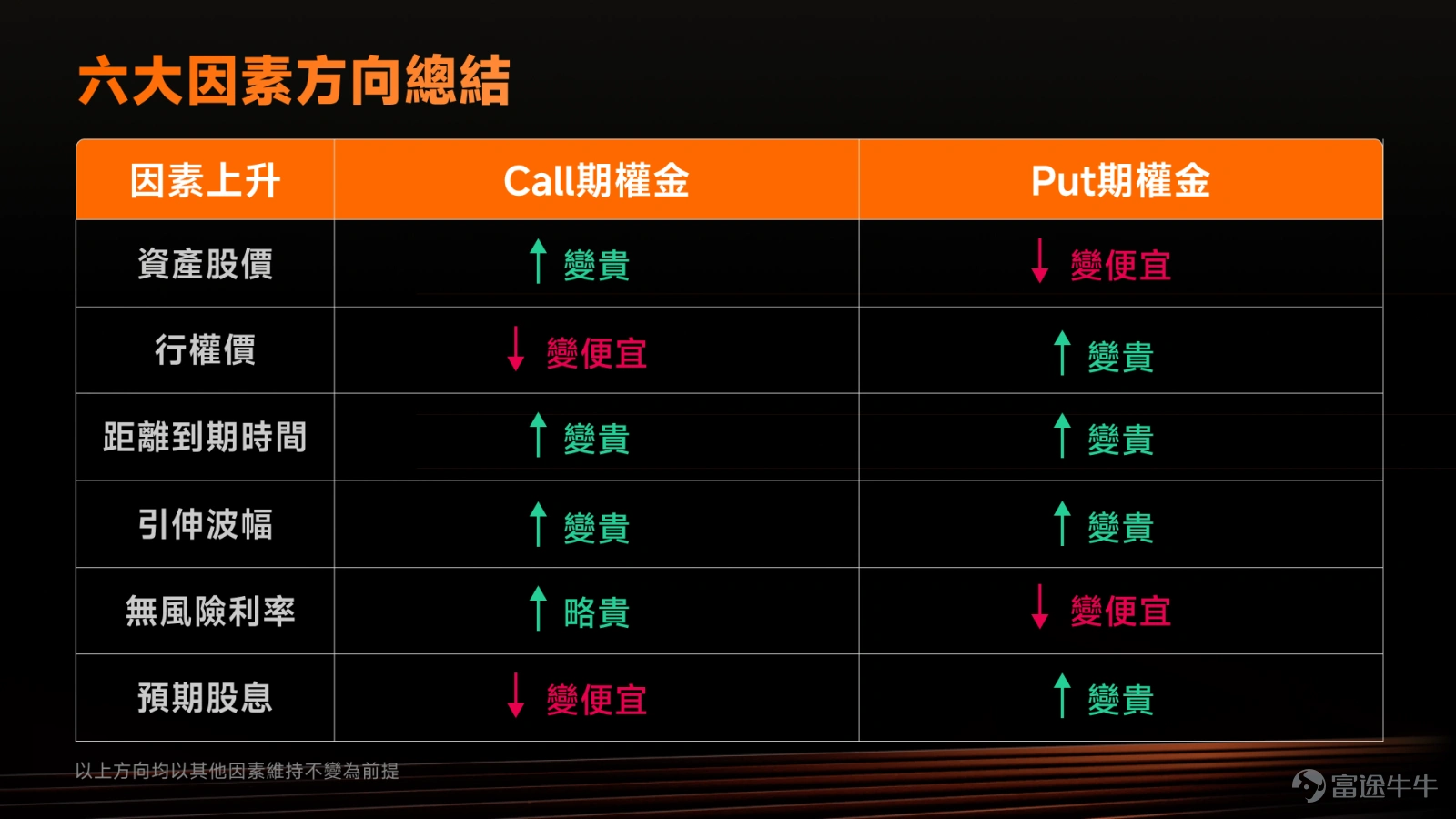
The instructor summarized the factors affecting option prices into six categories: underlying stock price, strike price, time to expiration, implied volatility, risk-free interest rate, and dividends.
Ceteris paribus, as the underlying stock price rises, call option prices typically increase while put option prices usually decrease. Additionally, the higher the strike price, the cheaper calls generally become, whereas puts tend to be more expensive.
For option buyers, time to expiration is also a crucial factor.
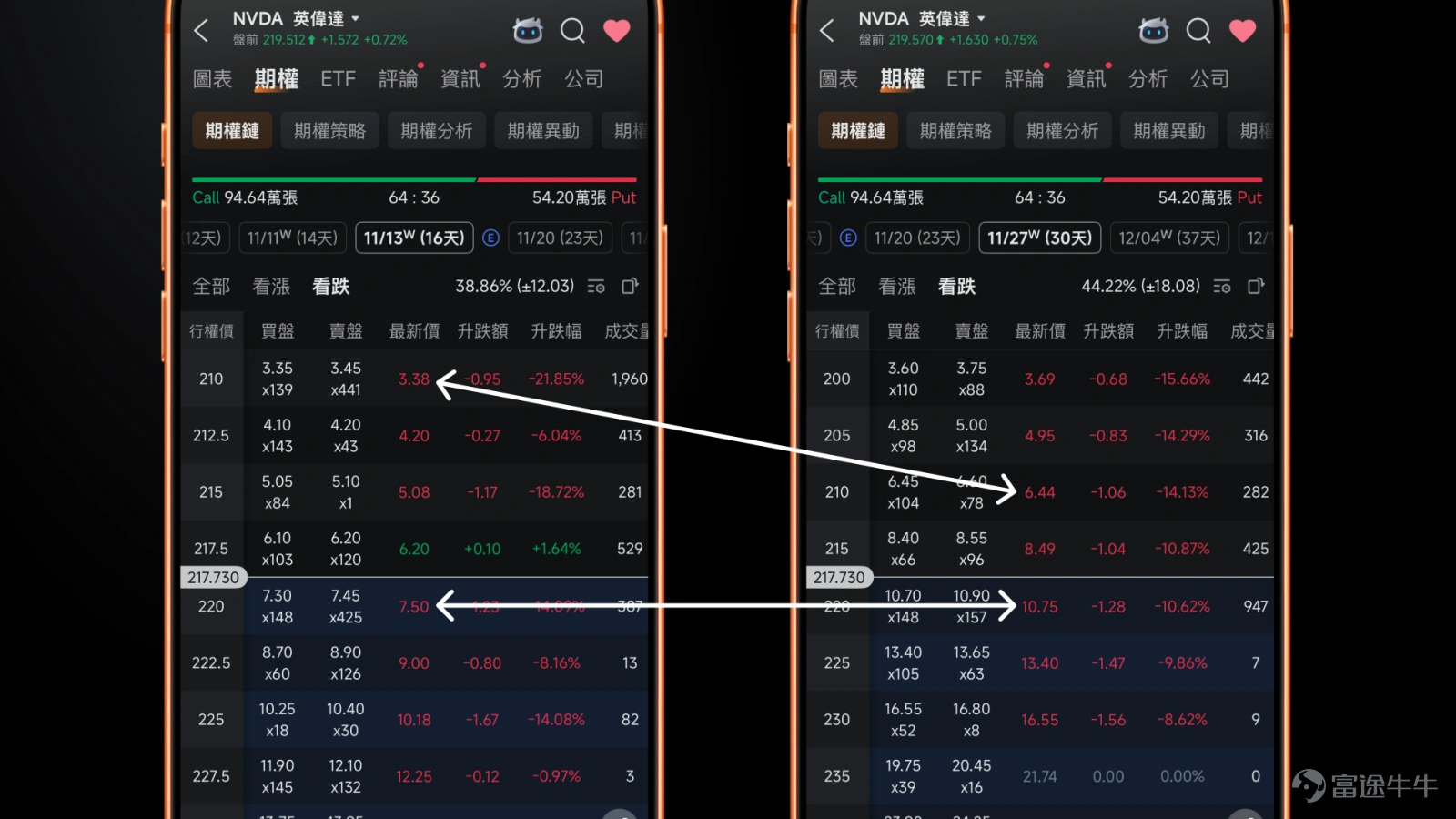
Instructor Bevis used NVIDIA options as an example to compare contracts with the same strike price but different times to expiration (16 days vs. 30 days). He demonstrated that a longer remaining time generally implies higher time value. As options approach expiration, time value tends to decay at an accelerated rate.
"Especially for us beginners trading options, avoid choosing contracts with expiration dates that are too near, because the time value erodes very quickly in such cases."
The instructor reminded investors that even if the stock price ultimately moves in the anticipated direction, options may still fail to generate profits due to the erosion of time value.
Even if you correctly predicted the stock price direction, why might the option premium still drop after buying a Call or Put? Besides the underlying stock price, what other factors affect option value? And how can you use the Moomoo App to observe the impact of different parameters on option prices? In this issue, we revisit the key highlights from the second beginner session, "Option Premiums Are Volatile: Understanding Why They Rise or Fall." Bevis, Senior Analyst at Futu Securities, combines the composition of option premiums with... $TENCENT (00700.HK)$ 、 $NVIDIA (NVDA.US)$ ...case studies to step-by-step deconstruct the six major pricing factors, and provides a live demonstration of the Moomoo Options Analysis and Options Calculator tools. 🔥 Sneak Peek! 3 Key Highlights from the Lectures ① Can you still lose money even if you predict the direction correctly? What makes up an option premium? Understand intrinsic value, time value, and how option premiums are calculated. ② Why do option premiums rise or fall? A breakdown of the 6 major factors From underlying stock price and time to expiration to IV, get to know the factors influencing option pricing. ③ Introduction to seller strategies in the four basic option types Understand the maximum profit, maximum loss, and break-even points for short calls and short puts. ✨ Quick delivery of instructor's key insights "Especially when beginners trade options, avoid choosing contracts with expiration dates that are too near-term, as their time value decays very rapidly." Instructor Bevis reminds investors who are new to options to pay attention to the choice of expiration dates, especially when they have no clear view on the market trend...
Another key factor highlighted by Instructor Bevis was Implied Volatility (IV).
Implied Volatility reflects the market's expectation of future volatility embedded in option prices. Ceteris paribus, as IV rises, the theoretical prices of both calls and puts typically increase.
Regarding the risk-free interest rate and dividends, the instructor also explained their directional impact on option pricing and demonstrated this using analytical tools.
Bevis specifically emphasized that the six major factors need to be considered comprehensively:
"You must assume that the other five factors remain constant to isolate and explain the impact of one variable. In reality, the outcome is a combined result of all six factors interacting."
The instructor reminded us that option pricing involves multiple factors. When analyzing a single factor in isolation, we must assume ceteris paribus (all other conditions remain constant); however, in real markets, various factors often change simultaneously.
Even if you correctly predicted the stock price direction, why might the option premium still drop after buying a Call or Put? Besides the underlying stock price, what other factors affect option value? And how can you use the Moomoo App to observe the impact of different parameters on option prices? In this issue, we revisit the key highlights from the second beginner session, "Option Premiums Are Volatile: Understanding Why They Rise or Fall." Bevis, Senior Analyst at Futu Securities, combines the composition of option premiums with... $TENCENT (00700.HK)$ 、 $NVIDIA (NVDA.US)$ ...case studies to step-by-step deconstruct the six major pricing factors, and provides a live demonstration of the Moomoo Options Analysis and Options Calculator tools. 🔥 Sneak Peek! 3 Key Highlights from the Lectures ① Can you still lose money even if you predict the direction correctly? What makes up an option premium? Understand intrinsic value, time value, and how option premiums are calculated. ② Why do option premiums rise or fall? A breakdown of the 6 major factors From underlying stock price and time to expiration to IV, get to know the factors influencing option pricing. ③ Introduction to seller strategies in the four basic option types Understand the maximum profit, maximum loss, and break-even points for short calls and short puts. ✨ Quick delivery of instructor's key insights "Especially when beginners trade options, avoid choosing contracts with expiration dates that are too near-term, as their time value decays very rapidly." Instructor Bevis reminds investors who are new to options to pay attention to the choice of expiration dates, especially when they have no clear view on the market trend...
3. Moomoo App Practice: Understanding Price Changes Using Option Analysis Tools
In addition to theoretical explanations, Bevis also provided a live demonstration of the Moomoo App's option analysis tools, allowing the audience to observe how different factors impact analytical results by adjusting parameters.
1. Adjust IV parameters to observe changes in stock price distribution
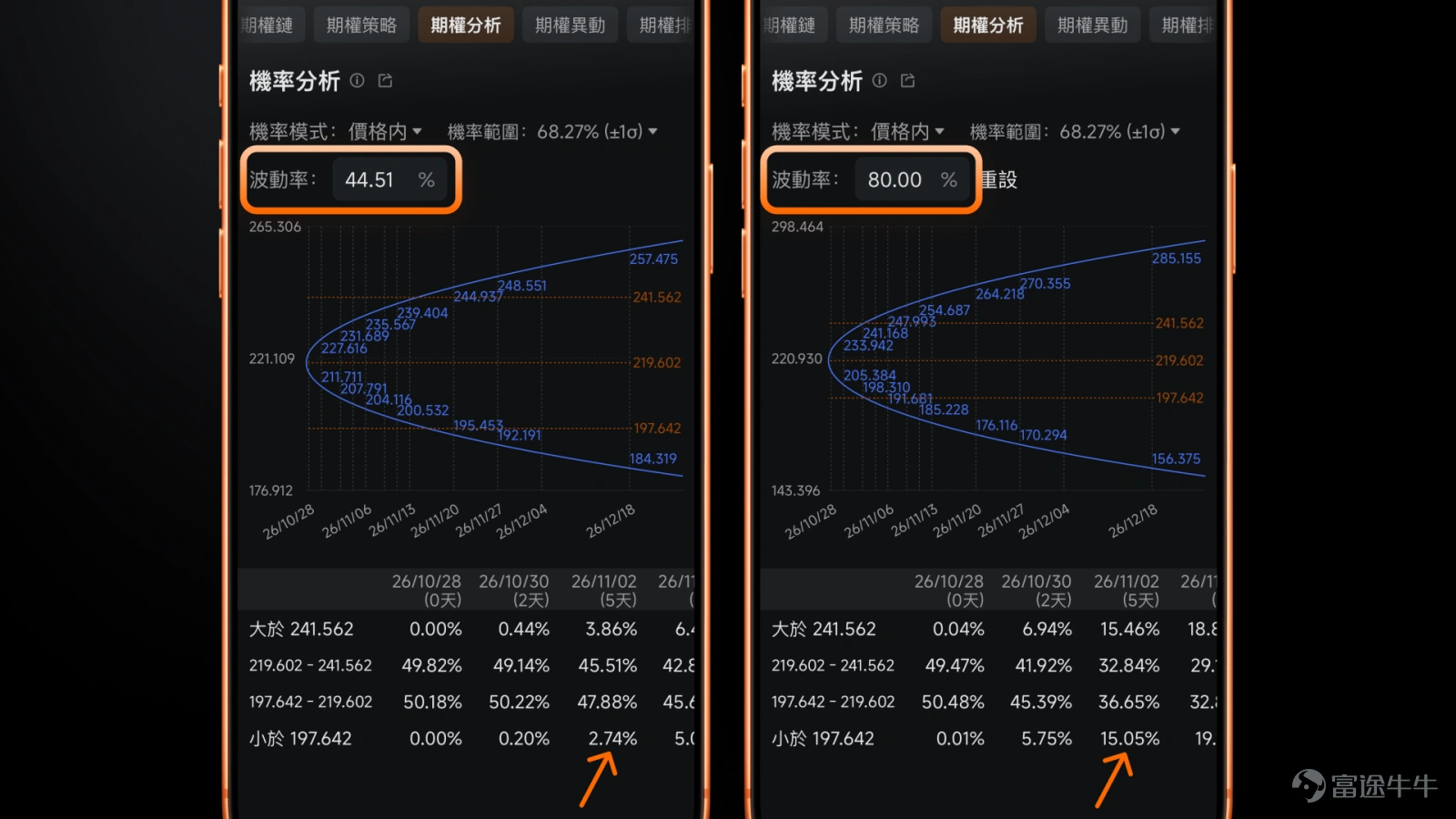
Instructor Bevis used NVIDIA (NVDA) as an example to demonstrate how to adjust implied volatility parameters via the [Option Analysis] feature.
As can be seen, when volatility is set at 44.51%, the probability of NVIDIA falling below $197 by the specified date is approximately 2.74%; when volatility is increased to 80%, the probability of a decline also rises.
This indicates that, assuming all other conditions remain equal, higher volatility typically results in a more dispersed future price distribution estimated by the model. It is important to note that this is an analysis based on volatility parameters and does not guarantee future stock price movements.
Even if you correctly predicted the stock price direction, why might the option premium still drop after buying a Call or Put? Besides the underlying stock price, what other factors affect option value? And how can you use the Moomoo App to observe the impact of different parameters on option prices? In this issue, we revisit the key highlights from the second beginner session, "Option Premiums Are Volatile: Understanding Why They Rise or Fall." Bevis, Senior Analyst at Futu Securities, combines the composition of option premiums with... $TENCENT (00700.HK)$ 、 $NVIDIA (NVDA.US)$ ...case studies to step-by-step deconstruct the six major pricing factors, and provides a live demonstration of the Moomoo Options Analysis and Options Calculator tools. 🔥 Sneak Peek! 3 Key Highlights from the Lectures ① Can you still lose money even if you predict the direction correctly? What makes up an option premium? Understand intrinsic value, time value, and how option premiums are calculated. ② Why do option premiums rise or fall? A breakdown of the 6 major factors From underlying stock price and time to expiration to IV, get to know the factors influencing option pricing. ③ Introduction to seller strategies in the four basic option types Understand the maximum profit, maximum loss, and break-even points for short calls and short puts. ✨ Quick delivery of instructor's key insights "Especially when beginners trade options, avoid choosing contracts with expiration dates that are too near-term, as their time value decays very rapidly." Instructor Bevis reminds investors who are new to options to pay attention to the choice of expiration dates, especially when they have no clear view on the market trend...
2. Use the Option Calculator to observe the impact of interest rate changes on option premiums
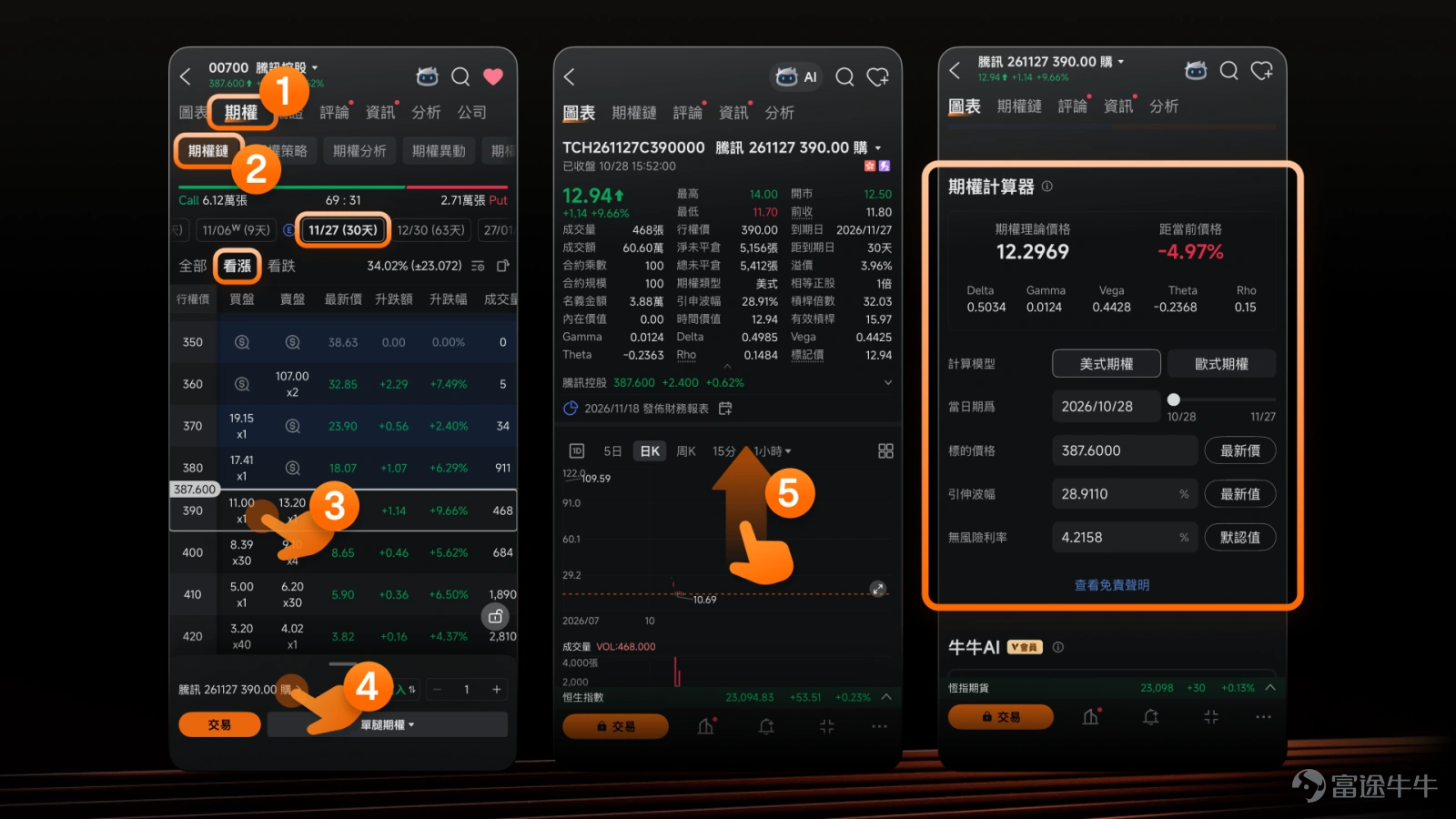
The instructor then demonstrated the "Option Calculator," using a Tencent call option expiring on November 27 as an example, to show how to understand option pricing by adjusting the risk-free interest rate parameter.
Feature path:
Even if you correctly predicted the stock price direction, why might the option premium still drop after buying a Call or Put? Besides the underlying stock price, what other factors affect option value? And how can you use the Moomoo App to observe the impact of different parameters on option prices? In this issue, we revisit the key highlights from the second beginner session, "Option Premiums Are Volatile: Understanding Why They Rise or Fall." Bevis, Senior Analyst at Futu Securities, combines the composition of option premiums with... $TENCENT (00700.HK)$ 、 $NVIDIA (NVDA.US)$ ...case studies to step-by-step deconstruct the six major pricing factors, and provides a live demonstration of the Moomoo Options Analysis and Options Calculator tools. 🔥 Sneak Peek! 3 Key Highlights from the Lectures ① Can you still lose money even if you predict the direction correctly? What makes up an option premium? Understand intrinsic value, time value, and how option premiums are calculated. ② Why do option premiums rise or fall? A breakdown of the 6 major factors From underlying stock price and time to expiration to IV, get to know the factors influencing option pricing. ③ Introduction to seller strategies in the four basic option types Understand the maximum profit, maximum loss, and break-even points for short calls and short puts. ✨ Quick delivery of instructor's key insights "Especially when beginners trade options, avoid choosing contracts with expiration dates that are too near-term, as their time value decays very rapidly." Instructor Bevis reminds investors who are new to options to pay attention to the choice of expiration dates, especially when they have no clear view on the market trend...
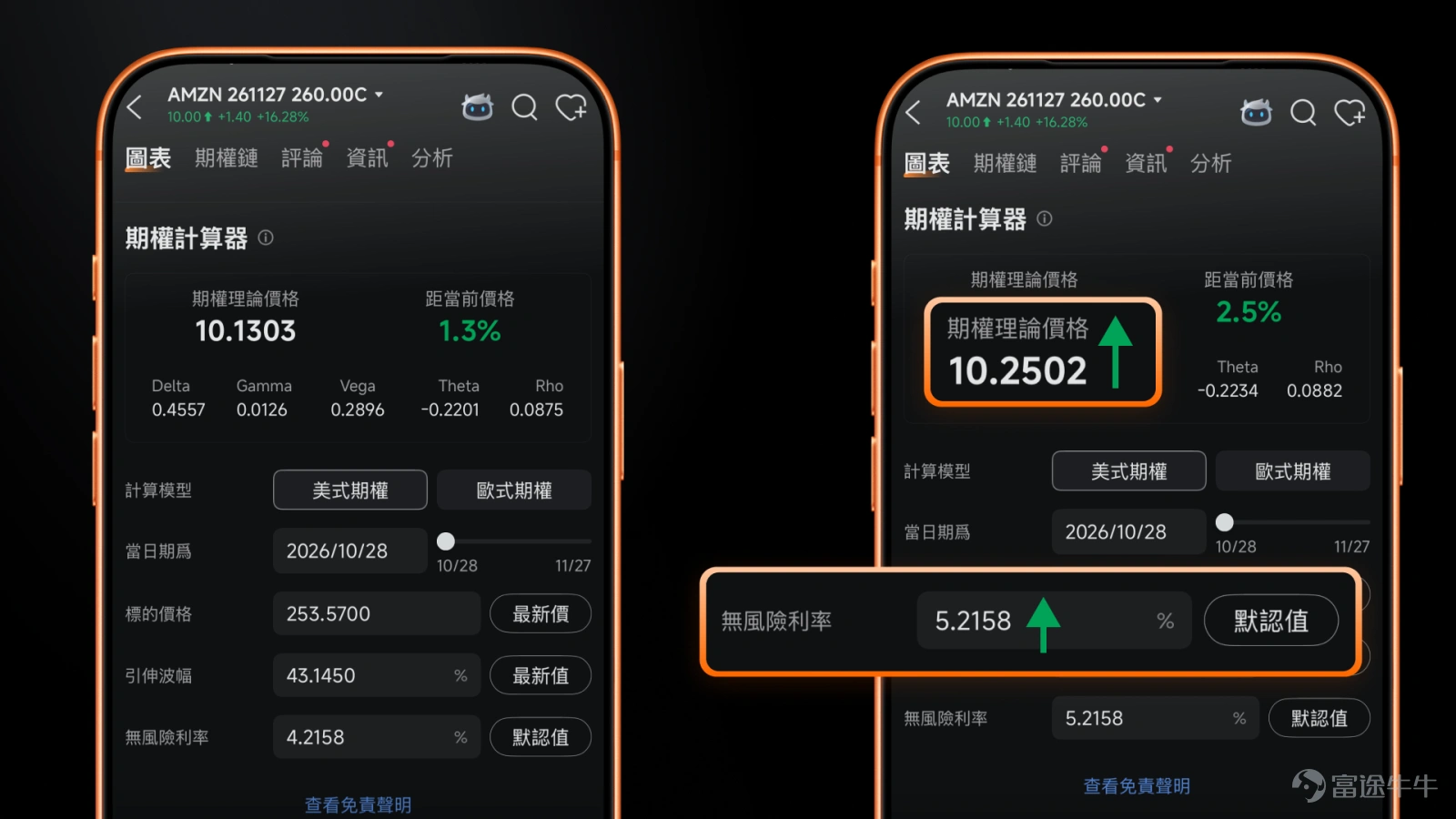
In the demonstration, he first set the risk-free interest rate at approximately 4.2%, then raised it to 5.2%—an increase of 100 basis points—while keeping all other conditions unchanged.
The results showed that even with a 100-basis-point hike in interest rates, the change in the theoretical price of the option in the example remained minimal.
"With all other factors held constant, you can see that the fluctuation in the option premium is actually very small."
Instructor Bevis used this to explain that for options expiring in about one to three months, the impact of interest rate changes was relatively limited in his example; however, for longer-dated options, interest rates may warrant closer attention.
Even if you correctly predicted the stock price direction, why might the option premium still drop after buying a Call or Put? Besides the underlying stock price, what other factors affect option value? And how can you use the Moomoo App to observe the impact of different parameters on option prices? In this issue, we revisit the key highlights from the second beginner session, "Option Premiums Are Volatile: Understanding Why They Rise or Fall." Bevis, Senior Analyst at Futu Securities, combines the composition of option premiums with... $TENCENT (00700.HK)$ 、 $NVIDIA (NVDA.US)$ ...case studies to step-by-step deconstruct the six major pricing factors, and provides a live demonstration of the Moomoo Options Analysis and Options Calculator tools. 🔥 Sneak Peek! 3 Key Highlights from the Lectures ① Can you still lose money even if you predict the direction correctly? What makes up an option premium? Understand intrinsic value, time value, and how option premiums are calculated. ② Why do option premiums rise or fall? A breakdown of the 6 major factors From underlying stock price and time to expiration to IV, get to know the factors influencing option pricing. ③ Introduction to seller strategies in the four basic option types Understand the maximum profit, maximum loss, and break-even points for short calls and short puts. ✨ Quick delivery of instructor's key insights "Especially when beginners trade options, avoid choosing contracts with expiration dates that are too near-term, as their time value decays very rapidly." Instructor Bevis reminds investors who are new to options to pay attention to the choice of expiration dates, especially when they have no clear view on the market trend...
This also highlights the value of an options calculator:By holding other conditions constant and adjusting a single parameter, you can observe how different factors affect the theoretical price of an option.
4. Short Call and Short Put: Collecting premiums while assuming risks
Following the introduction of Long Call and Long Put in the first session, the instructor further explained two seller strategies in this class.
Short Call (Selling a Call Option): The seller collects the premium upfront. If the stock price does not exceed the strike price at expiration, the call option will typically not be exercised, allowing the seller to keep the entire premium. However, if the stock price rises significantly, an uncovered Short Call could lead to theoretically unlimited losses.
Short Put (Selling Put Options): The seller collects the premium upfront, but if the stock price falls, they may be required to buy the underlying shares at the strike price.
Instructor Bevis specifically reminded attendees that US equity options contracts typically correspond to 100 shares of the underlying stock. Assuming a Short Put strike price of $220, being assigned 100 shares would require $22,000 in capital to purchase the stock.
For traders who do not intend to take delivery of the shares, the instructor shared his position management advice:
"If you don't really want to take delivery of the shares, it's best to close out the position before expiration."
The instructor used this opportunity to remind participants that when selling options, besides focusing on premium income, one must also consider exercise, assignment, and capital allocation.
5. What else should beginners pay attention to before placing orders?
At the end of the session, Instructor Bevis demonstrated how to use the Moomoo App's option chain to select the expiration date, strike price, and Call/Put contracts, before proceeding to the trading page.
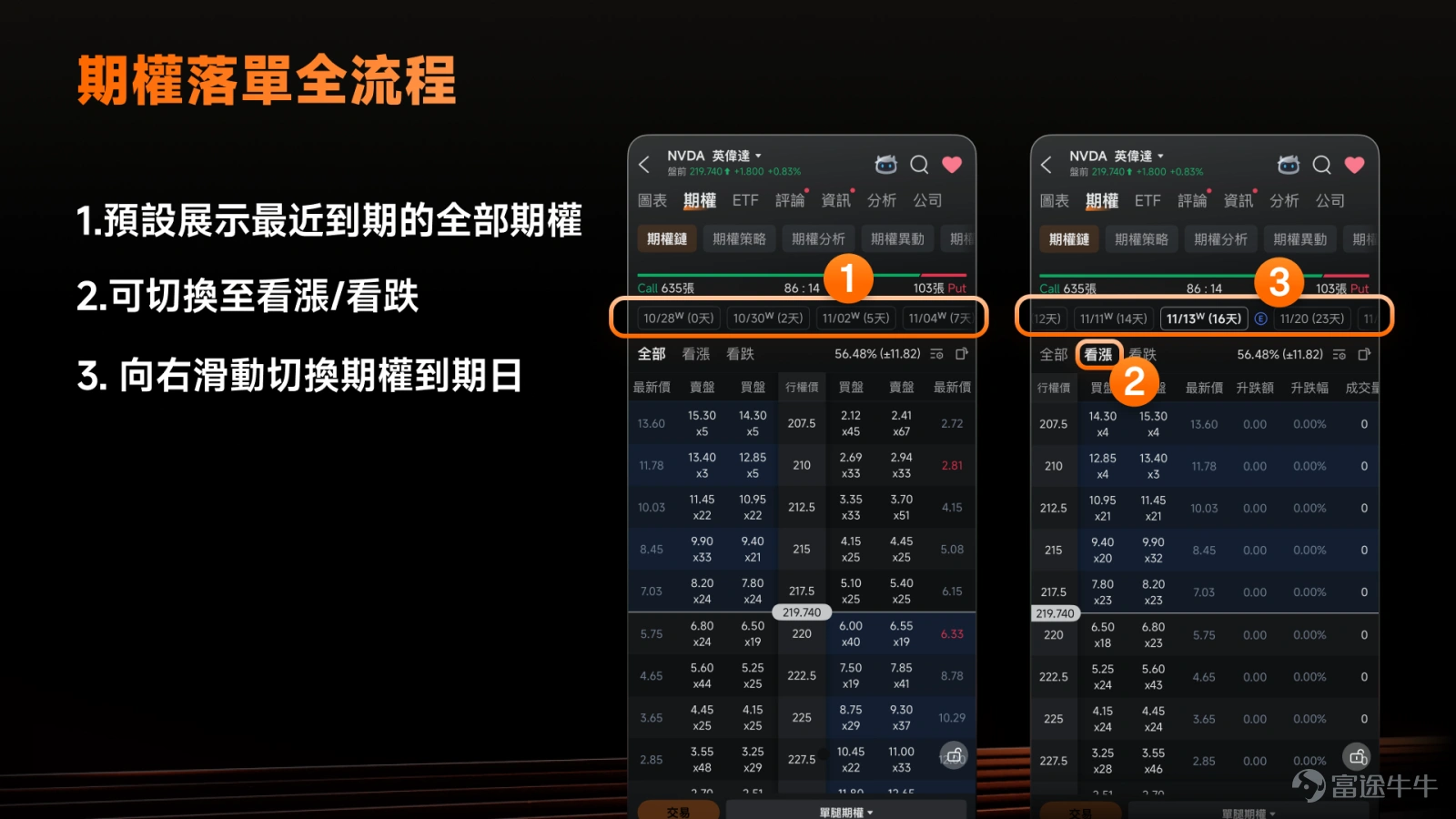
Even if you correctly predicted the stock price direction, why might the option premium still drop after buying a Call or Put? Besides the underlying stock price, what other factors affect option value? And how can you use the Moomoo App to observe the impact of different parameters on option prices? In this issue, we revisit the key highlights from the second beginner session, "Option Premiums Are Volatile: Understanding Why They Rise or Fall." Bevis, Senior Analyst at Futu Securities, combines the composition of option premiums with... $TENCENT (00700.HK)$ 、 $NVIDIA (NVDA.US)$ ...case studies to step-by-step deconstruct the six major pricing factors, and provides a live demonstration of the Moomoo Options Analysis and Options Calculator tools. 🔥 Sneak Peek! 3 Key Highlights from the Lectures ① Can you still lose money even if you predict the direction correctly? What makes up an option premium? Understand intrinsic value, time value, and how option premiums are calculated. ② Why do option premiums rise or fall? A breakdown of the 6 major factors From underlying stock price and time to expiration to IV, get to know the factors influencing option pricing. ③ Introduction to seller strategies in the four basic option types Understand the maximum profit, maximum loss, and break-even points for short calls and short puts. ✨ Quick delivery of instructor's key insights "Especially when beginners trade options, avoid choosing contracts with expiration dates that are too near-term, as their time value decays very rapidly." Instructor Bevis reminds investors who are new to options to pay attention to the choice of expiration dates, especially when they have no clear view on the market trend...
He reminded beginners to carefully verify the contract direction, strike price, and buy/sell actions to avoid selecting the wrong contract.
Additionally, liquidity can vary across different option contracts; even if the underlying stock is actively traded, the bid-ask spread for individual option contracts may still be wide.
Therefore, the instructor shared his preference for using limit orders:
"Try to set limit orders as much as possible. If they don't get filled, so be it; we can try again tomorrow."
Instructor Bevis suggests that investors new to options consider using limit orders to control their acceptable execution prices, rather than accepting unfavorable quotes just to achieve immediate execution. He also recommends that beginners first use the MooMoo paper trading platform to familiarize themselves with contract selection and the order placement process.
Want to learn more about options knowledge and tool usage? Stay tuned for "Highlights from the Options Practical Trading Camp" to revisit more exciting lecture content!You can also click here to view the full live replay of the lecture >>
This article is compiled based on automatically recognized subtitles from the lecture, with some colloquial content edited and condensed for clarity. The individual stock and options prices mentioned are for instructional purposes only and do not represent real-time quotes. Results from the options calculator and analysis tools are based on model assumptions and do not represent actual execution prices or future market performance. Options trading involves risks such as leverage, time value, volatility, liquidity, exercise, and settlement. Selling uncovered options may involve significant or even unlimited losses. This article is for educational and informational purposes only and does not constitute investment advice.
Risk Disclaimer: The above content only represents the author's view. It does not represent any position or investment advice of Futu. Futu makes no representation or warranty.Read more
Thumbs Up
21
Heart
3
Respect
1
77K Views
Report
Comments (4)
Write a Comment...
4
25
17