
What's the Talk on US Stocks | A Quiet Week, but Are US Treasuries Poised for Turmoil?

Earnings & Options Preview | Down 47% in July, Can SanDisk Prove Storage Demand Remains Strong?
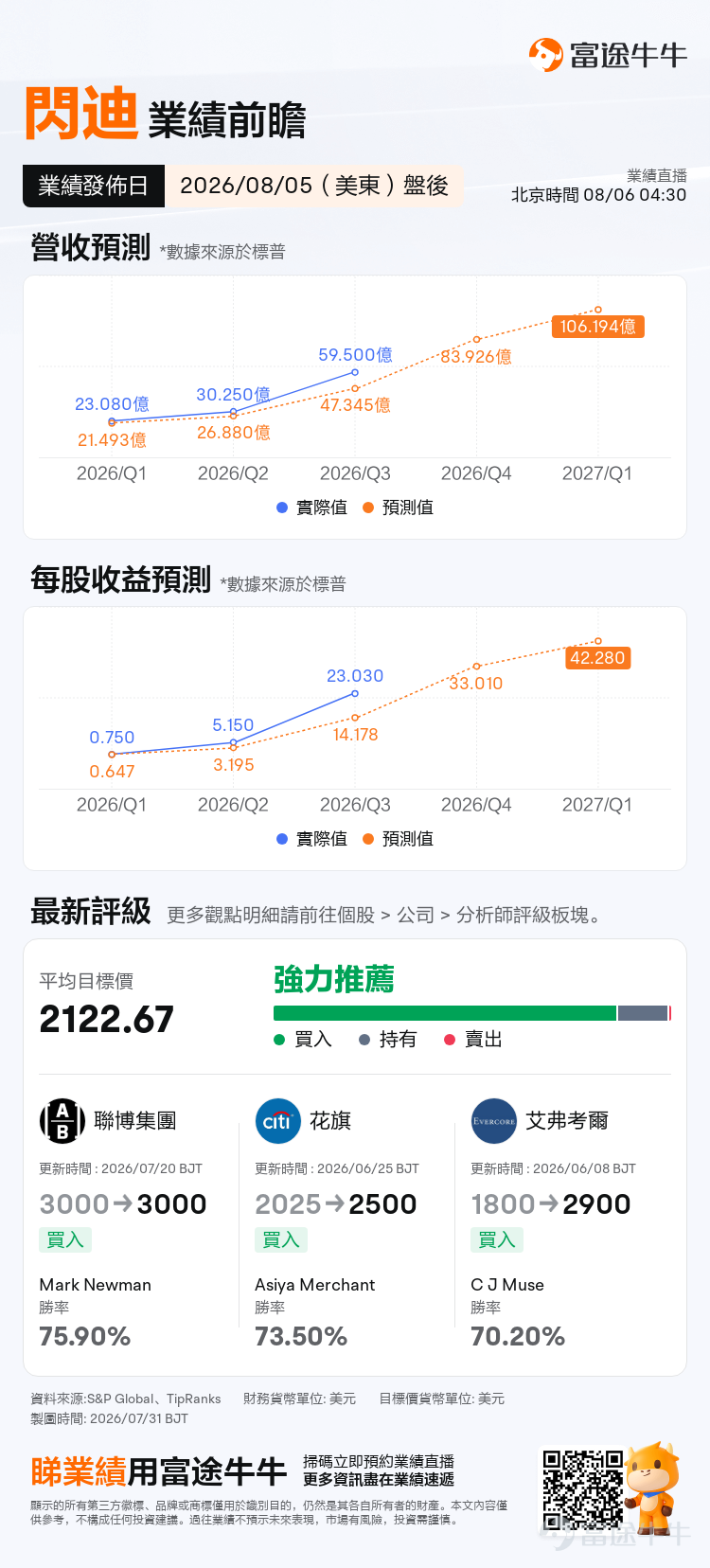
$SanDisk (SNDK.US)$ Will release earnings after market close on Wednesday, August 5.Current consensus estimates expect SNDK’s revenue to be $8.393 billion, up 41% quarter-over-quarter; EPS is expected at $33.01 per share, up 43.33% quarter-over-quarter.
SanDisk benefited earlier this year from rising expectations of increased storage demand, which drove a significant stock price rally. However, starting in July, the market entered a broad panic-driven correction, and SanDisk’s stock fell 46.57% in that month alone.The key issue for memory/storage stocks now is no longer whether earnings can improve from last quarter, but whether the company can deliver results or guidance that significantly exceed already elevated expectations to restore market confidence.Previously $SK hynix (SKHY.US)$ Reported Q2 FY26 revenue of KRW 79.32 trillion, a substantial sequential increase but below the market expectation of KRW 84.12 trillion; the stock closed down 2.6% that day.
![$SanDisk (SNDK.US)$ Will release earnings after market close on Wednesday, August 5.Current consensus estimates expect SNDK’s revenue to be $8.393 billion, up 41% quarter-over-quarter; EPS is expected at $33.01 per share, up 43.33% quarter-over-quarter. SanDisk benefited earlier this year from rising expectations of increased storage demand, which drove a significant stock price rally. However, starting in July, the market entered a broad panic-driven correction, and SanDisk’s stock fell 46.57% in that month alone.The key issue for memory/storage stocks now is no longer whether earnings can improve from last quarter, but whether the company can deliver results or guidance that significantly exceed already elevated expectations to restore market confidence.Previously $SK hynix (SKHY.US)$ Reported Q2 FY26 revenue of KRW 79.32 trillion, a substantial sequential increase but below the market expectation of KRW 84.12 trillion; the stock closed down 2.6% that day. Key Focus Areas for Earnings: 1. Can AI data center demand continue to exceed expectations? Data center business is the core pillar of SanDisk’s current valuation thesis. That segment tripled sequentially last quarter. This earnings report will be closely watched for: [Dollar]Whether the sequential growth rate of data center revenue remains at a high level [Dollar]Whether the proportion of high-margin enterprise SSDs continues to increase [Dollar]Progress on the implementation and customer mix of the $42 billion long-term supply agreement (NBM new business model) 2. NAND price trends and supply-demand dynamics AI workloads...](https://nnqimage.futunn.com/sns_client_feed/999908/20260803/web-1785759696352-r52bZGEfBj.png/big?area=2&is_public=true&imageMogr2/ignore-error/1/format/webp)
Key Focus Areas for Earnings:
1. Can AI data center demand continue to exceed expectations?
Data center business is the core pillar of SanDisk’s current valuation thesis. That segment tripled sequentially last quarter. This earnings report will be closely watched for:
 Whether the sequential growth rate of data center revenue remains at a high levelWhether the proportion of high-margin enterprise SSDs continues to increaseProgress on the implementation and customer mix of the $42 billion long-term supply agreement (NBM new business model)
2. NAND price trends and supply-demand dynamics
AI workloads generate massive demand for high-speed, persistent storage, strongly supporting sales of enterprise SSDs and premium NAND products. Persistent NAND flash shortages have been a key driver of share price appreciation. Therefore,the market will closely monitor its sales, pricing levels, and management’s commentary on NAND pricing trends for the next quarter and fiscal year 2027.
3. Gross marginLast quarter's gross margin of 78.4% has already significantly exceeded the guidance range of 65–67%.Watch whether this quarter’s gross margin guidance can hold within the 79–81% range.This implies whether management believes there is still room for further price increases and product mix optimization. If the actual margin exceeds 81%, it would reinforce the 'NAND supercycle' narrative; otherwise, it could trigger further market panic.
4. Full-year FY2027 guidance.The market will assess the new fiscal year guidance to determine:
Whether AI storage demand is a structural trend or a short-term spike.Whether high gross margins can be sustained.Capital expenditure plans (including capacity expansion under the alliance with Kioxia).Options market: How to use options to balance returns and risks in a high-volatility environment?
In the past three earnings releases, SanDisk experienced one instance where post-earnings volatility exceeded options market expectations, while the most recent two saw post-earnings moves smaller than anticipated.
![$SanDisk (SNDK.US)$ Will release earnings after market close on Wednesday, August 5.Current consensus estimates expect SNDK’s revenue to be $8.393 billion, up 41% quarter-over-quarter; EPS is expected at $33.01 per share, up 43.33% quarter-over-quarter. SanDisk benefited earlier this year from rising expectations of increased storage demand, which drove a significant stock price rally. However, starting in July, the market entered a broad panic-driven correction, and SanDisk’s stock fell 46.57% in that month alone.The key issue for memory/storage stocks now is no longer whether earnings can improve from last quarter, but whether the company can deliver results or guidance that significantly exceed already elevated expectations to restore market confidence.Previously $SK hynix (SKHY.US)$ Reported Q2 FY26 revenue of KRW 79.32 trillion, a substantial sequential increase but below the market expectation of KRW 84.12 trillion; the stock closed down 2.6% that day. Key Focus Areas for Earnings: 1. Can AI data center demand continue to exceed expectations? Data center business is the core pillar of SanDisk’s current valuation thesis. That segment tripled sequentially last quarter. This earnings report will be closely watched for: [Dollar]Whether the sequential growth rate of data center revenue remains at a high level [Dollar]Whether the proportion of high-margin enterprise SSDs continues to increase [Dollar]Progress on the implementation and customer mix of the $42 billion long-term supply agreement (NBM new business model) 2. NAND price trends and supply-demand dynamics AI workloads...](https://nnqimage.futunn.com/sns_client_feed/999908/20260803/web-1785759695979-uRsPs6sbd8.png/big?area=2&is_public=true&imageMogr2/ignore-error/1/format/webp)
Currently, SanDisk's put/call options volume ratio is 0.88, and its open interest ratio is 1.21,Many investors have deployed put options to hedge against potential downside risk in the underlying stock.The option's implied volatility (IV) stands at 136.59%, with an IV percentile of 93%, indicating it is at a historically high level,The market anticipates significant price movement following the earnings announcement.
![$SanDisk (SNDK.US)$ Will release earnings after market close on Wednesday, August 5.Current consensus estimates expect SNDK’s revenue to be $8.393 billion, up 41% quarter-over-quarter; EPS is expected at $33.01 per share, up 43.33% quarter-over-quarter. SanDisk benefited earlier this year from rising expectations of increased storage demand, which drove a significant stock price rally. However, starting in July, the market entered a broad panic-driven correction, and SanDisk’s stock fell 46.57% in that month alone.The key issue for memory/storage stocks now is no longer whether earnings can improve from last quarter, but whether the company can deliver results or guidance that significantly exceed already elevated expectations to restore market confidence.Previously $SK hynix (SKHY.US)$ Reported Q2 FY26 revenue of KRW 79.32 trillion, a substantial sequential increase but below the market expectation of KRW 84.12 trillion; the stock closed down 2.6% that day. Key Focus Areas for Earnings: 1. Can AI data center demand continue to exceed expectations? Data center business is the core pillar of SanDisk’s current valuation thesis. That segment tripled sequentially last quarter. This earnings report will be closely watched for: [Dollar]Whether the sequential growth rate of data center revenue remains at a high level [Dollar]Whether the proportion of high-margin enterprise SSDs continues to increase [Dollar]Progress on the implementation and customer mix of the $42 billion long-term supply agreement (NBM new business model) 2. NAND price trends and supply-demand dynamics AI workloads...](https://nnqimage.futunn.com/sns_client_feed/999908/20260803/web-1785759696354-Q5ALyg14V2.png/big?area=2&is_public=true&imageMogr2/ignore-error/1/format/webp)
1. If you hold shares of SanDisk or other storage-related stocks and are concerned about the elevated risk of holding the stock,
you can useput optionsto protect your position. In July, volatility in storage stocks intensified, with SanDisk experiencing a single-day drop as steep as 14.13%—far exceeding the cost of buying a near-term put option. If you're worried about further declines and potential losses around the earnings release, purchasing a put option can hedge and safeguard your long stock position.
(The chart below illustrates the simulated profit/loss profile of this strategy at expiration. The displayed graphic is for demonstration purposes only and does not constitute investment advice or guarantees; market conditions change rapidly, and the prices shown do not reflect real-time data.)
![$SanDisk (SNDK.US)$ Will release earnings after market close on Wednesday, August 5.Current consensus estimates expect SNDK’s revenue to be $8.393 billion, up 41% quarter-over-quarter; EPS is expected at $33.01 per share, up 43.33% quarter-over-quarter. SanDisk benefited earlier this year from rising expectations of increased storage demand, which drove a significant stock price rally. However, starting in July, the market entered a broad panic-driven correction, and SanDisk’s stock fell 46.57% in that month alone.The key issue for memory/storage stocks now is no longer whether earnings can improve from last quarter, but whether the company can deliver results or guidance that significantly exceed already elevated expectations to restore market confidence.Previously $SK hynix (SKHY.US)$ Reported Q2 FY26 revenue of KRW 79.32 trillion, a substantial sequential increase but below the market expectation of KRW 84.12 trillion; the stock closed down 2.6% that day. Key Focus Areas for Earnings: 1. Can AI data center demand continue to exceed expectations? Data center business is the core pillar of SanDisk’s current valuation thesis. That segment tripled sequentially last quarter. This earnings report will be closely watched for: [Dollar]Whether the sequential growth rate of data center revenue remains at a high level [Dollar]Whether the proportion of high-margin enterprise SSDs continues to increase [Dollar]Progress on the implementation and customer mix of the $42 billion long-term supply agreement (NBM new business model) 2. NAND price trends and supply-demand dynamics AI workloads...](https://nnqimage.futunn.com/sns_client_feed/999908/20260803/web-1785759695991-qzO8v69iWl.png/big?area=2&is_public=true&imageMogr2/ignore-error/1/format/webp)
Of course, with IV currently elevated, option premiums are relatively expensive, which benefits option sellers. If you believe the stock won’t surge significantly after earnings, you couldsell an out-of-the-money call while holding the underlying stock, implementing a covered call strategy.If the stock price does not rise above the strike price, you can keep the entire option premium as profit. If the stock price rises above the strike price, the call option will be exercised, allowing you to exit your position at a profit at the higher strike price.
![$SanDisk (SNDK.US)$ Will release earnings after market close on Wednesday, August 5.Current consensus estimates expect SNDK’s revenue to be $8.393 billion, up 41% quarter-over-quarter; EPS is expected at $33.01 per share, up 43.33% quarter-over-quarter. SanDisk benefited earlier this year from rising expectations of increased storage demand, which drove a significant stock price rally. However, starting in July, the market entered a broad panic-driven correction, and SanDisk’s stock fell 46.57% in that month alone.The key issue for memory/storage stocks now is no longer whether earnings can improve from last quarter, but whether the company can deliver results or guidance that significantly exceed already elevated expectations to restore market confidence.Previously $SK hynix (SKHY.US)$ Reported Q2 FY26 revenue of KRW 79.32 trillion, a substantial sequential increase but below the market expectation of KRW 84.12 trillion; the stock closed down 2.6% that day. Key Focus Areas for Earnings: 1. Can AI data center demand continue to exceed expectations? Data center business is the core pillar of SanDisk’s current valuation thesis. That segment tripled sequentially last quarter. This earnings report will be closely watched for: [Dollar]Whether the sequential growth rate of data center revenue remains at a high level [Dollar]Whether the proportion of high-margin enterprise SSDs continues to increase [Dollar]Progress on the implementation and customer mix of the $42 billion long-term supply agreement (NBM new business model) 2. NAND price trends and supply-demand dynamics AI workloads...](https://nnqimage.futunn.com/sns_client_feed/999908/20260803/web-1785759695962-9zCfZ8MzxT.png/big?area=2&is_public=true&imageMogr2/ignore-error/1/format/webp)
2. If you believe this round of storage stock movement has already hit its bottom and you want to buy in at a low price,
you cansell a put option at your desired entry point below the current market price.First, you receive the full premium from selling the option. Additionally, if the stock price falls below the strike price, the put will be exercised, allowing you to acquire the stock at the lower strike price and wait for further appreciation.
However, as an option seller, you face the risk of forced liquidation. To avoid this, ensure you have sufficient cash available to take delivery of the shares if assigned.
![$SanDisk (SNDK.US)$ Will release earnings after market close on Wednesday, August 5.Current consensus estimates expect SNDK’s revenue to be $8.393 billion, up 41% quarter-over-quarter; EPS is expected at $33.01 per share, up 43.33% quarter-over-quarter. SanDisk benefited earlier this year from rising expectations of increased storage demand, which drove a significant stock price rally. However, starting in July, the market entered a broad panic-driven correction, and SanDisk’s stock fell 46.57% in that month alone.The key issue for memory/storage stocks now is no longer whether earnings can improve from last quarter, but whether the company can deliver results or guidance that significantly exceed already elevated expectations to restore market confidence.Previously $SK hynix (SKHY.US)$ Reported Q2 FY26 revenue of KRW 79.32 trillion, a substantial sequential increase but below the market expectation of KRW 84.12 trillion; the stock closed down 2.6% that day. Key Focus Areas for Earnings: 1. Can AI data center demand continue to exceed expectations? Data center business is the core pillar of SanDisk’s current valuation thesis. That segment tripled sequentially last quarter. This earnings report will be closely watched for: [Dollar]Whether the sequential growth rate of data center revenue remains at a high level [Dollar]Whether the proportion of high-margin enterprise SSDs continues to increase [Dollar]Progress on the implementation and customer mix of the $42 billion long-term supply agreement (NBM new business model) 2. NAND price trends and supply-demand dynamics AI workloads...](https://nnqimage.futunn.com/sns_client_feed/999908/20260803/web-1785759696019-AAIxlPNnUT.png/big?area=2&is_public=true&imageMogr2/ignore-error/1/format/webp)
Finally, Options Sir has a small giveaway for fellow investors—feel free to claim it!Options Starter Pack
*This promotion is exclusively available to invited Hong Kong users. Click to learn more.Detailed terms and conditions of the promotion >>
Market conditions are complex and ever-changing,Options strategiesToo many choices and unsure how to proceed? Let Futubull help you build a strategy in three simple stepsOptions strategies, making investing simple and efficient!
![$SanDisk (SNDK.US)$ Will release earnings after market close on Wednesday, August 5.Current consensus estimates expect SNDK’s revenue to be $8.393 billion, up 41% quarter-over-quarter; EPS is expected at $33.01 per share, up 43.33% quarter-over-quarter. SanDisk benefited earlier this year from rising expectations of increased storage demand, which drove a significant stock price rally. However, starting in July, the market entered a broad panic-driven correction, and SanDisk’s stock fell 46.57% in that month alone.The key issue for memory/storage stocks now is no longer whether earnings can improve from last quarter, but whether the company can deliver results or guidance that significantly exceed already elevated expectations to restore market confidence.Previously $SK hynix (SKHY.US)$ Reported Q2 FY26 revenue of KRW 79.32 trillion, a substantial sequential increase but below the market expectation of KRW 84.12 trillion; the stock closed down 2.6% that day. Key Focus Areas for Earnings: 1. Can AI data center demand continue to exceed expectations? Data center business is the core pillar of SanDisk’s current valuation thesis. That segment tripled sequentially last quarter. This earnings report will be closely watched for: [Dollar]Whether the sequential growth rate of data center revenue remains at a high level [Dollar]Whether the proportion of high-margin enterprise SSDs continues to increase [Dollar]Progress on the implementation and customer mix of the $42 billion long-term supply agreement (NBM new business model) 2. NAND price trends and supply-demand dynamics AI workloads...](https://nnqimage.futunn.com/sns_client_feed/999908/20260803/web-1785759696353-xFKpysaX5R.webp/big?area=2&is_public=true&imageMogr2/ignore-error/1/format/webp)
Options Risk Disclosure:An option is a contract that grants the holder the right—but not the obligation—to buy or sell an underlying asset at a predetermined price on or before a specified date. Option prices are influenced by multiple factors, including the current price of the underlying asset, the strike price, time to expiration, and implied volatility. Implied volatility reflects the market’s expectation of future price fluctuations over the life of the option; it is derived by reverse-engineering the Black-Scholes pricing model and is commonly viewed as an indicator of market sentiment. When investors anticipate higher volatility, they may be willing to pay more for options to hedge their risk, resulting in higher implied volatility. Traders and investors use implied volatility to assess the attractiveness of option prices, identify potential mispricings, and manage their risk exposure.
Disclaimer:This content does not constitute an offer, solicitation, recommendation, opinion, or any form of guarantee regarding any securities, financial products, or instruments. The risk of loss in trading options can be substantial. In certain circumstances, your losses may exceed the initial margin deposit. Even if you place contingent orders such as 'stop-loss' or 'limit' orders, there is no assurance that losses will be avoided, as market conditions may prevent execution of these orders. You may be required to deposit additional margin on short notice. If you fail to meet such margin calls within the stipulated time, your open positions may be liquidated. You remain fully liable for any resulting deficit in your account. Therefore, prior to trading options, you should thoroughly research and understand how options work and carefully consider whether such trading aligns with your financial situation and investment objectives. If you trade options, you should become familiar with the procedures for exercising options and handling expiration, as well as your rights and obligations upon exercise or expiration. Options trading involves significant risk and is not suitable for all investors. Investors should carefully read"Characteristics and Risks of Standardized Options"。
Risk Disclaimer: The above content only represents the author's view. It does not represent any position or investment advice of Futu. Futu makes no representation or warranty.Read more


Comments (4)
to post a comment
14
43