
What was your first ETF purchase?

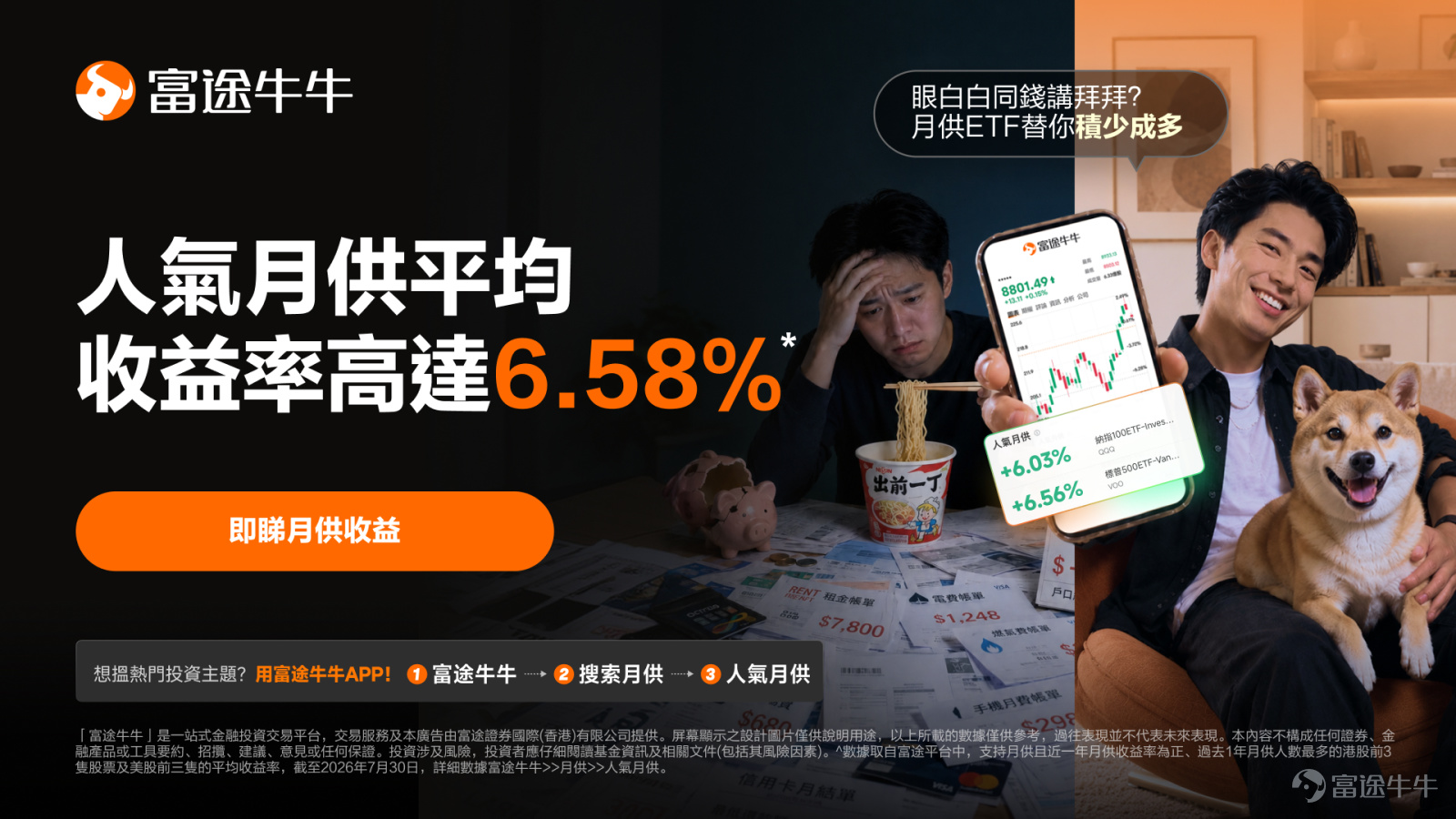
【Must-read for beginners entering the market】Amid ongoing market volatility, popular monthly investment plans offer an average return of up to 6.5%*, easily helping you supplement daily expenses!
Right after receiving your monthly paycheck, you pay rent ($7,800), electricity ($1,248), and mobile phone bills ($298)... Looking at your bank account, many people feel that helpless sense of 'watching money slip away without being able to do anything about it.'
Many people want to save and invest, but on one hand, rising prices and weak willpower make them feel they have 'nothing left' each month—and bank deposit or savings account interest rates don’t seem attractive enough. On the other hand, seeing the recent market volatility—up two days, down three—they hesitate to enter the market for fear of buying at the top! As a result, their capital remains idle, slowly eroded by inflation.
If you also have some spare cash and hope to earn relatively stable returns through saving or investing—but don’t want to take on excessive volatility risk—you can actuallyfollow the approach used by 'smart money' in the market: leverage 'monthly investment plans' to automate your saving and investing, steadily building your first pot of gold even in volatile markets.
🎓 Deep Dive: Advantages and Limitations of Monthly Investment Plans (DCA)
A 'monthly investment plan' essentially employsDollar Cost Averaging (DCA)Before deciding to 'lock' your money into a monthly investment plan, we need to rationally consider its pros and cons:
⚖️ Advantages of monthly investing:
1. Overcoming human behavioral weaknessesOnce you set up a monthly investment plan, the system automatically purchases on the designated date, helping you invest before spending and building a healthy habit of 'save first, spend later.'
2. Smoothing out market volatilityWhen the market declines, the same monthly contribution buys more fund units/shares; when the market rises, it buys fewer. Over the long term, this effectively averages out your purchase cost and avoids the risk of 'buying all at once at a high price,' making it especially suitable for volatile markets.
3. Low barrier to entry, small amounts add upYou don’t need to commit tens of thousands of dollars upfront—small amounts are enough to get started. This is ideal for university students and young professionals with some spare cash who want to accumulate wealth gradually to fund travel or supplement daily expenses.
⚠️ Limitations of monthly investing:
1. Underperforms lump-sum investing in a bull market: In a strong and sustained one-sided bull market, lump-sum investing at a low entry point yields significantly higher returns than dollar-cost averaging (monthly contributions). This is because monthly purchases during a bull market effectively buy in at progressively higher prices, raising the average cost basis.
2. Requires time to harness the power of compounding:Monthly investing is not a 'get-rich-quick' tool,The period needed to recover losses and generate substantial returns is typically long. If investors stop midway during a market downturn or are forced to liquidate positions at a loss due to urgent cash needs, they may lock in losses.
🔍 Breaking Down the Popularity Rankings: What are the trending tickers? What are their pros, cons, and risks?
Now that you understand the advantages and limitations of monthly investing, are you still unsure what to buy when taking your first step?
Why not take a look atthe most popular monthly investment list in the Monthly Investment Zone, with an average return of 6.58%*, helping you effortlessly follow 'smart money' allocations:

1️⃣ Hong Kong Stocks and HK-listed ETF Series
◦ What it isAn ETF that tracks the Hang Seng Index, allowing investors to buy a basket of blue-chip stocks representing the core of the Hong Kong market with a single click.
◦ StrengthValuations are at a relatively low level historically; investment门槛 is extremely low, offering high liquidity and strong diversification.
◦ RiskIts price movement is highly correlated with mainland China’s economy and policy direction. If macroeconomic recovery remains sluggish, Hong Kong stocks may face prolonged range-bound trading and valuation compression.
◦ What it isLarge-cap blue-chip stocks listed in Hong Kong, including both local and China-based firms, known for their high dividend yields.
◦ StrengthThey offer stable dividends and strong defensive characteristics during market volatility, backed by ample cash flow.
◦ RiskThese companies operate in traditional sectors with limited growth potential; HSBC is particularly sensitive to global monetary policy (e.g., Federal Reserve interest rates), while China Mobile is influenced by domestic telecom policies and capital expenditure cycles.
2️⃣ US Market Benchmarks, Tech Giants, and ETF Series
◦ What is itVOO tracks the top 500 U.S. companies, representing the overall U.S. economy; QQQ focuses on the Nasdaq 100 Index, primarily composed of technology and growth stocks.
◦ StrengthThe U.S. market is massive, home to the world's leading innovative companies, and demonstrates strong long-term upside growth potential.
◦ RiskTechnology sector valuations are generally high and exhibit significant volatility; U.S. equities are also susceptible to global geopolitical risks, changes in U.S. regulatory policies, and the threat of a global economic downturn. Additionally, investors whose base currency is not the U.S. dollar (e.g., Hong Kong dollar investors) face potential foreign exchange rate risk.
◦ What is itThe undisputed leader in global AI chips and GPUs, with an extremely deep moat from its CUDA software platform ecosystem.
◦ StrengthBenefiting from explosive growth in AI demand, it has enormous long-term growth potential; its high per-share price can be mitigated through monthly investment plans (which support fractional share purchases), significantly lowering the entry barrier for retail investors and enabling cost averaging to smooth out high volatility.
◦ RiskCustomer concentration is very high (roughly half of revenue comes from the top five hyperscale cloud service providers); the semiconductor industry experiences historical cyclical fluctuations; it faces competition from rivals like AMD and potential challenges from large tech customers developing their own chips; it is also affected by geopolitical factors such as export controls.
3️⃣ Fund Series
◦ What is itAn actively managed balanced fund by professional portfolio managers, diversified across U.S. and Canadian markets, primarily invested in U.S. dollar-denominated high-yield bonds, convertible bonds, and equities.
◦ StrengthAims to provide 'monthly distributions' through dynamic asset allocation by professional managers, delivering steady cash flow while pursuing capital appreciation.
◦ RiskRisks include active management risk and market concentration risk. The fund is also subject to net asset value (NAV) declines during severe market downturns. Additionally, distributions may be paid out of capital, so investors should be aware of the risk of earning income at the expense of capital depreciation.
◦ What is it?A long-established balanced fund that invests in equities, fixed-income, and hybrid securities to generate income and potential capital growth.
◦ StrengthFlexibly allocates between equities and bonds to balance returns and risk; typically exhibits lower volatility than pure equity funds. For over 20 years, the fund’s monthly distribution share class has maintained a consistent record of monthly payouts.
◦ RiskIt remains exposed to NAV declines during sharp market crashes. If distributions are paid from capital, the fund’s NAV per share may drop immediately; foreign exchange fluctuation risk also applies.
◦ What is it?Primarily invests in equities of global gold mining companies and related precious metals firms.
◦ StrengthOffers a monthly distribution share class; serves as an indirect investment vehicle for inflation hedging and safe-haven exposure (gold). When market risk aversion rises, its holdings in gold mining stocks often perform strongly.
◦ RiskGold mining stocks are highly volatile and heavily dependent on international gold price movements; they face concentrated sector risk, as well as market, credit, geopolitical, and currency volatility risks. Past performance does not guarantee future results.
🛡️ Volatile Market Strategy: The 'Offense-Defense Combo' of Cash Plus + Monthly ETF Investments
Amid recent sharp market swings driven by multiple factors—including continued deleveraging and declines in AI-related stocks, shifting Fed rate hike expectations, and geopolitical tensions—we all know it's unwise to 'go all-in' on a single asset.
You can adopt the following combination:
– 'Defense' (idle cash) — Futu Cash PlusPlace your everyday reserve funds or idle cash awaiting investment into Cash Plus to earn money market fund returns while maintaining high liquidity, ready to deploy at any time.
– 'Offense' (long-term growth) — Set up a monthly investment planAllocate a fixed portion of your monthly surplus to an automated recurring investment plan (e.g., VOO, QQQ, or Tracker Fund), smoothing out short-term volatility, averaging long-term costs, and pursuing sustained growth over time.
🛠️ Just 4 simple steps to start your monthly investment plan
1. Open the Futubull app, enter "Monthly investment" in the search bar to access the monthly investment section.
2. Refer to the "Monthly Investment Popularity Rankings", browse the popularity rankings for Hong Kong stocks, US stocks, or funds, and select your preferred assets. Gain a thorough understanding of each asset’s pros and cons (you can also tap on an asset to view detailed information).
3. Use the "Monthly Investment Calculator"to estimate your future returns.
4. Based on your risk tolerance and monthly investment goals, tap "Create Monthly Investment," enter your monthly contribution amount and withdrawal date, and easily start your monthly investment journey!

💡 If you have questions about stock selection or stock analysis, you can also activate Futubull’s AI Q&A – Expert Mode. It not only provides information, stock picks, diagnostics, and portfolio analysis but can also write code, build indicators, and execute strategies—turning your investment ideas from "inspiration" to "validation" in a seamless, no-code experience.

Notes and Risk Disclaimer:* Data is sourced from the Futu platform and represents the average returns of the top three Hong Kong stocks and top three US stocks with positive monthly investment returns over the past year and the highest number of monthly investors over the past year, as of July 30, 2026. For detailed data, please refer to the Futubull app >> Monthly Investment >> Popular Monthly Investments. Past performance does not guarantee future results.
Futubull is an all-in-one financial investment trading platform, with brokerage services provided by Futu Securities International (Hong Kong) Limited. This content is for investor education purposes only and does not constitute an offer, solicitation, recommendation, opinion, or any guarantee regarding any securities, financial products, or instruments. Investing involves risks; the prices of securities and funds may rise or fall. Please fully understand the product risks and seek professional advice before investing.
Risk Disclaimer: The above content only represents the author's view. It does not represent any position or investment advice of Futu. Futu makes no representation or warranty.Read more


Comments (2)
to post a comment
20
25