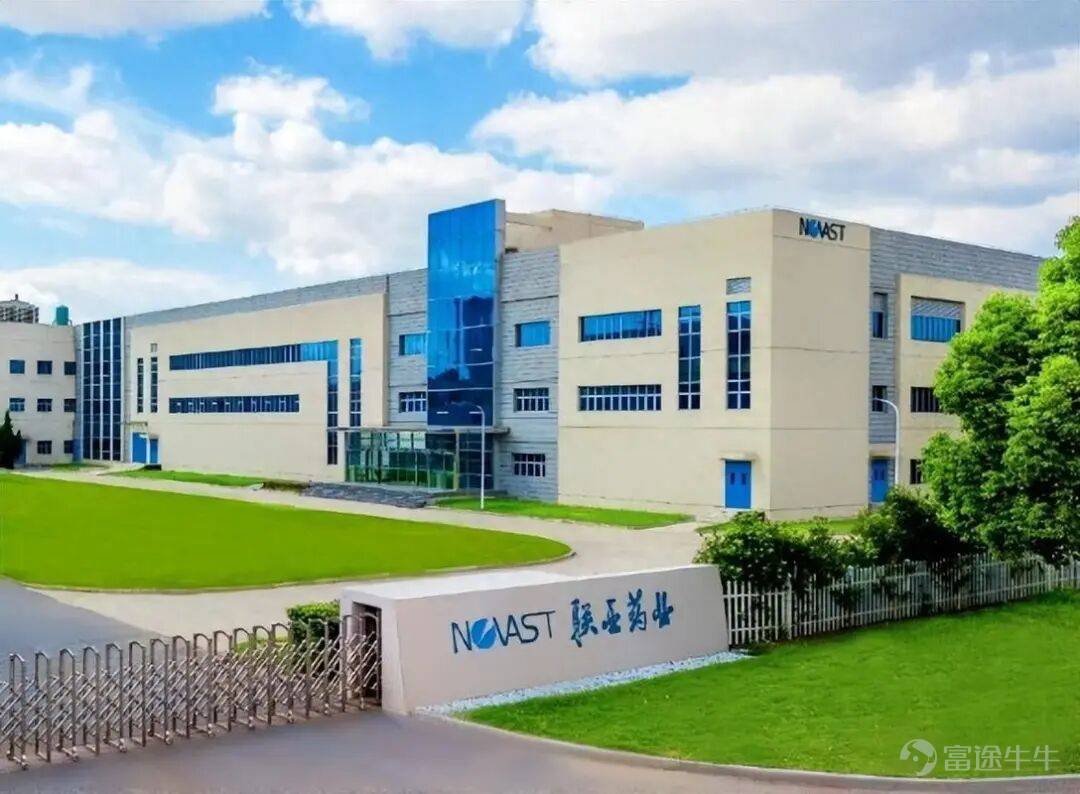

After many years, a pure generic drug company has finally passed the A-share listing review—why is Lianya Pharmaceuticals so determined to go public?

Produced by | Frontline of Entrepreneurship
Author | Zhang Jue
Editor | Egg Chief
Visual editor | Xing Jing
Reviewed | Songwen
In early July, Nantong Lianya Pharmaceuticals Co., Ltd. (hereinafter referred to as 'Lianya Pharmaceuticals'), a high-end generic drug manufacturer, passed its IPO review on the ChiNext board. For the pharmaceutical capital markets in recent years, this move carries a somewhat contrarian tone.
In recent years, from A-shares to Hong Kong-listed stocks, innovative drugs have nearly become the core narrative in the pharmaceutical capital markets. In contrast, although generic drugs have always been an indispensable part of the pharmaceutical industry, the generic drug sector has gradually been labeled as having 'limited growth potential and little room for imagination.'
Since 2023, there has been almost no pure generic drug company approved for listing on the A-share market—until the emergence of Lianya Pharma.
In fact, Lianya Pharma has consistently maintained approximately RMB 1.1 billion in cash on its balance sheet, enjoys stable profitability, and has even refrained from taking on debt to expand production capacity, instead insisting on raising funds through an IPO.
At a time when capital markets are chasing innovative drugs and the listing pathway for pure generic drug companies is nearly closed, what is the underlying rationale behind Lianya Pharma’s move to list on the ChiNext board—is it driven by genuine, inflexible needs for capacity expansion and R&D, or is it an inevitable strategic choice at the capital level? And will its IPO story resonate with investors?
1. A Generic Drugmaker’s Winding Path to IPO Approval
As early as November 2022, Lianya Pharma submitted an IPO application targeting the STAR Market and entered the inquiry phase that December. Over the following nearly two years, the company underwent three rounds of regulatory inquiries before voluntarily withdrawing its application materials in September 2024.
Lianya Pharma subsequently refiled for listing on the ChiNext board and received acceptance in mid-2025.
Since its inception, Lianya Pharma has long focused on the development and manufacturing of complex formulations and was relatively early in expanding into overseas markets such as the United States. Nevertheless, it remains fundamentally a generic drug company, with a core strategy centered on enhancing the difficulty of replication through complex formulation technologies to improve patient compliance or drug safety—rather than achieving breakthroughs via original targets or novel molecules.
For the STAR Market, which emphasizes 'hard tech' and original innovation capabilities, such companies often face inherent challenges in meeting the criteria for innovation classification.
Lianya Pharma’s eventual shift from the STAR Market to the ChiNext board can thus be seen as a realignment between its business positioning and the appropriate capital market segment.

(Image / Shutterstock, licensed under VRF agreement)
According to its prospectus, Lianya Pharmaceuticals has delivered relatively stable financial performance in recent years.
From 2023 to 2025, the company’s revenue reached RMB 700 million, RMB 866 million, and RMB 895 million, respectively; net profit amounted to RMB 116 million, RMB 260 million, and RMB 228 million, respectively. Notably, in 2024, the company achieved substantial profit growth, reflecting a clear improvement in profitability.
This performance is closely tied to the company’s long-standing accumulation of U.S. Food and Drug Administration (FDA) approvals, which have started yielding significant returns in recent years.
Generic drugs play an extremely important role in the U.S. healthcare system. Although they account for only a small portion of total prescription drug sales by value, they fulfill over 90% of all prescriptions. For both U.S. public health insurance programs and private insurers, generics are a core tool for controlling healthcare expenditures.
For this reason, the U.S. market has long been one of the world’s largest generic drug markets and remains a primary battleground for many Chinese pharmaceutical companies seeking overseas expansion. Lianya Pharmaceuticals has strategically focused on this market.
Among its portfolio, Lianya’s cardiovascular product nifedipine extended-release tablets captured a U.S. market share exceeding 82% at their peak in 2023, while diltiazem extended-release capsules have consistently maintained leadership in their niche segment, providing the company with stable cash flows.
In 2025, Lianya’s conjugated estrogens extended-release tablets received FDA approval. The originator drug, Premarin, developed by Pfizer, had been on the market since 1942, and for 83 years no generic version had been approved globally.The total addressable market for this product exceeds USD 600 million,and it is widely regarded within the industry as a classic product in the field of women’s health in the United States.
Lianya’s conjugated estrogens extended-release tablets represent the first generic version of this product. Entering this market has become a key new driver of the company’s growth, generating royalty income of RMB 77.65 million in the first half of 2026 alone.
From 2023 to 2025, the company’s overseas revenue accounted for 68.97%, 61.93%, and 63.15% respectively, with the U.S. market contributing the vast majority.
Ingenus Pharmaceuticals, based in the United States, has consistently been the company’s largest customer for multiple consecutive years, with its revenue contribution always exceeding 50%. Ingenus holds the exclusive U.S. commercialization rights for the company’s core FDA-approved products and covers major pharmaceutical distribution channels and retail outlets across the United States, enabling Lianya Pharma’s products to gain broad market access in the U.S.

The company’s second-largest customer is Sinopharm Holding, a leading domestic pharmaceutical distributor, which contributed RMB 279 million in revenue in 2025, representing 31.20% of total revenue. The company’s relationships with these two major customers—one domestic and one overseas—underscore the stability of Lianya Pharma’s business.
2. 'Overseas Entity' Returns Home
Lianya Pharma’s overseas orientation is not only reflected in its high proportion of U.S.-derived revenue; the company was initially structured along the path of an offshore-funded, overseas-listed entity.
In October 2004, Lianya Cayman was established in the Cayman Islands. In January of the following year, Lianya Cayman set up two onshore entities—Lianya Limited and Linko Pharma—in Nantong, Jiangsu Province. Lianya Limited had a registered capital of USD 6 million and was wholly owned by Lianya Cayman.
By September 2008, Lianya USA had also been fully transferred under Lianya Cayman. Lianya USA handles product registration, client liaison, and market development, making it the most critical component of Lianya Pharma.Initially, it was held 70% by Chinese-American founder Zhang Guohua and 30% by Indian-American co-founder Pinnamaraju Prasadraju.
At this point, Lianya Pharma had established a relatively complete red-chip structure: offshore shareholders controlled onshore R&D and manufacturing entities through Lianya Cayman, while integrating the U.S. sales and regulatory platform into the same corporate framework.
Based on its shareholder composition, asset allocation, and business focus, Lianya Pharma at that time resembled a pharmaceutical company rooted in Chinese manufacturing, targeting the U.S. market, and structured to facilitate future offshore financing.
However, valuations for generic drug companies in overseas capital markets have remained persistently low, and financing costs relatively high, preventing Lianya Pharmaceuticals from going public. With the emergence of favorable domestic pharmaceutical industry policies, the company decided in 2021 to pivot toward an A-share listing, triggering a reverse restructuring of its offshore holding structure that had been in place for over a decade.
Moreover, according to the prospectus, prior to the adjustment of the offshore holding structure, the company’s shareholders already included numerous state-owned funds, such as Xiamen C&D—wholly owned by Xiamen municipal government—and the Service Trade Innovation Development Guidance Fund (a national fund), as well as Shiyu Capital, a prominent market-oriented healthcare investment firm, which held shares through Danqing Holdings.

On August 18, 2021, Lianya Limited acquired 100% of the equity interest in Link Pharma from Lianya Cayman for USD 10.798151 million; on the same day, Lianya Limited also acquired 100% of Lianya USA’s equity for USD 0.89 million.
Subsequently, the company executed a shareholder 'rollover.' Prior to dismantling the red-chip structure, investors held shares in Lianya Cayman, which in turn controlled Lianya Limited. After the red-chip structure was dismantled, the original Cayman shareholders—or their designated entities—directly assumed equity stakes in Lianya Limited, and Lianya Cayman gradually exited its intermediate holding position.

It was precisely during this structural unwinding that Legend Capital became one of Lianya Pharmaceuticals’ most significant institutional shareholders. Legend Shengyuan took over a 19.8975% equity stake in Lianya Limited, and subsequently, other Legend-affiliated entities continued to hold additional shares in the company.
Legend Capital has long maintained investments across multiple segments of the pharmaceutical value chain—including innovative drugs, active pharmaceutical ingredients (APIs), formulations, distribution, and healthcare services—and emphasizes industrial synergy and vertical integration in its healthcare investments. It also shows a preference for companies with international operational capabilities.
According to the shareholding structure prior to the company’s ChiNext IPO filing, Zhang Guohua and his son Zhang Shuqiang—the company’s actual controllers—together with Pinnamaraju Prasadraju, indirectly controlled 29.4999% of the company’s equity, while Legend-affiliated entities collectively held 23.19%.
3. Are generic drug companies worth listing?
As of the end of 2025, Lianya Pharmaceuticals held RMB 1.099 billion in cash and cash equivalents, with a debt-to-asset ratio of only 12.37% and no short-term or long-term interest-bearing bank loans—a rarity in the pharmaceutical industry. For a formulation-focused company with annual revenue under RMB 1 billion, such a financial structure is already remarkably robust.
Therefore, when Lianya Pharmaceuticals proposed raising RMB 950 million, the market’s immediate concern was not whether the company could secure funding, but whether this capital truly needed to be raised through an IPO.
According to the prospectus, approximately RMB 300 million of the raised funds will be allocated to the construction of a high-end dosage form production base.

From a capacity utilization perspective, the company's existing production lines are indeed already operating close to full capacity. In 2025, tablet output reached 24.39 billion units, corresponding to a capacity utilization rate of 88.98%; sales volume reached 24.63 billion units, resulting in a production-to-sales ratio of 101.01%—sales even exceeded annual production (with the excess supplied from inventory built up in prior years).
The situation is even more pronounced for capsules, with capacity utilization rates reaching 110.17%, 143.88%, and 139.12% in 2023, 2024, and 2025, respectively—exceeding 100% for three consecutive years.

However, the issue is that Lianya Pharma’s capacity constraints had already emerged by at least 2023. If expansion was truly urgent, the company’s consistently growing operating cash flows over the past few years, along with its cash holdings exceeding RMB 1 billion, would have been sufficient to fund part of the project internally.
The prospectus also indicates that the company plans to allocate RMB 328 million to drug R&D projects and an additional RMB 266 million to the construction of an R&D center—totaling nearly RMB 600 million, which accounts for more than 60% of the total proceeds from the offering.
Yet historically, Lianya Pharma’s R&D intensity has not been particularly high.
From 2023 to 2025, the company’s R&D expenses amounted to approximately RMB 82 million, RMB 101 million, and RMB 107 million, respectively—totaling less than RMB 300 million over three years. In other words, the amount proposed for R&D and R&D center construction in this offering exceeds the company’s total R&D expenditures over the past three years by more than twofold.
Although Lianya Pharma operates in the high-end generic drug segment, which carries technical barriers, its R&D return on investment has been relatively modest.
For example, the company’s core product, metoprolol succinate extended-release tablets, had an export price of approximately RMB 0.176 per tablet and a domestic price of around RMB 0.35 per tablet in 2025; conjugated estrogens extended-release tablets, recently approved and ramping up production, were exported at approximately RMB 2.29 per tablet.
Compared to standard oral formulations, these products already command a certain pricing premium, yet they remain squarely within the category of typical small-molecule oral generic drugs.
Currently, the highest-value segments within the global generic drug industry are gradually shifting toward liposomes, long-acting microsphere formulations, and biosimilars.
Taking long-acting microsphere injectables as an example, they involve complex drug-release systems, sterile manufacturing processes, and lengthy pharmacokinetic bioequivalence validation, often requiring development timelines of several years. Due to the limited number of competitors in this space, even after market entry, these generics can maintain relatively high pricing.
The value proposition of biosimilars is even more pronounced. Given the complexities of cell culture, protein expression, purification processes, and clinical equivalence validation, their R&D costs typically reach hundreds of millions to billions of yuan—far exceeding those of chemical generics. A mature biosimilar product often achieves sales on the scale of several billion yuan.
Union Chempharma’s current core product portfolio clearly has not yet reached this tier. Moreover, according to its prospectus, the company does not intend to expand into innovative drug development.
Beyond its fundraising projects, Union Chempharma also plans to allocate RMB 500 million to supplement working capital. Meanwhile, the company completed a cash dividend payout of RMB 680 million by the end of 2025, while still maintaining over RMB 10 billion in cash on its balance sheet—raising understandable investor concerns about the necessity of this additional funding.
Most importantly, we are no longer in the era when generic drug companies were rushing to go public en masse.

A decade ago, holding FDA approvals and export capabilities alone constituted a scarce asset. However, as Chinese formulation manufacturers have collectively expanded overseas, competition in the U.S. market has intensified significantly.It is becoming increasingly difficult to secure high valuations based solely on generic drug operations.Early-listed generic drug companies such as Huahai Pharmaceutical, Livzon Group, and CSPC Pharma have all shifted their strategic focus toward innovative drugs.
The last purely generic-focused company to list on China’s A-share market was back in 2022—XuanTai Pharma, which specializes in high-end modified-release generics and debuted on the STAR Market. Its current market capitalization stands below RMB 5 billion.
Compared to four years ago, the pharmaceutical industry landscape has changed significantly. Amid the rising wave of innovative drugs, can Lianya Pharmaceuticals—which relies solely on the narrative of high-end generic drugs—achieve a valuation level that garners recognition from capital markets?
*Note: The featured image and uncredited images in this article are sourced from Lianya Pharmaceuticals' official website.
Risk Disclaimer: The above content only represents the author's view. It does not represent any position or investment advice of Futu. Futu makes no representation or warranty.Read more
Comments
to post a comment