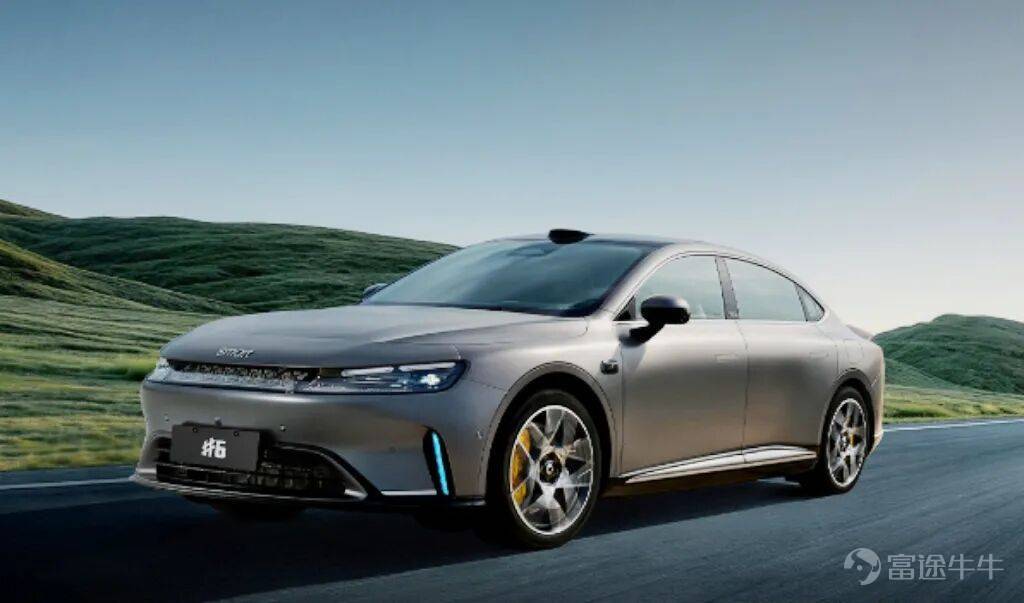

Monthly sales of 2,000 units and three consecutive years of decline: smart’s luxury script can no longer be performed

Produced by | Frontline of Entrepreneurship
Author | Wei Shuai
Edited by Feng Yu
Visual editor | Xing Jing
Reviewed by | Song Wen
Five years ago, if you walked into Beijing’s Sanlitun, Shanghai’s Xintiandi, or Chengdu’s Taikoo Li on a weekend, you’d likely spot a few uniquely styled compact cars in the parking lot—two-door models with rounded contours, often wrapped in personalized decals, likely owned by independent designers or fashion-conscious urbanites.

This was one of the few automotive brands in China’s market with a clearly defined user profile—distinctive and stylish, yet fun to drive and convenient.
Back then, smart wasn’t just an ordinary means of transportation—it was a statement of lifestyle: 'I don’t need a large cabin; I only need agility. I don’t need to please my whole family; I only need to please myself.'
Launched in 1998, the brand embedded the concept of the 'urban microcar' into global consumer consciousness and cultivated a loyal following in the Chinese market.
But if you visit those same shopping districts today and take a look around the parking lots, you’ll notice a new scene: the spots once occupied by smarts are now increasingly taken by new energy vehicles like the Wuling Hongguang MINI EV, BYD Seagull, and Geely Galaxy Starship.
Meanwhile, smart itself has transformed into a lineup of increasingly larger all-electric SUVs—the smart #1, #3, and #5.
Behind this shift lies a strategic pivot driven jointly by shareholder interests and industry cycles.The new smart leverages Geely’s SEA (Sustainable Experience Architecture) platform, repositioning its product identity from 'urban microcar' to 'premium urban electric SUV.' As vehicle dimensions have grown, so have prices—now starting above RMB 150,000, with some trims reaching into the RMB 250,000 range.
Yet market feedback has proven harsher than the strategic roadmap. The smart #1 briefly surpassed 3,000 units in monthly sales shortly after its 2022 launch but soon entered a downward trend, and now sells at around 2,000 units per month.
Its former 'microcar empire' has been reclaimed by Chinese brands through a different approach:The Wuling Hongguang MINI EV, priced in the RMB 30,000 range, has become China’s go-to urban runabout. BYD’s Seagull and Dolphin have set the benchmark for smart compact cars in the RMB 70,000–120,000 segment, while Geely’s Xingyuan has consistently topped sales charts since last year.
The A0 segment has long become a fiercely contested battleground for automakers in the new energy vehicle era.
An industry insider summed up smart’s dilemma: it wants to grow bigger, but what consumers miss is precisely its former smallness.
In other words, smart’s predicament isn’t just about product iteration—it’s a battle over who defines ‘urban mobility.’
As Chinese brands have turned micro EVs into social currency, made intelligence standard equipment, and driven prices down to levels smart never imagined, this pioneer that once defined the ‘urban microcar’ is now losing relevance in the very arena where it used to dominate.
1. The ‘Urban Sprite’ Is Falling Behind in Sales
According to data from Dongchedi, smart’s total brand sales in May 2026 stood at 2,122 units.
That figure places it outside the top 50 on China’s retail auto sales rankings. For context, Geely Auto Group alone sold over 240,000 vehicles that month—smart’s contribution accounted for less than 1%.
This isn’t a temporary slump but a three-year downward trend. From monthly averages exceeding 3,500 units in 2023 to potentially fewer than 2,100 units per month in 2026, smart’s market presence is being steadily eroded.

How did a once eye-catching ‘urban sprite,’ backed by automotive giants Mercedes-Benz and Geely and built on Geely’s SEA (Sustainable Experience Architecture) electric platform, slide from spotlight to obscurity in just three years?
Smart's electrification transformation began with a dramatic twist.
In 2019, Zhejiang Geely Holding Group and Daimler AG announced the formation of a 50:50 joint venture for the Smart brand.
This was a classic case of 'two strong players joining forces': Mercedes-Benz brought its century-old luxury design expertise and global reputation, while Geely contributed its electric vehicle platform, manufacturing efficiency, and deep understanding of the Chinese market. Headquartered in China with its production plant located in Xi'an, Smart transformed from a niche European brand into a new player actively competing in China's EV market.
In June 2022, the all-new Smart #1 officially launched. It marked Smart’s first-ever all-electric SUV and the debut product following the collaboration between Geely and Mercedes-Benz.

Built on Geely’s billion-dollar SEA (Sustainable Experience Architecture) platform and styled by MERCEDES-BENZ GROUP AG UNSP ADR EACH REP 0.25 ORD SHS, the vehicle entered the market with a starting price in the RMB 150,000 range—significantly lowering the entry barrier compared to previous gasoline-powered Smart models that typically started above RMB 200,000.
Market response was initially very positive. In 2023, Smart achieved retail sales of 42,292 units in the domestic market, marking its first standout year since embarking on electrification.
The Smart #1 quickly attracted young female buyers, urban professionals, and families purchasing an additional vehicle, thanks to its cute styling, refined interior, and design endorsement from MERCEDES-BENZ GROUP AG UNSP ADR EACH REP 0.25 ORD SHS. On social media platforms, the Smart #1 frequently appeared in trending topics such as 'first EV for women,' 'urban commuting essential,' and 'affordable alternative to Mercedes-Benz.'

However, market enthusiasm did not last long.
In 2024, Smart’s annual sales dropped to 33,280 units, a year-over-year decline of 21.3%. In 2025, sales fell further to 30,799 units, down over 7% year-over-year. By 2026, the downward trend steepened: cumulative sales from January to May totaled just 8,516 units, a decline of more than 24% compared to the same period the previous year.
Behind these figures lies a brand’s journey from being 'highly anticipated' to 'largely overlooked.'
Even more concerning is the imbalance in its model lineup. In May 2026, smart brand’s total sales reached 2,122 units, of which the #1 sold 1,266 units—nearly 60% of monthly sales; the #5 sold 528 units; the #3 sold only 195 units; and the newly launched #6 EHD sold just 133 units.
What does this mean? It means that smart is currently almost entirely dependent on one single model#1 to carry its entire business.With monthly sales of less than 200 units each, the #3 and #6 EHD have essentially lost market competitiveness. Although the #5 performs relatively better, as a mid-size SUV targeting a higher segment, it faces direct competition from strong rivals such as Li Auto, Nio, and Zeekr in the price range above RMB 200,000, leaving limited room for growth.
When people think of smart, many still associate it with a 'compact, cute city car'—but today’s smart is no longer what it used to be.
2. Sibling Rivalry: Divergent Fates Under the Same SEA Architecture
If smart’s challenges were solely due to intense market competition, one might attribute them to external pressures. However, internal competition arising from models built on the same platform may also be an overlooked rival for this compact car.
Smart vehicles are built on Geely’s Sustainable Experience Architecture (SEA), a modular pure-electric platform developed by Geely Auto Group. This architecture spans vehicle sizes from A-segment to E-segment and supports multiple body types—including sedans, SUVs, MPVs, and sports cars—and is regarded as the technological foundation of Geely’s electrification transformation. Popular models such as the Zeekr 001, Zeekr 007, Zeekr X, Lynk & Co Z20, and Geely Galaxy E8 all originate from this architecture.
What has the SEA architecture brought to smart? First, a mature and reliable electric powertrain system; second, significant cost advantages from platform standardization; and third, access to an extensive supply chain network. In theory, smart should have been able to quickly establish strong product competitiveness through this architecture and secure a solid position in the market.
Yet in reality, the same architecture has led to drastically different outcomes across different brands.
Take the Zeekr X as an example. This vehicle is also built on the SEA (Sustainable Experience Architecture) platform and positioned as a compact luxury all-electric SUV. Its target audience significantly overlaps with that of smart—both cater to young urban consumers who value design aesthetics and intelligent experiences. Yet, in multiple dimensions, the Zeekr X clearly outperforms smart: it offers stronger powertrain performance, higher-grade intelligent features, more advanced driver-assistance capabilities, and a far more extensive and mature sales and service network.
Consumer purchasing psychology here is easy to understand: when you have a budget of RMB 200,000 and are looking for a well-designed all-electric SUV, a comprehensive comparison across various criteria often makes the Zeekr X a more compelling choice than smart.
This 'intra-family rivalry' is particularly awkward for smart.
Especially in core user experiences such as intelligence, driver assistance, and cabin technology, smart’s iteration speed has clearly lagged behind its siblings within the same corporate family. On June 11, the new smart #6 was officially launched, finally announcing the integration of the Qianli ASD (Advanced Smart Driving) driver-assistance system.

(Image / Official Weibo account of smart China)
Even more nuanced is the brand relationship. One of smart’s key selling points has always been 'Mercedes-Benz design,' which it consistently emphasizes in marketing to highlight its premium heritage.
However, aside from its awkward position within Geely’s ecosystem, Mercedes-Benz itself has had limited bandwidth to support the brand. As Mercedes-Benz allocates more resources to high-end electric models like the EQE and EQS, the endorsement effect of the 'Mercedes-Benz pedigree' for smart continues to weaken.
As a result, smart finds itself caught in a dilemma: externally, it competes against formidable rivals like Tesla, BYD, XPeng, and Nio; internally, it battles for resources and customers against Zeekr, Lynk & Co, Galaxy, and even Mercedes-Benz’s own EQ series. Stuck in the middle, smart has neither received sufficient strategic focus nor established a clear, irreplaceable point of differentiation.
3. Strategic Drift: Growing Bigger but Losing Its Soul, Caught Between Choices
What has historically been smart’s most distinctive identity?
When the Smart Fortwo was launched in 1998, its core selling points were maneuverability in congested cities and distinctive industrial design. This identity earned Smart a loyal following during the era of internal combustion engine vehicles and underpinned its brand positioning as a 'premium urban commuter.'
However, after transitioning to electrification, Smart chose a radically different path: full-scale SUV-ization, with ever-increasing vehicle dimensions.
The Smart #1 exceeds 4.2 meters in length; the Smart #3 adopts a coupe-SUV silhouette; the Smart #5 moves further upmarket into the midsize SUV segment; and the Smart #6 EHD aims to address an even broader range of usage scenarios.

From a product portfolio perspective, Smart appears intent on building an SUV matrix spanning compact to midsize segments to cater to a wider customer base.
The rationale behind this strategic choice is easy to understand. The Chinese market has long favored SUVs, which command higher price premiums and allow for easier cost amortization through platform-based production. Given that Smart must compete in the RMB 150,000–250,000 price bracket against mainstream brands, offering SUVs seems like the safer bet.
But Smart overlooked a critical issue: once it grew larger, it was no longer the Smart people remembered.
In the memories of longtime users, Smart was a two-door, two-seater—easy to park, boldly distinctive, and a true urban sprite. Now, it has become an electric SUV with unremarkable interior space, increasingly generic styling, and dimensions approaching those of ordinary family SUVs.
New customers evaluate Smart by entirely different standards. They don’t see it as a unique small-car brand but compare it directly against mainstream SUVs like the Tesla Model Y, Zeekr X, and BYD Song L. In terms of space, Smart holds no advantage; in range, it’s unexceptional; in intelligent driving features, it lacks standout capabilities; and in value-for-money, it offers virtually no competitiveness whatsoever.
This 'growing bigger at the cost of losing its soul' transformation has caused a severe rupture in brand perception. Smart is neither the niche premium brand it once was nor capable of competing head-on with new-energy rivals in the mainstream market. Stuck in an awkward middle ground, it has lost the loyalty of its original fans while failing to attract new customers.
A deeper contradiction lies in the erosion of brand premium. Historically, Smart’s premium pricing stemmed from two forms of scarcity: the sense of luxury derived from Mercedes-Benz design and the uniqueness of being a 'micro urban vehicle.' Yet in the electric era, both sources of scarcity are rapidly vanishing.
From the starting line of this race, smart has been burdened with a heavier load.

(Image / smart official website)
In the view of 'Frontiers of Entrepreneurship,' smart’s problem isn’t the failure of a particular model, the ineffectiveness of a specific marketing campaign, or missteps in a pricing war. Its core issue lies in strategic drift: it lost its brand essence while trying to 'get bigger,' sacrificed its differentiation advantage in pursuit of mainstream appeal, and eroded strategic patience amid shareholder conflicts.
Smart must urgently answer three fundamental questions: Who am I? Whom do I serve? And why should anyone buy me? If it continues wavering on its current path, smart risks gradually becoming a marginal asset within its parent companies’ broader electric vehicle portfolios.
And that once-agile urban sprite—nimble enough to weave through congested city streets and capture countless hearts—may well become a regrettable footnote in China’s wave of automotive consumption upgrading.
*Note: The featured image and uncredited images in this article are sourced from smart’s global official WeChat account.
Risk Disclaimer: The above content only represents the author's view. It does not represent any position or investment advice of Futu. Futu makes no representation or warranty.Read more

Comments
to post a comment
1