
SK Hynix options trading is about to launch—should investors jump into memory stocks?

KIS Turns Bearish vs. SemiAnalysis’s Bullish Stance: How Much Has Semiconductor Risk in the US and Korea Been Priced In During the Second Half of De-leveraging?
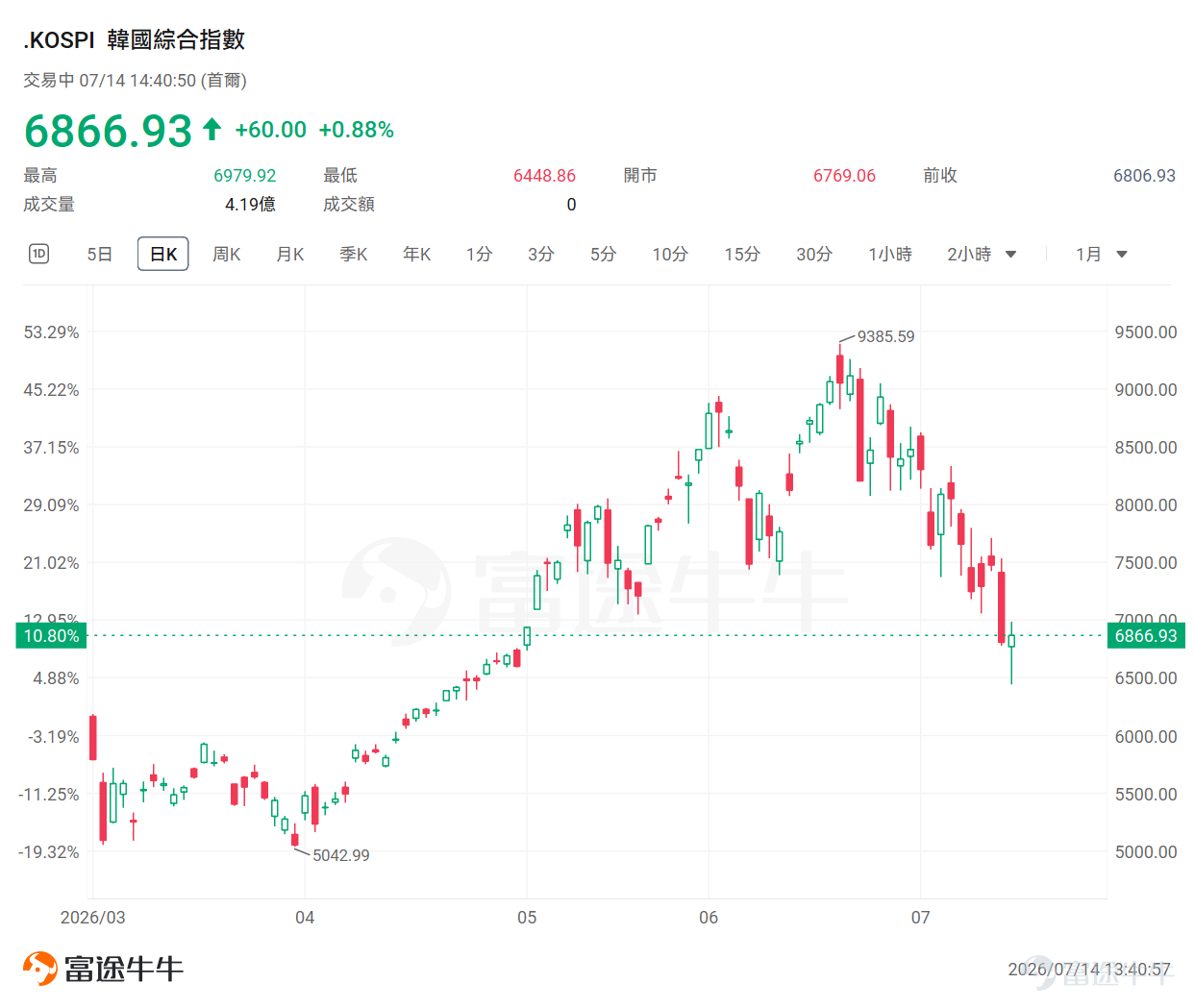
Over the past two weeks, AI semiconductors have undergone a rapid and sharp deleveraging. From the U.S. market's $NVIDIA (NVDA.US)$ 、 $Broadcom (AVGO.US)$ 、 $Micron Technology (MU.US)$ to Korea's $SK hynix (SKHY.US)$ 、 $Samsung Electronics (005930.KR)$ , the once most crowded AI hardware trade has clearly cooled off. As of this writing, the KOSPI has retraced more than 24%, and SOXX has declined over 13%.

This correction was not triggered by a single negative catalyst but rather by the simultaneous release of multiple pressures: on one hand, the market has started reassessing the sustainability of AI-related capital expenditures; on the other, the AI hardware trade had become excessively crowded, with valuations and institutional positioning both at elevated levels.
Meanwhile, earnings expectations for some semiconductor companies are beginning to diverge, prompting market concerns: has the AI hardware cycle already transitioned from a phase of high-speed growth into one of slowing profit growth?Currently, the biggest point of contention centers on SK Hynix, a key player in AI memory.
A bullish-bearish divergence is emerging around the AI memory cycle
On July 13, leading Korean institutions successively downgraded SK Hynix’s earnings forecasts. KIS was the first to cut its 2026 and 2027 earnings estimates, and today Mirae Asset Securities lowered its Q2 2026 operating profit forecast by 12% and also reduced its blended average price assumptions for DRAM and NAND.
As a core global supplier in the HBM space, any earnings revision for SK Hynix is amplified and heavily scrutinized by the market.The spread of pessimism mainly stems from investor concerns: as HBM capacity gradually comes online, the supply-demand balance may shift from tight to loose; combined with downstream customers gaining stronger bargaining power, HBM’s pricing premium is expected to compress, potentially pushing the memory industry back into its traditional cyclical volatility. The market has interpreted this as a signal that the AI memory super-cycle is nearing its peak, significantly pressuring related stock prices recently.
However, the real market divergence lies in whether investors are mistakenly equating 'slowing profit growth' with 'the end of the industry cycle.'
Just as pessimistic expectations were heating up, SemiAnalysis offered a starkly different assessment.Despite ongoing market noise and adjustments to valuation models, they still maintain an optimistic outlook for SK Hynix’s DRAM earnings in Q2 2026, forecasting DRAM operating profit to reach approximately KRW 55 trillion. Their core rationale is that spot prices for commodity DRAM have surged roughly 60% quarter-over-quarter, while HBM product prices saw only single-digit, minor fluctuations, resulting in an overall DRAM blended average selling price increase of about 45% quarter-over-quarter.
This suggests that the memory market has not experienced a collapse in demand; rather, the market is reassessing whether profit growth can sustain the explosive pace seen during HBM’s rapid expansion phase.In other words: the market is worried about a 'decline in growth momentum,' not 'disappearing demand.'
Hynix’s sharp sell-off is driven more by trading factors than by a fundamental collapse.
If we dissect SK Hynix’s recent plunge, we find it was not caused by deteriorating fundamentals in AI memory demand—this distinction is key to judging whether the current shock will persist.
According to Photon Capital’s analysis, Monday’s sharp drop was primarily triggered by the confluence of three trading- and supply-side factors:First, profit-taking by investors,Its ADRs experienced a natural pullback after surging nearly 13% on their US listing debut;Next isas high as USD 26.5 billionUS IPOresulting in a dilutive effect from newly issued shares;Lastly, there is repricing between Korean-listed shares and their US ADRs.In addition, global investors' portfolio rebalancing between South Korea and Taiwan's AI hardware sectors has further intensified short-term selling pressure.
Therefore, this correction appears more like:a repricing of risk amid high valuations, high leverage, and concentrated positioning.
How much semiconductor risk has actually been unwound?
So, the question is: How much risk has been released in the semiconductor sector? The answer: fundamental risks have only been partially unwound, while liquidity-driven risks have yet to be fully cleared.
Currently, corporate earnings have not shown any systemic deterioration. In fact, Samsung Electronics and SK Hynix previously reported results that exceeded market expectations. Thus, this sell-off appears more like leveraged funds reducing risk exposure, leading to passive valuation compression.What the market truly needs to wait for is not an upward revision of corporate earnings, but whether the selling pressure from capital flows has ended.
However, subtle shifts are emerging in market fund flows.On July 14, Goldman Sachs data showed that last week, hedge funds bought U.S. semiconductor stocks on a large scale—the largest such purchase in nearly three and a half years.

Source: Goldman Sachs
Previously, semiconductor stocks had experienced two consecutive weeks of heavy selling. Now, with capital flowing back in,this suggests that institutions have not entirely dismissed the AI hardware thesis. More precisely, the market is shifting from 'broad-based AI position reduction' to 're-selecting AI winners.'During the prior rally phase, any company within the AI supply chain received strong investor interest. However, after this round of adjustments, the market is now focusing on companies that can actually deliver on profitability.
Risk release does not mean risk elimination.
It should be noted that deleveraging in the semiconductor sector is not yet complete, and the market still faces three key uncertainties in the short term.
Looking ahead, whether U.S. and Korean semiconductor stocks can resume their upward trend hinges on a dual engine of 'liquidity recovery' and 'fundamental follow-through.' Currently, the market is closely awaiting three stabilization signals:
1. Technical selling exhaustion: This is specifically reflected in the stabilized asset base of leveraged ETFs, which has stopped shrinking rapidly, and a notable easing of concentrated selling during the final hour of trading—indicating that the liquidity-driven market impact is nearing its end.
2. Key catalyst realization: Focus centers on the upcoming earnings reports from major North American cloud service providers (CSPs), particularly whether their capital expenditure (Capex) guidance can reaffirm the sustainability of AI-related investments and thereby restore market confidence.
3. Regulatory policy countermeasures: Attention should be paid to whether Korean regulators introduce substantive market-stabilizing measures (such as short-selling restrictions or intervention by a stabilization fund) to break the negative feedback loop driven by panic sentiment.
Goldman Sachs characterizes this KOSPI decline as a 'liquidity-driven position unwinding.' Technically, the KOSPI closed precisely at the 6,800 support level—the 52-week Fibonacci retracement level. Should this support break, the next support level would be at 6,500.

Notably,From the perspective of leveraged capital mechanics, current market pressure may not yet be fully released.
On Monday, the KOSPI plunged 8.95% in a single day, reflecting a rapid deterioration in market sentiment and triggering significant margin calls across leveraged accounts. For investors who previously participated in the AI hardware rally via margin trading or leveraged ETFs, the sharp price decline necessitates repositioning of their risk exposure.
Tuesday (July 14) largely represented a phase of margin calls and fund settlements, with some selling pressure yet to be fully realized.According to the settlement mechanism of leveraged trading in the Korean market, the key focus should be on a potential second wave of pressure likely to occur on Wednesday and Thursday:
On one hand, if margin accounts fail to meet margin calls in time, forced liquidation sell orders could be concentrated during the opening auction phase;
On the other hand, leveraged ETFs must passively rebalance daily to maintain their target leverage ratio. During sustained market declines, this mechanism can create a pro-cyclical feedback loop of 'selling more as prices fall further.'
Additionally, foreign investors previously held significant positions in AI hardware stocks in Korea and Taiwan. As risk appetite diminishes, continued net outflows from foreign capital could further amplify short-term volatility. Therefore, although the semiconductor sector has already undergone a round of valuation compression, the market still needs to wait for the final release of liquidity-related selling pressure.
In other words: fundamental risks are gradually being validated, while the deleveraging process on the funding side is not yet fully complete.
Only after margin-driven selling eases, rebalancing pressure from leveraged ETFs subsides, and foreign outflows stabilize can the market potentially return to a trend driven by AI industry fundamentals.
Conclusion: AI semiconductors are undergoing a 'reassessment of conviction'
From the current situation, this semiconductor correction appears more like a high-level deleveraging episode rather than the end of the AI cycle.
The market is undergoing an important shift: from 'all AI assets are worth buying' to 'only AI companies with genuine profitability deserve to be held.'
For investors, the real question isn't whether semiconductors have finished falling, but rather:Whether deleveraging of capital is nearing its end, and whether the next rally will once again be driven by fundamentals.
AI hardware trades are undergoing a shakeout. But the companies that survive this shakeout could be the real winners of the next cycle.
Risk Disclaimer: The above content only represents the author's view. It does not represent any position or investment advice of Futu. Futu makes no representation or warranty.Read more


Comments (20)
to post a comment
70
151