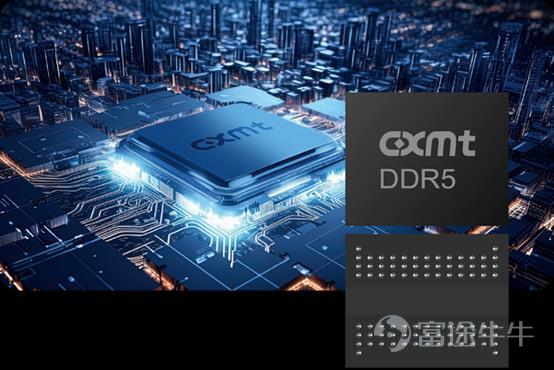
[Silicon-Based Economy] ChangXin Technology (planned IPO): A domestic memory pioneer breaking through after a decade-long effort, filling the high-end DRAM gap in mainland China

Silicon-Based Economy Special Report: ChangXin Technology (Planned IPO)
Free version: 6,627 words, estimated reading time: 13 minutes
Full version: 42,075 words
Silicon-based Economy: More forward-looking, more hardcore, supports topic/piece-by-piece payment unlocking
ChangXin is poised to enter the supply chains of global consumer electronics giants, leading cloud service providers, and major domestic internet platforms, reflecting a realignment in the global memory supply chain and the rising competitiveness of Chinese memory manufacturers.
Against the backdrop of tight global memory supply, U.S. tech giants such as Apple and Google may subsequently procure ChangXin memory chips to enhance supply chain diversification, signaling ChangXin’s comprehensive product competitiveness and its entry into the consideration set of top-tier international customers.
According to media reports, starting in May 2026, Apple initiated lobbying efforts with the U.S. government, first engaging with the U.S. Department of Commerce and subsequently continuing outreach to the White House and other federal agencies. Its core request is to seek a special compliance license to include ChangXin Memory in Apple’s global DRAM supply chain procurement system, with plans to use these chips in end products such as iPhones and Macs.
ChangXin’s LPDDR5X currently achieves a data transfer rate of 10,667 Mbps, with performance and yield rates meeting international top-tier standards and satisfying Apple’s quality control requirements.
Citing informed sources, foreign media reported that Google is evaluating the feasibility of procuring DRAM chips from ChangXin. Google’s internal supply chain team has begun qualification reviews, stability testing, and cost assessments of ChangXin’s DRAM products. The potential procurement would primarily focus on mature-node DDR5 chips, intended mainly for Google’s self-developed TPU chips.
ChangXin has been included on the U.S. Department of Defense’s 1260H list. Unlike the U.S. Department of Commerce’s Entity List, this designation does not directly prohibit U.S. companies from purchasing ChangXin products, but any related procurement collaboration faces challenges stemming from political, reputational, and regulatory uncertainties.
Even if U.S. authorities grant approval, overseas customers like Apple will find it difficult in the near term to secure sufficient volumes of ChangXin’s products.Against the backdrop of overall tight domestic DRAM supply in China, ChangXin's production capacity is expected to prioritize meeting domestic market demand, including that from local server makers, major internet companies, and smart device manufacturers. ChangXin previously disclosed that its current production capacity is far below domestic demand, leaving extremely limited room for overseas shipments.
Tencent’s collaboration with ChangXin marks a significant breakthrough for domestically produced high-end DRAM entering the core computing infrastructure supply chain of China’s leading internet platforms.
According to media reports, Tencent has signed a large-scale, long-term memory chip supply agreement with ChangXin, valued at over RMB 20 billion, with a duration of three to five years. The supplied products primarily consist of DDR5 chips for data centers and AI servers that have passed high-load validation. It remains unconfirmed whether HBM is included in the agreement.
ChangXin signed this cooperation order with Tencent just before its planned listing on the STAR Market of the Shanghai Stock Exchange. For Tencent, this move secures supply ahead of time amid global DRAM shortages and supply uncertainties, thereby reducing supply chain risk. For ChangXin, it gains strong endorsement from a key customer, locks in downstream demand for future capacity expansions, and obtains real-world validation—from a major client perspective—of the performance, reliability, and mass delivery capability of its domestically produced memory chips.
ChangXin is also negotiating partnerships with other domestic internet companies, including Alibaba Cloud, ByteDance, and Xiaomi.
Second, ChangXin is driving domestically produced DRAM from zero to one, establishing itself as a key player among the world’s leading DRAM manufacturers.
By Q4 2025, ChangXin’s DRAM sales are projected to account for 7.67% of the global DRAM market share, ranking fourth globally behind Samsung, SK Hynix, and Micron.
The DRAM industry is highly concentrated, with the top three manufacturers collectively holding over 90% of the global market share in 2025. ChangXin’s rise to fourth place signifies that domestically produced DRAM is no longer limited to small-scale trials or partial substitution—it is now entering the global mainstream supply system.
Third, ChangXin’s strategic value extends beyond its commercial growth as a memory chip company—it represents China’s domestic substitution efforts in the DRAM sector.
ChangXin is China’s largest, most technologically advanced, and most comprehensively integrated DRAM enterprise, covering research and development, design, and manufacturing. It has established two major product lines—DDR and LPDDR—and offers a full range of products including wafers, chips, and modules, serving key application markets such as servers, mobile devices, PCs, and intelligent vehicles.
China has long been a major global market for DRAM demand, while DRAM supply has historically been dominated by overseas manufacturers such as Samsung, SK Hynix, and Micron.
ChangXin Memory Technologies (CXMT) pioneered China’s domestic DRAM industry, achieving a breakthrough from zero to one and becoming one of the world’s leading memory manufacturers, thereby enabling mainland China to possess large-scale R&D, manufacturing, and delivery capabilities in mainstream DRAM technologies.
From the perspective of China's semiconductor supply chain security, CXMT holds significant strategic value.CXMT’s rise has strengthened the self-reliance of China’s AI computing power, cloud computing, and end-device industrial chains in critical memory components, underscoring its strategic importance amid intensifying technological competition among major powers.
Fourth, CXMT’s industrial ecosystem capabilities are evolving from single-point domestic substitution toward comprehensive, chain-wide leadership.
CXMT’s network of customers and suppliers is forming the initial framework of a domestic DRAM industrial ecosystem.Together with its upstream and downstream partners, CXMT has established an industrial closed loop for domestic DRAM—from R&D to mass production, and from upstream materials and equipment to end-user applications.
Upstream, CXMT collaborates closely with semiconductor design firms, EDA vendors, materials suppliers, equipment and component manufacturers, and memory module producers.
Downstream, CXMT serves clients in servers, mobile devices, PCs, and intelligent vehicles, partnering with leading customers including Alibaba Cloud, ByteDance, Tencent, Lenovo, Xiaomi, Transsion, Honor, OPPO, and vivo.
CXMT’s contribution to China’s domestic memory ecosystem extends well beyond procurement value.DRAM manufacturers impose extremely high requirements on upstream products. Suppliers of upstream equipment, materials, chemicals, gases, silicon wafers, photoresists, and other inputs gain validation in real mass-production environments if they enter ChangXin’s production lines.
Mass-production validation is often more valuable than laboratory testing, as production lines expose deeper issues such as stability, batch-to-batch consistency, delivery capability, and quality control. The larger ChangXin grows, the more opportunities domestic Chinese upstream suppliers have to iterate their products in real-world scenarios.
ChangXin’s value to downstream customers extends beyond merely supplying domestically produced chips.Customers in cloud computing, servers, smartphones, PCs, and intelligent vehicles require stable supply, product co-engineering, and rapid responsiveness.
ChangXin can collaborate with customers throughout product definition, certification, delivery, and continuous iteration, shifting domestic DRAM procurement from a substitution-based model to a collaborative supply relationship.
For end customers, this means enhanced supply chain security and greater flexibility in product development and inventory management.
Fifth, ChangXin was founded in 2016 and achieved rapid rise within a decade—a result of the combined forces of talent, technology, and capital.
Talent provides industry insight and organizational capabilities; technology offers an entry point into the DRAM market and supports product iteration; and long-term capital—such as that from Hefei state-owned investment—provides loss-absorbing capacity, production line construction capability, and local supply chain support. Together, these factors enabled ChangXin to evolve from a new domestic DRAM entrant into a significant variable in the global DRAM market.
1. Talent is the core driver behind ChangXin’s initial launch and continuous iteration.
ChangXin’s founder, Zhu Yiming, previously founded GigaDevice, where he accumulated experience in the memory chip industry through NOR Flash and MCU businesses, developing comprehensive capabilities spanning product definition, supply chain organization, and capital operations.
After entering the DRAM market, ChangXin Memory Technologies (CXMT) continuously recruited talent from major international companies such as Qimonda—the former German DRAM giant—as well as Micron, SanDisk, and Applied Materials, converting external expertise into internal R&D and mass production capabilities.
Zhu Yiming, founder and chairman of CXMT, born in 1972, earned his bachelor’s and master’s degrees from Tsinghua University before studying abroad in the United States, where he has deeply specialized in semiconductor memory technology.
In 2005, Zhu Yiming returned to China to start his entrepreneurial journey. Over the past 21 years, he has founded two listed companies and is one of the key drivers behind the localization of China's memory chip industry.
In 2005, Zhu Yiming founded GigaDevice Semiconductor. GigaDevice went public in 2016—before the launch of the STAR Market—listing under the main board standards of the Shanghai Stock Exchange. Its current market capitalization stands at RMB 475.6 billion.
In 2016, Zhu Yiming co-founded CXMT with Hefei municipal state-owned capital. CXMT is set to list on the STAR Market in 2026, with a potential market capitalization exceeding RMB 3 trillion, positioning it to become the largest company by market cap on China’s A-share market, reflecting immense future growth potential.
Second, technology served as CXMT’s entry point into the DRAM industry, underpinning product development, innovation, and iterative advancement.
CXMT did not start from scratch in DRAM development. Instead, it acquired patent licenses, technical documentation, and the Buried Wordline (BWL) architecture—a foundational physical control structure in memory chips—from Qimonda to establish its initial technological foundation.
Qimonda’s assets helped CXMT overcome early barriers related to patents and manufacturing processes. Since then, CXMT has consistently advanced its independent R&D, product iterations, and ramp-up of mass production.
Third, patient capital has been the critical support enabling CXMT to endure prolonged periods of losses.
DRAM is a capital-intensive, long-cycle, and highly volatile industry; private capital alone would struggle to sustain the multi-year pressure of R&D investment and production line construction.
The Hefei municipal government has provided ChangXin with sustained funding, factory facilities and production lines, and a clustered upstream-downstream supply chain through long-term equity investments, industrial funds, and local supporting infrastructure, enabling ChangXin to continue expanding capacity and iterating its products despite prolonged losses.
Sixth, ChangXin’s explosive performance stems from growth in DRAM shipment volumes and an increase in average selling prices (ASP), particularly the rise in ASP.
In Q1 2026, ChangXin reported revenue of approximately RMB 50.8 billion (USD 7.5 billion), up 719% year-over-year, nearly reaching its full-year 2025 revenue of RMB 61.8 billion (USD 9.1 billion), which grew 156% year-over-year.
In Q1 2026, ChangXin’s DRAM shipment volume increased by approximately 11% quarter-over-quarter, while ASP rose about 57% quarter-over-quarter. In Q3 and Q4 2025, ChangXin’s ASP increased by approximately 63% and 68% quarter-over-quarter, respectively. This indicates that the primary driver behind ChangXin’s revenue growth is price elasticity resulting from tight DRAM supply-demand dynamics, rather than rapidly capturing significant market share from Samsung, SK Hynix, or Micron in the short term.
SemiAnalysis forecasts that ChangXin’s global DRAM shipment market share will rise modestly from approximately 9% in 2025 to around 12% by 2027. Given rising DRAM prices and overall market expansion, even this limited share gain is sufficient to significantly boost ChangXin’s revenue and profits.
SemiAnalysis refutes the simplistic view that Chinese memory makers are disrupting the market through low pricing.In Q1 2026, ChangXin’s DRAM ASP was only about 5%–10% lower than that of Samsung, SK Hynix, and Micron. The price gap may widen going forward, but this is primarily due to differences in product mix among manufacturers, not a deliberate low-price strategy by ChangXin.
Samsung, SK Hynix, and Micron have a higher proportion of server DRAM and HBM shipments, which command higher prices per unit of capacity compared to consumer-grade DRAM.
SemiAnalysis expects that by the end of 2027, server DRAM and HBM will account for more than 50% of total DRAM demand. As the share of server DRAM and HBM grows, the ASP premium of Samsung, SK Hynix, and Micron relative to ChangXin could further widen.
Seventh, ChangXin’s improving gross margin should not be simplistically interpreted as a sign of technological catch-up.
ChangXin's gross margin turned positive to approximately 38% in 2025, up from -113% in 2023 and -4.7% in 2024, highlighting the significant impact of the DRAM cycle on profitability.
In 2025, ChangXin’s gross margin stood at 37.8%, close to Samsung’s 39.4% and Micron’s 39.8%, but notably lower than SK Hynix’s 60.4%.
In Q1 2026, ChangXin’s operating margin was approximately 70%, nearing SK Hynix’s 73%, though still below Samsung’s 81% and Micron’s 84%.
ChangXin’s rising profitability is primarily driven by the sharp surge in commodity DRAM prices, not by its cost structure catching up with industry leaders Samsung, SK Hynix, and Micron.Currently, ChangXin’s per-unit storage cost for DDR5 is over 30% higher than that of Samsung, SK Hynix, and Micron, indicating a gap in product competitiveness and manufacturing efficiency compared to these three major players.
Eighth, SemiAnalysis forecasts that ChangXin’s rapid capacity expansion will bring it close to the production levels of top-tier global DRAM manufacturers.
By the end of 2026, ChangXin’s monthly 12-inch-equivalent wafer capacity is expected to reach approximately 350,000 wafers—close to Micron’s monthly capacity of around 385,000 wafers, but still significantly behind Samsung’s 720,000 and SK Hynix’s 595,000.
SemiAnalysis projects ChangXin’s full-year 2026 revenue will exceed RMB 340 billion (USD 50 billion). ChangXin’s official guidance estimates first-half 2026 revenue at RMB 110–120 billion (USD 16.2–17.6 billion), implying second-half 2026 revenue of RMB 220–230 billion (USD 32.4–33.8 billion), representing a sequential increase of 83%–109%.
As ChangXin ramps up production at its Hefei and Beijing fabs and climbs the yield curve at its Phase 1 Shanghai fab, its monthly DRAM wafer capacity is projected to reach approximately 420,000 wafers by the end of 2027, accounting for about 17% of global DRAM capacity. By the end of 2028, this capacity is expected to rise to around 500,000 wafers per month; however, due to overall global DRAM capacity expansion, ChangXin’s share of total capacity will remain around 17%.
ChangXin’s rapid capacity expansion positions it to potentially challenge the top three global DRAM suppliers, reshaping the competitive landscape and elevating Chinese memory makers from regional players to pivotal forces in the global DRAM market.
ChangXin's rapid capacity expansion has raised market concerns about a potential supply shock in the DRAM market, though this concern may be overstated over the next two years.
Even if ChangXin and other memory manufacturers increase capacity, assuming industry capacity utilization remains above 90%, DRAM will still face a supply shortage.Memory wafer fabs have long construction lead times, making it difficult for ChangXin to accelerate capacity expansion in the short term and disrupt the current high-price environment for DRAM.
SemiAnalysis forecasts that global DRAM could experience a high single-digit percentage supply shortfall in 2026, with the shortage potentially widening to the low or mid-double-digit range by 2027.
Ninth, HBM is a weak point for ChangXin, with very limited HBM capacity currently in its production mix.
Approximately 99% of ChangXin’s revenue in 2025 will come from DDR and LPDDR products, with HBM contributing minimally to both revenue and profit.
SemiAnalysis estimates that by the end of 2025, only about 5,000 wafers per month of ChangXin’s capacity will be allocated to HBM; this figure is expected to rise to approximately 30,000 wafers per month by end-2026 and 55,000 wafers per month by end-2027.
In the long run, China’s push for AI computing self-sufficiency will drive ChangXin to expand its HBM capacity.
Driven by Chinese government policies, growing domestic AI computing demand, and improvements in HBM technology, ChangXin’s monthly HBM wafer capacity is projected to increase from approximately 5,000 wafers at the end of 2025 to around 100,000 wafers by 2028. SemiAnalysis estimates ChangXin’s share of global HBM wafer supply will rise from about 1% in 2025 to roughly 12% in 2028. This refers specifically to wafer supply share, not revenue or shipment volume share.
In the short term, it remains economically more rational for ChangXin to prioritize production of commodity DRAM.CXMT's HBM technology is not yet mature, and its HBM product yield is lower than that of standard DRAM. For CXMT, standard DRAM currently offers higher profit margins.
From the perspective of China's national strategy, the country needs to enhance its domestic supply capacity for HBM.In December 2024, U.S. export control policies restricted sales of HBM2E and newer-generation products to China, limiting the room for Korean suppliers to ship to China.
Chinese AI chip companies are experiencing growing demand for HBM, making CXMT’s strategic value in HBM particularly significant—it cannot be assessed based solely on short-term profitability.
In the short term, CXMT can more easily generate revenue and profits by continuing to produce standard DRAM; in the long term, HBM represents a critical strategic frontier that CXMT must break into, though this breakthrough will be more challenging than with standard DRAM.
10. CXMT’s key weaknesses in HBM lie primarily in front-end manufacturing and multi-layer stacking processes.
Front-end refers to wafer fabrication—the process of manufacturing the DRAM die itself; back-end refers to packaging and testing—vertically stacking multiple DRAM dies, connecting them, and encapsulating them into an HBM product.
Standard DRAM already involves high manufacturing complexity, but HBM is even more difficult, requiring multiple layers of DRAM dies to be stacked while ensuring each layer has sufficiently high yield and that the stacking, interconnection, and packaging processes proceed without issues.
In front-end manufacturing, CXMT’s current process technology can support certain HBM products, but it still lags significantly behind Samsung, SK Hynix, and Micron in advanced DRAM nodes, yield control, and product stability.
CXMT finds it relatively easier to catch up in back-end processes, which face fewer constraints from overseas equipment export controls. CXMT can strengthen its back-end capabilities through partnerships with OSAT providers, though its overall level still trails that of global leaders.
ChangXin is currently in the trial production and supply phase for its HBM3 8-layer stacked products, with plans to move toward 12-layer stacking next; manufacturing and packaging complexity will increase significantly.
Chinese AI chip companies such as Huawei and Cambricon are expected to potentially adopt ChangXin's HBM; domestic manufacturers would prioritize overseas HBM if they can secure it.
Eleven、On June 29, 2026, South Korean President Lee Jae-myung chaired the National Briefing on the Three Grand Super Projects for Korea’s Great Leap Forward, attended by Samsung Chairman Lee Jae-yong and SK Group Chairman Chey Tae-won (SK Hynix is a publicly listed subsidiary of SK Group). Samsung and SK Group announced large-scale domestic investment plans for South Korea.
The Three Grand Super Projects for Korea’s Great Leap Forward correspond respectively to three key pillars: semiconductors, physical AI, and AI data centers, with Samsung and SK Group serving as the core implementing entities.
Samsung plans to invest KRW 265.5 trillion (USD 1.72 trillion), including KRW 203 trillion (USD 1.32 trillion) directed toward semiconductor clusters in the capital region such as Pyeongtaek and Yongin, and KRW 62.5 trillion (USD 406 billion) allocated to future industries outside the capital region, including semiconductor hubs, AI data centers, smartphone factories, robotics, advanced displays, and batteries.
SK Group plans to invest KRW 210 trillion (USD 1.36 trillion), comprising approximately KRW 110 trillion (USD 714 billion) toward expanding AI memory production capacity, establishing an AI memory manufacturing belt around Yongin, Cheongju, and the southwestern region; and roughly KRW 100 trillion (USD 649 billion) for AI data centers, targeting the construction of 15 GW-class AI data center infrastructure.
Combined, Samsung and SK Group’s total investment amounts to KRW 475.5 trillion (USD 3.1 trillion)—approximately 6.5 times South Korea’s annual government budget—significantly exceeding prior market expectations and representing their comprehensive medium- to long-term domestic investment blueprint centered on AI-era industrial infrastructure.
South Korean media report that the investment horizon for these two conglomerates spans the next 10 years or even longer.
Samsung and SK Group’s massive investments signal South Korea’s strategic effort to transform the AI memory supercycle into a national industrial expansion opportunity.
Historically, South Korea's semiconductor production capacity was highly concentrated in the Seoul metropolitan area and Gyeonggi Province. Currently, driven by AI, demand for HBM, DRAM, NAND, and advanced packaging continues to rise, causing the existing semiconductor hubs in the Seoul capital region to face bottlenecks related to land, electricity, water resources, and power transmission.
The South Korean government aims, based on Samsung and SK Group’s new round of investments, to advance semiconductor manufacturing, AI data centers, power and water infrastructure, and regional industrial clusters within a unified framework. The goal is to reinforce South Korea’s global leadership in memory semiconductors while alleviating constraints in the capital region and fostering new advanced manufacturing hubs outside the capital area, thereby strengthening the nation’s competitiveness in the AI-driven memory cycle.
3. On July 3, 2026, Samsung initiated negotiations for Q3 2026 DRAM contract prices.
Samsung’s price increase this time covers all general-purpose DRAM product categories, with plans to raise average selling prices by up to 20% quarter-over-quarter. Mobile memory categories such as LPDDR are targeted for price hikes above the average.
Samsung’s DRAM products have seen substantial price increases for three consecutive quarters in 2026: approximately 90% quarter-over-quarter in Q1, 50%–60% in Q2, and an expected maximum increase of 20% in Q3. While the magnitude of price hikes has narrowed each quarter, the upward trend remains intact.
Multiple Chinese downstream OEMs have confirmed the authenticity of Samsung’s current price hike negotiations. Most manufacturers are mitigating the pressure from persistently rising memory chip prices by pre-locking purchase volumes and using long-term agreements.
12. On July 1, 2026, foreign media reported that Meta plans to launch a cloud computing business called Meta Compute, offering AI computing power to external clients, sparking market concerns about potential AI compute oversupply.
MetaIn the AI infrastructure domain, Meta is pursuing an aggressive investment strategy, with a 2026 capital expenditure plan of USD 125–145 billion—exceeding the combined total of 2024 and 2025.
Unlike Google, Microsoft, and Amazon, Meta lacks an established cloud computing business to monetize its AI infrastructure. Its massive AI investments primarily serve internal use cases such as ad recommendations, content distribution, and AI applications, with no clear path to external monetization.
Meta’s move into cloud services is primarily aimed at optimizing existing compute capacity, improving asset utilization, and generating cash flow to support its persistently high capital expenditures.
Meta operates two large AI model product lines: the open-source LLaMA series and the closed-source Muse Spark series. Overall, their performance lags behind industry leaders, and their user base remains relatively limited, resulting in partial underutilization of internal computing capacity—primarily consisting of existing inventories of H100 and H200 chips—as Meta continues large-scale procurement of next-generation high-end chips such as the GB200.
Meta’s current cloud service initiative stems primarily from structural idling of its own computing resources and does not indicate an overall surplus of AI computing capacity across the industry; globally, AI computing power remains in a state of supply shortage relative to demand.
On July 3, 2026, prominent semiconductor research firm SemiAnalysis published an article refuting market narratives suggesting that Meta’s sale of computing capacity signals a slowdown in capital expenditures.
In the first half of 2026, Meta signed agreements for over 5 GW of computing capacity through cloud leasing and third-party colocation arrangements, excluding its rapidly advancing self-built data center projects, indicating an even larger actual scale of computing capacity expansion.
SemiAnalysis assesses that Meta’s data center construction and computing capacity procurement will not slow down but will further accelerate, with capital expenditures expected to reach an astonishingly high level by 2027.
Across the industry, the combined 2026 capital expenditures of Google, Microsoft, Amazon, and Meta are projected to total approximately $725 billion, representing a 77% year-over-year increase, reflecting an accelerating phase of investment in AI infrastructure.
Meta’s massive investment in computing capacity is not aimed at becoming a specialized cloud computing provider like Neocloud; rather, it primarily serves four distinct, high-value use cases.
First, cutting-edge large model training is central: Meta’s Superintelligence Lab (MSL) continues to advance iterations of its proprietary closed-source models, and the team is highly encouraged by recent technical progress.
Second, Meta’s ad recommendation system (RecSys) has more than tenfold room for capacity expansion; Meta plans to significantly increase the complexity of its recommendation models to drive growth in ad pricing and user engagement time.
Third, Meta is pursuing a multi-billion-dollar deep collaboration with Anthropic, planning to offer private instances of the Claude model on Meta’s cloud platform, competing directly with model-as-a-service offerings like Amazon AWS Bedrock.
Fourth, Meta is committed to building a SpaceX-style high-margin, on-demand computing power rental market—just a few hundred megawatts of flexible capacity could generate over $10 billion in annual revenue.
Meta's entry into the cloud computing market directly impacts specialized AI cloud providers like Neocloud.Specialized AI cloud providers such as CoreWeave and NEBIUS previously held multi-billion-dollar computing capacity orders from Meta. With Meta now entering the cloud computing market, its role has shifted from CoreWeave’s and NEBIUS’s key customer to a potential competitor, prompting the market to reassess these vendors’ customer stickiness and pricing power.
From a broader industry perspective, Meta’s move signals that AI infrastructure is transitioning from a pure cost center to a monetizable asset, shifting competitive dynamics away from an all-out, cost-agnostic compute arms race toward capital-efficient, return-on-investment-driven operations.
Thirteenth, Lenovo recently announced it will implement a second round of across-the-board price increases due to tightening global memory chip supply and sustained upward pressure on prices.
Lenovo initiated its first round of price adjustments for end products in March 2026; this announcement confirms a second round of comprehensive price hikes set for July 2026, covering core product lines including PCs and servers.
Lenovo stated that the primary driver behind the price adjustment is the widening supply gap for DRAM and NAND Flash, which has significantly increased bill-of-materials costs. The company’s internal capacity to absorb these cost increases has nearly reached its limit. This pricing action aims to offset rising input costs and ensure stable operations and delivery capabilities. Going forward, Lenovo plans to secure capacity from major memory suppliers through long-term agreements to enhance delivery stability.
Risk Disclaimer: The above content only represents the author's view. It does not represent any position or investment advice of Futu. Futu makes no representation or warranty.Read more

Comments
to post a comment
1
1