
Google raises its capital expenditure guidance—can it carry the momentum through super earnings week

Follow the money and feel the trend
By Chen Ningdi
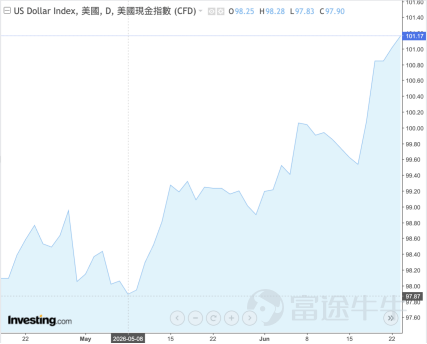
Kevin Warsh assumed office as Federal Reserve Chair in May 2026, and his advocacy for interest rate cuts combined with balance sheet reduction began driving the U.S. Dollar Index significantly higher, reaching 101.17 on June 23—the highest level in nearly a year.
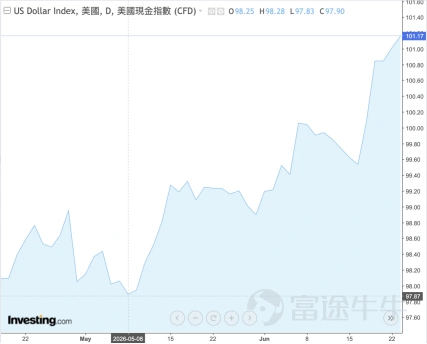
Figure 1: Daily U.S. Dollar Index, Source: Investing
The Secured Overnight Financing Rate (SOFR) in the U.S. has been notably higher than the Effective Federal Funds Rate (EFFR) over the past two months, indicating tightening liquidity in the banking system. Normally, SOFR—which reflects the rate for borrowing cash collateralized by Treasury securities—should be lower than the unsecured EFFR. The current inversion clearly signals weakened market liquidity.
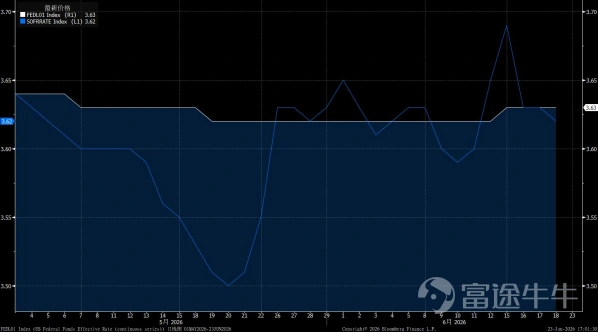
Figure 2: U.S. SOFR and Effective Federal Funds Rate, Source: Bloomberg
01
Capital markets are exhibiting a K-shaped divergence.
As liquidity tightens, the market has shown a clear K-shaped split: on one side, AI- and memory-related stocks repeatedly hit new highs; on the other, assets such as gold, oil, and Treasuries remain persistently weak. The chart below illustrates the performance of various asset classes since April this year.
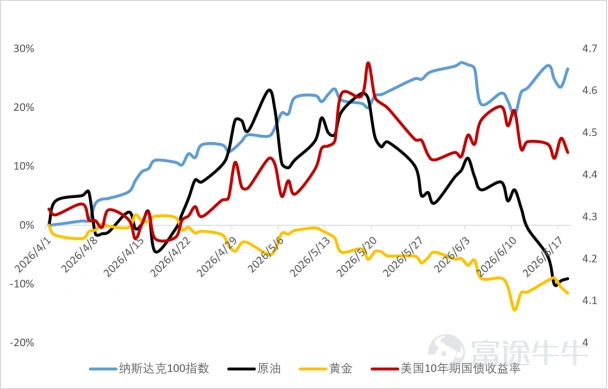
Figure 3: Performance of Various Asset Classes Since April This Year, Source: Bloomberg (Treasury yields shown on right axis)
Gold has entered a bear market. As of June 23, spot gold traded at USD 4,110 per ounce, down USD 1,300 from its peak of USD 5,400. Goldman Sachs, which had consistently maintained a bullish stance on gold, recently released a research report slashing its 2026 gold price target from USD 5,400 to USD 4,900 per ounce.
Crude oil prices have entered a downtrend amid expectations of an end to U.S.-Iran tensions. On April 7, the U.S. and Iran reached a two-week ceasefire agreement in Islamabad, with Iran confirming it would reopen the Strait of Hormuz. Oil prices began retreating from their high of USD 112 per barrel. Although negotiations between the two sides experienced repeated setbacks and twists, they ultimately announced a deal on June 22. Crude prices are likely to decline further.
Kevin Warsh’s monetary policy framework centers on rate cuts alongside balance sheet reduction. However, given persistently elevated near-term inflation in the U.S. (May CPI at 4.2%) and the relatively hawkish statement issued after the Federal Reserve’s June 17 policy meeting, the probability of further rate hikes this year has risen sharply. The 10-year U.S. Treasury yield could move higher from its current level of 4.5%.
The only area showing real excitement is the stock market. The KOSPI has surged 99% in six months, the Philadelphia Semiconductor Index has risen 103%, and the Nikkei 225 has climbed 38% over the same period. In contrast, the S&P 500 has only gained 8.15%; excluding tech stocks, its increase drops to just 2.1%. Thus, we can go even further and say that the only real buzz centers on AI-related stocks. The KOSPI’s rally is entirely driven by Samsung and SK, whose combined market capitalization accounts for 50% of South Korea’s total equity market. In Japan, Kioxia has been the key driver behind the market’s rise—its shares have soared 3,513% over the past year, giving it a market cap now surpassing Toyota to become Japan’s most valuable company, with a price-to-earnings ratio of 91x. This surge is also fueled by AI-related sentiment, as Kioxia’s flash memory chips are in short supply.
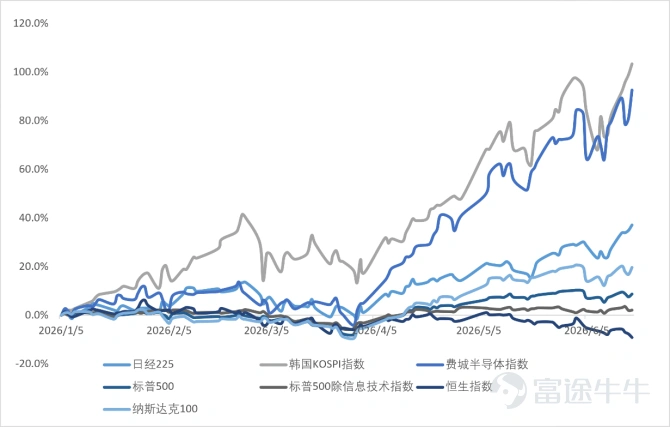
Figure 4: Year-to-date cumulative returns of major global stock indices in 2026. Source: Compiled from public data
What most people see is the hype around AI—the potential for AI to transform the world and reshape humanity. What I see is that capital never sleeps, and cycles never end.
02
Historical cycles
Without going too far back, let me illustrate with something I personally experienced. In 2003, I worked at an investment bank, covering the LCD panel industry. Although LCD technology was first developed in the U.S. in 1968, Japan later became the dominant force in this sector. Companies like Seiko Epson and Sharp held leading positions, and by 1994, Japan commanded a staggering 94% share of the global panel market. Seeing Japan’s success, South Korea attempted to replicate its path. Korean conglomerates—including Samsung, LG, and Hyundai—began aggressively catching up. By 1997, Korean firms had successfully taken market share from their Japanese rivals. In 1999, Samsung topped the global flat-panel display market with an 18.8% share, followed closely by LG at 16.2%, overtaking Sharp, which had dominated the rankings for years. Korean companies were truly riding high.
At that time, LCD panel technology evolved extremely rapidly—similar to today’s graphics cards and large AI models—with new generations released every three to six months. Screens kept getting larger and thinner, while color resolution continuously improved. Each new generation required investments in the tens of billions of dollars. Korea had already reached Gen 6, while China was still at Gen 3. My role in Korea back then was to help Chinese firms acquire Gen 4 production lines that Korean companies had phased out.
By 2007, the market logic shifted dramatically in ways no one had anticipated—not due to technological obsolescence or competitive pressure, but because of the iPhone’s launch. The advent of smartphones changed consumer behavior: people stopped prioritizing ever-larger, ultra-thin TVs and instead focused on small mobile screens. Since smartphone displays only required Gen 4 technology, why invest heavily in newer generations? This subtle shift in user habits rendered Korea’s massive prior investments worthless. China then surged ahead, relentlessly driving down prices until it ultimately replaced Korea as the industry leader. That was the first sectoral bubble I witnessed firsthand.
Around 2007, capital flowed heavily into the U.S. housing market, fueling strong demand for mortgage-backed securities (MBS)—the instruments that later triggered the financial crisis. As everyone knows, the crisis eventually erupted. In its aftermath, investors rotated into consumer staples, seen as a highly defensive sector. During the financial crisis, when the S&P 500 plummeted roughly 37%, the consumer staples sector declined only about 14% to 15.4% for the year, making it the most resilient—and best-performing—sector under such extreme conditions.
In 2015, capital once again concentrated in the internet sector. Apple’s market cap reached $683.4 billion, making it the largest component by weight in the index. The Nasdaq Composite hit a then-record high of 5,231.94 points in July 2015, surpassing its previous peak from the 2000 dot-com bubble era.
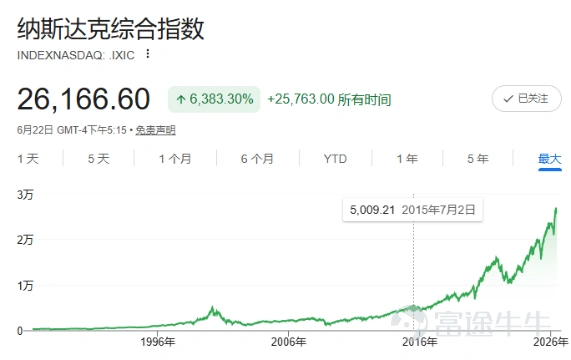
Figure 5: The Nasdaq index reclaimed its 2000 bubble-era record in 2015. Source: Google
Starting in 2020, offline consumption slumped due to the pandemic, and capital flowed into vaccine and biotech companies such as Pfizer and Moderna. After ChatGPT’s launch in 2022, funds shifted toward tech stocks led by AI.
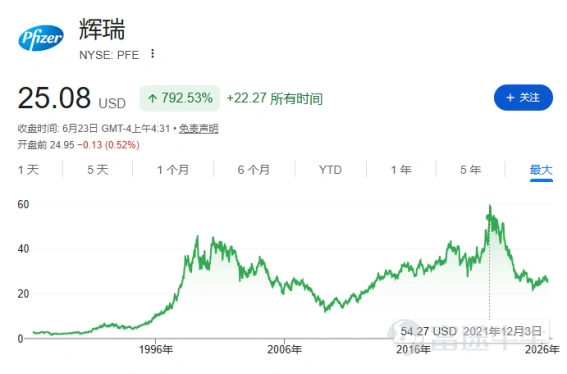
Figure 6: Pfizer's stock price hit a record high in 2021. Source: Google
The same pattern occurred on the Chinese mainland, albeit with its own independent market dynamics. During the China-U.S. trade war, consumer stocks were the hottest in 2018 for the same underlying reason as in the U.S.—their inelastic demand made them safe-haven assets. Kweichow Moutai was the standout performer during that cycle.
As China aggressively addressed industries where it had been constrained by U.S. technological restrictions, market confidence grew. With the consumer stock cycle fading, investors began chasing tech shares centered on 'new quality productive forces.' Stocks like CATL and BYD performed exceptionally well. As competition between China and the U.S. in AI intensified, both markets simultaneously focused on AI-related sectors. Shares of companies such as Lianxun Instruments, Yuanjie Technology, Cambricon, and Zhongji Xuchuang outperformed Kweichow Moutai, becoming the new darlings of the market.
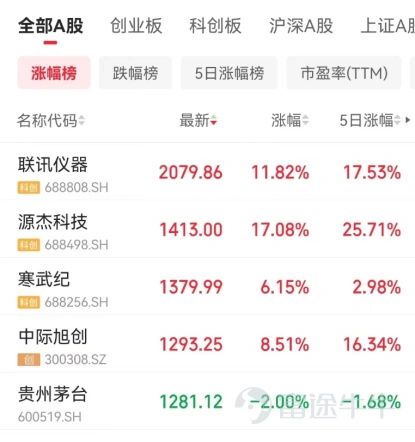
Figure 7: Kweichow Moutai is no longer the top stock in the A-share market. Source: Tonghuashun
Each market hotspot draws in capital, and every cycle typically lasts about two to three years. After two years, investors take profits and exit, causing bubbles to burst, and capital then flows into new sectors. The current AI boom follows the same pattern—once this wave ends around 2025 or 2026, where will the money go next?
Looking back, when Kuaishou listed in Hong Kong in 2021, it reported revenue of RMB 81 billion but a loss of RMB 78 billion, yet its market cap reached HKD 2 trillion. Today, Kuaishou’s revenue has grown to RMB 140 billion with a profit of RMB 20 billion, yet its market value has plummeted to just HKD 200 billion—a 90% drop. I notice many current AI-related stocks show a similar pattern: minimal revenue but market caps reaching hundreds of billions, even trillions.
These bubbles don’t appear out of thin air. Fundamentally, when industries like short-video platforms and AI first emerged, there were no established valuation frameworks, yet these companies genuinely held disruptive potential. Amid immense allure and uncertain prospects, bubbles naturally formed. The current AI and commercial space sectors are no different—no one can accurately forecast future AI revenues, yet these technologies could profoundly reshape society. Such bubbles are unavoidable; as actual financial results materialize over time, the froth will gradually dissipate. Just as during the dot-com bubble in the U.S., numerous internet companies collapsed, while a few—like Google and Amazon—survived and grew into giants. Investors shouldn’t gamble on holding the next Google or Amazon; instead, they should focus on steadily growing their portfolios.
03
The Mission of Family Offices
Emotionally, I certainly hope AI will bring revolutionary changes to humanity. From an investment standpoint, Delin is also actively embracing the future.But embracing the future doesn’t mean chasing hot trends; what truly matters is recognizing underlying trends and implementing sound asset allocation.
In every market wave, you must never concentrate all your bets in one place. In 2007, you shouldn’t have put everything into real estate; in 2015, not all into internet stocks; and today, not all into AI. Hype inevitably cools down, and booms eventually fade. Only after the feast ends and calm returns does true value reveal itself.
Currently, vast amounts of capital are flooding into the AI sector—into AI-related stocks such as NVIDIA, SpaceX, Anthropic, Zhipu AI, Minimax, and DeepSeek. The real market risk doesn’t lie in technical details or market share—it emerges precisely where no one is paying attention, potentially even reshaping the entire market’s logic. Just as the iPhone’s emergence changed how people watched television—not because TV screens degraded or competitors stole market share, but because the entire consumption paradigm shifted.
Cycles are eternal—every technological advancement will eventually be superseded by newer breakthroughs. Embracing the future is certainly correct, but what’s more crucial is choosing the right path toward that future and positioning yourself ahead of the next cycle.
04
Summary
1. Recently, asset performance has diverged: equities have performed strongly, while other assets—including bonds, gold, and crude oil—have declined.
2. The stock market’s performance has been primarily driven by technology stocks, especially leaders in AI and memory storage. Significant capital is crowding into these popular sectors.
3. Historically, capital tends to rotate across different sectors, and cycles always persist. This current equity rally is yet another manifestation of such a cycle.
4. True value lies not in chasing hot trends, but in discerning macro-level directional trends and achieving steady wealth appreciation through a long-term perspective.
Author Bio:
Ningdi Chen, a graduate of the University of Chicago with an Honors Bachelor's degree in Economics and Statistics, has over 26 years of experience in the global financial industry. He founded Delin Securities and Delin Family Office and was previously a licensed responsible person for Type 1, 4, and 6 licenses granted by the Hong Kong Securities and Futures Commission. He currently serves as Chairman of the Board, Executive Director, and Chief Executive Officer of Delin Holdings Group, Vice President of the Hong Kong Limited Partnership Fund Association, and authored 'The Era of Wealth Transformation: Discovering Counter-Cyclical Survival Wisdom.'
Disclaimer
This article is for reference purposes only. Investors should base their investment decisions solely on information disclosed in the company's official announcements.
The information and materials provided on this platform, including text, graphics, links, or other items sourced from third-party information terminals, are for general reference only. Under no circumstances shall the information published on this platform constitute investment advice.
No person may reproduce or republish any content without authorization from this official account.
Content shared via WeChat is for reference only and is the property of DL Holdings and its respective content providers. For the full disclaimer, please visit DL Holdings’ official website: https://www.dl-holdings.com/
Risk Disclaimer: The above content only represents the author's view. It does not represent any position or investment advice of Futu. Futu makes no representation or warranty.Read more

Comments
to post a comment
3