
English
Back
Open Account
AceCamp本营
wrote a column · Jun 11 11:59

Another new space sector entirely absent from SpaceX's IPO filing—what exactly is Project Starfall?

The content herein represents personal opinions only, shared for discussion purposes and not as a basis for investment decisions. Please assume all risks yourself.
I. Source of Intelligence and Overview
While the market has been closely watching the Starship launch payloads and Starlink business progress disclosed in SpaceX’s IPO prospectus, a project named 'Starfall' did not appear at all in its publicly filed S-1 document. The project had previously remained confidential within the commercial space industry and media coverage. It was not until late May 2026 that the U.S. Federal Aviation Administration’s (FAA) Office of Commercial Space Transportation officially released the 'Final Environmental Assessment for SpaceX Starfall Reentry Vehicle Operations in the Pacific Ocean' and the Record of Decision, thereby publicly revealing—for the first time—the design parameters and commercial validation process of this new product line.
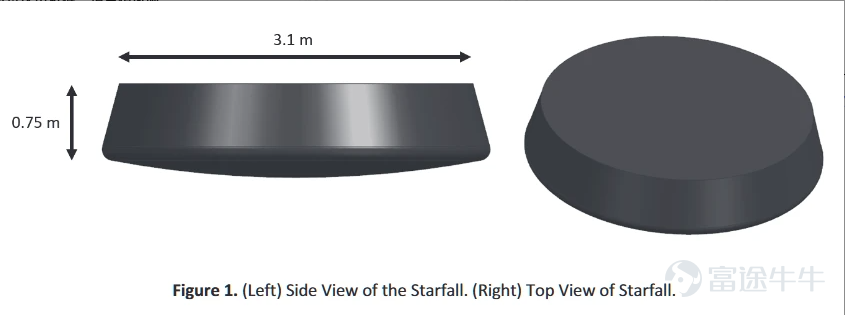
The content herein represents personal opinions only, shared for discussion purposes and not as a basis for investment decisions. Please assume all risks yourself. I. Source of Intelligence and Overview While the market has been closely watching the Starship launch payloads and Starlink business progress disclosed in SpaceX’s IPO prospectus, a project named 'Starfall' did not appear at all in its publicly filed S-1 document. The project had previously remained confidential within the commercial space industry and media coverage. It was not until late May 2026 that the U.S. Federal Aviation Administration’s (FAA) Office of Commercial Space Transportation officially released the 'Final Environmental Assessment for SpaceX Starfall Reentry Vehicle Operations in the Pacific Ocean' and the Record of Decision, thereby publicly revealing—for the first time—the design parameters and commercial validation process of this new product line. The above image is Figure 1 from an FAA report, depicting the basic shape and dimensional parameters of the Starfall vehicle (re-entry vehicle). The main focus of the report is a comprehensive analysis of the vehicle’s atmospheric re-entry and recovery process...
The image above is Figure 1 from the FAA report, illustrating the basic shape and dimensional parameters of the Starfall vehicle (reentry vehicle). The report primarily assesses the safety and environmental impact of the vehicle’s atmospheric reentry and recovery process. While it does not provide a systematic explanation of the product itself, it nonetheless offers substantial reliable intelligence about the Starfall project.
Project positioning and commercial objectives: The project serves a dual validation purpose—'low-Earth-orbit microgravity space manufacturing (including high-value products such as pharmaceuticals and semiconductor substrates)' and 'high-precision point-to-point cargo return to Earth.' Bloomberg first reported the program’s 'in-space manufacturing' background in July 2025, while the latest FAA filings have established its commercial rationale for returning physical cargo to Earth with high precision.
Physical form and dimensions: The Starfall spacecraft features a disk-shaped or cylindrical structure. Its physical dimensions are: height of 0.75 meters and top diameter of 3.1 meters. This design is highly optimized for stacking multiple units flatly within a launch vehicle’s payload fairing, enabling multi-layer, high-volume deployment.
Structural segmentation and mass: The spacecraft has a total mass of an impressive 2,500 kg, including a payload bay capable of carrying up to 1,000 kg of net payload. The core mechanical structure consists primarily of two components: a top plate and a heat shield located at the base.
Cargo bay volume and payload capacity: The spacecraft houses a dedicated internal cargo bay measuring 2.5 x 1.5 x 0.5 meters. Its maximum designed downmass capability (Return Payload Mass) reaches 1,000 kilograms, intended to safely return orbitally manufactured products to the ground.
Propulsion system characteristics: The capsule itself lacks any primary propulsion system, meaning it cannot perform deorbit maneuvers from low Earth orbit under its own power. It is equipped only with cold-gas thrusters for fine attitude adjustments and descent trajectory control before, during, and after atmospheric reentry.
Communications and telemetry assurance: The spacecraft’s exterior integrates two Starlink phased-array antenna terminals. During atmospheric reentry—when conventional communications suffer from plasma-induced 'blackout'—Starfall leverages the dense, in-orbit constellation of 9,600 Starlink satellites to maintain continuous, high-bandwidth, two-way telemetry, tracking, and control.
Launch vehicle and ride-share configuration: Designed for modular mass production, the Starfall spacecraft is not launched as a primary payload. Instead, it flies as a secondary or rideshare payload aboard Falcon 9 or Starship, reaching low Earth orbit (LEO) or executing suborbital missions.
Unpowered reentry mechanism: When mounted on the Falcon 9 second stage, Starfall consumes no additional deorbit propellant. After the second stage completes its reentry burn and descends to a peak altitude of 500 kilometers, it mechanically deploys Starfall. Leveraging the inertia imparted by the second stage and an extremely low perigee, Starfall rapidly enters the atmosphere within a single orbital period.
Deceleration and landing method: Following atmospheric reentry, the spacecraft decelerates aerodynamically and deploys a parachute system comprising a drogue chute, a pilot chute, and a single main parachute for further deceleration. Heat shield jettison and splashdown: Just before final ocean splashdown, the base-mounted heat shield is mechanically jettisoned to mitigate water-impact forces. The spacecraft ultimately splashes down in international waters of the Pacific Ocean approximately 1,300 kilometers off the coasts of California and Mexico. SpaceX will dispatch a dedicated recovery vessel to retrieve all components—including the heat shield—from the sea.
Environmental review allowance and planning: The final environmental assessment report approved in May 2026 granted a Finding of No Significant Impact (FONSI), authorizing the first two experimental reentry flights. However, application documents also reveal that SpaceX is seeking to amend its current license, with a long-term goal of conducting up to 10 annual Starfall cargo recovery reentry missions in the Pacific Ocean.
II. Decoding Starfall’s Vehicle Functionality and Design Logic
Starfall’s overall design is exceptionally minimalist—so much so that it borders on extreme restraint. Its core objective is not difficult to deduce: driving marginal costs down to the absolute minimum. Specifically, we can interpret its form and structure through the following three key business and engineering principles:
(1) 'Flattened' Disc Shape: Inheriting Starlink’s Stackable DNA
Most traditional spacecraft adopt a 'tall capsule' or 'conical' shape, but Starfall is strikingly different. It stands only 0.75 meters tall yet spans 3.1 meters in diameter. This extremely flat disc-like profile is highly unusual among atmospheric re-entry vehicles. The flattened design clearly carries 'Starlink-style DNA,' enabling Starfall to be vertically stacked in multiple layers inside a rocket fairing—just like Starlink’s flat-panel satellites. Moreover, this feature allows it to be directly integrated onto Starlink’s standard satellite platform in the future or ride as a secondary payload on Starlink launches, effectively 'carpooling' into orbit. It requires no dedicated launch vehicle, thereby minimizing logistics-related launch costs at the physical layer.
(2) Integrated Starlink Antennas: Eliminating Re-Entry Blackout for Precision Recovery
Two integrated Starlink phased-array antennas on the vehicle’s surface represent another critical technological enabler for Starfall’s high-density, low-cost operations. Traditional spacecraft experience a 'blackout' period lasting several minutes during atmospheric re-entry, during which communication with ground stations is lost due to plasma generated by intense surface friction. Starfall, however, leverages the network of nearly 10,000 Starlink satellites overhead, allowing electromagnetic signals to pass through the thinner wake region of the vehicle. This enables real-time, high-bandwidth telemetry throughout the entire descent phase. As a result, ground teams can continuously monitor the condition of high-value cargo inside the capsule, significantly improving splashdown accuracy. Recovery vessels can conduct 'precision retrieval,' drastically reducing time spent searching at sea and lowering operational costs.
(3) Elimination of Primary Propulsion System: Offloading Critical Cost and Mass
Starfall completely omits the liquid rocket engines and high-pressure propellant tanks typically found in conventional spacecraft, retaining only cold-gas thrusters for attitude control. The capsule itself lacks the capability to actively decelerate from a circular orbit and initiate atmospheric re-entry; instead, it delegates this fuel-intensive task entirely to the second stage of Falcon 9 (or Starship)—and, in the author’s estimation, will eventually be adapted to fly aboard flat-panel, Starlink-like carrier vehicles. By eliminating complex propulsion systems and toxic propellants, the vehicle not only achieves substantial reductions in manufacturing and maintenance costs but also, within a total mass cap of 2,500 kilograms, carves out an impressive 1,000 kilograms of net return payload capacity.
III. The New Space Economy: In-Space Manufacturing in Low Earth Orbit
Like Apple, SpaceX is rarely the first entrant into any given market segment. Even its dominant Starlink project followed earlier attempts at non-geostationary broadband internet services—such as O3b Networks, which aimed to serve the 'Other 3 Billion,' as well as the pioneering Teledesic and OneWeb, which later competed head-to-head with SpaceX. Yet SpaceX consistently leverages unmatched cost advantages and deep vertical integration to overtake competitors and ultimately dominate every sector it enters.
Returning to the Starfall project, the replication of this business model is strikingly evident. Microgravity manufacturing in space was not invented by SpaceX—Varda Space has already demonstrated the physical feasibility of space-based pharmaceutical production. They successfully crystallized small-molecule drugs (such as ritonavir) onboard a miniature reentry capsule in orbit. In microgravity environments, convection and sedimentation nearly vanish, allowing protein crystals and drug molecules to grow with exceptional uniformity, free from the gravity-induced stratification effects seen on Earth. Moreover, microgravity can also be leveraged for ultra-high-purity material manufacturing—such as semiconductor substrate materials (e.g., third-generation optoelectronic crystals) and high-performance optical fibers—enabling perfect atomic-level alignment without the defects caused by terrestrial gravity.
The value of microgravity for specific high-value manufacturing processes has long been widely recognized. However, extremely high per-unit costs and severe scalability constraints have historically been the biggest barriers to space-based manufacturing. Consequently, companies like Varda that are currently pursuing or planning space manufacturing initiatives are often confined to cutting-edge 'laboratory-scale' operations and cannot yet achieve industrial-scale mass production.
SpaceX’s ambition clearly extends beyond laboratory experiments—it likely aims to build a genuine low-Earth-orbit industrial park.
In SpaceX’s recently filed S-1 registration statement (pages 6, 7, and 10), significant emphasis was placed on its deep collaboration with Tesla and Intel on the Terafab chip manufacturing and advanced hardware strategic roadmap. When viewed alongside Starfall’s one-ton downmass capacity, a comprehensive closed-loop space industrial ecosystem becomes clearly visible:
For SpaceX, leveraging its monopolistic launch capabilities, its existing Starlink communications network, and the Starfall return capsules specifically engineered for batch stacking, it has—for the first time—driven the logistics cost of low-Earth-orbit cargo transport below the critical threshold required for positive economic returns. Starfall features an internal cargo bay measuring 2.5 x 1.5 x 0.5 meters and a payload capacity of one metric ton, enabling it to deliver high-quality wafers or entire crates of ultra-pure pharmaceutical crystals—manufactured in microgravity—to terrestrial markets at scale. Semiconductor substrates and optoelectronic crystals grown in space-based microgravity achieve near-perfect atomic alignment, virtually eliminating lattice defects caused by gravity-driven convection on Earth. This ultra-high-purity physical property will confer an absolute, insurmountable physical advantage in next-generation high-performance chip manufacturing—one that ground-based competitors cannot replicate regardless of process optimization.
In the longer-term industrial evolution, Starlink V3 and its future derivative platforms could very well transcend their original communications function and evolve into 'automated micro-factories' in orbit. Fully automated semiconductor or pharmaceutical processing could occur in space, with finished products accumulated and packaged on-orbit before being deorbited via attached Starfall vehicles at the push of a button. This integrated hardware-software architecture not only serves the immediate low-Earth-orbit market but also aligns precisely with Elon Musk’s recent vision: the ultimate form of the future space industry will include lunar manufacturing and lunar electromagnetic launch systems. The foundational technical pathways and engineering experience for high-value semiconductor production in microgravity or lunar low-gravity environments are already undergoing substantive iteration today through the Starfall project in low Earth orbit. This is the moat SpaceX is quietly constructing—with physical hardware beyond mere words in its prospectus—to dominate the tangible space economy for decades to come.
IV. Conclusion
In summary, Starfall’s understated appearance in the FAA’s environmental review report reveals that SpaceX is quietly completing the final piece of its physical closed-loop puzzle within its vast low-Earth-orbit empire. This initiative, deliberately obscured in the latest prospectus, may carry strategic weight comparable to that of Starship or Starlink themselves.
Based on current evidence, SpaceX’s expansion trajectory follows a clear and highly feasible logic: initially leveraging the military’s rigid demand and stable budget for global point-to-point precision delivery to provide a solid financial cushion for Starfall’s early-stage technical iteration and engineering validation; in the medium term, capitalizing on its absolute monopoly in launch costs and space-based communications to break through the historically prohibitive logistics cost barrier of space manufacturing, thereby delivering ultra-pure semiconductor wafers and high-value pharmaceutical crystals to terrestrial markets at scale; and in the long run, potentially integrating orbital AI compute satellites’ digital capabilities with physically manufactured microgravity products in a seamless fusion.
This is not a peripheral business that will generate explosive short-term financial gains, but rather a quintessential SpaceX-style 'late-mover dominance' strategy. It once again demonstrates to capital markets that while competitors are still debating isolated possibilities for low-Earth-orbit commercialization, SpaceX is already deploying its irreplicable vertically integrated physical stack to monopolize the entire extraterrestrial industrial ecosystem. The future trajectory of Starfall deserves sustained attention from every investor focused on the long-term landscape of commercial spaceflight.
The author has long tracked the latest developments in global commercial spaceflight, frontier technologies, and hardcore supply chains. If you are interested in the long-term capital dynamics of commercial space, or the trillion-dollar emerging赛道 of integrated digital and physical low-Earth-orbit assets, please follow me for ongoing insights. I will periodically share exclusive industry perspectives combining high information density with deep analytical rigor, as we together witness the dawn of humanity’s tangible space-based industrial era.
Risk Disclaimer: The above content only represents the author's view. It does not represent any position or investment advice of Futu. Futu makes no representation or warranty.Read more
Thumbs Up
2
137K Views
Report
Comments
Write a Comment...
2