
English
Back
Open Account
吴说
wrote a column · Jun 1 19:10

CZ in Conversation with Cathie Wood: Bitcoin May Have Passed Its Worst Phase; Stablecoin Competition Will Remain Intense in the Short Term

Author | ARK Invest Translated by | Wu Blockchain In this episode of the ARK Invest podcast, Cathie Wood interviews CZ, founder of Binance, reviewing his entrepreneurial journey from China and Canada to Tokyo, New York, and Shanghai, followed by the founding of Binance in 2017, and also discussing the controversial flash crash on November 10 (1011). Regarding Binance’s founding and personal experiences, CZ stated that Binance has maintained its long-term leadership primarily through user protection, global expansion, low-cost operations, liquidity network effects, and accumulated trust. On industry trends, he noted that progress in crypto payments has been slower than expected, but institutional adoption, stablecoin expansion, tokenization of real-world assets (RWA), and the onboarding of traditional assets like gold and oil onto blockchains have progressed faster than anticipated. CZ also mentioned that AI agents will drive growth in on-chain trading, stablecoin competition will intensify, non-USD stablecoins face constraints due to regulatory costs and limited banking support, and while quantum computing warrants attention, it can be addressed by upgrading to quantum-resistant cryptographic solutions. Finally, the discussion turned to Bitcoin cycles, with CZ suggesting that although 2026 may be influenced by the four-year cycle, institutional capital flows, ETFs, equity market performance, and the macroeconomic environment could make this correction different from previous ones. The views expressed by the guest speaker do not represent the opinions of Wu Talk and should not be considered as investment advice. Please strictly adhere to local laws and regulations. Audio transcription and translation were completed by GPT and may contain errors. CZ's upbringing...
Author | ARK Invest
Translated by | Wu Blockchain
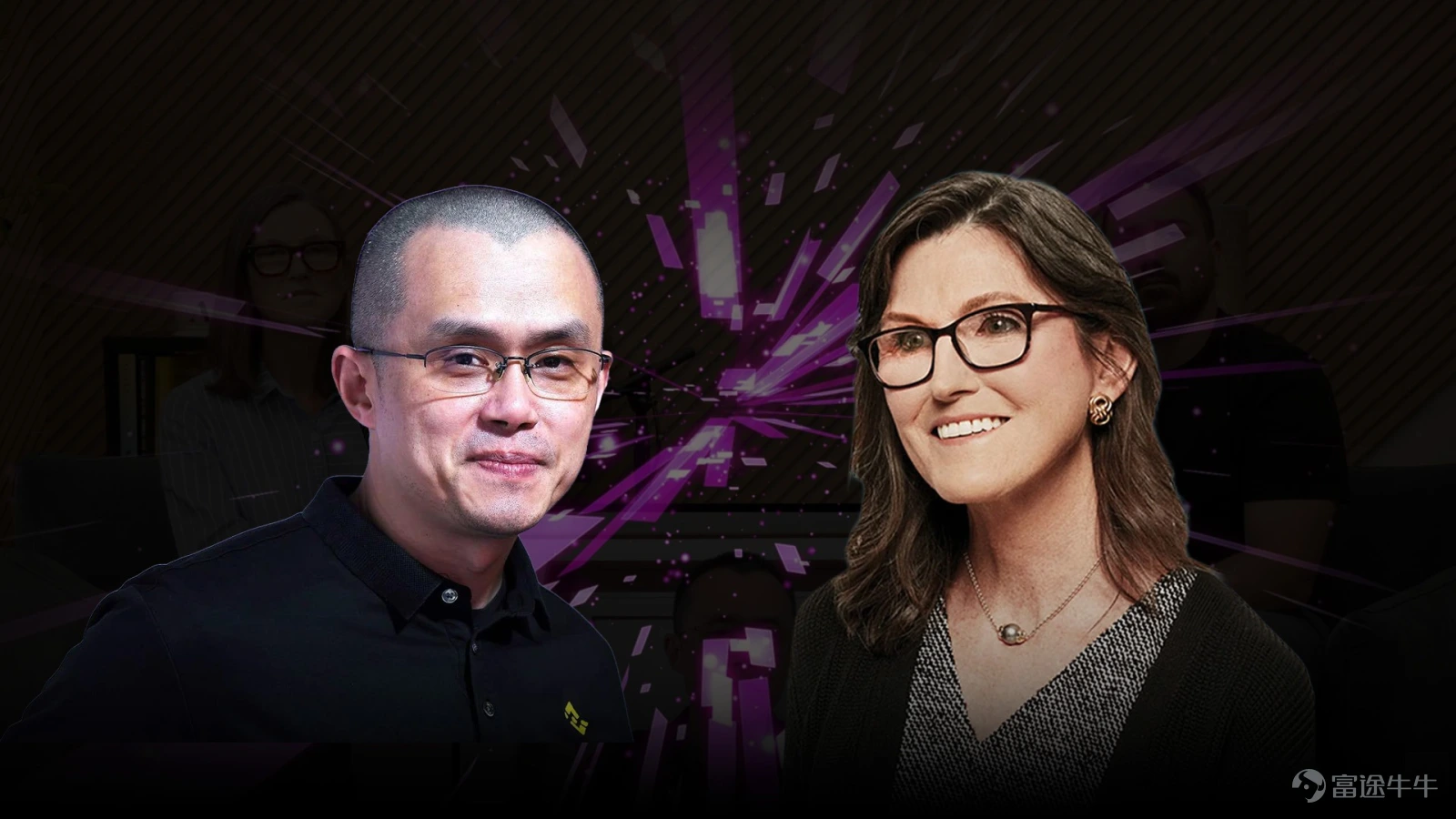
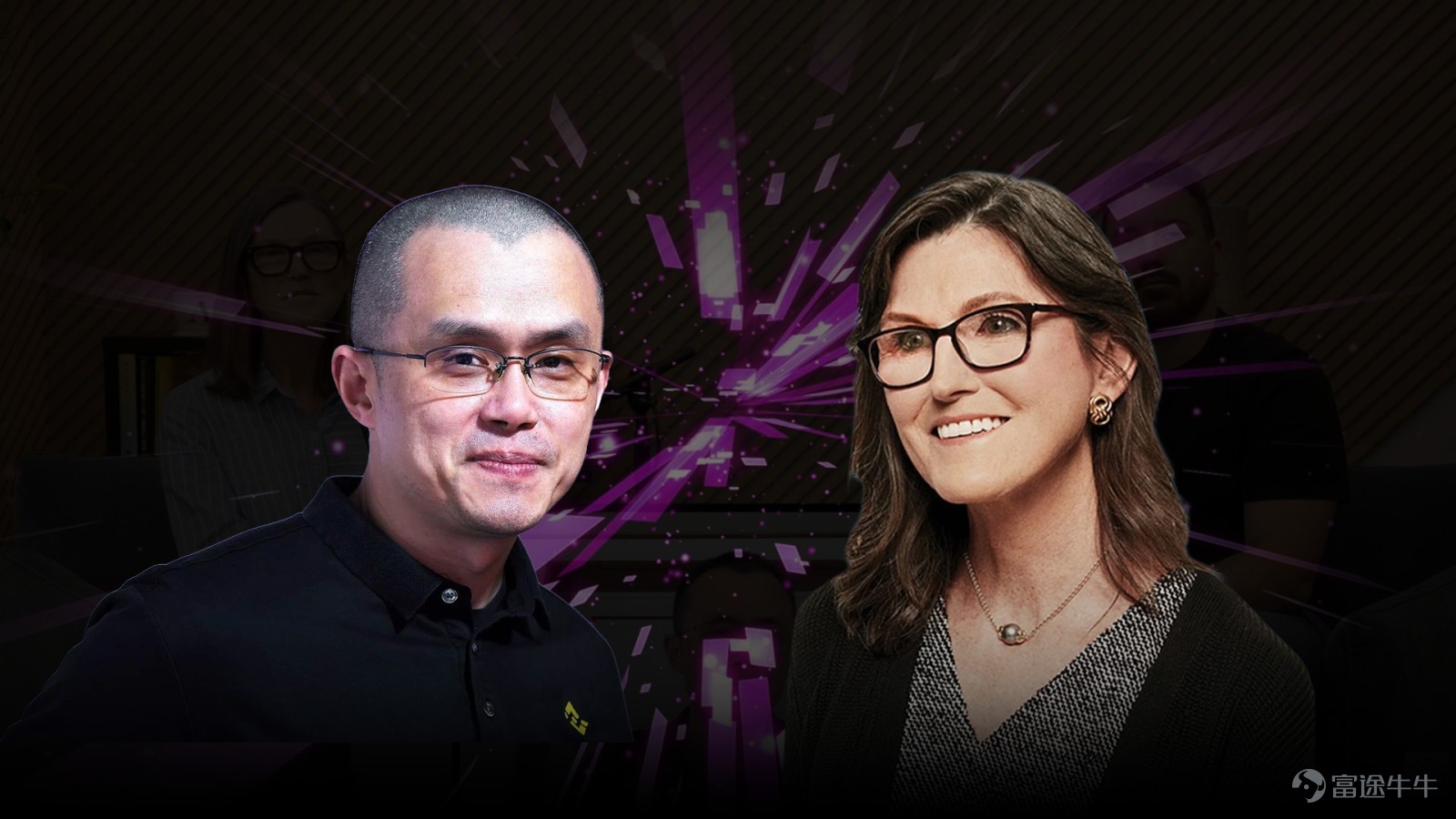
In this episode of the ARK Invest podcast, Cathie Wood interviews CZ, founder of Binance, reviewing his entrepreneurial journey from China and Canada to Tokyo, New York, and Shanghai, followed by the founding of Binance in 2017, and also discussing the controversial flash crash on November 10 (1011).
Regarding Binance’s founding and personal experiences, CZ stated that Binance has maintained its long-term leadership primarily through user protection, global expansion, low-cost operations, liquidity network effects, and accumulated trust. On industry trends, he noted that progress in crypto payments has been slower than expected, but institutional adoption, stablecoin expansion, tokenization of real-world assets (RWA), and the onboarding of traditional assets like gold and oil onto blockchains have progressed faster than anticipated. CZ also mentioned that AI agents will drive growth in on-chain trading, stablecoin competition will intensify, non-USD stablecoins face constraints due to regulatory costs and limited banking support, and while quantum computing warrants attention, it can be addressed by upgrading to quantum-resistant cryptographic solutions.
Finally, the discussion turned to the Bitcoin cycle. CZ believes that although 2026 may be influenced by the four-year cycle, institutional capital, ETFs, stock market performance, and the macro environment could make this adjustment phase different from previous ones.
The views expressed by the guest speaker do not represent the opinions of Wu Talk and should not be considered as investment advice. Please strictly adhere to local laws and regulations. Audio transcription and translation were completed by GPT and may contain errors.
CZ’s Background and the Founding of Binance
Lerenzo: CZ, could you take a few minutes to briefly walk us through your early experiences and your journey before founding Binance?
CZ: I was born in China and later moved to Hefei. At age twelve, I immigrated to Canada, where I spent most of my teenage years. In my youth, I played a lot of volleyball. My academic performance was strong in my final two years of high school, which helped me get into university. I then went on to study in Montreal.
After graduation, I worked in Tokyo for a few years before moving to New York, where I served as a development engineer at Bloomberg for four years. I gradually advanced to lead a team that grew from about sixty to roughly eighty people.
In 2005, I returned to Shanghai to start a fintech venture, which I ran until 2013. That year, I encountered Bitcoin and immediately found it fascinating. I decided to go all-in, left my previous company, and began exploring various roles within the Bitcoin and crypto industry.
By 2017, I felt the timing was right, so I founded Binance. Looking back now, there was certainly an element of luck involved. At the time, most exchanges were primarily Bitcoin-focused and didn’t support Ethereum-based ERC-20 tokens. As a new platform, Binance launched its own token, BNB, which was initially an ERC-20 token—naturally enabling us to support most ERC-20 assets from the outset.
Binance grew rapidly. We invested heavily in user protection, server performance, matching speed, and security. Just five months after launch, Binance became the world’s largest cryptocurrency exchange by trading volume—a position we’ve largely maintained for about eight years now.
Since then, we’ve navigated multiple market cycles and bear markets. Around 2023, our case with the U.S. Department of Justice entered the resolution phase. Personally, I pleaded guilty to a charge related to the Bank Secrecy Act, and Binance took corresponding actions. Ultimately, I received a four-month prison sentence, and Binance paid a $4 billion fine.
Now, I primarily spend my time supporting entrepreneurs through YZi Labs, making investments, and advancing Giggle Academy. I remain active in the industry and continue engaging with the community on X. That’s roughly my story.
Cathie: A more complete account of your journey is detailed in your recently published book, 'Monetary Freedom.' Readers can gain a fuller understanding of your story through this book.
CZ: Yes, the book was just released seven days ago.
Cathie: You're still actively involved in crypto—it remains your passion. At the same time, you've started exploring other areas, many of which overlap with ARK’s focus areas, such as multi-omics and robotics. I’m also glad to see you allocating capital to these fields, as they’ve long suffered from pricing inefficiencies, especially in public markets. Opportunities are now emerging rapidly, and these companies truly need more investors to support their growth.
CZ: I completely agree. For me, transitioning from entrepreneur and builder to investor is still very much a learning process. You have extensive experience in this area, and I feel there’s a lot I can learn from you.
AI, stablecoins, and asset tokenization are accelerating the transformation of the Web3 landscape
Lerenzo: You’ve been in this industry for over a decade. Looking back now, what developments have progressed more slowly than you expected, and which ones faster?
CZ: Quite a few things turned out differently from my original expectations.
I originally thought crypto payments would already be widely adopted by now, but that hasn’t actually happened. Although crypto cards exist and many people use them, merchants don’t even realize they’re crypto cards—they just see Visa or Mastercard. Users can pay with cryptocurrency, but the front-end experience doesn’t reflect that crypto payments have achieved large-scale adoption.
Another surprise for me was how quickly institutions entered the crypto space, especially the shift we’ve seen in the U.S. market over the past year. A year and a half ago, I still felt the U.S. was broadly anti-crypto, but then a clear pivot occurred, which really caught me off guard.
But I also believe that precisely because of the restrictive policies over the past few years, the crypto industry didn’t see particularly strong innovation during the last cycle. Many builders were sued, and lots of people shifted toward meme coins instead—genuinely useful applications didn’t emerge at scale.
So I think the current situation resembles more of a lack of innovation at the application layer. I hope that as the U.S. regulatory environment shifts toward support, we’ll see more genuinely useful applications being built.
Cathie: One thing that really caught us off guard was the rise of stablecoins. Now, with the AI boom underway, we’re also seeing a trend driven jointly by AI and stablecoins. Do you think AI could become a key catalyst for a new wave of innovation recovery?
CZ: Absolutely.
First, AI agents will trade far more frequently than humans, and they’re more likely to use cryptocurrencies for transactions rather than SWIFT or Visa cards.
Second, AI will significantly accelerate development speed, helping the industry build applications faster, create wallets that are easier to use and more secure, and develop faster blockchains. So AI will drive progress on both the application and R&D fronts simultaneously.
Additionally, stablecoins were another area I didn’t anticipate would grow so large back then. Initially, we all thought it was just a transitional tool, but its scale has far exceeded expectations.
There are also some other interesting developments—for example, gold and crude oil have started trading actively on crypto exchanges. This shows that traditional assets and crypto trading platforms are accelerating their convergence, and directions like tokenized stocks are also growing rapidly.
Cathie: Why do you think these trends are developing so quickly? Is it because Larry had long ago proposed that ‘all assets will be tokenized,’ prompting traditional finance to finally take serious action?
CZ: I think Larry’s influence is indeed enormous. He has significant sway not only over traditional financial institutions but also over national leaders. When the CEO of BlackRock speaks, the entire market pays close attention.
At the same time, he truly is very forward-looking—he foresaw the trend of asset tokenization well in advance. I believe we’re now witnessing an accelerated convergence between traditional finance and the crypto industry. They’ve always been part of the same industry—just using different technologies.
Additionally, Binance now has 320 million users, and these users genuinely have demand for trading traditional assets. Coupled with the shortage of high-quality assets in the crypto market, once tokenized assets become accessible to global crypto investors—even something as basic as gold—people will trade them.
So I think this is driven both by timing and by key figures in traditional finance pushing the industry toward this shift.
Cathie: Do you think traditional financial institutions are embracing crypto today because it lowers costs and reduces friction, or because it unlocks a much larger market opportunity?
CZ: I think it’s both.
They’ve clearly already seen the commercial potential. Just look at the trading volumes on crypto exchanges and on-chain—you can see the market is already there.
On the other hand, this technology genuinely reduces fees and costs. In the short term, it might compress profit margins, but if trading volume grows as a result, the overall business will still expand. Ultimately, this technology will inevitably drive industry fees lower, and players unwilling to reduce fees will eventually lose market share.
Cathie: Often, traditional industries initially resist technological disruption. But this time, the financial sector seems to be proactively embracing it. However, the real winners are usually the more native companies, as they don’t carry the baggage of maintaining both traditional finance and DeFi systems. How do you see this playing out going forward?
CZ: That’s indeed a matter of balance.
Some executives at large traditional financial firms are more focused on short-term performance and bonuses during their tenure, and may not be willing to initiate change. But others are more concerned with the company’s long-term development.
In contrast, native crypto companies have no legacy baggage and are naturally more inclined to adopt new approaches. Private companies also tend to think more long-term compared to public companies.
But in the longer term, the trend won’t change: those who adopt better technology, reduce costs, and improve efficiency will win out; those unwilling to change will ultimately be disrupted.
Cathie: More importantly, blockchain and AI are rapidly converging, and AI is advancing faster than any previous technology. So, the idea that 'if you don’t keep up, you’ll be left behind' will happen even more quickly.
CZ: I completely agree. Change is accelerating, yet businesses have less time to react. If your CTO isn’t considering AI today, you’ll soon be left behind; next, if you’re not thinking about blockchain, the same will happen.
So I believe we’ll reach that stage very soon.
How Binance Maintains Its Leading Position: Global Footprint, Low-Cost Operations, and User Trust
Lerenzo: Binance has held the number-one spot for so many years—how exactly has it managed that? There are many competitors in the market, and quite a few of them also have substantial resources. So I’m really curious: is this due to culture, organizational structure, or something else?
CZ: I think there are several key factors behind this.
First—and most importantly—we always prioritize user protection above revenue and profit. Whenever an issue arises, our first consideration is always safeguarding our users.
Second, we’ve always maintained a more global footprint. Over the past decade-plus, the regulatory environment has remained highly uncertain. Many platforms have relatively clear home markets, which ties them to a specific country. If that country is crypto-friendly, they thrive; if it opposes crypto, they suffer significant setbacks.
From the beginning, Binance’s approach has been: if a country opposes crypto, we exit; if a country supports crypto, we invest more there. Fortunately, Binance has attracted a segment of users from every crypto-friendly country, and together, those users add up to a massive scale.
Once we reach this scale, we can offer the best liquidity. The better the liquidity, the more users will choose you, because they get better prices and lower trading costs—creating a network effect.
Additionally, we’ve always kept our costs relatively low. Although we now have some offices, none are large, and we don’t have an expensive headquarters in a prime location. Most of our team still works remotely, which helps us maintain low operating costs. I’ve also always wanted Binance to retain a venture-like feel, even as our team has grown significantly.
Another point is that trust is extremely important in the crypto industry, especially for centralized exchanges. We’ve consistently remained the industry leader with substantial trading volume and a strong security track record, which continually builds user trust.
In contrast, I think some U.S. platforms have excessively high costs and fees. U.S. users often have limited options and must use these platforms, creating a kind of localized monopoly. However, I believe the U.S. should open up to global competition. This would drive down prices, give consumers more choices, and increase crypto adoption in the U.S.—which would ultimately benefit existing U.S. players as well.
Lerenzo: What’s your view on the future of exchanges? As more assets like stocks and venture capital shares move on-chain, will trading platforms evolve into 'everything exchanges'? Meanwhile, new platforms like Kalshi and Polymarket are emerging. What do you think about this direction?
CZ: I think many platforms will move toward becoming 'everything exchanges,' and this is very likely to happen. For example, Binance has already listed crude oil and gold, and Coinbase and other exchanges will probably follow with similar offerings. As technology advances, a single platform will support more and more functions, and intermediaries will diminish.
At the same time, however, market segmentation will continue. For most retail users, centralized exchanges remain easier to use; only when users become more familiar with the industry—or when self-custody wallets become simpler and more secure—will they likely shift more toward DEXs.
So the final landscape will depend on which trend moves faster. If a large wave of new users enters the market quickly, centralized exchanges will grow faster; if users enter gradually and mature over time, DEXs may grow faster.
The current developments in the U.S. are also worth watching closely. The SEC has recently sent more positive signals regarding DEX front-ends, and the CFTC has shown relative support for prediction markets. I believe this sector will develop rapidly going forward.
As for Binance, we’ll stay open-minded—we’ll go wherever the market opens up.
I also believe Coinbase now has a great opportunity. So it’s highly likely that multiple exchanges will coexist in the long term, rather than one dominating the market.
Competition among stablecoins will intensify, and no clear winner will emerge in the short term. Non-USD stablecoins remain constrained by cost and adoption rates.
Cathie: On the regulatory front and within the U.S. market, we’re still waiting for clearer guidance—especially regarding 'sharing yields with users.' How do you think about this? There’s always been an external perception that you have close ties with Tether—or that Binance has strong links with Tether. We also know that, at least in the near term, Tether is unlikely to share yields. Meanwhile, Circle appears to be steadily gaining market share. What’s your view on how things will unfold?
CZ: Let me clarify one point first. Binance has no business relationship with Tether—no equity ties, no revenue sharing, no profit-sharing arrangements, and not even any commercial contracts. It’s just that Binance listed Tether early on, and Tether has played an important role in the industry’s development overall.
Personally, I believe stablecoins should generate yields for users. Tether most likely won’t do this in the short term, but that leaves room for competitors. Some newer stablecoins have already started offering yields to users, and there are many ways to implement this. Even if regulators restrict direct interest payments, platforms could still return value to users through reward mechanisms, account design, or other means.
I don’t think this can be completely restricted. Of course, I understand regulators’ concerns—the industry aims to integrate with the traditional financial system, not abruptly disrupt it entirely.
But I still believe that, whether in the U.S. or elsewhere, stablecoins that offer users attractive returns while remaining easy to trade will emerge soon—and ultimately prevail. Right now, Tether holds a dominant position, but USDC is also significant, USD1 is growing rapidly, and non-U.S. stablecoins are expanding quickly as well.
I believe any platform that prioritizes users more will ultimately win—whether through lower fees, greater rewards, or higher returns. Anything that delivers more value to users represents a clear competitive advantage. If the U.S. prohibits such practices, international stablecoins may gain an edge in the short term.
Lorenzo: There’s always been concern in the market: if stablecoin users are allowed to receive yields, could that accelerate the outflow of deposits from traditional financial institutions into stablecoins? Do you think this concern is justified?
CZ: I think there’s some validity to that concern.
A common pattern is to place assets in relatively safe places and generate returns through U.S. Treasury bonds or other government securities. But once you go down the path of chasing higher yields, market participants will keep pushing returns upward—and higher returns usually imply higher risk.
By contrast, banks themselves operate under a fractional reserve system and invest most of their deposits elsewhere, making them highly vulnerable in the event of a bank run. So far, crypto exchanges—and even stablecoin issuers—have largely maintained one-to-one reserves overall, and some leading institutions also undergo audits. I believe the crypto industry should not break away from this principle.
Crypto exchanges and stablecoin issuers should both maintain 100% reserves. Of course, even with full reserves, there are still ways to generate yield—and I actually encourage companies to share that yield with users.
But if it's legally prohibited, then don’t do it in that country. However, if stablecoins issued by other countries can offer such features, they will. As long as global users retain access to these stablecoins, more and more people may switch to using them.
So fundamentally, users care about just a few things: yield, convenience, and security.
Cathie: How do you think the stablecoin space will ultimately evolve? Will this market end up in a 'winner-takes-all' scenario?
CZ: In the long run, consolidation toward a few dominant players is indeed possible, but in the short term, I think we’re more likely to see intense competition rather than rapid consolidation.
For many years, maintaining banking relationships and sound reserve management over the long term was already a high barrier, especially given an overall unfriendly regulatory environment. That’s precisely why Tether has been able to grow so large.
But now, that barrier has dropped significantly. Issuing a stablecoin has become much easier—the key challenge is no longer just issuance itself, but adoption: how to get users to actually use your stablecoin. This is fundamentally a question of marketing, user growth, and ecosystem development.
If certain projects can offer incentive mechanisms more attractive than Tether’s, I believe they have a real chance to succeed. So in the short term, we’ll see many different stablecoins emerge.
Moreover, discussions today are increasingly focused on U.S. dollar-denominated stablecoins, but many countries would also like to issue stablecoins pegged to their own currencies. The expansion of dollar stablecoins essentially reinforces the global dominance of the U.S. dollar, and naturally, other countries hope their own currencies will see broader usage.
Additionally, U.S. dollar stablecoins are typically backed by U.S. Treasury bonds, which actually offers other countries an idea: using stablecoins to attract capital and indirectly support their domestic bond markets. Therefore, I believe we’ll see more stablecoins denominated in different national currencies emerge in the future.
As for whether the market will eventually consolidate under just a few dominant players in the long run, that depends on how things unfold. Stablecoins do exhibit network effects, so concentration among leading players is certainly possible; however, since entry barriers have already lowered, many new entrants will likely keep experimenting in the short term.
Lerenzo: Up to now, we haven’t really seen local-currency—i.e., non-U.S. dollar-denominated—stablecoins gain traction. Is this due to structural reasons?
CZ: Based on my limited understanding, I think the primary reason is simply that it’s too costly.
Take euro-denominated stablecoins as an example. According to what I’ve heard from some projects, the costs involved in launching such stablecoins are quite high. They usually require substantial insurance arrangements and significant capital backing. For a venture, this is extremely difficult to achieve.
Often, you might need to invest hundreds of millions of dollars upfront just to launch a euro stablecoin, yet the market itself isn’t mature enough yet. Because scale hasn’t been achieved, most users are already accustomed to transacting with U.S. dollar stablecoins—so this is essentially a classic 'chicken-or-egg' problem.
In Mexico’s case, the issue may lie more in bank integration. Situations vary across countries, with each facing slightly different obstacles.
I know many have also tried developing renminbi-denominated stablecoins, but again, banking support in this area tends to be complicated. Hong Kong recently issued stablecoin licenses to HSBC and Standard Chartered—so we’ll see how those efforts progress. However, banks typically move very cautiously and slowly, so they may not understand this industry or align as closely with the ecosystem as native crypto stablecoin projects do.
So far, none of these non-dollar stablecoins have truly gained significant scale. This has effectively given the U.S. dollar a major advantage. Of course, other countries and currency systems are also striving to catch up—it remains to be seen how they’ll develop going forward.
The threat posed by quantum computing warrants attention, but the crypto industry is not without solutions.
Lerenzo: You’ve previously shared some interesting perspectives on quantum computing. I know you’ve also read some papers about how ‘quantum computing could threaten Bitcoin.’ Obviously, we’re both in the crypto industry, and Binance itself holds a significant amount of crypto assets. What’s your view on the timeline for this issue? Are we over-worrying right now, or not worried enough?
CZ: First of all, I’m not an expert in this field, but I have recently spoken with some technical folks who are more familiar with this area.
My intuition is that cryptocurrencies like Bitcoin will eventually implement the necessary upgrades. As for what to do with Satoshi’s coins, the community will likely find a solution by then. There might be a one- or two-year migration window; if migration hasn’t been completed by the time someone actually cracks those addresses, the community will most likely consider freezing, burning, or taking other measures. This is ultimately something that would require a community vote.
I also think there’s inevitably some promotional element in statements from companies like Google. After all, people working on quantum computing naturally tend to emphasize progress. People often overestimate what can be achieved in a year but underestimate what can be accomplished in ten years.
So I believe quantum computing is indeed advancing rapidly, but timelines like 2029 are usually overly optimistic. Such estimates carry a marketing angle but also genuinely help raise industry awareness and encourage proactive preparation.
Therefore, I think this issue deserves serious attention, but there’s no need for excessive panic. Greater computational power is always a good thing in itself, and quantum-resistant cryptographic algorithms already exist—we just need to migrate to them. So this isn’t a problem without a solution; the real challenge lies in coordination.
As for who will drive this transition, I’m not sure. It will most likely be Bitcoin core developers, or perhaps another blockchain may upgrade first. Some chains have more centralized governance mechanisms and can move faster. Maybe another protocol will act first, and Bitcoin will follow suit.
Cathie Wood clarifies the ‘October 11 flash crash’
Cathie: I’d also like to clarify something here. During a recent news segment around the time of the ‘October 11 flash crash,’ I mentioned Binance. At that time, we were aware of a software glitch in the market, but Binance was not the trigger of that flash crash. I want to make it clear to everyone: that flash crash was not caused by Binance. Market turmoil related to tariffs resurfaced at the time, creating extremely tense sentiment that may have amplified volatility, but we believe the related impact has largely passed.
CZ: First of all, I really appreciate your willingness to clarify this matter. However, I’m not sure if you’re aware that the statement you made at the time was widely quoted in Chinese media.
Cathie: Oh my goodness, really?
CZ: Yes. Many Chinese media outlets were criticizing Binance and the flash crash on November 10 at the time, repeatedly using that clip of your video. So I’m genuinely glad you’ve clarified this now.
Cathie: I had absolutely no idea before—really, not a clue.
CZ: Right, that’s exactly what I thought too. When doing podcasts, conversations naturally involve saying a lot of things, and it’s impossible to lay out every assumption or disclaimer in full detail. Yet others often take a single excerpt and circulate it independently—especially in the Chinese community, where this was particularly evident at the time. But it’s fine; I think this issue has already passed.
Bitcoin may have already weathered its worst phase, with institutional capital emerging as a new source of support.
Cathie: Finally, I’d like to hear your view on Bitcoin’s current stage. Do you still think we’re within the four-year cycle? Will this rally continue? Are you still bullish on Bitcoin?
CZ: I think Bitcoin is currently influenced by two opposing forces.
On one hand, the expected pullback in 2026 still appears consistent with the four-year cycle: 2022 was a bear market, 2025 is a bull market, and a correction in 2026 would fit this pattern logically.
But on the other hand, there are now two positive catalysts. First, Trump clearly places great importance on stock market performance, and when equities do well, the crypto market typically benefits as well. Second, geopolitical tensions tend to boost demand for assets like gold—and I believe Bitcoin will benefit similarly.
Bitcoin previously dipped below $60,000 but has rebounded over the past few days to around $74,000–$75,000. If equities continue to strengthen, I believe this will provide support for Bitcoin and the broader crypto market. Given the significant influence of the U.S. market on global crypto markets, I remain quite optimistic and think this recovery cycle could unfold faster than previous ones.
Of course, this is not investment advice.
Cathie: I also believe that one of the key forces supporting Bitcoin right now comes from traditional financial institutions. They’ve been studying and understanding the four-year cycle and have been waiting for a pullback like this. At least based on our fund flow data, institutional inflows recently have exceeded those seen during most periods over the past few years.
CZ: Your assessment of institutional behavior is very accurate. Most institutions move slowly in their decision-making, often requiring committee approvals. But once they actually start allocating capital, they don’t exit quickly. They might take a month to build a large position, and once acquired, they tend to hold it for many years—so they’re essentially long-term holders.
As institutional capital enters the market through ETFs, this will lead to greater price stability and help propel the market higher. I’m very optimistic about this trend.
Risk Disclaimer: The above content only represents the author's view. It does not represent any position or investment advice of Futu. Futu makes no representation or warranty.Read more
Heart
1
29K Views
Report
Comments
Write a Comment...
1