Supervised FSD inches closer to entering China—but does Musk still care?

Tesla’s autonomous driving capability is drawing closer to Chinese customers.
On May 21, Tesla posted on social media announcing the countries where its supervised FSD autonomous driving software will be available, including China. Other listed countries include the United States, Canada, Mexico, Australia, South Korea, and the Netherlands.

The news immediately trended on Weibo.
However, as of this report, Tesla China has not released any related announcements about FSD. Instead, it promoted two discontinued older models on Weibo, stating, 'Model S and Model X have reshaped the world’s perception of what electric vehicles can achieve.'
According to Jiemian News, Tesla customer service stated:“The company is actively advancing regulatory approval procedures in accordance with national requirements and will roll out the feature to domestic customers as soon as approval is secured.”This statement does not significantly differ from previous communications.
Additionally, the customer service representative noted that the CNY 64,000 intelligent driver-assistance package is not compatible with all vehicles; some models only support the CNY 32,000 Enhanced Autopilot package.
FSD (Full Self-Driving) is Tesla's advanced driver-assistance system, originally known as Autopilot before being renamed to its current designation. According to feedback from U.S. owners, compared with other autonomous driving software, FSD excels in complex urban scenarios—including lane-keeping, adaptive cruise control, lane changes, intersection navigation, and overtaking maneuvers—demonstrating decisive decision-making and precise execution.
Last month, Tesla rolled out FSD version 14.3 in North America. The latest iteration upgrades reinforcement learning training, enhances the neural network’s vision encoder, and updates the AI compiler, enabling it to better handle rare and extreme edge cases. Tesla claims the new version improves response speed by 20% and accelerates Smart Summon functionality by 33%.
Chinese users have long anticipated FSD but have remained unable to access it—until now.With Tesla’s recent disclosure of new developments, FSD’s entry into China has taken another step forward.
FSD has been a key competitive advantage for Tesla in North America, significantly outperforming systems from other automakers in real-world use. However, due to multiple constraints, Tesla’s rollout of FSD to other markets has progressed slowly. If Tesla can successfully introduce its premium-priced FSD to China, it stands to reap substantial returns.
However,Tesla’s challenges in the Chinese market extend well beyond autonomous driving.
In recent years, Tesla has faced intense competition from domestic Chinese brands across product offerings, pricing, and brand perception. Compared to intelligent driving capabilities, these issues require significantly more time, effort, and resources from Tesla to gradually resolve.
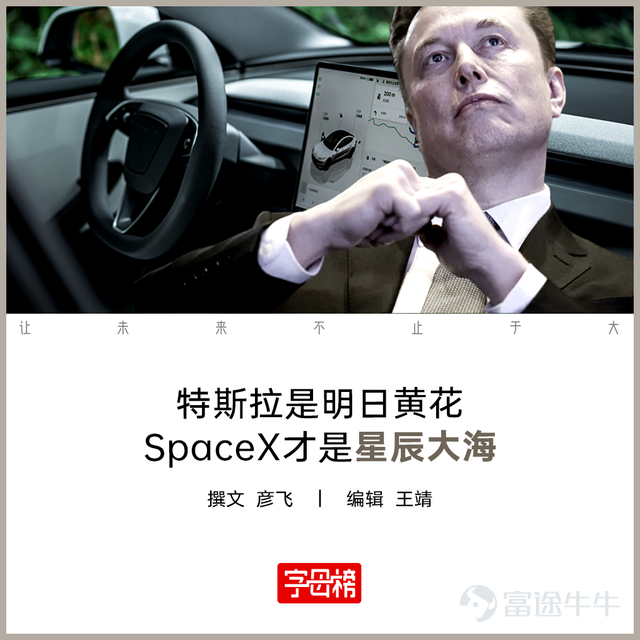
However, Elon Musk has already shifted his primary focus toward SpaceX, and Tesla itself may eventually become part of SpaceX. His grand vision centers on building a vertically integrated, hardware-software AI infrastructure spanning from Earth to space—not on continuing to sell electric vehicles.
With its founder’s attention divided, Tesla will likely find it difficult to sustain upward momentum in China relying solely on its current set of strategic advantages.FSD might address some of these challenges, but it is not a panacea for all obstacles.In the absence of new model launches to stimulate demand, Tesla’s growth curve in the Chinese market is gradually approaching a ceiling.
A
In the United States, its class-leading autonomous driving capability serves as Tesla’s key competitive moat.
Most regions in North America feature wide roads and low population density, providing an ideal environment for autonomous driving and propelling Full Self-Driving (FSD) sales upward. According to Tesla, as of the end of the first quarter of 2026, global FSD subscribers reached 1.28 million, up 51% year-over-year.
Elon Musk previously indicated that Tesla expects to launch FSD version 15 between the end of this year and early next year. This version will involve a comprehensive overhaul of the software architecture to further enhance safety.
Additionally, Tesla has been lowering the barrier to entry for FSD. In February, the company eliminated the $8,000 one-time purchase option in most markets, switching instead to a subscription model priced at $99 per month.
However, in China,FSD cannot be deployed, making autonomous driving one of Tesla’s notable weaknesses.
Currently, all Tesla models available on its official website come standard with 'Basic Autopilot,' which includes adaptive cruise control and lane-keeping assist. For an additional RMB 32,000, customers can opt for 'Enhanced Autopilot,' adding features such as navigation-guided driving, auto lane change, smart parking, and Summon.
For an extra RMB 64,000, vehicle owners can further upgrade to 'Smart Autopilot'—though this feature is labeled as 'coming soon.' Tesla states that this functionality will enable the car to handle the vast majority of driving tasks with minimal driver intervention.
Compared with domestic brands whose competition in intelligent driving has become fiercely intense, Tesla’s current suite of driver-assistance software holds no clear advantage.
Currently, domestic brands such as NIO, XPeng, Li Auto, Harmony Intelligent Mobility Alliance, BYD, and Zeekr—as well as joint-venture brands like BMW, Mercedes-Benz, Audi (BBA), Toyota, and Honda—are all prioritizing intelligent driving capabilities, which have nearly become standard features in new vehicles.
Overall, in common scenarios such as highway and urban expressway NOA (Navigate on Autopilot) driving and automated parking, almost all mid-to-high-end intelligent driving systems from automakers perform well. Public data shows that from January to February this year, the penetration rate of new passenger vehicles equipped with Level 2 combined driver assistance functions reached 69.15%, up 10 percentage points year-over-year.
Automakers are now focusing their R&D efforts on long-tail scenarios, such as driving at night in rain or fog, navigating roads without clear signage, parking lot cruising, and intelligent vehicle summoning. Additionally, 'door-to-door' (or 'parking-space-to-parking-space') intelligent driving capability has become a key competitive battleground across the industry.
Tesla’s Full Self-Driving (FSD) system can handle most of these highly challenging scenarios—and often performs even better. However, the base-level intelligent driving software currently sold in the Chinese market typically struggles with such situations.
In addition to matching Tesla’s performance, domestic automakers’ intelligent driving systems also offer a pricing advantage.

At present, most automakers include the base-level intelligent driving system as a complimentary feature. Advanced systems usually come with more powerful hardware, such as higher-compute intelligent driving chips and a greater number of LiDAR units and cameras. The one-time upgrade cost typically ranges from RMB 10,000 to RMB 20,000—significantly cheaper than Tesla’s RMB 64,000 price tag.
The underperformance of Tesla’s base-level intelligent driving system compared to local brands has somewhat hampered its sales. Public data shows that in 2025, Tesla China’s total wholesale deliveries—including both domestic sales and overseas exports—reached 851,732 units, down 7% year-over-year.
Under these circumstances, introducing FSD into China as soon as possible to address this weakness and reestablish its competitive edge has become Tesla’s top priority in the Chinese market.
B
Tesla has previously sent clear signals indicating its intention to bring FSD to China.
Last month, Tesla’s careers page indicated,The company is hiring autonomous driving test personnel in nine cities, including Beijing, Shanghai, Guangzhou, and Shenzhen,responsible for identifying functional improvements and performance regressions across software iterations, and required to travel flexibly to various domestic and international locations to conduct on-road testing of vehicles on public roads, test tracks, and validation sites.

Musk has mentioned multiple times his desire to launch Full Self-Driving (FSD) in China, yet the rollout has repeatedly been delayed.
As early as July 2024, Musk stated during Tesla’s earnings call that FSD approval for China was expected by the end of 2024. In September of the same year, Tesla indicated it would launch FSD in China in the first quarter of 2025.
By January 2025, the situation had changed. Musk noted that Tesla could not transfer training video data outside of China; meanwhile, U.S. government restrictions prevented Tesla from using advanced GPUs for training within China. “It’s a bit of a tricky problem,” he said.
Musk proposed a new timeline: launching a supervised version of FSD in China sometime in 2025. However, this target also failed to materialize.
According to other reports, in the first half of 2025,Tesla had rolled out FSD on a limited basis to certain Chinese owners whose vehicles were equipped with Hardware 4 (HW4),but subsequently took no further action.
In November 2025, Musk revealed during Tesla’s shareholder meeting that FSD had received “partial approval” in China, after which the FSD rollout process in China accelerated sharply.
In February this year, Tao Lin, Vice President of Tesla, publicly stated that Tesla’s driver-assistance data does not need to leave China and will strictly comply with Chinese data regulations. Tesla has already established a local AI training center in China and deployed localized training capabilities to prepare for broader deployment in the future.
In April, Tesla China announced on its official Weibo account that the company had received approval for Supervised Full Self-Driving (FSD) in the Netherlands—a critical step for approvals in other EU countries. Meanwhile, the company is working hard to launch intelligent driver-assistance features in the Chinese market as soon as possible.
In the same month, Tesla updated its FSD rollout timeline for China. During the Q1 2026 earnings call,Tesla management stated they hope FSD will receive approval from relevant Chinese authorities in the third quarter of this year.
The delayed introduction of FSD in China is primarily due to two factors: training data and road conditions.
As Elon Musk noted, Tesla cannot transmit China’s road traffic data overseas. At this stage, it can only source videos of Chinese roads from the internet to train FSD—an approach whose data quality still falls far short of that obtained through on-the-ground collection.
Moreover, China’s road environments are significantly more complex than those in the U.S.
Compared to the U.S., urban roads in China generally have higher density, with more intersections and closely spaced ramps. Pedestrians and non-motorized vehicles frequently encroach upon—and sometimes permanently occupy—motor vehicle lanes. Additionally, many motor vehicle lanes feature special rules, such as tidal lanes or bus-only lanes during specific hours. These uniquely local traffic scenarios pose significant challenges for FSD, which was originally trained on U.S. driving conditions.
Given enough time, these issues could gradually be resolved. However, time is precisely what Tesla lacks most—customers cannot wait indefinitely for FSD. Under these circumstances, Tesla must periodically release positive updates to reassure potential buyers while simultaneously accelerating efforts to bring FSD to market.
C
During last quarter’s earnings call, Tesla management conveyed this message: FSD itself is the product, and the vehicle is merely the delivery mechanism.
Clearly,Tesla aims to move beyond the logic of selling cars and hardware and shift toward selling SaaS and software.This is at least more advantageous in capital markets—while SaaS isn't exactly a novel business model, it's certainly far more appealing than selling cars.
However, the foundation of this logic hinges on Full Self-Driving (FSD) achieving strong global sales. Whether Chinese consumers are willing to pay for it is critical.
Tesla is already working on addressing the issue of localized computing power.
According to public reports, Tesla has already built a computing center in China, primarily using existing data for localized optimization rather than training models with data collected from Chinese vehicle owners. It is foreseeable that as localized training increases, FSD’s adaptability to domestic road conditions will improve.
But first, Tesla needs to sell more new vehicles in China before it can even begin talking about selling FSD.

The latest version of FSD requires the computational power of Tesla’s AI4 chip. However, many existing Chinese owners purchased vehicles equipped with earlier Hardware (HW) versions that lack the necessary hardware support for FSD. In other words, the over one million vehicles Tesla has sold in China to date cannot immediately become FSD users.
On the new vehicle front, Tesla’s sales in China have held up reasonably well over the past few quarters, with the Model 3 and Model Y still ranking among the top-selling models.
But Tesla faces no shortage of challenges.For example, its model lineup is aging.
To this day, Tesla’s newest Model Y is already a six-year-old model. Over the past six years, Chinese automakers have made tremendous strides, rolling out a constant stream of new models, while Tesla has continued to rely on just one hit product.
Moreover, the Model Y is a sparsely equipped midsize SUV—relatively compact in size and with an interior that’s unremarkable at best. By contrast, most domestic models priced between RMB 200,000 and 300,000 now come standard with premium features like refrigerators, large screens, and plush seating, often exceeding five meters in length.
When it comes to pre- and post-sales service, user communities, and founder branding, Tesla China simply doesn’t measure up to domestic rivals like NIO, XPeng, and Li Auto—and there’s little sign of meaningful improvement on the horizon.
Stuck in a cycle of relying solely on the Model Y, Tesla urgently needs a breakthrough product to keep pace with the rapid advances of Chinese brands.
But the real question now is:Does Musk even care about selling cars anymore?
Since 2022, Musk has increasingly devoted his time outside Tesla—acquiring Twitter (now X), launching xAI, advancing SpaceX’s Mars ambitions, and developing humanoid robots.
By 2026, Musk’s primary focus had shifted to SpaceX’s mega IPO, into which he also folded xAI. His vision centers on building a future empire combining rockets, satellites, and AI; cars, in this framework, are merely AI endpoints.
In this context, Full Self-Driving (FSD) is just one application of AI in transportation. Its imminent arrival in China would certainly be welcome news—but this autonomous driving battle won’t be large-scale, and its value represents only a small fraction of SpaceX’s broader ambitions, so there’s no rush.
Fortunately, Tesla has finally signaled that FSD is coming to China, giving Chinese owners a long-awaited response after years of anticipation.
However, Tesla can never return to what it once was. An innovative and dynamic Tesla requires an Elon Musk who is diligent, engaged, and self-disciplined. Yet this automotive tycoon no longer prioritizes building and selling cars; instead, he has fully unleashed himself and is now set on heading into space. $Tesla (TSLA.US)$$Tesla (LIST0426.SH)$$Direxion Daily TSLA Bull 2X Shares (TSLL.US)$$SpaceX (FT0002)$$Automobiles (LIST1040.HK)$$Huatai-PB CSI Intelligent Automobile Theme ETF (516520.SH)$$Intelligent driving concept stocks (LIST23590.US)$$Intelligent driving concept stocks (LIST23589.HK)$$Lidar Technology (LIST2539.US)$$Autonomous Driving (LIST2444.US)$
Risk Disclaimer: The above content only represents the author's view. It does not represent any position or investment advice of Futu. Futu makes no representation or warranty.Read more
Comments
to post a comment