
Tengsi | What did Trump's visit to China bring? Are the central banks of both the US and China simultaneously trapped in a 'policy dilemma'?!
Preface
From May 13 to 15, 2026, US President Trump paid a state visit to China. Both sides announced a series of cooperation achievements in the economic and trade fields, including the establishment of a Trade and Investment Council, a principle agreement to cut tariffs on products of mutual concern of equivalent scale, expanded market access for agricultural products, Boeing aircraft procurement commitments, and the continuation of large-scale soybean procurement agreements.
Based on these outcomes, we aim to explore their short-term and medium-term impacts on the economies of both China and the US, explain how changes in trade policy affect inflation trends through price transmission mechanisms, and further discuss potential constraints and guidance for monetary policy formulation by the central banks of both countries.
The following are the author’s views; if you have different thoughts, feel free to leave a comment in the comment section.
The core economic implications of the trade and economic outcomes from the visit to China
Tariff arrangement consensus:Both parties agreed to continue implementing the results of earlier consultations and reached a positive consensus on tariff arrangements, in principle agreeing to reduce tariffs on products of mutual concern on an equal scale. This means that the previously imposed high tariffs covering hundreds of billions of dollars’ worth of goods could be systematically reduced, and the decrease in marginal costs will directly improve the profit margins of import and export companies in both countries.
Institutional cooperation mechanism:Both parties agreed to establish a Trade Council and an Investment Council as permanent platforms for discussing each other's concerns in the areas of trade and investment. If this mechanism operates effectively, it will greatly reduce uncertainty premiums caused by bilateral trade frictions and provide institutional guarantees for long-term economic and trade cooperation.
Agriculture sector:The two sides reached multiple consensuses regarding agricultural product market access, including resolving long-standing technical barriers such as dairy products, automatic detention of aquatic products, bonsai exports to the US, and recognition of disease-free zones in animal epidemics. Additionally, concerning the soybean procurement agreement signed in November 2025, China has committed to purchasing at least 25 million tons of US soybeans annually from 2026 to 2028, providing clear fundamental demand support for US agricultural exports.
Aviation sector:Boeing secured a commitment for the purchase of 200 aircraft, which not only directly boosts U.S. high-end manufacturing exports but also signifies a restoration of trust between China and the U.S. in the trade of high-tech products. The arrangements to ensure the manufacturing of aircraft engines and the supply of components have positive implications for the stability of the global aviation industry chain.
Political trust:The leaders of both countries agreed to establish"A Constructive Strategic Stability Relationship between China and the U.S."As a new positioning for their relationship, this political consensus provides the necessary high-level structural support for the continued deepening of economic and trade cooperation.
Impact on the U.S. economy
In the short term, the agriculture sector is the biggest direct beneficiary. The continued implementation of the soybean procurement agreement provides certainty for export revenues in the U.S. Midwest agricultural states. At current prices, annual exports of 25 million tons of soybeans correspond to approximately $11-13 billion in export value, directly stabilizing farm incomes and reducing agricultural inventory pressures. Resolving non-tariff barriers for agricultural products will further expand incremental market opportunities in China, benefiting industries such as dairy and meat.
Secondly, manufacturing exports are expected to rebound. The order for 200 Boeing aircraft will provide stable production schedules for the U.S. aviation manufacturing industry over the coming years, driving employment and output across upstream and downstream supply chains. Expectations of tariff reductions will also support the export of industrial and capital goods.
At the same time, the reduction in uncertainty from U.S.-China competition has provided a boost to the capital markets. The establishment of the Trade Council conveysthe positive signal that 'issues can be resolved through dialogue',which helps to reduce companies' concerns about supply chain disruption risks, encouraging businesses in the US to make capital expenditures and replenish inventories.
However, it should be noted that the expansion of exports in the short term means a relative tightening of domestic supply – more agricultural and industrial products will be shipped to China rather than remaining in the U.S. domestic market for consumption, which could exert some upward pressure on domestic prices of related goods.
Impact on the Chinese economy
For China, the impact is more complex and features structural characteristics:
First,An increase in agricultural imports will help stabilize domestic food prices.In recent years, Chinese agricultural product prices, such as pork and soybeans, have experienced significant volatility due to fluctuations in domestic supply and rising import costs. Expanding imports of relatively inexpensive agricultural products from the U.S. will marginally reduce feed and food processing costs, helping stabilize the food component of the CPI.
Second,The improvement in the export environment to the U.S. will boost external demand. Under the expectation of tariff reductions, Chinese export companies to the U.S. — particularly those in sectors like machinery and electronics, textiles, and furniture that were previously heavily impacted by high tariffs — are likely to see a recovery period for orders, which would positively impact employment stability and manufacturing investment.
Third,Guarantees in aircraft procurement and technology product supplies provide support for industrial upgrading. The rapid recovery and development of the civil aviation industry require the continuous introduction of advanced aircraft models. The stabilization of engine and parts supply reduces operational risks for airlines. From an industrial perspective, this also creates opportunities for the growth of related industries such as aircraft maintenance and retrofitting in China.
Fourth,Structural challenges remain. While the soybean procurement agreement benefits China’s food supply chain, adjustments to China's domestic agricultural planting structure — especially the expansion of soybean cultivation areas and the domestic substitution strategy — may face external supply shocks. Additionally, Boeing aircraft purchases could create certaincrowding-out effectson the market space for China’s domestically produced large aircraft C919, requiring careful balancing at the industrial policy level.
Inflation Transmission
How changes in trade policy affect inflation is a complex process involving multiple pathways, multi-level interactions, and time lags.
Direct Effect: Import Price Channel
The most direct effect of tariff reductions is to lower the landed cost of imported goods. Assuming both China and the US reduce tariffs on products of equivalent scale, this means importers from both countries will pay less in tariffs at customs clearance, potentially lowering the final retail price of imported goods.
For China, a reduction in import tariffs on US agricultural products such as soybeans, meat, and dairy products would directly lower the prices of intermediate goods like soybean meal, cooking oil, and feed, which would ultimately translate into lower prices for end consumer goods such as pork and poultry.
For the US, a reduction in tariffs on consumer goods and industrial intermediates made in China — such as electrical machinery, textiles, and furniture — would also lower domestic retail prices.
For every one percentage point reduction in tariffs, under conditions of perfect competition, the domestic retail price of imported goods is expected to drop by0.5-0.8percentage points. Given the large volume of trade between China and the US, the inflation-suppressing effect through this channel should not be overlooked.
Indirect Effect: Supply Chain Cost Channel
Against the backdrop of deep integration into global value chains, intermediate goods trade accounts for a significant proportion of Sino-US trade. The easing of tariffs implies a reduction in costs at various stages of the supply chain, which will be gradually passed on along the production chain.
Taking the electronics industry as an example, the reduction in tariffs on intermediate goods such as chips and precision components imported by China from the US will lower the production costs for Chinese electronics manufacturers. Meanwhile, the reduction in tariffs on assembled parts and components imported by the US from China will also help control input costs for its manufacturing sector. The transmission lag through this channel is typically2-3A quarter.
Reverse effect: Demand expansion channel
While trade easing lowers prices on the supply side, it will also boost aggregate demand through income effects and wealth effects, creating a reverse pull on inflation.Export firms receive more orders → profits and employment improve → household incomes rise → consumption expands, this is the classic transmission chain where external demand drives domestic demand. At the same time, reduced uncertainty and restored business confidence will stimulate corporate investment expansion, further pushing up the aggregate demand curve. The forces from both supply and demand sides converge at the inflation end – if demand expands faster than supply recovers, trade easing could instead push up core inflation.
Exchange rate channel
For China, improved export prospects and expectations of foreign capital inflows may strengthen the RMB exchange rate. RMB appreciation will further lower import prices in RMB terms, enhancing deflationary effects.
For the US, the expected narrowing of the trade deficit could put some depreciation pressure on the dollar, thereby raising import prices and partially offsetting the inflation-dampening effects of tariff reductions.
In summary, trade easing is likely to generate downward pressure on inflation in both China and the US in the short term, as the transmission speed through import price channels and supply chain channels is relatively fast, while the effect of demand expansion takes longer to fully materialize.
In the medium term, if the demand side continues to improve and supply bottlenecks emerge, inflation may gradually recover. Differences in inflation trends between the two countries depend on the phase of their respective domestic economic cycles: if the US economy is already close to its potential output level at that time, demand expansion is more likely to trigger inflation; if China’s economy is still in the early stages of recovery, demand expansion will translate more into volume growth rather than price increases.
Implications and impacts on monetary policy formulation
Impact on the Federal Reserve
Since the substantial interest rate hikes from 2022-2023, the Federal Reserve experienced a phase in 2024-2025 where inflation fell from high levels to near target levelsfinal mileThe downward pressure on inflation brought by easing trade tensions has, in the short term, helped the Fed consolidate its disinflation achievements and strengthen its confidence in achieving the 2% inflation target.
However, changes in the medium-term inflation outlook require the Fed to remain vigilant. If eased trade tensions drive a strong rebound in the U.S. economy and labor market tightness persists,core PCE may face renewed upward risks by 2027.The Fed may faceemployment-inflationtrade-offs anew – if signs of economic overheating emerge, it would need to maintain restrictive rates for a longer period or even reconsider raising rates.
Additionally, the interaction between fiscal and trade policies is worth monitoring. Tariff reductions imply lower tariff revenue for the U.S. government, and decreased agricultural subsidy needs may ease fiscal spending pressures, though other fiscal commitments involved in trade negotiations could impact deficits. Coordination between fiscal and monetary policy will be an important variable affecting macroeconomic stability.
Impact on the People's Bank of China
The policy environment faced by China's central bank is becoming more complex. On one hand, the easing of trade tensions has improved external demand and created expectations of RMB appreciation, which helps alleviate capital outflow pressures and provides greater room for monetary policy operations. The decline in import prices also helps reduce imported inflation pressures, lessening the central bank’s concerns about controlling inflation.
On the other hand, the core contradiction currently facing China is not inflation—excluding food and energy, China's core CPI has remained low for a long time, even facing risks of deflation—but rather insufficient aggregate demand and weak confidence. Against this backdrop, the improvement in external demand brought about by eased trade tensions is"good news", and the central bank may lean towards maintaining an accommodative stance, continuing to support the real economy’s recovery through measures like reserve requirement ratio (RRR) cuts and interest rate reductions, without needing to tighten prematurely.
From historical experience, central banks’ monetary policies oftendepend largely on the single variable of core CPI.。
The RMB exchange rate mechanism is also an important consideration. If the RMB appreciates significantly due to improved trade conditions, it may squeeze profit margins for export-oriented companies. In response, the central bank might engage in counter-cyclical adjustments through interventions like fixing the central parity rate or managing liquidity to maintain the exchange rate at a reasonable and balanced level and avoid self-reinforcing expectations of one-sided appreciation.
Nonlinear risks in monetary policy
It should be noted that the economic impact of easing trade tensions has nonlinear characteristics. If tariff reductions exceed expectations or if economic agents' confidence recovers faster than expected, the economies of both countries may enter a"demand-inflation"The pro-cyclical reinforcement channel forces central banks to make unexpected policy adjustments. Conversely, if the implementation of agreements is hindered and friction recurs, the dividends of trade easing may quickly dissipate, causing monetary policies in both countries to shift back towards easing to counteract downside risks. This policy uncertainty itself creates volatility for market interest rates and asset prices.
In conclusion
The economic and trade achievements reached during Trump's visit to China in May 2026 mark the possible beginning of a rare period of easing in Sino-US economic and trade relations. From the perspective of economic fundamentals, trade easing will lower prices for some goods in both countries on the supply side, but the demand expansion effect will exert a reverse push on inflation, posing challenges to the monetary policies of both countries."Disinflation" and "Stable Growth"The complex trade-offs.
For monetary policy, short-term inflation declines help the Federal Reserve solidify its anti-inflation results and provide room for the People’s Bank of China to ease; but uncertainties regarding medium-term inflation trends require both central banks to maintain policy flexibility and transparent communication, avoiding policy lags due to linear extrapolation.
Against the backdrop of slowing global economic growth intertwined with geopolitical risks, changes in US-China economic relations are not just fluctuations at the trade data level, but an important structural variable influencing the global inflation landscape and monetary policy cycles.
Looking ahead, whether the economic and trade teams of the two countries can quickly finalize the details of the outcomes and whether the Trade and Investment Council can achieve institutionalized operations will directly affect the pace and strength of the release of the aforementioned economic effects.** **’s visit to the US in Autumn 2026Will be the next key observation point for verifying and advancing the implementation of these outcomes.
In an environment where uncertainties remain high, policymakers from both countries need to balance short-term growth targets with long-term structural reforms using a prudent and pragmatic approach, striving to secure more favorable external conditions for the stable operation of their respective economies during this window of trade easing.

$Gold Futures (AUG6) (GCmain.US)$$USD (USDindex.FX)$$U.S. 10-Year Treasury Notes Yield (US10Y.BD)$ $Crude Oil Futures (AUG6) (CLmain.US)$$Brent Last Day Financial Futures Current Contract (AUG6) (BZcurrent.US)$ $S&P 500 Index (.SPX.US)$ $Nasdaq Composite Index (.IXIC.US)$ $Dow Jones Industrial Average (.DJI.US)$ $Hang Seng TECH Index (800700.HK)$ $Hang Seng Index (800000.HK)$
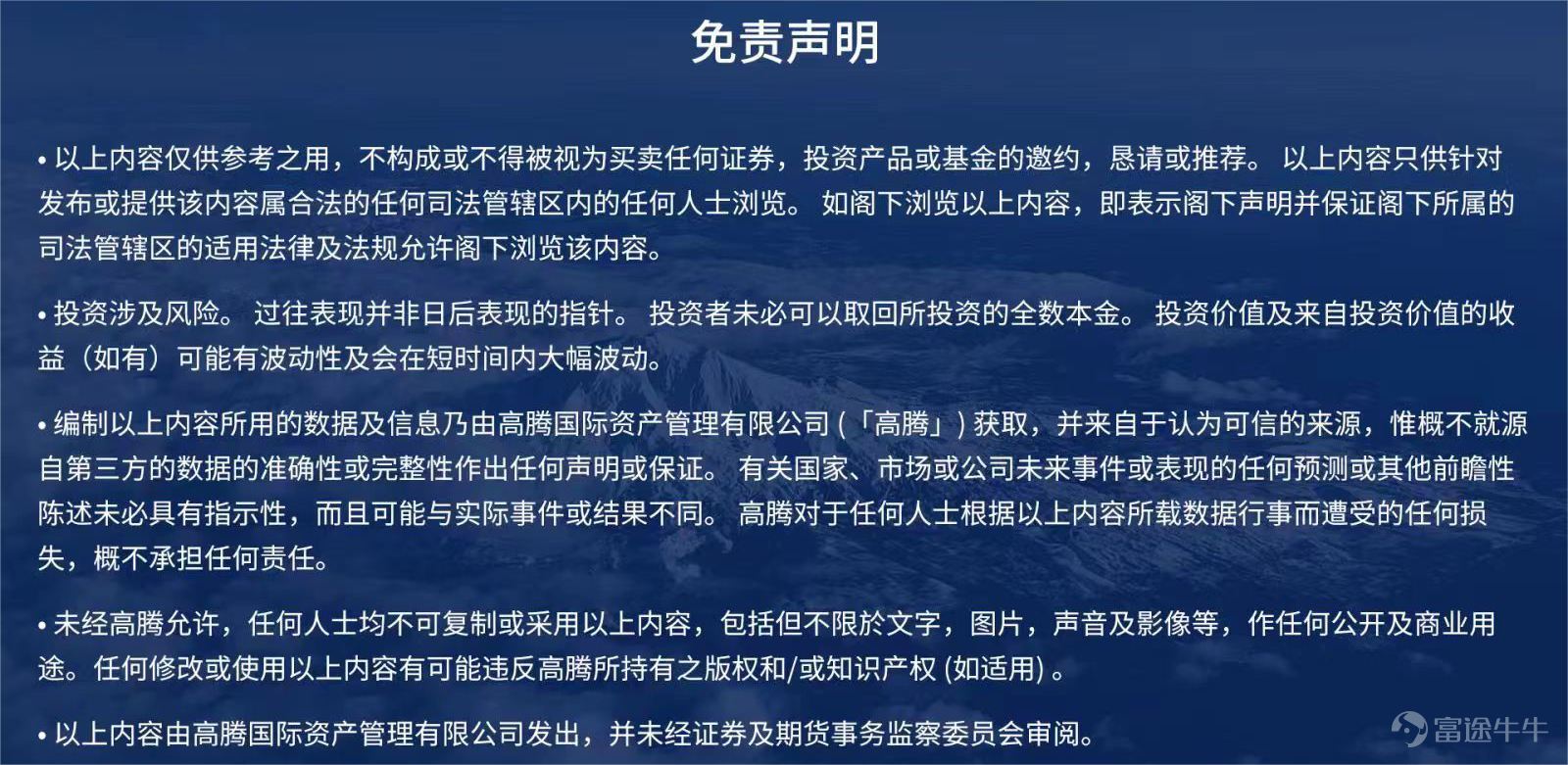
Risk Disclaimer: The above content only represents the author's view. It does not represent any position or investment advice of Futu. Futu makes no representation or warranty.Read more


Comments
to post a comment
2
1