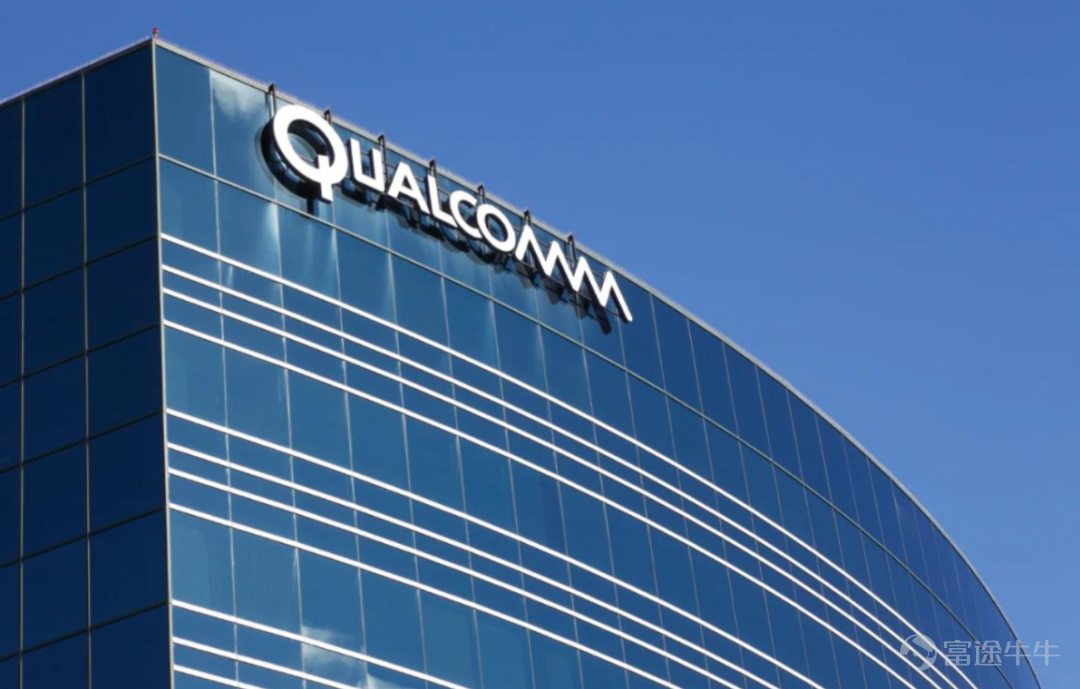

Behind Qualcomm's continuous decline: Hindered growth in core business, AI narrative not gaining recognition
Introduction:Even though Qualcomm $Qualcomm (QCOM.US)$ A major step has been taken in the AI transformation, but investors do not see it as an 'AI concept stock'.

Li Ping/Author Lishi Business Review/Produced by
1
A difficult-to-save stock price
Since 2026, under the nearly frenzied siphoning effect of the AI industry, a global shortage crisis in memory chips is brewing. This is not only causing serious impacts on several key industries such as global consumer electronics, automobiles, and PCs, but has even extended to the upstream chip sector of the smartphone supply chain.
This has once again made Qualcomm, which has had a tough year, encounter the 'memory chip price hike crisis'.
Recently, institutions such as Goldman Sachs and Bernstein have successively issued research reports downplaying Qualcomm's growth prospects, stating that weakness in the smartphone market and the loss of Apple orders could pose potential risks to the company. Among them, Bernstein, a top global equity research institution, believes that with the intensifying cost pressures related to memory chips, the rise in product prices will have a 'significant negative impact' on global smartphone shipments, and considers the current market consensus on Qualcomm's earnings to be 'significantly overestimated'.
The sluggish global demand for smartphones has become one of the main reasons why institutions are pessimistic about Qualcomm. On April 10, a report released by market research firm CounterPoint Research showed that due to DRAM and NAND shortages and the influence of the situation in the Middle East, global smartphone shipments fell by 6% year-on-year in the first quarter of 2026. Apart from Apple, sales of Android camp brands such as Samsung, Xiaomi, OPPO, and Vivo all declined, which is clearly not good news for Qualcomm.

As the global leader in smartphone chips, Qualcomm sells its Snapdragon series processor chips to Chinese brand smartphone manufacturers such as Xiaomi, OPPO, and Vivo, while also collecting substantial patent licensing fees from mobile giants like Apple and Samsung, thereby achieving stable revenue growth. Data shows that from fiscal year 2015 to fiscal year 2025, Qualcomm’s revenue grew from $25.3 billion to $44.284 billion, maintaining steady growth in revenue scale.
However, with the peak penetration rate of global smartphones, Qualcomm, which heavily relies on its mobile processor chip business, gradually faces a ceiling crisis. At the same time, Qualcomm’s strained relationship with its largest and most important client, Apple, continues to weigh on its valuation.
According to the latest earnings report data, in the first quarter of fiscal year 2026 (ended December 28, 2025), Qualcomm achieved revenue of $12.25 billion, a year-on-year increase of 5%. Among this, the mobile chip business achieved revenue of $7.8 billion, a year-on-year increase of 3.3%, with revenue growth significantly slowing compared to the previous quarter (14.2%).
Looking ahead to the second quarter of fiscal year 2026, Qualcomm has further lowered its mobile chip revenue guidance to $6 billion, a year-on-year decrease of 13%, reflecting the direct suppression of shipment volumes due to supply chain bottlenecks. Meanwhile, Qualcomm expects the overall revenue range for the second quarter to be between $10.2 billion and $11 billion, far below market expectations (above $11.1 billion). The core reason is that production cuts by mobile phone manufacturers will directly drag down their chip order volumes.
In response, Qualcomm CEO Cristiano Amon noted during the earnings call that in the coming quarters, the mobile phone industry will face dual constraints from DRAM memory supply and pricing, and that 'the entire fiscal year's mobile phone market size will be determined by memory availability.'
Affected by weaker-than-expected guidance, Qualcomm shares plunged more than 8% the day after the earnings announcement, with its market capitalization shrinking by nearly $14 billion in a single day.
In terms of revenue composition, Qualcomm's main business can be divided into two major segments: semiconductor operations (QCT), which focuses on chip products, and technology licensing operations (QTL), responsible for intellectual property licensing. Among these, Qualcomm's QCT business includes smartphone chips, automotive chips, and IoT businesses. The automotive chip business is considered the 'second growth curve' driving Qualcomm's future expansion.
Data shows that in the first quarter of fiscal 2026, Qualcomm's IoT business generated $1.7 billion in revenue, representing a 9% increase year-over-year; revenue from automotive chips grew 15% to $1.1 billion, setting a new record for quarterly revenue. Additionally, Qualcomm's QTL business achieved $1.59 billion in revenue, up 29% year-over-year, with a pre-tax profit margin as high as 77%, continuing to provide stable income and profits through its patent licensing system.

It is not difficult to see that, in terms of revenue composition, automotive chips account for only 9% of the company's total revenue, remaining the smallest of Qualcomm’s four main revenue streams, and are still unable to offset the impact of declining smartphone chip sales on Qualcomm in the short term.
In fact, slower-than-expected diversification progress has been one of the main reasons many research firms have repeatedly downgraded Qualcomm. In this regard, Goldman Sachs analyst James Schneider pointed out in a recent report that Qualcomm's active expansion into related markets such as automotive, personal computers, and data centers is a key move toward revenue diversification. However, the loss of share among core smartphone customers, including Apple, will partially offset the effectiveness of these efforts, thus pressuring Qualcomm's fundamentals.
Due to memory chip shortages and weaker-than-expected guidance, Qualcomm's stock price has continued to decline since the start of 2026, with monthly K-line charts showing three consecutive negative months. In the first quarter of 2026, Qualcomm's stock fell 24.32%, significantly higher than the Nasdaq index's decline during the same period.
In response to the persistently weak stock price, Qualcomm's board approved a new $20 billion stock repurchase authorization on March 17, while raising the quarterly cash dividend on common shares from $0.89 to $0.92 per share, bringing the annualized dividend payout per common share to $3.68.
However, the final results show that these measures had little effect. As Bernstein noted in its latest report, even with stock buybacks and positive developments in the data center business, it is difficult to offset the impact of weak smartphone demand.
2
Apple, Difficult to Retain
In addition to the sales pressure on its core mobile chip business, the reduction or even disappearance of orders from major client Apple has become a significant concern for Qualcomm. In its latest research report, Bernstein pointed out that Qualcomm's licensing agreement with Apple may expire within the next year, and related risks are worth watching.
In fact, as early as December 2019 when Apple acquired Intel’s modem division, Qualcomm seemed to have been living under the shadow of Apple's 'self-developed chips.' Even though Apple paid Qualcomm a whopping $4.5 billion in settlement fees for 5G modem business and signed a six-year patent licensing agreement, this did not dispel concerns in the secondary market. Throughout 2022, Qualcomm's stock price plummeted by over 40%.

After acquiring Intel’s modem division, Apple spent tens of billions of dollars over the following years developing its own modem chips to replace Qualcomm’s modems used in iPhones, but it has yet to succeed. Some analysts believe that modem chips need to transmit and receive wireless data from various types of wireless networks and must comply with strict connectivity standards to serve wireless carriers worldwide, making this a highly challenging task for Apple.
Ultimately, Qualcomm secured another three-year order from Apple, providing Snapdragon 5G modems and RF systems for smartphones to be launched in 2024, 2025, and 2026.
Due to slower-than-expected progress in Apple's self-developed modem chips, Qualcomm’s stock rebounded in 2023 and 2024. In June 2024, Qualcomm's total market capitalization briefly exceeded $250 billion, marking the best performance of the company's shares on the Nasdaq market. However, as Apple’s self-developed modem chips came to fruition, Qualcomm’s stock faced renewed pressure.
Public information shows that in February 2025, Apple introduced its first self-developed 5G modem chip, which was featured in the simultaneously released iPhone 16e model. Apple claims that this chip offers faster and more stable 5G speeds with lower power consumption, making it the most energy-efficient modem ever used in an iPhone. Some analyses suggest that if Apple completely phases out Qualcomm chips by 2027, the latter could lose billions of dollars in high annual revenue.
According to the latest reports, the upcoming iPhone 18 series will extensively feature Apple’s self-developed C2 5G modem chip, significantly reducing Qualcomm’s share to only a small proportion. Data shows that as Apple’s third-generation self-developed communication chip, the C2 modem uses Taiwan Semiconductor’s 4nm process, is deeply optimized for the iPhone, supports both Sub-6GHz and mmWave full 5G bands, and can finally resolve the long-standing signal issues of the iPhone.

According to foreign media reports, the C2 modem will be primarily equipped in the iPhone 18 Pro series, with a 70% adoption rate for high-end models, reducing Qualcomm’s share to less than 30%. The standard iPhone 18 will adopt a hybrid “C2 + Qualcomm” solution, with Qualcomm holding a slightly larger share, but overall, its share will drop sharply (from the previous 65%).
3
The Hard-to-Shake Label of Being a 'Mobile Stock'
As of the most recent trading day’s close, Qualcomm’s stock price closed at $137.94, with a market cap of approximately $147.1 billion. Within less than two years, Qualcomm’s total market cap has evaporated by nearly $100 billion, with a cumulative decline of nearly 40%. From a valuation perspective, Qualcomm’s latest trailing P/E ratio is only 11 times, about 45% lower than the average P/E ratio of U.S. tech stocks, reflecting strong skepticism among secondary market investors about its growth prospects.
In recent years, in order to reduce over-reliance on smartphone chips, Qualcomm has actively expanded into areas such as automotive chips, IoT, and laptop processors. However, according to the latest earnings report, 70% of Qualcomm’s revenue still comes from the mobile phone business. Additionally, considering the high gross margin of its technology licensing business, the proportion of Qualcomm's gross profit from the mobile phone sector is even higher.
In the second half of 2025, Qualcomm, which has long sought to shed its label as a 'smartphone stock,' told a story of AI transformation to the secondary market, drawing significant external attention at one point.
On October 27, 2025, Qualcomm unveiled its next-generation AI inference-optimized solutions for data centers, including accelerator cards and racks based on the cloud AI chips Qualcomm AI200 and AI250. These two chips utilize Qualcomm Hexagon NPUs and can be integrated into a complete liquid-cooled server rack system, employing direct liquid cooling to enhance thermal efficiency.
Qualcomm stated that leveraging its advantages in NPU technology, these solutions deliver rack-level performance and excellent memory capacity, enabling fast generative AI inference at a high cost-performance ratio, thus supporting scalable, efficient, and flexible generative AI.

Some analysts believe that AI data centers still face many technical challenges in terms of heat dissipation and energy consumption. By targeting high-performance, high-power AI computing scenarios from the outset and emphasizing its 'liquid-cooled server rack system,' Qualcomm has addressed a key pain point in current AI data centers. This also means that NVIDIA, which has long dominated the AI semiconductor market, will face a new challenger.
The day after the announcement, Qualcomm’s stock surged over 11%, with intraday gains exceeding 20%, marking the largest single-day increase since 2019. However, Qualcomm's identity as an 'NVIDIA challenger' does not seem to have gained sufficient recognition from investors. Analysts pointed out that NVIDIA has deeply cultivated the data center market for many years and built a mature software ecosystem centered around CUDA. In comparison, Qualcomm’s data center software ecosystem is almost starting from scratch.
In addition to the gap in 'soft' power within the ecosystem, Qualcomm also faces 'hard' constraints from the supply chain. Data center equipment demands extremely high reliability, stability, and compatibility, involving multiple supply chain stages such as chip design, manufacturing, packaging, testing, and server assembly. As a newcomer in the data center field, Qualcomm is at a disadvantage when competing with giants like NVIDIA for advanced manufacturing capacity, meaning the mass production and delivery of products like AI200 and AI250 will face significant uncertainty.
Moreover, as early as May 2025, Qualcomm announced a partnership with Humain, a company from Saudi Arabia, to supply AI inference chips to data centers in the region, promising to deploy systems capable of using 200 megawatts of power. However, so far, Humain remains Qualcomm's only publicly announced data center customer.
In its first-quarter report for fiscal year 2026, Qualcomm maintained its guidance that data center revenue would significantly grow in FY27 (corresponding to calendar Q4 2026). This indicates that the 'far water' of AI data centers still cannot quench Qualcomm’s 'near thirst' of short-term performance declines. In other words, even though Qualcomm has initiated a new AI narrative, secondary market investors still do not view it as an 'AI concept stock.'
Risk Disclaimer: The above content only represents the author's view. It does not represent any position or investment advice of Futu. Futu makes no representation or warranty.Read more
Comments
to post a comment