Rebound after losses? Domestic insulin leader experiences rollercoaster performance! Tonghua Dongbao may still face transformation anxiety
Source: Era Weekly, Author: Lin Yunxiao
On the evening of April 19, domestic insulin leader Tonghua Dongbao (600867.SH) released its 2025 annual report. After experiencing losses in 2024, Tonghua Dongbao turned profitable in 2025 with a rebound in performance.
The annual report data shows that in 2025, Tonghua Dongbao achieved revenue of 2.947 billion yuan, a year-on-year increase of 46.66%; net profit attributable to shareholders reached 1.219 billion yuan, compared with a loss of 41.95 million yuan in the same period last year; non-recurring net profit reached 375 million yuan, compared with a loss of 10.04 million yuan in the same period last year.
Regarding the factors influencing changes in performance, Tonghua Dongbao pointed out in its annual report that the change in revenue was mainly due to significant growth in sales volume of insulin analog products during the reporting period, driving an increase in domestic sales revenue.
According to the annual report, on April 23, 2024, in the follow-up procurement of the insulin special centralized procurement, the selected price of the company's products decreased compared to the original price. The drop in price will put some pressure on sales revenue. However, according to the renewal rules and the selection results, all of the company’s products were selected as Class A/A1. Specifically, the insulin glargine and premixed insulin aspart series were selected as Class A1, allowing the company to secure 90% or 100% of the first-year procurement demand, along with more than 30% of the second-round national allocation.
The annual report noted that this would help further increase the market share of the company's products, particularly accelerating the rollout of insulin analogs while speeding up product access and scaling nationwide. In addition to insulin, new products such as liraglutide injection, empagliflozin tablets, and sitagliptin phosphate tablets contributed incremental sales revenue.
Regarding strategies for centralized procurement, Tonghua Dongbao's securities department told reporters from the Times Weekly that the company ensured Class A bid qualification while further expanding its market presence.
Apart from the factors related to centralized procurement, the sale of equity also significantly impacted Tonghua Dongbao’s net profit for 2025. The annual report stated that the change in attributable net profit was mainly due to revenue growth during the reporting period and the transfer of shares in Amoytop Biotech (688278.SH), combined with the termination of R&D projects in the same period last year, which resulted in a substantial recognition of R&D losses.
Tonghua Dongbao’s securities department told reporters from the Times Weekly that the significant write-off of terminated R&D project costs also had a major impact on the company’s profits, but the company’s profitability is gradually recovering.
On April 20, Tonghua Dongbao's stock closed at RMB 10.08 per share, down slightly by 0.69%.

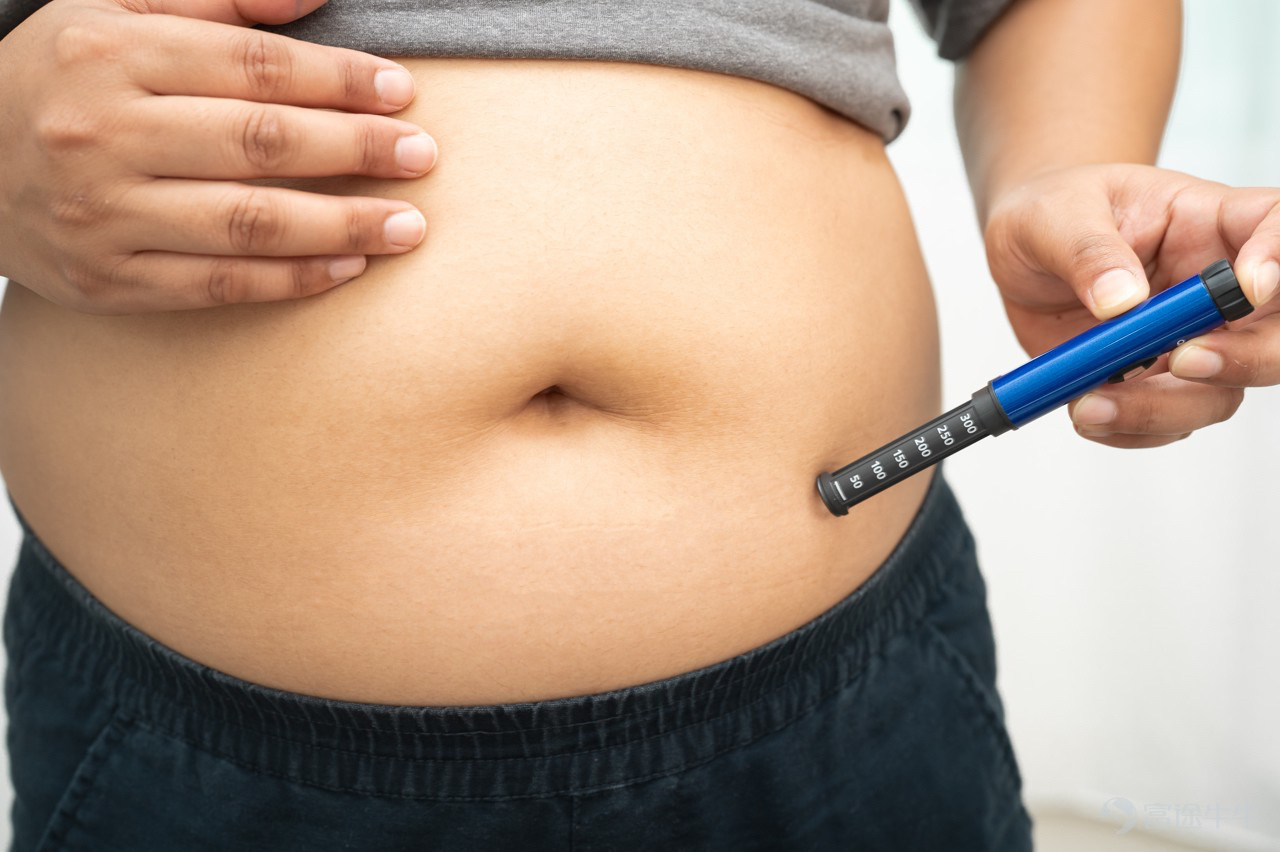
Image source: Tuchong Creative
Behind the fluctuating performance
Tonghua Dongbao went public in 1994 and, after posting a loss in 2004, did not experience any attributable net profit losses between 2005 and 2023. However, this streak ended in 2024.
In recent years, the performance of veteran insulin company Tonghua Dongbao has experienced significant fluctuations. In 2024, both revenue and net profit declined, and Tonghua Dongbao's stock price also plummeted during the same year.。
The 2024 annual report data shows that Tonghua Dongbao's 2024 operating revenue fell by 34.66% year-on-year, with an attributable net profit of -RMB 42.7232 million and a non-recurring net profit of -RMB 9.1954 million.
In April 2024, the second national insulin-specific bulk procurement tender was launched. To capture market share, Tonghua Dongbao adopted an aggressive price-cutting strategy in the procurement process.
Compared with the winning bid prices from the first round of insulin procurement, the prices of Tonghua Dongbao's selected products in the follow-up procurement have declined. For example, the prices of human insulin injection and isophane human insulin mixed injection decreased by approximately 10.4%, while the price of isophane human insulin injection fell by about 13.4%.
In its 2024 annual report, Tonghua Dongbao noted that the winning bid prices for all its insulin products had dropped to varying degrees. Additionally, the implementation of the procurement policy led to a general expectation of price reductions for the company’s products, prompting commercial clients to control and adjust their inventory. These factors resulted in a decline in sales revenue.
Furthermore, Tonghua Dongbao conducted a one-time write-off or refund for the price difference between the original supply price and the procurement-implemented price for all inventory products in the distribution channel prior to the procurement implementation. The recognition of this transaction led to a reduction in the company's revenue.
In terms of gross margin, in 2025, the gross margin of Tonghua Dongbao's biological products (active pharmaceutical ingredients and finished dosage forms) decreased by 4.26 percentage points, mainly due to the reduced unit selling prices of its major products—human insulin injections and insulin analogs—as a result of the procurement implementation.
However, as the advantages of increased product volumes gradually became apparent, Tonghua Dongbao's profitability began to recover in 2025. In its 2025 annual report, the company stated that in the domestic market, it leveraged its success in the insulin procurement bids to promote volume growth in insulin analog products such as aspart and glargine, thereby increasing market share. Meanwhile, products like liraglutide injection and empagliflozin tablets also achieved growth. Multiple product categories contributed to an increase in domestic sales revenue.
Although Tonghua Dongbao's profitability has recovered somewhat, it is worth noting the significant gap between the company’s non-GAAP net profit of 375 million yuan and its parent company’s net profit of 1.219 billion yuan in 2025. This discrepancy may be attributed to the impact of Tonghua Dongbao's transfer of its stake in Amoytop Biotech.
On May 22, 2025, Tonghua Dongbao signed a Share Transfer Agreement with Tibet Trust Co., Ltd., transferring 23.1876 million unrestricted tradable shares of Amoytop Biotech, representing 5.70% of Amoytop Biotech’s current total share capital, at a price of 56.12 yuan per share, for a total transfer amount of 1.301 billion yuan. The investment gain from this equity transfer was 1.099 billion yuan, significantly boosting the company's net profit.
Innovative transformation faces fierce competition in a saturated market
Achieving transformation through innovative research and development may be one of the key challenges for Tonghua Dongbao, a long-established insulin company, at present.
In its 2025 annual report, Tonghua Dongbao noted that the company is deepening its innovative transformation by developing multiple Class I innovative drugs. GLP-1 drugs, which have significant market potential as treatments for diabetes and weight loss, are being developed through a model of 'independent research and development plus external collaboration.' This has led to the establishment of a GLP-1 product pipeline including liraglutide, insulin degludec liraglutide injection, semaglutide, an oral small-molecule GLP-1 receptor agonist (THDBH110 capsule), and a GLP-1/GIP dual-target receptor agonist.
However, the market for diabetes and weight-loss products, which previously seemed to offer tremendous growth potential, has now become fiercely competitive.
Currently, Novo-Nordisk A/S and Eli Lilly and Co, two international giants, have built barriers leveraging their first-mover advantage and are competing for the title of the world's top pharmaceutical product. Eli Lilly and Co’s tirzepatide generated $65.179 billion in revenue for 2025, surpassing Novo-Nordisk A/S’s semaglutide to become the new blockbuster drug.
Among domestic companies, competition in the development of GLP-1 drugs is becoming increasingly fierce. Innovent Bio’s dual-target agonist mazdutide injection was launched in August 2025, while Xianweida Bio’s eginetugliptide also entered the market in early 2026. Additionally, CSPC Pharma, Hengrui Pharma, Hansoh Pharma, 3SBio, and other companies' GLP-1 drugs are in Phase III clinical trials or have submitted marketing applications.
On March 20 this year, the core patent for Novo-Nordisk A/S’s semaglutide officially expired in China. The generic drug market is also highly competitive; Insight database shows that over 20 domestically produced versions of semaglutide have advanced to approved clinical stages or beyond. Ten pharmaceutical companies, including Jiuyuan Gene, Livzon Group, and Qilu Pharma, have submitted registration applications for twelve domestically produced generic versions of semaglutide.
A large number of generic drugs may soon hit the market, further adding pressure on pricing. Prior to the patent expiration, Eli Lilly and Co and Novo-Nordisk A/S, the two original innovators, had already initiated price wars in the domestic market.
Starting January 1, 2026, Eli Lilly and Co’s tirzepatide injection (Mounjaro) saw significant price reductions across all four specifications after being included in the medical insurance system. The main specification, 5mg*4 doses, dropped from 2,758 yuan to 551 yuan. Similarly, Novo-Nordisk A/S’s semaglutide injection (Ozempic) experienced a substantial price cut in the hospital market, with the initial dose of 0.25mg*4 doses decreasing from 1,264.9 yuan at launch to 230.84 yuan.
In the GLP-1 drug space, Tonghua Dongbao may face multiple challenges related to differentiated demand and pricing. The company’s securities department told reporters from the Times Weekly that its GLP-1-related R&D is still in its early stages. The company will proceed according to the current plan and make adjustments based on future competition.
Tonghua Dongbao’s R&D efforts are not limited to the GLP-1 field. The 2025 annual report states that the company has expanded its therapeutic areas from diabetes to weight loss, gout/hyperuricemia, and more. Its innovative drugs in the gout treatment area include THDBH150/THDBH151 tablets and etoricoxib tablets.
In addition to innovative R&D, international expansion is another crucial pathway for Tonghua Dongbao to explore incremental markets. According to the annual report, Tonghua Dongbao achieved overseas revenue of 203 million yuan in 2025, representing a year-on-year increase of 97%.
In terms of insulin products, Tonghua Dongbao has partnered with Jianyou Pharmaceutical to enter the U.S. insulin market. The company's human insulin active pharmaceutical ingredient production facility has passed an on-site inspection by the European Medicines Agency (EMA) and is ready for commercial production in the EU. The protamine human insulin mixed injection (30R) has been approved for marketing in Uzbekistan.
Regarding GLP-1 products, Tonghua Dongbao’s Liraglutide injection has been approved for domestic use in China and is collaborating with Kexing Pharma to promote registration and filing in 17 emerging overseas markets, including undergoing a GMP on-site audit by Egypt's Ministry of Health.
Risk Disclaimer: The above content only represents the author's view. It does not represent any position or investment advice of Futu. Futu makes no representation or warranty.Read more
Comments
to post a comment