
Massive losses from stockpiling, share price plummets—have young investors in Pop Mart suffered heavy losses?

Source | Tech Planet
Text | Zhang Ningyi
On March 25, Pop Mart released an impressive annual report showing full-year revenue for 2025 at 37.12 billion yuan, a year-on-year increase of 184.7%, and adjusted net profit at 13.08 billion yuan, a year-on-year increase of 284.5%.
Unexpectedly, on the day the earnings report was released, the stock price plummeted 22.51% in a single day, marking the largest one-day drop since its listing, with over HKD 65 billion wiped off its market value. The decline continued, with another 10.46% drop on March 26, followed by further losses from March 30 to 31. By March 31, the stock had fallen more than 40% from its February peak.
By the close of trading on April 2, Pop Mart's share price had fallen 34.7% cumulatively compared to the day before the earnings announcement, wiping out nearly HKD 100 billion in market value.
Although there was a significant recovery on April 8, with the closing price at HKD 152.6, up 7.62% from the previous trading day and a turnover of HKD 6.175 billion that day, management had repurchased approximately 9.32 million shares over six consecutive trading days following the plunge in an attempt to stop the fall. However, the market did not seem to immediately respond positively. From the perspective of key technical indicators, the stock remains in a weak range.
Young investors who bought shares out of interest did not expect that Pop Mart, which created the Labubu craze last year, would suddenly experience a sharp drop in its share price, causing many to lament their losses. The secondary market also appears pessimistic.
Has Pop Mart truly fallen from grace?
Losing a million in three days, young people 'investing out of interest' feel the pain of heavy losses
A young man who bought Pop Mart shares told Tech星球 that his mood recently felt like a rollercoaster. The first thing he does every morning is check the stock price. After investing HKD 1.1 million in Pop Mart shares in mid-last year, he had made over a million in profits before this recent stock crash. Since Pop Mart's stock price usually rose after each earnings release, he decided to increase his holdings just before this earnings announcement. Unfortunately, the sudden plunge wiped out all his previous gains, resulting in a loss of almost a million within three days. Unable to predict future stock movements and unwilling to take further risks, he cut his losses promptly but still lost nearly HKD 200,000 of his principal.
Many young people have suffered substantial losses, leading them to seek solace by forming groups on social media with others in similar situations to discuss their plight. These young individuals are not professional investors; they merely wanted to invest their spare cash. Most chose Pop Mart because of their personal interest in the trendy toy sector and the popularity of Labubu last year. Following the unexpected stock plunge, they expressed frustration over their losses, claiming they were 'wiped out.'
Some investors bought Pop Mart shares hoping to capitalize on short-term rebounds after the earnings report. One investor recounted purchasing two lots at HKD 201 per share through a cash account and one lot at HKD 178 via a Hong Kong stock account. He later sold one lot at HKD 149, resulting in a loss of HKD 5,800, or 17%. Initially believing the company’s long-term value was undervalued, he didn't consider short-term market sentiment shifts or changes in valuation logic due to high growth rates slowing down. After reassessing the safety margin and position security, he decided to sell his shares. Regarding future plans, he may repurchase between HKD 15-18 (equivalent to below HKD 134).
Another Pop Mart stock investor with a similar strategy told Tech星球 she simply bought the stock as a bargain-hunting move, purchasing at HKD 166 and selling the next day at HKD 158. Many investors around her who started paying attention or entered the market post-earnings report shared the same mindset.
The biggest issue right now is the large divergence in opinions. Pop Mart experienced rapid growth in the past, but now it will transition from high growth to low growth. Many people even believe it will experience negative growth, saying last year was the peak of emotional hype when many scalpers hoarded stock, piling up various favorable factors to achieve such strong performance," she said.
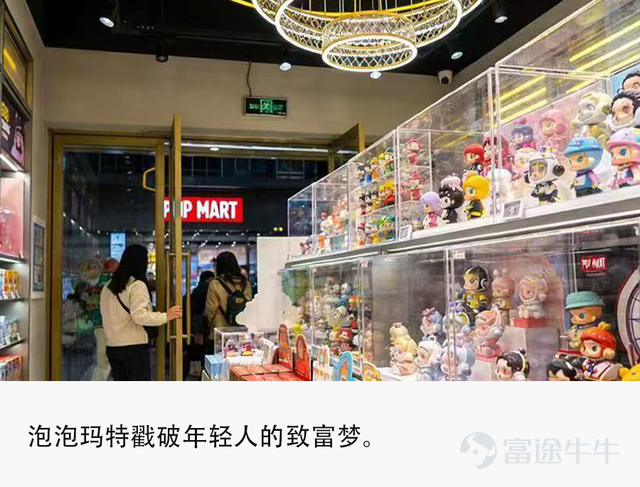
However, the volatility in share price seems not to have affected consumer enthusiasm for offline purchases. Pop Mart's physical stores are still crowded with customers, but compared to last year, there is a noticeable difference.
The frenzy of long queues for Labubu is gone, and consumers have become more rational and dispersed. Although many categories are out of stock in the store, customers often communicate with staff and then follow restocking updates via WeChat mini-programs or store groups, almost eliminating the problem of 'impossible to get.'
A Pop Mart store employee told Tech Planet that the current consumer enthusiasm for Labubu and the recently popular Star People series is about the same. Compared to last year when all eyes were on Labubu, consumer interest has diversified significantly. Besides these two star IPs, other IPs like Dimoo and Skullpanda also show strong sales performance. According to feedback from customers on-site, most buyers now are long-time Pop Mart fans who understand the different IPs well and select items based on their preferences, while fewer casual buyers are present.
Pop Mart's jewelry store is similar; the frenzied rush for new products at the grand opening is over. Now, foot traffic in the store is relatively stable, with most customers having clear purchase goals before visiting the physical store to view the products and decide whether to buy.
Scalpers lost thousands, and the secondary market remains sluggish.
However, the secondary market may have already anticipated Pop Mart’s temporary share price drop.
The state of the secondary market serves as the most direct reflection of Pop Mart’s and other trendy toy brands’ sales performance. The issues facing Pop Mart are clearly reflected in the pricing and trading activities within the secondary market. The Labubu craze has faded, and new IPs lack sufficient momentum. While the temporary downturn in the secondary market doesn't necessarily predict Pop Mart's future, it does reflect the current challenges faced by this giant in the trendy toy industry.
A person involved in reselling trendy toys told Tech Planet that the price of Labubu in the secondary market has been falling since the second half of last year. High-premium products are becoming increasingly rare. Some limited-edition collaborations, like the recent Sanrio series, might see a short-lived premium upon release, but even those premiums cannot return to the previous levels and remain within normal ranges. Additionally, many older models are being sold below cost in the second-hand market.
Among the new IPs, only the Star People series gained significant popularity for a period, while other IPs have maintained relatively steady states. Aside from existing fanbases, the growth rate of 'die-hard fans' for these IPs cannot compare to Labubu’s surge last year. Even the Star People series failed to replicate last year's buying frenzy, which once drew nearly universal attention. Nowadays, IP popularity mainly stays within niche circles. According to the aforementioned source, during the first few days after a new product launch, prices may rise six to seven times higher but quickly stabilize. Under normal circumstances, premiums are controlled within 10%-20%. For example, an 899-yuan gift box typically sells for between 980 and 1050 yuan.
A former ticket scalper who has since left the business told Tech Planet that as Pop Mart's production capacity continues to rise, many scalpers have incurred losses and exited the market. He himself was not severely affected because he didn't engage in bulk stockpiling. However, a player who did hoard inventory suffered significant losses. At the peak, he had accumulated goods worth over 8,000 yuan, which can now only be sold for about 2,000 yuan. Fearing that prices will continue to drop, he is gradually selling off his stock. Initially driven by interest, he started with sporadic purchases but ended up losing more than 6,000 yuan due to excessive stockpiling.
A scalper with one year of experience told Tech Planet that expectations are relatively low within second-hand Pop Mart reselling groups. Since Pop Mart operates directly, scalpers used to purchase products at full price or sweep shelves at physical stores—those people often seen buying in bulk at offline locations. Previously, Labubu was extremely difficult to obtain, leading to high markups, meaning profits could still be made even on non-hidden editions. As such, buying in large quantities guaranteed profit.
However, now there are fewer product categories with high premiums, and trendy toy collectors are gradually losing interest in competing for items with high markups. Consequently, profit margins for second-hand reselling have plummeted. Therefore, scalpers increasingly rely on sourcing goods from proxy factories and selling them on platforms like Xianyu or in some discount groups. These items are essentially identical to authentic products but come at half the retail price, allowing scalpers to sell them at around 70% of the retail price and still make modest profits consistently.
The aforementioned scalper told Tech Planet that in order to seek more business opportunities, some of them have shifted from focusing solely on Pop Mart to diversifying into other blind box IPs that are recognizable but not yet mainstream, thereby spreading risk while maintaining Pop Mart as their primary focus.
Can it return to its peak?
As demonstrated by Pop Mart's current situation on the consumer side, deeper concerns in the capital markets may stem from its heavy reliance on a single IP and the lackluster performance of subsequent IPs.
In 2025, Labubu's annual revenue reached 14.161 billion yuan, accounting for an overwhelming 38%. In the second half of 2025 alone, Labubu generated 9.35 billion yuan in revenue, nearly double the 4.81 billion yuan earned in the first half, underscoring its deep dependence on a single IP. In contrast, the classic IP MOLLY brought in just 2.9 billion yuan, while other new IPs delivered relatively mediocre results.
Moreover, overseas markets are considered one of the core growth engines for Pop Mart in 2025, with high expectations for growth. Despite overall increases, overseas revenue for the full year of 2025 hit 16.27 billion yuan, marking a 291.9% year-on-year increase. However, significant cooling occurred in the second half of the year, with notable declines in the Americas, Europe, and the Asia-Pacific region.
At the beginning of this year, Pop Mart's announcement of entering the home appliance industry drew considerable criticism from consumers. The stark difference between the positioning of trendy toys and the highly competitive home appliance sector has led to skepticism about Pop Mart's new venture.
Due to these compounded factors, returning to its peak in the short term does indeed face challenges. Nevertheless, many investors still express optimism about Pop Mart's future.
An investor shared her thoughts, stating that this company is still consistently profitable. It's just that its short-term growth has not met market expectations, but this does not mean the company isn’t making money, nor does it suggest that there won’t be opportunities for future growth to exceed expectations. Ultimately, time will reveal the answer.
Risk Disclaimer: The above content only represents the author's view. It does not represent any position or investment advice of Futu. Futu makes no representation or warranty.Read more

Comments
to post a comment
2
1