
Earnings Review of the Internet Advertising Landscape: Where Will New Growth Come From?
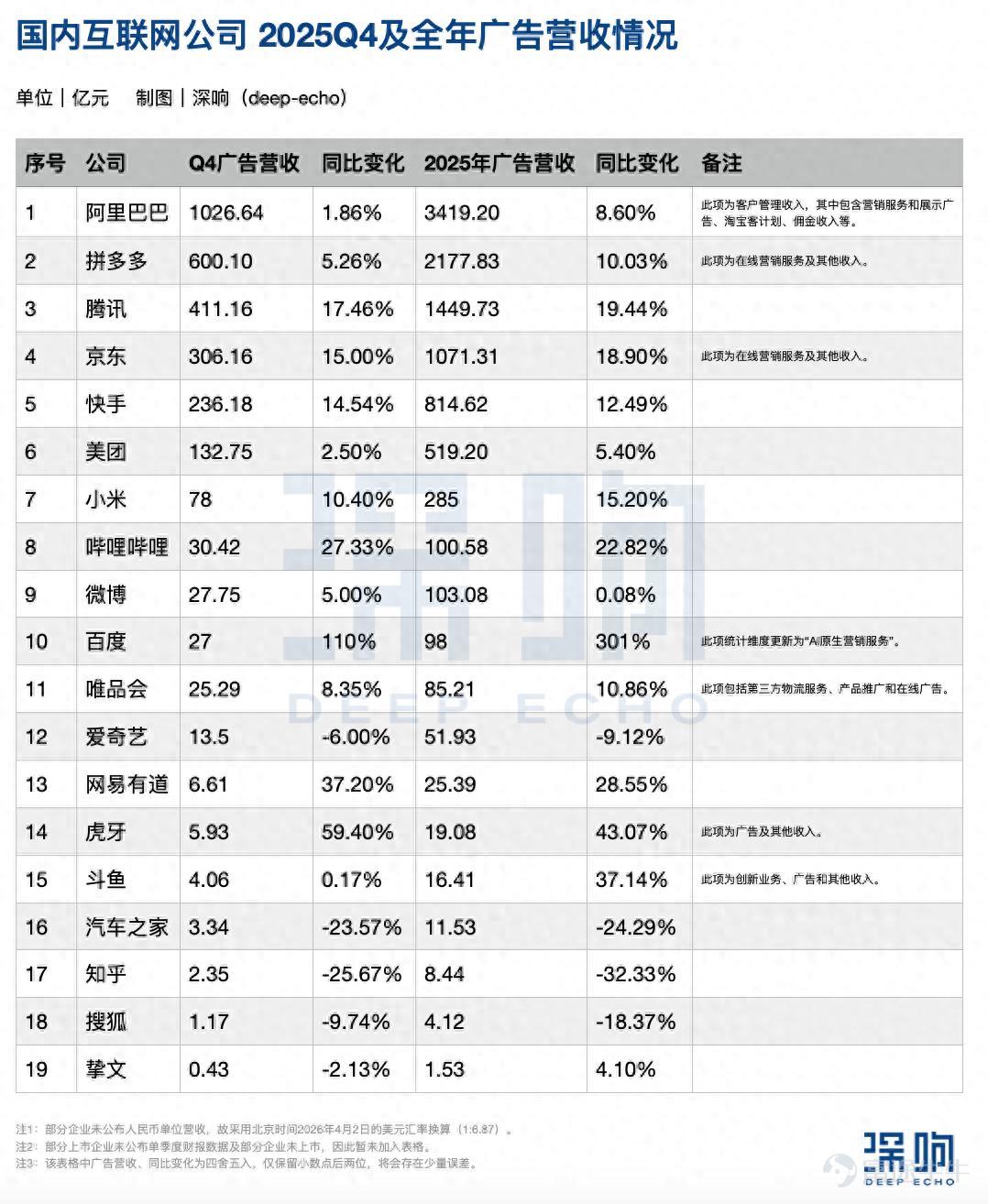
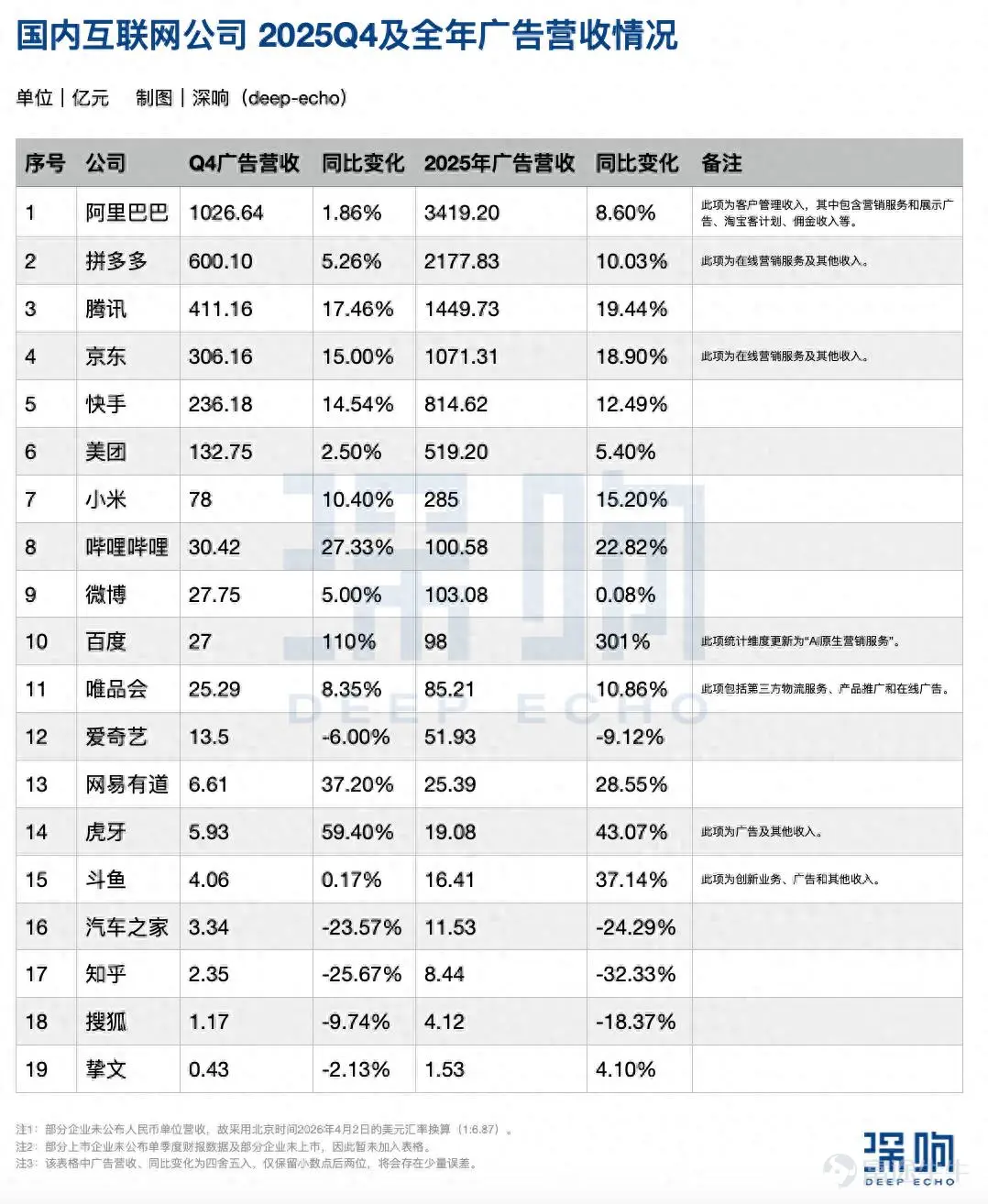
Recently, major internet companies have released their earnings reports. Looking at the advertising revenue in 2025, 'stability' is the most direct impression – whether looking at Q4 alone or the entire year, the rankings of leading companies have hardly changed. (Note: ByteDance is not included in the statistics as it has not gone public and does not have accurate publicly available data.)
Contrary to the industry's perception of slowing growth in internet advertising, in fact, many companies have achieved solid growth. Tencent Advertising maintained double-digit growth despite its large base, with Q4 advertising revenue reaching 41.116 billion yuan and full-year advertising revenue reaching 144.973 billion yuan. JD.com's advertising revenue has seen double-digit growth for five consecutive quarters from Q4 2024 to the whole year of 2025. Bilibili and NetEase Youdao are among the 'mid-sized internet companies' with growth rates exceeding 20%.
Notably, starting from Q3 2025, Baidu introduced a new disclosure category called 'AI Native Marketing Services.' Under this category, relevant revenue in 2025 increased by 301% compared to the whole of 2024, signaling that 'AI is becoming a core driver.'
Against the backdrop of consumption fluctuations and advertisers' budget adjustments still collectively influencing the advertising market, we must not only look at 'who is growing faster,' but also analyze and answer specifically where the new growth is coming from.
E-commerce advertising remains the largest segment but has entered a 'rational range'
According to various data statistics, e-commerce advertising is still the most stable base of the internet advertising market—continuously occupying nearly 30% of the market share for many years and leading all forms of advertising with a year-on-year growth rate of 15.58%. In macro terms, e-commerce advertising remains one of the sectors with the most predictable growth.
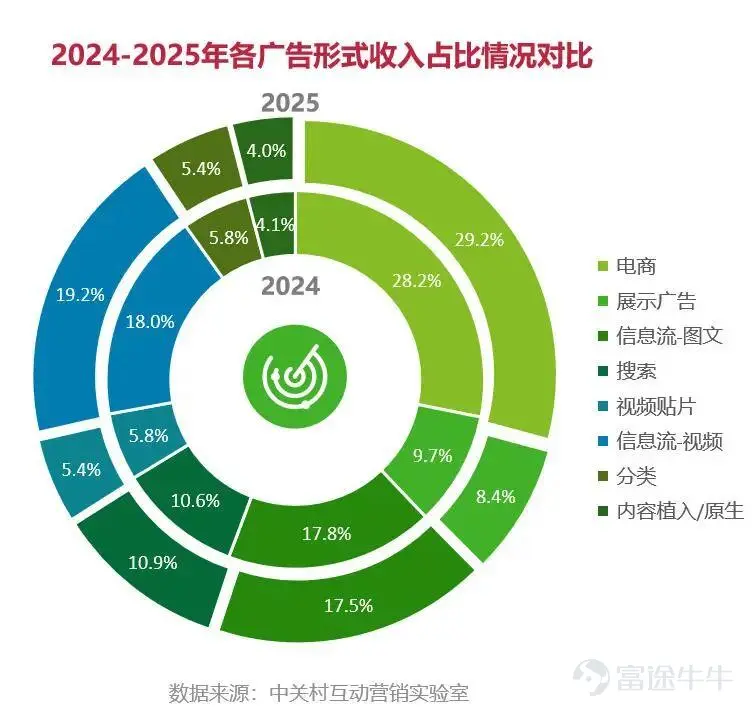
"2025 China Internet Advertising and Marketing Trends Report"
A closer look at several major e-commerce platforms shows that JD.com's advertising revenue growth rate is higher. In Q4 2025, its marketing and advertising revenue reached 30.616 billion yuan, a year-on-year increase of 15.00%, which is in line with the overall industry growth; in Q2 and Q3, advertising revenue growth even exceeded 20%. For the full year of 2025, marketing and advertising revenue amounted to 107.131 billion yuan, an increase of 18.90% year-on-year.
Looking further into JD.com's advertising business strategies, the core drivers supporting revenue growth come from multiple aspects:
First, the improvement in advertising efficiency. JD.com gradually transitioned the ad placement process, originally reliant on human expertise, towards automation and intelligence by optimizing traffic allocation mechanisms and introducing AI algorithms alongside agency tools. Underpinning this was the self-developed large model upgraded to JoyAI in July 2025, providing foundational support for ad recommendation algorithms. Additionally, "Jing Xiaotong" (JD.com’s AI-powered advertising assistant) generates ad creatives and materials while integrating cross-account data to automatically complete attribution analysis.
Second, synergy from the food delivery business. In Q4 2025, JD.com's food delivery contributed an additional 2%-3% growth to advertising revenue. The expansion of food delivery services increased ad reach frequency and enhanced the overall commercial efficiency of traffic.
Third, the expansion of the content ecosystem. In March 2025, JD.com launched the "Jingchuang Double Hundred Plan," investing 10 billion in traffic and 2 billion yuan in cash through short videos, live streaming, and influencer collaborations, creating new ad placement scenarios for advertisers. The vibrancy of the content ecosystem directly increased ad inventory, prompting merchants to allocate more budget toward acquiring content-driven traffic.
Fourth, the expansion of the merchant ecosystem and cross-platform collaboration. JD.com continuously attracted new merchants and improved merchant activity through initiatives like the "Merchant Growth Acceleration Program" and the "Spring Dawn Plan." The number of new merchants grew by 57% year-on-year, with nearly a thousand new merchants exceeding 10 million yuan in sales. This expansion of the merchant base directly increased the number of advertisers. Meanwhile, JD.com partnered with Xiaohongshu in May to launch the "Red-JD Plan," allowing advertisers placing ads on Xiaohongshu to add direct JD.com shopping links. This positioned JD.com as the final touchpoint in brands' omnichannel marketing, further enhancing merchants’ willingness to advertise on JD.com.
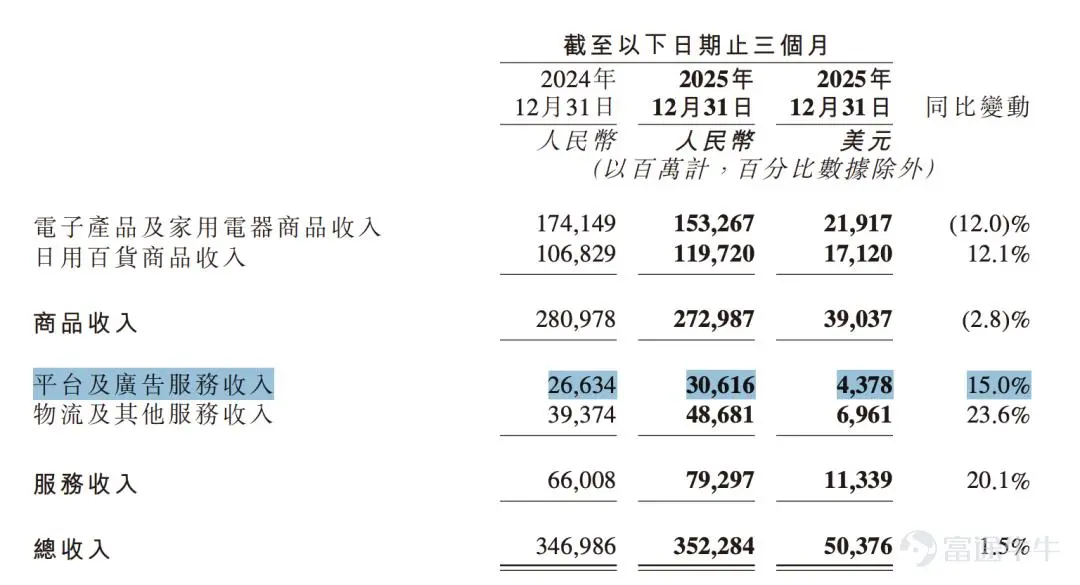
Source: JD.com Financial Report
In contrast, Alibaba and PDD Holdings showed performance following a different rhythm.
Alibaba's year-on-year growth rate for customer management revenue in the first three quarters of 2025 remained around 10%. Revenue in the fourth quarter was RMB 102.664 billion, increasing by 1% year-on-year, almost flat compared to the same period last year. For the full year of 2025, total customer management revenue reached RMB 341.920 billion, growing by 8.60% year-on-year.
Since the launch of Alibaba’s 'Full-Site Promotion' in April 2024, the company had anticipated more significant growth as the product gained popularity during its earnings calls. However, due to continuous adjustments in software service fees and merchant policies on the platform, many short-term deductions from merchants were reduced. For instance, starting September 2024, Tmall eliminated the annual software service fee and implemented a tiered reduction for the newly introduced 0.6% basic software service fee. Other measures included expanding commission-free categories, introducing 'Return Protection,' and implementing various cost-cutting initiatives. These adjustments temporarily weakened the growth rate of customer management revenue, resulting in limited overall revenue growth.
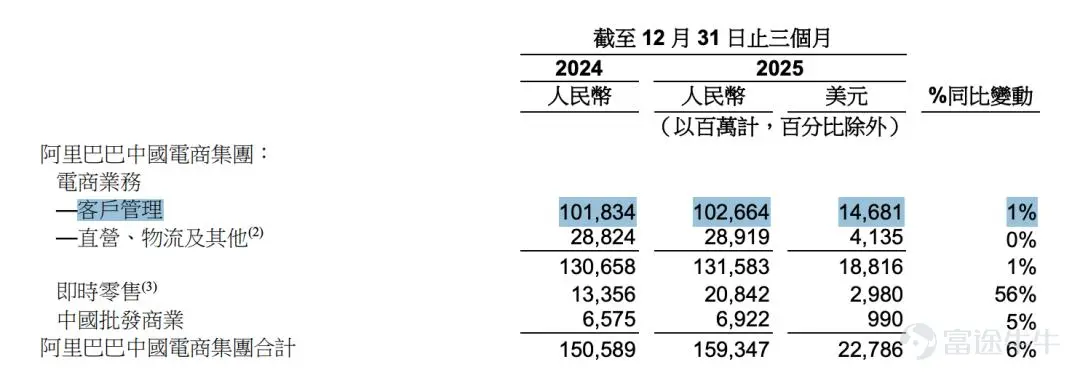
Source: Alibaba earnings report
The changes at PDD Holdings are even more pronounced.
Before 2023, its online marketing services revenue had long maintained high growth of around 50%. However, this began to gradually decline from 2024 onward, with revenue in the fourth quarter of 2025 reaching RMB 60.010 billion, and year-on-year growth dropping to 5.26%. For the full year of 2025, total online marketing services revenue amounted to RMB 217.783 billion, representing a year-on-year increase of 10.03%.
PDD Holdings attributed this to 'actively giving up profits for ecosystem benefits.' During the earnings call, Co-Chairman and Co-CEO of PDD Holdings, Zhao Jiazhen, mentioned that the company chose to heavily invest in the supply chain, allocating resources toward long-term capability building. Additionally, initiatives like the 'Billion-Yuan Reduction Plan' and the 'Trillion-Yuan Support Program' directly affected the platform’s advertising revenue from merchants but were necessary investments to 'nurture the ecosystem.'
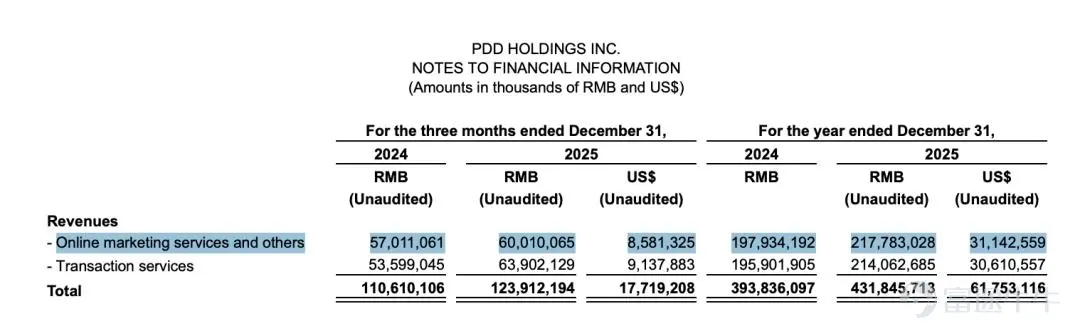
Source: Pinduoduo's financial report
Although specific data for Douyin E-commerce is unavailable, its series of strategic adjustments in 2025 align with those of Alibaba and PDD Holdings, pointing towards ecosystem co-construction.
On one hand, 'subtracting': For example, in early 2025, Douyin introduced 'Nine Major Merchant Support Policies,' covering nearly a hundred product categories exempt from commissions, automatic reimbursement of promotional fees, reductions in freight insurance and deposit requirements, and a small business assistance fund, among other cost-reduction measures. On the other hand, 'adding': The platform continues to strengthen shelf scenario capabilities, focusing on enhancing three key entry points—Douyin Mall, search, and store homepage—and integrating DouBao AI Assistant into Douyin Mall to create a new AI-based recommendation portal.
Overall, the 'rational range' of e-commerce advertising growth does not indicate weak growth but rather an active shift in growth strategies by platforms—from relying on traffic monetization via 'ad-driven' models to adopting 'operations-driven' models centered on supply quality and merchant ecosystems.
AI Fully Penetrates the Entire Advertising Chain
An obvious trend in 2025 is that almost all platforms with growing ad revenues have repeatedly emphasized the role of AI in their financial reports.
Further analysis of the AI products and tools mentioned in these companies' financial reports reveals that the changes brought by AI have permeated the entire advertising chain, from placement to production and conversion.
– On the placement side, AI is taking over decision-making processes that were previously highly reliant on human expertise.
– On the production side, tools like AIGC and digital humans have significantly lowered the threshold for creating materials.
– On the conversion side, search, recommendation, and shopping guide pathways have been reshaped, linking ads more directly to transaction outcomes.
Take Tencent as an example. In 2025, its marketing service revenue reached 144.973 billion yuan, a year-on-year increase of 19%. In the fourth quarter alone, revenue hit 41.116 billion yuan, up 17% year-on-year. For a company with Tencent Ads’ scale, double-digit growth is quite remarkable.
During the earnings call, management highlighted that the upgrade of the foundational ad technology model, along with the launch of the intelligent placement product suite 'AIM+', has improved click-through rates and ad prices. AI-driven precision targeting and creative generation have significantly enhanced advertisers' ROI compared to other channels. Additionally, AI’s optimization of ad targeting, expansion of closed-loop marketing services, and customized formats for specific scenarios (such as playable mini-game ads) have collectively driven growth.
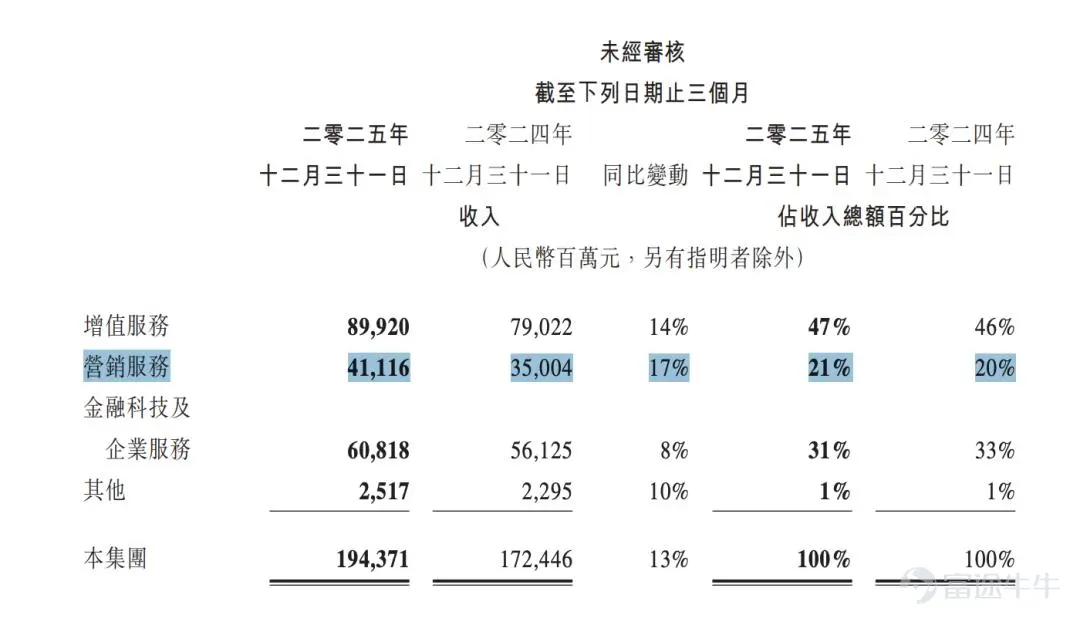
Image source: Tencent Financial Report
Kuaishou also devoted significant space in its financial report to discussing the application of AI in its advertising business.
In 2025, Kuaishou's annual online marketing service revenue reached 81.462 billion yuan, up 12.49% year-on-year. In the fourth quarter, online marketing service revenue reached 23.618 billion yuan, representing a year-on-year increase of 14.54%. Overall, quarterly growth rates remained stable within the 12%-15% range.
Kuaishou stated that through generative reinforcement learning bidding models, large-scale recommendation models, and tools like AIGC short videos, digital humans, and digital employees, the platform has achieved simultaneous improvements in placement efficiency and conversion effectiveness. Specifically, the fully automated placement system UAX has achieved an external circulation consumption penetration rate close to 80%, while AIGC tools have significantly reduced the entry barrier for small and medium-sized merchants, directly driving the growth of ad spending.
Meanwhile, in the fourth quarter of 2025, Kuaishou AI's revenue reached 340 million yuan. By the end of 2025, Kuaishou AI's global user base exceeded 60 million, with more than 600 million videos generated cumulatively. It provided API services to over 30,000 enterprises and developers. Kuaishou AI also formed a synergistic effect with its advertising business: AIGC significantly lowered the production threshold for advertising materials, and video content generated by Kuaishou AI could be directly utilized for rapid iteration of ad creative concepts, indirectly driving ad consumption growth.

Source: Kuaishou's financial report
Bilibili’s advertising revenue in Q4 2025 reached 3.042 billion yuan, representing a year-over-year growth rate of 27%. The company’s total annual advertising revenue amounted to 10.058 billion yuan, an increase of 23% compared to the previous year, making it one of the few companies that maintained a growth rate of over 20% consistently.
In its financial report, the company specifically highlighted that AI-driven advertising infrastructure, combined with community content interaction, played a crucial role in propelling its annual advertising business beyond the 10-billion-yuan mark.
Overall, Bilibili made significant strides in 2025 by implementing comprehensive AI infrastructure covering everything from material generation and talent matching to data insights, thereby establishing intelligent capabilities across the entire advertising value chain.
- Regarding material generation, Bilibili launched its commercial official AIGC platform 'Stellar AI' in January, tested the AI video creation tool 'Peanut AI' in August, and officially rolled it out in Q4.
- During the ad placement phase, Bilibili introduced the 'Automatic Material Exploration for Ad Placement' feature, which can intelligently analyze materials based on advertisers’ bids and objectives while continuously iterating the oCPX bidding model for performance ads. For influencer marketing, the Spark platform launched the 'AI Talent Selection' feature, helping brands choose suitable content creators (UP Masters) and enhancing the efficiency of commercial deal matchmaking.
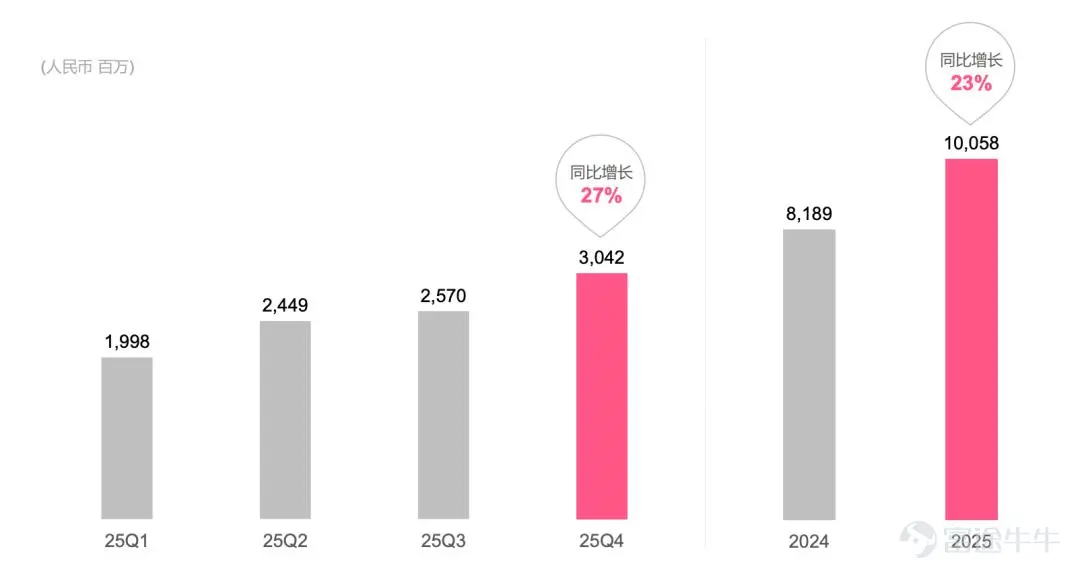
Bilibili's Quarterly Advertising Revenue in 2025. Source: Bilibili Investor Relations.
NetEase Youdao has provided a case study for the overseas advertising market.
In Q4 2025, NetEase Youdao's online marketing service revenue reached 660 million yuan, representing a year-over-year increase of 37.2%. For the full year 2025, its online marketing service revenue grew by 28.55%, reaching 2.539 billion yuan.
The company attributes its growth to internal demand within the NetEase group and the expansion of overseas markets, while also explicitly mentioning that this is due to the significant improvement in advertising efficiency thanks to ongoing investment in AI technology. Tools such as AI ad optimization specialists and iMagicBox are helping achieve higher conversion rates in programmatic advertising and KOL marketing.
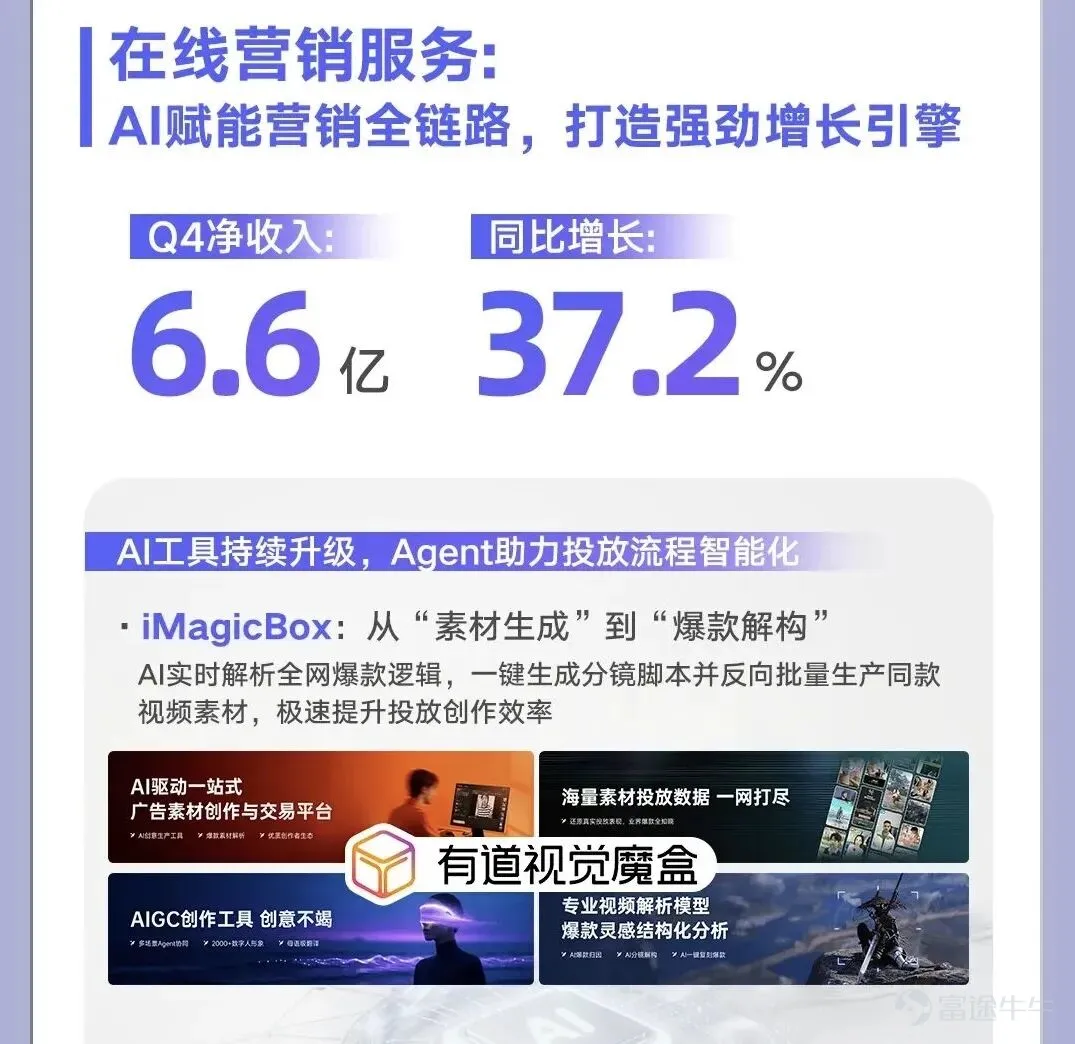
Image source: NetEase Youdao Official Account
The companies mentioned above are mostly still improving the efficiency of their existing advertising systems through AI. In contrast, Baidu has adopted a more aggressive approach.
Since the third quarter of 2025, Baidu introduced a new category called 'AI-native marketing services,' separating AI marketing products centered around intelligent agents and digital humans, and clearly positioning them as the company's second growth curve outside its traditional business. For the full year of 2025, this segment generated 9.8 billion yuan in revenue, a year-on-year increase of 301%.
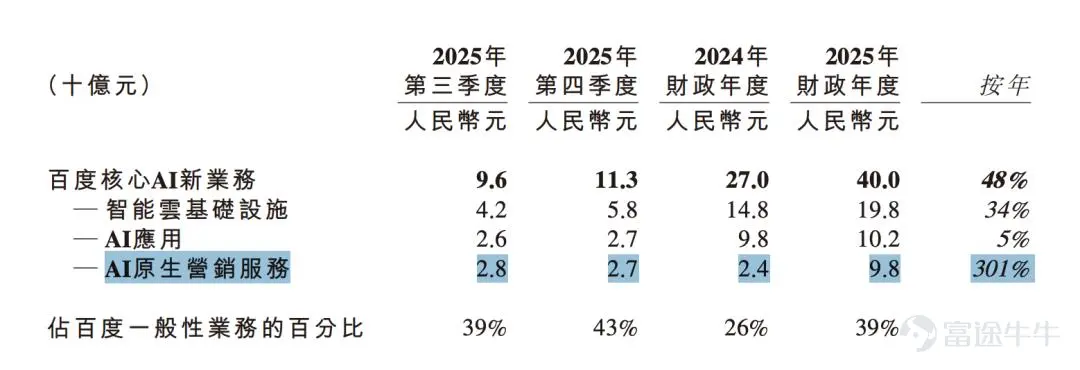
Image source: Baidu's financial report
In terms of specific practices, Baidu has indeed started early and continued to invest heavily in AI marketing.
Over the past two years, Baidu has continuously integrated large model capabilities into every aspect of the marketing chain—including new search, merchant intelligent agents, the Qingduo platform, and minimalist ad placement tools. These capabilities are not isolated single-point products but operate in synergy around a complete marketing process.
Previously, DeepEcho communicated with Zhang Lihong, head of Baidu's commercial product division, and learned that the development path was not formed all at once but rather based on rapid validation and screening in numerous real-world business scenarios: by widely experimenting at different stages and gradually converging on product forms that can stably improve ROI, are accepted by advertisers, and have scalable capabilities. This further confirms the real effectiveness of AI in enhancing advertising operations.
Whether it’s an aggressive transformation or incremental optimization, everyone ultimately points in the same direction: AI is redefining the productivity of advertising. Although AI has not yet demonstrated astonishing driving force, everyone is placing their bets on future growth here.
AI applications, short dramas, and manga dramas are driving advertising growth.
As AI technology gradually becomes the underlying capability for advertising production and placement, another interesting phenomenon is emerging: AI applications — those large model and AI tool companies — have begun large-scale ad placements, collectively becoming a significant force driving advertising revenue growth in 2025.
Bilibili is the most typical beneficiary.
The company mentioned in its financial report that AI-related advertising spending grew by over 150% year-on-year in 2025. Major model applications such as Kimi and DouBao all consider Bilibili a core platform to reach younger audiences. Management further emphasized during the earnings call that the platform's aggregation of young, highly educated, and tech-oriented users makes it more efficient at converting AI-related ads, achieving both 'awareness building and conversion.' This also gives Bilibili unique advertising value among content platforms.
It’s not just Bilibili; short video and information feed platforms' high efficiency in content distribution and user reach has made them a widely favored channel for AI applications to acquire users. Kuaishou’s Q4 earnings report also noted that AI application clients significantly increased their marketing budgets, with the platform effectively absorbing this influx of ad spending.
To acquire a large-scale user base, social media, long-form video, and other platforms are key channels not to be missed, and Tencent happens to fully cover these scenarios. Therefore, in its financial report, Tencent also highlighted a significant increase in ad placements from gaming, e-commerce, education, and internet services sectors, with internet services (including AI applications) being a major component.
According to a joint report by DataEye and DianDian Data, non-Tencent apps like DouBao, Kuake, Qwen, Kimi, and XingYe are loyal supporters of Tencent Ads.
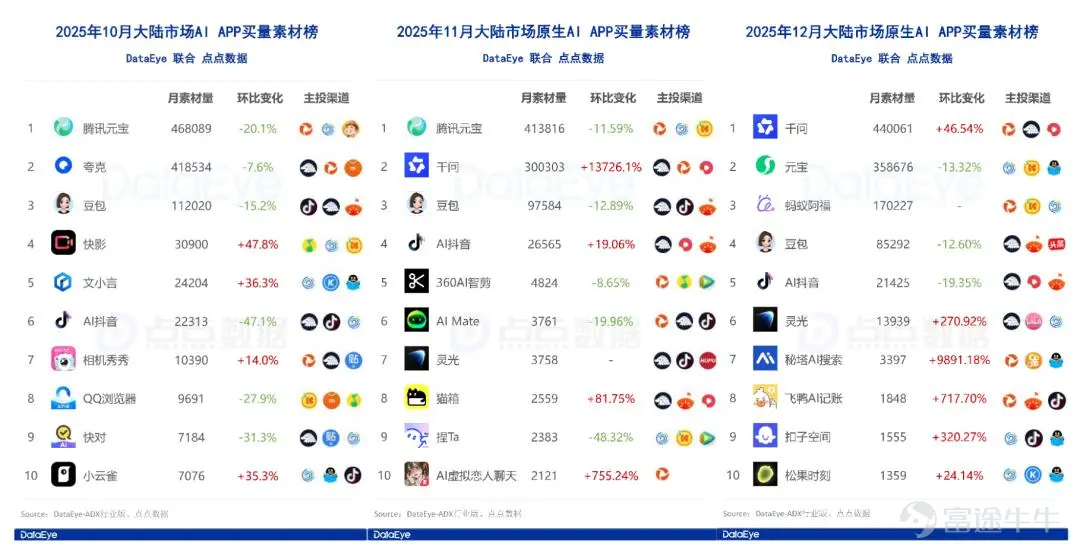
Image source: DataEye
Another important source of growth alongside AI applications is short dramas and manga series.
After several years of rapid development, the short drama industry has formed a relatively mature business model. Advertising is no longer just a trial run but has become a scalable growth strategy.
For instance, Kuaishou mentioned that short dramas belong to its primary external growth client category, with marketing expenditures for short dramas growing by over 300% year-on-year in Q4 2025. This reflects that short drama producers are still in a phase of acquiring user scale through continuous ad buying, showing strong dependency on traffic.
In contrast, manhua series represent a relatively 'newer' category of advertisers.
Starting from mid-2024, the number of players in the manhua series space rapidly increased, reaching a peak of ad spending during the summer of 2025. According to DataEye-ADX industry data, the number of ongoing manhua series grew from 234 in January to 17,944 by December 2025, representing an increase of over 76 times throughout the year. The number of creatives for ongoing manhua series rose from 27,000 in January to 1.623 million by December, marking a yearly increase of over 59 times.
The core advantage of manhua series does not lie in the narrative format itself but rather in the efficiency revolution on the production side — through AI-powered video generation capabilities, content creation costs and cycles have been significantly compressed, enabling more small and medium-sized teams to participate in supply. As one of the main platforms hosting manhua series placements, Kuaishou mentioned in its earnings report that the video generation capabilities of its Lingyi AI directly propelled the rapid expansion of manhua series content supply and further drove synchronized growth in distribution and advertising demand.
It is not just Kuaishou; ByteDance leverages Tomato Fiction as a vast IP source that binds many creators at the supply end, coupled with Douyin’s traffic distribution advantages and technical empowerment like the Seedance model, making the performance of manhua series particularly strong.
According to Short Series Study Room statistics, the cumulative annual viewership of manhua series on Douyin exceeded 75.772 billion, with 37,000 works launched. Data from Ocean Engine also shows that daily ad spending on manhua series surpassed 4 million in the first half of 2025, growing by 568%, and by December, it had already broken through 20 million.
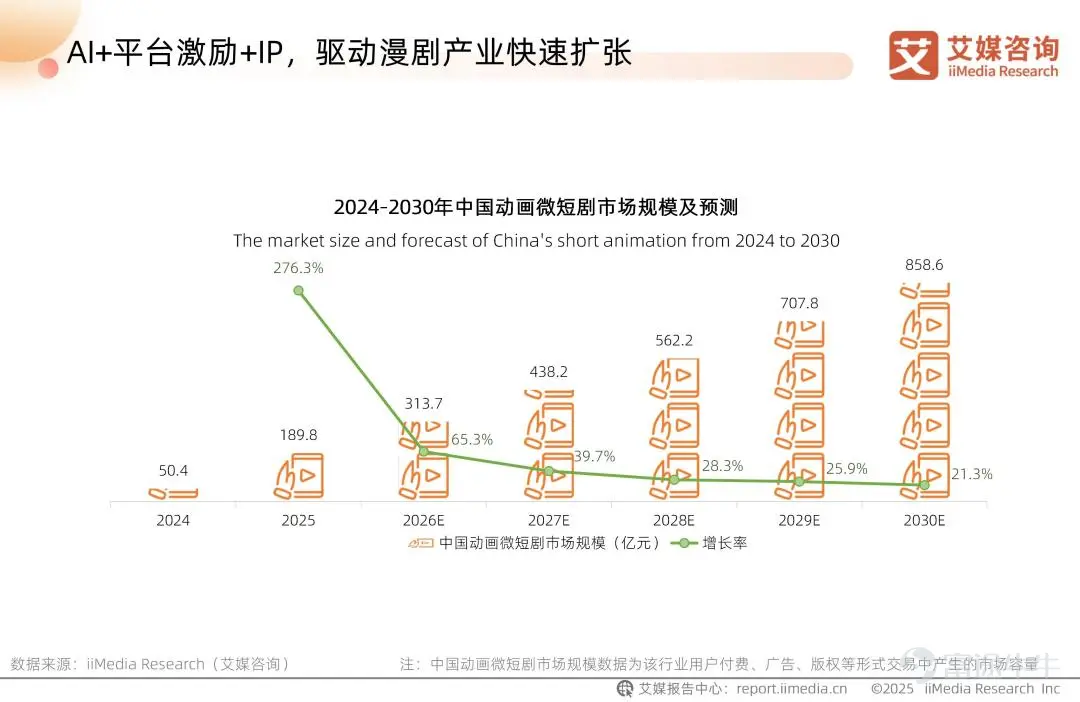
iiMedia Consulting '2025-2026 China AI Manhua Industry Trend White Paper'
Feedback from the platform side indicates that this trend is being further confirmed.
NetEase Youdao explicitly mentioned in its 2026 outlook that it would focus on capturing marketing demand growth in areas such as AI applications, gaming, and short series, planning to primarily handle related budgets through programmatic advertising and KOL marketing capabilities.
AI applications and short series/manhua share the common characteristic of being in a 'burning money for users' phase, while the vast pool of the internet happens to provide sufficient traffic dividends. The match between supply and demand jointly drives the explosive growth in advertising spend within emerging industries. Companies like NetEase Youdao's optimism and continued investment also indicate that these emerging sectors are not merely brief phases of 'traffic grabbing' but rather long-term opportunities that can be continuously sustained.
In summary, in 2025, the internet advertising industry entered a phase characterized by 'multiple variables working together': a stabilizing traffic structure, more prudent budget allocation, continuous expansion of content supply, and technology reshaping efficiency boundaries at the foundational level.
Entering 2026, this trend will continue. With the accelerated penetration of AI technology, whether it's e-commerce advertising, content platform advertising, or the investment logic of emerging industries, all are being redefined by the same set of technological capabilities. The differences between platforms increasingly depend on who can more efficiently convert these technological capabilities into sustainable business outcomes.
For platforms, the growth of advertising businesses will be a long-term competition centered around efficiency, structure, and capabilities. For advertisers, this also means a shift in investment logic: moving from reliance on experience and channel selection in the past to a greater dependence on system capabilities and efficiency evaluations; transitioning from 'buying traffic' to directly 'buying results'.
Risk Disclaimer: The above content only represents the author's view. It does not represent any position or investment advice of Futu. Futu makes no representation or warranty.Read more
Comments
to post a comment
1