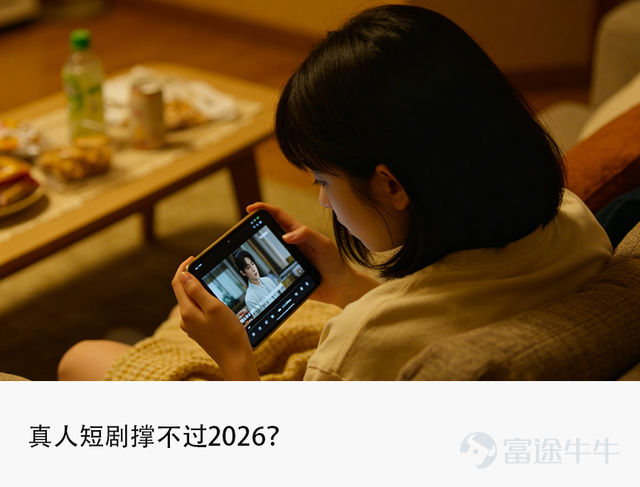

AI actors sweep the film and TV industry, resembling celebrities and borrowing faces from ordinary people

Source| Tech Planet
Text| Zhai Yuanyuan
In 2025, short drama actors will welcome the springtime of their acting careers.
Endless acting opportunities, appearances on variety shows, and red carpet events have driven up daily pay rates. Even actors in 'third male' or 'third female' roles can command quotes of 1,000 to 3,000 yuan per day. Actors from hit short dramas can rise to top-tier status with a single breakout role, seeing their pay skyrocket by tenfold to fifty or sixty thousand yuan.
However, in just a year, the short drama space has been taken over by AI-driven short dramas.
Live-action short dramas have fallen from grace into a trough. Top actors are being reported as underpaid, while many mid-tier actors are airing grievances on social media about their compensation being slashed. Scripts that were once too numerous to handle have now halved in quantity. An independent producer revealed to Tech星球 that a leading short drama actor who previously received around 30 script offers in a month now only gets 7 to 8.
In stark contrast to the decline of live-action short drama actors, AI actors are thriving. Discussions around AI actors have reached unprecedented levels over the past half month. Long-form drama companies like Yaoker Media signed two AI actors, while Yuxiao Media announced contracts with six AI actors. Industry insiders speculate that all roles below 'second male lead' will be played by AI actors; AI short dramas stealing faces has made the entire industry jittery. Many short drama professionals pessimistically predict that live-action short dramas might cease to exist by 2026.
AI actors spark anxiety in the entertainment industry
Short drama professionals are caught in an AI-induced anxiety, while the buzz around AI actors continues to grow amid the industry's push towards AI-powered short dramas.
Film companies signing AI actors make the future of live-action films even more concerning. Although AI actors face significant controversy and could never fully replace human actors, for now, the rise of AI short dramas is shrinking the room for live-action short dramas to survive.
The impact on human actors is immediate. An independent producer explained to Tech星球 that apart from top-tier actors facing project cancellations, compensation has also dropped significantly—some actors’ pay was reduced from tens of thousands to just a few thousand yuan. Others saw their final payouts discounted by 20%. Unknown short drama actors have taken to social media to complain about their pay being cut by 40%. One such actor told Tech星球 they've been greatly affected, with very few shooting projects available now. Many live-action actors are forced to change careers.
As AI short dramas rise, live-action short dramas continue to wane. Hongguo Platform consistently explains that 'canceling guarantees' doesn’t mean abandoning live-action short dramas—it’s a structural adjustment reflecting the industry's evolution to a specific phase. The platform remains committed to supporting live-action short dramas. On April 3rd, Douyin Group's Short Drama Copyright Center even set up a 200 million yuan special fund to incentivize live-action short dramas. However, the market for live-action short dramas keeps contracting.
From platforms to production companies, there’s a rush to pivot. Luyao, a short drama professional, revealed that according to her information, Jiuzhou seems to have abandoned live-action dramas. AI-integrated dramas may displace many actors because they drastically lower costs. Companies previously focused on live-action short dramas are shifting towards AI-integrated ones. Chengdu Zhongdu, a short drama company, announced in March that it would exit live-action filming entirely, redirecting all employees toward contract production, screenwriting, and AI-directed dramas, no longer participating in live-action shoots. Their business focus will shift to investment production, AI drama production, and scriptwriting. Even top live-action short drama companies like Tinghuadao are internally monitoring and studying AI-integrated short dramas.
Chinese Online, which is projected to incur a full-year loss of 580 million to 700 million yuan in 2025, has also started collecting AI live-action short drama scripts. A source close to Chinese Online revealed to Tech Planet that the company's domestic operations have not yet launched any AI live-action series and are just beginning to gather scripts. The domestic business remains focused on producing live-action adaptations of online novels, following a high-quality short drama strategy, while AI short dramas are being developed simultaneously, though no breakout hit has emerged yet. Chinese Online owns numerous online novels suitable for adaptation into short dramas, and its editors-turned-producers are now working on both AI comics and AI live-action series. The difference may lie in higher script requirements for live-action series, ensuring better cost recovery.
The earliest department established domestically by Chinese Online was the anime division, which was later renamed the AI Anime Division. Eventually, they stopped producing static comics altogether, with the entire team shifting focus to AI comic dramas. Due to the high costs associated with live-action dramas, Chinese Online’s domestic live-action projects follow a premium route to ensure profitability. 'Currently, the volume of output is substantial, but it feels like working for Red Fruit Short Dramas. Last year, the company had an 80% hit rate for premium short dramas.' However, the actual number of productions was much lower than planned at the beginning of the year, with only a few dozen releases last year. For now, Chinese Online’s main focus remains on comic dramas, with significant collaborations with ByteDance and Tencent.
An AI wave sweeping across the entire industry
For live-action short drama companies, the reality is stark: transitioning carries certain industry barriers; not transitioning could lead to failure.
Live-action short dramas became an industry hotspot driven by platforms, production companies, and individual investors. However, when the tide receded and speculative capital exited, over 90% of these ventures ended up unprofitable, causing the sector to cool down rapidly.
The impact of the AI short drama trend on live-action short dramas continues to spread. On April 3, according to short drama media outlet 'New Wrist,' 1,340 actors and staff publicly demanded overdue wages totaling 5.6 million yuan. The client had not made payments, leading to the collapse of the production company's cash flow. Such unpaid wage disputes involving live-action short drama companies are not uncommon.
Embracing AI live-action dramas has become an industry consensus, whether proactive or reactive. An employee from a comic drama company stated that this isn't about personal preference regarding AI short dramas—it's a necessity. There’s no choice but to adapt.
As platforms gain momentum, players reliant on platform traffic must chase after the latest trends. From paid short dramas to free short dramas, then to comic dramas, and most recently AI live-action dramas, Red Fruit has begun replicating its past experience in self-produced live-action short dramas into comic dramas and AI live-action series. It is understood that Red Fruit’s collaboration with comic drama companies mainly falls under two models: 'contract manufacturing' and 'copyright acquisition.' Under the contract manufacturing model, Red Fruit provides IP content, the contracted company handles production, and the copyright belongs to Red Fruit as part of its self-produced series. Copyright acquisition includes both exclusive and non-exclusive partnerships.
AI short dramas have surged ahead aggressively, even evolving into more niche markets. Currently, AI short dramas are categorized into AI comic dramas, AI live-action dramas, and AI narrated dramas. Lü Shaolong, Vice General Manager of top comic drama company Judo Short Drama & Lingju Animation, mentioned that the company launched its AI live-action drama business in December 2025. Initially, the goal was to produce high-quality AI live-action dramas, but due to the emergence of new categories like 'AI humanoid narration' (novel comic explanations), the company swiftly decided to ramp up production capacity. AI humanoid narration essentially pairs novel content with dynamic visuals, upgrading the art style from slapstick cartoons to human-like representations.
AI humanoid narration dramas boast an extreme cost-to-profit model. A short drama professional revealed to Tech Planet that the cost per episode of AI humanoid narration drama is extremely low, but hit shows can generate profit margins up to 100 times the investment. Although the absolute profit per episode is modest (around 100,000 yuan), the extremely low marginal costs still yield significant profits. However, correspondingly, the probability of producing a hit is also quite low.
The current team size of the company producing short AI-generated dramas is around 1,000 people, with a stable production capacity of 100 high-quality AI human dramas per month, along with 1,000 to 2,000 AI synthetic human commentary dramas. During the peak period before the Lunar New Year, they achieved a monthly output of 2,000 episodes.
However, compared to high-quality AI human dramas, the natural traffic红利 for AI synthetic human commentary has passed. The industry now relies on paid promotion to achieve profitability, though the sector itself remains profitable. Lü Shaolong stated that in the future, premium AI synthetic human dramas will be a major trend in the industry, as their content appeals to all age groups and is not restricted by genre.
Caught in 'face-stealing' controversy, can AI actors replace real humans?
AI short dramas have not only successfully taken center stage, but their visibility and discussion levels have even surpassed those of live-action short dramas.
The viewership of AI short dramas has been skyrocketing. According to DataEye, AI animated dramas accounted for nearly 30% of the total 8.67 billion views during the 2026 Spring Festival season for short dramas. Many AI animated dramas garnered over 100 million views. In March, the native viewership of the top 100 AI dramas on Douyin reached new heights, doubling from the previous month. The viewership ceiling for leading short dramas broke through 500 million, with the top three AI dramas each exceeding 500 million views. Within the top 100 AI drama rankings, AI synthetic human dramas increased from 38% in January to 85% in March.
It’s worth noting, however, that soaring viewership does not necessarily equate to user satisfaction. Users’ acceptance of AI human dramas is actually quite low. Many users have expressed concerns, and according to an industry report by Chinese online platforms, the acceptance rate for AI short dramas is impacted by the 'uncanny valley effect.' At this stage, among categories like traditional animated dramas, AI-assisted live-action, fully AI-animated, and fully AI synthetic human dramas, users show the lowest willingness to pay for AI synthetic human dramas.

Additionally, AI short dramas face numerous risks and challenges.
On April 3rd, Hongguo urgently removed an AI short drama called 'Peach Flower Hairpin,' which had become embroiled in a 'face-stealing' controversy. A synthetic character resembling a real-life user appeared in the drama, prompting a complaint from the individual. This AI 'face theft' incident is not isolated. Previously, AI short drama protagonists were accused of resembling celebrities like Xiao Zhan and Yang Zi.
A representative from an animated drama company told TechPlanet that in practice, short drama companies strictly avoid using celebrity faces or civilian portraits during the review process to reduce legal risks and prevent infringement such as 'face-stealing.' If a character resembles a certain celebrity, they would change the prompt and swap the face. However, sometimes the resemblance might be to an unknown person, which could slip past reviews, making it difficult to mitigate such risks.
Two AI actors signed by Yaoke Media were widely criticized and even boycotted by netizens for resembling multiple celebrities.
The controversy surrounding AI actors cannot be completely avoided for the time being, and at the same time, the commercial value of AI actors cannot be anchored to that of real-life actors. AI short dramas, which are often discarded after a single episode or even a single day, make it hard for audiences to remember the face of an AI actor.
Although many in the film and TV industry are optimistic about the future of AI actors, stating that the industry will definitely revolve around AI to rebuild a new mechanism, some insiders also mention that, in essence, AI actors are a form of virtual idol. There remains significant potential in terms of portrait rights, IP development, and licensing, and the industry might see the emergence of an 'AI Hatsune Miku' within the realm of AI actors.
However, some practitioners in the short drama field hold opposing views. A representative from a short drama company stated that the commercial value of real-life actors stems from the叠加of three personas: 'the character in the show,' 'their personal image,' and 'their commercial brand.' Currently, AI actors struggle to build a credible 'personal image,' limiting their ability to extend commercial value. AI actors cannot replicate the path of real-life stars.
For viewers, a practitioner in the short drama industry mentioned that audiences have not yet reached the point of caring whether the 'actor’s' face in AI short dramas remains consistent. In fact, it is difficult to maintain consistency in hyper-realistic faces within a single AI short drama.
For the entire film and TV industry, AI technology has undoubtedly replaced many roles, but as one industry professional put it, human emotion is something AI actors cannot portray. In the film industry, people remain the most important element. If all the actors in films and TV shows were AI, where would its soul be?
Risk Disclaimer: The above content only represents the author's view. It does not represent any position or investment advice of Futu. Futu makes no representation or warranty.Read more
Comments
to post a comment