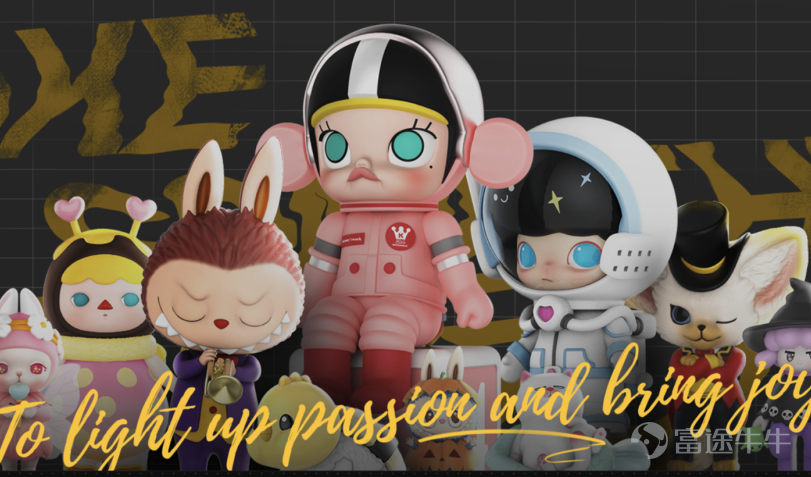

Labubu is not the Achilles' heel of Pop Mart

This is a story about a recurring cycle of misjudgment, with Pop Mart as the main character.$POP MART (09992.HK)$
In 2016, people said 'Molly, without a story, won't last three years,' but it has now stood for two decades; in 2022, the argument that 'there will be no classics after Molly' emerged, not knowing that THE MONSTERS series, to which labubu belongs, had been lying low in Pop Mart's IP library for three years; by 2025, as production capacity expands, the 'alarm' over the disappearance of labubu's scarcity rang out again: Pop Mart will enter the 'post-labubu era.'
The capital market's concerns about Pop Mart seem never-ending: they worry both about its over-reliance on a single super IP and the uncertainty of its ability to replicate hits.
On March 25, Pop Mart released a record-breaking 2025 earnings report, with revenue growing 184.7% year-on-year and adjusted net profit surging 284.5%. However, the stock price plummeted continuously after the release of the earnings report, with cumulative declines exceeding 30% over two trading days.
As always, when doubts poured in from all sides, Pop Mart at the center of the storm showed remarkable composure. On March 26, Pop Mart announced the repurchase of 3.94 million shares for approximately HKD 600 million, followed by another repurchase of 1.98 million shares for HKD 299 million the next day, signaling confidence in the company’s long-term development.
During the annual earnings call, Pop Mart founder Wang Ning said, 'Even without labubu's contribution, the company achieved very rapid growth over the past year.'
According to the latest disclosed 2025 annual report, Pop Mart's revenue reached RMB 37.12 billion. THE MONSTERS series contributed RMB 14.16 billion, accounting for 38.1% of revenue; while other artist IPs like MOLLY, SKULLPANDA, CRYBABY collectively generated RMB 19.25 billion, making up 51.9%.
While outsiders were dazzled by labubu's 365.7% year-on-year growth, they overlooked the fact that multiple top IPs of Pop Mart grew by more than 150%. Especially the Star People IP launched in August 2024, whose popularity soared. By the end of 2025, its revenue exceeded RMB 2.06 billion, with a staggering year-on-year growth of 1600%.
Challenges persist, but there is no 'labubu anxiety' in Pop Mart's world.

Table created by: Snow Leopard Finance Society
Only labubu of the times, no era of labubu
Success relies three parts on luck and seven parts on hard work. This is true for most successes, and labubu is no exception.
Capturing the public's mood is an esoteric art. Finding the aesthetic common ground among billions of people globally remains an almost impossible task, even with today’s rapidly advancing AI capabilities.
Thus, Pop Mart has always focused on expression and presentation rather than blindly following trends, pandering, or betting on uncertain outcomes.
In 2025, for the first time, artist-driven IPs accounted for 90% of Pop Mart’s revenue, while licensed IPs, externally sourced content, and other categories dropped to just 10%. For Pop Mart, talented artists and designers are the source of all IP inspiration and creativity. They possess unique perspectives, intriguing personalities, and a passion for creation, and their work quality determines the ceiling of the entire IP operation.
As evidence, Pop Mart’s leading IPs each exhibit highly distinctive artistic styles and unique emotional expressions. The grinning labubu with its nine teeth stands out as especially unconventional.
However, unique aesthetics and expressions don’t always resonate immediately with audiences in the present moment.
Some require time to build emotional connections with fans, others need shifts in societal moods or trends, and still others rely on word-of-mouth to accumulate momentum through gradual, layered expansion. This process may take months or even years.
Labubu is a quintessential example. As one of the characters from The Monsters series, labubu was created in 2015. Four years later, the first set of products after signing with Pop Mart was released, but it wasn’t until 2024 that labubu truly gained widespread recognition and became a global top-tier phenomenon.
PUCKY and CRYBABY have followed similar growth trajectories.
PUCKY was one of the IPs that signed with Pop Mart early on. Although not among the top-tier IPs, under Pop Mart’s continuous management, its product forms evolved from trendy toys to plush items, expanding consumer sensory experiences from visual to tactile and further into auditory realms. In 2026, PUCKY’s “Tap Series,” which produces a wooden percussion sound when tapped, achieved massive mainstream popularity.
CRYBABY is an IP created by Thai local artist Molly. It was not initially accepted by everyone, and its first product in 2020 did not become an instant hit. However, when the trend of emotional economy arrived, this IP, which centers on emotional freedom, finally found the opportunity to resonate emotionally with the public.
Since then, Pop Mart has continued to strengthen the emotional connection between the IP and consumers through innovations in product categories like vinyl figures and plush toys, as well as external collaborations. The company has also launched products that integrate with local cultures in overseas markets, such as the CHEER UP, BABY! series in the North American market, allowing the narrative of 'courage to cry' to gain global reach and resonance. Now, CRYBABY has become one of the most dynamic IPs alongside Labubu.
In fact, most of Pop Mart's IPs did not achieve peak popularity immediately upon debut but eventually found their emotional resonance points with the public after long-term investment and patient nurturing.
This reflects a persistence in long-termism, where there is a willingness to give potential artist IPs time and patience, which also represents a victory in IP operation.
This is why Wang Ning repeatedly emphasized to investment bank analysts asking about Labubu, 'I hope people see more of our platform’s ability to operate IPs.'
From a broader perspective and over a longer time horizon, it can be said that Pop Mart has made Labubu successful, rather than the other way around. No opportunist would be willing to spend five or even ten years meticulously cultivating and patiently waiting for success. And when luck strikes, only those who practice long-termism can seize the opportunity.
When Stars Shine Bright: The Age of IPs
The year 2025 will be the fastest-growing year in Pop Mart's history. During the earnings call, Wang Ning described it as an 'unprecedented year.'
Labubu’s contribution is evident. Its extraordinarily high topic热度 and explosive sales growth worldwide have brought massive traffic to Pop Mart and an opportunity for rapid organizational evolution, which Wang Ning likened to 'a new race car driver being thrust into an F1 race.'
During the call, he repeatedly emphasized that although the company experienced extremely rapid growth in 2025, he still hopes for 'linear, healthy growth' for the company.
As a trendy toy company, IP is the core asset of Pop Mart, and the growth of IPs has its cycles. This objectively determines that the company's growth cannot skyrocket overnight but must proceed step by step. The explosive popularity of Labubu magnified Pop Mart's luck but also made people easily overlook its long IP foundation-building process.
In 2021, shortly after Pop Mart went public, it released its 2020 earnings report. In that year’s financials, only a handful of IPs such as MOLLY, Dimoo, and PUCKY were noteworthy. At that time, the revenue from THE MONSTERS series was only 200 million yuan, while SKULLPANDA brought in merely 39 million yuan.
By the end of 2025, Pop Mart’s IP pool will include classic IPs that have accumulated over time, such as MOLLY, SKULLPANDA, and CRYBABY, as well as rising stars like Star People, along with a large reserve of IPs from signed artists. IPs at various life cycle stages are distributed continuously, forming a multi-layered and multi-tiered IP matrix.

In terms of revenue composition, Pop Mart already has 17 IPs generating over 100 million yuan each in revenue, with six IPs contributing more than 2 billion yuan. Labubu accounts for less than 40% of this, and the combined sales revenue of Labubu plush toys, figurines, and peripheral products in China makes up about one-third. This means approximately 70% of the income comes from contributions by multiple IPs and categories.
Pop Mart’s IP universe is far from as fragile as outsiders might imagine. The explosive popularity of Labubu is phenomenal, but from a longer-term perspective, it’s merely an exciting interlude in Pop Mart’s long-term IP operation and doesn’t affect the main theme.
Looking back at every classic IP from Pop Mart, each had its own defining moment.
In 2019, Molly emerged as the single super-hit, becoming the 'number one trendy toy IP in China'; in 2021, SKULLPANDA’s revenue share jumped from 1.6% to 13.3%, making it the second-largest IP after Molly, and the following year, its Temperature Series figurines became the highest-selling product set in Pop Mart history; in 2024, CRYBABY's revenue increased by 1537% year-on-year, quickly entering the '1 billion club' within just one year; in 2026, PUCKY’s Digital Wooden Fish ('Knock-Knock Series' plush keychains) went viral, being hailed by office workers as a healing tool, selling out immediately upon release.
Every wave of popularity is accompanied by premiums in the secondary market, which is a result of supply-demand self-adjustment under the laws of market economics. However, the disappearance of premiums does not mean that the IP has lost relevance.
Trendy toy products naturally carry social attributes, and once they touch on certain popular emotions, they can rapidly ferment in a short period, causing热度to skyrocket and demand to surge dramatically. This is a common challenge faced by trendy toy companies: the inability to precisely predict demand and match inventory.
However, after numerous trials, Pop Mart’s flexible supply chain system has been able to swiftly respond to these pulse-like demand changes and guide prices back to normal.
Short-term scarcity brings price volatility but does not alter the intrinsic value of a product. Similarly, the disappearance of scarcity does not equate to the demise of an intellectual property (IP).
Labubu is no longer in short supply, but Pop Mart clearly isn't concerned. Even if no single IP can reach Labubu's level in the short term, the combined strength of multiple leading and mid-tier IPs can still provide a solid foundation for the company. As Pop Mart expands its IP library and classic IPs gradually mature, the impact of any single IP will continue to diminish.
Evergreen IPs bolster upward trajectories.
As one of Pop Mart’s earliest iconic IPs, Molly has maintained popularity for a decade.
Initially, MOLLY was depicted as a little painter. Later, Pop Mart developed various iterations such as ROYAL MOLLY, SPACE MOLLY, and BABY MOLLY, enriching the spirit and symbolism behind the IP. For example, SPACE MOLLY features MOLLY wearing an astronaut helmet, symbolizing courage and fearlessness in exploring the unknown.
The product format of MOLLY has expanded beyond collectible figurines. The BABY MOLLY Pocket Friends series, launched in 2025, utilized soft vinyl plush craftsmanship, receiving strong market feedback. In 2026, the ANGRY MOLLY Heartfire Plush Keychain sold out immediately upon release.
In the minds of fans, MOLLY has gradually become personified and tangible. In May 2025, at Douyin's Diverse Night event, MOLLY appeared on the red carpet as a costumed character, becoming the first IP figure to grace the Starlight Avenue. During the final stage of 'Riding the Winds 2025,' MOLLY transformed into a supportive companion, performing 'Bubbling Up' alongside MOKOKO.
Pop Mart’s meticulous operations have endowed this IP with continuous freshness, making the Molly figure akin to a versatile container that accommodates diverse imagery, emotions, and expressions. Sales of the MOLLY series grew from 40 million yuan in 2017 to 2.9 billion yuan in 2025.
This reflects the unique malleability of IPs 'without stories.'
Similarly, Sanrio, Japan’s leading original IP company with over 65 years of history, followed a similar path to ensure that the classic Hello Kitty image remains globally influential, even becoming a core ambassador of Japan’s Kawaii culture worldwide.
In 1974, Hello Kitty debuted as 'a little cat without a mouth,' a minimalist design that allows consumers to project their own emotions onto it. This approach aligns perfectly with Pop Mart's IP operation philosophy – rather than focusing on telling a complete story for MOLLY or Kitty, they are treated as emotional carriers. They become confidants and companions to fans, with their life stories not crafted by movies or animations but shaped through daily interaction and companionship with fans.
However, 'no story' does not mean the absence of a spiritual core. Each of Pop Mart’s IPs has its own worldview and exhibits strong growth potential. Through cross-brand collaborations, theme parks, animations, and more, Pop Mart enriches the emotional narratives and scene experiences of its IPs, making the characters even more vivid.
Take SKULLPANDA as an example. Just in the fourth quarter of last year, SKULLPANDA was involved in several major moves: a collaboration with the American TV series 'Wednesday,' launching a co-branded pendant; a partnership with the XG girl group, releasing a Japan-exclusive co-branded doll; a collaboration with Sanrio, creating Melody and Kuromi plush pendant dolls; and early this year, a co-branded plush pendant with 'My Little Pony.'
In December 2025, Pop Mart held the SKULLPANDA 'CAGE-UNCAGE' exhibition at the National Museum of Singapore, centered around art, culture, and urban storytelling, incorporating local artistic installations to showcase SKULLPANDA's worldview.
This operational strategy shares similarities with Disney. Disney’s earliest IPs were born in the 1920s and 30s, primarily shaped by stories, but it didn’t stop there. Starting in the 1950s, Disney gradually extended its IPs from the screen to offline physical experiences and television media, amplifying their value through theme parks, merchandise, and live-action films, ultimately building a vast entertainment empire and achieving a century-spanning commercial legend.
Innovation is the best way to sustain classics. Pop Mart is following a similar path, transforming IPs from single trendy toy figures into cultural symbols that can be experienced, interacted with, and resonate emotionally through diverse scenarios like theme parks, collaborations, and exhibitions. Under meticulous operations, those IPs that have reached their peak have all evolved into timeless classics, solidifying as evergreen IPs for Pop Mart.
For labubu, it is still at the beginning of its lifecycle. During the earnings call, Wang Ning compared labubu to a gold mine, stating that 'the exploration of its value has just begun.'
Pop Mart’s Chief Operating Officer, Si De, also revealed during the meeting that the labubu 4.0 series and artist collaboration series will be launched in the second half of this year, and the labubu movie has entered the script stage.
Classic IPs continue to grow, while emerging IPs are also gaining momentum.
Starry People is a new IP introduced by Pop Mart in August 2024. It quickly gained immense popularity upon launch, generating revenue exceeding 100 million yuan in its debut year, making it one of the fastest-growing new IPs under Pop Mart. In the first half of 2025, Pop Mart City Park introduced three Starry People celebrity friends and collaborated with the band Orange Ocean to release their first exclusive single, 'The Song of Starry People,' which created a viral sensation on social media platforms.
Favoring the new and tiring of the old is human nature, which has led to questions about the lifecycle of trendy toy IPs. Indeed, novelty fades, but the fundamental demand for emotional consumption does not change. With a more diversified IP ecosystem and refined operations, Pop Mart sustains fan emotions by delivering emotional value and the power of companionship, consistently following an upward growth trajectory.
As early as its IPO, Pop Mart introduced two core strategies: internationalization and group-oriented development centered on IPs. By the end of 2025, nearly 44% of Pop Mart’s revenue will come from overseas business, showing significant progress, while the strategy of IP-centered group expansion is considered by Wang Ning as 'the most important strategic direction for the next five years.'
Labubu presented an opportunity for Pop Mart to refine its global supply chain integration, IP operation capabilities, and corporate organizational management. However, as one of Pop Mart's IPs, it remains part of the cycle of 'IP incubation, growth, maturation, and expansion.'
As long as the underlying logic of long-termism remains unchanged, Pop Mart will not face 'Labubu anxiety,' because its confidence lies not in any single IP but in its ability to continuously incubate classics, create blockbusters, and reinforce its multi-IP ecosystem foundation.
Author: Li Xiao
Cover source: Company official website
Risk Disclaimer: The above content only represents the author's view. It does not represent any position or investment advice of Futu. Futu makes no representation or warranty.Read more

Comments
to post a comment
3