Tech giants boost Capex again! What's the outlook for future stock prices?
Index options
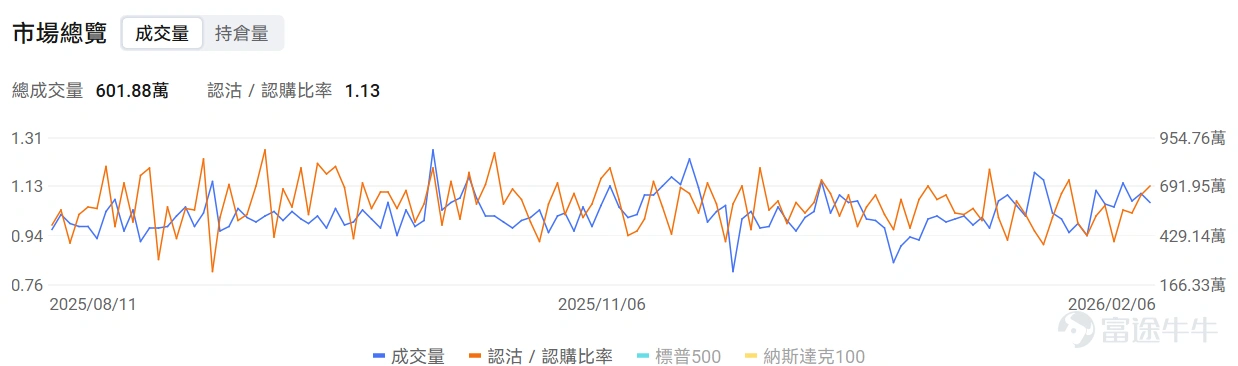
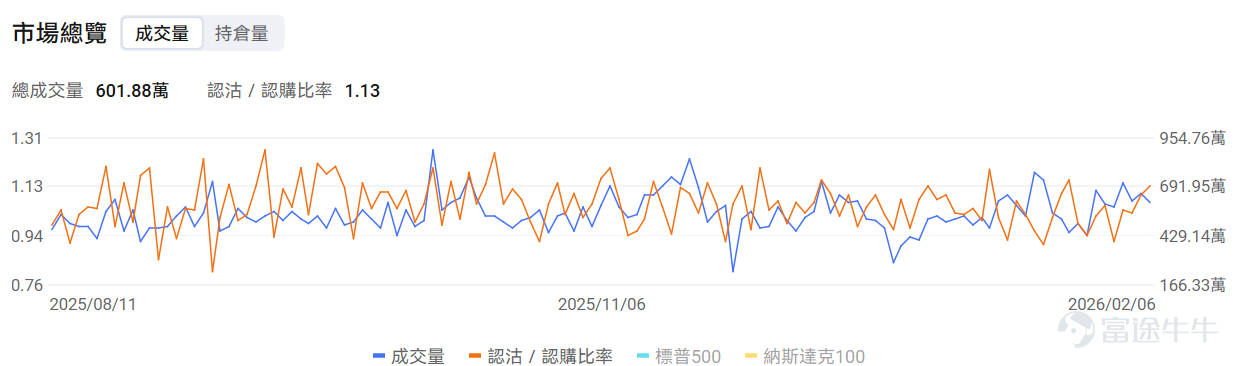
On February 6, Eastern Time, trading volume in the U.S. stock index options market declined, with a total of 6.02 million contracts traded. The put/call ratio rose to 1.13.

Stock options
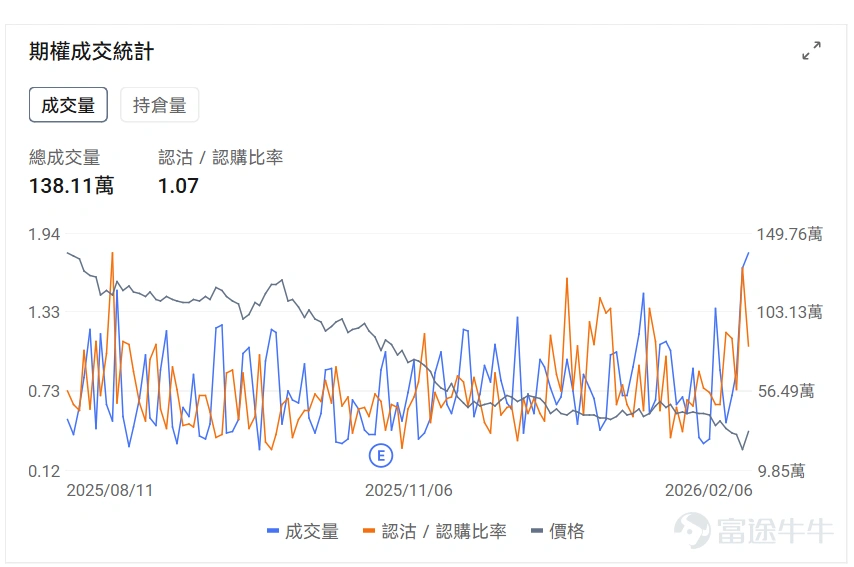
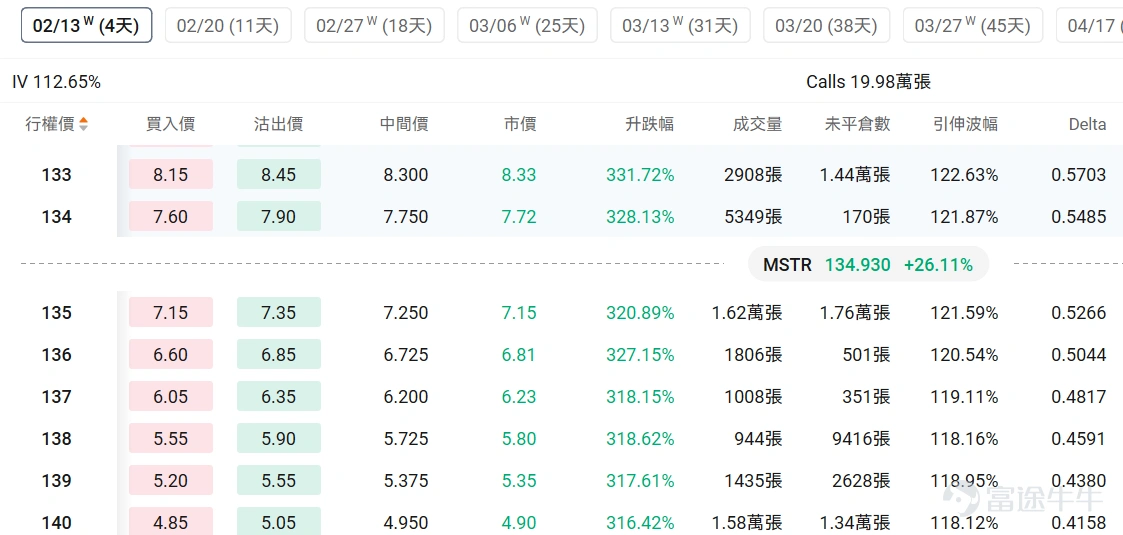
$Strategy (MSTR.US)$It surged 26.11%, with 1,381,100 options contracts traded, and the put/call volume ratio dropped to 1.07. After Strategy posted a fourth-quarter net loss of $12.4 billion, its stock price soared 26%, and Bitcoin returned above $70,000.

Looking at the call options expiring this Friday, several have seen price increases exceeding three times their original levels.

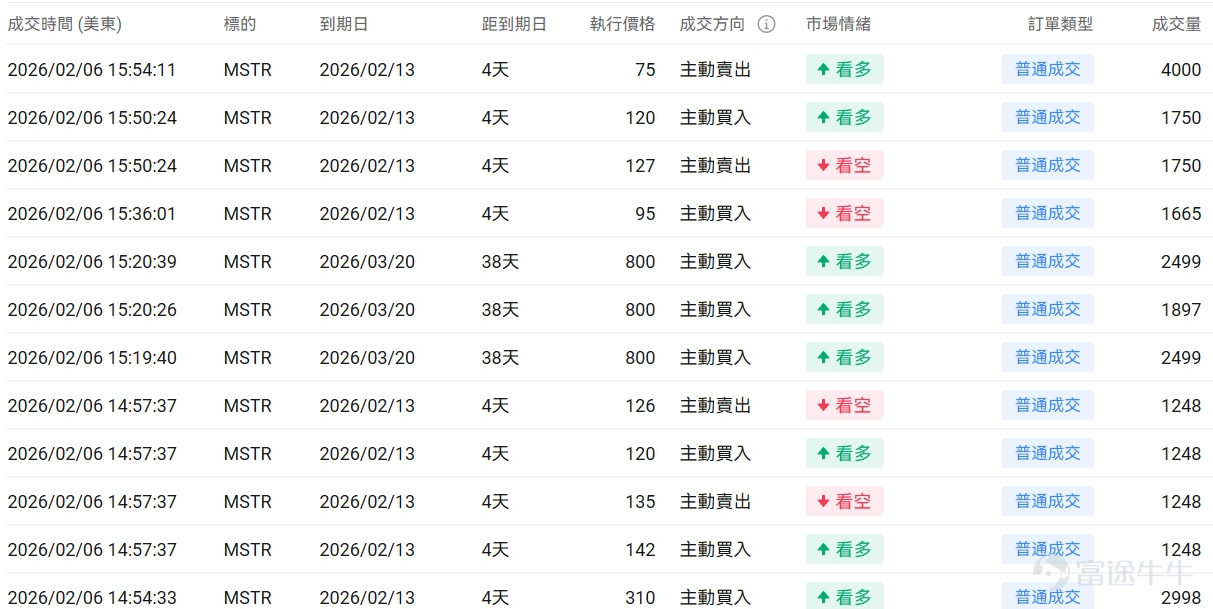
Large-volume option trades indicate that institutional investors are relatively bullish.

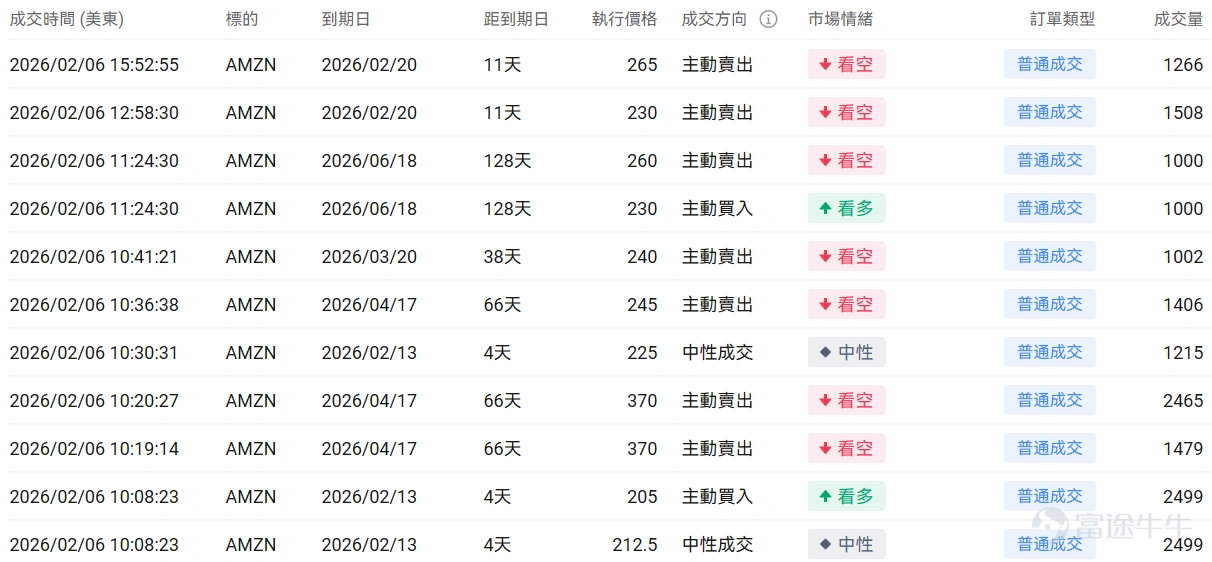
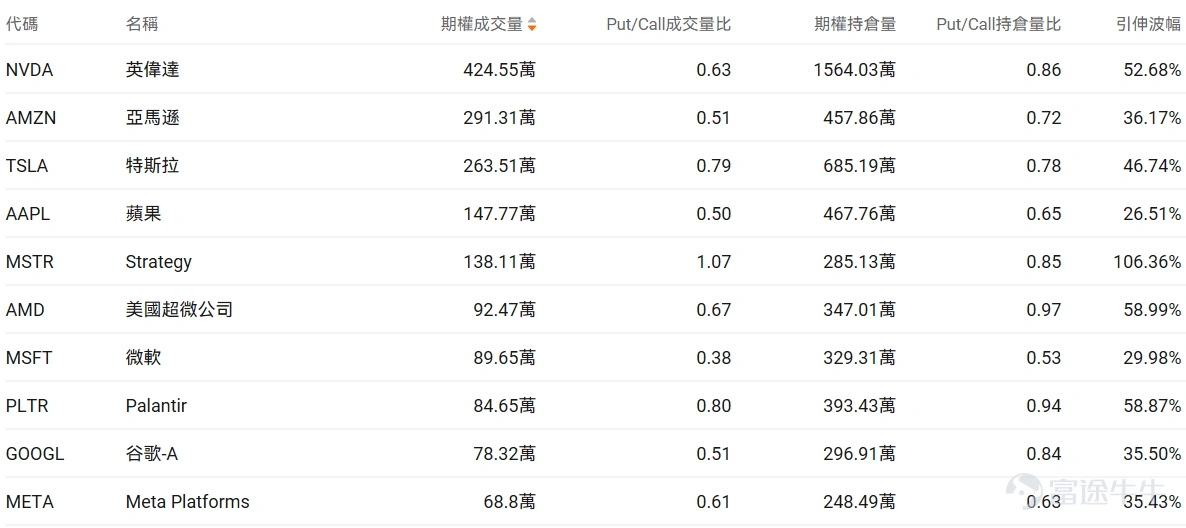
$Amazon (AMZN.US)$It fell 5.55%, with 2,913,100 options contracts traded, and the put/call volume ratio dropped to 0.51. Amazon announced a 200 billion USD capital expenditure plan for 2026, earmarked for AI and cloud infrastructure development.

Large-volume option trades indicate that institutional investors are predominantly bearish.

Options Volume Ranking
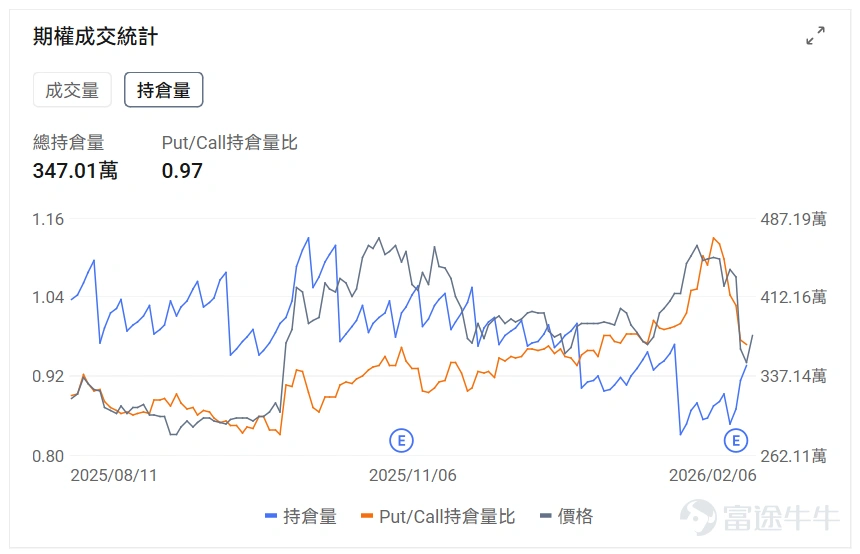
The highest put/call open interest ratio is$Advanced Micro Devices (AMD.US)$, reaching 0.97. AMD and Intel have notified their customers in China of a shortage in server CPU supplies, with delivery cycles extended to 8-10 weeks.

Top 10 Ranking of US Stock Options Trading Volume

Top 10 Ranking of US Stock ETF Option Trading Volume

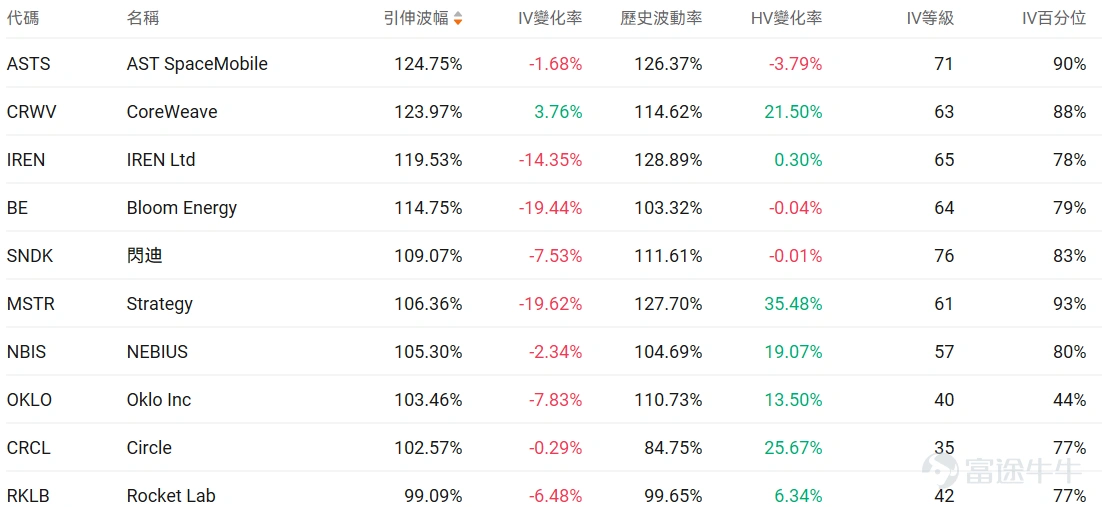
Implied Volatility Ranking (Underlying market capitalization > 1 billion, and options trading volume > 100,000)
$Cipher Digital (CIFR.US)$Implied volatility hit a high of 141.35%, down 5.60% from the previous trading day. A subsidiary of Cipher Mining issued 2 billion in senior secured notes to finance the Black Pearl data center.

$CoreWeave (CRWV.US)$Implied volatility saw the largest increase, reaching 123.97%, up 3.75% from the previous trading day. NVIDIA is making an additional investment of 2 billion USD in CoreWeave and launching an AI cloud brand vision.

Top 10 U.S. Stock Option Volatility Rankings (Underlying asset market capitalization > $10 billion and option trading volume > 100,000 contracts)

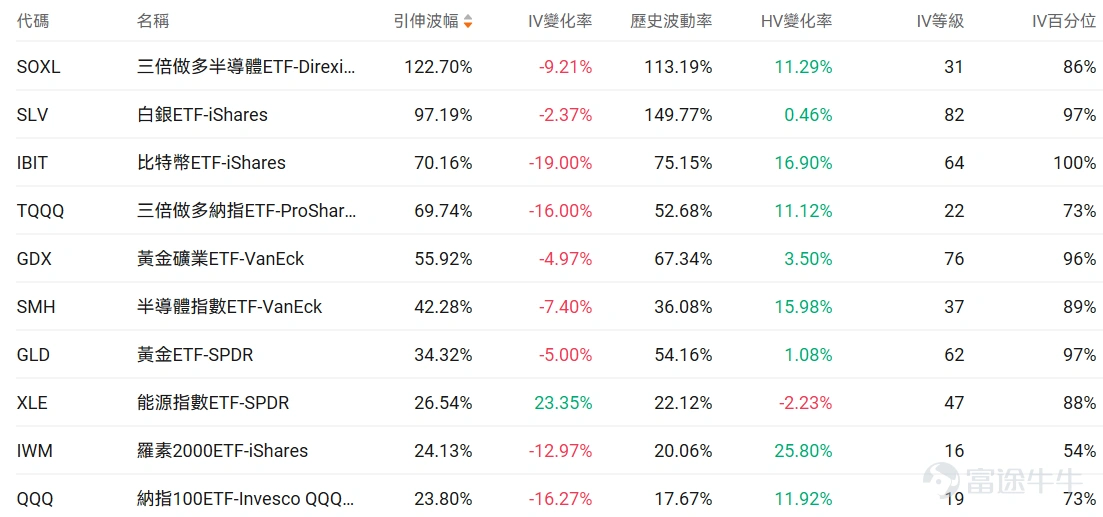
Top 10 US Stock ETF Implied Volatility Rankings (Criteria: Market Capitalization > 10 billion USD)

*This promotion is exclusively for HK-invited users. Click to learn more.Detailed Rules of the Event>>

Risk Warning
An option is a contract that gives the holder the right, but not the obligation, to buy or sell an asset at a fixed price on or before a specified date. The price of an option is influenced by a variety of factors, including the current price of the underlying asset, the strike price, the time to expiration, and implied volatility.
Implied volatility reflects the market’s expectations of future price fluctuations for options over a given period. It is derived from the Black-Scholes pricing model for options and is generally regarded as an indicator of market sentiment. When investors anticipate greater volatility, they may be more willing to pay higher prices for options in order to hedge their risks, thereby driving up implied volatility.
Traders and investors use implied volatility to assess the attractiveness of option prices, identify potential mispricings, and manage risk exposures.
Disclaimer
This content does not constitute an offer, solicitation, recommendation, advice, or any guarantee regarding securities, financial products, or instruments. The risk of loss when trading options can be substantial. In certain circumstances, the losses you incur may exceed the amount of margin initially deposited. Even if you set up contingency instructions—such as “stop-loss” or “limit-price” orders—these may not necessarily prevent losses. Market conditions could render such instructions unexecutable. You might be required to deposit additional margin within a short period. If you fail to provide the required margin amount within the specified time, your open positions could be liquidated. Nevertheless, you will remain liable for any shortfall that arises in your account as a result. Therefore, before engaging in option trading, you should thoroughly study and understand options, and carefully consider whether such trading is suitable for you based on your financial situation and investment objectives. If you trade options, you should familiarize yourself with the procedures for exercising options and the timing of option expiration, as well as your rights and responsibilities when exercising options and at option expiration. Option trading involves extremely high risks and is not suitable for all investors. Before participating in any option trading strategy, investors should read carefully.Characteristics and Risks of Standardized Options。
Editor/Lee
Risk Disclaimer: The above content only represents the author's view. It does not represent any position or investment advice of Futu. Futu makes no representation or warranty.Read more
Comments
to post a comment
1