
Repost | Junsheng Tai Pharmaceuticals Provides New Answers for CKM Treatment
This article is reprinted from PharmaCube
On February 6, JunShengTai Pharmaceuticals disclosed multiple clinical datasets for its self-developed FIC product HTD1801 during an investor meeting. At the same time, the company officially welcomed the arrival of its new Chief Medical Officer, Dr. Filip Surmont. During the meeting, Dr. Filip Surmont systematically introduced JunShengTai's overall strategy in the cardiorenal metabolic (CKM) field and proposed to continue advancing the development of HTD1801 within related disease spectrums under the CKM framework, particularly for chronic kidney disease (CKD).
As awareness and understanding of CKM-related diseases gradually spreads and deepens globally, metabolic diseases are no longer simply understood as problems associated with a single organ or indicator but are being reassessed within a highly interconnected and long-evolving system. Using JunShengTai Pharmaceuticals' strategic layout as an entry point, it may become clearer how the drug development logic for CKM-related diseases is evolving under an integrated perspective.
For a considerable period of time, the correspondence between single targets and diseases has been the foundational logic of drug development. The effectiveness of this strategy has been repeatedly validated in new drug development efforts for infectious diseases, cancer, and other fields, driving continuous iterations in treatment methods: as long as the key target is clear, precise intervention could potentially bring about corresponding therapeutic effects. However, when it comes to new drug development for chronic diseases such as metabolic disorders, this approach is increasingly showing its limitations.
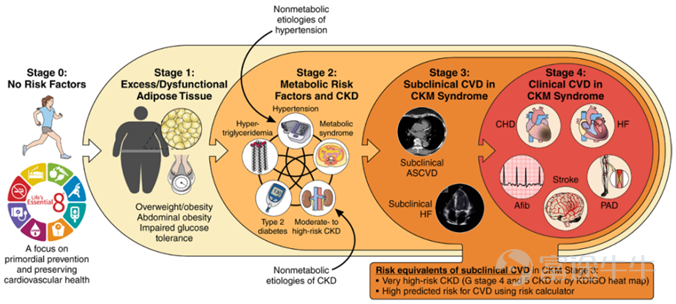
In the real world, metabolic diseases usually do not occur in isolation but often coexist with issues in multiple organs or systems. This suggests that these diseases do not progress along a single path but instead interact among multiple systems, amplifying one another. For example, abnormal blood glucose, dyslipidemia, impaired renal function, and cardiovascular diseases frequently affect the same patient simultaneously. This highly interconnected disease pattern has deepened academic understanding of such conditions and spurred the emergence of the Cardiorenal Metabolic (CKM) syndrome concept.
![Staging of CKM systemic diseases [1]](https://nnqimage.futunn.com/sns_client_feed/40001097/20260206/web-1770351762462-bVhy5lyjAI.png/big?area=1&is_public=true&imageMogr2/ignore-error/1/format/webp)
Staging of CKM systemic diseases [1]
Under the CKM framework, metabolic diseases are being redefined as systemic issues involving multiple organs and pathways, with corresponding clinical needs and new drug development strategies also being upgraded. Clinical practice is no longer solely focused on improving single indicators but increasingly emphasizes innovative treatment approaches that can systematically regulate metabolic homeostasis and deliver comprehensive improvements.
HTD1801 hits CKM with its multi-pathway modulation advantages
From an epidemiological perspective,CKM-related diseases have become one of the heaviest burdens on the global healthcare system. Statistical data shows that CKM-related issues affect nearly 90% of American adults and approximately 80% of Chinese adults. These diseases are often accompanied by long-term medication, multi-endpoint management, and continuous risk accumulation, revealing significant limitations in relying on improvements in single indicators. The emergence of multi-pathway modulation drugs is a response to the treatment needs in the CKM field.
In this context, HTD1801 stands out with its unique multi-pathway modulation characteristics, becoming a representative innovative drug in the CKM field, providing new ideas and possibilities for resolving current clinical treatment dilemmas.

Multiple benefits of HTD1801 (Source: CVCT 2025 Conference)
The birth of HTD1801 is not accidental; as a novel molecular entity formed by the bonding of berberine cations and ursodeoxycholic acid anions, its design is based on a rich accumulation of knowledge about natural products combined with modern innovation. HTD1801 regulates pathways related to energy metabolism and inflammation control through dual active centers, influencing metabolic homeostasis at a higher level and providing protective effects to organs.

Dual-target mechanism of HTD1801 (Source: 10th Pharmaceutical Innovation and Investment Conference)
Mechanism studies show that HTD1801 can simultaneously act on two key pathways: AMP-activated protein kinase (AMPK) and NOD-like receptor protein 3 (NLRP3). The former, as the core regulatory hub of energy metabolism, promotes glucose uptake, fatty acid oxidation, and improves insulin sensitivity when activated, thus playing a fundamental regulatory role in glucose and lipid metabolism; the latter is an important driver of chronic inflammation, and its inhibition helps alleviate inflammation-related insulin resistance and creates conditions for improving organ functions such as the liver and kidneys.
These two pathways are highly interconnected in the metabolic disease network, so their synergistic regulation is more likely to bring about systemic chain optimization effects rather than short-term improvements in isolated indicators.
From mechanism to results: Multiple clinical benefits are gradually emerging
The multi-pathway regulatory mechanism of HTD1801 has already shown corresponding clinical outcomes in several clinical studies.
In terms of blood glucose control, in multiple Phase III studies conducted on patients with Type 2 Diabetes Mellitus (T2DM), HTD1801 demonstrated a consistent reduction in HbA1c levels across different treatment contexts. Whether in newly treated patients with poor diet and exercise control or in those who did not respond well to metformin, its glucose-lowering effect has clear clinical significance, outperforming dapagliflozin in both primary and secondary endpoints [2].

Glucose-lowering effect of HTD1801 (Source: 10th Annual Conference on Pharmaceutical Innovation and Investment)
Notably, its clinical benefits extend beyond glycemic control. In the aforementioned studies, the HTD1801 treatment group also observed a concurrent decrease in key lipid indicators such as low-density lipoprotein cholesterol (LDL-C) and non-high-density lipoprotein cholesterol (non-HDL-C). This result is highly consistent with its mechanism of regulating energy and lipid metabolism through the AMPK pathway.

Lipid-lowering data of HTD1801 in Phase III studies
Further pooled analysis showed that in T2DM patients with concomitant kidney injury, HTD1801 exhibited signals of improvement in estimated glomerular filtration rate (eGFR) slope. Specifically, in patients with mild renal impairment, the eGFR in the HTD1801 treatment group significantly improved compared to the placebo group (5.30 vs. 0.35 mL/min/1.73m²), with an annualized difference in eGFR slope as high as 9.81 mL/min/1.73m²; in patients with hyperfiltration, HTD1801 demonstrated a lowering effect on eGFR (-2.83 vs -0.28 mL/min/1.73m²) [3].

(Source: ASN 2025 Conference)
Although these results still need further validation, from the perspective of cardiorenal-metabolic (CKM), their significance stands out—it suggests that multi-pathway regulation may create conditions for long-term organ protection. This discovery provides important clues regarding the potential value of HTD1801 in CKM comorbidity management and lays the groundwork for future clinical exploration in chronic kidney disease.
Additionally, in inflammation-related indicators, HTD1801 treatment significantly reduced inflammatory markers closely associated with cardiovascular events and T2DM outcomes, such as gamma-glutamyl transferase (GGT) and high-sensitivity C-reactive protein (hs-CRP). Combined with its beneficial trends in weight loss, improvement of fatty liver, and reduction of 10-year coronary heart disease risk [4], these multidimensional results appear to be external manifestations following the gradual restoration of metabolic homeostasis.
These comprehensive effects promoting the restoration of metabolic homeostasis make HTD1801 not just a glucose-lowering drug but also a promising compound with broad metabolic improvement and organ-protective efficacy. As related research progresses, HTD1801 may potentially become a foundational therapy in the CKM field.
The introduction of the CKM concept not only reshaped the medical community's understanding of diseases but also set higher standards for drug development and medical decision-making. To further advance the development of HTD1801 in the CKM treatment field, Jun Sheng Tai Pharmaceuticals recently appointed former AstraZeneca executive Dr. Filip Surmont as the Group Chief Medical Officer, a move seen as a significant step towards deepening clinical-oriented initiatives in the CKM domain.
During his tenure at AstraZeneca, Filip Surmont was deeply involved in global clinical development in the cardiovascular and metabolic disease fields. His career has been highly focused on long-term outcomes, real-world benefits, and complex chronic disease management. This background aligns closely with the systemic perspective emphasized in the CKM field. This appointment can be viewed as an early strategic move by Jun Sheng Tai Pharmaceuticals in the CKM era.
Conclusion
The introduction of the CKM systemic disease concept did not create a new disease classification but rather unveiled the true nature of chronic diseases in the real world. Under this framework, treatment goals must move beyond improving single indicators to adopt a comprehensive benefit paradigm that better aligns with clinical needs, providing patients with more stable and sustainable health improvements in long-term management.
In this sense, HTD1801 represents not just the potential of a single product but a drug development logic that aligns with the times — truly integrating into the disease network, shifting from single-point interventions to systemic regulation.
When diseases are redefined as systemic issues, the evolution of treatment strategies becomes inevitable.
References
Risk Disclaimer: The above content only represents the author's view. It does not represent any position or investment advice of Futu. Futu makes no representation or warranty.Read more
Comments
to post a comment
1