Share your most unforgettable trade in 2025 using three keywords!
Tesla in 2025 $Tesla (TSLA.US)$ Delivered the most 'polarizing' earnings report since its IPO:Annual revenue fell by 3% for the first time, annual net profit plummeted by 46%, deliveries from the traditional automotive business declined 8.55% year-over-year, seemingly hitting a growth bottleneck; however, after-hours trading saw gains of up to 4%, pushing its market cap toward $1.5 trillionAt the same time, a $20 billion bet on xAI, halting production of the Model S/X to free up capacity for robotics, Elon Musk's series of moves have left the market puzzled but too apprehensive to bet against him.
In fact, Tesla is no longer just a 'car manufacturing company.' As Duan Yongping would say,this company appears to be a"venture capital"。
1. Core of Earnings Report: Dual Decline in Revenue and Profit, Yet Gross Margin Biggest Surprise
First, looking at the most straightforward financial figures, they are a mixed bag but hide deeper implications.

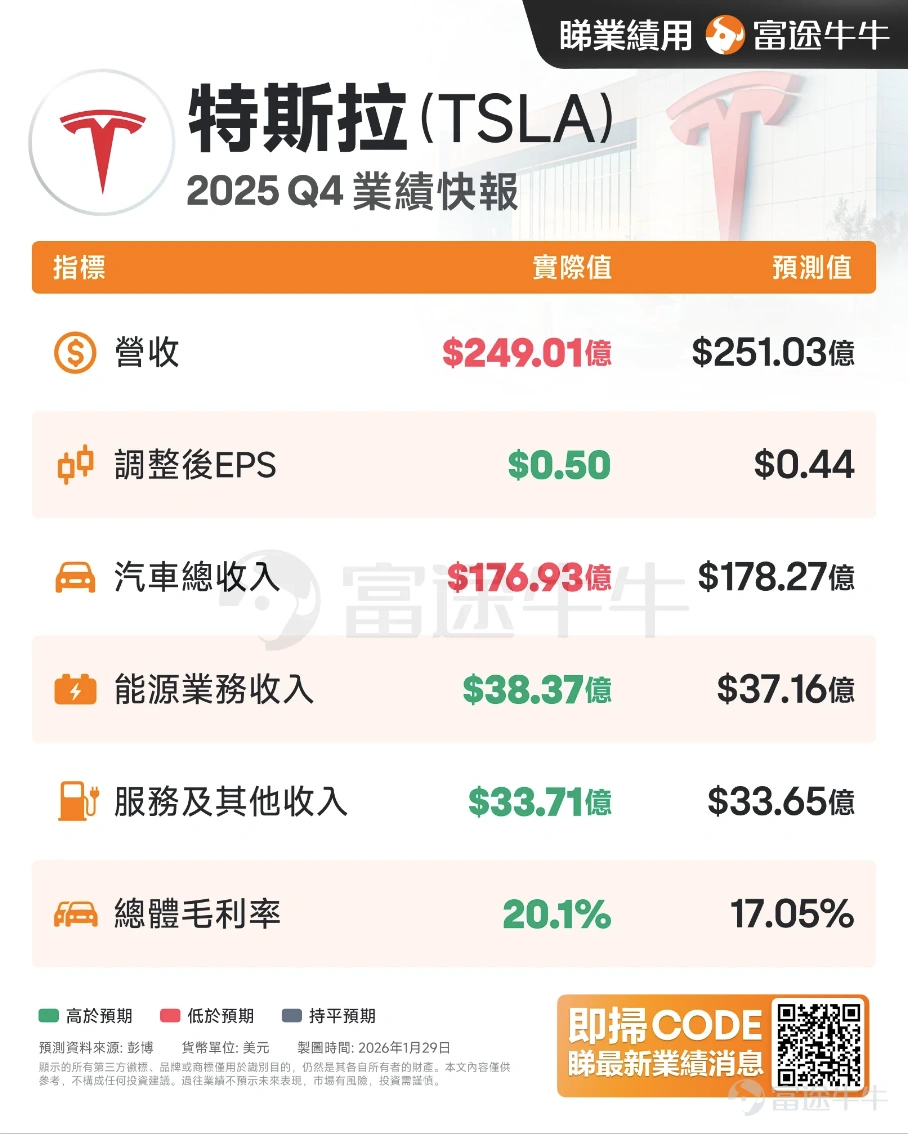
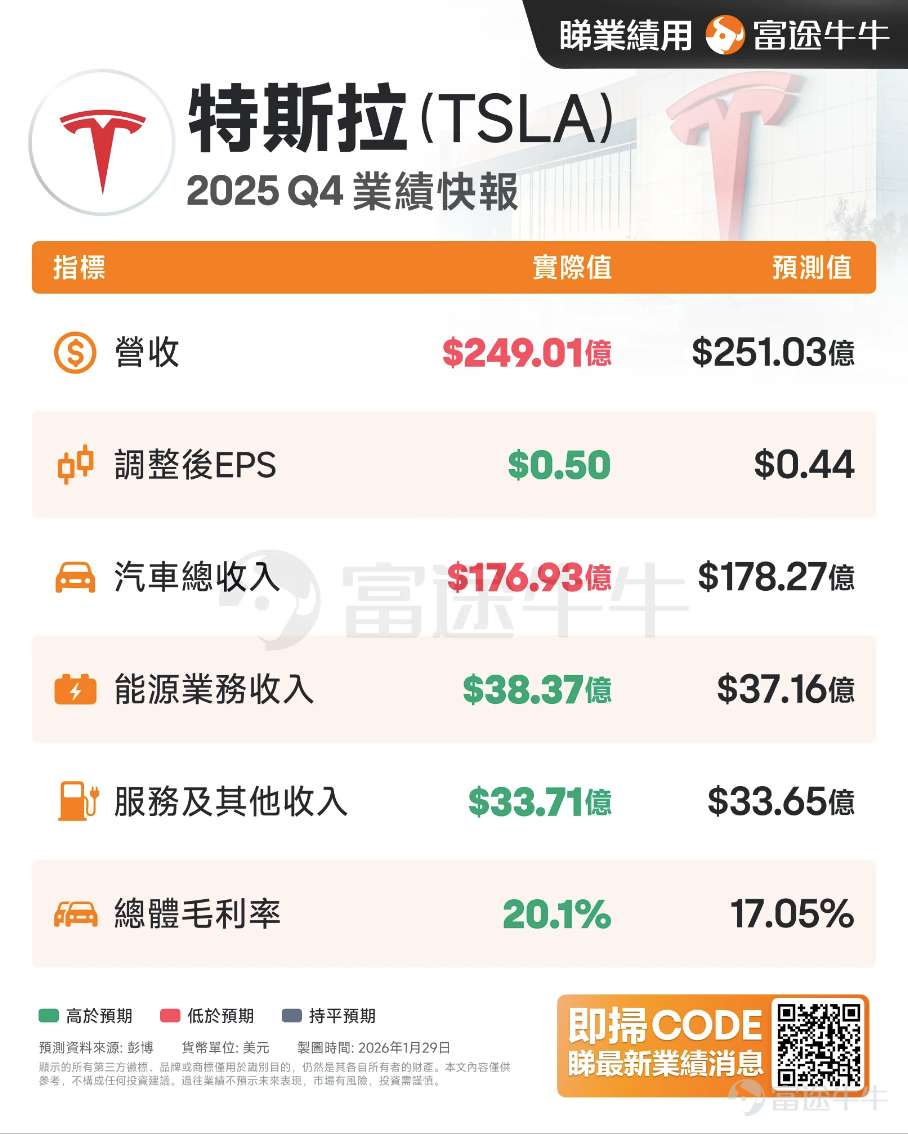
Revenue Side:Total revenue for Q4 2025 was $24.901 billion (down 3% year-over-year), with annual revenue reaching $94.8 billion (down 3% year-over-year).This marks the first annual revenue decline.However, Q4 single-quarter revenue exceeded market expectations of $24.79 billion, demonstrating business resilience.
Profit Side:Q4 GAAP net profit was $840 million (a 61% year-over-year plunge), with annual GAAP net profit reaching $3.8 billion (down 46% year-over-year); non-GAAP net profit stood at $1.761 billion (a 16% year-over-year decline).Mainly affected by price wars and AI investments.
Gross margin: Q4 consolidated gross margin rebounded to 20.1%, up 3.86 percentage points year-over-year, surpassing market expectations of 17.05%,The turnaround in gross margin was the biggest highlight of this earnings report.
The key factors behind the rise in gross margin are two-fold:
1. Effective cost control:Variable costs per vehicle dropped significantly, offsetting the increase in amortization costs caused by the decline in sales volume,Possibly related to the weakening impact of tariffs;
2. Product mix optimization:Although the average selling price per vehicle declined in Q4,the launch of the high-performance versions of Model 3/Y, coupled with FSD subscriptions exceeding 1.1 million vehicles,successfully stabilized the average selling price.
Second, a major strategic move: the discontinuation of Model S/X to free up capacity for Optimus
During the earnings call, Musk dropped a bombshell announcement: Model S/X will officially 'retire with honor' and prepare for discontinuation!However, this is not a business contraction but rather Tesla'sstrategic maneuvering。
Musk stated that the original premium vehicle production line at the Fremont factory will be transformed into a mass-production center for the humanoid robot Optimus, with a long-term goal of producing 1 million units annually, directly targeting the trillion-dollar robotics market; according to supply chain sources, capacity ramp-up will begin after March 2026,once mass production begins, it will become Tesla’s new growth engine.
Third, a $2 billion bet on xAI: The ambition to build a physical AI closed loop
The most significant hidden highlight in the earnings report is Tesla's related-party transaction of a $2 billion investment in xAI. xAI recently completed a $20 billion Series E funding round, with giants like NVIDIA and Cisco participating. Through equity participation and framework agreements, Tesla has achieved deep integration of AGI algorithms with its own hardware (vehicles, robots);in the long term, this investment will help Tesla seize a leading position inembodied intelligenceHigh ground, allowing AI technology to be scaled up for physical-world implementation, completely closing the loop“algorithm + hardware”closed loop.
Simply put, what Tesla aims to create is not “smart cars,” but“AI entities capable of autonomous action,”with both cars and robots serving as carriers of AI.
Four: Breakdown of the $1.5 trillion market cap: Four key segments underpin the valuation
The market no longer views Tesla purely as an automaker, and the composition of its $1.5 trillion market cap is clearly visible, with over two-thirds coming from non-automotive businesses:
1. Core automotive business (approximately $0.4 trillion): This portion is estimated based on Tesla's peak profitability in 2022 (around 20 times EBITDA). Amidst stalled growth, this valuation has begun to stabilize and return to rational levels.
1. Autonomous driving and FSD (approximately $0.6 trillion): The market has the highest premium expectations for its role as a software service provider. As the number of FSD subscribers surpasses 1.1 million, the logic behind its SaaS transformation is gradually being priced in by the market.
1. Humanoid robot Optimus (approximately $0.3 trillion): Although this project is still in its early stages, the determination to transform production capacity at the Fremont factory has given the market significant room for imagination.
1. Energy and services business (approximately $0.3 trillion): This segment is the hidden champion in the financial reports. In the fourth quarter, revenue from energy generation and storage reached $3.837 billion, a year-over-year increase of 25%, demonstrating strong anti-cyclical growth potential.
This means that buying Tesla stock now essentially bets on the future of AI and robotics, rather than a recovery in vehicle sales.However, it should be noted that as the penetration rate of new energy vehicles increases, the overall market is approaching saturation. If Tesla's automotive business experiences a downturn due to impacts from the broader new energy vehicle market, compounded by less-than-ideal progress in humanoid robotics, the $1.5 trillion valuation will be difficult to sustain.
V. Technical analysis & options deployment: Three options strategies to help you
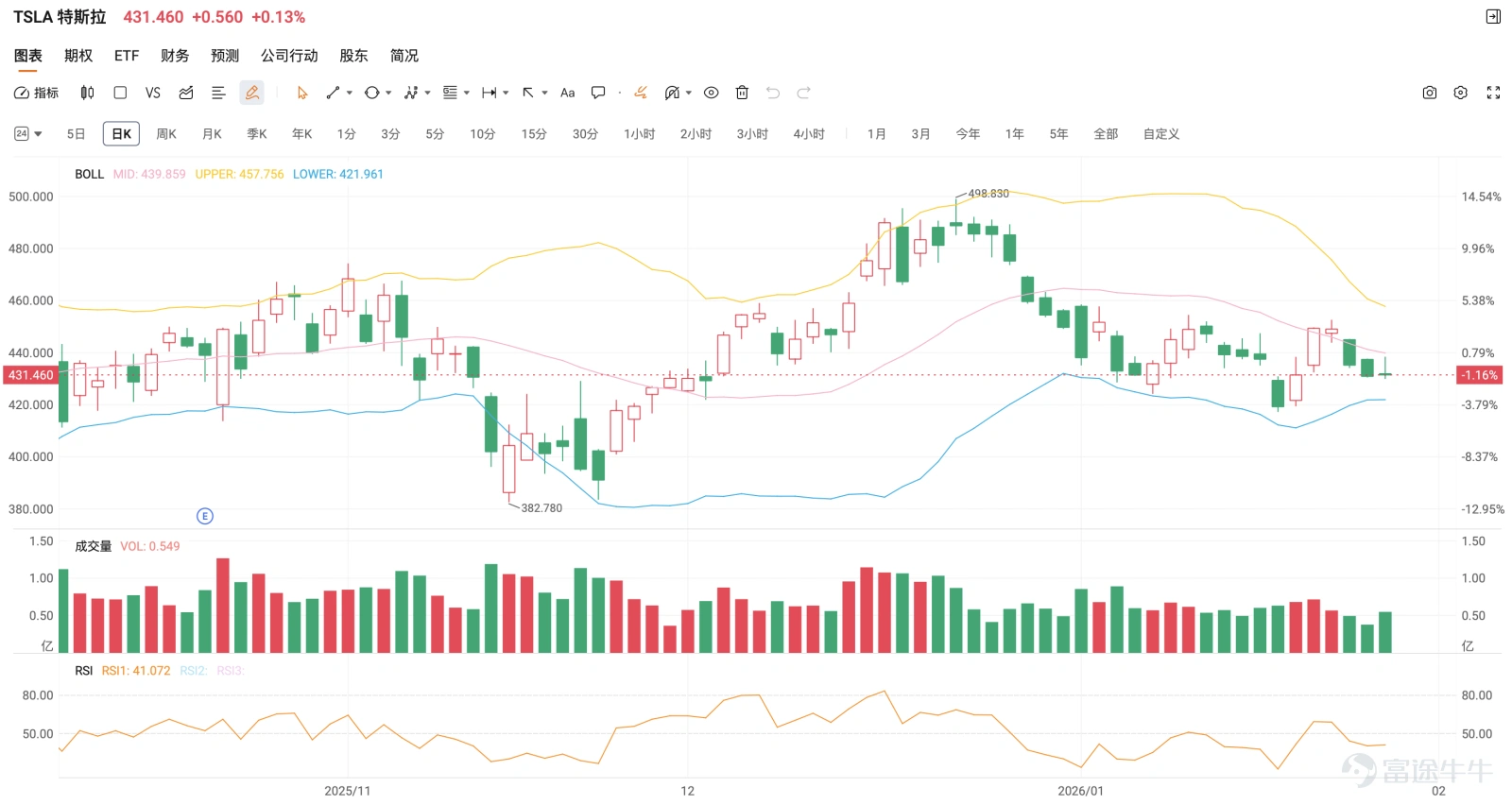
After a period of volatile adjustments, TSLA's technical indicators show that previous overbought conditions have been digested, and the stock price is poised to break through the 20-day moving average, ending the consolidation trend. However, with a PE ratio of nearly 300 times, it remains severely overvalued, providing justification for both bullish and bearish arguments.

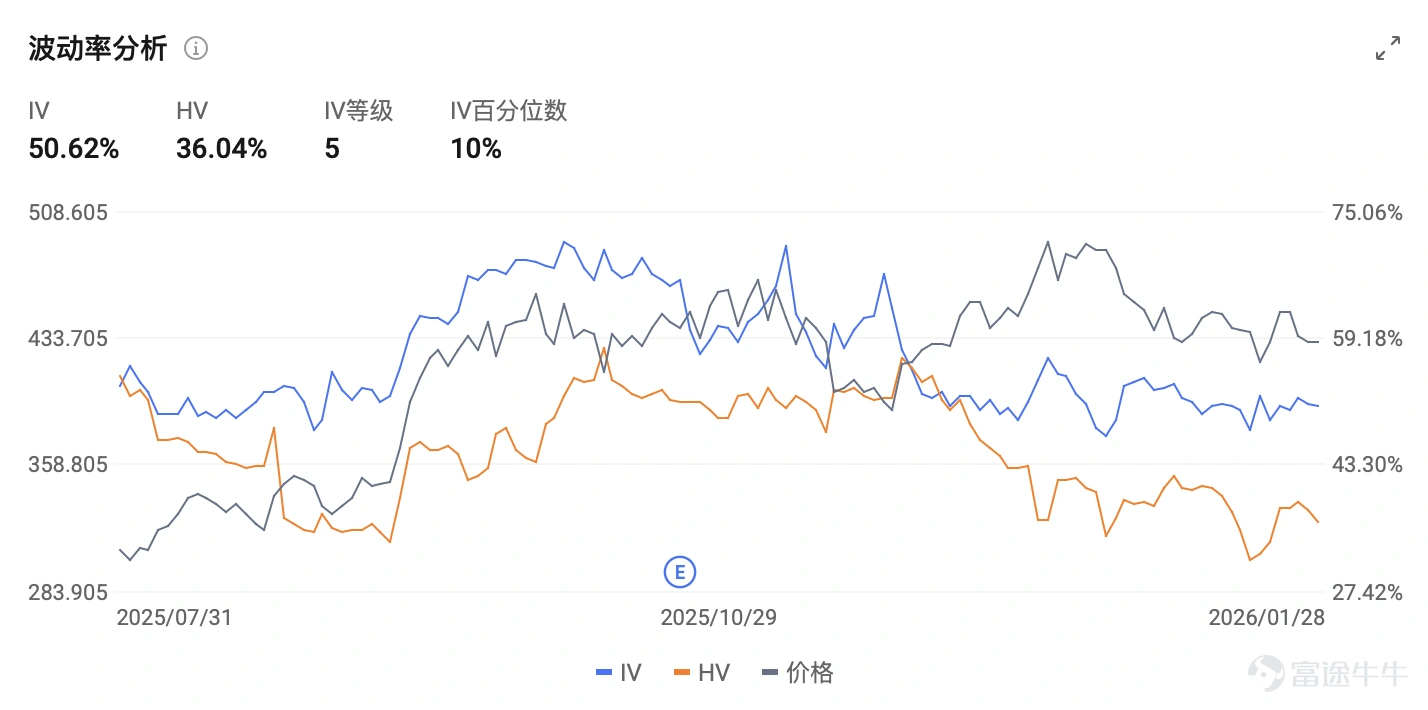
The current implied volatility of TSLA options is about 50%, which is at a historically low level (10th percentile), with a Put/Call volume ratio of 0.65.This demonstrates that market bullish sentiment is gradually recovering, and this earnings report is expected to accelerate this trend.


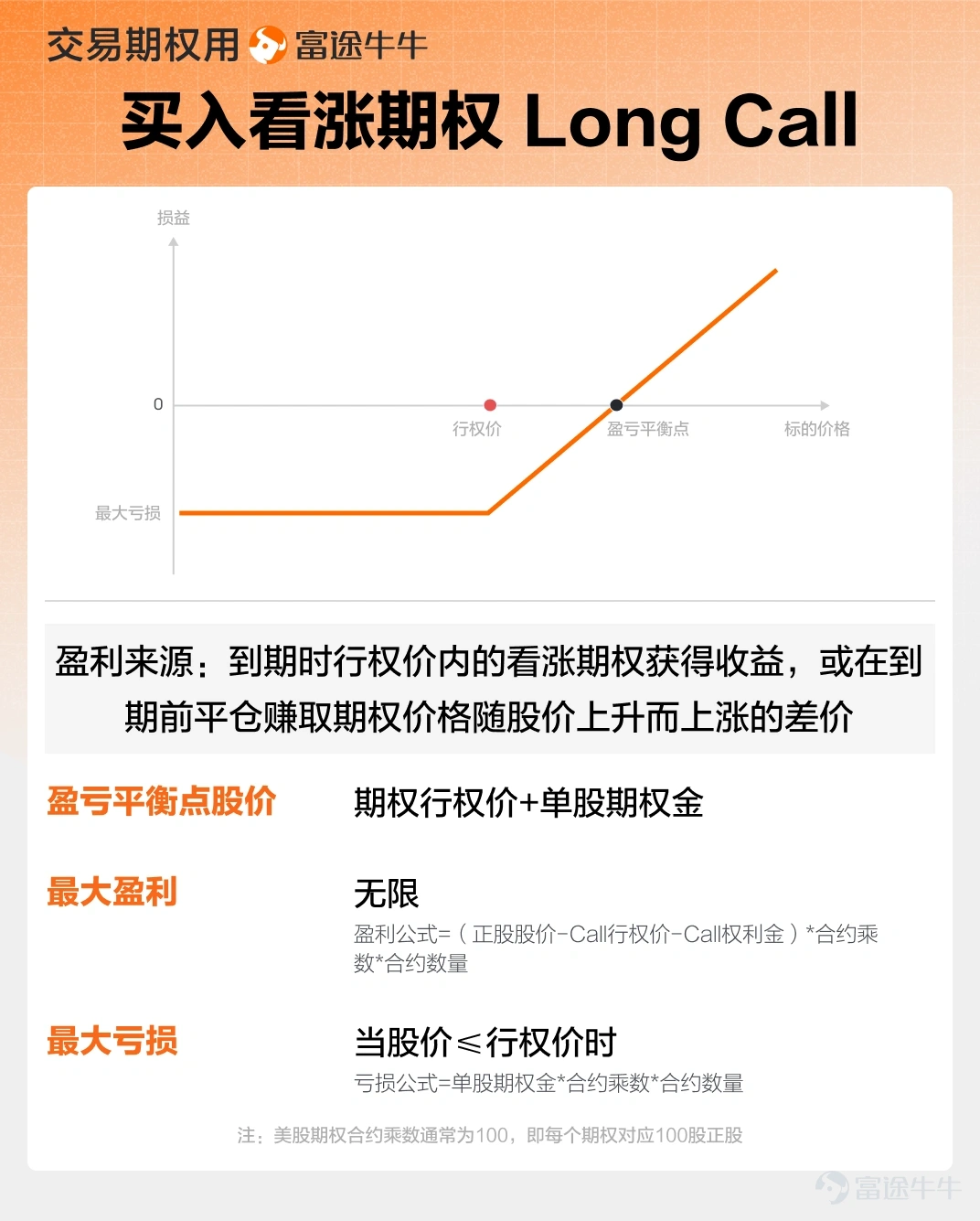
Investors who are optimistic about Tesla can deploy a simple options strategy,such as buying call options with an expiration of around three months to participate in the potential upcoming rally in Tesla.The characteristic of buying call options is that the maximum loss is limited; when you are optimistic about Tesla's development prospects and Tesla's stock price rises, the price of the Call typically increases rapidly, generating profits.

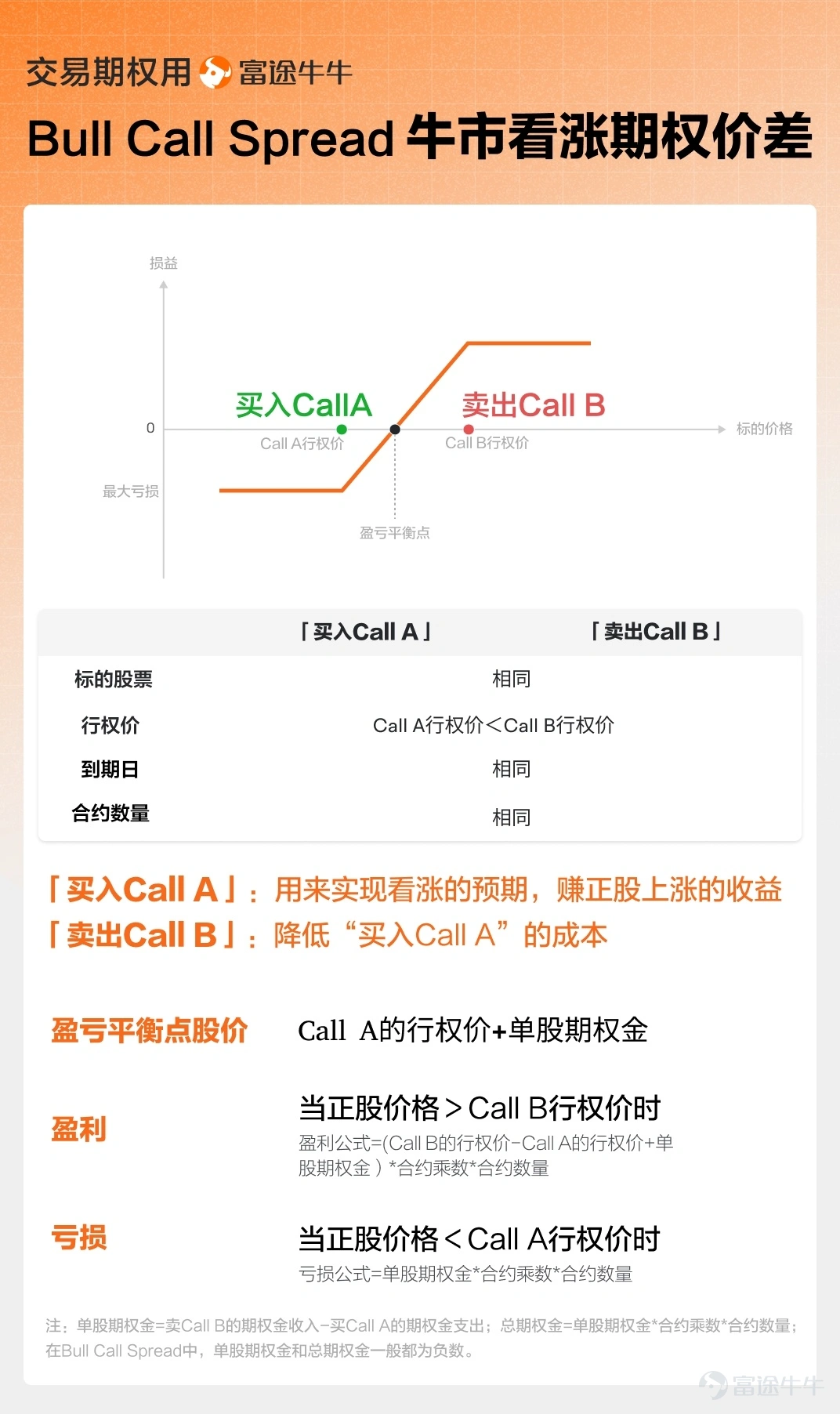
Moreover, investors can reduce the cost of building the option position by selling a call option with a higher strike price, creating what is known as a bull call spread strategy.This strategy has a lower cost compared to directly buying call options, but the potential profit is also capped. It is suitable for more conservative investors.

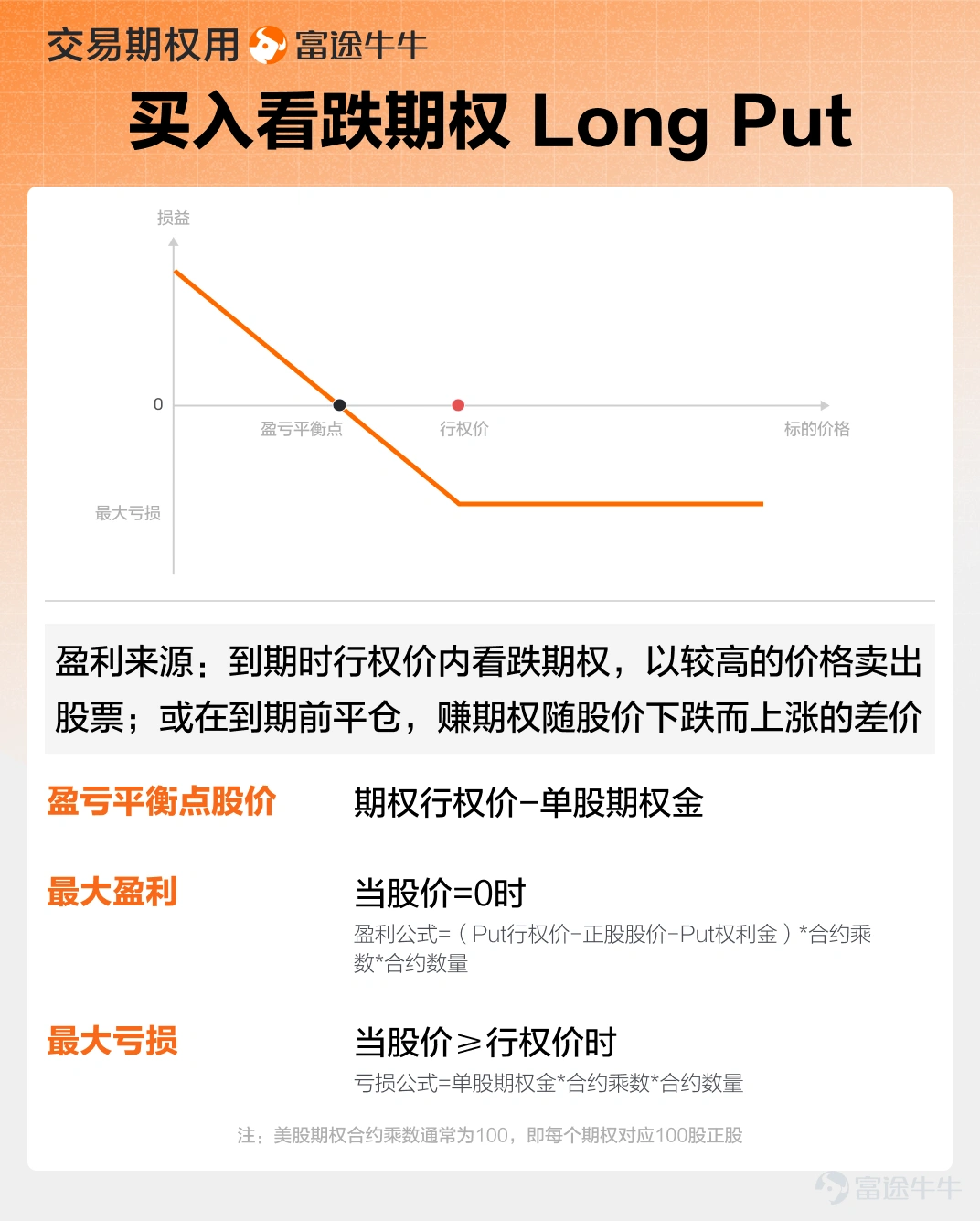
Of course, although market sentiment after Tesla’s earnings results appears highly optimistic, we should also notethat Tesla's TTM P/E ratio has reached 297x, which represents a significant overvaluation.In this scenario, if the actual progress of humanoid robots disappoints or the AI bubble bursts, the valuation could be unsustainable. Once risks materialize, Tesla, trading at nearly 300 times earnings, will likely bear the brunt. From a value perspective, taking advantage of high market sentiment to buy long-term put options can be seen as a bet on a broader valuation correction.Investors with this mindset can consider buying long-term Put options.

Finally, here's a small perk for fellow investors—welcome to claim it!Beginner's Options Package
This event is exclusively for invited HK users, click to learn moreDetailed event rules >>
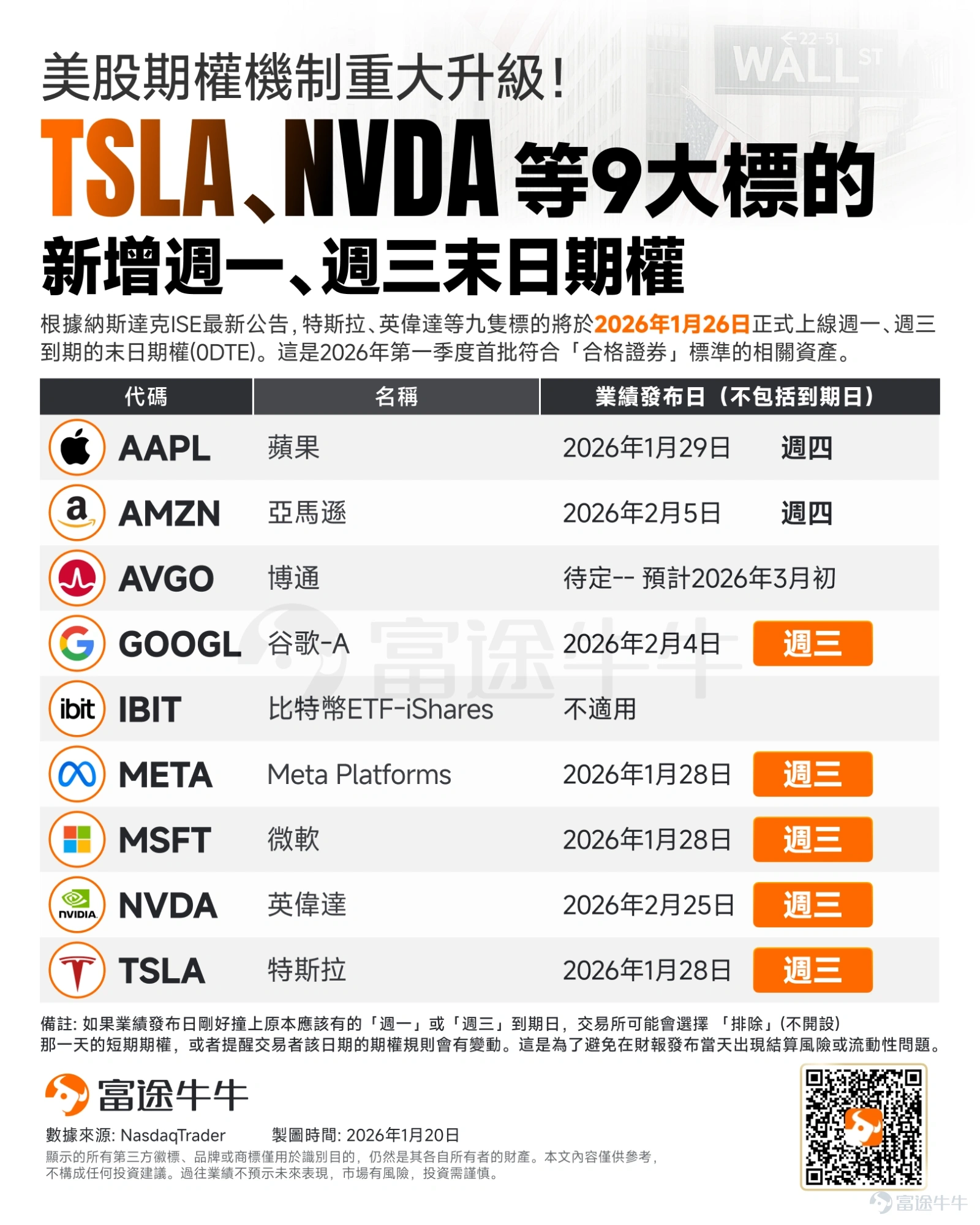
Major upgrade to the US options mechanism! New Monday and Wednesday options added for nine major symbols including Tesla and NVIDIA. A step-by-step guide to profiting from end-of-term options using the NiuNiu tool >>

Disclaimer
This content does not constitute any offer, solicitation, recommendation, opinion, or guarantee of any securities, financial products, or tools. The risk of loss in buying and selling options can be substantial. In some cases, your losses may exceed the initial margin amount deposited. Even if you set contingent orders, such as 'stop-loss' or 'limit' orders, these may not necessarily prevent losses. Market conditions may make these orders unexecutable. You might be required to deposit additional margin within a short period. If you fail to provide the required amount within the specified time, your open positions may be liquidated. However, you will still be responsible for any account deficit arising from this. Therefore, before trading, you should study and understand options and carefully consider whether such trading suits you based on your financial situation and investment objectives. If you trade options, you should be familiar with the procedures upon exercising options and at expiration, as well as your rights and obligations when exercising options and at expiration.
Risk Disclaimer: The above content only represents the author's view. It does not represent any position or investment advice of Futu. Futu makes no representation or warranty.Read more
Comments (3)
to post a comment
33
22