
Hong Kong-listed AI 'twin leaders' see active trading! How to position in the AI sector for the Year

Alibaba's AI narrative returns, a catch-up window for the internet leader
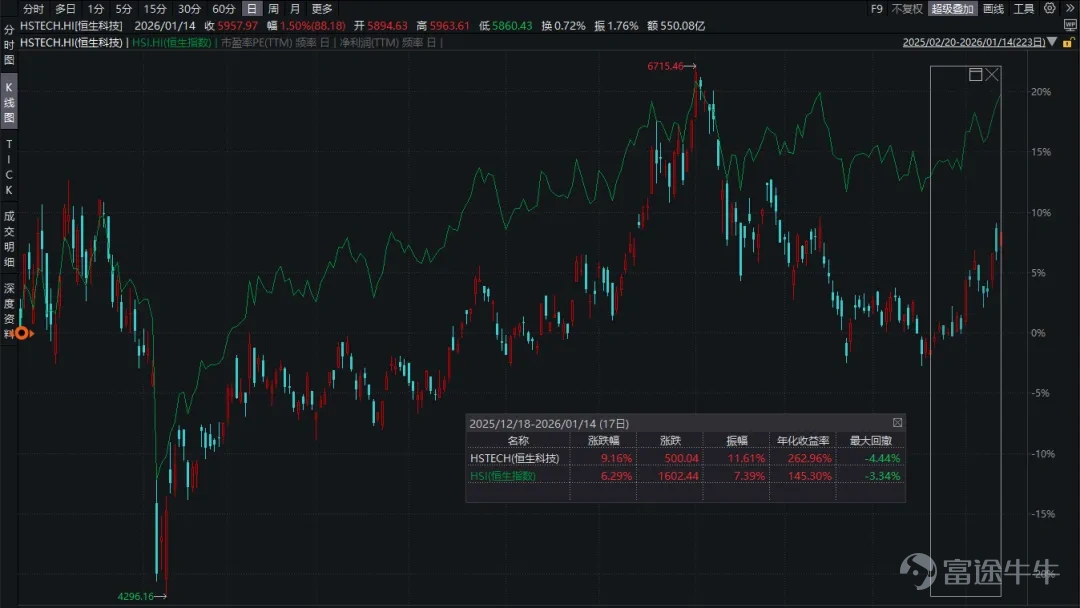
Entering 2026, global stock markets have collectively surged, and Hong Kong stocks are no exception. In the first nine trading days of the year, they have risen nearly 6%, with the Hang Seng Index back above 27,000 points, less than 2% away from the high in October last year.
It is worth noting that although the Hang Seng Index has risen significantly, the Hang Seng Tech Index is still about 12% below its peak last year, which implies a potential catch-up opportunity.
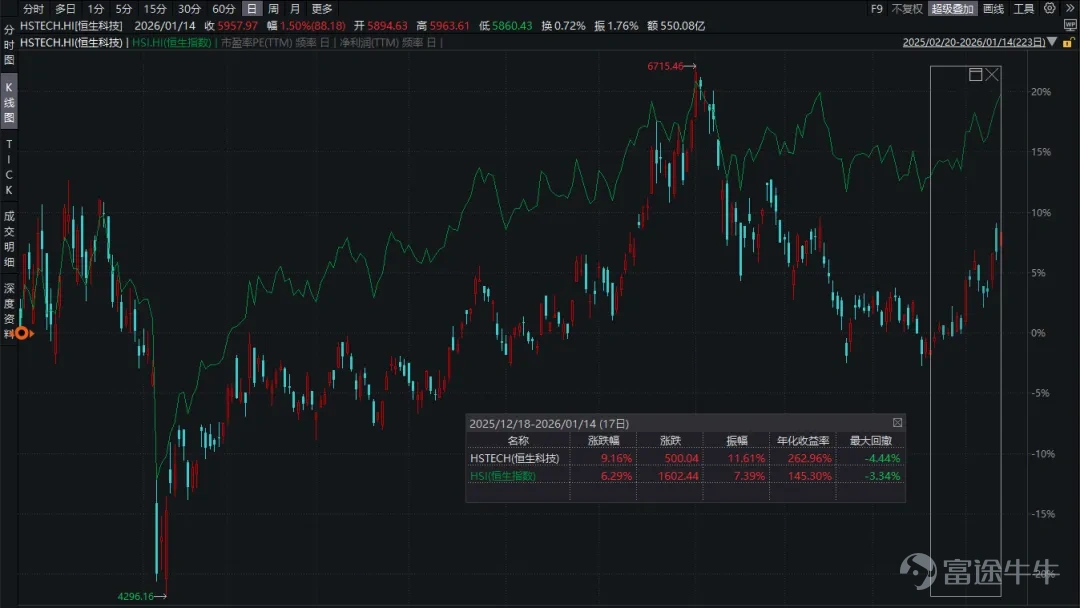
Last year, there were multiple instances where the Hang Seng Index outperformed the Hang Seng Tech Index, but later the Hang Seng Tech Index caught up with the Hang Seng Index. Moreover, the elasticity of the Hang Seng Tech Index is greater than that of the Hang Seng Index. Therefore, it is highly probable that the gap between the increases in these two major market indices will narrow.
Thus, investors who underperformed the market in the first nine trading days need not worry too much. The reaction of the Hang Seng Tech Index has been relatively slow, which has already been the norm over the past year. Next, one should patiently wait for the resurgence of AI narratives in internet stocks. For those interested in participating in the catch-up gains of the Hang Seng Tech Index, the HK Connect Internet ETF Fund (520913) is a choice worth considering, as its holdings are sufficiently focused on leading technology companies, offering the simplest and most straightforward allocation.
Three logics behind Hong Kong-listed internet stocks
Since the beginning of the year, the performance of the Hong Kong stock market has lagged behind that of the A-share market, possibly shaking the confidence of investors in Hong Kong-listed internet stocks.
Currently, the A-share market is still dominated by speculative trading on themes and concepts, with most individual stocks lacking substantial earnings support. According to CICC’s report: essentially, this is 'excess liquidity' chasing 'scarce return assets.' It's just that, as the recognized scarce assets change at different stages, they continue to rotate.
Therefore, investors in internet stocks should not lose heart, because once the market's thematic speculation ends, capital will return to the main trend. We still believe that the main trend this year will be led by Hong Kong internet stocks.
Three reasons to be optimistic about internet stocks:
1. In terms of valuation, internet stocks are the cheapest in the Hong Kong market and also have the greatest growth potential.
As shown in the chart below, the current P/E ratio of the Hong Kong Internet Index is 26 times, with the current percentile at only 34%. The overall valuation of Hong Kong internet stocks has not yet returned to the historical average P/E ratio of 28 times.
The current P/E ratio of the Nasdaq is 42 times, while that of the ChiNext Index is 41 times. In comparison, internet stocks are certainly undervalued and more attractive at present.
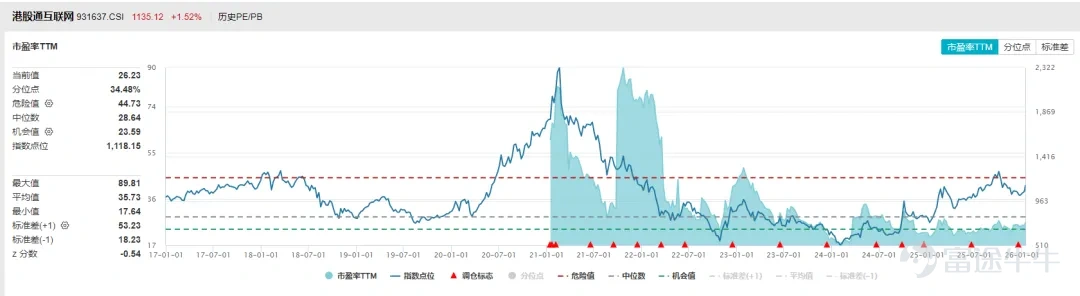
Especially as internet stocks stand at the great opportunity brought by the AI era, leading internet companies have found new growth curves, which can effectively raise their existing valuations.
In terms of individual stock valuation, Tencent's valuation is only 17 times PE, NetEase's is just 14.5 times PE, and Alibaba's valuation, including its cloud business, is around 15 times PE. Driven by AI, it's not excessive for leading internet stocks to return to a valuation of 20 times.

2. The AI narrative revaluation led by Alibaba
After comparing the attractiveness of internet stocks, we observed that the speculative trading of themes in A-shares has cooled down this week. Meanwhile, Hong Kong-listed internet stocks have started to rebound, with Alibaba surging 15% this week.
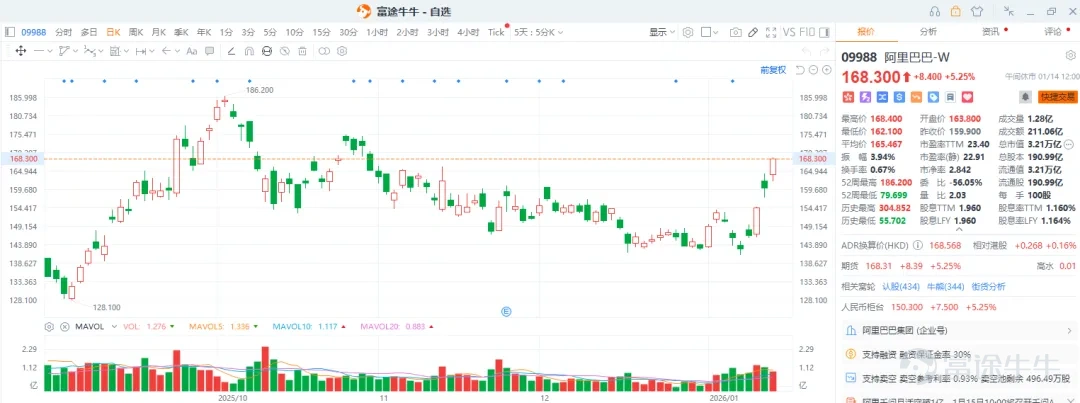
Notably, last year’s market performance in Hong Kong stocks told us that a significant rise in Alibaba’s share price acted as the starting gun for AI opportunities in Hong Kong stocks. When Alibaba begins to propose a new narrative, the market will start a new trend centered on Alibaba—such as in February and September last year when internet stocks experienced a major surge.
The main reason for Alibaba’s decline over the past month was concerns about a potential downgrade in Q4 results last year. Currently, the market has fully absorbed earlier negative news and is refocusing on the potential changes for Alibaba this year.
First, we’ve seen that Alibaba has been accelerating the implementation of AI applications within the Alibaba ecosystem recently. For example, Alibaba’s large-scale model ‘Qwen’ achieves data interoperability across key applications within the Alibaba ecosystem. Going forward, we should see Qwen's app connecting Taobao and Flash Purchase. Once Qwen's large-scale model is ready, other Alibaba applications will gain traffic driven by Qwen, bringing substantial synergies to the business.
Secondly, according to LatePost, Alibaba today set a target for 2026 to capture 80% of China’s incremental AI cloud market.
We believe the market reaction going forward will be quite intense, potentially triggering a new wave in internet stocks. This is because internet stocks have adjusted by 10-15% over the past two months, and now that the Hang Seng Index has risen significantly, it’s time for internet stocks to catch up.

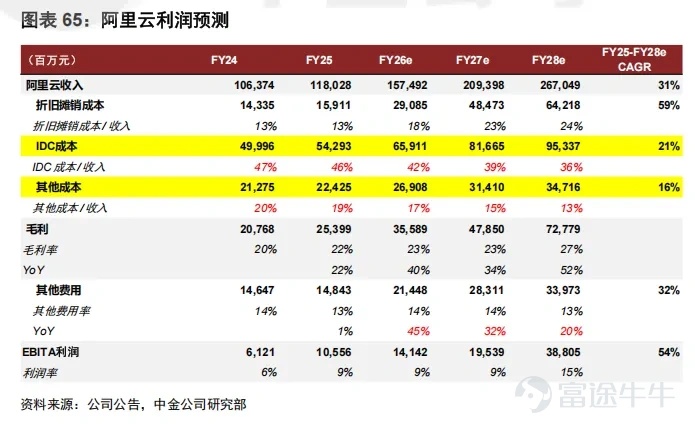
According to CICC's estimates, Alibaba Cloud's revenue CAGR is expected to exceed 30% over the next three years.
In CICC's view, in the AI era, Alibaba Cloud’s differentiated advantages are more pronounced, and its market share will continue to grow. Alibaba Cloud will solidify its position as the market leader.
Secondly, the profit margin of AI cloud is expected to be higher than traditional cloud in the medium to long term. As AI-related revenue continues to increase, Alibaba Cloud’s overall profitability is projected to have significant room for improvement. By fiscal year 2028, Alibaba Cloud’s AI business EBITA margin is expected to approach 18%, contributing an incremental 3.5% to the profit margin.
Moreover, overseas markets are also a key growth driver for Alibaba Cloud. Overseas markets offer better business environments and higher profit margins, allowing Alibaba Cloud to contribute greater profitability. According to CICC’s estimates, by fiscal year 2028, Alibaba Cloud’s overseas business EBITA margin could exceed 20%, adding an incremental 2.5% to the profit margin.
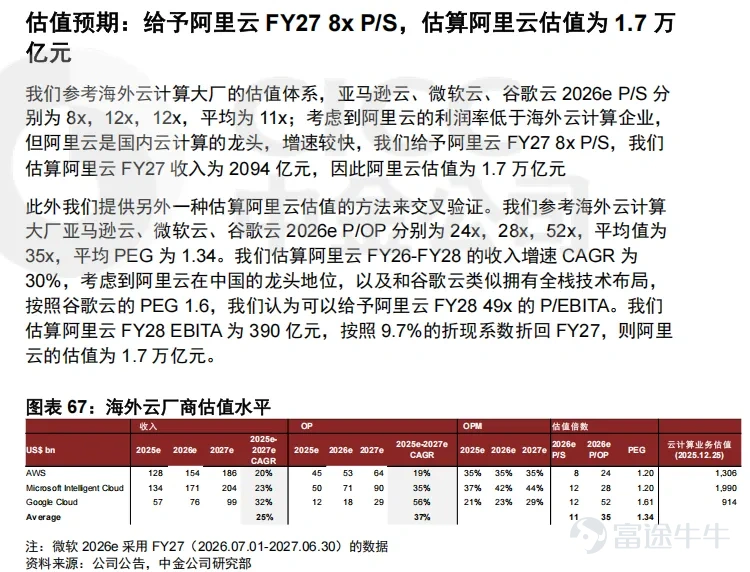
Based on CICC's expectations, assigning Alibaba Cloud a PS ratio of 8x for fiscal year 2027, its valuation is estimated at RMB 1.7 trillion. However, the market has yet to fully reflect this expectation, currently giving Alibaba Cloud a PS ratio of only 3-4x. The current valuation gap remains substantial. As Alibaba Cloud drives market sentiment, other internet stocks may also see a re-rating in valuations.
3. Unique Advantages of Internet Stocks
First, the Hong Kong-listed internet sector has purer AI thematic attributes. For example, both Tencent and Alibaba are leveraging AI to enhance advertising, and internally, they widely use AI to improve operational efficiency. Second, foreign investors favor China’s AI application narrative—Tencent can be compared to Meta, while Alibaba resembles Google or Amazon. Third, these stocks are undervalued with high growth certainty.
When participating in the AI narrative of Hong Kong internet stocks, the key lies in capturing Beta returns and selecting the right investment targets.
When it comes to stock selection, the simplest and most straightforward way to gain exposure to Hong Kong internet stocks is by choosing ETFs. During the explosive growth phase of AI applications, it's hard to predict which company will outperform. Selecting the wrong individual stock might result in underperformance compared to the broader market. However, by choosing a well-weighted Hong Kong internet ETF, we can conveniently allocate investments across leading internet stocks, diversify risks, and avoid underperformance during bull markets.
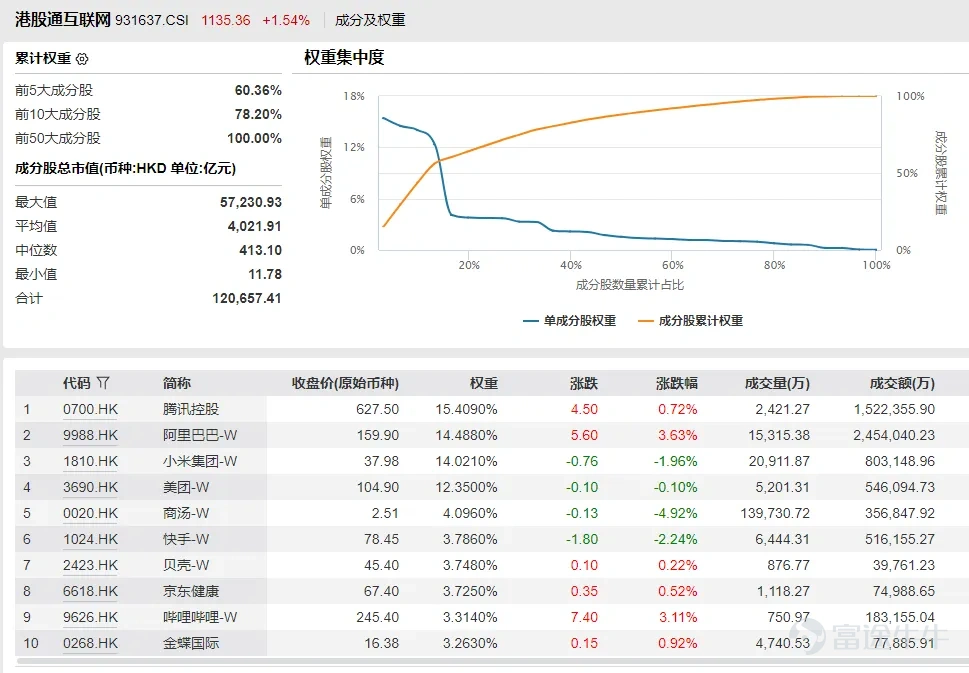
For instance, the Hang Seng Tech Internet ETF (520913) represents a pure-play and highly concentrated index for investing in Hong Kong-listed technology companies. This ETF primarily tracks the aforementioned Hong Kong Internet Index (931637), making it a noteworthy allocation tool in the current market environment.
Risk Warning: The stocks and funds mentioned in this article are for research and analysis reference only and do not constitute any trading advice. The gains and performance of stocks and funds represent the past and do not predict the future. Investing in funds involves risks, and caution is advised when entering the market.
Risk Disclaimer: The above content only represents the author's view. It does not represent any position or investment advice of Futu. Futu makes no representation or warranty.Read more
Comments
to post a comment