
The tech gala is here! Can CES 2026 ignite a tech rally?

NVIDIA's CES Predicts the Future of Autonomous Driving, WeRide Leads the Industry by Integrating Dual Technology Approaches
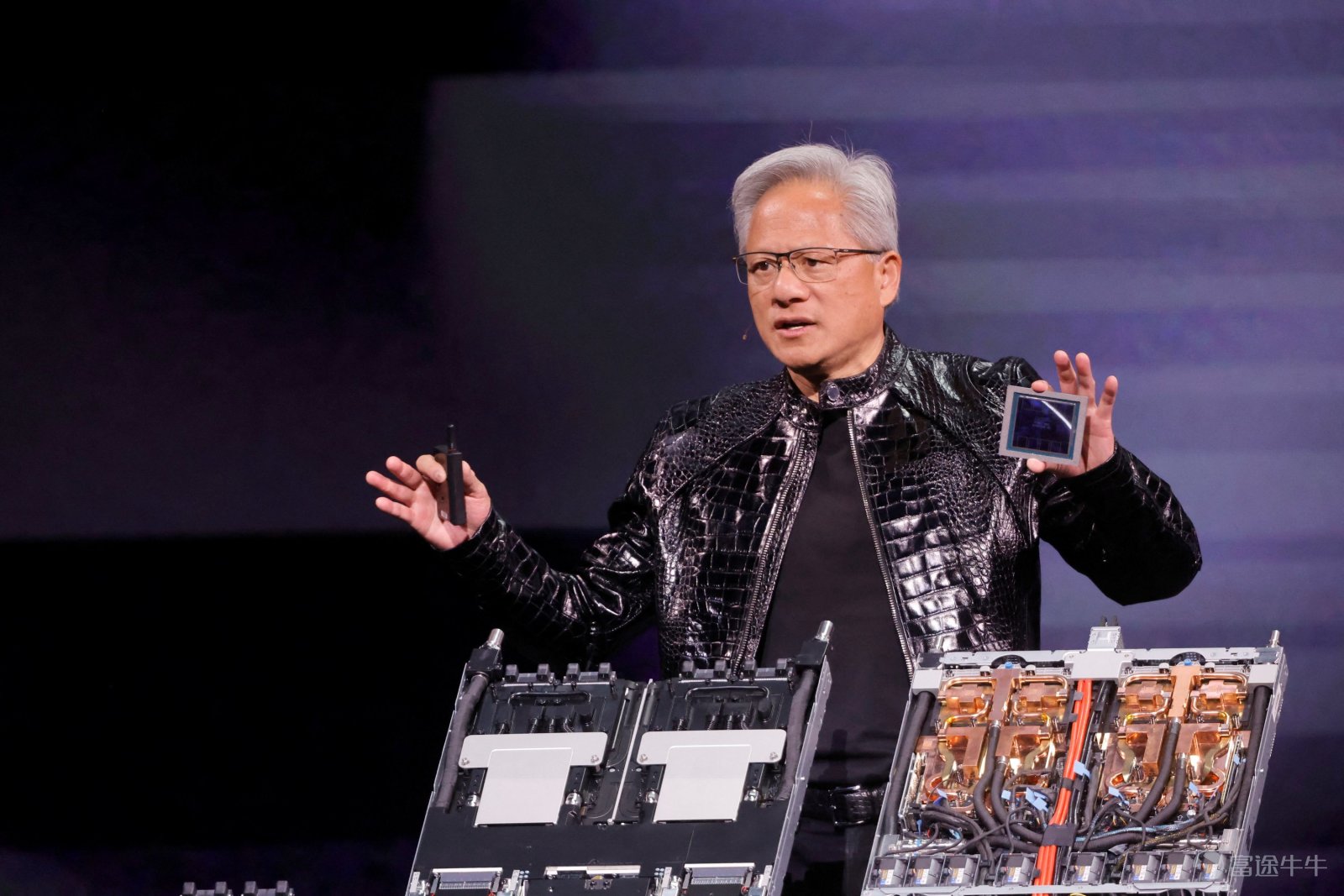
"Autonomous driving will become the first large-scale application scenario for physical AI." At CES 2026 (International Consumer Electronics Show), Jensen Huang, Founder and CEO of NVIDIA, predicted that in the next decade, most vehicles worldwide will achieve autonomous driving.

(Jensen Huang, Founder and CEO of NVIDIA, delivers a speech at CES 2026; photo from Reuters)
As an important partner in NVIDIA's global L4 autonomous driving and Robotaxi ecosystem,WeRide (NASDAQ: WRD, HKEX: 0800) continues to lead the industry. It is not only the world's only technology company to achieve large-scale commercial applications of L4 unmanned driving and L2+ assisted driving, but also officially announced the integration of one-stage end-to-end technology from L2+ assisted driving into L4 unmanned driving research and commercial operations, becoming the world’s first autonomous driving technology company to fuse the Tesla approach with the Waymo approach.

(WeRide Robotaxi GXR and WePilot 3.0 road test vehicles)
This leading position in the industry stems from WeRide's universal autonomous driving technology platform built around its core L4 Robotaxi technology—WeRide One. Centered on full-stack software algorithms for autonomous driving, this platform systematically integrates AI models, software algorithms, modular hardware design, and cloud architecture platforms. With high versatility and scalability, it can efficiently empower different vehicle models with autonomous driving capabilities in urban scenarios, achieving 'one platform,打通万千场景'.

(WeRide One: WeRide's General Technology Platform for Autonomous Driving)
Relying on the high versatility of WeRide One, WeRide has achievedbidirectional expansion in application scenarios and technical levels: In terms of application scenarios, autonomous driving capabilities have expanded from Robotaxis for personal mobility to multiple product lines such as Robobuses, Robosweepers, and Robovans; at the technical level, it has extended to L2+ advanced driver-assistance systems (ADAS), providing automakers with ADAS solutions.
After eight years of continuous optimization, the WeRide One platform has not only gained a data training advantage across multiple application scenarios but also broken through the boundaries between L4 fully autonomous driving and L2+ assisted driving. It has distilled core AI models using an end-to-end technical approach, applying them to L4 autonomous driving. This makes AI drivers increasingly intelligent, consistently performing complex perception, prediction, and planning tasks with high efficiency and reliability. Their driving skills even surpass those of the best human drivers, perfectly integrating FSD (Full Self-Driving) assisted driving technology represented by Tesla and L4 autonomous driving technology represented by Waymo.
This unique technological advantage allows WeRide to maintaina globally leading safety operation record. Since launching China’s first publicly operated Robotaxi service in 2019, WeRide’s Robotaxis have been safely operating on public roadsOver 2,300 days, WeRide has never faced regulatory penalties due to autonomous driving system failures. According to data from California's DMV and industry consultants, WeRide ranked first among commercially operational autonomous driving companies in terms of MPI (miles driven per intervention) for each year from 2022 to 2024,surpassing Waymo.。
This technological leadership has also enabled WeRide to seize a critical scale and first-mover advantage in commercial deployment. WeRide’s L4 Robotaxi has entered the global commercial operation phase, with operations spanning more than 10 cities worldwide, including Beijing, Guangzhou, Abu Dhabi, Dubai, Riyadh, Singapore, and Zurich. Among these, WeRide’s Robotaxis have achieved driverless commercial operations in Beijing, Guangzhou, and Abu Dhabi, with the Abu Dhabi fleet nearing the break-even point on a per-vehicle basis.
By the end of 2025, WeRide’s global Robotaxi fleet will reach approximately 1,000 vehicles, with around 200 deployed in the Middle East, entering an accelerated growth phase. By 2030, WeRide is expected to deploy hundreds of thousands of Robotaxis globally.

(WeRide Robotaxi enters global commercial deployment)
In the L2+ advanced driver-assistance systems (ADAS) field, WeRide officially launched WePilot 3.0, a one-stage end-to-end ADAS solution co-developed with Bosch, in August 2025. It successfully reached SOP (Start of Production) within three months, setting another industry record.
Compared to traditional multi-module architectures, WePilot 3.0 integrates perception, prediction, and planning control using a one-stage end-to-end AI large model, ensuring consistent strategies and smooth decision-making across complex dynamic environments worldwide. It also offers greater generalization capabilities and safety redundancy. In challenging non-structured scenarios such as vehicle-road interactions, vehicle-vehicle interactions, and vehicle-pedestrian interactions, the one-stage end-to-end architecture minimizes information loss and system jitter, enabling more continuous, natural, human-like, and safer driving performance.
As “physical AI” accelerates into real-world applications, autonomous driving is transitioning from technical exploration to large-scale application. Leveraging the long-term technological advantages of WeRide One and breakthroughs in integrating L4 autonomous driving with L2+ ADAS technologies, WeRide is rapidly advancing autonomous driving from isolated successes to systematic, large-scale commercial implementation through a robust and clear path.
Risk Disclaimer: The above content only represents the author's view. It does not represent any position or investment advice of Futu. Futu makes no representation or warranty.Read more
Comments
to post a comment