
English
Back
Open Account
Kicking off the year with a bang! Multiple sectors in Hong Kong's stock market are quietly gaining m
融慧财经
joined discussion · Jan 8 09:58

[Warrant Insights] Behind the Hang Seng Index’s unusual movements, a complete breakdown of the联动密码 between warrants and their underlying stocks

Based on technical data from January 7, $Hang Seng Index (800000.HK)$
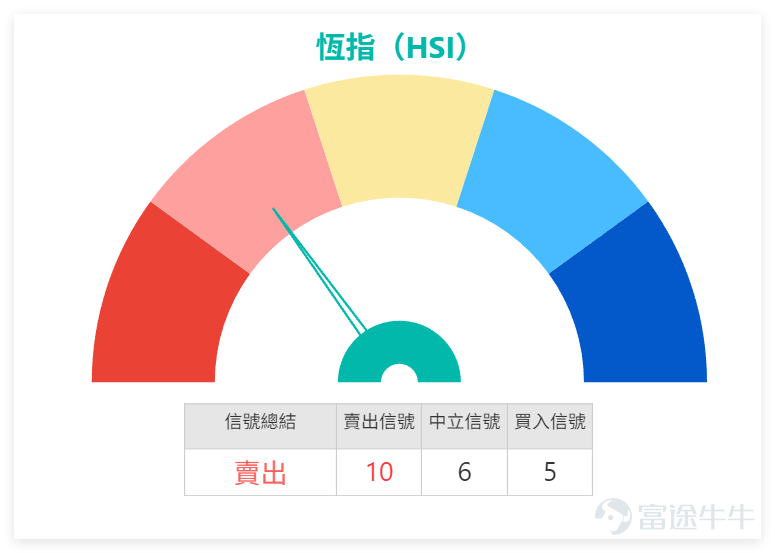
The Hang Seng Index closed at 26,458.95 points, down 0.94% on the day, with a trading volume of 276.134 billion yuan. The RSI index is at 61, and the technical indicators summarize to a "sell" signal with a strength of 10; among various oscillation indicators, the CCI indicator shows an "overbought state, sell" signal, while the ADX indicator and Ichimoku Cloud both indicate "sell." Only a few indicators like MACD signals and Bollinger Bands show "buy" signals. The current support levels for the Hang Seng Index are 25,892 points (Support 1) and 25,364 points (Support 2), with resistance levels at 26,883 points (Resistance 1) and 27,554 points (Resistance 2). In the short term, it will be crucial to watch whether it can stabilize above the 26,500-point level.
Based on technical data from January 7, $Hang Seng Index (800000.HK)$ The Hang Seng Index closed at 26,458.95 points, down 0.94% on the day, with a trading volume of 276.134 billion yuan. The RSI index is at 61, and the technical indicators summarize to a "sell" signal with a strength of 10; among various oscillation indicators, the CCI indicator shows an "overbought state, sell" signal, while the ADX indicator and Ichimoku Cloud both indicate "sell." Only a few indicators like MACD signals and Bollinger Bands show "buy" signals. The current support levels for the Hang Seng Index are 25,892 points (Support 1) and 25,364 points (Support 2), with resistance levels at 26,883 points (Resistance 1) and 27,554 points (Resistance 2). In the short term, it will be crucial to watch whether it can stabilize above the 26,500-point level. In the financial sector, HSBC Holdings (00005.HK) closed at HK$127.2, down 1.24%, with technical indicators showing a "strong sell" signal. The stock price is under pressure near the middle line of the Bollinger Bands. AIA (01299.HK) closed at HK$85.95, slightly down 0.12%. Multiple oscillation indicators show an overbought condition, indicating significant short-term adjustment pressure. Ping An (02318.HK) closed at HK$71.1, down 1.25%, with an RSI of 84 in the overbought zone and technical signals suggesting a "strong sell." China Construction Bank (00939.HK) closed at HK$7.62, down 1.42%, with the stock price below all major moving averages, reflecting a weak technical pattern. In the tech sector, Tencent Holdings (00700.HK) closed at HK$624.5...
In the financial sector, HSBC Holdings (00005.HK) closed at HK$127.2, down 1.24%, with technical indicators showing a "strong sell" signal. The stock price is under pressure near the middle line of the Bollinger Bands. AIA (01299.HK) closed at HK$85.95, slightly down 0.12%. Multiple oscillation indicators show an overbought condition, indicating significant short-term adjustment pressure. Ping An (02318.HK) closed at HK$71.1, down 1.25%, with an RSI of 84 in the overbought zone and technical signals suggesting a "strong sell." China Construction Bank (00939.HK) closed at HK$7.62, down 1.42%, with the stock price below all major moving averages, reflecting a weak technical pattern.
In the tech sector, Tencent Holdings (00700.HK) closed at HK$624.5, down 1.26%, with weakening MACD signals, leading to a technical summary of "sell." Alibaba (09988.HK) closed at HK$145.9, down 3.25%, breaking below MA10 and MA30, with a trading volume reaching 21.759 billion yuan, reflecting strong selling pressure. Meituan (03690.HK) closed at HK$104.5, down 1.51%, with technical indicators showing "neutral" but leaning towards sell, requiring observation of whether it can hold above the HK$100 mark.
In consumer and real estate sectors, Geely Auto (00175.HK) closed at HK$17.51, down 1.79%, with an RSI of 53 indicating neutrality, though trading volumes support the decline. Link REIT (00823.HK) rose against the trend by 1.11%, closing at HK$34.58, with technical signals indicating "buy," making it one of the better-performing blue chips. Bank of China (Hong Kong) (02388.HK) closed at HK$39.42, down 1.15%, with technical indicators showing a "sell" signal.
Overall, the Hong Kong stock market was under pressure on January 7, with many blue-chip stocks showing weakening technical patterns. The financial and technology sectors led the declines, while only a few utility stocks demonstrated resilience. Investors should focus on oversold rebound opportunities and risk management.
Regarding the Hang Seng Index's movements and their interaction with CBBCs, on January 5, 2026, the Hang Seng Index slightly increased by 0.03%, closing at 26,347.24 points. Two BOC bull contracts tracking the Hang Seng Index subsequently experienced notable rises: the BOC Bull Contract (61877) surged 12% over two days, and the BOC Bull Contract (60819) rose 10% over the same period, far exceeding the Hang Seng Index’s 0.42% gain during the same time, fully demonstrating the leverage effect of CBBCs.
It's important to note that CBBC price movements are closely tied to the underlying asset (here, the Hang Seng Index). When the Hang Seng Index rises, Bull Contracts (call CBBCs) will follow suit, and the higher the leverage, the greater the potential gain during underlying asset volatility. Conversely, when the Hang Seng Index falls, Bear Contracts (put CBBCs) have the advantage. Key factors influencing CBBC performance include not only leverage but also premium and implied volatility – the lower the premium, the more reasonable the CBBC price relative to the underlying asset, offering better value; the smaller the implied volatility, the relatively lower the risk of CBBC price fluctuations.
Based on the current market situation and CBBC linkage logic, we have screened out four higher-value CBBCs from the pool for investors' reference.
First, looking at call direction, JPMorgan Call Warrants (21186) have a leverage of 17.3 times, with an exercise price of 28,600 points. Their low premium and implied volatility reduce investors' cost risks, making them more stable. BOC Call Warrants (23798) offer leverage of 6.1 times, also with an exercise price of 28,600 points. Although the leverage is not as high as the former, its lower implied volatility suits risk-averse investors seeking stability.
Now turning to put direction, Societe Generale Put Warrants (24091) offer leverage of 9.5 times, with an exercise price of 24,278 points, having the lowest premium and implied volatility. If the Hang Seng Index fails to sustain its rebound and returns to a downward trend, this target would be a good choice. UBS Bull Contract (62270) offers leverage of 25.4 times, with a stop-loss level of 25,500 points, featuring the lowest premium and relatively high actual leverage, suitable for investors optimistic about the Hang Seng Index rebound and able to bear some risk.
Reference suggestion: Fellow investors who already hold the selected warrants mentioned above can set a profit-taking level based on the corresponding strike price. For instance, investors holding J.P. Morgan call warrants (21186) can place their profit-taking level near the warrant price corresponding to the strike price of 28,600. For those who have not yet entered the market, it's not advisable to chase targets that have already surged in the short term, as intraday fluctuations could be due to short-term speculative trading. It is preferable to choose targets with low premiums and low implied volatility, such as J.P. Morgan call warrants (21186) or Societe Generale put warrants (24091). These types of products carry lower risks and offer better cost-effectiveness when the underlying stock fluctuates.
Risk warning: Intraday fluctuations may result from short-term speculative trading; if the underlying stock lacks sustained volume support, the warrant prices could retreat at any time. Before entering the market, ensure you clearly check the real-time premium rate and trading volume of the warrant, avoiding targets with excessively high premiums or low trading volumes, which might prevent timely buying or selling. Additionally, warrants are leveraged products with high volatility. Investors should allocate funds reasonably according to their risk tolerance and avoid blindly following trends.
Did you catch the warrant market movements following the Hang Seng Index’s unusual activity on January 5? Do you think the Hang Seng Index can sustain a breakout above the resistance level of 26,883 points? Feel free to share your thoughts and strategies in the comments section! Want more analysis? Don’t forget to follow 'HK Warrants Jenny' for daily updates!
Disclaimer: This article does not constitute any investment advice.
This article is for reference only and does not constitute any investment advice. The market data, opinions, and analysis contained herein may change at any time without prior notice. We shall not be liable for any loss or damage arising from reliance on the information in this article. Technical analysis merely indicates whether certain technical conditions are met; a comprehensive evaluation of asset performance should incorporate additional data. Trading decisions should not be based solely on the content of this article. Please note that past performance is not indicative of future results.
#Hang Seng Index #Hong Kong Stock Movement #Warrants Real-time Analysis #Intraday Opportunities #Hong Kong Stock Warrants Jenny #Warrants Selection #Warrants Strategy #Derivatives Hedging #Short-term Rebound of Hang Seng Index #Warrants Leverage Effect
Risk Disclaimer: The above content only represents the author's view. It does not represent any position or investment advice of Futu. Futu makes no representation or warranty.Read more
Thumbs Up
1
50K Views
Report
Comments
Write a Comment...
1