
引言
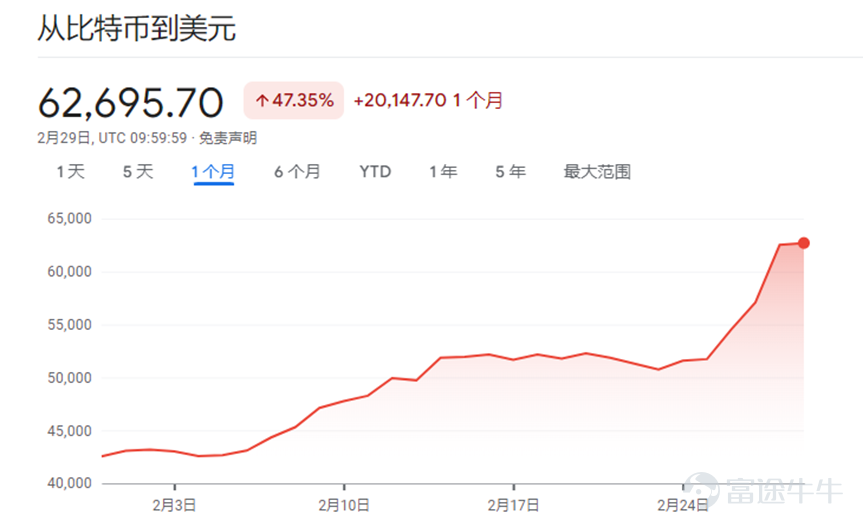
Bitcoin prices surged on Wednesday, surpassing $59,000 and reaching levels not seen since the end of 2021. The upward trend of this top cryptocurrency continues, indicating that Bitcoin's current investment is very hot. For those who cannot directly participate in Bitcoin trading using a digital wallet, what opportunities are there to join the Bitcoin feast?
Image: Bitcoin prices continue to rise

Source: Google Finance
In the past, the direct purchase of Bitcoin allowed investors to have complete control and ownership of real cryptocurrency assets, but this method also has some obvious disadvantages. Such as:
• Exchange accounts may face security risks such as private key theft or loss, threats of exchange hacking, etc.
• Managing Bitcoin requires a certain level of technical knowledge, which may make investors unfamiliar with digital currency operations feel difficult.
The above two points are usually the doubts when trading Bitcoin, so under these pain points, there are alternatives.Bitcoin ETFAs a substitute.
Simply put, a Bitcoin ETF is an exchange-traded fund that allows investors to participate in the Bitcoin market through traditional securities exchanges without directly buying and holding Bitcoin. In other words, buying a Bitcoin ETF can be equivalent to holding a portion of digital currency.
This investment tool provides convenience for investors who wish to invest in bitcoin but are concerned about the complexity and security issues of cryptocurrency exchanges. At the same time, holding bitcoin ETFs is more cost-effective (with fees usually less than 0.3%) compared to holding bitcoin directly. Trading through a stock account is more convenient, provides more security, and can potentially reduce tax burdens in retirement accounts.
So what can be traded on the exchange now?
Taking the US stock market as an example, the 11 bitcoin spot ETFs approved by the Securities and Exchange Commission (SEC) have been performing well since their launch, and as spot ETFs, they have lower commission rates, which is worth paying attention to. In addition, in markets such as Canada, there have been related spot ETFs available for trading early on, and many bitcoin futures ETFs also entered the market earlier.
Image: 11 Bitcoin spot ETFs performing well

Data source: Futubull
I. What spot ETFs are available in the US stock market?
1. Take the top two in terms of trading volume for spot ETFs listed at the beginning of the year as examples:
(1)$iShares Bitcoin Trust (IBIT.US)$It is a bitcoin exchange-traded fund that allows investors to indirectly participate in the bitcoin market by buying fund shares. IBIT is directly linked to the price of bitcoin, providing investors with a convenient way to access bitcoin assets without directly holding or managing cryptocurrencies.
Advantages: Strong compliance, investors can buy and sell IBIT shares at any time during normal trading hours, relatively high liquidity.
Disadvantages: As a financial product related to bitcoin, IBIT's performance may be impacted by tracking errors, i.e. the fund's net asset value may not fully synchronize with the spot market price of bitcoin.

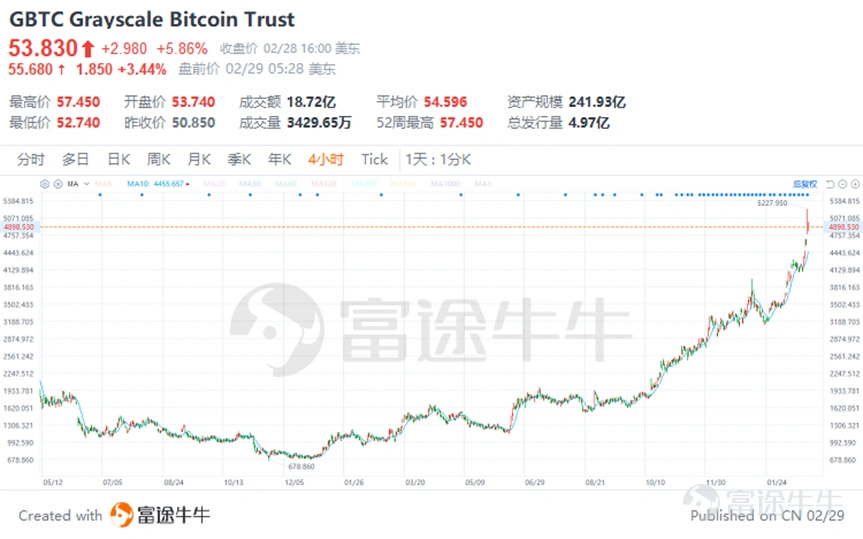
(2)$Grayscale Bitcoin Trust (GBTC.US)$It is a closed-end investment tool that allows investors to indirectly hold bitcoin. It is issued and managed by Grayscale Investments, but it is not an exchange-traded fund (ETF). The net assets of GBTC are based on the value of the bitcoin it holds.
Advantages: Similar to IBIT, for institutions and individual investors seeking compliant channels to invest in bitcoin with high liquidity, GBTC is a good choice.
Disadvantages: Compared to other investment products, GBTC has relatively high management fees, which may erode investment returns.

2. What are some other spot ETFs available?
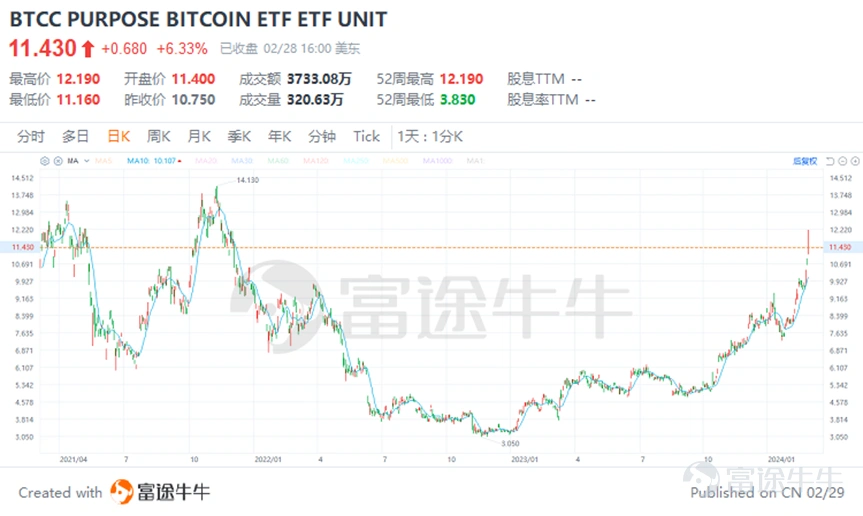
(1)$Purpose Bitcoin ETF Currency Hedged Units (BTCC.CA)$Feature: As the world's first approved bitcoin spot ETF, BTCC directly holds actual bitcoins, tracking the market price of bitcoin more closely.

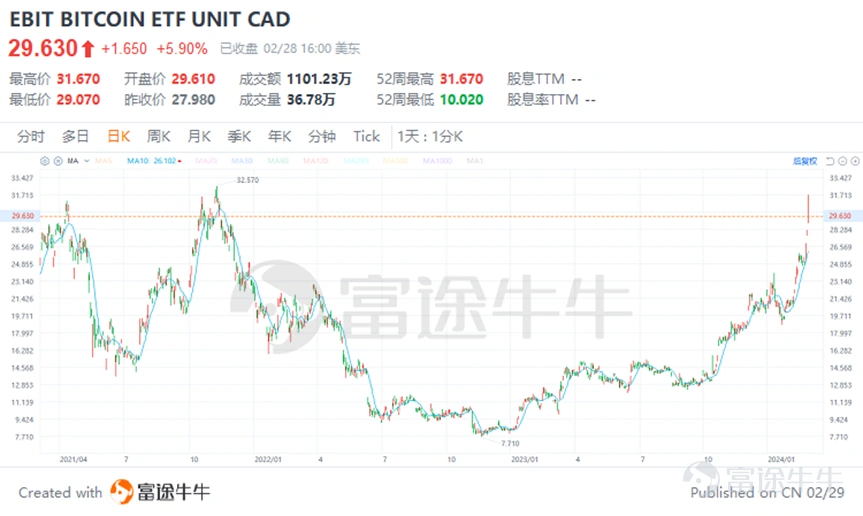
(2)$Evolve Bitcoin ETF (EBIT.CA)$Feature: Similar to BTCC, EBIT directly holds bitcoins, providing investors with investment returns highly correlated to bitcoin prices.

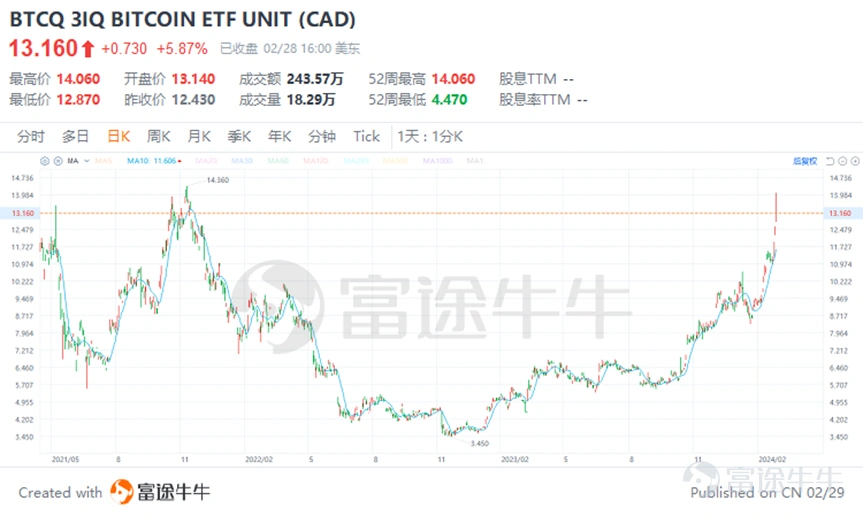
(3)$3IQ CORP. BITCOIN ETF (CAD) (BTCQ.CA)$Feature: Co-launched by 3iQ and CoinShares, BTCQ directly holds and stores bitcoins, providing investors with exposure to the bitcoin market, while relying on professional institutions for bitcoin management and storage, alleviating investors' security concerns of directly holding bitcoins.

What other bitcoin spot ETF products are available in other markets?
Apart from the US stock market, there are multiple bitcoin spot ETF products available for investors to trade in markets like Canada and Hong Kong. Next, we will provide investors with detailed introductions to these products:
Canadian Market:
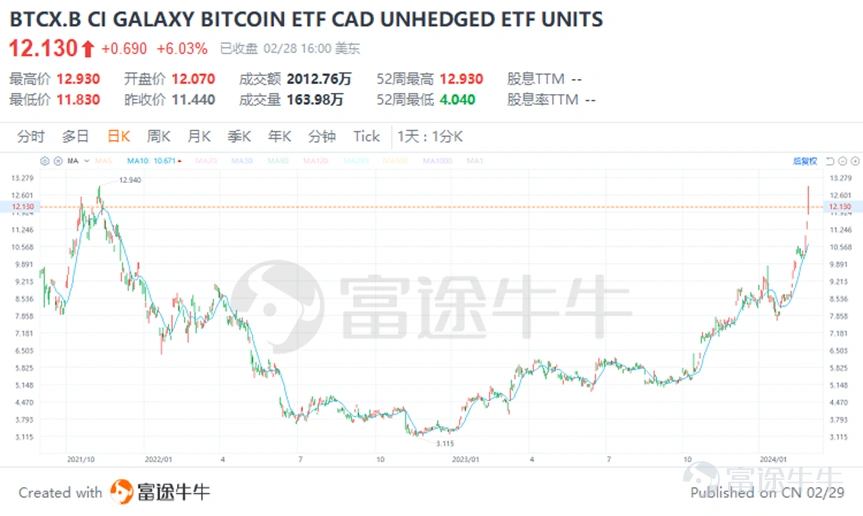
$CI INVESTMENTS INC GALAXY BITCOIN ETF (BTCX.B.CA)$Features: BTCX directly holds bitcoin, providing investors with a convenient way to invest in bitcoin in the Canadian market. This ETF offers a direct investment channel in the bitcoin spot market, with a certain level of transparency and regulatory protection. At the same time, as it is currently only listed in Canada, global investors may be restricted by regional investment rules.

Hong Kong Stock Market:
In the Hong Kong stock market, three bitcoin spot ETFs under the approval of the Hong Kong Securities and Futures Commission, including Huaxia Hong Kong, Bosera International, and Harvest International, enjoyed their first issuance on April 29 and officially listed on the Hong Kong Exchange on April 30. This marks the first batch of virtual asset spot ETFs in Asia to be officially listed, representing a historic moment for the Hong Kong capital markets.At the same time, these ETF products are also available for investors to directly purchase and trade within the Futubull platform.
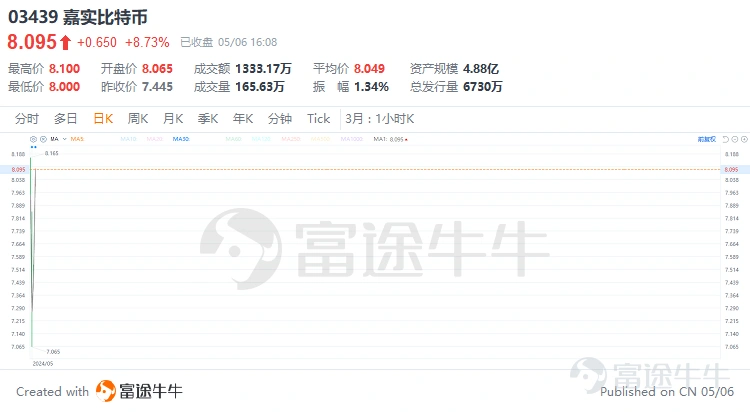
$Harvest Bitcoin Spot ETF (03439.HK)$On April 30th, listed on the Hong Kong Exchange, directly holding actual bitcoins, providing investment results closely related to bitcoin price performance. The product tracks the CME CF Bitcoin Reference Rate Index (Asia Pacific version), which aggregates the trading volume of bitcoin trading activities in major bitcoin spot trading venues. Currently, the total expense ratio of the Harvest Bitcoin ETF is 1% per year.
Advantages: Strong compliance, investors can buy and sell ETF shares at any time during normal trading hours, with relatively high liquidity.
Disadvantages: Due to being financial products related to bitcoin, the performance of ETFs may be affected by tracking errors, i.e., the fund's net asset value performance may not be completely synchronized with the bitcoin spot market prices.

$ChinaAMC Bitcoin ETF (03042.HK)$Similar to the CSOP Bitcoin, it directly acquires and holds Bitcoin, closely tracks the CME CF Bitcoin Reference Rate Index, and provides investment returns closely related to the Bitcoin price. The fund's initial scale reached 0.95 billion Hong Kong dollars, with a first-day trading volume of 41.45 million Hong Kong dollars.
Advantages: Strong compliance, investors can buy and sell ETF units at any time during normal trading hours, with relatively high liquidity.
Disadvantages: The total transaction fee rate is 1.99% per year, the highest among current Hong Kong stock spot ETFs.

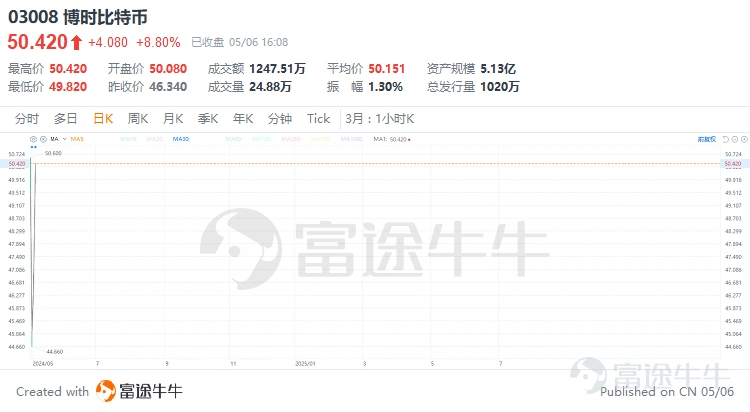
$Bosera HashKey Bitcoin ETF (03008.HK)$Tracking the performance of Bitcoin spot prices, closely tracking the CME CF Bitcoin Index. What is unique is that the Bosera Bitcoin is priced directly linked to the value of Bitcoin, at one ten-thousandth of the Bitcoin price (10,000 shares = 1 Bitcoin).
Advantages: Lower total expense ratio, only 0.85% per year. At the same time, this ETF can adopt a 'physical' subscription mechanism, allowing investors to subscribe to ETF units directly using Bitcoin.
Disadvantages: It may also be affected by tracking error of the index, meaning the fund's net asset value performance may not be completely synchronized with the Bitcoin spot market price.

In addition to spot ETFs, there are also Bitcoin futures ETFs:
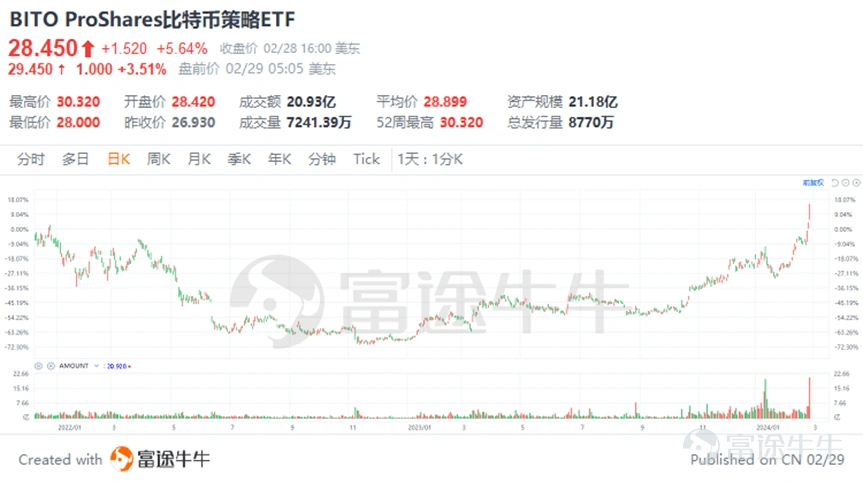
1.$ProShares Bitcoin ETF (BITO.US)$Feature: As the first Bitcoin futures ETF listed in the USA, BITO tracks the performance of Bitcoin futures contracts instead of directly holding Bitcoin. Investors can indirectly participate in the Bitcoin market fluctuations through this ETF, without the need to directly purchase or store cryptocurrencies.
Advantages: For traditional investors, this ETF provides a more familiar and regulatory-compliant investment channel; it can be bought and sold at any time during trading hours and has higher liquidity.
Disadvantages: Due to tracking futures contracts, there may be roll costs (rollover expenses) and basis risk (difference between futures and spot prices), and it cannot fully reflect the performance of the Bitcoin spot market.

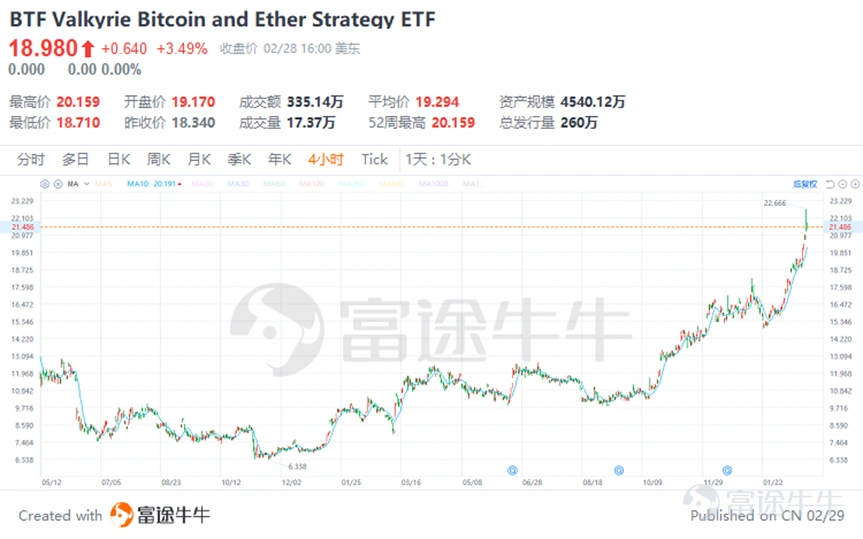
2.$CoinShares Bitcoin and Ether ETF (BTF.US)$Feature: Similar to BITO, BTF also invests in Bitcoin futures contracts, providing investors with a compliant way to gain exposure to Bitcoin.
Advantages: It also has regulatory compliance, suitable for investors who want to get involved with Bitcoin but are unwilling to take on the risk of directly holding Bitcoin.
Disadvantages: It faces similar issues such as rollover costs of futures contracts and basis risk.

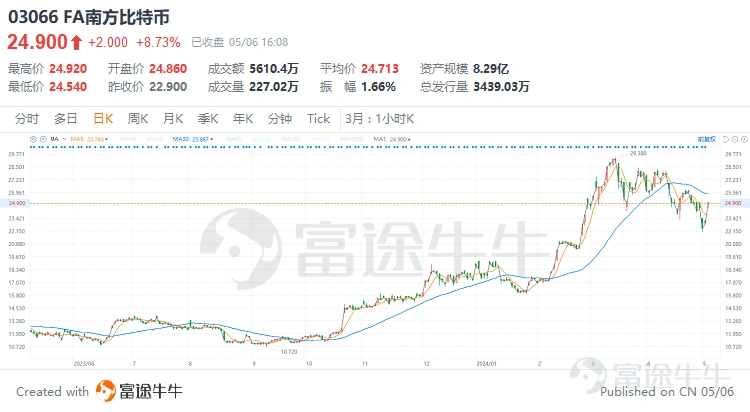
3.$CSOP Bitcoin Futures ETF (03066.HK)$: When trading in the Hong Kong stock market, the main investment is in bitcoin futures contracts of the Chicago Mercantile Exchange (CME), aiming to achieve long-term capital appreciation, rather than directly tracking the spot price of bitcoin.
Advantages: It has regulatory compliance, suitable for investors who wish to get exposure to bitcoin but are unwilling to take on the risk of holding bitcoin directly.
Disadvantages: Facing issues such as futures contract rollover costs and basis risk.

The Difference Between Bitcoin Spot ETF and Bitcoin Futures ETF
Digital currency spot ETFs (such as bitcoin spot ETFs) are like a basket that directly contains real digital currencies, such as bitcoin itself, with their value closely following the fluctuations in the bitcoin market price.
On the other hand, digital currency futures ETFs are more like a basket containing "contracts to purchase digital currencies at a specified price," these contracts agree to buy or sell bitcoin at a specific price in the future, and their value is influenced not only by the price of bitcoin, but also includes additional factors like the time value of futures contracts and rollover costs.
Therefore, spot ETFs directly reflect the spot price, while futures ETFs may deviate from the spot price, and at the same time, futures ETFs may face issues such as the cost of rolling over contracts when they expire.
If you do not want to incur costs related to rolling over contracts, spot ETFs will be more cost-effective for investment.
Risk Disclaimer: The above content only represents the author's view. It does not represent any position or investment advice of Futu. Futu makes no representation or warranty.Read more
Comments (20)
to post a comment
73
117