

The End of an Era: Naspers and SoftBank Both Exit Tencent and Alibaba

Source: Haokan Business
A single announcement wiped out HKD 440 billion of Tencent's market value.
This "market-crushing" entity is called Naspers.
At noon on June 27, Tencent$TENCENT (00700.HK)$The announcement stated that its major shareholder Prosus (which is majority-owned by Naspers) and Naspers will launch a long-term, open-ended share repurchase program and will systematically raise repurchase funds by selling Naspers Group's holdings in Tencent Holdings on the market.
Naspers is expected to sell only a small fraction of Tencent's daily trading volume each day. For example, if the Naspers Group were to execute a share-repurchase program over the past three months in compliance with European regulatory restrictions, the average daily sales of Tencent shares would not exceed 3%–5% of Tencent's average daily trading volume.
Simply put, Naspers and Prosus want to buy back their own shares but lack the cash, so they need to sell part of their Tencent holdings to raise funds.
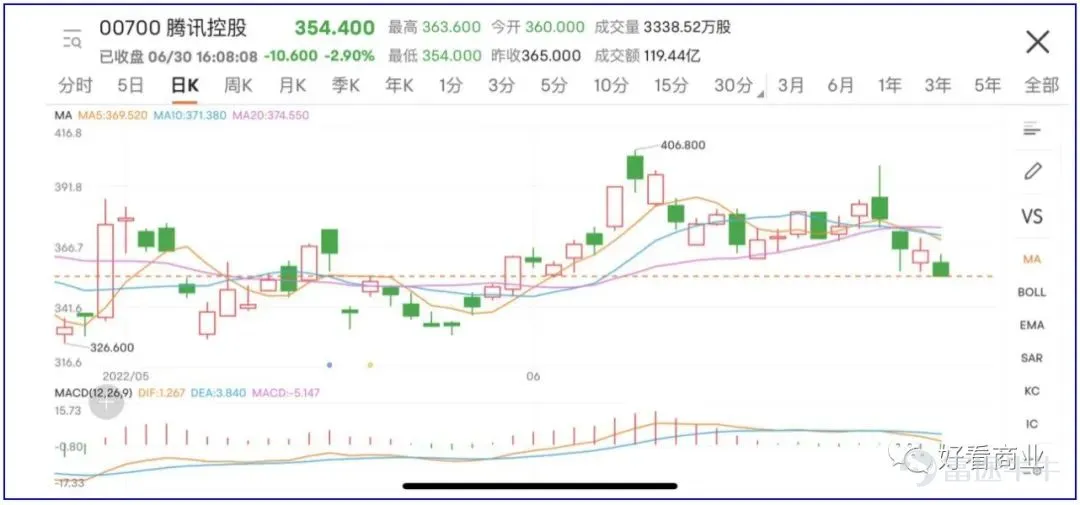
Following the announcement, Tencent reversed from a 4.16% gain to a 0.68% decline within one minute of the afternoon opening, wiping out roughly HK$200 billion in market value in an instant. The stock closed the day down more than 1.5%.
From June 28 to 30, Tencent's share price continued to open and trade lower. By the close on June 30, Tencent's market capitalization had evaporated by more than HK$440 billion from its peak prior to Naspers' announcement.
It remains unclear how significant and for how long Naspers' ongoing share reductions will impact Tencent's stock price.
In its announcement, Naspers stated that the purpose of launching the share buyback program is to enhance the net asset value of both Naspers and Prosus, as their current net asset values are currently undervalued.
This share repurchase program is indefinite, with the primary funding source being the sale of Tencent shares.
Naspers stated that it will continue to repurchase shares as long as its net asset value remains low, which implies that its reduction of its stake in Tencent could also be indefinite.
When stock prices are sluggish, listed companies typically resort to share repurchases to boost share prices and safeguard shareholder interests.
In recent years, Alibaba$BABA-W (09988.HK)$Major shareholder SoftBank is also continuing to repurchase its shares. Following a record-breaking JPY 2.5 trillion share-buyback program launched in 2020, SoftBank announced another JPY 1 trillion (approximately USD 8.8 billion) share-repurchase initiative in November 2021.
Gradually cashing in its Alibaba shares is an important way for SoftBank to raise funds for share repurchases, as well as reduce debt and gain liquidity.
Notably, for many years Naspers and SoftBank have each been the largest shareholder in China's two internet giants, Tencent and Alibaba. Both made early bets on China's internet sector at the turn of the century and have held their stakes in Tencent and Alibaba for more than two decades, reaping returns that have multiplied their investments by several thousand times—a performance that has earned them legendary status in the investment world.
As the golden two decades of breakneck growth for China's two internet giants draw to a close, Naspers and SoftBank have also reached the point where they need to pull out.
Coupled with global macroeconomic and geopolitical factors that have plunged the entire internet and technology sector into a downturn, asset values have plummeted, making it increasingly inevitable for investors to divest holdings in assets with limited upside potential and instead chase the next Tencent or Alibaba.
Tencent and Alibaba Have Become Major Shareholders' "ATMs"
In 2001, Naspers invested USD 32 million to acquire a 46.5% stake in Tencent. Even though Tencent's current market capitalization has halved from its all-time high, Naspers still holds shares worth USD 126.2 billion after two rounds of share reductions.
Naspers has held this investment for more than 20 years, generating a total return of over 4,731 times.
In 2000 and 2004, SoftBank Group invested USD 20 million and USD 60 million in Alibaba, respectively. After several rounds of adjustments, it once held up to 34.4% of Alibaba's shares. It has held the shares for over 20 years, with a total return of more than 2,000 times.
Today, the most stable major shareholders in the histories of Tencent and Alibaba are finally reaping the rewards—Naspers and SoftBank are both gradually reducing their stakes and exiting.
The latest share reduction announcement marks Naspers' third divestment plan targeting Tencent.
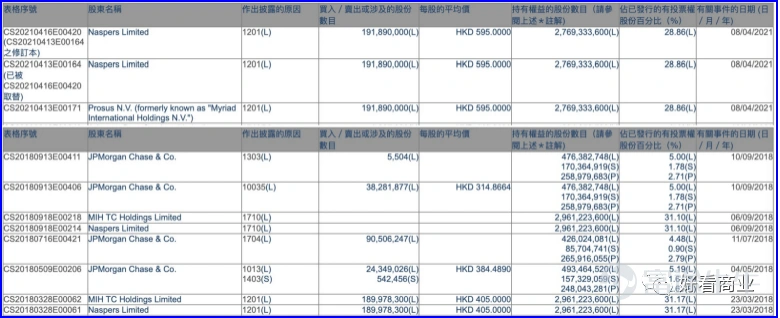
Naspers' first-ever reduction of its Tencent stake occurred in March 2018. At the time, it sold 189,978,300 Tencent shares at HKD 405 per share—representing approximately 2% of Tencent's outstanding shares—and raised roughly USD 10.6 billion.
Following this share reduction, Naspers still holds a 31.17% stake in Tencent.
In 2019, Naspers undertook a spin-off, consolidating its international internet assets—including Tencent, Flipkart, Russia's Mail.ru, and Ctrip—into its holding company, Prosus. Prosus was listed on the Euronext Amsterdam in September 2019.
Following that spin-off, Prosus took over Naspers' entire 31.17% stake in Tencent.
In April 2021, Prosus, through its subsidiary MIH TC Holdings Limited, further reduced its stake in Tencent by 191,890,000 shares—approximately 2% of Tencent's outstanding share capital—at a price of HKD 595 per share, realizing a total of USD 14.6 billion from the sale.
According to Refinitiv data, this was the largest block trade of shares globally as of that time. Following this reduction in holdings, Prosus's stake in Tencent fell to 28.86%.
To soothe market sentiment and accommodate Tencent's concerns, Naspers provided explanations for both share reductions. It stated that the proceeds from the first reduction were primarily used to expand its operations in various regions and to support future acquisitions and integrations, while the second reduction was aimed at enhancing financial flexibility, including further external investments and capital replenishment. Following each reduction, Naspers pledged not to sell any additional Tencent shares over the next three years.
Unfortunately, it went back on its word. On June 27, 2022, it announced that it would once again reduce its stake in Tencent—and this time, the reduction would be indefinite.
After all, the thrill of receiving a substantial sum of cash from just one share reduction is hard to beat. By selling Tencent shares in two rounds, Naspers and Prosus have collectively reaped roughly 25 billion US dollars in profits.
In addition, at the end of last year, Tencent reduced its stake in JD.com through a "dividend-style" share distribution, distributing its 460 million Class A ordinary shares in JD.com (with a total value of approximately 127.7 billion Hong Kong dollars) to eligible shareholders.
Through this equity distribution, Prosus acquired about 4% of JD.com shares through its subsidiary MIH TC Holdings. On June 24, Naspers completed the sale of this portion of JD.com shares, realizing a profit of 3.67 billion US dollars.
At its peak, Tencent's market capitalization neared 1 trillion US dollars, repeatedly crowning it as China's most valuable company and the world's most valuable social-media firm.
For Naspers and Prosus, Tencent serves as a secure foundation—and a cash machine whenever funding is needed. Even though Tencent's market capitalization has now halved from its peak, it remains a massive "gold mine" for its major shareholder, Naspers.
In recent years, Alibaba has served as a safety net for its major shareholder, SoftBank. Whenever SoftBank runs into trouble, it almost invariably reduces its stake in Alibaba to obtain "life-saving funds."
In 2016, after holding Alibaba for 16 years, SoftBank reduced its stake in Alibaba for the first time, announcing at the time that it would sell shares worth at least 7.9 billion US dollars, with the aim of reducing the company's debt and increasing liquidity.
According to publicly available information, SoftBank made several investment missteps at the time, resulting in a substantial decline in the market value of its assets and total debt reaching 108.2 billion US dollars.
After the first reduction, SoftBank's stake in Alibaba decreased from 32% to about 28%.
In June 2019, SoftBank once again reduced its stake in Alibaba by selling 73 million American Depositary Shares (ADS), generating pre-tax profits of approximately JPY 1.2 trillion (about USD 11.12 billion).
According to the fiscal 2019 financial report as of March 31, 2020, SoftBank Group posted a net loss attributable to parent company shareholders of JPY 961.576 billion, mainly due to huge losses from Vision Fund investments.
In late March 2020, SoftBank announced that it would cash out $14 billion from Alibaba by reducing its stake by an amount equivalent to 10% of its current holdings.
In fiscal year 2021 (April 1, 2021 – March 31, 2022), SoftBank Group reported a net loss attributable to parent company shareholders of JPY 1.7 trillion (approximately RMB 89.76 billion), marking its largest-ever loss.
Whether SoftBank will continue to reduce its stake in Alibaba to obtain lifeline funds has become the focus of market attention.
In a research report, investment bank Jefferies mentioned that SoftBank will need US$40 billion to US$45 billion in cash in 2022 to fund its private equity investments and share repurchases, and it may raise funds by selling assets rather than borrowing; reducing its stake in Alibaba is one of the options for fundraising.
Fubao estimates that SoftBank may have reduced its stake in Alibaba by 20 million shares in the fourth quarter of 2021.
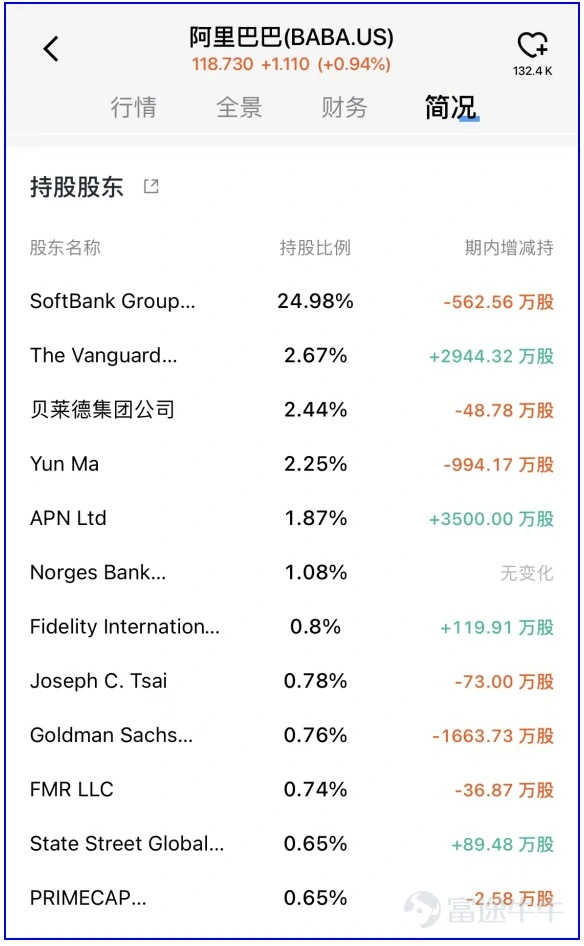
According to S&P data, SoftBank currently holds a 24.98% stake in Alibaba and remains the largest shareholder.
Tough Times for Naspers and SoftBank
As Tencent's largest shareholder for more than two decades, Naspers has maintained a low-profile and enigmatic presence in China's venture capital community.
In fact, it occupies a crucial position in the global connectivity and technology sectors, with many unicorns backed by it.
Naspers, originally founded in 1915 and headquartered in Cape Town, South Africa, was initially known for its traditional print media operations. At one time, the company published 60 consumer newspapers and magazines, including the best-selling Daily Sun.
After years of expansion, Naspers has evolved into a vast investment empire. Its portfolio includes e-commerce segments such as classified ads, food delivery, payments and fintech, edtech, and e-commerce services, along with social and internet platforms, media, and other sectors.
For instance, in the food-delivery sector, Delivery Hero, iFood, and Swiggy are all part of Naspers’ portfolio.
Delivery Hero, based in Germany, is one of the world's largest food-delivery giants, with a current market capitalization of €8.4 billion. Swiggy, India’s leading food-delivery platform, was valued at $10.7 billion earlier this year according to media reports. iFood, headquartered in Brazil, is currently the largest food-delivery app in South America. Naspers holds a 54.68% stake in iFood through Prosus.
However, Naspers faced difficulties during the fiscal year 2022 (from April 1, 2021, to March 31, 2022).
Persistent global turmoil and uncertainty have created a continuously volatile economic environment,” Naspers stated bluntly in its fiscal 2022 annual report.
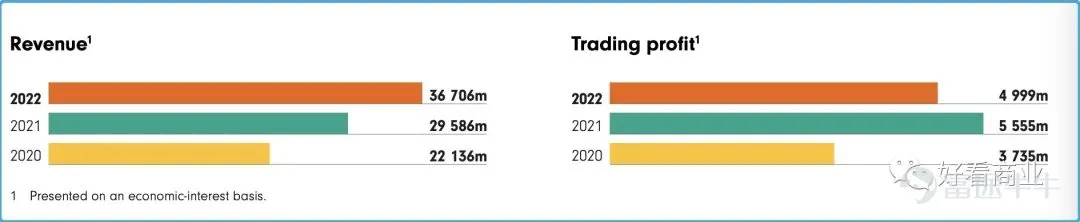
In fiscal year 2022, Naspers Group’s revenue increased by 24% year on year, reaching USD 36.7 billion in economic terms; however, this growth rate was lower than the 33.9% recorded in the same period of the previous year.
In terms of operating profit, six out of Naspers' nine major business segments reported operating losses in fiscal year 2022, with total losses amounting to US$1.337 billion.
Notably, the food-delivery segment posted the largest operating loss, totaling US$724 million—double the loss recorded in the same period last year. Meanwhile, the e-commerce segment, which includes food delivery, reported an operating loss of US$1.12 billion.
In fiscal year 2022, despite a 10% year-on-year decline in operating profit, Naspers Group still posted $5 billion in operating profit, largely driven by its stake in Tencent, which contributed $6.273 billion.
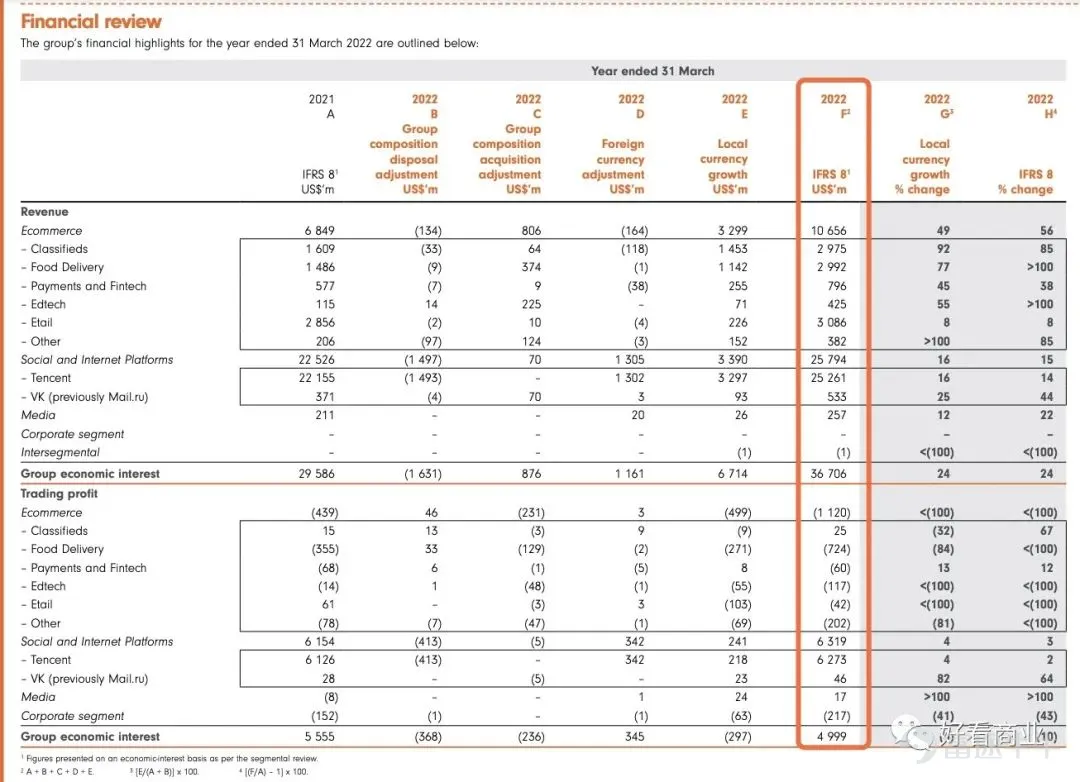
In its financial report, Naspers noted that, despite strong revenue growth driven by its investment portfolio, the group—like many other technology companies—is facing significant macroeconomic and geopolitical headwinds, which have resulted in sharp volatility in capital markets during the second half of fiscal year 2022.
The Russia-Ukraine war, inflation, and rising interest rates have all led to higher capital costs and greater uncertainty. In recent months, as risk appetite has declined sharply, valuations of companies in the global technology and internet sectors have fallen significantly.
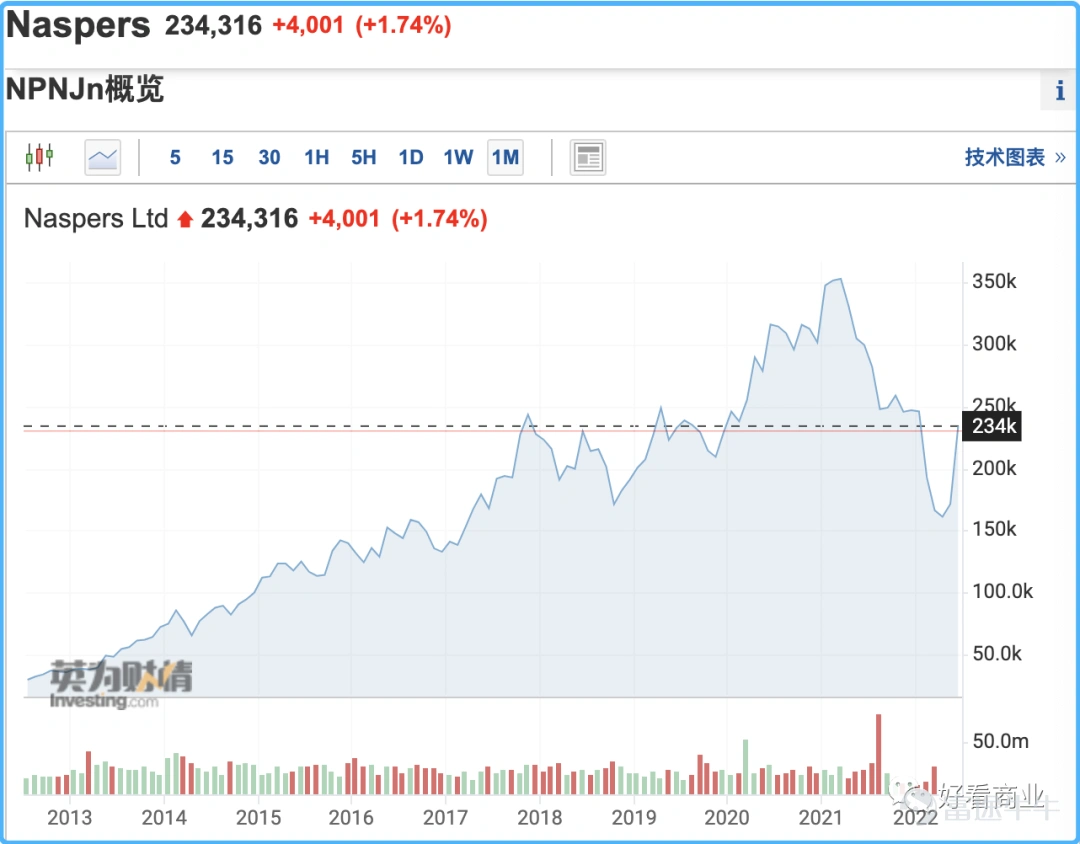
These factors have resulted in the first decline in its net asset value in years, and Naspers believes that the discount on its total assets has "fallen to an unacceptable level."
As of June 29, Naspers' market capitalization on the Johannesburg Stock Exchange stood at approximately US$30 billion, while its net asset value was US$70.7 billion, representing a discount of more than 57%.
Prosus's market capitalization also trades at a substantial discount to its net asset value. As of June 29, 2022, its net asset value stood at €157.7 billion, while its total market capitalization on the Euronext Amsterdam was only €88.34 billion, representing a discount of nearly 44%.
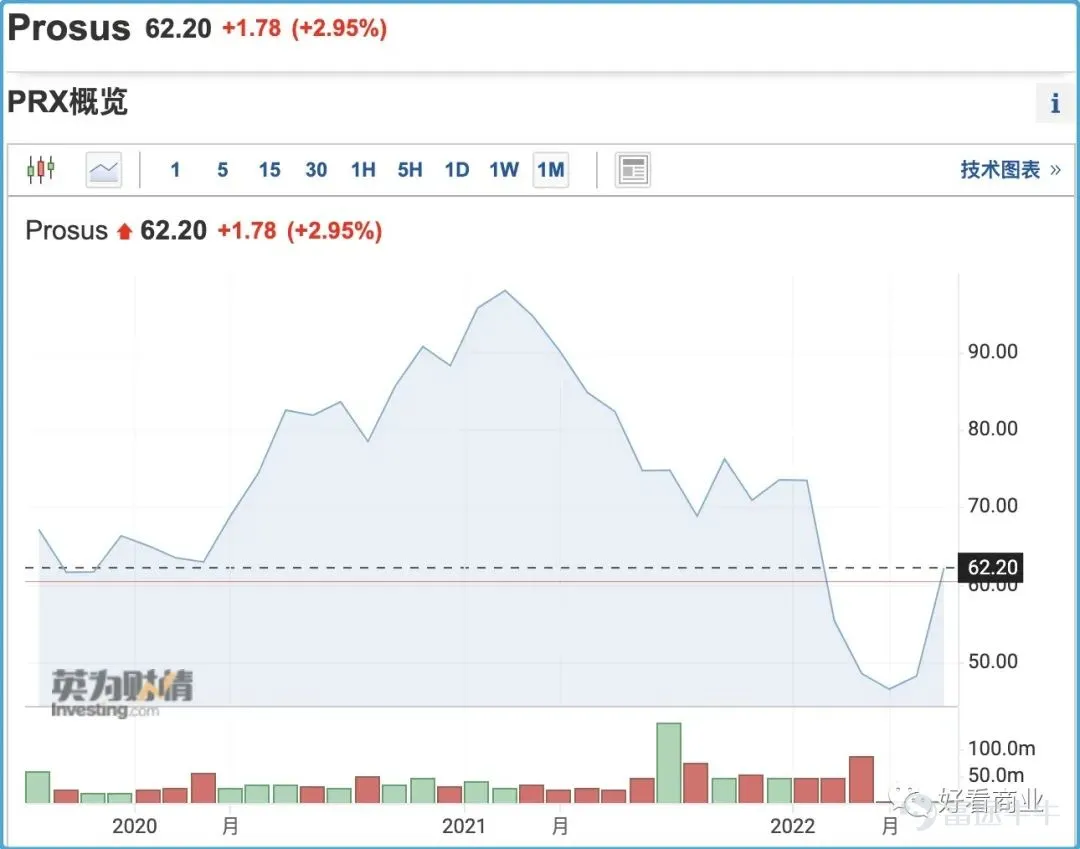
Naspers stated that taking proactive measures to narrow the discount is their top priority.
Compared with Naspers' low profile and air of mystery, Masayoshi Son and his SoftBank Group are well-known figures within China's venture capital community.
Masayoshi Son was once hailed as the 'Emperor of Investment.' He founded SoftBank in 1981 at the age of 24 and took the company public on the Tokyo Stock Exchange in 1994. After years of development, SoftBank Group evolved into a comprehensive investment conglomerate, primarily focusing on internet and telecommunications-related investments.
At the age of 18, he earned his first million; his investment in Yahoo yielded returns exceeding 100 times at its peak; and his investment in Alibaba generated returns as high as 2,000 times. These accomplishments all belong to Masayoshi Son.
In 2017, he launched the hundred-billion-dollar Vision Fund, making massive bets on technology stocks, which blatantly revealed his 'gambler' style, ultimately leading to his downfall and plunging SoftBank Group into deep losses.
In fiscal year 2019 (ended March 31, 2020), SoftBank Group reported an operating loss of JPY 1.35 trillion (approximately USD 12.5 billion) and a net loss of JPY 750 billion.
This marked SoftBank's first fiscal-year loss in over a decade. Since then, it seems that Masayoshi Son and SoftBank Group have exhausted their good fortune, with the company's financial performance steadily deteriorating.
In fiscal year 2021 (ended March 31, 2022), SoftBank Group found itself in an unprecedented dire situation: the net loss attributable to parent company shareholders reached JPY 1.7 trillion (approximately USD 15.7 billion) for that fiscal year.
This represents the worst loss in SoftBank Group's 40-year history and the largest loss since the inception of its funds.
The Vision Fund was the primary culprit behind SoftBank Group's fiscal 2021 loss. During this period, the Vision Fund incurred a staggering loss of 2.64 trillion yen (approximately USD 24.5 billion).
Following the release of its 2021 annual report, Masayoshi Son stated that due to the COVID-19 pandemic and the Russia-Ukraine conflict, the world has entered a 'state of chaos.' He emphasized that SoftBank must now adopt a defensive strategy rather than the aggressive approach it once championed.
In the early 2000s, both Naspers and SoftBank invested in Tencent when the company was still in its infancy, making bold investments with ample appetite and unwavering patience. As a result, they executed two of the longest-held and most lucrative investments in the history of China's internet industry.
Today, two decades later, everything has changed. Both Naspers and SoftBank are now mired in difficulties, looking rather like a clay Buddha crossing a river.
Two Decades of Rapid Growth Are Hard to Recapture
The past 20 years have been a period in which Naspers and Tencent, as well as SoftBank and Alibaba, achieved mutual success.
Within the Naspers Group, Tencent has long been the largest contributor to revenue and profit as well as the cornerstone of its assets; Alibaba has long accounted for half of the total assets of the SoftBank Group.
After two decades of breakneck growth, China's internet sector has transitioned from the consumer internet to the industrial internet, accompanied by increasingly stringent regulatory oversight and enforcement targeting the major tech giants. As a result, the pace of growth across the industry has begun to slow, with the deceleration particularly pronounced at behemoths like Tencent and Alibaba.
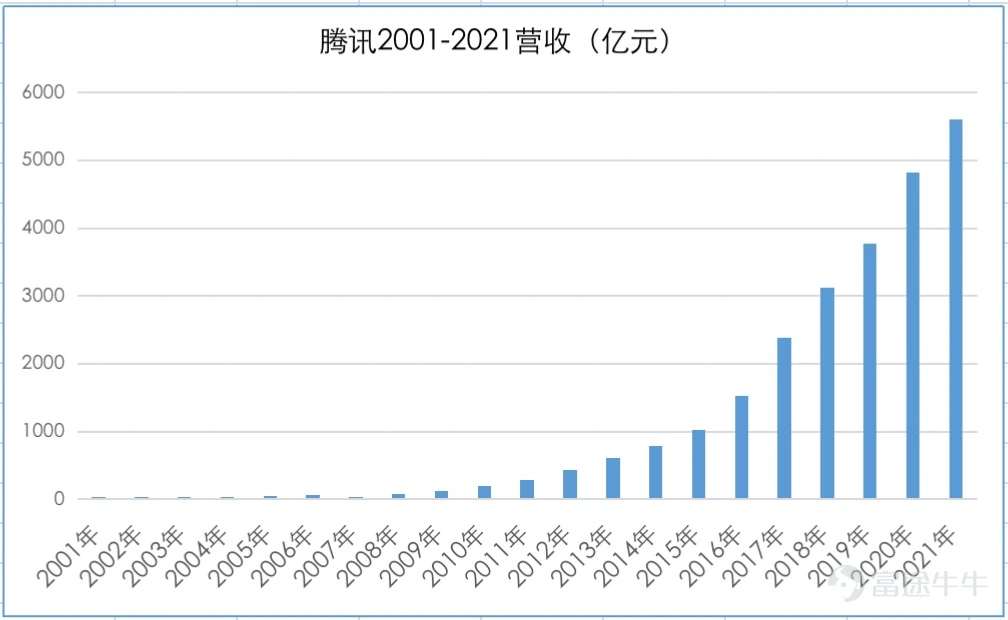
In Q4 2021, Tencent reported total revenue of RMB 144.2 billion, up 7.9% year on year, marking the slowest revenue growth since the company went public in 2004.
In Q1 2022, Tencent's revenue growth further decelerated, with year-on-year growth of just 0.1%, effectively stalling.
In terms of profitability, Tencent's non-IFRS net profit has posted year-on-year declines for three consecutive fiscal quarters since Q3 2021—a trend that has not been seen in at least the past decade.
Alibaba has also bid farewell to its past period of rapid growth.
In the third quarter of fiscal year 2022 (Q4 of calendar year 2021), Alibaba's revenue increased by 10% year on year, falling short of market expectations. Notably, customer management revenue from Taobao and Tmall declined by 1% year on year during the quarter, an unprecedented occurrence in Alibaba's history.
In the fourth quarter of fiscal year 2022 (calendar year 2022 Q1), Alibaba's revenue grew 9% year over year, marking the first time that quarterly revenue growth has fallen below 10%.
Naspers has always pursued high growth; Masayoshi Son is even nicknamed "Mr. Tenfold," reflecting their almost fanatical appetite for rapid expansion. Today, as Tencent and Alibaba have entered a more stable phase, their growth rates are increasingly failing to meet Naspers' expectations.
In its earnings report, Prosus noted that Tencent's growth has slowed and that it is facing a challenging macroeconomic environment, driven by regulatory pressures and the COVID-19 pandemic.
According to the Nikkei Chinese website, on June 24, Masayoshi Son stated at SoftBank Group's annual general meeting of shareholders, "Although Alibaba once accounted for more than half of SoftBank Group's stock assets, its share is now around 20%."
In fact, over the past fiscal year, both SoftBank and Naspers have made new investment deployments.
Take Naspers as an example: in fiscal year 2022, the company invested a total of US$6.2 billion, part of which was used to increase its equity stakes in existing investments, while the remainder was allocated to sectors with potential for future value appreciation.
Naspers stated that, in order to navigate these turbulent times, it has decided to prioritize funding for the development of its existing businesses and adopt a more prudent approach to balance-sheet management, thereby maintaining robust cash flow.
Risk Disclaimer: The above content only represents the author's view. It does not represent any position or investment advice of Futu. Futu makes no representation or warranty.Read more


Comments (4)
to post a comment
12
75