

Big manufacturers are doing their own “golden fingers”? Where did BAT's “Sequoia guys” go
Internet CVC (Corporate Venture Capital), which once had no negative consequences, dominates the Chinese venture capital industry, and was even able to invest half of the enterprise with “half life”, came to an end in 2021.
Judging from the 2021 financial reports of major companies, investment businesses that earned 100 billion dollars in profits for giants in the past have become a source of drag on net profit and even caused overall losses under the cold winter of the Internet.
The key words of business for big manufacturers have also generally changed from “unlimited investment” in previous years to “cost reduction and efficiency” this year (see Xuebao Finance and Economic News for details)How did Tencent Ali and Byte survive the winter? CEOs reached a rare consensus, only these four words”). Along with that, the high-profile CVC of the big manufacturers also took a step back:
Tencent$TENCENT (00700.HK)$The official investment website, which was launched in a high-profile manner a year ago, quietly shut down, and Byte even directly abolished its strategic investment department. The more important change is that giants that used to use investment as a starting point to link horizontally and build high walls are gradually estranging from the companies they invested in in the past. Tencent cuts Beijing$JD-SW (09618.HK)$East and Sea holdings reduced; Ali CEO Zhang Yong withdrew from Weibo$WB-SW (09898.HK)$The board of directors also changed its shareholding in Tudou.com to “indirect.”
However, in the infinite game of business operations, only trough periods have no finish line. Xuebao Finance & Economic News observed that in addition to the low level of investment in CVC, a major Internet company, it has also been accompanied by difficult transitions and emerging directions of investment. They are quietly shifting to new logic and new channels in a new context, and are worth paying more attention to.
Big manufacturer CVC “appreciates more than miserable”
The past 2021 Q4 earnings season has become a “bad time” for big manufacturers, especially the cash cow CVC business in the past.
In a nutshell, judging from investment results alone, most Internet giants' CVC business suffered serious losses in the fourth quarter of last year.
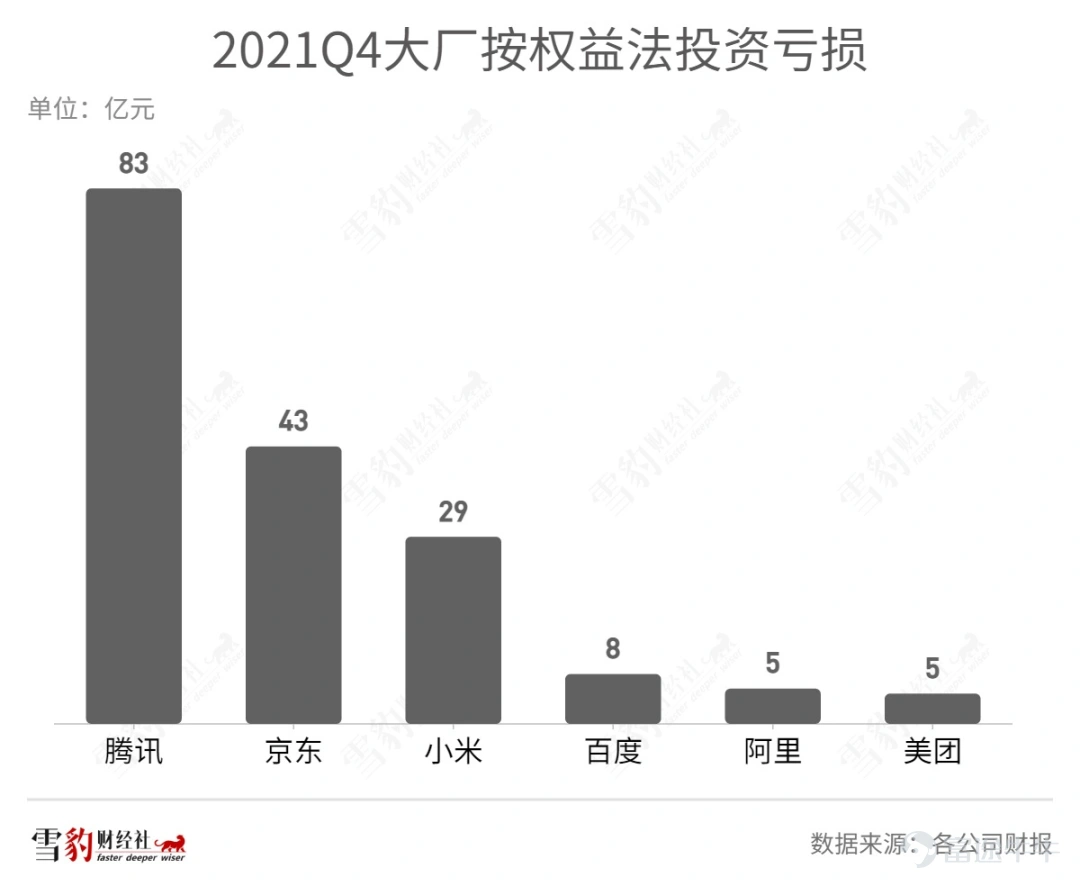
Tencent, which has been on the CVC throne for 8 consecutive years and is known as the “top domestic venture capitalist,” overturned in the field it was once most familiar with. Although the Q4 financial report shows that Tencent's net profit from investment companies reached 100 billion dollars, the main profit was from “selling” JD. By reducing most of JD's shares in the form of dividends alone, Tencent received 78.2 billion yuan in revenue.
The “share of the results of associated companies and joint ventures,” which reflects Tencent's CVC revenue, lost 8.3 billion yuan, compared with a profit of 1.6 billion yuan in the same period last year. Tencent's Q4 net profit fell 25% year over year, excluding gains from the sale of shares of JD and other companies.
Another “top domestic venture capital” Alibaba$Alibaba (BABA.US)$$BABA-W (09988.HK)$Nor were they spared. The Q4 investment business lost 0.549 billion yuan according to the equity method, and the Q3 investment business had a net loss of more than 11.4 billion yuan. This directly affected Ali's net profit performance, and even set a new record of negative net profit growth since Ali went public in the third quarter.
Baidu$BIDU-SW (09888.HK)$The net investment loss calculated by the Q4 equity method last year was 0.773 billion yuan, and the Q3 long-term investment fair value loss figure was as high as 18.9 billion yuan. Baidu also used this figure to top 2 investment losses for major companies in Q3 last year. Baidu's overall net loss in Q3 was 16.6 billion yuan. In other words, if there were no losses in the investment business, Baidu would be profitable.
In addition to veteran CVC player BAT, other major companies are also struggling with investment losses.
Xiaomi$XIAOMI-W (01810.HK)$Although the investment did not cause losses, the overall decline in investment directly lowered the company's net profit. Financial reports show that in 2021, Xiaomi's annual profit fell from 20.31 billion yuan in the same period in 2020 to 19.28 billion yuan, down 5.1% year on year. Xiaomi said this was due to a decrease in fair value returns from listed common stock investments. The fair value of Xiaomi's investment in 2021 fell 38.3% year on year to 8.1 billion yuan, a decrease of about 5 billion yuan.
The investment loss calculated by the JD Equity Law was 4.3 billion yuan, which is the biggest reason behind its net loss of 5.2 billion; Meituan Investment lost 0.47 billion yuan; Station B's Q4 investment loss was 0.093 billion yuan, and the Q3 investment loss was as high as 0.724 billion yuan.
Why is the golden button not working?
The CVC business has gone from being a cash cow to a “loser” and is mainly affected by both external and internal factors.
Due to external factors, changes in the fair value of an investment are mainly affected by fluctuations in the stock price of the invested company. In 2021, technology internet companies generally fell into a state of continuous decline. US stocks, Chinese securities, and Hong Kong stocks were no better. The fall in stock prices directly caused fair value losses for large companies' investments.
Take Tencent as an example. As the first or second largest shareholder of listed companies such as JD, Meituan, and Pinduoduo, according to Wind data, the stock prices of the three companies fell 20%, 23%, and 67% respectively in 2021. This also caused the fair value of Tencent's joint ventures (composed of directly and indirectly held listed equity interests) to shrink sharply by 35% to 634.6 billion yuan compared to the same period last year.
Tencent's 2021 Quarterly Report revealed that “sharing the performance of associated companies and joint ventures,” which was still profitable a year ago, has turned into a net loss of 8.3 billion yuan. According to the explanation in the financial report, it is inferred that this portion of the loss was due to losses from Meituan, DiDi, etc.
Baidu is also typical. The net investment loss for the fourth quarter of last year was 0.773 billion yuan, of which the loss of its subsidiary iQiyi brought it an investment loss of nearly 0.3 billion yuan.
The collapse of CVC in large manufacturers was also affected by internal factors that adversely affected the growth of Internet companies' main business in the cold winter.
The online advertising business has deteriorated, and the macroeconomic downturn has adversely affected e-commerce business growth. The pandemic has impacted businesses such as takeout and in-store wine travel... Once upon a time, shares in star companies holding these tracks could be obtained to easily earn a lot of money, but under the reversal of the two poles, the former cash cow became a black hole devouring profits.
Finally, there are fewer good investment targets, which is also an important factor in the failure of large manufacturers to make money.
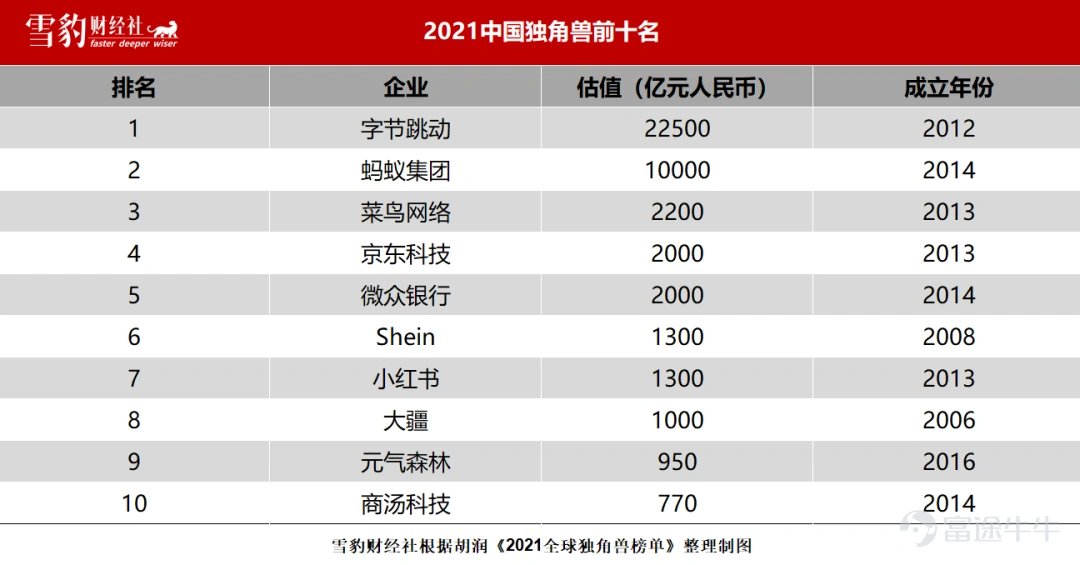
Unicorns don't grow as fast as you might think, and they take a long time to hatch. According to Hurun's “2021 Global Unicorn List”, China ranks second in the world with 301 companies, but these companies on the list don't seem to be as “young” as people think; the average age is 8 years old. One of the youngest players in the top ten Chinese unicorns is Genki Forest, a company founded in 2016.
There are only 8 new recruit companies founded in 2020 on the list, accounting for less than 3%. Most of the rest are veterans of unicorns, and these “old unicorns” have long been on the spotlight of CVC's.
According to IT Orange data, more than half of the 300 unicorn companies have giants behind them. In terms of investment transactions, Tencent (59), Ali (31), Xiaomi (20), Baidu (19), and JD (14) are the top 5 investors in unicorn institutions.
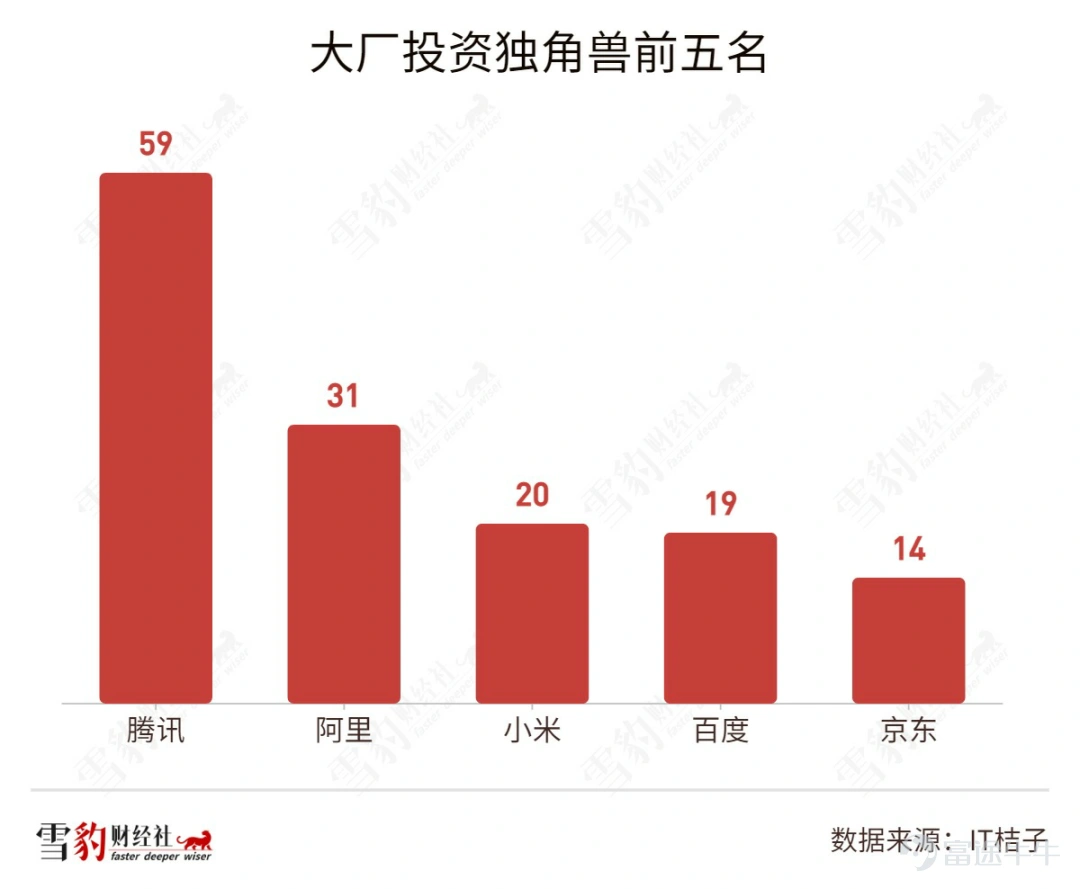
The scarcity of “young unicorns” in recent years has intensified competition among CVs, and even the giants behind the unicorns have largely coincided. According to IT Orange data, 32 of the unicorns invested by Tencent were co-invested with other CVC giants. Tencent and Ali, which have always been regarded as the main rivals by the outside world, there are also 14 unicorns, such as Xiaohongshu, in which both parties participated.
Star companies in the hands of big manufacturers keep falling and losing money, and there are few new high-quality “prey.” As they grew older, the golden hands that once brought glory to the big factory gradually faded away.
Deep-water steering
Under the cold winter, the money spent never went back, but the quiet shift has not slowed down, and a new direction has emerged.
According to IT Orange data, as of November 2021, the top eight Internet companies CVC are Tencent, Xiaomi, Ali, ByteDance, and Station B$Bilibili (BILI.US)$$BLI APR2 (BLI2204.HK)$Baidu, Meituan, and Jingdong participated in a total of 591 projects, with a total investment amount of nearly 350 billion dollars. This figure increased 30% over the same period last year. The investment momentum of Internet CVC giants continues unabated.
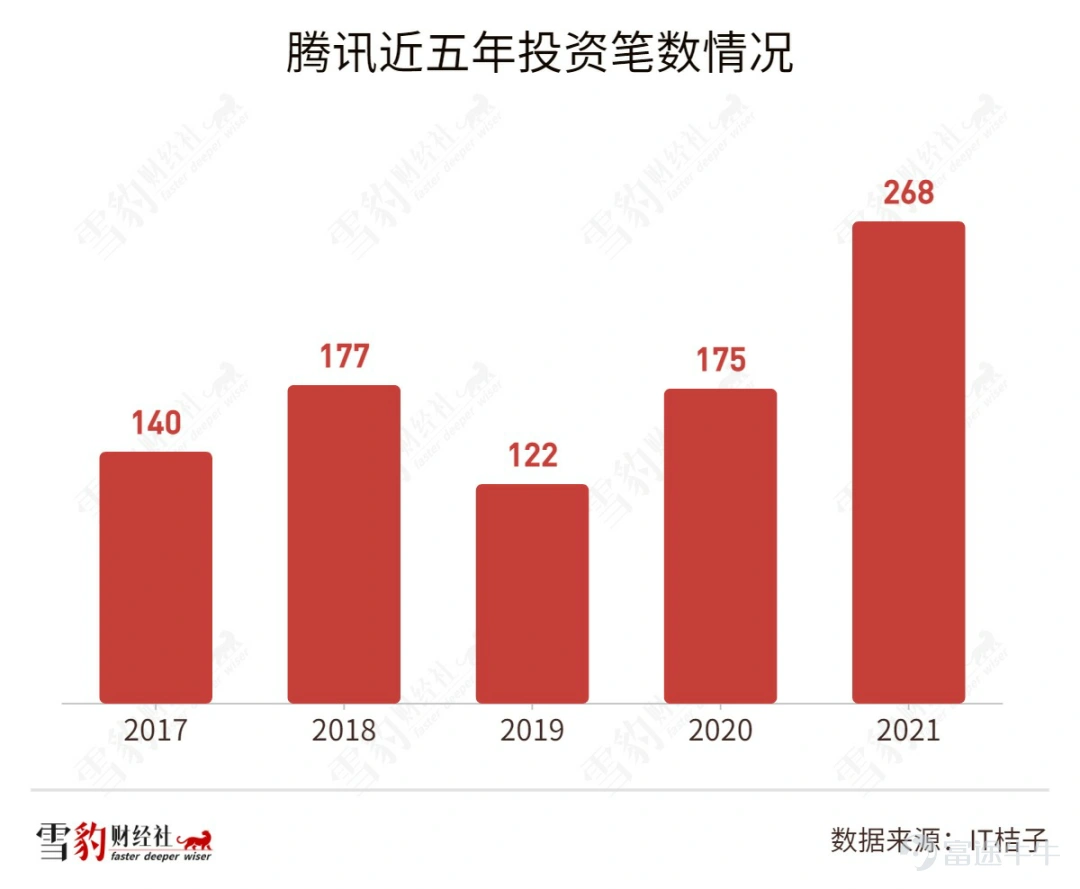
Among them, although Tencent sold more than 100 billion dollars of shares in the secondary market, it still maintained the speed and intensity of investment in the primary market. According to IT Orange data, as of December 24, 2021, Tencent made a total of 268 investments, an increase of 53% over the previous year. On average, it needed to invest in a company every 1.3 days.
Even with the abolition of the Battle Investment Department's Byte, foreign investment has not stopped. In the first two months of this year, Byte completed 10 investments in areas such as smart hardware, enterprise services, advanced manufacturing, and healthcare.
When things went smoothly, “investing without boundaries” was a mantra for big manufacturers, but now, the giant CVC is no longer extending its reach to all racetracks, and is instead focusing on choosing the direction.
Xuebao Finance & Economic News observes that compared to the past, Dachang CVC's investment strategy is undergoing three important shifts.
First, focus investment on core business and scale back from outside the border to within the border.
Taking Tencent as an example, it invested 64 in the game industry in 2021, doubling from the previous year, and its share of investment also increased from 12% in 2020 to nearly 24%. The TOB business, which has become Tencent's second-largest revenue, has also become a new driving force for investment. In 2021, 58 investments were made, doubling the previous year. Ali, on the other hand, has significantly reduced its investment in the entertainment circuit and has instead invested in core business tracks such as e-commerce and TOB.
Second, the demand for giants to invest overseas is getting louder and louder.
Tencent had a total of 6 game company mergers and acquisitions last year, 5 of which were completed overseas. The biggest investment was when Tencent spent 1.27 billion dollars to acquire the British game company Sumo Group in July of last year. In addition to mature companies, foreign unicorns are also Tencent's favorite. As of February this year, Tencent has invested in 24 foreign unicorn companies, the largest number among Chinese companies. There were 4 investments in 2021, but the pace accelerated markedly after 2022, and 5 investments were made in the first two months of this year.
Zhang Yong, chairman of the board of directors and CEO of Ali, once said at the 2021 Investor Relations Conference: “Today, the overseas market has huge potential, and overseas business is growing rapidly, and it may become one of the main growth drivers for Ali in the next few years.” Ali's overseas investment market activity also increased in 2021, investing in 13 mergers and acquisitions, compared to 6 in the same period in 2020. NetEase CEO Ding Lei also said that the world's top game talents will be summoned to accelerate the development of overseas markets.
Finally, a more profound and important change in direction is that with the wave of structural transformation of the Chinese economy, the leaders of large manufacturers are also shifting from investing at the cusp to increasing industrial investment.
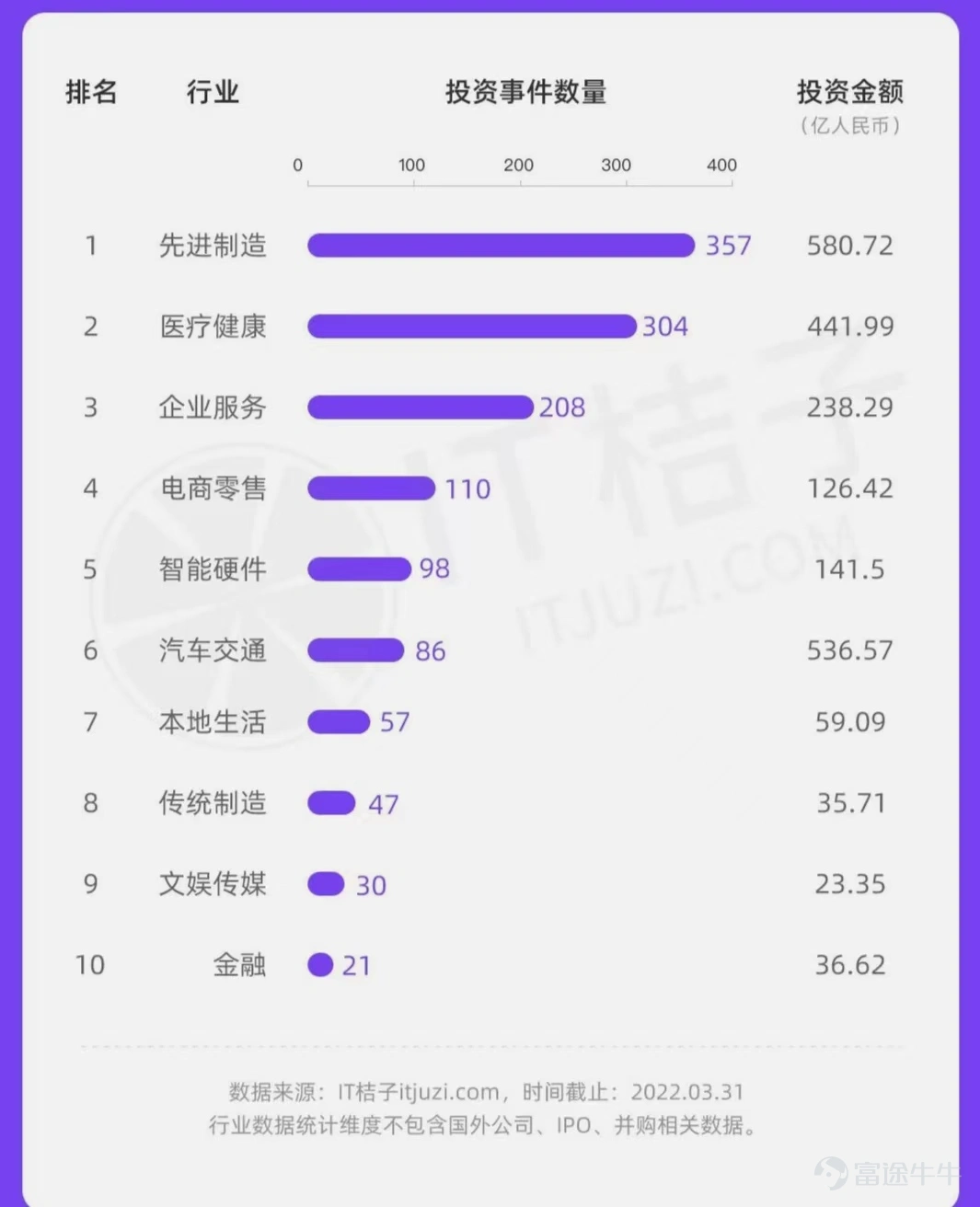
In the context of the development of hard technology becoming domestically dominant, according to IT Orange data, domestic venture capital reached 250 billion yuan in the first quarter of 2022. The top three were advanced manufacturing, healthcare, and enterprise services, respectively. Among them, advanced manufacturing accounted for nearly 1/4 of the investment amount.
When reducing its holdings in JD, Tencent indicated its future investment direction in response, “It will continue to explore new tracks and opportunities, especially cutting-edge technology and the digitalization of the real economy.” Before 2018, Tencent had never invested in the advanced manufacturing industry. In 2021, it invested 7 times, which is the sum of the previous two years. Ali, Xiaomi, and others are also eyeing chips.
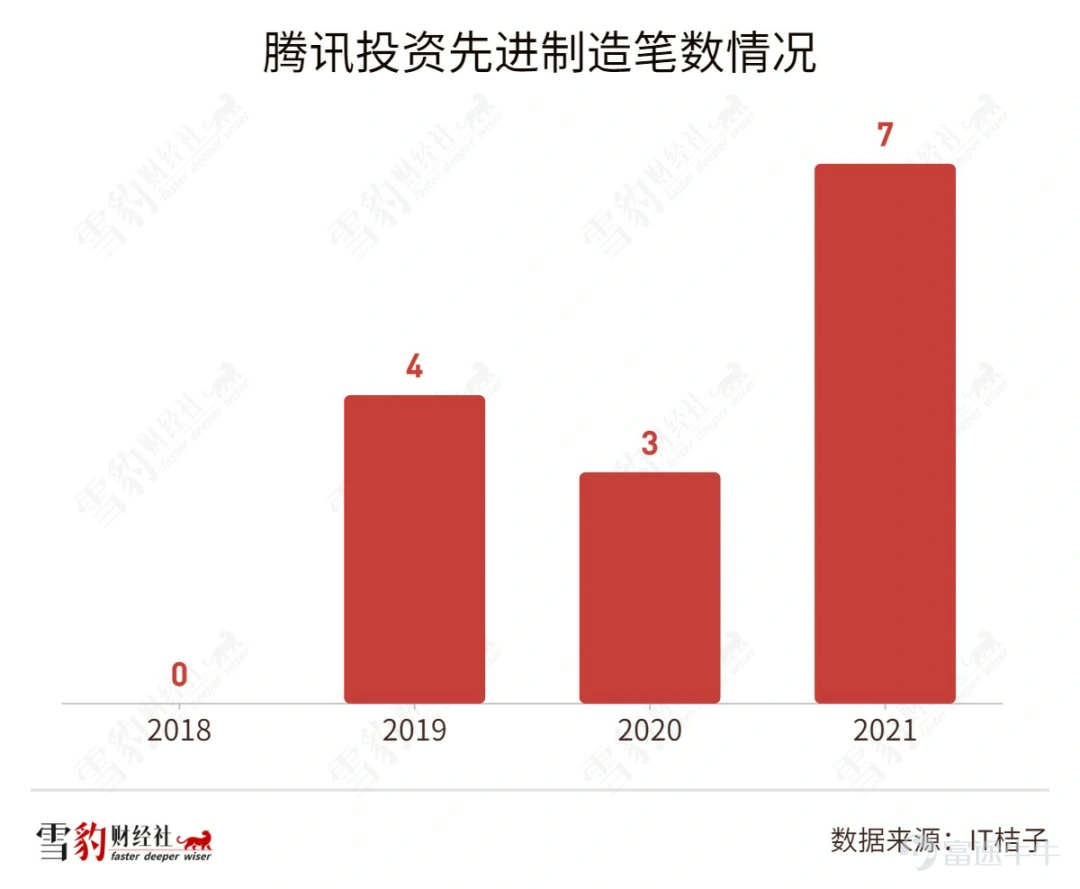
Momentary gains and losses will not cause big manufacturers to completely abandon their golden fingers, but under the tide of the times, the efforts of the giants at the helm in deep water can be shown through numbers.
Along with the shift to the three major directions of core business, overseas markets, and hard technology, the glory of the big manufacturers faded little by little, and they are exploring a new continent based on new logic and new channels, and have only just begun their journey.
(Author: Yan Xuegong)
Risk Disclaimer: The above content only represents the author's view. It does not represent any position or investment advice of Futu. Futu makes no representation or warranty.Read more


Comments
to post a comment
5
4