美國PPI再度“爆表”,IEA下調原油需求
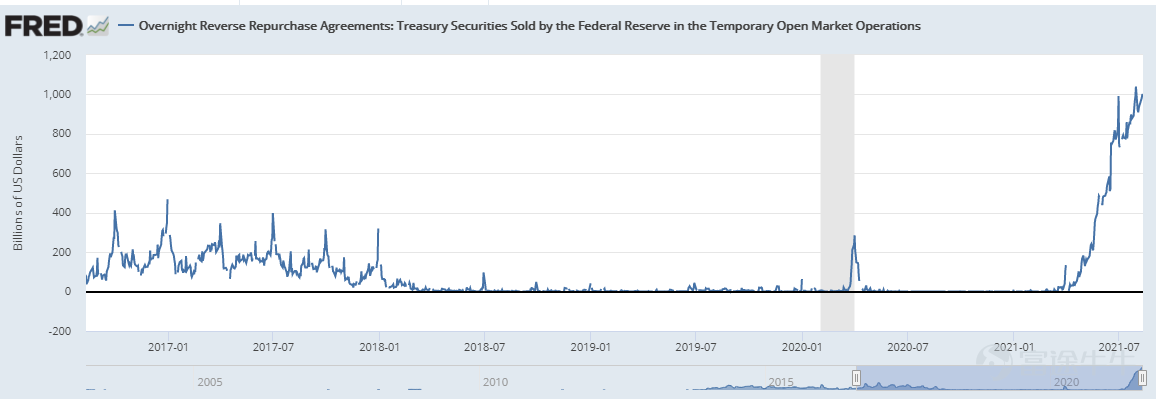
On August 12, the amount of the Federal Reserve's fixed interest rate reverse repurchases exceeded trillion dollars, reaching 1,00.46 billion US dollars. After breaking 1 trillion dollars for the first time in US history on July 30, this is another 1 trillion US dollars after a lapse of more than two weeks.
If there is a first time, then there will be a second time, and the Fed's reverse repurchase cannot escape this rule.
According to Bebb's law, from a psychological perspective, the first big stimulus can dilute the second small stimulus.Compared to the first time, the stock market's reaction to the news that the reverse repurchase has broken the trillion dollar mark is already much lackluster. The three major US stock indices all fluctuated only slightly. Among them, the Dow Jones index closed up 0.62%.

Although the market has become accustomed to it, the US macroeconomic policy still needs to be closely watched. After all, as a global financial center, any action in the US macroeconomic policy can have a certain impact on the capital market.
So, what issues and indicators should we focus on in the US in the future? Crude oil prices, US CPI inflation, and the Fed's QE attitude.
1. Crude oil has become the biggest obstacle to economic recovery
Faced with soaring crude oil prices, the White House finally couldn't sit back. It did not hesitate to punch itself in the face of the Green New Deal and proposed that “the competitive energy market will ensure reliable and stable energy supply, and OPEC+ must take more measures to support the recovery. ”
The reason why 1,000 enemies were killed and 800 self-damage made the US face the killer regardless of the face of crude oil pain was America's high inflation.After experiencing negative oil prices during the pandemic, crude oil gradually rebounded. WTI crude oil futures prices have rebounded all the way from negative to over $70 now. The huge increase has had a significant impact on CPI.
At 2021In the second quarter of the year, the US energy CPI maintained double-digit year-on-year growth.5The year-on-year ratio of the energy category reached an astonishing 2 in January8.5%。
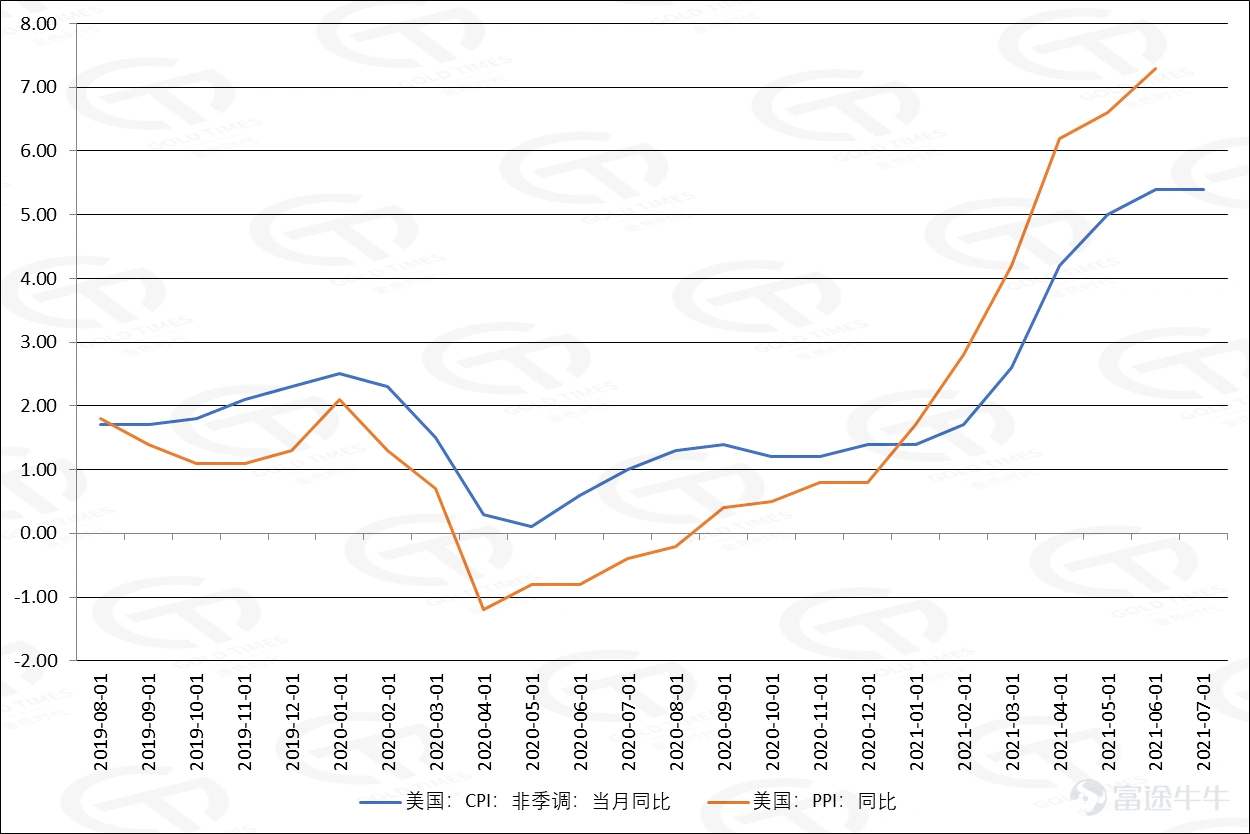
Now that US CPI inflation has exploded one after another, the CPI for June and July has reached the top 5 compared to the previous year. The inflationary pressure on the US is enormous, and solving the problem of high oil prices is already imminent.
In addition to the cause of inflation, the rise in crude oil prices is causing more hindrance to the economy. Due to the rise in crude oil prices, the production and operation costs of downstream enterprises have increased, while the consumption capacity of the American people, which has just been mitigated from the epidemic, has not increased.Ultimately, it led to an increase in corporate costs and a situation where profits were not long.
From the second half of '19 to the beginning of 2021, the US PPI index was below the CPI year on year. After January 2021, the US PPI gradually began to exceed the CPI year on year. This difference clearly reflects the rapid rise in related commodity prices leading to the cost side, but not the profit side.

This transmission pattern is clearly unhealthy, and if left to develop, it will eventually hinder economic recovery.Therefore, stopping oil prices and preventing their widespread transmission is the primary solution to the US economic recovery problem.
II. Continued high fever CPI
According to the latest data, the US CPI increased 5.4% year on year in July, up 0.5% month on month, and the annual growth rate (over the past 12 months) increased 5.4% month on month. Overall, the era of major US inflation has arrived.
In the face of continued high CPI, the Federal Reserve maintained a “brief period of inflation.”As inflation figures were released one after another, the Federal Reserve's rhetoric became the emperor's new clothes.
According to data released in July, prices for housing, food, energy, and new vehicles all increased in July. In that month, energy prices rose 1.6% month-on-month and 23.8% year-on-year. Among them, gasoline prices increased 2.4% month-on-month and surged 41.8% year-on-year. Food prices rose 0.7% month-on-month and 3.4% year-on-year, up 1 percentage point from June.
Looking at the long term, in addition to energy, transportation in the US is also growing rapidly year over year. Among them, used car prices have always been high, and the CPI barely stabilized until the fall in used car prices in July.

The year-on-year growth in energy and transportation has declined somewhat; on the face of it, a brief period of inflation seems to hold true. However, as the economy continues to grow, the Fed's loose monetary policy will further drive demand growth, making it difficult to establish a short period of inflation.
At the same time, people's inflation expectations are also rising. According to the New York Federal Reserve survey data, the median inflation forecast for the next year is 4.8%. Nearly a quarter of Americans believe that general inflation will exceed double digits.
The epidemic is unblocked, inflation expectations are growing, and monetary policy is relaxed. Under the joint impetus of many factors, the actual level of inflation will continue to rise continuously in the future.The CPI for the entertainment, housing, and food categories will rise one after another.
3. The Federal Reserve's QEattitudes
With the continuous improvement of economic data, the Federal Reserve's attitude also changed, as the original dovish gradually became hawkish.
According to media reports,Several Federal Reserve officials said that the US economy is growing rapidly and is rapidly approaching the point where the Federal Reserve can begin to reduce debt purchases. The level of inflation has met one of the key criteria for starting to raise interest rates, but there is still room for improvement in the job market.
Looking at it now, it is unlikely that the Federal Reserve will raise interest rates before the end of this year. After all, current inflation is not entirely due to the release of water from the Federal Reserve.
According to data, the leverage ratio of the US residential sector and the non-financial enterprise sector clearly lags behind that of government departments. The balance sheet of the Federal Reserve also reflects that most of the liquidity released by the Federal Reserve is also stored on commercial banks' books. The federal government's deficit is also closely linked to the current round of inflation.

Therefore, until the economy fully recovers, the Federal Reserve will remain cautious in raising interest rates and will not hit the brakes hard.At the same time, Federal Reserve Chairman Powell faces the choice of re-election. His assessment of inflation and interest rate hikes in the US economy involves a multi-party political game.
However, interest rate hikes may not be significant this year, but expectations for early implementation of the QE policy have increased significantly.There has been a heated debate within the Federal Reserve about when to begin reducing debt purchases. Looking at the level of public opinion expectations transmission mechanisms, today's multi-party opinion orientation shows that it is more likely that the Fed will reduce QE ahead of schedule.
(This content is the author's independent opinion and does not represent Kim Shih's financial position. The content of this article is for reference only and is not intended as any investment advice. (The market is risky, so you should invest with caution.)
Risk Disclaimer: The above content only represents the author's view. It does not represent any position or investment advice of Futu. Futu makes no representation or warranty.Read more
Comments
to post a comment
6
30