Options Hub: How to structure your options strategy amid market volatility?

[Options Practical Camp | Key Highlights No.6] Betting Big or Small with Single-Leg Options? Sir Zhu Breaks Down Trading Techniques for Multi-Leg Strategies
Does buying Calls or Puts guarantee maximum profits if you get the direction right? If you buy both Calls and Puts simultaneously, is there a chance to profit regardless of whether the market rises or falls?Multi-leg options may seem complex, but how can they actually help investors adjust trading costs and manage risk?
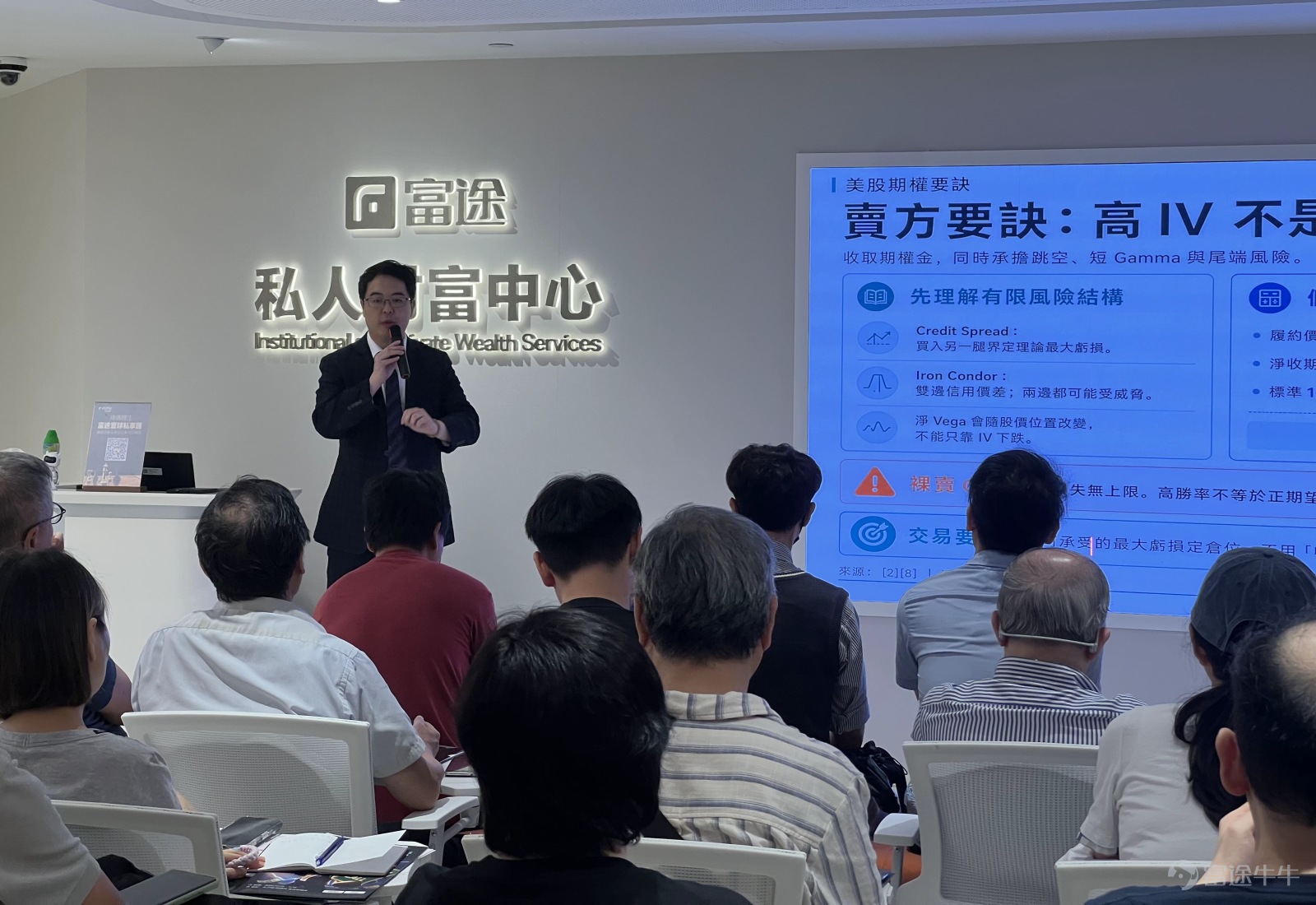
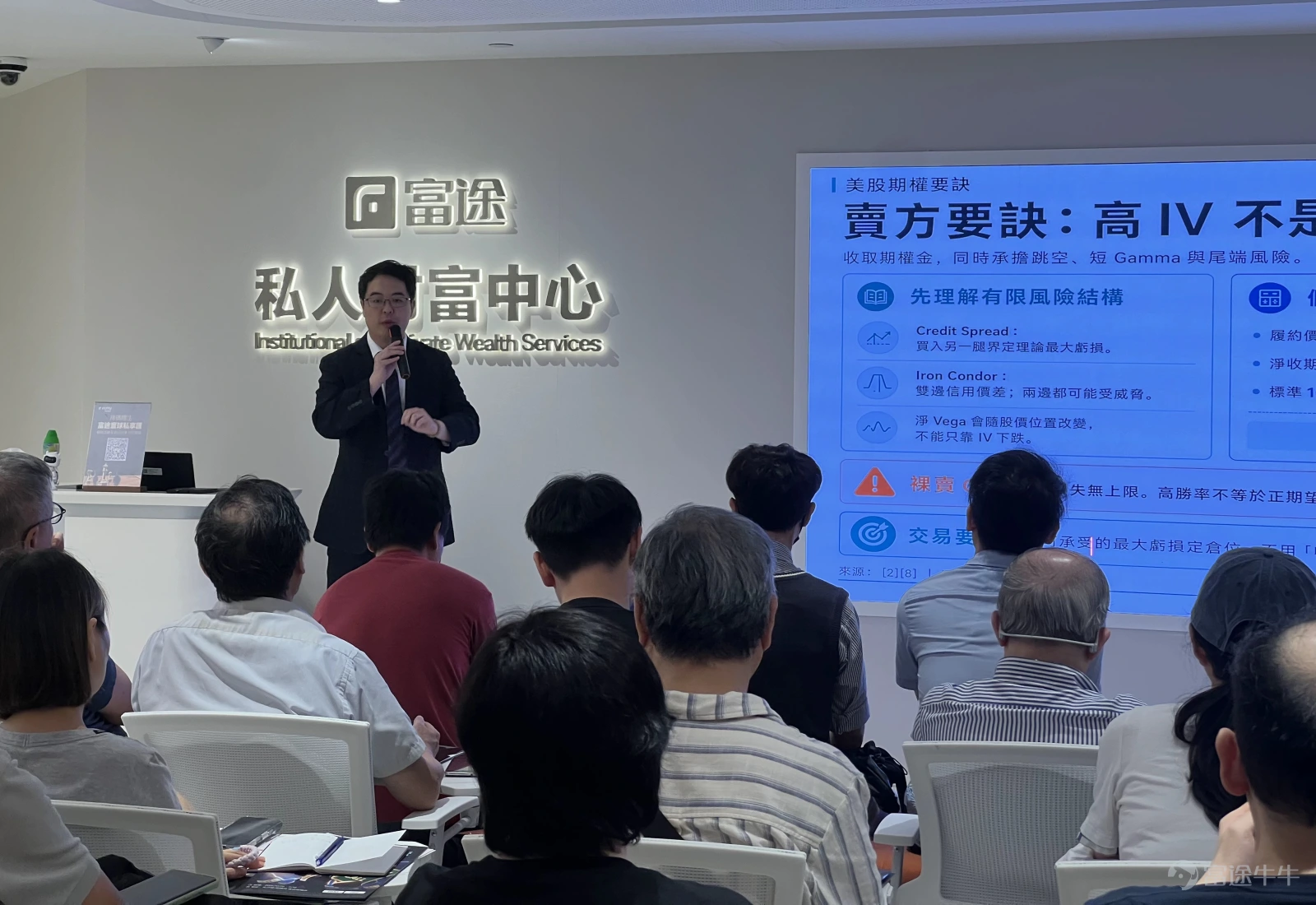
In this episode of "Options Practical Camp: Key Highlights," we invitedZhu Jinmin (Sir Zhu), founder of Haofeng Investment Education and investment KOL, to share insights from his lecture, "Single-Leg Options: Betting Big or Small; Multi-Leg Options: What You Need to Know." Drawing on his own US stock trading experience, Sir Zhu starts by addressing common misconceptions about trading Implied Volatility (IV), and through $Advanced Micro Devices (AMD.US)$ case studies involving earnings reports, Bull Call Spreads, and Iron Condors, he breaks down the mechanics and profit/loss trade-offs of multi-leg option strategies.
🔥 Sneak Peek! 3 Key Highlights from the Lectures
① Should you avoid buying Calls when IV is high? Is collecting more option premium always better?
Sir Zhu shares common misconceptions regarding IV assessment when trading options, as well as the trading risks hidden behind high IV.
② If you trade both bullish and bearish directions, why is it still possible to lose money?
Using AMD's earnings report to break down the profit and loss conditions for Long Straddle and Long Strangle strategies.
③ How to choose multi-leg strategies? Practical analysis of Bull Call Spreads and Iron Condors.
Understand the considerations for using different option combinations from the perspectives of transaction costs, expiration dates, and risk control.
✨ Quick Quote Delivery
"When you trade spreads, you shouldn't do it just for the sake of doing it. You must first think through exactly why you are executing the trade."
Sir Zhu believes that before using multi-leg strategies, one should clearly define their views on market direction, expected price magnitude, and risk, and then select the appropriate combination.

1. Should you avoid buying Calls when IV is high? Sir Zhu highlights two trading misconceptions
The session began with Mr. Zhu sharing his views on Implied Volatility (IV).
He pointed out that some investors, seeing a stock's IV reach 100% or even 150%, consider the options too expensive and are reluctant to buy long calls or long puts.
However, Mr. Zhu raised another question:
"Think carefully about why the stock has such high IV... it's because the stock experiences significant ups and downs."
He explained that some stocks are inherently highly volatile, leading to relatively higher option IV. Abandoning trades solely due to high IV may cause investors to overlook the underlying asset's inherent volatility characteristics.
Mr. Zhu described this as "pure IV determinism," which can easily cause investors to miss out on certain trading opportunities.
Nevertheless, regarding selling options to collect premiums, he also opposes focusing solely on whether IV is high or low.
Some investors specifically look for stocks with IVs of 90% or 100% to execute short put strategies, as these options typically offer higher premiums.
Mr. Zhu warned:
"If it drops by half or even 70% from its highs, you could still face devastating losses."
He shared his experience with option exercise during the Silicon Valley Bank incident, illustrating that even if substantial premiums are collected when selling puts, extreme declines in the underlying asset can still lead to significant losses and settlement risks.
Therefore, he particularly emphasized that high implied volatility (IV) does not guarantee profitability when selling options.
2. Long Straddle, Long Strangle: Can buying both sides still result in a loss?
Next, Mr. Zhu introduced two strategies involving the simultaneous purchase of calls and puts.
Long Straddle: Simultaneously buying calls and puts with the same strike price and expiration date, typically selecting at-the-money (ATM) options.
For example, if the stock price is $100, and the call and put premiums are each $4, the total cost is $8. If held to expiration, the stock price needs to rise above $108 or fall below $92 for the position to start generating a profit (excluding fees).
Long Strangle: Similarly involves buying both calls and puts, but selects out-of-the-money (OTM) options with different strike prices.
Mr. Zhu reminded investors that although a Long Strangle typically has lower premium costs than an at-the-money Long Straddle, it requires larger price movements to have a chance of covering the costs.
He didn't even mention how large the volatility needed to be for the trade to work out.
After AMD announced its earnings, the stock rose about 9% in after-hours trading. However, it reversed gains before the market open, rebounded again after the official open, and ultimately ended with a price change far less significant than the initial after-hours surge.
Mr. Zhu pointed out that if investors buy both call and put options before an earnings report, they could lose on both sides if the final price volatility is insufficient to cover the cost of both options, compounded by the drop in implied volatility (IV) post-earnings.
However, he also shared his experience trading AMD using a Long Strangle. He initially profited from the long put side, and then benefited from a subsequent stock price rebound, which recovered the value of the previously losing long call.
Mr. Zhu used this to illustrate that, beyond the final price, the timing of position closing and how traders manage their positions on both sides significantly impact the actual outcome.
3. Bull Call Spread: Lowering Costs, but at What Price?
Moving on to spread strategies, Mr. Zhu focused on demonstrating the Bull Call Spread.
Assuming an investor is bullish on a certain stock, they can first buy a call option with a strike price of $100, and then sell a call option with a strike price of $108.
"I pay premium to buy a long call, and since I want to reduce costs, I also sell a short call on the upside."
Collecting premiums by selling call options with higher strike prices can offset part of the cost of a long call. However, correspondingly, when the stock price rises, the short call will also offset part of the profit from the long call.
Mr. Zhu specifically reminds investors that expiration dates should not be chosen as exclusively long-term or short-term.
If the duration is too short, the stock price may not have enough time to rise to the target strike price; but if it is too long, especially for stocks with high implied volatility (IV), the short call may significantly offset the profits of the long call during the early stages of the rise.
However, Mr. Zhu believes that the most noteworthy aspect of a Bull Call Spread is not necessarily its performance when making money.
"I think the best part of trading a bull call spread isn't about the profits you make; it's... that you lose much less money when you misjudge the market."
He explained that when investors misjudge the direction and the long call incurs losses, the premium collected from the short call can offset part of those losses.
Mr. Zhu further analyzed this from the perspective of trading psychology:If holding a long call alone, investors may be unwilling to cut losses when the loss reaches 50%; however, if the initial cost is reduced through a spread strategy, resulting in smaller overall losses, it may be easier to make the decision to close the position.
This is a key trading consideration he particularly emphasizes when using Bull Call Spreads.
4. Iron Condor: How to position yourself when IV is high but the stock price is range-bound?
Finally, Mr. Zhu introduced the Iron Condor strategy.
This strategy involves establishing spread combinations on both the call and put sides to collect premiums, while using further out-of-the-money options to cap the maximum potential loss.
Mr. Zhu shared that he looks for stocks with relatively high implied volatility (IV) but where the stock price is expected to remain range-bound in the short term.
"If the IV is elevated but the price range remains controlled, there is actually an opportunity to execute this spread."
He also shared a trading approach: some traders wait until after a company releases its earnings results before considering whether to establish an Iron Condor.
The reason is that significant gap moves may occur before the earnings report, potentially breaking through the price range set by the strategy. After the earnings release, although IV may drop, some stocks may still retain higher volatility characteristics.
However, this does not guarantee that the stock price will remain sideways after the earnings release, nor should broader market risks and other event risks be ignored.
At the end of the seminar, Sir Zhu reiterated that multi-leg strategies are not better just because they are more complex; rather, they require clear trading rationales.
For example, if investors are bullish on a stock's rise but expect limited upside, and wish to reduce the cost and maximum potential loss of buying calls, they can consider adopting corresponding bull call spreads.
As he reminded in the conclusion, before employing multi-leg strategies, investors should clearly define their trading rationale, expected market movements, and risk tolerance before deciding which spread to choose.
Want to learn more about options strategies and practical trading approaches? Stay tuned for "Highlights from the Options Practical Trading Camp" to revisit more exciting lecture content!
This article is compiled based on automatically recognized subtitles from the lecture, with some colloquial content edited and condensed. Stock and options prices are for educational reference only and do not reflect real-time market conditions. Multi-leg options strategies involve risks related to premiums, implied volatility, time value, liquidity, and exercise/settlement. Limited risk does not mean significant losses cannot occur. This article is for educational and informational purposes only and does not constitute investment advice.
Risk Disclaimer: The above content only represents the author's view. It does not represent any position or investment advice of Futu. Futu makes no representation or warranty.Read more

Comments
to post a comment
27
14