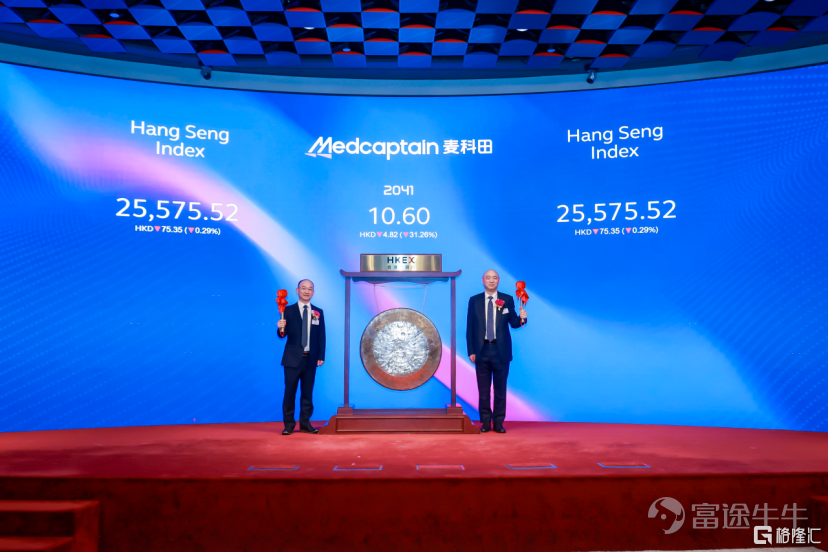

Mindray (2041.HK) lists on the HKEX, marking the launch of a leading platform-based medical device company
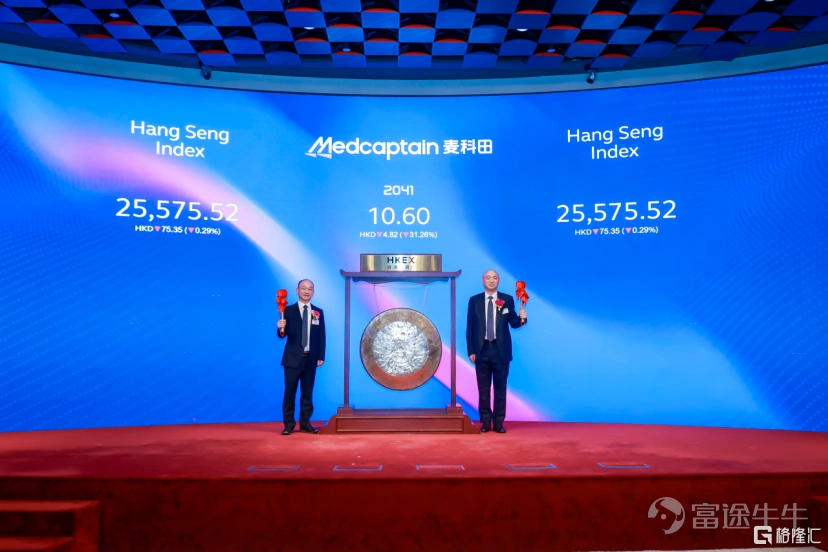
On September 7, 2026, Shenzhen Mindray Bio-Medical Electronics Co., Ltd. (02041.HK) was officially listed on the Hong Kong Stock Exchange.
This Shenzhen-headquartered global medical device provider is offering 38.9106 million H-shares globally at an offer price of HK$15.42 per share. The Hong Kong public offering portion was oversubscribed by 436.37 times, while the international placing was subscribed 2.35 times. Based on a lot size of 100 shares, the minimum entry cost is approximately HK$1,557.
With Mindray's arrival, the list of new medical device listings on the Hong Kong Stock Exchange in 2026 has expanded to six. How should investors view this company, hailed as an 'invisible champion' in the medical device sector, following its listing?
As the 15th Five-Year Plan kicks off, the main policy thread for medical devices is becoming clearer.
2026 marks the opening year of the 15th Five-Year Plan, with policy frameworks becoming increasingly clear across the R&D, allocation, and demand segments.
From the R&D perspective, the focus is on breakthroughs in core technologies.
On March 24, the National Medical Products Administration launched the three-year 'Spring Rain Action' for the transformation of clinical innovation achievements in medical devices, prioritizing innovative medical device projects with the potential to achieve key technological breakthroughs and domestic substitution. On July 13, the State Council issued the 'National Health 15th Five-Year Plan.' This is the first time a five-year plan has proposed 'full-chain support for the development and application of innovative drugs and medical devices,' explicitly increasing support for the R&D of key core technologies, components, and complete units for high-end medical devices. With top-level planning setting the direction and review reforms accelerating, a synergistic policy framework has been established.
From the allocation perspective, rigid targets are releasing demand.
The 'National Health 15th Five-Year Plan' sets quantitative allocation targets, such as the number of rehabilitation physicians and therapists, while also proposing the improvement of early screening, diagnosis, and treatment systems, and the establishment of integrated outpatient clinics for chronic diseases. This directly drives procurement demand for categories such as POCT and in vitro diagnostics. On the funding side, CNY 200 billion in ultra-long-term special sovereign bonds have been allocated in 2026 to support equipment updates, covering approximately 11,000 projects across 22 sectors. Rigid targets set the direction, while sovereign bond funds ensure implementation, creating clear downstream procurement demand for numerous medical device companies.
From the demand perspective, expansion at the grassroots level is opening up incremental markets.
The 'National Health 15th Five-Year Plan' proposes accelerating the construction of close-knit medical consortia and tilting premium appointment slots toward grassroots institutions. The 'Healthcare Grassroots Strengthening Project' further clarifies that basic coverage of close-knit county-level medical communities will be largely achieved by the end of 2027. The 'Action Plan for Traditional Chinese Medicine in the Healthcare Grassroots Strengthening Project,' jointly issued by the National Administration of Traditional Chinese Medicine and other departments, proposes strengthening resource sharing in county-level medical imaging, ECG diagnosis, and medical testing, thereby opening up broad incremental markets for medical device companies represented by Mindray.
Future Catalysts: Globalization, Inflection Point in Profitability, and Platform Moats
If the IPO is Mindray's "coming-of-age ceremony," then its long-term value will be determined by the sustained release of three core growth drivers.
Highlight 1: Overseas revenue accounts for nearly half, marking the harvest phase of globalization.
Unlike most domestic medical device companies that rely heavily on a single market, Mindray's globalization has moved from strategic layout to performance realization.
According to the prospectus, the company's overseas revenue share increased from 38.4% in 2023 to 48.3% in 2025, accounting for nearly half of total revenue. As of March 31, 2026, the company had 497 active overseas distributors in over 140 countries and regions, covering major areas including Asia-Pacific, EMEA, and the Americas.
More importantly, Mindray's globalization is not merely "product export" but substantial "capability output." The company has established representative offices in the UK, Netherlands, Belgium, Turkey, India, Thailand, Indonesia, Mexico, Brazil, and Colombia, along with five R&D centers (Shenzhen, Changzhou, Nanjing, Shanghai, and the UK) and six production centers. As of March 31, 2026, the company had obtained over 300 medical device registration certificates from national drug administrations, more than 40 FDA approvals, and over 300 CE-certified products.
Frost & Sullivan points out that Mindray is one of the few medical device players in China with a scaled global network. Against the backdrop of policies such as "volume-based procurement" continuing to impact domestic medical device pricing, the strategic value of overseas markets is becoming increasingly prominent. The continuous improvement of localized service capabilities means that overseas revenue is not only high in proportion but also sustainable.
Highlight 2: The inflection point in profitability has been confirmed, and profit elasticity will continue to be released.
2025 was a watershed year for Mindray's financial performance. The company turned profitable, recording a net profit of RMB 50.74 million. From the perspective of non-IFRS metrics, which better reflect core operating performance, adjusted profit surged from RMB 11.23 million in 2023 to RMB 129 million in 2025.
Entering 2026, this trend continued to accelerate. In the first quarter of 2026, the company's adjusted net profit reached RMB 35.02 million, a significant year-on-year increase of 132.0%; adjusted EBITDA reached RMB 75.28 million, up 44.5% year-on-year. The quarter recorded a net loss of RMB 2.53 million, primarily due to share-based payments of RMB 25.10 million under the pre-IPO share option plan and listing expenses of RMB 12.50 million. These are one-off non-cash or non-operating factors and do not affect core profitability.
The drivers of profit improvement stem from two fronts: On the revenue side, all three business segments grew in tandem, with total revenue reaching RMB 422 million in Q1 2026, a year-on-year increase of 19.1%. On the cost side, gross margin rose steadily from 49.6% in 2023 to 53.7% in 2025, and further climbed to 54.3% in Q1 2026, as cost improvements driven by product mix optimization and economies of scale continue to materialize. $MEDCAPTAIN (02041.HK)$
As the company's revenue scale continues to expand and the proportion of high-margin products increases, profit elasticity is expected to become increasingly evident in subsequent quarters.
Highlight 3: The "platform-type" moat of the sector leader continues to strengthen.
Mindray's most scarce value label lies in its "multi-pronged" platform layout. In the medical device sector, single-segment champions are not uncommon, but companies holding leading positions in three niche segments simultaneously are extremely rare among Hong Kong-listed stocks.
In the life support sector, according to Frost & Sullivan data, Mindray has ranked first in China's infusion workstation market by sales volume for eight consecutive years from 2018 to 2025, achieving a market share of 26.1% in 2025; it also topped the enteral nutrition pump market for five consecutive years from 2021 to 2025, with a market share of 26.9% in 2025. The world's first remote infusion control system and China's first multi-channel infusion workstation were both industry pioneers.
In the minimally invasive interventional sector, the company ranked among the top three in the Chinese market for minimally invasive interventional consumables in the digestive system annually from 2022 to 2025, achieving a market share of 21.5% in 2025; it entered the top five in the disposable cholangioscope market from 2023 to 2025, with a market share of approximately 7.5% in 2025. The company is one of the few domestic brands in China with a proprietary endoscope product portfolio.
In the in vitro diagnostics (IVD) sector, the company launched the world's first fully automatic thromboelastography analyzer in 2021; by 2025, it ranked among the top five in China's blood typing equipment market, with a market share of approximately 3.9%.
Each of the three segments holds a "champion" title, and together they form the capability to provide comprehensive solutions for hospital-wide departments. Under the closed-loop model of "equipment + consumables + informatics," once a hospital introduces Mindray's infusion workstations, there are cross-selling opportunities for subsequent endoscopy systems, coagulation analyzers, supporting consumables, and reagents. By the end of 2025, the company's products had covered more than 6,000 hospitals in China, including approximately 90% of Grade A tertiary hospitals, making this extensive customer base a core carrier of platform value.
As of March 31, 2026, the company had over 60 products in development, covering more than 10 life support products, over 30 minimally invasive interventional products, and more than 20 in vitro diagnostic products, providing ample ammunition for the continuous strengthening of its platform moat.
Summary
China's medical device industry is standing at a turning point from "follow-up innovation" to "leading innovation." The path represented by Mindray is distinctly different from "single-point breakthroughs"; it does not rely on a single blockbuster product but instead builds an anti-cyclical, sustainable medical device platform through multi-sector layout, global operations, and continuous M&A integration.
For Medcaptain, its IPO is merely the starting line. As synergies across its three core business segments continue to unfold, its global network deepens, and earnings elasticity is increasingly realized, this multi-sector medical device platform may have only just turned the first page of its long-term growth narrative.
Risk Disclaimer: The above content only represents the author's view. It does not represent any position or investment advice of Futu. Futu makes no representation or warranty.Read more
Comments
to post a comment
1